reviewstook.com is reader-supported. When you buy through links on our site, we may earn an affiliate commission.
Where to buy
Landscape photography rewards patience and punishes weight, and that tension is exactly where the compact camera earns its keep. The best compact cameras for landscape photography are not shrunken compromises for people who cannot afford a full system; they are deliberate tools for walkers, climbers and road-trippers who know that the finest viewpoint on a ridge is usually the one reached on foot, an hour after the car park, with weather moving in. A camera that lives in a jacket pocket gets carried to places a tripod-heavy kit never sees, and a photograph taken beats a theoretically superior photograph left at home every single time.
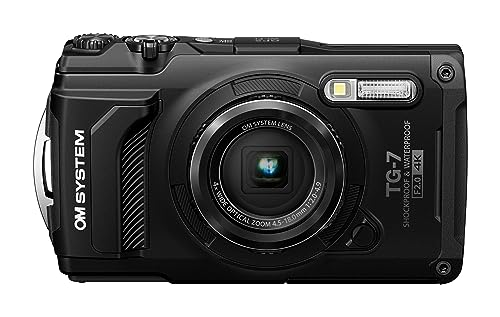
- OM SYSTEM Olympus Tough TG-7: check price on Amazon
- Sony ZV-1F: check price on Amazon
- DJI Osmo Pocket 3: check price on Amazon
- Nikon Z50 II: check price on Amazon
- Sony RX100 VII: check current listings and availability
- Panasonic Lumix LX100 II: check current listings and availability
Judging compacts for scenery means ignoring the spec-sheet contests that dominate other genres. Nobody on a windswept headland cares about burst rates. What matters is whether the lens is wide enough for a foreground that pulls the eye into the frame, whether the sensor holds shadow detail in a valley while the sky above it stays intact, whether the body shrugs off drizzle and grit, and whether the battery survives a cold dawn. Dynamic range and honest colour do the heavy lifting; resolution is a distant fifth.
This guide also takes a position on the raw file question, because landscape work is where raw capture earns its storage. A JPEG baked under a difficult sky is a finished argument; a raw file is a negotiation you can revisit. Every pick below can record raw, and the sections after the picks explain how to expose for the highlights, work a foreground, and build a small kit around a pocketable body without quietly recreating the weight you set out to escape.
Two of the six picks are listed without a shop link because they sit outside this site’s verified pool. They are recommended on their merits, described in the same detail, and flagged clearly in the notes that accompany this guide. Nothing in the ranking changes because of a link’s presence or absence.
Key Takeaways
- Wide lenses and shadow-friendly sensors matter more for scenery than megapixels or burst speed.
- Weather resistance decides which camera is still working at the viewpoint, not just which arrived there.
- The Tough TG-7 is the pick that treats rain, frost and river crossings as ordinary working conditions.
- Raw capture is close to non-negotiable when a bright sky shares the frame with a dark valley.
- A pocketable camera carried daily will out-shoot a superior system left in the car.
- The Nikon Z50 II is the ceiling-raiser: still travel-sized, but with interchangeable lenses for serious trips.
In this guide
Quick Picks
| Camera | Badge | Why it is here |
|---|---|---|
| OM SYSTEM Olympus Tough TG-7 | Best for harsh weather | Waterproof, freeze-proof and crush-resistant, with raw capture and a bright lens for grim days. |
| Sony RX100 VII | Best zoom range in a pocket | A genuine 24-200mm equivalent reach behind a one-inch sensor, for ridges near and far. |
| Sony ZV-1F | Best wide and simple | A fast, very wide fixed lens on a one-inch sensor for big-sky compositions at dawn. |
| Panasonic Lumix LX100 II | Best for dial-led shooting | Aperture ring and shutter dial slow you down in the way good landscape work rewards. |
| DJI Osmo Pocket 3 | Best for moving scenery | A gimbal camera that turns a walk along a coastline into smooth, sweeping footage. |
| Nikon Z50 II | Best compact system | APS-C quality and lens choice in a body that still belongs in a daypack’s top pocket. |
How were these six chosen for scenery rather than snapshots?
The first filter was the lens, read from the landscape photographer’s side of the glass. A scenic camera lives at the wide end: foreground rocks, a leading shoreline, a fence line running toward a summit. Picks were favoured if their widest setting could hold a near foreground and a distant horizon in one convincing frame, and any camera whose lens started narrow had to justify itself through some other landscape virtue, such as the Pocket 3’s moving panoramas.
Files came second. Each candidate had to record raw, because the genre’s defining technical problem — a sky several stops brighter than the land beneath it — is solved in the edit more often than in the exposure. Sensor size was weighed as a proxy for shadow recovery: one-inch sensors form the serious floor here, the LX100 II’s larger multi-aspect sensor and the Z50 II’s APS-C chip sit above it, and the TG-7’s smaller sensor survives the cut only because its toughness opens locations the others cannot enter.
Field behaviour formed the third test. Landscape photography happens at the cold ends of the day, with gloves on, on ground that is rarely flat or dry. Dials that can be worked by feel, screens that tilt for a low tripod-free angle, batteries that tolerate a frosty start, and bodies that do not demand a rain cover at the first shower all counted heavily. A camera that needs pampering in the exact conditions that produce dramatic scenery fails the genre even if its files are lovely.
Finally, honesty about role. No pick here pretends to be a large-format replacement for gallery printing, and the guide says where each one’s ceiling sits. What unites the six is that each can be the only camera on a serious walking trip without the photographer feeling they left the real photography at home.

OM SYSTEM Olympus Tough TG-7 — Best for harsh weather
Every landscape kit has a day it cannot shoot: the gale on the sea cliffs, the waterfall gorge where spray hangs permanently in the air, the sleet that arrives precisely with the good light. The TG-7 exists for those days. It is waterproof, freeze-proof, shockproof and crushproof in ways ordinary cameras simply are not, and it records raw files through a bright zoom lens, which makes it less a holiday tough camera and more a specialist instrument for scenery that fights back.
Consider the waterfall problem specifically. The viewpoints worth having are inside the spray zone, where a conventional compact is either bagged, wiped every ten seconds, or quietly dying. The TG-7 stands on the wet rock and works. Its lens stays clear longer than exposed front elements twice its size, the body can be rinsed under a tap at the car, and the photographer stops rationing frames against the weather and starts composing — which is when the good frames arrive.
Its macro heritage, inherited from the Tough line’s microscope modes, turns out to be a landscape gift at ground level. Frost on a dry-stone wall, lichen on a summit cairn, ice feathers along a frozen stream: the TG-7 focuses absurdly close with its subject lit evenly, giving the walking photographer a second genre — the intimate landscape — inside the same pocket. Many owners report the close-up frames from a trip outlast the grand vistas in their own affection.
The compromises are real and should be stated without flinching. The sensor is the smallest in this guide, so shadow recovery in a contrasty ravine is limited and high-ISO work at dusk gets grainy quickly. This is a camera for daylight drama and foul weather, not for blue-hour subtlety. Photographers whose landscapes are mostly gentle evenings will feel the ceiling; photographers whose landscapes involve weather warnings will not care.
Battery behaviour in the cold deserves its own mention because the rating is earned outdoors: the sealed body insulates its cell better than most compacts, and the camera wakes fast from sleep, which matters when light breaks through cloud for ninety seconds and the whole photograph is a race.
- Type: rugged compact, sealed against water, frost and crushing
- Files: raw capture, unusual in the tough-camera class
- Lens: bright zoom, strongest at its wide end
- Close work: microscope-style macro for intimate landscapes
Strengths
- Shoots inside spray, sleet and surf without protection
- Raw files from a camera that can be rinsed clean
- Close-focus modes open a whole second genre
Trade-offs
- Small sensor limits shadow lifting and dusk work
- Zoom reach is modest for distant peaks
- Controls are small under thick gloves
Best for: coastal storms, waterfalls, winter hills and any trip where the weather is the subject. Not suited for: low-light specialists or photographers who print very large from shadow-heavy files.
There is also a psychological dividend worth naming: because the TG-7 cannot really be hurt by the conditions, its owner stops sheltering the camera and starts sheltering the composition. Lenses get wiped instead of hidden. That shift in behaviour, repeated across a wet week in the hills, is worth more frames than any specification on its box.
Sony RX100 VII — Best zoom range in a pocket
The RX100 VII answers the landscape question most compacts dodge: what about the mountain that is not the one you are standing on? Its zoom reaches the equivalent of 200mm while still opening at a properly wide 24mm, all behind a one-inch sensor with a strong record in raw processing. From a single viewpoint it can shoot the valley panorama, the layered ridges at mid-range, and the compressed stack of peaks that only a telephoto can flatten into graphic bands of blue.
Layered-ridge photography is where this camera quietly outclasses wider rivals. Atmospheric perspective does the artistic work — each successive ridge paler than the last — but the photographer must isolate those layers from a cluttered foreground, and that is a telephoto’s job. Owners who arrive from prime-lens compacts describe the first evening with the long end as a small revelation: compositions they had walked past for years were suddenly available from the same lay-by.
The files reward careful handling. Expose for the sky, and the one-inch sensor gives back shadow detail in the land with less protest than smaller chips; the lens stays sharp enough across its range that the zoom can be used as a compositional tool rather than a compromise dial. Autofocus is famously quick, which landscapes rarely need — except for the one frame in fifty where a shaft of light, a bird, or weather crossing the valley demands an instant response.
Handling is the tax. The body is dense, smooth and small, its controls miniature, and on a cold morning with gloves it asks for patience. The pop-up viewfinder is a gift in glaring snow light, though, and the tilting screen serves low compositions among foreground grasses. Battery life is the other discipline: carry a spare, because a long evening of bracketed frames at a viewpoint eats the small cell steadily.
As a travel-landscape instrument it has one more virtue: it disappears. In a jacket it is forgotten until the light changes, which means it is present for the unplanned photograph — the rainbow over the harbour seen from a café window — that trip itineraries never schedule.
- Type: premium compact, one-inch sensor
- Lens: wide-to-telephoto zoom for layered ridgelines
- Finder: pop-up electronic viewfinder for glare
- Files: raw with generous highlight discipline
Strengths
- Telephoto reach no rival pocket camera matches
- One body covers panorama and compression shots
- Raw files hold up under firm shadow recovery
Trade-offs
- Miniature controls punish gloved hands
- Small battery needs a spare on long evenings
- No weather sealing for exposed viewpoints
Best for: mountain walkers who compose at many focal lengths and travel with one pocket free. Not suited for: storm chasers or anyone who shoots mainly in rain.
Its age in the range is, paradoxically, a landscape virtue: the model is thoroughly understood by raw converters and accessory makers, its quirks are documented by a decade of field use, and nothing about it will surprise its owner at a viewpoint. Scenery photography has enough surprises supplied by the weather.

Sony ZV-1F — Best wide and simple
The ZV-1F was designed for vloggers, yet landscape photographers keep adopting it for a simple reason: its fixed lens is very wide and respectably fast, sitting in front of a one-inch sensor, in a body with almost nothing to learn. For the big-sky school of landscape — vast foregrounds, dramatic cloud architecture, the horizon pushed high or low — a wide prime that is always ready is not a limitation but a discipline, and this is the cheapest honest way into that discipline with a serious sensor.
Working with one focal length changes how a walk unfolds. Instead of arriving at a viewpoint and zooming through options, the ZV-1F’s owner scouts with their feet, finding the foreground stone or pool that the wide frame demands. Photographers who teach composition often prescribe exactly this exercise; the camera enforces it full-time. The reward is a portfolio with a consistent, confident perspective rather than a scrapbook of focal lengths.
Low sun is its favourite condition. The fast aperture keeps dawn exposures comfortable, the sensor’s files tolerate the contrast of a sunrise over water, and the fully articulating screen — built for presenters — proves just as useful flipped for a waist-level composition among dunes or heather. It is also genuinely silent in operation, which suits the dawn photographer’s superstition about not disturbing the morning.
The fixed lens is also the boundary, and it should be faced squarely: there is no reach here, no isolating a lighthouse from its headland, no compressing ridges. Cropping the wide file spends resolution quickly. Walkers who know their ground and return to it will thrive; tourists hoping one camera will frame everything at a famous viewpoint will feel hemmed in, and should look at the RX100 VII above.
Video, its design centre, still serves the landscape shooter who wants a moving record of a place — slow pans across a misty valley, the sound of a stream — with stabilisation that handles a careful handheld sweep. Think of it as a bonus on a stills camera for this genre, rather than the reason to buy.
- Type: fixed-lens compact, one-inch sensor
- Lens: very wide, fast prime; no zoom
- Screen: fully articulating for low compositions
- Character: minimal controls, immediate readiness
Strengths
- Wide prime teaches strong foreground composition
- Fast lens and big sensor flatter dawn and dusk
- Almost no learning curve before the first trip
Trade-offs
- No telephoto reach for distant subjects
- Cropping spends its resolution quickly
- Video-first layout omits some stills refinements
Best for: big-sky walkers, beginners building composition habits, and minimalists who shoot one way well. Not suited for: varied focal-length shooters or distant-peak specialists.
There is a final, underrated point in its favour: because it asks so little of its owner, it gets taken on the walks that are not photography trips at all — the dog walk, the errand over the hill — and those are the walks where unrepeatable light most often appears.
Panasonic Lumix LX100 II — Best for dial-led shooting
The LX100 II is the landscape compact for photographers who believe the exposure triangle should be touched, not menu-dived. An aperture ring circles its lens, a shutter-speed dial sits on the top plate, and exposure compensation has its own wheel: the three decisions of landscape photography are under three fingertips before the camera reaches the eye. On a cold viewpoint, that tactility is not nostalgia; it is speed, accuracy and the pleasure of working deliberately.
Its sensor is larger than the one-inch class and uses a multi-aspect design, so switching between 3:2, 4:3 and 16:9 crops the image circle rather than merely masking a fixed frame. For scenery this is a subtle joy: a 16:9 sweep for the coastal panorama, a squarer frame for a woodland interior, each composed in the finder as a native shape. The lens covers a useful wide-to-short-telephoto span and is fast at the wide end where landscapes live.
The files have a particular strength in colour. Panasonic’s rendering of greens and earth tones — the palette that dominates temperate landscapes — is restrained and true, and the raw files accept firm highlight recovery when a bright sky sits over bracken and stone. Woodland photographers, who fight contrast and colour casts simultaneously, tend to become loyal to this camera quickly.
Age shows in the supporting systems rather than the images. Autofocus is contrast-based and unhurried, which scenery forgives; the rear screen is fixed, which low compositions do not; and there is no weather sealing, so the camera rides out drizzle in a pocket rather than on a strap. Its video is a secondary skill. None of this matters much at a tripod-free viewpoint at 7 a.m., where the dials and the lens do the talking.
What the LX100 II really sells is a pace. Landscape photography at its best is slow looking punctuated by exact decisions, and a camera whose controls invite deliberation nudges its owner toward that rhythm. Beginners learn exposure faster on it than on any touchscreen rival, because cause and effect are printed on metal.
- Type: enthusiast compact, larger multi-aspect sensor
- Controls: aperture ring, shutter dial, compensation wheel
- Lens: fast wide zoom suited to scenery
- Composing: switchable native aspect ratios
Strengths
- Physical dials make exposure a tactile habit
- Multi-aspect sensor composes panoramas natively
- Earth-tone colour suits woodland and moorland
Trade-offs
- Fixed rear screen limits low angles
- Unhurried autofocus and no weather sealing
- Video plays a supporting role only
Best for: deliberate shooters, exposure learners, and woodland or countryside specialists. Not suited for: action hybrids or anyone needing a tilting screen for ground-level work.
Keep it in a small belt pouch rather than a camera bag and its whole philosophy clicks: a serious instrument, carried like a notebook, opened when the land does something worth recording. Few compacts respect the walking half of landscape photography as well.

DJI Osmo Pocket 3 — Best for moving scenery
Some landscapes are better walked through than stood in front of, and the Pocket 3 is built for exactly that heresy. Its one-inch sensor rides on a three-axis gimbal, so a stroll along a cliff path, a boardwalk over marshland or a forest track becomes footage that floats — the camera gliding over foreground grasses, rising to reveal the view, settling as a lake comes into sight. For photographers building moving records of places, nothing else this small produces motion this composed.
The stills case is better than its video-first reputation suggests. The sensor is the same class as the serious compacts here, the lens is wide enough for grand foregrounds, and the gimbal doubles as a stabiliser that permits slow, careful exposures at dusk without a tripod — a trick no ordinary compact can match. Panoramas are a house speciality: the gimbal head pans the camera through a sweep with mechanical evenness, stitching a viewpoint too wide for any single frame.
Its relationship with weather and terrain is companionable. It works one-handed on a scramble where the other hand is needed for the rock, starts quickly when light breaks, and its small screen is adequate for framing scenery even if files deserve a bigger review later. Walkers covering long distances notice the weight — or rather, never do.
Limits follow from the concept. The gimbal head is a precision instrument that dislikes being crushed in a rucksack’s main compartment; it wants its case. There is no zoom, so distant subjects stay distant, and stills photographers who live for the single perfected frame may find its video-shaped menus a detour. Rain is tolerated in spirit rather than specification — this is not the TG-7.
Where it earns the place is the modern landscape portfolio, which increasingly mixes the framed still with the moving establishing shot: the photograph on the wall, the glide along the ridge on the screen beneath it. One pocket device covering both, at this sensor quality, is a genuinely new capability rather than a gadget’s promise.
- Type: gimbal camera, one-inch sensor
- Stabilisation: three-axis mechanical, enables slow dusk exposures
- Panoramas: motorised sweeps stitched in camera
- Carry: one-handed, pocket-weight for long trails
Strengths
- Walking footage with a floating, deliberate feel
- Gimbal steadiness helps stills at slow speeds
- Motorised panoramas suit grand viewpoints
Trade-offs
- No zoom for isolating distant features
- Gimbal needs its case in a packed rucksack
- Not sealed against serious rain
Best for: trail storytellers mixing stills and motion, and walkers who shoot while moving. Not suited for: telephoto composers or storm-proof requirements.
A practical tip from owners: film the approach, not just the arrival. The Pocket 3’s finest landscape work is the thirty seconds before the famous viewpoint — the path, the gate, the first reveal — which is precisely the part of the day a stills camera leaves unrecorded.

Nikon Z50 II — Best compact system
The Z50 II stretches the definition of compact — it is a small mirrorless body with interchangeable lenses — and it is included because landscape photographers eventually ask the question it answers: how much quality can I carry before the kit stops being portable? With its APS-C sensor and a compact kit zoom, it rides in a daypack’s lid; with a wide prime fitted, it produces files that settle arguments with cameras twice its travel weight.
The sensor’s advantage appears exactly where scenery is cruellest. Sunrise over a dark valley asks a file to hold a near-white sky and near-black foreground simultaneously, and the Z50 II’s raw files simply have more to give in both directions than any fixed-lens compact here. Photographers who bracket exposures and blend them, or who print large enough for shadow detail to be inspected, will feel the difference without needing it explained.
Lens choice converts it from a camera into a small system tuned per trip. The collapsible kit zoom for a walking holiday; a fast wide lens for a night-sky excursion; a modest telephoto for a coastal week of compressed headlands. Each choice is made at home, once, rather than at the viewpoint — which suits landscape work’s planning temperament. The electronic viewfinder, a proper one rather than a pop-up concession, earns its keep in snow glare and bright maritime light.
Discipline is required to keep it compact. The moment a second body or a fast zoom joins the bag, the portability argument dissolves and a larger system would serve better. Bought and used as a one-body, one-or-two-lens outfit, though, it is the ceiling of what this guide can recommend while keeping a straight face about the word compact.
Its video and autofocus, designed for a much wider brief, are simply surplus here — competent, modern, and available for the trip’s other subjects, from village markets to the walkers themselves. Landscape buyers should read them as insurance rather than the point.
- Type: compact mirrorless system, APS-C sensor
- Lenses: interchangeable; kit zoom collapses for travel
- Files: the strongest raw latitude in this guide
- Finder: full electronic viewfinder for bright conditions
Strengths
- Raw files hold sky and shadow together best here
- Lens choice tunes the kit to each trip
- Proper viewfinder for glare and snow
Trade-offs
- Only compact if the lens collection stays disciplined
- Needs a small bag rather than a jacket pocket
- System cost grows with each added lens
Best for: serious walkers planning dedicated photography trips and large prints. Not suited for: true pocket carry or spontaneous everyday use.
Choose it as the trip camera, not the everyday camera, and the pairing writes itself: the Z50 II for the mornings you set an alarm for, one of the pocket picks above for everything the day improvises. Many strong portfolios are built on exactly that division of labour.
How do the six compare side by side?
| Camera | Sensor class | Lens character | Weather stance | Landscape identity |
|---|---|---|---|---|
| OM SYSTEM Tough TG-7 | Small | Bright zoom, wide-led | Fully sealed | Foul-weather specialist |
| Sony RX100 VII | One-inch | 24-200mm equivalent zoom | None stated | All-focal-lengths pocket tool |
| Sony ZV-1F | One-inch | Very wide fixed prime | None stated | Big-sky minimalist |
| Panasonic LX100 II | Larger multi-aspect | Fast wide zoom | None stated | Dial-led deliberate shooter |
| DJI Osmo Pocket 3 | One-inch | Wide, gimbal-mounted | Light tolerance | Moving-scenery recorder |
| Nikon Z50 II | APS-C | Interchangeable | Body-dependent | Portable system ceiling |
Read the table by working conditions rather than by specifications. If your scenery is wet, the comparison ends at the first row. If your scenery is varied and distant, it ends at the second. The middle rows trade reach for philosophy — fixed wide simplicity against dial-led deliberation — while the last two rows answer different questions entirely: how the place moves, and how far you are willing to build a system around it.
What makes a foreground earn its place in the frame?
Wide lenses do not create depth; foregrounds do. The classic compact-landscape failure is a beautiful view photographed as a flat postcard — all distance, no entry point. The cure is to find something near the lens that belongs to the same story as the background: a pool reflecting the peak, a path that enters at the corner and leads the eye home, frost patterns on the rock at your feet rhyming with the snowline above. Get low, get close, and let the wide lens exaggerate the near object’s importance until the frame has a beginning, a middle and an end.
This is where the picks divide by temperament. Fixed-wide cameras like the ZV-1F force the habit; zooms permit laziness, standing back and magnifying instead of walking in. Whichever you carry, treat the first composition you find as a draft: move two metres, kneel, look again. Landscape light changes slowly, which grants the one luxury other genres lack — time to iterate at the viewpoint before the moment passes.
How should you expose when the sky is brighter than the land?
Start from a rule that survives every metering mode: highlights that clip to featureless white cannot be recovered, while shadows usually can. Expose for the sky, accept a dark foreground in the preview, and lift the land in the raw edit — the workflow the sensor choices in this guide were selected to support. Where the gap is extreme, take a bracketed set at the viewpoint and blend later; every pick here can shoot the sequence, and the discipline costs nothing but card space.
Graduated filters, the film era’s answer, still work on the larger picks but are fiddly on pocket cameras; the modern compact equivalent is a steady hand, a raw file and ninety seconds of editing. What matters is deciding at the viewpoint which part of the scene the photograph is about — sky drama or land detail — and exposing for that priority rather than asking the meter to average two scenes into one compromise.
What belongs in a walking kit beside the camera?
Less than you think, chosen well. A spare battery, because cold mornings tax small cells; a microfibre cloth in a sealed bag, because the lens will meet spray, drizzle or a fingerprint at the worst moment; a mini tripod or a beanbag substitute for the slow exposures that dusk demands, which several picks can also solve with stabilisation; and a dry bag for the camera inside the rucksack, because packs are weather-resistant in the way umbrellas are waterproof — true until tested.
Resist the accessory spiral. The entire premise of this guide is that a pocket camera plus judgement outperforms a heavy kit left behind, and every added gadget should have to argue its way into the bag against that premise. If an item does not serve the next viewpoint you actually plan to visit, it is luggage, not equipment.
How do you plan a landscape outing around light instead of luck?
Good landscape photographs look spontaneous and are usually scheduled. The planning begins with the sun’s geometry: the direction a valley faces decides whether it receives dawn or dusk light, and a viewpoint that is sublime at 7 a.m. can be a flat disappointment by ten. Walkers who keep even rough notes — this ridge faces east, that beach loses its light behind the headland by six — build a private atlas that pays out for years, because the same locations recur across seasons with different gifts.
Weather forecasting is the second discipline, and the useful forecast is not the cheerful summary but the details photographers learn to read: cloud amount by height, because high thin cloud makes colour while low unbroken cloud makes soup; wind direction, because it decides which coast gets surf and which gets shelter; and the hour after rain, when washed air and wet rock produce the most saturated natural colour of the month. A compact camera’s portability converts this knowledge into results, because the kit needed to exploit a promising forecast is already in your coat when the sky begins to organise itself.
Tides deserve a paragraph for coastal shooters. A beach at low water is a different location from the same beach at high water — foreground pools, exposed reefs and walkable headlands appear and vanish on a six-hour cycle — and the photographers who check a tide table compose deliberately while everyone else improvises. Several of this guide’s picks, the TG-7 above all, are built to work in the wet margins where the tide’s gifts concentrate.
Finally, plan the retreat as carefully as the arrival. Landscape light peaks as conditions worsen for walking: dusk on a ridge, a storm clearing over a darkening valley. A headtorch, a known path down and a camera that works one-handed while the other hand holds a rail are not mountaineering fussiness; they are what make the last, best frame a relaxed one rather than a rushed one.
Why does scale make or break a mountain photograph?
Mountains photograph smaller than they feel. The eye, standing before a summit, registers effort, altitude and weather as size; the camera records only angles, and a great peak across a valley can shrink into a polite triangle. The landscape photographer’s countermeasures are compositional rather than optical. Include something of known size — a walker on the ridge path, a bothy in the valley floor, sheep in the middle distance — and the brain recalibrates instantly, restoring the mountain’s true stature by comparison.
Foreground scale works the same trick in reverse. A boulder photographed from thirty centimetres fills the lower frame like a cliff face, and if its texture and lichen honestly belong to the place, the exaggeration reads as drama rather than deceit. This is the wide-lens compact’s home ground: the ZV-1F and Pocket 3 can place their lenses almost on the rock while still holding the summit behind it, a geometry bigger cameras with bigger minimum focus distances find awkward.
Weather supplies scale for free when you let it. A cloud shadow crossing a slope reveals the slope’s size in a way flat light never does, and mist separating a ridge into receding planes gives the eye the stepping stones it needs to measure depth. Patience at the viewpoint — waiting for the shadow, the gap, the clearing — is therefore a compositional technique, not a virtue signal, and it is the main reason landscape photographers budget an hour for a location that takes four minutes to photograph.
How should you protect and manage files on a long trip?
A week of landscape shooting produces a small archive with a large emotional value, and it deserves a routine as deliberate as the photography. The foundation is boring and absolute: every evening, the day’s card is copied to a second place — a laptop, a tablet, a portable drive — before the card is formatted for tomorrow. Cards are cheap and small; the dawn you climbed for is neither. Photographers who treat this as optional eventually meet the trip that teaches them otherwise.
In the field, discipline is simpler. Carry two smaller cards rather than one enormous one, so a failure costs a day rather than a journey. Keep the camera’s clock set correctly when travelling across time zones, because a portfolio sorted by timestamp falls apart quietly otherwise. And use the walk back to review honestly: delete the hopeless frames in the evening, not at the viewpoint, where the screen lies about sharpness and the light is still doing things you should be watching.
Back home, the raw files from these compacts reward a consistent hand. Build one restrained preset for your own eye — gentle highlight recovery, modest clarity, colour left close to what the place offered — and apply it across the trip before judging individual frames. A set of landscape photographs should feel like one journey remembered by one person, and consistency in the edit is what makes six cameras’ worth of technique disappear into a single voice.
Do filters still matter on a compact camera?
Mostly no, with one honourable exception. The graduated filters of the film era have been replaced by raw highlight recovery and exposure blending, both of which every pick here supports, and the screw-on filter adapters available for some compacts add bulk that contradicts the format’s purpose. Coloured and novelty filters belong to a look the edit can reproduce reversibly, which is always the better order of operations.
The exception is the polariser. It does two things software cannot: it removes reflections from wet rock, foliage and water surfaces to reveal the colour beneath, and it deepens a blue sky by cutting scattered light at the source. For the picks with filter threads or adapter options, a slim polariser is the one accessory that earns bag space on bright days. Learn its rotation by watching the water rather than the sky — reflections vanish unmistakably — and remember it costs light, so dawn work usually leaves it in the pouch.
The neutral-density filter keeps a niche for the long-exposure artists: waterfalls rendered as silk and clouds streaked across a summit need exposure times that bright daylight forbids, and no amount of editing synthesises motion that was never recorded. If that is your style, the system pick and the adapter-friendly compacts serve it; if it is not, spend the money on the spare battery instead and never think about filters again.
Which mistakes do landscape beginners repeat most?
The horizon through the middle is the classic: a frame split into two dull halves, cured by deciding whether sky or land is the subject and giving it two-thirds of the picture. Next comes the midday trap — arriving at famous viewpoints at noon, when light flattens everything, instead of planning the walk so the viewpoint coincides with the low sun at either end of the day. Third is shooting every scene at the widest setting because the camera offers it; some subjects want compression, and the photographers who thrive learn to walk away from viewpoints that their lens cannot honestly frame.
A quieter mistake is editing the life out of a good file: saturation pushed until greens turn fluorescent, shadows lifted until night looks like noon. The raw headroom these cameras provide is a tool for fidelity, not a licence to repaint the county. The landscape photographers whose work lasts tend to edit toward what the place felt like, which is a harder and more interesting target than what the sliders allow.
Should you choose a zoom or a fixed lens for scenery?
It is the oldest argument in the compact landscape world, and both sides are right about different photographers. The zoom’s case is coverage: a walking route passes a dozen subjects of different scales, and the camera that frames all of them — the RX100 VII above all — turns a hike into a harvest. Photographers who travel to unfamiliar country, where the compositions cannot be scouted in advance, benefit most; the zoom is insurance against the viewpoint you did not know existed until the light was already on it.
The fixed lens argues from the opposite direction: constraint as a teacher and a signature. A single wide focal length produces a body of work with one consistent way of seeing, and it forces the physical engagement — walking closer, crouching lower, circling the foreground — from which strong compositions actually come. Owners of fixed-lens compacts often report shooting fewer frames and keeping more of them, which any editor will recognise as the arithmetic of maturity.
There is a practical middle test that settles the question honestly for most buyers. Look at your own last hundred landscape photographs and ask how they were framed. If they cluster at the wide end with occasional long shots, a zoom earns its complexity. If they are overwhelmingly wide, with the long frames mostly forgettable, the fixed lens is not a compromise for you at all — it is the removal of everything you were not using, and the money saved buys the trips instead.
Weather and carry argue too. Zooms extend, breathe and present seams to the weather; fixed lenses stay sealed, short and instantly ready, which is part of why the wide primes in this guide pair so naturally with foul forecasts and spontaneous walks. The system pick dissolves the argument entirely by moving the decision home — choose the lens per trip — at the cost of the bag the other five picks refuse to require.
Whichever you choose, commit for a season rather than a weekend. Both disciplines take time to become reflexes, and the photographer who swaps philosophies monthly masters neither. A winter of one lens, honestly worked, teaches more about your own seeing than a cupboard of alternatives.
Final Recommendation
Match the camera to your weather and your walking, in that order. If your scenery is coastal, wet or wintry, the Tough TG-7 is the honest first choice — it will simply be working on days the others stay bagged. If you want one pocket camera for every ridge and valley, the RX100 VII’s zoom makes it the default. Choose the ZV-1F to learn wide composition cheaply and well, the LX100 II if your hands think in dials, the Pocket 3 if your landscapes move, and the Z50 II when a trip deserves a system and your pack can honour the discipline of keeping it small.
Above all, buy the camera you will carry on the unpromising Tuesday as well as the golden Saturday. Landscape photography is a attendance contest judged by the sky, and the compact that is with you wins it.
One last piece of sequencing advice: spend the first month with whichever pick you choose shooting close to home, in the lanes, parks and riverbanks you already know. Familiar ground strips away the excitement of the new location and exposes what the camera itself is teaching you — its lens character, its files, its handling in cold fingers. By the time the big trip arrives, the instrument will have become transparent, and all of your attention can go where it belongs: on the land, the weather and the slow theatre of the light.
How do you keep a compact steady enough for sharp scenery?
Sharpness in landscape work is lost to small carelessnesses rather than bad lenses. The first is the jabbed shutter button: a firm press at the climax of a slow exposure moves the camera exactly when stillness matters most, which is why the two-second self-timer — set once, used always for static scenes — is the cheapest sharpness upgrade in this entire guide. The second is holding the camera at arm’s length on its screen like a serving tray; tuck the elbows into the ribs, let the strap take tension, or find the rock, wall or rucksack that the location always provides.
Wind is the third thief, and it is underrated because it does not appear in the frame to confess. On an exposed ridge a gusty day can soften every frame from a camera held at head height; dropping to a kneel, sheltering behind a boulder, or shooting from ground level with the screen tilted transforms the same gusts into a non-issue. Several picks tilt their screens for exactly this, and the Pocket 3’s gimbal was practically designed for the problem.
Finally, review at full magnification occasionally rather than constantly. One frame in twenty, zoomed in on the camera or later at home, tells you whether your technique is holding; checking every frame teaches nothing except anxiety and drains the battery that the evening session needs. Trust the routine, verify the routine, then watch the light instead of the screen.
Frequently Asked Questions
Do I really need raw files for landscape photography?
For the genre’s defining situation — bright sky, dark land — yes, more than for any other common subject. Raw preserves the highlight and shadow information that the edit needs to balance the two. All six picks record raw; the habit of shooting it is the single cheapest upgrade in landscape quality available to you.
Is a one-inch sensor enough for large prints?
For most landscape subjects in decent light, comfortably so at moderate print sizes, especially with careful exposure. Where the smaller sensors show their limits is heavy shadow recovery and very large enlargements; if those are your goals, the Z50 II’s APS-C files are the step up within this guide.
Can I use a compact instead of a tripod at dusk?
Often, with technique: brace against a rock or wall, use the self-timer to avoid nudging the camera, and let stabilisation work — the Pocket 3’s gimbal is the extreme case, holding genuinely slow exposures steady. Flowing-water effects at very long exposures still reward a mini tripod, which is why one rides in the suggested kit.
Which of these handles waterfalls best?
The TG-7, and it is not close: spray that ends other cameras’ sessions is its working environment, and its close-focus modes add the details — wet moss, ice, foam patterns — that complete a waterfall set. Pair slow shutter speeds for the silky effect with a few fast frames for texture, and edit between them.
How important is a viewfinder for scenery?
More than screen-only shooters expect, in exactly the bright conditions — snowfields, white beaches, high-altitude glare — where screens wash out. The RX100 VII’s pop-up finder and the Z50 II’s full finder both earn their keep there. In softer light a tilting screen serves low compositions better, which is why several picks offer one.
What focal length do landscapes actually need?
A wide end first: most strong scenery frames are built from a near foreground and a wide view. A moderate telephoto is the second tool, for layered ridges and isolated features. That is why the zoom-equipped picks are so practical, and why the fixed-wide picks are best understood as deliberate, single-discipline instruments.
Related Guides
Keep exploring with our companion guides to compact cameras for travel photography, the best cameras for hiking and outdoor use and getting started with raw photo editing.


