reviewstook.com is reader-supported. When you buy through links on our site, we may earn an affiliate commission.
Where to buy
Action photography punishes hesitation. A winger cuts inside, a dog hits the water, a BMX rider leaves the lip of the ramp — and the camera has perhaps half a second to find the subject, lock focus and keep it while everything moves. Shoppers comparing the best canon cameras for action shots are really comparing three things: how fast a body fires, how intelligently its autofocus predicts motion, and how honestly its buffer clears when the moment refuses to end. Canon’s range answers those questions at several levels, and this guide separates the working sports tools from the bodies that merely carry a fast headline number.
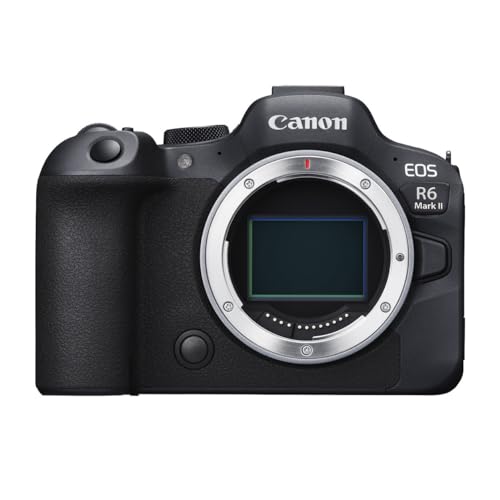
- Canon EOS R6 Mark II: check price on Amazon
- Canon EOS R6 Mark III: check price on Amazon
- Canon EOS R3: check current listings on Amazon
- Canon EOS R5: check current listings on Amazon
- Canon EOS R7: check current listings on Amazon
- Canon EOS 90D: check current listings on Amazon
Only two bodies in this guide carry purchase links, and the reason deserves stating once, clearly: Canon’s verified pool for this site currently confirms the two R6-series bodies, so every other Canon model — including the professional R3 — is discussed in prose without a link. That is a limitation of our verification, not a judgement on the cameras. Several prose-only picks below are, for particular sports, better tools than the linked pair, and the reviews say so where it is true.
Lenses decide action photography as much as bodies do. A fast body behind a slow-focusing kit zoom still misses, while a modest body behind a bright telephoto with quick motors produces keepers. Budget conversations in this guide therefore treat body and first action lens as one purchase, and the buying sections return to that pairing repeatedly. Canon shooters with existing EF glass should also know the RF mount accepts adapted EF lenses gracefully, which softens the upgrade for owners of the DSLR pick below.
Weather and abuse belong in the calculation too. Sideline photography happens in rain, dust and flying mud, and sealing quality separates bodies that shrug off a wet Saturday from bodies that spend it in a plastic bag. Every pick below is assessed partly on that sideline reality, because action shooters do not get to choose their weather — only their equipment’s tolerance for it.
“Action” is not one subject but a family of them, and they stress a camera in different directions. Field sports stress prediction, because players change direction without asking the autofocus for permission. Motorsport stresses panning discipline and shutter behaviour, because the subject moves fast but predictably, and the photographer’s technique becomes the limiting factor. Wildlife stresses reach and silence, because the subject is distant, shy and unimpressed by specifications. Dogs, children and amateur sport — the action most owners actually shoot — stress all three at once in miniature, under worse light than any of them. The ranking below weights that real mixture rather than a single professional discipline, while the reviews flag where a body is a specialist wearing an all-rounder’s clothes.
One more honesty belongs up front: technique outranks equipment in this genre more than in any other in this series. A mid-range body in practised hands — positioned well, anticipating play, panning smoothly — will out-shoot a flagship waved hopefully at the action. The bodies here were chosen to reward practice fastest, not to replace it.
Key Takeaways
- Canon’s EOS R6 Mark II pairs very fast burst shooting with subject-detecting autofocus that tracks eyes, animals and vehicles.
- The EOS R6 Mark III carries the R6 action formula into Canon’s newest generation for buyers wanting the longest runway.
- Canon’s EOS R3, covered in prose, remains the professional sideline body with eye-controlled focus and a stacked sensor.
- The EOS R5 trades a little burst depth for high resolution that suits action shooters who crop hard.
- Canon’s EOS R7 gives APS-C reach that wildlife and field-sports shooters feel as free telephoto length.
- The EOS 90D DSLR still serves EF-lens owners who shoot action on a careful budget.
In this guide
Quick Picks
| Camera | Badge | Why it is here |
|---|---|---|
| Canon EOS R6 Mark II | Best all-round action Canon | Fast bursts, deep subject detection and full-frame low light in one balanced body. |
| Canon EOS R6 Mark III | Newest R6 generation | The current evolution of the action-hybrid line for long-term owners. |
| Canon EOS R3 | Professional sideline tool | Stacked sensor speed and eye-control autofocus built for working sports photographers. |
| Canon EOS R5 | Best for heavy cropping | High resolution that lets distant action be reframed without falling apart. |
| Canon EOS R7 | Best reach per lens | APS-C crop multiplies telephoto length for birds, wildlife and field sports. |
| Canon EOS 90D | Best DSLR holdover | Optical viewfinder action shooting for EF-lens owners on a budget. |
How did we rank Canon bodies for moving subjects?
Autofocus prediction mattered more than any single specification. Raw burst speed is easy to advertise, but frames per second only count when the frames are in focus, so we weighted subject detection breadth — people, animals, vehicles — and the system’s willingness to stay on a chosen subject through partial occlusion, the moment a player passes behind another player.
Buffer behaviour came next. Action arrives in waves, and a body that fires brilliantly for two seconds then stalls for ten will miss the goal that follows the scramble. We favoured bodies whose real-world clearing, on sensible cards, lets a shooter work an entire passage of play rather than a single rehearsed instant.
Finally we weighed the unglamorous: viewfinder blackout, rolling shutter on fast pans, sealing, and how the body behaves with the telephoto lenses action shooters actually own. A camera is a system on a sideline, and the ranking reflects the system rather than the brochure.
Why does autofocus prediction matter more than burst speed?
Consider what focus must do during a sprint. The subject’s distance changes continuously and unevenly, the photographer’s pan adds its own motion, and the autofocus system earns its keep by predicting where the subject will be when the shutter fires — not where it was when focus was measured. Modern Canon subject detection layers recognition on top of that prediction: the camera identifies a head, an eye, a racing car or a dog, and allocates its tracking intelligence accordingly.
Burst speed then becomes the multiplier on good prediction. Forty frames of a well-tracked runner give an editor the exact stride, the exact expression, the frame where the ball meets the boot. Forty frames of drift give forty variations of almost. This is why the R6 bodies rank above faster-on-paper alternatives in real sidelines, and why the buying advice below keeps returning to tracking quality before headline numbers.
Pre-shooting features extend the same logic backwards in time. Bodies that record frames from before the shutter is fully pressed rescue the moments human reaction time cannot — the kingfisher’s dive, the starting pistol’s flinch. Shooters new to action work should treat that feature as a tutor: it reveals how late their instincts actually are, and training against it sharpens them.

Canon EOS R6 Mark II — Best all-round action Canon
Balance wins sidelines. The R6 Mark II fires electronic bursts at speeds that embarrass older professional bodies, yet the reason working shooters praise it is quieter: its autofocus detects people, animals and vehicles, finds eyes within those subjects, and holds them through the chaos of a real play. A 24.2-megapixel full-frame sensor keeps high-ISO images clean under floodlights, so the fast shutter speeds action demands remain available after the light goes — the combination that actually produces printable sports photographs.
In-body stabilisation helps in the specific way action shooters need: not for the subject, which freezes by shutter speed, but for the photographer’s own shake during long handheld waits with heavy telephotos. Pans smooth out, horizons steady, and the percentage of frames ruined by the human holding the camera drops noticeably across a long event.
Video capability rides along without diluting the stills mission, which matters for the growing number of sideline shooters asked to deliver both. The body seals against weather credibly, the dual card slots protect a paid assignment, and the whole package stays light enough for a full day carried on a monopod or a strap.
Reservations are honest ones. Resolution is the modest figure in the R-series line-up, so shooters who crop distant action aggressively will feel the R5’s advantage below. Electronic-shutter rolling distortion can bend the fastest pans and spinning balls at the extremes, manageable with technique but present. Neither point dethrones it as the balanced recommendation; both define the specialist cases where a sibling serves better.
Buy it as the default answer and most Canon action shooters can stop shopping. It tracks, it fires, it survives the weather and the dark, and it leaves budget — just — for the telephoto lens that completes it.
- Type: full-frame mirrorless, 24.2 megapixels
- Focus: subject detection for people, animals, vehicles
- Stabilisation: in-body, helps long handheld waits
- Cards: dual slots for assignment security
Strengths
- Tracking that holds eyes through real plays
- Clean high-ISO files under floodlights
- Fast bursts with a workable buffer
Trade-offs
- Resolution limits aggressive cropping
- Rolling shutter shows on extreme pans
- Needs a fast telephoto to fulfil its promise
Best for: sports, wildlife and event action across most levels. Not suited for: shooters whose style depends on cropping half the frame away.

Canon EOS R6 Mark III — Newest R6 generation
Generational steps in a mature line are refinements, and that is the honest frame for the R6 Mark III. It succeeds the Mark II as Canon’s current full-frame action hybrid, carrying the formula — subject-detecting autofocus, in-body stabilisation, rapid burst shooting and serious video — into newer processing and a body intended to anchor kits for years. Buyers should study the live listing for the precise specification deltas, since action shooters care about exactly the details (buffer depth, pre-shooting behaviour, video options) that summaries flatten.
Who gains most from choosing the newer body? Owners planning a long cycle. Sports and wildlife work punishes equipment across seasons, and starting at the line’s current head buys firmware support, accessory relevance and resale strength that a previous generation, however capable, begins spending from day one. Clubs and semi-professionals equipping for several seasons of fixtures rationally pay for that runway.
What does not change is the discipline the camera demands around it. The Mark III behind a slow kit zoom still misses like any body would; its tracking deserves fast glass, its buffer deserves fast cards, and its sealing deserves a shooter who wipes it down after the rainy match rather than sealing it damp into a bag. Systems reward care in proportion to their capability.
Against its predecessor the decision is arithmetic rather than awe. If the price gap is small relative to a multi-year ownership, the newer body is the calm choice; if the gap would consume the telephoto budget, the Mark II plus glass beats the Mark III plus compromise every Saturday of the season. This guide’s loyalty is to the photographs, not the release calendar.
As a pick it stands for currency within a trusted formula. Canon’s action story in the R6 line is proven; the Mark III is simply where that story currently continues.
- Type: full-frame mirrorless, newest R6 generation
- Focus: subject detection across action categories
- Stabilisation: in-body system
- Role: long-cycle body for sports and wildlife kits
Strengths
- Current generation of a proven action line
- Longest firmware and accessory runway
- Hybrid video strength for sideline deliverables
Trade-offs
- Check exact gains on the live listing
- Newest pricing resists discounts
- Still demands fast lenses and cards around it
Best for: equipping an action kit for several seasons ahead. Not suited for: buyers whose lens budget the premium would consume.
Canon EOS R3 — Professional sideline tool
Professionals measure cameras in missed frames per season, and the R3 was engineered to make that number embarrassing for rivals. Its stacked sensor reads out fast enough to keep electronic-shutter distortion minimal while firing rapid bursts, and its autofocus introduced eye control — the photographer looks at a subject in the viewfinder and the camera moves focus there. On a crowded pitch, that thought-speed selection is not a gimmick but a genuine competitive edge.
The integrated grip, deep weather sealing and control layout assume full working days in bad conditions with heavy professional telephotos attached. Files from its 24-megapixel sensor prioritise speed and high-ISO cleanliness over cropping room, a trade working sports photographers accept gladly because agencies want the moment, not the megapixels.
We present the R3 without a link because our verified pool does not currently include it. Semi-professionals should also weigh the honest economics: the R3’s advantages appear at the margins of professional work — the fastest pans, the worst weather, the tightest deadlines — while the R6 bodies cover most amateur and club action superbly for considerably less commitment.
Second-hand examples increasingly circulate as professionals rotate stock, and a well-kept R3 with a known history can be the finest action purchase in this entire guide for the right buyer. Inspection matters: shutter history, sealing condition and grip wear tell the story of its working life.
It closes the professional argument plainly. If your income or your club’s reputation rides on the frame where the boot meets the ball, this is Canon’s purpose-built answer, and its absence of a link here is our pool’s limitation, not its demerit.
- Type: full-frame professional mirrorless
- Sensor: stacked design for fast readout
- Focus: eye-controlled point selection
- Build: integrated grip, deep weather sealing
Strengths
- Fastest, calmest electronic shooting here
- Eye control speeds subject selection in crowds
- Built for full days of professional abuse
Trade-offs
- No verified listing in our pool, so no link here
- Resolution chosen for speed, not cropping
- Professional pricing, new or used
Best for: working sports photographers and serious sideline regulars. Not suited for: occasional action shooters paying for margins they will never use.
Canon EOS R5 — Best for heavy cropping
Distance is action photography’s tax, and the R5 pays it with resolution. Its 45-megapixel sensor records scenes with enough detail that a subject occupying a modest part of the frame can be cropped into a publishable image — the distant try, the far end of the pitch, the bird that would not come closer. For shooters whose sports keep them behind barriers and boundaries, that cropping insurance changes what a day’s shooting yields.
Speed remains respectable rather than class-leading. Burst rates and tracking serve most action competently, and the subject detection shares Canon’s modern intelligence, though the R6 bodies sustain their fastest work longer and the R3 outclasses it for pure pace. The R5’s proposition is different: slightly fewer frames, each carrying far more information.
Video ambition rides highest here among the prose picks, with high-resolution recording that production-minded shooters value, balanced against recording limits that action videographers should check against their event lengths. Stills-first buyers feel those limits least.
File size is the daily tax on all that resolution. Cards fill faster, buffers clear slower per frame, and editing storage grows teeth. Shooters should budget media and drives as part of the R5 decision rather than discovering them mid-season.
Choose it when your action is distant and your cropping is heavy — wildlife from hides, field sports from fixed positions, motorsport from spectator banks. Choose the R6 line when the action comes to you and pace matters more than pixels.
- Type: full-frame mirrorless, 45 megapixels
- Focus: modern Canon subject detection
- Video: high-resolution recording options
- Role: action at distance, cropped hard
Strengths
- Cropping headroom no other pick matches
- Strong tracking for most real action
- High-end video for hybrid assignments
Trade-offs
- No verified listing in our pool, so no link here
- Large files tax cards, buffers and storage
- Burst endurance trails the R6 bodies
Best for: distant action reframed in the edit. Not suited for: spray-and-pray shooters on small memory cards.
Canon EOS R7 — Best reach per lens
Physics gives APS-C shooters a gift: the crop. The R7’s smaller sensor uses the central portion of a lens’s image, so a telephoto behaves as though it were half again as long — and for birds, wildlife and field sports, that free reach is worth more than full-frame purity. Mount a sensible telephoto zoom and the R7 frames subjects that would demand far costlier glass on the bodies above.
Speed credentials are serious. Fast bursts, Canon’s subject detection tuned with animal recognition that bird photographers praise, and a compact body that hikes to the hide without complaint make it the enthusiast action bargain of the range. In-body stabilisation steadies the long effective focal lengths where shake multiplies.
Compromises trace to the sensor’s size. High-ISO performance under floodlights trails the full-frame picks, so evening sport is its hardest assignment, and the shallower depth-of-field look of full-frame telephotos is not available. Buffer depth at maximum speed also asks for shot discipline on the fastest sequences.
We cover it in prose, without a link, under the same pool rule as the R3 and R5. Buyers comparing it against the linked R6 bodies should decide by subject distance: if your action is usually too far away, the R7’s reach answers your real problem; if it is usually too dark, the full-frame bodies answer yours.
For wildlife beginners it may be the smartest first action body Canon makes — not despite the crop, but because of it, with the savings funding the telephoto that the whole enterprise depends on.
- Type: APS-C mirrorless with crop reach
- Focus: subject detection incl. animals
- Stabilisation: in-body, vital at long lengths
- Role: birds, wildlife and field sports value
Strengths
- Telephoto reach multiplied by the crop
- Fast, intelligent tracking for its class
- Light body for hides and hiking
Trade-offs
- No verified listing in our pool, so no link here
- Floodlit sport strains its high-ISO ceiling
- Buffer asks for discipline at top speed
Best for: wildlife and distant field sports on a sane budget. Not suited for: night matches under weak lights.
Canon EOS 90D — Best DSLR holdover
Some photographers still prefer looking through the lens itself. The 90D is Canon’s most capable APS-C DSLR argument for them: an optical viewfinder with no blackout or lag, a 32.5-megapixel sensor, respectable burst speed through the mirror mechanism, and compatibility with the enormous EF and EF-S lens libraries many shooters already own. For action work at school and club level it remains a legitimate, satisfying tool.
Its autofocus splits personality by how you shoot. Through the viewfinder it uses a capable but older phase-detection system that tracks well in good light; in live view it borrows mirrorless-style focusing that many owners find more precise for slower subjects. Action shooters should learn the viewfinder system’s habits — its coverage is narrower than any mirrorless pick here — and play to its strengths on predictable movement.
Economics are its closing argument. Used bodies and the vast EF-S lens market let an EF-owning family build an action kit for a fraction of mirrorless money, and battery life through an optical finder dwarfs every mirrorless rival — a full tournament on a charge is ordinary. Durability is proven by a decade of school bags and sidelines.
Ceiling honesty: subject detection lacks the animal and vehicle intelligence of the R bodies, video is a secondary citizen, and Canon’s development energy lives in the RF mount now. The 90D is a holdover, proudly — the right purchase when the lenses in the cupboard outvalue the features on the brochure.
It earns the final slot as the guide’s respect for installed bases. Not every action shooter should switch systems to chase tracking; some should buy the best body their existing glass deserves, and for EF owners this is it.
- Type: APS-C DSLR, optical viewfinder
- Sensor: 32.5 megapixels
- Lenses: EF and EF-S libraries, used market depth
- Battery: endurance mirrorless cannot match
Strengths
- Optical finder with zero lag or blackout
- Huge, affordable used lens ecosystem
- Tournament-length battery life
Trade-offs
- No verified listing in our pool, so no link here
- No animal or vehicle subject detection
- RF mount is where Canon develops now
Best for: EF-lens owners shooting club action economically. Not suited for: buyers starting fresh — mirrorless serves them better.
How do electronic and mechanical shutters change action work?
Every body in this guide offers two ways to expose a frame, and action shooters feel the difference in their keepers. The mechanical shutter reads the scene in a way that keeps fast pans and spinning balls geometrically honest, at the cost of noise, vibration and a lower top burst rate. The electronic shutter is silent and blisteringly fast, but it reads the sensor line by line, so a racing subject or a panned background can lean, bend or warp — the rolling-shutter effect the R3’s stacked sensor was engineered to minimise and the other bodies manage with varying grace.
Practical sidelines develop hybrid habits. Wildlife shooters live on the electronic shutter because silence is a fieldcraft tool and birds rarely move fast enough across the frame to bend. Motorsport shooters pan at deliberate shutter speeds where the effect hides inside intentional blur. Indoor sports under flickering lights sometimes force the mechanical shutter, because electronic reading can band under artificial light frequencies. There is no correct setting, only a correct reading of the venue in front of you.
Beginners should run one experiment early: photograph a spinning bicycle wheel or a ceiling fan with both shutters at their fastest, and look at what each does to straight spokes. Ten minutes of that teaches more about this section than any specification table, and it calibrates the trust each mode deserves for the sports you actually shoot.
What does sideline weather really do to a camera kit?
Rain is the obvious assailant and the least subtle: it finds the gaps between lens and body, fogs viewfinders, and turns dials slippery exactly when gloves make them clumsy. Sealing quality across this guide’s bodies is genuinely tiered — the R3 shrugs, the R6 pair cope well, the R7 and 90D ask for covers and care — and a rain sleeve costs so little that owning one should precede any debate about which tier you bought.
Cold is the quieter tax. Batteries surrender charge early, screens sluggish, and a photographer’s own fingers become the least reliable component on the sideline. Dust does the opposite season’s work, infiltrating zooms that pump air as they extend and settling on sensors during hurried lens changes in car parks. Action kits survive these things by ritual — caps on, changes sheltered, gear dried before it is bagged — more than by specification.
Heat completes the set at summer tournaments, where black bodies bake on sunlit sidelines and video-capable hybrids approach their thermal limits during long ceremonies. None of this is a reason to choose a different pick from this list; it is the operating manual the list assumes, and the shooters who internalise it stop blaming their cameras for the weather’s behaviour.
How do the six compare when the whistle blows?
| Camera | Action role | Signature strength | Watch out for |
|---|---|---|---|
| Canon EOS R6 Mark II | All-round action | Tracking, bursts, floodlight files | Cropping headroom modest |
| Canon EOS R6 Mark III | Newest action hybrid | Current generation, long runway | Premium over its predecessor |
| Canon EOS R3 | Professional sideline | Stacked speed, eye control | Professional price, no link here |
| Canon EOS R5 | Distant action | 45MP cropping insurance | File size and buffer taxes |
| Canon EOS R7 | Reach value | Crop multiplies telephotos | High-ISO ceiling at night |
| Canon EOS 90D | DSLR holdover | EF lenses and battery life | Older tracking intelligence |
Which lens should an action shooter buy first?
Reach with focusing speed, in that order of honesty: a mid-range telephoto zoom whose autofocus motors are known to be quick, because a slightly shorter lens that focuses fast outperforms a longer one that hunts. Sports under lights adds a third demand — a wide maximum aperture — which is where budgets begin to argue. Buyers should test the intended pairing on their actual subject where possible; a borrowed afternoon at a match teaches more than a month of reviews.
Adapted EF telephotos deserve mention for switchers. Canon’s adapter keeps native EF glass working on RF bodies with performance owners generally praise, so an existing long lens can fund a body-first upgrade path. Verify the specific lens’s reputation on mirrorless bodies before assuming, since a few elderly designs focus less happily adapted.
How should a beginner set up a Canon body for a first match?
Start with the tracking case the manual recommends for your sport, servo autofocus throughout, and a shutter speed that freezes your subject — then raise ISO without fear, because a sharp noisy frame beats a clean blurred one in every editor’s bin. Shoot short bursts rather than continuous panic, review focus at the first break, and adjust one variable at a time. By the third match the settings will be habits, and the habits are the skill.
How should cards and batteries be managed across a tournament day?
Action shooting consumes the two consumables at rates stills photographers find indecent. A morning of bursts can fill cards that would last a portrait shooter a month, and the discipline that saves the afternoon is boring: format cards in the camera at the day’s start, never mid-day; shoot to the faster slot; swap at natural breaks rather than at the buffer’s demand; and treat a full card as a developed film — pocketed, never reinserted “just to check”. Dual-slot bodies earn their premium precisely here, writing insurance copies while the action refuses to pause for admin.
Batteries follow a parallel liturgy. Mirrorless action bodies drink steadily through viewfinders that never sleep, so the working rule is a battery per half of the day, rotated without sentimentality, with the grip or the spares pouch treated as part of the camera rather than an accessory. The 90D’s optical-finder frugality looks almost unfair in this company — one of the genuine remaining arguments for its design.
Files deserve an end-of-day ritual too, because tournament photographs are perishable goods: selections wanted by clubs, parents and local papers while the day is still news. Shooters who tag keepers in-camera during quiet passages edit in minutes later; shooters who face three thousand unmarked frames at midnight learn, once, why the professionals tag.
Which sports flatter which body in this list?
Football, rugby and hockey — team sports of feints and collisions — flatter the R6 bodies and the R3, whose subject detection was raised on human movement and whose buffers survive a passage of play. The difference between the R6 pair and the R3 shows in the worst weather and the fastest counterattacks; club shooters will rarely invoice the difference, professionals will invoice it weekly.
Motorsport flatters technique over detection, which levels this list interestingly: the R5’s resolution rewards the practised pan with frames that crop into posters, the R7’s reach serves spectator-bank shooting where fences and distance rule, and even the 90D, in practised hands with a long EF lens, produces saleable paddock work. Racket sports and athletics sit between the poles — predictable bursts of extreme speed where pre-shooting features and fast shutters earn their keep.
Birds and wildlife flatter the R7 first and the R5 second, for reach and cropping respectively, with the R3 as the professional’s no-compromise answer. Dogs at a park — the nation’s actual action subject — flatter whichever body is already in your hands with animal detection switched on, which in this list means any of the mirrorless five.
What mistakes cost action shooters the most frames?
Single-point focus on erratic subjects leads the casualty list, followed closely by shutter speeds chosen for the light rather than the motion. Third comes chimping through the decisive passage — eyes on the screen while the goal happens. Fourth is filling the buffer on the build-up and sitting locked out for the finish. Every one of these is a habit failure, not an equipment failure, which is good news: habits are free to fix.
How does positioning beat equipment on a sideline?
Ask a professional sports photographer for their real secret and they will talk about backgrounds and angles, not bodies. Shooting along the play rather than across it compresses the action and fills the frame; choosing the end where the light falls on faces rather than backs doubles the keeper rate before a setting is touched; standing where the celebration will run — toward the scorer’s favourite corner, the team’s bench, the family’s section — is anticipation made physical. Every body in this guide rewards that craft proportionally, and none substitutes for it.
Beginners misread this hierarchy constantly, because equipment is purchasable and positioning must be learned in the rain. The encouraging truth is that positioning is learnable in a single season: arrive early, watch where the regulars stand, notice which end each team attacks in which half, and keep a notebook of what the venue taught you. By the return fixture, the same camera produces a different photographer’s work.
Access deserves its footnote. School and club sport usually welcomes a keen photographer; higher levels credential strictly, and no camera in this guide — not even the R3 — opens a gate that a pass does not. Build the portfolio at the levels that welcome you, and let the equipment grow at the speed the access does.
What does video add to an action photographer’s brief?
Clubs, sponsors and athletes increasingly ask the sideline photographer for moving pictures too: the warm-up reel, the goal in vertical for the evening post, the interview in the corridor. Canon’s hybrid strength across this list — most developed in the R6 pair and R5 — means the stills body doubles as the video body, with stabilisation steadying handheld clips and subject tracking following a player through a drill. Photographers who once carried a second device for video now carry a second lens instead.
The compromise is attention, and it should be managed honestly. Video and stills of the same passage compete for the same eyes, and most sideline workers choose per passage rather than per match: stills for the decisive minutes, video for the colour around them. Bodies that switch modes quickly and remember separate settings — a practical strength of the modern R bodies — make that alternation survivable.
For the amateur, the calculus is kinder: a child’s match filmed and photographed by the same parent, from the same spot, with the same camera, is a family archive of a richness previous generations needed a crew to produce. That, as much as any professional argument, is what the hybrid era bought.
How should an action shooter practise between matches?
Deliberately, and on subjects that forgive. Dogs at a park offer erratic acceleration and joyful unpredictability in unlimited supply; traffic at a junction teaches panning at graduated speeds; birds at a feeder rehearse the exact prediction skills wildlife demands, at kitchen-window convenience. Fifteen focused minutes on any of these, reviewed critically the same evening, builds more sideline skill than a month of matches shot on hope.
Review is the practice’s engine. Sort the session’s frames by focus accuracy rather than by affection, and count — the percentage is the score, and watching it climb across a season is the most motivating graph in photography. When the percentage stalls, the fault is diagnosable: prediction, shutter speed, or position, in that order of likelihood, and each has a drill.
The bodies in this guide differ in how honestly they report that practice. Fast, accurate tracking makes success feel easy and can mask lazy positioning; the 90D’s older system, by demanding more, sometimes teaches faster. There is no paradox there — only a reminder that the camera is the tutor as well as the tool, and different students need different tutors.
How do night and indoor sports change the ranking?
Floodlights reorder this list more honestly than any laboratory could. Under weak evening light, the full-frame bodies pull away: their sensors sustain the fast shutter speeds action demands at sensitivities where the APS-C picks begin to smear detail into noise, and the R6 pair’s clean high-ISO files are the practical reason so many club photographers end up there regardless of their daytime preferences. The R5 crops less happily at those settings but starts with resolution to spare; the R3 was built for exactly these evenings.
Indoor sport adds flicker to darkness. Arena and school-hall lighting pulses at frequencies that interact with electronic shutters and exposure, producing banding that ruins sequences invisibly until review. Experienced indoor shooters test both shutter types during warm-ups, choose frame rates with the venue’s lighting in mind, and treat the first quarter as calibration. The bodies here all offer the tools; the ranking indoors rewards the ones whose high-ISO files forgive the settings the flicker imposes.
Daylight specialists reading this should apply the discount in reverse: in honest sun, the R7’s reach and the 90D’s value close most of the gap the floodlights open, and a summer wildlife shooter who buys for January’s stadium has optimised for the wrong season.
What should an action shooter upgrade first: body, lens or technique?
Technique, because it is free and because its absence caps the other two. A season of deliberate positioning and prediction practice will lift a keeper rate further than any purchase in this guide — a fact professionals state cheerfully because their own rates rest on it. The shooter who has done that season and still loses frames to focus drift or buffer stalls has earned the right to blame equipment, and their notebook will say exactly which specification to buy.
Lens before body, for almost everyone else. Focus speed, reach and aperture live in the glass, and a faster telephoto on a mid-range body out-shoots a flagship behind a slow zoom in the majority of real action scenarios. The exception is the shooter whose body lacks subject detection entirely — for them the modern R bodies are not an upgrade but a category change, and body-first is defensible.
Body last, then, unless the body is the named bottleneck — and when it is, this list’s order applies: R6 Mark II for the balanced leap, Mark III for the long runway, R3 for the professional margin, R5 for the cropping style, R7 for the reach problem, 90D for the EF inheritance. Upgrades sequenced by evidence rarely disappoint; upgrades sequenced by launch calendars often do.
How do action shooters protect a paid or precious assignment?
Redundancy is the professional’s religion, practised at three levels. Files exist twice from the moment of capture wherever the body allows dual recording — a discipline the R6 pair, R5 and R3 all support and the single-slot picks must simulate with mid-event card swaps and immediate copies. Bodies exist twice at any assignment that cannot be restaged, even if the second is an older generation riding in the bag as insurance. And the shooter’s own knowledge exists twice: settings rehearsed on the backup body too, because a borrowed camera with unfamiliar menus is a third problem arriving during the first two.
Amateurs shooting the unrepeatable — a child’s final school final, a once-a-decade family reunion match — should borrow the religion at their scale: fresh cards, charged spares, a second pair of eyes with a phone for the moments the main camera misses. The bodies in this guide fail rarely; assignments fail at the seams around them, and seams are cheap to reinforce in advance.
What is the honest role of luck in action photography?
Larger than anyone’s portfolio admits. The decisive frame usually contains an element nobody directed — the exact expression, the ball’s position against the floodlight, the opponent’s despair timed to the stride — and the camera’s contribution is to be ready, focused and firing when luck clocks in. Burst depth, tracking tenacity and pre-shooting features, the technologies this guide ranks, are best understood as luck-multipliers: they widen the window in which fortune can be caught rather than replacing it.
That framing should console beginners comparing their contact sheets with professionals’. The professional’s advantage is partly a larger window and mostly a larger number of windows — more matches, more passages, more rolls of the dice, sorted more ruthlessly. Shoot more action, keep the camera ready longer, delete more honestly, and the luck statistics of the two portfolios converge faster than the equipment gap ever closes.
How should an action kit be packed for a day that changes?
Weather turns, fixtures move, the second match starts under lights the first one never met — an action day is a logistics exercise wearing a photographer’s coat. The working kit answers with layers: the body and its primary telephoto assembled and ready, the wider lens for the celebrations and the team photo, cards and batteries in the same pockets every single time so hands find them without eyes. Photographers who pack identically for every assignment move faster at the moment the day changes, because their bag has habits even when the venue does not.
Weight is the tax on preparedness, and each body in this guide levies it differently. The R7 and 90D kits hike to distant grounds kindly; the R3 with professional glass announces itself to shoulders by half-time. Monopods, harnesses and the discipline to leave the third lens in the car are the countermeasures, and they belong in a buying decision more honestly than a laboratory weight in grams — because the action photographer carries their purchase for six hours at a stretch, in the rain, uphill, at the exact moment the winning goal goes in at the far end.
Pack the night before, charge everything that accepts charge, and format nothing in the morning rush. The day’s first decisive moment rarely waits for a photographer still assembling their intentions at the gate.
How do action shooters review a match honestly afterward?
The contact sheet is a confession, and professionals read theirs without anaesthetic. Sort by the failures first: the frames a half-step late, the sequences where focus chose the wrong player, the passages shot from a position the play had already abandoned. Each failure class has a population, and the largest population names the next drill — prediction, position or settings, in the order this guide has repeated because the evidence keeps repeating it.
Keepers deserve the same forensic treatment in reverse. The frames that worked usually share a geometry — the angle along the play, the background that separated the subject, the moment anticipated rather than chased — and naming that geometry turns a good day into a repeatable method. Photographers who skip this review improve at the speed of accident; photographers who keep it improve at the speed of intention, and the bodies in this guide, which report their settings faithfully in every file, make the review a matter of reading rather than remembering.
Archive the review itself. A line per match in the shooter’s notebook — venue, light, what the camera did well, what the human did not — compounds across a season into the most personal buying guide ever written: the one that will eventually specify, with total authority, whether the next purchase should be a body, a lens or a train ticket to a better vantage point.
One last calibration for the notebook: revisit it when the season turns, because action photography’s lessons expire with the light. The settings that froze a June evening’s play will lie about a November afternoon’s, the position that owned the summer pitch may face the wrong end all winter, and the camera — whichever of these six it is — will faithfully record the difference between a photographer who updated their notes and one who framed last season’s. Readiness, in this genre, is a subscription renewed monthly, and the bodies here merely make the renewal pleasant.
Bring the same honesty to the season’s end-of-year purchase, when discounts tempt every sideline in the country simultaneously. A body bought because its price fell, rather than because a notebook named its specification, joins the kit as a stranger; a body bought against evidence arrives as an answer. The six above will all be somebody’s bargain this year — let the notebook, not the banner, decide whether one of them is yours.
Final Recommendation
Most Canon action shooters should buy the EOS R6 Mark II and spend the savings on fast telephoto glass; those equipping for many seasons should weigh the R6 Mark III’s longer runway. Professionals will gravitate to the R3 regardless of links, distant-action shooters to the R5’s cropping room, wildlife beginners to the R7’s reach, and EF loyalists to a good 90D. The through-line is tracking: pick the body whose autofocus you trust with your sport’s decisive half-second, and the rest of the specification sheet becomes commentary.
Related guides
- Best Digital Cameras for Stop Action Shots: Shutter Speed, Flash Duration and Zone Focus
- Best Digital Cameras for Action Shots: Burst, Tracking and Shutter Speed
Frequently Asked Questions
Is the R6 Mark II fast enough for professional sport?
For most assignments, yes — its tracking and burst performance cover professional club and regional work comfortably. The R3’s advantages appear at the extremes: the fastest subjects, the worst weather, the tightest filing deadlines. Many working shooters own the R6 class as a second body even when an R3 leads.
Does APS-C really help for wildlife action?
Genuinely. The R7’s crop makes a given telephoto frame tighter without a heavier lens, and its animal detection was designed with bird photographers in mind. The trade is high-ISO cleanliness, so dawn and dusk specialists should weigh full-frame bodies against the reach saving.
Can I use my EF lenses on the R bodies for sport?
With Canon’s mount adapter, generally yes and often very well. Autofocus speed on most EF lenses remains strong; a minority of older designs feel less eager. Test your specific long lens adapted before a paid assignment, and keep the DSLR body as backup until the pairing has proved itself.
What shutter speed freezes most action?
Field sports usually need around 1/1000s or faster, motorsport pans deliberately use far slower speeds for background blur, and indoor sports are a negotiation between the light available and the fastest speed your ISO tolerance allows. The right answer is subject-specific; the wrong answer is leaving the camera on automatic and hoping.
Why do my bursts slow down mid-match?
Buffer filling, almost always — worsened by slower cards, larger files and continuous shooting through quiet passages. Faster cards, shorter bursts and clearing discipline between plays fix most cases. The R5’s big files fill buffers quickest; the R6 bodies are the marathon runners here.
Related Guides
Canon shooters building out a kit will find the glass discussion in the best aftermarket lenses for canon cameras guide, while the R6 bodies’ video talents are examined in the best canon cameras for beginners video roundup. For the historical end of Canon video, the best cannon cameras for video 2007 article covers the tape-era ancestors of these mirrorless bodies.


