reviewstook.com is reader-supported. When you buy through links on our site, we may earn an affiliate commission.
Where to buy
Eight hundred dollars is where camera buying stops being about permission and starts being about judgement. Below this line, every compromise is visible; at the line itself, the best cameras under 800 dollars include machines with one-inch sensors, mechanical gimbals, professional stabilisation and weather sealing that would have embarrassed flagship equipment a few product generations ago. The task is no longer finding a good camera. The task is refusing the wrong good camera — the excellent device built for somebody else’s filming life.
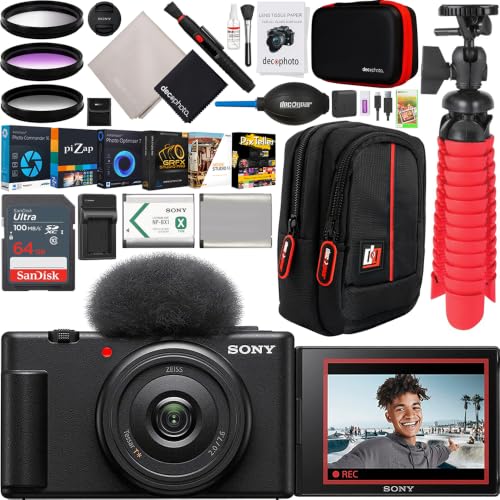
- Sony ZV-1F: check price on Amazon
- DJI Osmo Pocket 3: check price on Amazon
- GoPro HERO13 Black: check price on Amazon
- DJI Osmo Action 5 Pro: check price on Amazon
- Insta360 X4: check price on Amazon
- OM SYSTEM Tough TG-7: check price on Amazon
Look at the shape of the list before the details. No interchangeable-lens body appears, and that is a considered verdict rather than an oversight: at eight hundred, a mirrorless body plus a worthy lens plus a card consumes the budget and leaves the system half-built, while each camera below is complete on arrival. Buyers whose hearts are set on lens swapping should read this guide as a map of the finest alternatives — and as a warning about what a system really costs — before committing.
What unites the six is maturity. None is a first attempt at its category; each is a refined generation of a proven design, with the early faults engineered out and the accessories, tutorials and community knowledge fully grown around it. Eight hundred dollars spent on maturity buys reliability that specification sheets cannot express: the mount that exists, the firmware that behaves, the answer that a forum already holds.
Sensor ambition is the budget’s headline dividend. The one-inch sensors in the Sony and the DJI gimbal camera change what evenings look like — restaurants, city streets, family rooms lit by lamps rather than rigs — and that change, more than any resolution figure, is what owners of cheaper cameras actually envy. Readers upgrading from phones or entry action cameras will feel the step most after sunset.
Treat the ceiling as a whole-kit ceiling throughout. Several picks leave generous change for the microphone, mount or case their genre rewards, and the reviews keep accounts accordingly. A camera that consumes all eight hundred must defeat rivals that arrive with their ecosystems funded, which is a harder contest than the headline figures suggest.
Key Takeaways
- At eight hundred, one-inch sensors and a mechanical gimbal enter the conversation for complete cameras.
- Sony’s ZV-1F is the talking-to-camera specialist, with a wide lens and eye focus built for creators.
- DJI’s Osmo Pocket 3 pairs that sensor class with a real gimbal for motion no software can imitate.
- GoPro’s HERO13 Black remains the toughest, most mountable camera in this price territory.
- DJI’s Osmo Action 5 Pro owns dusk and rain among the action picks.
- Insta360’s X4 and OM’s Tough TG-7 cover the two extremes: filming everything at once, and surviving anything.
In this guide
Quick Picks
| Camera | Badge | Why it is here |
|---|---|---|
| Sony ZV-1F | Best for talking to camera | One-inch sensor, wide lens and creator colour for faces at arm’s length. |
| DJI Osmo Pocket 3 | Best moving camera | A three-axis gimbal and large sensor in a coat-pocket body. |
| GoPro HERO13 Black | Best action flagship | 5.3K video, elite stabilisation and the deepest mount ecosystem anywhere. |
| DJI Osmo Action 5 Pro | Best for low light action | A large sensor for its class and stamina for long, wet days. |
| Insta360 X4 | Best 360 camera | Records every direction, then lets the edit choose the shot. |
| OM SYSTEM Tough TG-7 | Best indestructible camera | Waterproof, freezeproof and crush-resistant, with macro talents besides. |
How were these six chosen from everything under eight hundred?
Verification gated entry, as it does across this series: only models confirmed against manufacturer listings in our pool could be linked, which quietly removed a crowd of plausible-sounding alternatives whose listings could not be trusted to match their names. What survived that gate was then judged as complete purchases — camera, media and the means to charge it — against the full eight-hundred ceiling.
Category leadership was the next filter. At this budget a camera should be a defensible answer to the question “what is the best of its kind that this money buys?” — the best talking compact, the best gimbal camera, the best action flagship, and so on. Second-best versions of a category were cut even when excellent, because eight hundred dollars entitles a buyer to the leader or to a clear reason why not.
Evening performance broke ties. Cameras live much of their lives in lamplight, restaurant glow and winter afternoons, so sensor size and honest low-light behaviour weighed more heavily than midday specifications. That weighting explains the list’s tilt toward larger sensors and away from resolution heroes whose numbers collapse after dark.
Readers comparing this list with cheaper roundups on this site will notice the same names graduating upward — the action leaders and the little gimbal camera appear wherever their prices allow — and that consistency is deliberate. A camera does not become a different product because the budget around it changed; what changes is the company it keeps and the accessories the ceiling can fund. Guides that reshuffle their recommendations to fill each price page are writing fiction; this one keeps its judgements and lets the budgets move.
Longevity of the surrounding ecosystem closed the selection. Mounts, cases, filters, spare batteries and a living second-hand market all extend a camera’s useful years, and at eight hundred those years are the real purchase. Every pick below can still be accessorised, repaired and resold through channels that will exist when a cheaper marvel’s have evaporated.

Sony ZV-1F — Best for talking to camera
Sony built the ZV line by watching creators instead of consulting tradition, and the ZV-1F is the purest result: a one-inch sensor behind a wide fixed lens, tuned from the factory for a face at arm’s length. The width matters more than newcomers expect. It holds the speaker, their hands and a slice of the room behind them in one frame, which is the visual grammar of modern video — context included, nothing cropped to a floating head.
Colour science is the quiet reason these cameras conquered their niche. Skin emerges from the ZV-1F looking like skin under the mixed lighting of real rooms — window daylight from one side, warm lamps from the other — where lesser cameras reach for a waxy correction that viewers read as cheapness without knowing why. Creators who film themselves daily stake their credibility on that rendering, and the Sony earns the stake.
Eye autofocus removes the last technical anxiety from solo filming. Sit, stand, lean toward the lens for emphasis, glance at notes, hold a product up to the camera — the focus follows the eye or the object with a confidence that lets the speaker think about sentences instead of sharpness. The product-showcase behaviour, which shifts focus to a held item and back, sounds like a gimmick until a reviewer uses it once and refuses to film without it again.
Audio follows a sensible hierarchy. The built-in microphones, with their directional capsule arrangement and supplied windscreen, handle a quiet room respectably; the microphone input and Sony’s wireless options handle everything louder. Budget the upgrade path rather than demanding perfection from the body: at this level, the camera’s job is a clean image and a clean input, and the ZV-1F provides both.
Stabilisation is the honest weakness, electronic and sized for walking rather than running. Handheld vlogging at a stroll looks fine; anything athletic belongs to the gimbal or action picks below. Buyers should classify themselves truthfully here, because the ZV-1F’s entire design assumes a presenter, not a pursuit — and rewards that presenter with the finest self-filmed image in this guide.
The flip screen completes the solo workflow. Framing, exposure and recording state are all confirmable from in front of the lens, so a one-person production needs no monitor, no phone app and no second take born of uncertainty. Channels are built on the accumulation of such small certainties, and few cameras at any price accumulate them as deliberately as this one.
Within the eight-hundred ceiling it sits comfortably, leaving room for the microphone and small tripod that complete a creator’s desk. Buy it as the front-of-camera instrument of a talking channel and it will not be the thing that limits the channel’s growth; the script will have to take that blame, as it should.
- Type: creator compact, one-inch sensor
- Lens: wide fixed lens for arm’s-length framing
- Focus: eye autofocus with product showcase mode
- Screen: fully articulating for self-framing
Strengths
- Finest self-filmed face in this guide
- Focus behaviour built for solo creators
- Kind colour under mixed room light
Trade-offs
- Stabilisation sized for walking pace
- Fixed lens ends the framing choices
- Serious audio needs an added microphone
Best for: presenters, reviewers and vloggers who film themselves talking. Not suited for: action filming or interchangeable-lens ambitions.
Desk setups reveal a second career for this camera. Mounted on a small tripod beside a monitor, the ZV-1F becomes a meeting and streaming camera of a quality no webcam in this series matches, with depth and colour that make a home office look like a studio corner. Creators who present live as well as recorded get two instruments from the one purchase, which strengthens its claim on the budget considerably.
Beginners should hear one reassurance plainly: the automatic modes are not a compromise to apologise for. Sony tuned this camera’s automation around faces and products specifically, so a new creator can film publishable material on day one and grow into manual control at the pace their curiosity sets, rather than the pace their confusion demands.

DJI Osmo Pocket 3 — Best moving camera
Hold the Pocket 3 and the category confusion starts immediately: it is too small to be a serious camera and too capable to be a toy. The resolution of that confusion is the three-axis gimbal in its head, mechanically isolating a one-inch sensor so effectively that walking footage glides like a dolly shot. Electronic stabilisation, however refined, corrects a shaken image after the fact; the gimbal prevents the shake from becoming image at all, and the difference survives every attempt to describe it — you have to watch the two kinds of footage side by side.
Movement is therefore this camera’s native language. City walks, market tours, property walkthroughs, travel days, a child led by the hand through a zoo — subjects that punish handheld cameras become the Pocket’s showreel. Subject tracking keeps a face or figure centred while the operator simply walks, which converts one person into a two-person crew: presenter and camera operator in a single body.
The sensor earns the evenings. A one-inch sensor behind that gimbal holds faces together under streetlights and restaurant pendants where action cameras smear, so a travel day can be filmed whole — dawn departure to night market — on one device without the footage changing character at dusk. Few single cameras in this guide can honestly claim a whole day; this one can.
Sound integrates with DJI’s wireless microphone ecosystem with unusual grace, the transmitter pairing directly and the voice arriving at constant level while the camera moves. Walking interviews and guided tours, formats that defeat camera-mounted microphones, become routine. The little rotating screen handles framing and menu work, and the whole instrument returns to a coat pocket between scenes, which is why its owners film more: the camera is present at moments a larger rig would have missed by being elsewhere.
Delicacy is the tax. A gimbal head is a precision mechanism, not a bumper; it wants a case, a moment of care at each setup, and mounts that hold its base while leaving the head free to travel. Owners who treat it like an action camera will break it like one. Owners who treat it like the instrument it is get years of impossibly smooth footage from a device smaller than their phone.
Battery planning mirrors the care theme. The internal battery covers a filming session rather than a festival, and the honest workflows are a power bank in the bag or the charging handle accessories the ecosystem offers. Neither is burdensome, but both must be planned before the walking tour rather than discovered during it.
Judged against the eight-hundred line, the Pocket 3 is the pick that most changes what a solo creator can attempt. It does not merely improve existing footage; it adds the moving shot — long the preserve of crews and rails — to the one-person repertoire, and entire channel formats have been founded on that addition.
- Type: gimbal camera, one-inch sensor
- Stabilisation: three-axis mechanical gimbal
- Tracking: automatic subject following
- Audio: direct wireless microphone pairing
Strengths
- Movement footage no rival here can match
- Evening image from a genuinely large sensor
- Pocketable between scenes, always present
Trade-offs
- Gimbal head demands careful handling
- Session-length battery, plan the top-ups
- Mounts must respect the gimbal’s travel
Best for: walking tours, travel days and solo moving pieces. Not suited for: being thrown into a kit bag unprotected.
Real-estate and venue work deserves a mention, because the Pocket has quietly become the walkthrough camera of small agencies and rental hosts. One smooth pass through a property, tracked and level, replaces a gallery of distorted phone photographs, and the same logic serves gyms, galleries, cafés and classrooms — any space whose truth is in its movement rather than its corners.
Vertical filming for short platforms is handled by rotating the screen and reframing, and the camera’s smallness makes it the rare device equally welcome on a wedding table, a market stall and a mountain path in the same week. Versatility measured in invitations — the places a camera is allowed to be — may be this pick’s most underrated statistic.

GoPro HERO13 Black — Best action flagship
The flagship of the action world arrives with a different burden from its rivals: it must justify being the default. The HERO13 Black does it the way defaults always do, by removing reasons to choose anything else — 5.3K video for cropping freedom, stabilisation refined across more crashes, jumps and wipeouts than any competitor can claim, waterproofing as a birthright, and a mount ecosystem so complete that the question is never whether a position is possible, only which of four brackets suits it.
Resolution here is a tool rather than a trophy. Filming wider and higher than the delivery format lets an editor reframe a descent, straighten a horizon or punch into a moment without the image falling apart, and action footage — captured once, at speed, without retakes — benefits from that insurance more than any other genre. The HERO13’s owners crop confidently because the pixels hold.
Interchangeable lens options widen the creative range beyond the fixed ultra-wide look the category is known for, letting the same body shoot a calmer, more natural perspective for talking segments or an anamorphic flavour for cinematic pieces. A flagship that can change its optical personality ages more slowly than one locked to a single expression, and at this budget ageing slowly is a financial virtue.
Endurance and heat management are the mature parts of the design, visible in the unglamorous statistics of finished recordings. Long rides, long dives and long timelapses complete because the battery system and thermal behaviour were engineered for the whole session rather than the demo. Creators planning expedition-style days should still carry spares — physics remains physics — but the baseline reliability here is the class benchmark.
The image character stays unmistakably GoPro: vivid, wide, deep in focus, energetic. Filmmakers building a calm, cinematic brand may prefer DJI’s quieter rendering in the pick below, while those building an adventure brand will find this character is precisely the brand. Neither is wrong; the guide’s job is to make the choice conscious.
Accessories complete the flagship argument. Batteries, chargers, media mods, lights, mounts for vehicles, boards, helmets and animals — the catalogue is an industry, and second-hand availability keeps it affordable. A HERO13 bought this year can be re-roled for years: hero camera today, second angle when its successor arrives, the brave camera on the risky mount forever after.
Against the ceiling, it is the complete action purchase: the camera serious action filmmakers recommend to each other without caveats, priced where a considered buyer expects a flagship to sit, and leaving just enough room in eight hundred for the card and the mount the first project demands.
- Type: flagship waterproof action camera
- Video: 5.3K with reframing headroom
- Lenses: interchangeable options beyond ultra-wide
- Ecosystem: the deepest in action filming
Strengths
- Reframing freedom from genuine resolution
- Stabilisation proven in the harshest sports
- Every mount and accessory imaginable exists
Trade-offs
- Vivid look will not suit cinematic brands
- Long expedition days still need spares
- Flagship price consumes most of the budget
Best for: serious action and adventure filmmakers. Not suited for: quiet, cinematic talking-head channels.
Timelapse and slow-motion modes extend the flagship beyond its sports brief. Construction progress, tide cycles, crowd flows and weather fronts all compress beautifully through the HERO13’s patience, while high frame rates turn a dive, a swing or a splash into examinable grace. Creators whose channels mix action with observation will find these modes moving from garnish to staple within a season.
GPS and telemetry overlays serve the data-minded sports: speed, altitude, g-force and route drawn onto the footage itself. Cyclists, skiers and sailors analysing performance as much as reliving it get an instrument as well as a camera, and coaching content built on those overlays has become a genre the flagship owns outright.

DJI Osmo Action 5 Pro — Best for low light action
Action cameras historically clocked off at sunset, their small sensors surrendering the golden hour to noise. The Action 5 Pro was designed against that surrender, with a larger sensor for the class that keeps dusk rides, dawn starts and floodlit evenings usable. For outdoor filmmakers, whose best light is so often the day’s last hour, that single engineering priority reorganises the shooting calendar: sessions extend, night segments become planned content rather than accidents, and footage cuts together across the whole day.
Stabilisation carries DJI’s house maturity, the product of a company that steadies cameras for a living across drones and gimbals. Trail vibration, road buzz and handheld running all emerge composed, with a naturalness that keeps the energy of the scene without transmitting its violence. Editors who grade footage tend to prefer this rendering — calmer colours, gentler contrast — as the better starting point for a considered look.
Endurance is the second headline. Long battery sessions suit the way action days actually unfold: a camera mounted at dawn, consulted at intervals, still alive for the descent home. Paired with fast charging, the rhythm of a filming weekend bends around the light instead of around the charger, and expedition-minded buyers should weigh that stamina as heavily as any resolution figure.
Subject tracking adds a capability action cameras were not supposed to have, holding a rider or runner in frame with a modest following intelligence. Solo athletes filming themselves gain a camera operator of sorts, and while nobody should confuse it with a human’s judgement, the gap between tracked solo footage and fixed solo footage is the gap between a scene and a surveillance clip.
Waterproofing and build continue the Pro brief: the body is made to be rained on, splashed, frozen and pressure-rinsed, and to serve as the permanent second camera in a kit — the one that lives on the bike, rides the bumper, or waits in the boat. In that role its low-light calm makes evening second angles cut seamlessly against a flagship’s material instead of announcing their cheaper origin.
Microphone quality from the body is respectable for trail commentary, and the wireless ecosystem path exists for speech-led work. Wind remains the honest enemy outdoors, managed by placement and muffs rather than solved by electronics, and riders who narrate should budget the lavalier as they would on any pick here.
Choose it over the GoPro when your filming skews toward dusk, endurance and a graded look; choose the GoPro for ecosystem breadth and reframing resolution. That the choice between flagships is now about taste rather than competence is exactly what an eight-hundred budget should buy.
- Type: rugged action camera, large sensor for class
- Stabilisation: DJI electronic system with tracking
- Endurance: long sessions, fast charging
- Role: dusk action and permanent second camera
Strengths
- Best evening footage among the action picks
- Battery stamina for whole outdoor days
- Calmer colours editors prefer to grade
Trade-offs
- Ecosystem younger than GoPro’s
- Wind still defeats body microphones
- Tracking assists, never replaces, an operator
Best for: dusk riders, endurance days and graded adventure edits. Not suited for: buyers wanting the widest accessory catalogue.
Underwater work flatters this camera more than its action label suggests. Colour holds together at snorkelling depths where rivals drift green, and the housing-free waterproofing keeps the ritual to a rinse. Divers planning serious depth will add a case to any action camera, but for the reef-top, kayak and waterfall world the Action 5 Pro is ready as it floats.
Firmware support is a DJI habit worth pricing into the decision. Features have a history of arriving after purchase across the company’s lines, extending a camera’s useful novelty well past its launch season. Buyers keeping equipment for years — this guide’s assumed reader — benefit from manufacturers who keep improving the box already sold.

Insta360 X4 — Best 360 camera
The X4 records the world in a sphere and lets the edit decide what the camera was looking at. That inversion — shoot everything, frame later — sounds like a gimmick until a filmmaker experiences its first miracle: the moment that happened behind the camera, captured anyway. Wildlife turning up off-axis, a child’s reaction while the lens faced the cake, the overtaking car and the driver’s face in the same unbroken take: 360 capture converts luck into footage, because the camera was never pointing the wrong way.
Resolution is what makes this generation practical. Spreading pixels around a sphere starved earlier 360 cameras, leaving extracted frames soft; the X4’s headline 8K sphere leaves enough detail in each reframed view for platform delivery without apology. Single-lens mode covers conventional wide action filming when the sphere is unnecessary, so the camera moonlights as a standard action body between 360 assignments.
The invisible selfie stick remains the party trick with real production value. The stitching erases the pole, leaving footage that appears to float ahead of or above the subject — the drone shot without the drone, legal in the parks and cities where drones are not. Walkers, skiers, riders and travellers build signature openings from that floating perspective, and audiences who cannot see the trick simply feel the production value.
Workflow is the honest cost. Sphere files are large, reframing is an editing stage rather than an afterthought, and a creator who hates post-production will hate the tax on every clip. The companion software softens the burden with tracking-assisted reframing — mark the subject and let the software pan the sphere — but the X4 still belongs to filmmakers who enjoy the edit as part of the craft.
Fragility frames the handling rules. Two bulging lenses see everything, including the ground during a fall, and they cannot hide behind a flat case the way other action cameras do. Lens guards for risky work, a pouch rather than a pocket, and mounts chosen with the lenses’ exposure in mind are the owner’s standing disciplines. Treated accordingly, the camera survives its adventures; treated like a GoPro, it will eventually present the bill.
Low light spreads the sphere’s resources thinnest, and night footage is where the format’s arithmetic shows. Plan the X4 for daylight and bright evenings, pair it with any other pick here for after-dark work, and the combination covers a filming life more completely than either device alone — a pairing this budget can just support when the two are bought in sequence.
As the list’s wildcard it earns its place by adding shots no other pick can produce at any price in this guide. A creator whose ideas keep arriving as impossible angles should stop reading comparisons and buy the sphere.
- Type: 360 action camera with single-lens mode
- Capture: 8K sphere, reframed in editing
- Signature: invisible selfie stick effect
- Handling: exposed twin lenses need guards
Strengths
- Never points the wrong way, ever
- Floating third-person shots without a drone
- Doubles as a conventional action camera
Trade-offs
- Reframing time on every clip
- Lenses exposed to knocks and scratches
- Night stretches the format thinnest
Best for: creators whose best moments happen off-axis. Not suited for: publish-straight-from-camera workflows.
Live streaming from the sphere opens a different door: a single X4 can broadcast an event — a gig, a match, a market day — with viewers choosing their own view inside the scene. Small venues and creators experimenting with immersive formats get an entry ticket here that once required a rig of synchronised cameras and a broadcast engineer to apologise for it.
Photographers should not overlook the stills hiding in the sphere. A reframed still extracted from 360 capture is a photograph taken in every direction and composed later, which rescues street and travel moments where the decisive instant happened at the photographer’s shoulder. Several working street photographers now shoot scenes spherically first and argue about composition at leisure.

OM SYSTEM Tough TG-7 — Best indestructible camera
Every other camera in this guide has conditions; the TG-7 has a habitat. Waterproof far beyond rain, freezeproof into proper winter, crushproof against the weight of accidents and shockproof against drops that would retire its rivals, it is the camera for the places cameras are not supposed to go — under waterfalls, into blizzards, across building sites, through the hands of enthusiastic children at the seaside. Its specification sheet reads like an insurance policy that also takes photographs.
Underwater is its first language. Snorkellers, kayakers, tide-pool explorers and pool-party documentarians get a camera that simply enters the water with them, no housing ritual, no seal anxiety, and surfaces ready for the barbecue. The images carry the bright, immediate character of a well-made compact, and the video serves holiday and fieldwork purposes with equal ease.
Macro is its secret second language, and the one photographers praise longest. The TG-7 focuses astonishingly close, with microscope-style modes and lighting accessories that turn tide pools, frost crystals, insects and workshop details into expeditions. Field scientists, anglers documenting catches, jewellers, dentists of the natural world — a whole archipelago of niches swears by this little tank for close work no phone survives attempting in the same places.
Field systems thinking runs through the design: GPS and environmental sensors log where and in what conditions each frame was taken, which turns holiday snaps into records and site photographs into evidence. Construction crews, surveyors and researchers who need a camera that documents rather than decorates will find the TG-7 speaking their language fluently.
Image quality in ordinary conditions is the honest trade. The small sensor that enables the toughness cannot match the one-inch picks for evening rendering, and photographers whose work is cafés at dusk should buy the Sony or the DJI gimbal instead. The TG-7’s bargain is different: it trades the best light for the worst places, and for its owners that trade is not a compromise but the entire point.
Handling favours gloves and wet hands, with controls that work when the photographer is cold, sandy or wearing the mitts a January survey demands. Screens and dials designed for the field make the mirrorless ritual of menus-through-mittens feel like the affectation it is.
Within eight hundred it is the list’s insurance purchase: not the finest image, but the camera still working on the day every finer instrument stayed in the dry bag. Expeditions, worksites, boats and boisterous families should start their shortlist here and argue themselves out of it only with effort.
- Type: waterproof, freezeproof rugged compact
- Signature skills: underwater and extreme macro
- Logging: GPS and environmental sensors
- Controls: glove- and wet-hand friendly
Strengths
- Survives water, frost, drops and crushing
- Macro modes no rival here attempts
- Field logging turns photos into records
Trade-offs
- Small sensor trails at dusk
- Not a creator’s talking camera
- Rugged design adds pocket bulk
Best for: expeditions, worksites, water and macro in rough places. Not suited for: evening café photography or vlogging.
School and family service is where many TG-7s quietly live out their years. A camera that a child can drop on a beach, dunk in a rock pool and hand back sandy is a camera that actually attends childhood, rather than watching it from a parent’s cautious pocket. The resulting archive — underwater faces, macro worlds in rock pools, sledging in real snow — has a texture no protected flagship ever collects.
Anglers and hunters form another loyal parish: catch photographs in rain and spray, trophy records with location logged, gear that survives the boat floor. The TG-7’s logging turns those pictures into evidence of weight, place and condition, which in competitive and record-keeping circles is worth more than beauty.
How do the six compare side by side?
| Camera | Home ground | Signature strength | Watch out for |
|---|---|---|---|
| Sony ZV-1F | Talking to camera | Face, colour, eye focus | Walking-pace stabilisation |
| DJI Osmo Pocket 3 | Moving footage | Gimbal smoothness | Delicate head, session battery |
| GoPro HERO13 Black | Action flagship | Resolution and mounts | Vivid house look |
| DJI Osmo Action 5 Pro | Dusk action | Low light and stamina | Younger ecosystem |
| Insta360 X4 | 360 coverage | Every direction at once | Edit time, exposed lenses |
| OM SYSTEM Tough TG-7 | Extreme places | Survival and macro | Dusk image quality |
What does stepping up to eight hundred actually change?
Evenings, mostly. The jump from the five-hundred class is not resolution or badge prestige; it is the right to keep filming when the light goes, with faces and scenes holding together instead of dissolving. Creators feel it as longer usable days, indoor footage that needs no apology, and a calendar no longer divided into filming light and wasted light.
Reliability changes alongside. This class brings the mature generations — stabilisation that has been debugged by millions of users, mounts that exist for every vehicle and animal, firmware that behaves on expedition day. The premium buys the absence of surprises, which professionals value more than any headline feature and amateurs learn to value after their first ruined once-only moment.
The third change is resale gravity. Named leaders hold value; obscure bargains evaporate. An eight-hundred camera from this list can be sold toward its successor in two years for a meaningful fraction of its cost, which quietly makes the true price of ownership lower than the sticker suggests — provided the box, accessories and receipts were kept, a discipline worth adopting on day one.
There is a psychological dividend, too, that owners report consistently at this level: the camera stops being the excuse. Footage that disappoints can no longer be blamed on equipment, so attention moves to light, sound, story and practice — the things that were limiting the work all along. Eight hundred dollars, properly spent, buys the end of an alibi, and many creators date their real progress from exactly that purchase.
Which mistakes do buyers make at this level?
Buying a system on a compact’s budget leads the list. The mirrorless body that consumes the ceiling leaves its owner lens-poor and accessory-poorer, filming through a kit lens while resenting the complete cameras in this guide. Systems are wonderful purchases at system budgets; at eight hundred they are usually a down payment disguised as a decision.
Duplicating a strength runs second: two action cameras, no microphone; a 360 camera and a flagship action body, no tripod. Kits fail at their weakest link, and at this level the weakest link is almost never the camera. Audit the whole chain — capture, sound, light, storage, edit — before letting the camera consume the budget.
A subtler version of the same error is buying the camera your favourite creator uses, without their lights, their editor or their decade of practice. The picks above were described by working conditions rather than by famous owners precisely so that the comparison stays honest: your kitchen’s light, your trail’s weather, your audience’s patience.
Ignoring the hands completes the trio. The gimbal camera bought by a butterfingered owner, the exposed-lens 360 bought by a caver, the delicate creator compact bought for a building site: each pick above names its handling character plainly, and the buyer’s own habits are data, not insults. Match them honestly.
How should the eight hundred be sequenced across a year?
Sensible buyers stage the spend. The camera and its card come first, because everything else is commentary; a month of real filming follows, during which the genuine frustrations announce themselves in order of pain. Only then does the second tranche move — toward the microphone, mount or case that the month’s footage, rather than a launch-day theory, has nominated. Staging converts one anxious purchase into a series of small, evidence-based ones.
The staging also protects against the classic regret of this price band: the accessory bought for a filming style the owner turns out not to have. A month with the Pocket 3 teaches whether its owner is truly a walker or secretly a tripod presenter, and the answer redirects the second tranche completely. Money spent after evidence is worth roughly twice money spent before it, at any budget.
Keep a simple filming log during that first month — date, place, light, one line about what annoyed you. Six entries naming the same annoyance is a shopping list no reviewer can write for you, and it is the difference between a kit that grows by design and one that grows by drift.
What about buying the previous generation and banking the difference?
It is the shrewdest alternative this guide can offer, and honesty requires naming it. Flagship action cameras and creator compacts refresh on cycles, and the outgoing generation — often ninety percent of the camera for a meaningful saving — funds the microphone, the mounts and the second battery that the current model would have starved. Buyers whose filming is established rather than experimental should price the previous generation of every pick here before committing.
The cautions are equally real. Battery and accessory compatibility sometimes breaks between generations, warranty shortens on old stock, and the specific improvement of the new model — low light on the Action 5 Pro, resolution headroom on the HERO13 — may be exactly the one your filming needs. Compare by your dominant scene, not by the size of the discount.
Used examples of this list’s cameras form the third path, with the usual disciplines: buy the ecosystem, inspect the lenses and seals, and prefer sellers who kept boxes and receipts. A used leader plus new accessories frequently out-serves a new midrange camera, which is the arithmetic that keeps this class’s second-hand market so brisk.
Which of these six travels best?
Travel compresses every camera virtue into a single bag-weight decision, and the picks divide sharply by philosophy. The Pocket 3 and ZV-1F travel as instruments — cased, charged, treated as the trip’s recording department — and repay the care with footage a phone cannot approach. The action pair and the TG-7 travel as companions, living in jacket pockets and daypacks, surviving the beach bar and the boat floor, and filming the trip as it happens rather than as it is staged.
The X4 travels as a gamble with a spectacular upside: one device that can reframe a whole journey afterward, at the cost of luggage discipline around its lenses and evenings spent in the reframing software instead of the old town. Travellers who edit on the road love it; travellers who edit never should leave it at home and take the GoPro.
Charging logistics quietly arbitrate among all six. USB-powered devices share the phone’s chargers and power banks, while proprietary batteries demand their own planning. A two-week trip forgives either; a month of movement rewards the camera whose power life is simplest, which is a specification no launch review ever headlines and every traveller eventually writes home about.
How do these cameras serve a small business, not just a hobby?
Increasingly, this is the real purchase behind the search. A tradesperson documenting work, a rental host filming properties, a coach analysing clients, a maker selling process as much as product — each is buying a business tool at a hobbyist’s price, and the picks map cleanly: the ZV-1F for the talking expert, the Pocket for the walkthrough, the action pair for process and proof, the TG-7 for site records, the X4 for spaces sold whole.
Business buyers should weight reliability and replaceability above artistry, because a camera that earns money must be a camera that can be reordered overnight when it dies. Every pick here passes that test — current models, living ecosystems, accessories in stock — which is an unglamorous virtue no discontinued bargain can offer, however fine its images.
Tax and warranty paperwork, the dullest paragraph in this guide, belongs in a business purchase from day one: keep the invoice, register the product, and record the serial. Cameras at this level are assets, and treating them as assets from the first week is what separates a business kit from an expensive hobby with invoices.
What should a buyer test in the first weekend?
Evening light, before anything else. Film the room you actually live in, at the hour you actually film, and judge faces rather than test charts. Three of these six picks will flatter that test and three will merely pass it, and knowing which your evenings demand is worth more than a month of specification comparisons conducted at noon.
Sound comes second, because it is the test buyers skip and regret longest. Record a minute of speech in your real filming place — the kitchen, the trailhead, the workshop — and listen on headphones rather than speakers. The gap between what each pick’s microphones deliver and what your content needs is the exact size of the accessory budget the first month should hold.
Handling closes the weekend: mount it where it will live, carry it where it will travel, and time the setup ritual honestly. A camera whose ritual fits your patience will be used for years; one whose ritual annoys you by Sunday will be sold by spring, and the first weekend is the cheapest moment to learn which kind you have bought.
Final Recommendation
Let your dominant scene decide. Presenters live in the ZV-1F’s frame; walkers and travellers glide behind the Pocket 3; committed action filmmakers take the HERO13; dusk and endurance belong to the Action 5 Pro; the unreproducible moment belongs to the X4; and the places that kill cameras belong to the TG-7. Eight hundred dollars is enough to own the leader of any one of those worlds outright, with change for its essential accessory — which is why this budget, spent by scene rather than by specification, produces the most satisfying cameras in this entire series.
One closing discipline applies to whichever name wins: buy it from a seller whose returns window covers your first filming month, and use that month as the trial this guide’s first-weekend tests begin. A camera kept past its evidence is a decision; a camera kept past its return window by inertia is merely a delay. The six above were chosen to survive honest trials — put them through one.
Frequently Asked Questions
Why is there no mirrorless camera under eight hundred here?
Because the honest unit of purchase is body plus lens plus card, and that unit breaks the ceiling for the systems worth owning. A body-only price is a down payment, not a camera. Buyers committed to a system should budget beyond this guide or buy used with experienced help; buyers wanting a complete camera today are exactly who these six serve.
Which pick is best for a first serious camera?
The one matched to the filming you already do weekly. Presenters should start with the ZV-1F, movers with the Pocket 3, sport with either flagship action camera. A first serious camera succeeds by fitting an existing habit so well that it gets used daily, because daily use is the only tuition that cannot be bought separately.
How much should accessories take from the eight hundred?
Plan on a tenth to a fifth: a fast card always, then the genre item — microphone for presenters, mounts for action, guards for the 360, a case for the gimbal. The picks were chosen partly for leaving that room; a camera demanding the whole ceiling plus accessories is quietly over budget.
Is 360 worth it for a normal travel channel?
Only if the editing tax is welcome. Travel creators who enjoy post-production gain shots competitors cannot copy; those who publish fast and raw will resent every sphere file. The X4’s single-lens mode softens the commitment, but the honest answer remains that 360 is a workflow before it is a camera.
Which of these handles rain best?
The TG-7 treats rain as a mild suggestion and immersion as a hobby; both action cameras are waterproof natives; the X4 swims with lens discipline; the Pocket 3 and ZV-1F are the two that should be sheltered. Match the pick to your climate as seriously as to your subject.
Will these cameras still satisfy in three years?
The mature designs age slowly because their categories move slowly, and their ecosystems keep them accessorised and repairable. The likeliest cause of replacement is a changed filming life, not an obsolete camera — which is the best outcome eight hundred dollars can buy.
Owners can stretch those years further with unglamorous care: firmware kept current, seals rinsed after salt water, batteries stored half-charged rather than full or empty, and lenses — especially the X4’s exposed pair — cleaned with cloth rather than clothing. None of this is exciting, and all of it is the difference between a three-year camera and a six-year one.
Related Guides
Readers working with half this ceiling will find the same honesty applied in the best cameras under 5p bucks guide, while those whose subject is a car cabin specifically should continue to the best cameras for youtube car vlogging roundup. The gimbal camera’s talents for people filming people are explored further in the best cameras for youtube autofocus guide.


