reviewstook.com is reader-supported. When you buy through links on our site, we may earn an affiliate commission.
Where to buy
Filmmaking on a budget is an exercise in allocation. A thousand — the frame set by anyone searching for the best cameras under 1000 filmmaking options — is enough money to make a short film that plays beautifully on a festival screen, and also exactly enough money to waste entirely on a camera body that leaves nothing for the lens, the microphone and the light that audiences actually judge. This guide therefore treats the budget as a kit budget: every pick below was chosen because it leaves the film-maker a workable remainder, or because it needs so little around it that the remainder can go on sound and light instead.
- Nikon Z50 II: check price on Amazon
- DJI Osmo Pocket 3: check price on Amazon
- Sony ZV-1F: check price on Amazon
- Insta360 Ace Pro 2: check price on Amazon
- GoPro HERO13 Black: check price on Amazon
- DJI Osmo Action 5 Pro: check price on Amazon
Notice what the list is not. It is not six interchangeable-lens flagships, because at this budget the honest centre of gravity sits lower: one genuine mirrorless body that can grow into a cinema kit, and a set of self-contained cameras — gimbal, compact, action — whose stabilisation and simplicity let a small crew, or a crew of one, shoot finished-looking footage today. Film students, wedding-film assistants, documentary beginners and narrative dreamers with a script in a drawer will each find their instrument below, labelled for the kind of film it serves.
Crew size quietly shaped the shortlist as well. A camera that needs a focus puller, a monitor and a media manager is a wonderful instrument and a poor fit for the two-person unit this budget implies; every pick below can be operated, honestly and well, by one person who is also doing something else — directing, performing, or keeping the location owner sweet. That operability is a specification, whatever the brochures say.
A discipline runs through every review and should be stated before any of them: no camera at any price records good sound from across a room, and no audience has ever forgiven bad sound for the sake of a pretty image. The picks were judged as image-makers, but the guide’s buying sections reserve a real share of the thousand for audio and light. A film-maker who spends the whole budget on the camera has not made a bold choice; they have made an unfinished film.
Geography deserves a sentence, because film-making budgets are spent in local currencies and local rental markets even when the search was typed in dollars. The thousand is treated throughout as the order of budget the keyword describes — a serious micro-budget — and the allocation advice scales down or up with the local figure the reader is actually holding. A smaller purse buys the same shapes in smaller proportions; the order of priorities, camera then sound then light, survives every conversion.
Resolution, similarly, is treated here as a means rather than a medal. These cameras record in high resolution because reframing, stabilising and delivering to platforms all benefit — not because the number belongs in the film’s credits. What separates them for cinema is dynamic range, colour that grades gracefully, autofocus that can be trusted with an actor, and stabilisation that disappears. Those are the axes of the rankings that follow.
Key Takeaways
- Nikon’s Z50 II is the only true system camera here: the body a film student can build a cinema kit around, lens by lens.
- DJI’s Osmo Pocket 3 delivers the most finished-looking footage per minute of setup, with gimbal movement no other pick can imitate.
- Sony’s ZV-1F is the dialogue-and-vlog compact: wide lens, kind colour and webcam duty for the creator-economy film-maker.
- Insta360’s Ace Pro 2 brings a large-for-action sensor and Leica-tuned optics to low-light action cinematography.
- GoPro’s HERO13 remains the crash-cam and POV standard for stunts, vehicles and water.
- DJI’s Osmo Action 5 Pro is the endurance action camera: long battery life and colour built to match across a multi-camera shoot.
In this guide
Quick Picks
| Camera | Badge | Why it is here |
|---|---|---|
| Nikon Z50 II | Best filmmaking system under the budget | A mirrorless body with serious video, subject-detect AF and a lens mount that grows into cinema glass. |
| DJI Osmo Pocket 3 | Best one-person film crew | A 1-inch sensor on a gimbal: tracking shots, walk-and-talks and gimbal moves from a pocket. |
| Sony ZV-1F | Best for dialogue-led pieces | Wide fixed lens and creator tuning for interviews, vlogs and talking-head films. |
| Insta360 Ace Pro 2 | Best low-light action cinematography | A big action-camera sensor and strong stabilisation for night streets and moving rigs. |
| GoPro HERO13 Black | Best POV and crash camera | The mount-anywhere camera for vehicles, water and shots no other camera should attempt. |
| DJI Osmo Action 5 Pro | Best endurance action camera | Long recording stamina and colour science that matches DJI’s wider ecosystem. |
What should the best cameras under 1000 for filmmaking actually be judged on?
Cinema asks different questions of a camera than photography does, and the judging here followed the film set rather than the studio. Autofocus was assessed as an actor’s partner: does it hold a face through a walk toward camera, does it rack smoothly or snap like a surveillance system, can it be trusted when the crew is the actor? Stabilisation was judged on whether the movement looks intentional — the slow push, the walking shot — rather than merely steady. Colour was judged in the grade: files that accept a look without falling apart, skin that stays skin under mixed practical lamps.
Endurance formed the fourth axis, because film sets run on time. A camera that overheats at minute forty of a wedding ceremony or a documentary interview is not a bargain at any price, and battery and thermal behaviour are reported per pick with the same seriousness as image quality. Finally, the ecosystem test: microphones in, headphones out where possible, media the budget can afford, and a path — of lenses, of accessories, of skills — that leads somewhere when the next budget arrives.

Nikon Z50 II — Best filmmaking system under the budget
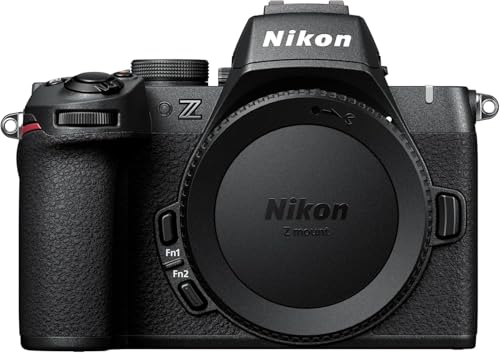
Every film school cohort contains the same argument: buy the finished gadget, or buy the system and grow. The Z50 II is this guide’s answer for the growers. It is a proper mirrorless camera — APS-C sensor, interchangeable Z-mount lenses, high-quality 4K video, subject-detect autofocus that recognises people and tracks them through a scene — priced so that the body plus a first lens still respects the thousand, leaving the film-maker a mount, a sensor and a skill set that all appreciate with use.
Its video credentials are not a stills camera’s afterthought. The footage is oversampled and clean, the colour presets include options film-makers actually use for a pleasing image straight from camera, and the autofocus — the historical weakness of video shot on stills bodies — detects eyes and holds them with a composure that lets a solo shooter act as their own focus puller. For narrative work, where an actor’s movement is choreographed and the camera’s job is fidelity, that reliability is the difference between usable takes and heartbreaking ones.
The lens mount is the long argument. Z-mount glass spans affordable primes that give a student the shallow-depth language of cinema, zooms for documentary versatility, and — through Nikon’s own ecosystem — a future upgrade to full-frame bodies that keep every lens working. A film-maker’s first thousand buys the mount as much as the camera; the body will be replaced in five years, the lenses will be on the replacement.
Practical set behaviour is strong. The body handles like a photographer’s camera because it is one — a virtue for the film-maker who also shoots the poster and the production stills — the screen articulates for low and high angles, and external microphone input acknowledges the first rule of this guide. Battery life through a shooting day of short takes is workable, with spares cheap by cinema standards.
What it lacks, against the self-contained picks, is built-in forgiveness. There is no gimbal in the box: hand-held footage needs a steady hand, a strap technique or a separate stabiliser later. In-body stabilisation helps at the margins rather than transforming walking shots. The crop sensor, excellent as it is, concedes the very darkest scenes to larger sensors above the budget. And the kit demands learning — exposure, focus modes, colour choices — where the Pocket 3 below demands only taste.
That learning curve is, for the intended buyer, the point. The Z50 II is the camera on which a film-maker becomes a cinematographer: every manual decision it asks for is a lesson the gadget cameras politely skip. Students, narrative beginners and documentary makers planning a second purchase someday should start here, with one good lens, and let the thousand found a kit rather than finish one.
A final production note: because it is also a superb stills camera, the Z50 II quietly covers the film’s entire visual department — casting photos, location scouts, poster frames, behind-the-scenes for the crowdfunding page. Independent films run on such doublings, and no other pick in this guide doubles as completely.
- Sensor: APS-C, oversampled 4K video
- Autofocus: subject and eye detection for video
- Mount: Nikon Z, lenses carry to future bodies
- Audio: external microphone input
Strengths
- The only growth path to a real cinema kit here
- Autofocus trustworthy enough for narrative takes
- Doubles as the production’s stills camera
Trade-offs
- No gimbal: movement must be learned or rigged
- Demands exposure and focus skills from day one
- Darkest scenes belong to larger sensors
Best for: film students and narrative or documentary beginners building a kit. Not suited for: shooters wanting polished footage with zero learning curve.

DJI Osmo Pocket 3 — Best one-person film crew
Watch a Pocket 3 working on a one-person shoot and the budget logic becomes obvious. The camera is a 1-inch sensor riding a three-axis gimbal, and the gimbal is a crew member: it smooths the walking shot into a glide, pans like a tripod head with a patient operator, and — with subject tracking engaged — follows the actor while the film-maker, who is also the actor, concentrates on the performance. Under a thousand, nothing else buys movement that looks this expensive.
Image quality sustains the illusion. The large sensor keeps night streets and lamplit interiors coherent, dynamic range holds a window in frame without surrendering the room, and the colour profiles include flatter options for film-makers who grade, alongside ready-made looks for those who do not. Autofocus is quick and its tracking, once locked, has the tenacity of a focus puller who likes the actor.
Dialogue scenes reveal its second talent: audio architecture. Built-in microphones are unusually competent, and DJI’s wireless transmitters pair directly, so a two-person scene can be recorded with a microphone on each speaker and no receiver dangling from the camera. For the micro-budget film — where the sound recordist is a coat stand holding a recorder — that integration is not convenience; it is the difference between dialogue that sounds like a film and dialogue that sounds like evidence.
The rotating screen flips the camera into vertical for the short-form trailers and teasers through which independent films now find their audiences, and the whole apparatus sets up in under a minute, a virtue location shooting rewards daily. A Pocket 3 crew trespasses lightly: cafés, streets and stairwells that would eject a tripod-and-rig production tolerate the person holding what appears to be a phone accessory.
Its limits are physical. The gimbal is a mechanism with motors and a temper — it wants its case, dislikes being crushed in a bag, and cannot be handed to the stunt department. The lens is fixed and wide: close-ups are made by walking closer, and the compressed portrait look of a longer lens is unavailable. Long continuous recordings ask for power planning, and in heavy rain it should be sheltered where the action cameras below would keep rolling.
For the solo narrative shooter, the travel documentarian and the wedding-film assistant, it remains the most complete film-making instrument under this budget — the pick whose footage most often gets asked the question every micro-budget director wants to hear: what did you shoot that on?
There is a discipline it teaches, too. Because the Pocket 3 makes movement easy, beginners over-move — every shot gliding, floating, orbiting — until the film feels seasick. The directors who get the best from it ration the gimbal: static frames where the scene is still, movement where the story moves. The camera supplies the capability; the taste, as always, is hired separately.
- Sensor: 1-inch on a 3-axis gimbal
- Tracking: ActiveTrack subject following
- Audio: direct pairing with DJI wireless mics
- Screen: rotating, vertical-native shooting
Strengths
- Movement that looks budgeted ten times higher
- Large-sensor image in a pocketable body
- Dialogue audio solved inside one ecosystem
Trade-offs
- Fixed wide lens; no portrait compression
- Gimbal needs care in bags and weather
- Long takes need a power plan
Best for: solo film-makers, travel documentary and wedding-film assistants. Not suited for: rough handling, rain-soaked shoots or lens-look experimentation.

Sony ZV-1F — Best for dialogue-led pieces
A surprising share of micro-budget cinema is two people talking in a room, filmed well. For that film — the interview documentary, the two-hander short, the creator’s essay film — the ZV-1F is the precision tool in this guide: a 1-inch sensor behind a wide fixed lens, in a body designed from the first sketch for people who speak to cameras. It asks almost nothing of its operator, which frees the operator to direct.
The wide lens earns its place in dialogue geography. It frames two faces across a table, or one face with the room that explains them, from distances small apartments allow; and its deep, forgiving focus means a lean-in for emphasis does not become a blur. Sony’s eye autofocus rides the conversation without hunting, and its product-showcase behaviour — focus shifting to an object held toward camera, then returning — serves the review-film and unboxing genres that blur into documentary on modern platforms.
Colour is creator-tuned in the useful sense: skin protected, saturation cheerful without vulgarity, and an image that can be uploaded with minimal grading when the film’s schedule is measured in hours. Film-makers who do grade will find the files cooperative within the limits of a compact’s codec; film-makers who do not will find the camera has quietly graded for them.
The ZV-1F’s second career is as a streaming and webcam instrument of genuinely high quality, which matters to the economics of micro-budget film-making: the camera that finances itself through the creator’s weekly videos is the camera that is already owned, charged and understood when the short film’s shooting weekend arrives. Equipment that earns between films is how a thousand-dollar budget survives contact with a filmography.
Boundaries are clear and mostly optical. The fixed lens cannot isolate a face with a long-lens look, cannot reach across a hall, and its electronic stabilisation is for static and gently moving frames rather than walking shots — pair it with a small tripod and it is content; ask it to chase action and the action cameras below will file a formal complaint. Low light is competent rather than heroic.
Bought for dialogue, interviews and the creator’s film-adjacent work, it is the lowest-effort route in this guide to footage that looks intentional. Narrative shooters wanting lens language should look to the Nikon; shooters whose films are built from talk should start here and spend the saved remainder on the microphone this camera deserves.
One more working habit suits it: because it is so unobtrusive, subjects relax. Interviewees who would perform for a rigged cinema camera talk to the little Sony like a person, and documentary film-makers learn quickly that the best performance is often the one the subject forgot to give. Small cameras have been winning that argument since the first handheld documentaries; the ZV-1F is its current, polished form.
- Sensor: 1-inch, fixed wide lens
- Focus: eye AF with product-showcase mode
- Role: dialogue, interviews, creator films
- Live use: high-quality USB webcam
Strengths
- Frames conversation beautifully in small rooms
- Near-zero operating burden on a small crew
- Earns its keep as a streaming camera between films
Trade-offs
- One focal length, forever
- Stabilisation is for calm, not pursuit
- Low light competent rather than outstanding
Best for: interview documentary, two-hander shorts and creator film-makers. Not suited for: action coverage or lens-look narrative cinematography.

Insta360 Ace Pro 2 — Best low-light action cinematography
Action cinematography at this budget used to mean accepting the action camera’s traditional surrender: the moment the light fell, the image dissolved. The Ace Pro 2 is the pick that renegotiates that surrender. Its sensor is large by action-camera standards, its optics carry a famous German name’s tuning, and its low-light processing holds night streets, neon and headlit roads together with a coherence that lets an editor cut its footage beside bigger cameras without apology.
For the film-maker, the use case is precise: the chase, the ride, the run, the POV sequence — shots that must be mounted on a body, a bike, a board or a bonnet, at hours when cinema cameras are asleep in their cases. Stabilisation is computational and excellent, the flip screen lets a performer-director frame a self-shot sequence properly, and the colour profiles include flatter options for footage destined for a grade rather than a feed.
Build serves the set. The Ace Pro 2 is waterproof, quick to mount, and tolerant of the vibration and weather that action sequences are made of; its magnetic mounting system speeds the repositioning that eats a small crew’s day. Battery behaviour is managed with spares, as on all action cameras, and the files — high-resolution, high-bitrate — want fast cards and an honest storage plan.
Against the GoPro below, the argument is emphasis. The GoPro is the ecosystem and the crash-tested standard; the Ace Pro 2 is the low-light and image-quality challenger, with a screen arrangement solo performers prefer. Film-makers shooting action after dark — the night ride, the city run, the illuminated festival — will feel the difference in every frame; daylight stunt units may never notice it.
It remains an action camera in the ways that define the species: a fixed ultra-wide view that bends the world’s edges, audio that serves as a scratch track beside a real microphone, and a small sensor that — however heroic its processing — will not produce the shallow-depth portrait language of the Nikon’s lenses. Casting it as a main camera for a dialogue film would be a category error this guide will not commit.
Cast correctly, it is the specialist that lets a thousand-dollar production include sequences that look like a car commercial’s second unit. Micro-budget films live on such sequences: ninety seconds of night-city motion can carry a trailer, a pitch and a festival programmer’s attention all by itself.
Directors should plan its shots like stunts, because that is what they are: mount, safety check, rehearsal at half speed, then the take. The Ace Pro 2’s forgiveness in low light has encouraged more than one beginner to skip the rehearsal; the footage survives, the mount occasionally does not. Discipline is cheaper than replacement, even under this budget.
- Sensor: large for an action camera, low-light tuned
- Optics: Leica-co-engineered lens
- Screen: flip-up for self-framing
- Build: waterproof, magnetic mounting
Strengths
- Night action footage that cuts beside bigger cameras
- Solo performers can frame themselves properly
- Fast magnetic repositioning on set
Trade-offs
- Ultra-wide look is the only look it owns
- Audio is a scratch track, not a soundtrack
- High-bitrate files demand fast, large cards
Best for: night rides, POV sequences and action second-unit work. Not suited for: dialogue-led films or shallow-depth cinematography.

GoPro HERO13 Black — Best POV and crash camera
Some shots in a film are simply not available to a camera anyone cares about. The HERO13 is the camera for those shots: fixed to a car that will drive through the river, taped inside the drum kit, mounted on the helmet of the rider whose fall the documentary is about. Its value to a film-maker is not that it outperforms the other picks — at most things it does not — but that it goes, cheerfully and replaceably, where the shot is dangerous and the budget cannot insure a cinema camera.
Within that role it is superbly equipped. The image is high-resolution with stabilisation that has been refined across more action footage than any rival can claim, lens options adjust the width and character of the view, and slow-motion modes give editors the grammar of impact — the splash, the landing, the near-miss — at the moment the story needs emphasis. Colour can be shot flat for the grade or vivid for the feed.
Production practicality is the GoPro’s native language. Mounts exist for every surface a film set contains, batteries swap in seconds, the camera can be controlled and monitored from a phone at the end of a pole or under a car, and its files slot into every editing workflow on earth. A unit can own three angles of a stunt for less than one angle of a larger camera’s insurance excess.
Honesty about the rest: the ultra-wide view announces itself, the low-light image trails the Ace Pro 2, and dialogue recorded on its microphones belongs in the scratch track. Battery doors and mounts are consumables on a hard-working unit. None of this is news to any film-maker who has used one, which is rather the point — the HERO13 is the known quantity, the camera whose behaviour on set can be predicted to the minute.
For the narrative film-maker under a thousand, its place in the kit is as the second camera bought after the main one: the Nikon or DJI makes the film, the GoPro makes the three shots everyone remembers. Documentary makers covering vehicles, water or risk will promote it to first camera without needing this guide’s permission.
It closes its review with the oldest advice in action cinematography: buy the mounts before the extra battery. A HERO13’s genius is positional, and the film-maker with a clamp, a suction mount, a chest harness and a pole owns more cinema than the film-maker with a spare of everything and the camera stuck on a tripod.
Festival audiences, incidentally, have stopped reading action-camera footage as amateur. The grammar is established — the POV insert, the impossible angle — and programmers judge the shot’s story value, not its sensor size. A well-placed GoPro in a micro-budget film is now simply cinematography, which is the highest compliment this guide pays any specialist.
- Type: flagship action camera
- View: ultra-wide with lens options
- Control: phone monitoring for remote mounts
- Role: POV, vehicles, water, crash positions
Strengths
- Goes where the memorable shots live
- The deepest mounting ecosystem in film
- Slow motion for the grammar of impact
Trade-offs
- Low light trails the Ace Pro 2
- Fixed wide look, no lens language
- Onboard audio is reference only
Best for: stunt, vehicle, water and POV coverage as a second unit. Not suited for: main-camera duty on dialogue or night shoots.

DJI Osmo Action 5 Pro — Best endurance action camera
The last pick solves the action camera’s least glamorous problem: time. Film sets, expeditions and event coverage run long, and the Osmo Action 5 Pro’s party trick is stamina — battery life that outlasts its rivals across a shooting day, paired with DJI’s colour science so its footage matches the Pocket 3 and DJI drones in the same production without a colourist’s overtime. For the film-maker building a small DJI-flavoured unit, that matching is a production feature, not a spec-sheet line.
Its sensor and processing are aimed at dynamic range: bright skies over dark streets, the doorway between a dim interior and a blazing exterior — transitions that cheaper action cameras render as a choice between two exposures, the Action 5 Pro attempts to keep both. Subject tracking, unusual in this class, follows a performer through a frame the operator cannot watch, and the front and rear screens serve both the mounted and the self-shot configuration.
On set it behaves like equipment rather than a gadget. Waterproofing is confident, the mounting system is quick, storage is built in as a safety net beside the card, and the camera’s operating temperature range suits the expedition and endurance-event work where its battery advantage compounds — the all-day ride, the river journey, the festival covered from gates to encore.
Compared with the GoPro, it trades the incumbent’s mounting universe and slow-motion fame for endurance, colour matching and tracking; compared with the Ace Pro 2, it trades a measure of low-light polish for that same stamina. Film-makers should choose among the three action picks by the shape of their shooting day — dangerous, dark or long — a cleaner decision than any specification table offers.
Its ceilings are the family’s ceilings: fixed wide optics, small-sensor night limits relative to the mirrorless pick, and audio that supports rather than stars. Within a DJI-centred kit, though, it is the action camera that behaves like a colleague of the gimbal camera above, sharing batteries’ philosophy, colour and control logic — and small crews feel such harmonies in their bones by the third location of the day.
Under the thousand, it also leaves the most room of the three action picks for the accessories that turn endurance into coverage: mounts for the vehicle, the helmet and the tripod, and the cards to hold a day that its battery finally allows to be filmed whole.
Documentary makers covering process — the build, the journey, the restoration — should note the tracking and stamina pairing specifically. A camera that can be mounted in the morning, follow its subject’s movement within frame, and still be recording at the wrap is a second crew member for process films, and process films are where micro-budget documentaries most often find their subjects and their festivals.
- Sensor: action-class, dynamic-range focused
- Stamina: class-leading battery endurance
- Colour: matches DJI cameras and drones
- Tracking: subject following, dual screens
Strengths
- Films the whole day its rivals film in shifts
- Cuts cleanly beside DJI gimbal and drone footage
- Tracking serves unattended process coverage
Trade-offs
- Low-light polish a step behind the Ace Pro 2
- Mounting universe smaller than GoPro’s
- Same fixed-wide ceiling as all action picks
Best for: long shooting days, expeditions and DJI-centred small units. Not suited for: night-led action or dialogue-led productions.
A note on reading the comparison that follows: the roles column matters more than any other. A film set is a small society of specialisations, and the beginner’s classic error is buying two cameras that want the same job while the job nobody bought for — usually sound or the impossible angle — goes unfilled. Read the six as a crew to be assembled across this purchase and the next, not as rivals in a single-elimination contest, and the table becomes a casting sheet.
How do the six compare for a film set?
| Camera | Role on set | Signature strength | Watch out for |
|---|---|---|---|
| Nikon Z50 II | A-camera, system | Lens language and growth | Movement needs rigging or skill |
| DJI Osmo Pocket 3 | A-camera, solo | Gimbal movement, tracking | Fixed wide lens |
| Sony ZV-1F | Dialogue camera | Effortless interviews | One focal length |
| Insta360 Ace Pro 2 | Action unit | Low-light action | Scratch-track audio |
| GoPro HERO13 Black | Crash/POV unit | Impossible positions | Night performance |
| DJI Osmo Action 5 Pro | Endurance unit | All-day stamina | Smaller mount universe |
What else does a filmmaking budget have to buy?
Sound first, and it is not close. A modest wireless or wired microphone, placed near the speaker rather than on the camera, improves a film more than any camera upgrade at this level; audiences read audio quality as production value with an honesty they never apply to resolution. Every pick above accepts an external microphone path — through an input, an adapter or a paired wireless system — and the budget should fund that path before it funds a single creative accessory.
Light is second, and cheaper than film-makers fear. One soft LED panel, used close and dimmed rather than far and blazing, plus the practical lamps already in the location, will carry most interiors in this guide’s films; the large-sensor picks exist partly to make that small lighting package sufficient. A five-in-one reflector costs almost nothing and has rescued more exterior dialogue scenes than any lens.
Support and storage complete the kit: a tripod that does not tremble, cards fast enough for the chosen camera’s best codec, batteries counted honestly against the shooting day, and a drive the footage is copied to before anyone sleeps. Film-making’s catastrophes are overwhelmingly archival — the card reused, the drive dropped — and under a thousand the discipline costs less than the disaster.
How do you choose between a system camera and a self-contained one?
Ask what the second film looks like. If the plan is a filmography — skills compounding, kit growing, a style developing across shorts — the Nikon is the foundation and the others are instruments added later. If the plan is one film, made now, with the crew and knowledge already in the room, the self-contained picks convert money into finished footage with a directness the system cannot match: the Pocket 3 for movement and dialogue, the ZV-1F for talk, the action trio for the sequences that justify the trailer.
Time is the hidden currency in the choice. The system camera pays its dividend in capability per year; the gadgets pay theirs in capability per weekend. Neither is the correct answer in the abstract — but a film-maker who knows their own calendar knows their camera, and this guide’s ordering simply asks the question in the order the budget will ask it.
Which mistakes sink micro-budget films most often?
Blowing the budget on the body leads the list, for the reasons this guide opened with: the film that results is beautifully resolved and badly heard, lit by whatever the location happened to contain. Second is movement without motivation — gimbal glides and drone-like sweeps pasted over scenes that wanted stillness — a failure of taste that capable cheap stabilisation has made epidemic. The camera sections above praised movement; the mistake is using it because it is available.
Third comes the unrecorded room: productions that never capture a minute of ambient sound, leaving the editor to glue dialogue takes over a void. Fourth, the single copy of the footage, riding home on one card in one pocket. And fifth, the schedule that assumes the camera will behave — no test day, no rehearsal of the kit — so the first morning of the shoot becomes the crew’s introduction to overheating limits, battery appetites and menu systems. Every pick in this guide rewards a full test day before the real one; professionals call it prep, and it is the cheapest insurance in film-making.
How does low light separate these cameras on a real set?
Every camera in this guide advertises its night performance; a film set tells the truth about it in one specific shot — the interior at night with a practical lamp in frame and a face in shadow beside it. That shot divides the six cleanly. The mirrorless Nikon, with the largest sensor here and fast prime lenses available to it, owns the shot outright: it can hold the lamp’s glow, the face’s detail and a pleasing fall into darkness simultaneously, which is the visual grammar audiences read as cinema. The Pocket 3 follows surprisingly closely, its 1-inch sensor and fast fixed lens gathering enough light to keep interiors coherent, though its depth of field stays deeper and its look stays more documentary.
The ZV-1F occupies the honest middle: fine for a lit interior, strained by a candlelit one, its small sensor asking the lighting department — often one panel and a prayer — to do more of the work. Among the action cameras the Ace Pro 2 leads after dark by a visible margin, its processing holding colour in neon and headlight scenes where the HERO13’s image turns busier and the Action 5 Pro sits between them, cleaner than the GoPro, less composed than the Insta360. None of the three embarrasses itself; all three announce their sensor size when the scene drops below streetlight.
The practical lesson for the film-maker is casting by scene, the way a larger production casts cameras by unit. Shoot the night dialogue on the Nikon or the Pocket, the night ride on the Ace Pro 2, the dawn exterior on anything in this guide, and the grade will meet in the middle without a fight. Micro-budget cinematography is not about finding the camera with no weakness; it is about scheduling each camera’s weakness into scenes where nobody will ever see it.
Why is sound half the film, and how do these cameras handle it?
Directors say audiences forgive a soft image and never forgive unclear dialogue, and the physiology is simple: viewers strain to hear, tire, and blame the film. On a micro-budget the sound plan therefore deserves the same deliberation as the camera choice, and the six picks divide by how gracefully they accept help. The Nikon offers a proper microphone input and the stills-camera ergonomics a sound recordist can work around. The Pocket 3 goes further for its size class, pairing natively with wireless transmitters so the microphone rides on the actor — the single most effective sound upgrade available at any budget, because distance, not equipment price, is what ruins location audio.
The ZV-1F was designed for voices and treats them kindly, with directional built-in capture that flatters a speaker in a quiet room and an input path for better. The action trio, by contrast, record the world’s noise democratically — wind, engine, handling, voice all at once — and their audio should be planned as a synchronisation reference while a phone, a pocket recorder or a wireless system near the subject captures the track the audience will hear. This is not a workaround invented for cheap cameras; it is how professional sets have always worked, with sound recorded as its own discipline.
Whatever the arrangement, three habits protect the film. Record room tone at every location, because editors build scenes on it. Slate or clap where two devices must sync, because finding alignment by waveform at midnight is a tax on the desperate. And monitor with headphones whenever the camera allows it, since the fault discovered in the edit — the humming fridge, the buzzing light — was audible on the day to anyone who listened. The cameras in this guide can all be part of a properly recorded film; none of them can record one alone from across the room.
What should a test day with a new camera actually cover?
Professionals prep; beginners unbox on the morning of the shoot and pay tuition to the location. A proper test day with any pick in this guide runs the film in miniature. Shoot a page of dialogue with the intended microphone arrangement and listen to it on the speakers the audience will use. Walk the camera through the location’s ugliest light — the window at noon, the corridor at dusk — and note where the exposure and autofocus need supervision. Record continuously for the length of the longest planned take, because thermal limits and battery appetites are facts that brochures round off.
Then perform the unglamorous drills. Fill a card and change it against the clock. Swap batteries in the dark by feel. Copy the footage to its drive and verify the copy before formatting anything, rehearsing the exact ritual the shoot night will demand when everyone is tired. Set the camera’s date, name the files sensibly, and decide the frame rate and colour settings for the whole production now, in calm, rather than per scene in haste.
Finally, edit the test. Half of what a camera is lives in its files — how the colour grades, how the codec behaves on a modest computer, how long rendering takes at the film’s real length. A film-maker who has edited a test scene owns their camera; a film-maker who has only read about it is renting their confidence from reviewers. Every pick above will pass a test day honourably; the ones that fail productions are almost always the ones that never got one.
How should the budget be divided across a whole production?
A workable division, offered as a starting discipline rather than a law, gives the camera the largest single share but never the whole purse — roughly half to two-thirds, depending on whether the pick is the system Nikon, which must also buy a lens, or a self-contained camera that arrives ready. Sound takes the next slice and should be defended in every budget argument, because it is the slice the audience notices. Light follows, then support, cards and batteries share what remains, and a small contingency — the cable nobody owned, the card that must be bought at location prices — saves the production from the arithmetic of optimism.
Two worked shapes illustrate the principle. The narrative shape pairs the Nikon and one fast prime with a wired microphone on a stand, a single soft panel and a tripod the production already half-owns; it photographs like a film school exercise in the best sense, every rupee and dollar visible on screen as intention. The documentary shape pairs the Pocket 3 with its wireless microphone and spends the rest on batteries, cards and a monopod; it moves fast, interviews beautifully and fits in a shoulder bag on a train. Neither shape is the correct one — the film being made decides — but both obey the rule the gadget-only budget breaks: the camera is the beginning of the kit, not its totality.
Renting completes the picture for one-off needs. The specialist lens for a single weekend, the second light for the big interior, the extra action camera for the stunt day — rental converts the budget’s fixed remainder into capability exactly when the schedule needs it, and every city with a film school has a rental shelf priced for students. A thousand spent partly on rentals across a production often photographs richer than a thousand spent entirely at a camera counter, a sentence worth reading twice before the shopping begins.
Final Recommendation
Build the thousand in the order the audience perceives: a camera that fits the film, a microphone that reaches the actors, a light that flatters them, and the cards and batteries that let all three finish the day. Within the camera share, the Nikon Z50 II is the student’s and the system-builder’s choice — the only pick here that is a beginning rather than a conclusion. The Pocket 3 is the solo film-maker’s finished instrument, the ZV-1F the dialogue specialist, and the action trio should be chosen by the shape of the shooting day: the Ace Pro 2 for darkness, the HERO13 for danger, the Action 5 Pro for duration.
Whichever is bought, shoot the test film first — a two-minute scene, with dialogue, movement and a night exterior — before the real production’s calendar is set. That small film will teach more about the camera, the microphone and the crew than any guide can, and it will do so while the lessons are still free.
Frequently Asked Questions
Is 4K necessary for a short film on this budget?
It is useful rather than necessary: the headroom helps reframing, stabilisation and future-proofing, and every pick here offers it. A well-lit, well-recorded film in a lower resolution will beat a careless 4K one at any festival. Spend attention on light and sound first; the resolution these cameras provide as standard is already more than the story needs.
Can an action camera really serve as a main camera?
For action, travel and POV-led films, yes — entire features have been built around them. For dialogue-led narrative, the fixed wide lens, modest audio and night limits make it a specialist miscast as a lead. This guide’s three action picks are sequenced as units within a production, which is where their considerable talents belong.
What is the first accessory a film-maker should buy?
A microphone that can be placed near the speaker — wireless for movement, wired for economy — before any other accessory is considered. It is the only purchase that improves every scene in the film regardless of subject, and the one whose absence no editing can disguise.
Should a beginner buy the Nikon or the Pocket 3?
The beginner who wants to learn cinematography should buy the Nikon and accept the apprenticeship; the beginner who wants to finish a film this season should buy the Pocket 3 and accept its fixed lens. Both are honest answers to different questions, and confusing the two questions is the only wrong move available.
How important is a flat colour profile at this level?
Valuable for film-makers who grade, irrelevant for those who do not, and harmful for beginners who shoot flat and then lack the time or skill to grade — their footage simply looks unfinished. Most picks here offer both paths; choose per production, not per ideology.
What frame rate should a beginner shoot a short film at?
The frame rate of the delivery, for almost every beginner production, is the frame rate of cinema convention — the rate that makes motion look like a film rather than a broadcast. Shoot the project at one consistent rate, reserve high frame rates for shots intended as slow motion, and decide before the first day rather than in the edit, where mixed rates become mixed headaches. Every pick in this guide handles the convention natively; the discipline is the director’s, not the camera’s.
Can these cameras handle a full wedding film or event?
The endurance picks can: the Action 5 Pro’s stamina, the Pocket 3 with a power plan, and the Nikon with spares all cover long-form event work, provided audio is recorded properly on a separate path. Ceremony-length continuous recording should always be rehearsed with the exact kit before the day, whatever the badge.
One encouragement, from everyone who has finished a micro-budget film, for the reader still pricing cameras instead of shooting: the finished rough film teaches more than the perfect unpurchased kit ever will. These six cameras are all, demonstrably, enough — features and festival shorts have been made on less. Pick the one whose weaknesses your particular film can hide, protect the sound budget with your life, and start the test day this weekend.
Related Guides
Film-makers whose subject is a wedding day should read the best cameras for wedding videography guide alongside this one, while the autofocus discussion for moving subjects continues in the best cameras for YouTube autofocus roundup. For buyers whose budget is framed in rupees, the best cameras under 1 lakh guide covers the neighbouring territory.


