reviewstook.com is reader-supported. When you buy through links on our site, we may earn an affiliate commission.
Where to buy
A wedding gives a photographer no rehearsal and no mercy. The kiss happens once, the confetti falls once, the father cries once, and a camera that hunts for focus in a dim church or writes too slowly to its card does not produce a slightly weaker album — it produces a gap the couple will notice at every anniversary. Choosing the best cameras to use for wedding photography is therefore less about chasing the newest specification and more about matching a body’s reliability to the day’s unforgiving rhythm: preparation in window light, a ceremony in gloom, portraits in hard noon sun, and a reception that ends in near-darkness lit by a DJ’s coloured lamps.
- Canon EOS R6 Mark II: check price on Amazon
- Sony Alpha 7 IV: check price on Amazon
- Panasonic LUMIX S5II: check price on Amazon
- Canon EOS R6 Mark III: check price on Amazon
- Nikon Z50 II: check price on Amazon
- Panasonic LUMIX S5IIX: check price on Amazon
One clarification before the cameras themselves. Earlier guides in this series have covered filming a wedding — the moving-image side of the day, with its microphones, gimbals and continuous recording. This guide is about stills. A wedding photographer’s camera is judged on frozen moments: the autofocus that finds an eye through a veil, the sensor that holds a white dress and a black suit in the same frame, the shutter that makes no sound during vows. Readers hired to shoot photographs, or couples researching what their photographer should be carrying, are in the right place; readers planning wedding video should treat this page as background and look at the filming guides instead.
Five of the six bodies below are full-frame, and that is a deliberate weighting rather than snobbery. Weddings are shot where light goes to die — panelled halls, stone churches, marquees after sunset — and the larger sensor’s advantage in those rooms is not a laboratory curiosity but the difference between a clean file a couple can print large and a grainy one they cannot. The sixth pick, a smaller-sensor Nikon, earns its place honestly as a second body and a starter’s route in, and its review says plainly where its ceiling sits.
Glass, it must be said once, matters as much as any body here. Every camera below becomes a wedding camera only when paired with fast lenses — a wide zoom for the room, a standard zoom for the day, a fast prime for the dark. The bodies were ranked assuming that pairing; a modest body behind excellent glass will outshoot a flagship behind a slow kit zoom at any reception ever held.
Key Takeaways
- Canon’s EOS R6 Mark II is the safest pair of hands here: autofocus that finds eyes through veils, in-body stabilisation and files that forgive mixed light.
- Sony’s Alpha 7 IV counters with resolution headroom for cropping and an enormous lens catalogue, new and used.
- Panasonic’s LUMIX S5II brings phase-detect autofocus and remarkable value to the full-frame wedding kit bag.
- The EOS R6 Mark III is the forward-looking Canon choice for photographers who also deliver highlight films.
- Nikon’s Z50 II works as a light second body or a first wedding camera for assistants learning the trade.
- The S5IIX suits the growing number of photographers expected to shoot stills and serious video on the same contract.
In this guide
Quick Picks
| Camera | Badge | Why it is here |
|---|---|---|
| Canon EOS R6 Mark II | Best overall for weddings | Eye autofocus that survives veils and confetti, silent shooting, and colour couples love straight from camera. |
| Sony Alpha 7 IV | Best for cropping room | Higher resolution for re-composing in the edit, plus the deepest lens ecosystem in this guide. |
| Panasonic LUMIX S5II | Best value full-frame | Phase hybrid autofocus and strong stabilisation at a friendlier point in the full-frame market. |
| Canon EOS R6 Mark III | Best for hybrid shooters | The newest Canon full-frame body, for photographers whose contracts now include motion work. |
| Nikon Z50 II | Best second body | Light, quick and affordable enough to hang beside a main camera as the wide-angle or backup body. |
| Panasonic LUMIX S5IIX | Best for photo-video contracts | Everything the S5II does, extended for the photographer who also delivers a wedding film. |
How did we choose the best cameras to use for wedding photography?
Wedding duty imposes a checklist few other genres share, and the ranking below follows it in order. Autofocus reliability in low light comes first, because ceremonies happen in it and moments cannot be recalled. Second is the silent or near-silent shutter: a photographer who sounds like a typewriter during the vows will not be recommended to the couple’s friends, and word of mouth is the industry’s entire marketing department. Third comes dynamic range, the ability to hold a white dress’s detail without turning the groom’s suit into a black hole. Dual card slots, weather sealing and battery stamina follow — the unglamorous insurance features — and outright image quality, which every modern full-frame body supplies in abundance, was treated as the entry ticket rather than the contest.
Ergonomics across a twelve-hour day also counted, in ways spec sheets never capture. A body that will be raised several thousand times must balance with a standard zoom without wrecking a wrist, its controls must fall under fingers in the dark of a reception, and its menus must allow a custom setup the photographer can reach blind. Working wedding shooters were the reference point throughout: what they carry for money, what they carry as backup, and what they quietly sold after one season.

Canon EOS R6 Mark II — Best overall for weddings
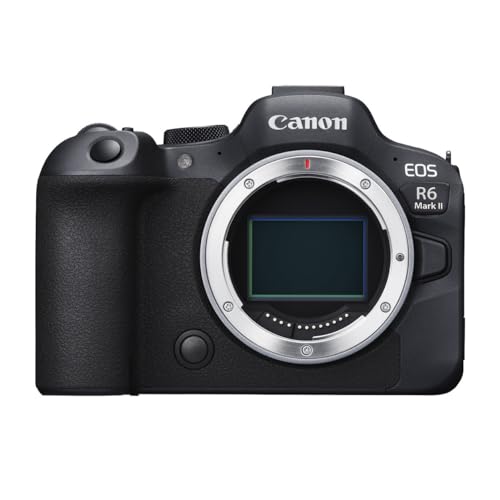
Ask a room of working wedding photographers what they would carry if only one body were allowed, and this Canon is the answer that keeps coming back — not because it tops every chart, but because it so rarely gives a moment away. Its subject-detect autofocus finds eyes with a tenacity that borders on stubborn: through a veil, behind raised glasses during the toast, in the half-second when the bride turns laughing toward a voice off-camera. Weddings are a sport of half-seconds, and this camera plays it superbly.
Low light is where the R6 Mark II builds its reputation into a living. Church interiors, candlelit barns and reception rooms lit mostly by string lights are its natural habitat; the full-frame sensor keeps files clean at the sensitivities those rooms demand, and the in-body stabilisation steadies the slow shutter speeds that let ambient light — the light the couple paid the venue for — paint the picture instead of a flash flattening it. Photographers who favour available light will find their whole style accommodated here.
Canon’s colour science deserves its own paragraph because couples, not photographers, are its beneficiaries. Skin tones from this body arrive warm and flattering with minimal editing, across the range of complexions a wedding party contains, and in mixed light — window daylight on one side, tungsten on the other — the files grade gracefully instead of splitting into orange and blue factions. A photographer delivering eight hundred images cannot hand-retouch each one; a camera whose default rendering is already kind is worth money.
The silent electronic shutter is genuinely silent, which changes what a photographer may attempt during a ceremony: the exchange of rings, a parent’s expression mid-vow, the registrar’s pen — frames that a mechanical clatter would either forbid or ruin. Burst depth supports the confetti throw and the first kiss without the buffer stalling at the decisive instant, and dual card slots write every frame twice, the profession’s baseline insurance against the card failure that ends careers.
Handling across a long day is thoughtfully sorted. The body is weather-sealed against the rain that wedding folklore guarantees, the grip suits a standard zoom for hours, and Canon’s control layout — a wheel where the thumb rests, a joystick under it — lets settings change while the eye stays at the finder. Battery life through a full day is achievable with sensible screen discipline, though most professionals will still carry a second battery the way they carry a second everything.
Reservations are minor and specific. Resolution, at the class standard for speed-focused bodies, gives less cropping freedom than the Sony below; a photographer who routinely rescues composition in post should weigh that. The lens system, while superb, prices its finest wedding zooms at a level that makes the body’s own value feel almost incidental. Neither point dents the central verdict: as a single instrument for the whole wedding day, this is the most trustworthy camera in the guide.
Seasoned shooters also praise a quieter virtue: predictability. The R6 Mark II behaves the same in the first hour and the twelfth, in July heat and November drizzle, and its files from two bodies — many wedding teams run a matched pair — interleave in the edit without colour-matching surgery. For a business built on delivering a coherent album, that consistency is a commercial asset, not a technical footnote.
- Sensor: full-frame, speed-oriented resolution
- Autofocus: subject and eye detection
- Stabilisation: in-body, coordinated with lenses
- Cards: dual slots for instant backup
Strengths
- Eye autofocus that holds through veils and crowds
- Flattering skin tones with minimal editing
- Truly silent shooting for ceremonies
Trade-offs
- Less cropping headroom than higher-resolution rivals
- Finest Canon wedding lenses are expensive
- A second battery remains a working necessity
Best for: professional wedding photographers wanting one body for the entire day. Not suited for: shooters who crop aggressively or print enormous wall art routinely.

Sony Alpha 7 IV — Best for cropping room
Sony’s Alpha 7 IV plays a different long game. Where the Canon prioritises the moment as captured, the Sony banks extra resolution on its full-frame sensor so the moment can be re-composed later — and wedding photographers who shoot fast and loose, trusting the edit, will understand the appeal instantly. The wide shot of the first dance becomes a tight portrait of two faces; the group photograph yields individual couples cropped from its edges. Weddings reward that insurance because positions cannot be negotiated mid-ceremony.
Autofocus is the other half of its case. Sony’s eye detection is famously adhesive, locking onto the bride’s eye and declining to be distracted by foreground guests, floral arrangements or the best man’s waving arm. Real-time tracking follows subjects across the frame with a confidence that lets the photographer think about expression and timing instead of focus points — the correct division of labour between human and machine at a wedding.
The lens ecosystem is the deepest argument of all. Sony’s own catalogue covers every wedding focal length at several price levels, and third-party makers fill the shelves beneath with fast zooms and primes that let a photographer build a kit gradually: one excellent standard zoom this season, a fast portrait prime next. For a photographer financing a business from bookings, that ladder matters more than any single body’s specification, and no rival system in this guide offers as many rungs.
Files from the A7 IV reward the editor. Dynamic range holds the dress-and-suit problem gracefully, shadow recovery rescues the back-of-church frames, and the colour, while cooler and more clinical than Canon’s by default, grades into any house style a studio maintains. Photographers delivering a consistent look across hundreds of images will find the raw material obedient.
Video capability, while secondary in this guide, is a genuine secondary income: the same body that shoots the stills can capture a competent ceremony clip or a highlights reel for couples who add it late. Stabilisation is present and useful, the body is sealed, and dual slots protect the day. Battery performance is strong, and the enormous used market around Sony gear keeps a second body within reach of growing businesses.
Its compromises are ergonomic and temperamental. The menu system, though improved, still rewards study rather than intuition, and the body can feel like an instrument rather than an extension of the hand until its custom buttons are programmed — a weekend’s work every owner should schedule. Rolling shutter on the electronic shutter asks for mechanical shooting during fast panning. And the very depth of the lens catalogue can seduce a new professional into buying glass before bookings justify it.
None of that displaces it. For the photographer who edits seriously, crops honestly and builds a kit over years, the A7 IV is the system purchase in this guide — the body whose surrounding ecosystem keeps appreciating long after the wedding season that paid for it.
- Sensor: full-frame, higher-resolution class
- Autofocus: real-time eye detection and tracking
- Lenses: deepest native and third-party catalogue here
- Cards: dual slots, modern media options
Strengths
- Resolution that turns one frame into several deliverables
- Eye autofocus among the most reliable available
- A lens ladder for every stage of a business
Trade-offs
- Menus demand deliberate customisation
- Electronic shutter wary of fast panning
- Default colour needs more grading than Canon’s
Best for: editing-led photographers and studios building a long-term system. Not suited for: shooters wanting perfect colour with no post-production at all.

Panasonic LUMIX S5II — Best value full-frame
Panasonic spent years making excellent wedding-capable cameras that professionals hesitated over for one reason: contrast-based autofocus that pulsed at the worst moments. The S5II ended that era. Its phase hybrid autofocus detects and holds subjects the way wedding work demands — an eye found quickly, a couple tracked down the aisle — and with that single change, everything else Panasonic already did well became available to the wedding market at a price the big two should find embarrassing.
Stabilisation is the headline of that everything else. The S5II’s in-body system is among the most effective here, and at a wedding its value is specific: hand-held frames at slow shutter speeds during the ceremony, where flash is banned and tripods are unwelcome, stay sharp while the ambient glow of candles and windows does the lighting. Photographers who work discreetly, from the back and the side aisles, gain real stops of usable darkness.
The sensor’s rendering suits the genre. Colours lean natural rather than cosmetic, skin holds together under mixed reception lighting, and the files tolerate the exposure compromises a fast-moving day imposes — the slightly under-exposed frame from the dance floor recovers without turning to mush. A photographer shooting two hundred frames an hour needs files that forgive; these do.
L-mount is the system’s story. Panasonic’s own lenses cover the wedding staples, and the alliance with Sigma and Leica fills the shelf with fast primes and zooms at prices that undercut the equivalent glass elsewhere — a meaningful consideration for a photographer equipping from scratch, where the S5II’s body saving can be redirected into the lens that actually makes the portrait.
Build and endurance fit professional use: sealing for the inevitable shower, a body that balances mid-size zooms, dual card slots, and a fan-assisted thermal design borrowed from its video siblings that also means long reception shooting never meets a heat warning. The electronic viewfinder and screen are clear without being class-leading, and the controls reward a day’s familiarisation.
Where does it concede ground? Burst shooting and buffer depth sit a step behind the Canon for the most violent confetti moments, the lens catalogue — while broad — lacks a few exotic options, and the resale and rental ecosystem around Panasonic full-frame remains thinner, which matters to photographers who hire extra bodies for big weekends. Client perception, that unfair tax, also lingers: some couples still equate the famous two brands with professionalism, whatever the files say.
Judged on photographs rather than perceptions, the S5II is the rational professional’s bargain in this guide: full-frame wedding capability, modern autofocus and superb stabilisation, bought with money left over for glass. Photographers building a business on margin rather than mythology should start their shortlist here.
- Sensor: full-frame, natural colour rendering
- Autofocus: phase hybrid with subject detection
- Stabilisation: highly effective in-body system
- Mount: L-mount, shared with Sigma and Leica
Strengths
- Modern autofocus removes the old Panasonic objection
- Stabilisation built for dark, flash-free ceremonies
- Body savings can be spent on better lenses
Trade-offs
- Burst depth a step behind the Canon
- Thinner rental and resale ecosystem
- Brand perception still taxes some bookings
Best for: professionals equipping from scratch on a sensible budget. Not suited for: photographers dependent on local rental houses for extra bodies.

Canon EOS R6 Mark III — Best for hybrid shooters
Every generation of wedding camera now answers a question the previous one could ignore: how much of the contract is film? Couples increasingly book one creative for both, and the EOS R6 Mark III is Canon’s current answer for the stills photographer whose deliverables have quietly grown a highlights reel. It belongs in this guide not as a replacement for the Mark II above — which remains the purist’s stills tool — but as the body for the photographer whose business has already crossed that line.
The stills foundation is the family resemblance one would hope for: full-frame sensor, Canon’s subject-detect autofocus lineage, in-body stabilisation and the colour science that makes wedding clients happy without an editing marathon. A photographer upgrading from the Mark II will find the handling familiar in the hands and the files familiar in the edit, which across a two-body wedding kit is worth more than novelty.
Where the newer body earns its premium is headroom. Faster processing shows up in burst behaviour and autofocus confidence in ugly light; the video side is specified for clients who ask rather than for speculators. Reception speeches, the first dance, a short film of the vows — the Mark III covers the hybrid contract from one bag, with one lens mount and one colour pipeline, instead of a second system maintained for ten minutes of footage.
That consolidation has a business logic worth stating plainly. Two systems mean two sets of batteries, chargers, cards and backup bodies; one system means the stills backup is also the video backup. For a solo operator driving to a venue with everything they own, the Mark III’s breadth is a form of insurance purchased as capability rather than as a spare.
Wedding-specific virtues carry over intact: silent shooting for the ceremony, dual slots for the irreplaceable, sealing for the weather, and ergonomics that survive the twelfth hour. Canon’s wedding zooms — the fast standard and the portrait primes — mount natively and balance as designed. A photographer already invested in that glass loses nothing by stepping to the newer body when contracts demand it.
Honest cautions apply to any newest-generation body. Early firmware matures in public, accessories and third-party support trail the launch, and the price premium over the Mark II buys capability a pure stills photographer may never invoice for. Buying it to shoot photographs alone, while the Mark II exists, is spending the couple’s money on the photographer’s curiosity.
Taken on its intended terms, though, the Mark III is the future-proof seat in this guide: the Canon body for photographers whose wedding work is becoming a blend, bought once and grown into across several seasons rather than replaced at the next contract’s demands.
- Sensor: full-frame, latest Canon generation
- Autofocus: subject detection, refined processing
- Role: stills-led hybrid for photo-film contracts
- System: native Canon RF wedding glass
Strengths
- One system covers stills and highlight films
- Familiar Canon handling and colour for upgraders
- Headroom for contracts that keep expanding
Trade-offs
- Premium wasted on stills-only work
- Newest-body ecosystem still maturing
- Heavier demands on storage from hybrid days
Best for: Canon photographers whose bookings now include motion. Not suited for: pure stills shooters, for whom the Mark II is the smarter spend.

Nikon Z50 II — Best second body
Not every camera at a wedding is the camera. Professionals shoot with two bodies — a standard zoom on one shoulder, a fast prime or a wide zoom on the other — because lens changes during the ceremony are how moments get missed. The second body has a distinct job description: light enough to forget, quick enough to trust, cheap enough that its presence needs no justification. Nikon’s Z50 II, the only crop-sensor camera in this guide, fits that description better than any full-frame body fits a budget.
Its sensor is smaller, and this review will not pretend otherwise: in the darkest reception corners it concedes cleanliness to the full-frame picks, and its depth-of-field look differs from theirs. But second bodies rarely shoot the darkest frames. They shoot the wide establishing view of the room, the candid table shots under decent light, the detail frames of rings and stationery — work comfortably inside the Z50 II’s competence, delivered with Nikon’s pleasing colour and a modern autofocus system that detects subjects and eyes with real assurance.
Speed is its working charm. The camera wakes fast, focuses fast and keeps the photographer’s rhythm unbroken when the main body is mid-burst or mid-card-change. Assistants and second shooters — often the least experienced person on the team — produce dependable results from it because its automatic modes are honest and its controls are simplified without being toy-like. Many a wedding business has effectively trained its next lead photographer on a body exactly like this.
Size rewrites the day’s physical arithmetic. A Z50 II with a compact lens hangs unnoticed for twelve hours where a second full-frame body becomes a shoulder injury by the speeches. It also travels as the backup that actually gets carried — the body in the bag when the main camera fails is worth infinitely more than the superior body left at the studio because the kit was already heavy.
Nikon’s Z-mount gives it a growth path: the same lenses the photographer may later use on a full-frame Nikon mount natively, and the crop factor even lends telephoto reach to portrait lenses for candid work from the back of a church. Video is competent for the odd clip. Battery commonality with the photographer’s wider kit will vary, so spares belong in the checklist.
Who should not buy it? A solo photographer seeking one body for entire weddings in dark venues — the full-frame picks above exist for that contract, and stretching a crop sensor across a candlelit barn dance will show in the album. The Z50 II’s honest station is beside the main camera, or in the hands of the photographer covering their first weddings while the full-frame fund accumulates.
As either, it is excellent: the affordable, featherweight insurance policy and training ground of this guide, and a reminder that a wedding kit is a team of cameras, not a single hero.
- Sensor: APS-C crop, modern generation
- Autofocus: subject and eye detection
- Role: second body, backup, assistant’s camera
- Mount: Nikon Z, shares full-frame Z lenses
Strengths
- Light enough for a genuine twelve-hour carry
- Modern autofocus far beyond its price class
- The backup body that actually travels
Trade-offs
- Concedes dark-room cleanliness to full-frame
- Different depth-of-field look from the main bodies
- Not a solo dark-venue wedding camera
Best for: second shooters, backups and photographers building toward full-frame. Not suited for: sole-body coverage of dim evening weddings.

Panasonic LUMIX S5IIX — Best for photo-video contracts
The final pick is the S5II’s sibling wearing a second hat. The S5IIX takes everything the standard model offers the wedding photographer — phase hybrid autofocus, stabilisation that thrives in dark ceremonies, natural colour, dual slots, sealed build — and extends the video side into territory that working hybrid shooters actually invoice for: broader recording options, professional monitoring and storage flexibility for the photographer who delivers a real film alongside the album.
Why does a stills guide include it? Because the market moved. A visible share of wedding contracts now read photographs plus film, and the photographer who can sign both halves with one kit bag wins work the stills-only competitor cannot quote for. The S5IIX is the body in this guide specified for that signature: stills in the morning, ceremony film at noon, speeches recorded properly in the evening, one mount and one set of batteries throughout.
Its stills performance mirrors the S5II’s review above and does not need re-litigating: the same sensor virtues, the same stabilisation advantage in flash-free churches, the same forgiving files. A photographer choosing between the siblings purely for photographs should buy the standard model and spend the difference on glass — this review says so without hesitation, because honesty about the cheaper option is the entire point of a buying guide.
The premium buys the motion department. Extended codecs and external recording options serve the deliverable couples increasingly request; the body’s thermal design sustains long ceremony recordings that defeat lesser hybrids; and its monitoring tools — the scopes and assists a videographer leans on — are present rather than gestured at. For the photographer learning film, it is a school and a tool in one purchase.
Practical wedding logic follows. One body can be the dedicated ceremony camera on a tripod while its twin — or the photographer’s main stills body — roams; speeches get recorded with proper audio fed to the camera; the first dance exists as both a still sequence and a film clip from coordinated angles. The kit list shrinks, the car boot empties, and the backup arrangements simplify in ways a solo operator feels immediately.
Costs of the breadth are the usual ones: menus and muscle memory must serve two crafts, storage consumption on hybrid days is heroic, and the discipline of switching between stills and film mindsets mid-celebration is a skill no camera supplies. Photographers who never intend to offer film should read this pick as a signpost to its sibling and move on.
For those who do intend it, the S5IIX closes this guide as the expansion purchase: the body that lets a wedding photography business grow a second revenue stream without growing a second camera system to feed it.
- Sensor: full-frame, shared with S5II
- Autofocus: phase hybrid, subject detection
- Video: extended professional recording options
- Role: stills plus contracted wedding film
Strengths
- Full S5II stills virtues, broader film toolkit
- Sustains long ceremony recording without drama
- One system for a two-part contract
Trade-offs
- Premium is wasted on stills-only bookings
- Hybrid days consume storage at a heroic rate
- Two crafts in one menu system to master
Best for: photographers selling combined photo and film packages. Not suited for: stills-only shooters, who should buy the S5II instead.
How do the six compare side by side?
| Camera | Sensor | Signature strength | Watch out for |
|---|---|---|---|
| Canon EOS R6 Mark II | Full-frame | Moment-proof autofocus and colour | Cropping headroom |
| Sony Alpha 7 IV | Full-frame | Resolution and lens ecosystem | Menus need customising |
| Panasonic LUMIX S5II | Full-frame | Stabilisation and value | Thinner rental network |
| Canon EOS R6 Mark III | Full-frame | Hybrid headroom | Premium for stills-only work |
| Nikon Z50 II | APS-C | Featherweight second body | Dark-venue ceiling |
| Panasonic LUMIX S5IIX | Full-frame | Photo-film contract coverage | Storage appetite |
Which lenses turn these bodies into wedding cameras?
Three lenses cover ninety percent of a wedding, and every body above was ranked assuming them. A fast standard zoom is the day’s workhorse — preparation, ceremony, groups, reception — living on the main body from arrival to first dance. A fast prime in the portrait range is the low-light and shallow-depth specialist, deployed when the light dies and the backgrounds need melting. A wide zoom owns the room: the venue dressed and empty, the dance floor at its most chaotic, the group photograph in a space too small for retreat. Photographers buying in stages should purchase in that order, because the standard zoom earns from the first booking while the others refine.
Renting deserves an honourable mention in any honest buying guide. The exotic glass — the ultra-fast portrait lens, the long telephoto for a cathedral’s back row — may serve four weddings a year and sit idle for forty-eight weekends; rental houses exist precisely for that arithmetic, and every system in this guide is rentable in major cities, the Panasonic pair most thinly. A body owned and lenses rented is a legitimate professional structure, not a compromise.
Two smaller purchases protect the whole enterprise. A flash — with the humility to bounce it — rescues the reception when ambient light finally gives up, and a fast card reader shortens the midnight backup ritual that no photographer may skip. Neither is glamorous; both appear in every working kit bag ever unpacked.
What does a wedding day ask of the photographer, hour by hour?
Preparation is a portrait session in a stranger’s house: window light, cluttered backgrounds, emotion running high and space running out. The camera must focus quietly at close range and render skin kindly at arm’s length — the prime lens’s hour. The ceremony reverses every condition: distance, darkness, silence and prohibition, flash banned and movement restricted, the long lens and the silent shutter earning their keep while the photographer’s own stillness becomes part of the equipment.
Portraits between ceremony and reception are the day’s only directed minutes, and they reward the autofocus and colour the top picks were chosen for: twenty minutes, a wedding party, a setting sun, no second chances at the light. The reception then dissolves into documentary chaos — speeches in gloom, dancing in strobe-lit darkness, a bouquet in ballistic flight — where high sensitivities, stabilisation and burst depth separate the album’s best pages from its apologies.
Understanding that rhythm explains this guide’s rankings better than any specification table. The cameras are ordered by how completely they cover all four acts without a change of system, because the professional’s question is never which camera shoots the best single frame, but which one never misses the frame the couple will frame.
What mistakes do photographers make when choosing a wedding camera?
Buying resolution they do not need is the classic error: the couple will print an album and perhaps one large canvas, not wallpaper, while the speed, sensitivity and autofocus bought with the same money would have served every dark church on the calendar. Second comes the single-card-slot gamble, still taken by beginners whose first card failure — a matter of when, across a career — will arrive mid-wedding with a couple’s entire day on it. Dual slots are not a luxury feature; they are the profession’s seatbelt.
Neglecting the backup plan follows. A professional arrives with a second body, second lenses, spare batteries and cards in embarrassing abundance, because equipment fails at weddings with the same reliability that rain does. The Z50 II’s presence in this guide is that principle made purchasable. Finally, photographers underinvest in their own familiarity: a new body bought the week before a wedding, its menus unlearned and its quirks undiscovered, is a liability wearing a flagship badge. Whatever is bought should be bought a season early and shot at everything — birthdays, street scenes, the dog — until its operation is reflex.
How should a second shooter change the camera plan?
Many weddings are covered by two photographers, and the pairing of bodies matters more than either body alone. The classic division gives the lead the standard zoom and the moments — the aisle, the vows, the kiss — while the second shooter works the angles the lead cannot occupy: the groom’s face during the bride’s entrance, the parents’ reactions, the wide view from the balcony. For that role the second camera wants a longer lens or a wider one than the lead’s, never a duplicate of it, because two photographers standing in the same place with the same framing have produced one photograph at twice the cost.
Colour consistency across two bodies is the hidden technical problem of the two-shooter wedding. Files from different systems grade differently, and an album that shifts colour temperature every time the viewpoint changes looks amateur however sharp each frame is. Teams solve it by matching brands where budgets allow — one reason the Canon pair and the Panasonic pair in this guide pair so naturally — or by shooting a grey reference at each venue and disciplining the edit. Couples never name this flaw when they see it; they simply feel the album is somehow less than the sum of its photographs.
The second shooter’s camera is also the lead’s insurance. When — not if, across a long career — a main body fails mid-ceremony, the wedding continues on the second camera while the failure is absorbed silently at the back of the church. This is the deepest argument for the Z50 II’s role in this guide: a second body good enough to finish a wedding alone, light enough to be carried by the person whose other job is watching for the moments the lead is missing.
Communication completes the system. Two photographers with a silent signalling habit — a glance, a gesture, a pre-agreed plan for who takes the kiss and who takes the parents — produce coverage that feels choreographed. The cameras enable it only by being reliable enough to forget; a body that demands attention during the ceremony breaks the choreography, which is one more reason this guide ranked dependability above brilliance throughout.
What about weather, spares and the unglamorous half of the kit?
Weddings happen in all weathers because they are booked a year before the forecast exists. Rain is the common adversary: it finds the couple’s portrait session, the confetti line and the photographer’s unsealed lens with equal enthusiasm. Every main body in this guide is weather-sealed, but sealing is a system property — the lens must be sealed too, its mount gasket seated, and the photographer must still wipe, cover and shelter with the paranoia the day deserves. A plastic rain cover costing less than the wedding breakfast has saved more albums than any sensor ever made.
Heat is the quieter enemy at summer weddings. Bodies left in a parked car or in direct sun on a tripod reach temperatures that shorten battery life and, in video work, end recordings; the professional habit is shade, rotation and a cool bag. Cold does the opposite damage at winter weddings, draining batteries that revive when warmed against the body — spares carried in an inside pocket are a December tradition among photographers who learned the hard way.
Insurance and backup are the sections of the kit list no client ever asks about and every professional maintains. Equipment insurance, liability cover, and a backup workflow that begins before leaving the venue — cards copied to a laptop or drive in the car, the originals kept on the photographer’s person, a third copy made at home before sleep — are what separate a business from a hobby with expensive toys. The cameras above all write to dual slots precisely so that the first copy of that chain exists from the moment the shutter fires.
Finally, the photographer’s own logistics belong in the plan: water, food eaten standing up, shoes chosen for twelve hours rather than for style, and a timeline agreed with the couple that builds slack around the portrait session. A camera guide can only say so much about shoes, but the albums that fail rarely fail because of the camera — they fail because an exhausted, dehydrated photographer stopped seeing. The bodies here were chosen to remove equipment from the list of things that can go wrong; the rest of the list is the photographer’s to manage.
How do these cameras handle the album and the wall?
A wedding’s afterlife is print: the album on the coffee table, the framed portrait above the stairs, the small prints parents carry. Judged there, every full-frame body in this guide is comfortably sufficient — album pages are modest in size, and even the Z50 II’s files print beautifully at the dimensions wedding albums use. The differences appear only at the extremes: the very large wall print, where the Sony’s resolution and the full-frame files’ cleanliness pull ahead, and the heavily cropped rescue, where resolution is the only currency accepted.
Colour in print rewards the same virtues as colour on screen. Skin that grades gracefully, whites that stay clean and shadows that hold detail all survive the translation to paper, where there is no brightness slider to rescue a file that arrived muddy. Photographers delivering albums should proof one print from any new body before the season starts; the screen’s opinion and the paper’s differ, and the paper is the one the couple keeps for fifty years.
What should be budgeted beyond the camera body itself?
New professionals consistently under-budget the system around the body, and the omission shows up at their first wedding. The honest arithmetic of a working kit runs roughly like this: the body is the largest single purchase but rarely the majority of the spend. The standard zoom costs a substantial fraction of the body again; the portrait prime follows; then cards fast enough to clear the buffer, batteries in threes, a flash and modifier, a bag that organises rather than merely contains, and the computer and drives the midnight backup ritual requires. A photographer who spends everything on the flagship body and shoots the wedding on a slow kit zoom has inverted the priorities this guide opened with — the couple will see the lens’s limitations in every dark reception frame, while the body’s surplus virtues sit unused.
Staging the purchases across a season is the working solution, and it shaped several rankings above. Bookings fund the kit in order: body and standard zoom first, because together they can cover a whole wedding creditably; the prime when the second or third booking lands; the second body — the Z50 II’s moment — before the first wedding at which a failure would be a reputational catastrophe rather than an embarrassment. Rental fills the gaps in between, and there is no shame in it: half the professionals shooting this weekend have a rented lens in the bag.
Couples reading this guide to sanity-check a photographer’s fee should take the same lesson in reverse. The price of wedding photography is mostly the price of redundancy — two bodies, two cards in each, backups of the backups, insurance, and a decade of practice at not missing the kiss. A photographer quoting far below the market is usually quoting without the redundancy, and the saving is made from the couple’s only copy of their day.
Final Recommendation
Match the body to the business you actually run. The solo professional shooting stills alone should buy the Canon EOS R6 Mark II and build the three-lens kit around it; nothing in this guide will serve that photographer better per wedding. The editing-led shooter, and anyone building a system for a decade, belongs with the Sony A7 IV and its endless lens ladder. Panasonic’s S5II is the margin-conscious professional’s full-frame — the money it saves buys the portrait prime that clients will actually see the difference from — while its S5IIX sibling and Canon’s R6 Mark III wait for the photographer whose contracts have grown a film clause. Nikon’s Z50 II completes every kit above as the second body and stands, honestly labelled, as the beginner’s first wedding camera.
Whichever body is chosen, observe the profession’s two rituals before the first booking: shoot a full pretend day on it — a friend’s party will do — to learn its battery, its buffer and its behaviour in bad light; and set the second card slot to mirror the first before the camera leaves the house. The couple are trusting one person with the only copy of a day that cannot be repeated. The cameras above are worthy of that trust; the rituals make the photographer worthy of the cameras.
Related guides
Frequently Asked Questions
Is full-frame essential for wedding photography?
For the main body at evening weddings, it is close to it: the sensitivity and depth control in dark venues are working advantages, not luxuries. For second bodies, detail work and daytime ceremonies, a good crop-sensor camera like the Z50 II delivers professional results, which is why it earns its place here with its ceiling honestly stated.
How many cameras should a wedding photographer carry?
Two on the body and access to a third is the professional pattern: two working bodies with complementary lenses, and backup equipment in the car or bag for the failure that statistics eventually schedule. Solo shooters at small weddings sometimes work with two total, but never with one.
Does the camera brand matter to clients?
Far less than portfolios do. Couples book photographs they have seen, not equipment lists; the Panasonic pair’s only real tax is a thinner rental network, not client resistance. Buy the system whose lenses and handling suit the work, and let the album do the persuading.
Should a wedding photographer shoot silently all day?
Silence is for the ceremony and the speeches, where noise is intrusion. Elsewhere the mechanical shutter’s feel and its freedom from rolling-shutter quirks during fast action make it the better default. The skill is switching without thinking, which is a custom-button assignment worth making on day one.
What is the first lens to buy after the body?
The fast standard zoom, without argument: it covers preparation to reception at the focal lengths weddings actually use. The portrait prime follows when bookings justify it, and the wide zoom third. Photographers who reverse the order own beautiful glass for photographs they are not yet equipped to take.
How far in advance should a photographer buy before a booked wedding?
A season is the comfortable answer and a month is the honest minimum. The new body needs to become reflex — its autofocus modes chosen, its custom buttons set, its battery appetite measured across a long day — before it is trusted with an unrepeatable one. Photographers who upgrade mid-season traditionally carry the old body as the primary for the first two weddings and promote the newcomer only once it has survived a rehearsal day without surprising them.
Can one of these cameras also film the wedding?
Competently, yes — all six record video, and the S5IIX and R6 Mark III are specified for contracted film work. But filming a wedding well is a separate craft with its own audio and endurance demands; this guide’s subject is the stills, and readers booking film should read the video-focused guides alongside it.
One last word belongs to the couples who arrived here while choosing a photographer rather than a camera. Ask to see a complete wedding, not a highlights reel of twelve frames: the full gallery exposes the dark-church frames, the reception gloom and the group photographs that portfolios hide. A photographer whose complete weddings hold together — focus, colour and composure from preparation to last dance — is shooting with equipment and habits of the standard this guide describes, whatever badge the body wears.
Related Guides
Photographers building the portrait side of their kit will find the best cameras for portrait photography roundup a natural companion, while the low-light discussion continues in the best cameras for low light guide. For the moving-image side of the same day, see the best cameras for wedding videography guide.


