reviewstook.com is reader-supported. When you buy through links on our site, we may earn an affiliate commission.
Where to buy
A car is a terrible studio that happens to move at speed. The light changes every time the road turns, the cabin shakes on surfaces no tripod was designed for, the driver is legally required to look at the road rather than the lens, and the whole recording has to happen without a single hand leaving a control it should be holding. Finding the best cameras for youtube car vlogging is therefore not a smaller version of choosing a vlogging camera. It is a different discipline, governed by mounts, vibration, cabin audio and the hard rule that the camera must demand nothing from the driver once the wheels are turning.
- Sony ZV-1F: check price on Amazon
- DJI Osmo Pocket 3: check price on Amazon
- GoPro HERO13 Black: check price on Amazon
- Insta360 X4: check price on Amazon
- DJI Osmo Action 5 Pro: check price on Amazon
- Insta360 GO 3S: check price on Amazon
Mounting is the decision that quietly makes every other decision. A camera in a car lives on a suction cup, a vent clip, a headrest post or a magnetic pad, and each position trades view against shake against legality. Windscreen mounts give the classic over-the-bonnet framing but sit in the driver’s sightline in some jurisdictions and bake in summer sun. Dash-top positions keep the lens low and legal while picking up every tremor the dashboard transmits. The six picks below were chosen partly for how many of those positions they can honestly occupy — size, weight and mount ecosystems matter here as much as sensors.
Vibration deserves its own warning before any product is praised. Electronic stabilisation can smooth a walking shot beautifully and still turn to jelly on a coarse road surface, because engine and tyre vibration arrives at frequencies and amplitudes walking never produces. Mechanical isolation — a gimbal, a damped mount, a camera light enough not to fight its own bracket — is what separates watchable driving footage from the kind viewers describe as making them carsick. Several picks below earn their place on isolation alone.
Cabin audio is the third discipline, and the least forgiving. A car interior is a small reflective box filled with road roar, ventilation hiss and indicator clicks, and the driver’s voice competes with all of it from an arm’s length away while facing forward, away from any microphone mounted near the lens. No camera in this guide records beautiful cabin audio by itself at motorway speed. What the better picks offer is a workable path: a wireless microphone clipped to the driver, an input the camera accepts gracefully, or an operating style — parked segments, quieter roads — that keeps the voice ahead of the noise.
Safety and legality run underneath every paragraph that follows, and this guide will keep returning to them because car vlogging has a failure mode no other category in this series has: a badly mounted camera is not merely an aesthetic problem. Nothing in a cabin should be touched, adjusted, reframed or even glanced at while driving. Every setup described below is a park, mount, frame, test, then drive arrangement. Creators who want to interact with the shot belong in the passenger seat of someone else’s car, and several of the most successful channels in this genre are quietly built exactly that way.
Key Takeaways
- Sony’s ZV-1F gives the clearest parked and slow-speed talking footage, with a wide lens that suits a cabin’s tight geometry.
- DJI’s Osmo Pocket 3 isolates road vibration mechanically, producing the calmest moving footage of any pick here.
- GoPro’s HERO13 Black brings the deepest mount ecosystem and shrugs off heat, knocks and weather at the windscreen.
- Insta360’s X4 records the cabin and the road simultaneously, letting one device cover driver and journey.
- DJI’s Osmo Action 5 Pro is the rugged second angle for exterior and low-mounted driving shots.
- The thumb-sized GO 3S hides in places no other camera fits, for detail shots of hands, pedals and controls.
In this guide
Quick Picks
| Camera | Badge | Why it is here |
|---|---|---|
| Sony ZV-1F | Best talking-to-camera in the cabin | Wide lens, kind colour and eye autofocus for parked segments and gentle roads. |
| DJI Osmo Pocket 3 | Best for smooth moving footage | A real gimbal eats the vibration that defeats electronic stabilisation on coarse roads. |
| GoPro HERO13 Black | Best mount-anywhere workhorse | Suction, clamp and adhesive options everywhere, and tough enough to live in the car. |
| Insta360 X4 | Best two-shots-from-one camera | 360 capture covers the driver’s face and the road ahead in a single recording. |
| DJI Osmo Action 5 Pro | Best exterior driving angle | Strong stabilisation and low-light ability for bumpers, wheels and dusk journeys. |
| Insta360 GO 3S | Best hidden detail camera | Magnet-mounts to pillars and trim for the close shots that make car videos feel produced. |
What does a moving car do to a camera?
Heat is the first assailant, and it works while the car is parked. A cabin left in sun becomes an oven, and a camera left mounted at the windscreen cooks quietly until its thermal protection ends the recording some miles into the journey it was meant to document. Working car vloggers develop a ritual outsiders find fussy: the camera comes off the mount at every stop, lives in shade or in a bag, and goes back up only when the drive resumes. Picks with honest thermal behaviour and quick remounting — the action cameras below especially — fit that ritual; delicate setups fight it.
Light inside a car swings more violently than in almost any other filming environment. The driver passes from open motorway glare into a tree-lined lane, under a bridge, into a tunnel and out into low sun, sometimes inside a single minute, and the exposure system must ride those swings without pumping visibly or blowing the windscreen view to white while the face goes dark. Cameras with strong dynamic range and well-mannered auto exposure hold both the driver and the road in the same frame, which is the defining shot of the genre: a person talking, a journey visibly happening behind them.
Rolling shutter and vibration conspire in the background of many failed car videos. Vertical lines — lamp posts, door frames, the A-pillar itself — wobble as the car moves over imperfect surfaces, an effect viewers feel as unease before they can name it. Gimbal isolation attacks the cause; high-frame-rate electronic stabilisation attacks the symptom; sheer camera mass on a rigid mount sometimes damps it by inertia. The picks below represent all three strategies, and the reviews say plainly which strategy each one trusts.
Power is a quieter constraint that ends more shoots than image quality ever does. A two-hour drive at high resolution drains small cameras completely, and a camera that dies forty minutes from the destination takes the journey’s ending with it. The working answers are unglamorous: a USB feed from the car’s own supply where the camera supports it, spare batteries in the glovebox where it does not, and a recording plan that saves the hero segments for charged moments rather than running the lens indiscriminately from driveway to driveway.
Then there is the matter of the driver’s attention, which outranks every specification in this guide. A camera that needs its framing checked, its battery watched or its recording confirmed at intervals is a camera competing with the road for a mind that the road has first claim on. The best car setups share a personality: they are verified before departure, they announce their state with a glanceable light or screen position the driver never has to study, and they are otherwise forgotten until the engine stops. Judge every pick below against that personality and the ranking explains itself.

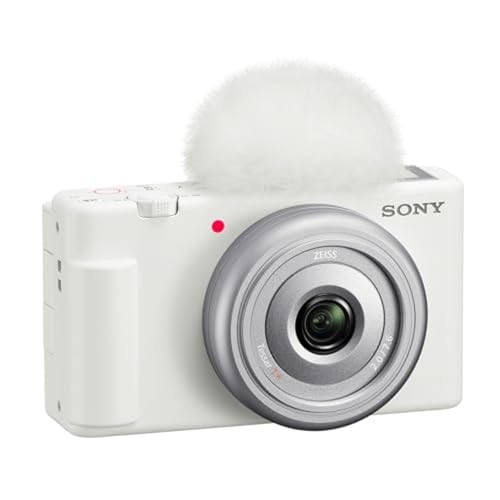
Sony ZV-1F — Best talking-to-camera in the cabin
Park the car, and the ZV-1F becomes the finest speaking instrument in this guide. Its wide fixed lens was designed for a face at arm’s length, which is almost exactly the distance between a driver and a sensibly placed cabin camera, and the geometry flatters the genre’s core shot: the driver framed with headroom, a slice of cabin for context, the world visible through glass behind. Sony’s creator colour renders skin kindly under the mixed light a car provides — daylight through the windscreen, shadow from the roof — without the waxy correction cheaper cameras apply.
Eye autofocus carries the parked segment and the gentle-road segment alike. The driver glances at the road, at mirrors, down at controls, back to the lens, and the Sony’s eye detection re-acquires through all of it without the visible hunting that makes cabin footage feel amateur. For the review-and-reaction formats that dominate car vlogging — the driver discussing a route, a car, a day — that reliability is the product. The camera asks for no focus management whatsoever, which in this category is a safety feature wearing a specification’s clothes.
Rolling footage is where honesty must moderate the praise. The ZV-1F’s stabilisation is electronic and modest, designed for a walking pace rather than a vibrating dashboard, and on coarse surfaces the frame trembles in a way the gimbal pick below simply does not. The working pattern most owners settle into is a division of labour: the Sony films the parked introductions, the destination walkarounds and the quiet-road conversations, while a tougher camera handles the rough miles between. Judged inside that pattern it is superb; judged as an all-surface driving camera it is miscast.
Mounting a camera of this shape takes more thought than mounting an action camera. It wants a proper small tripod head or a quality clamp mount rather than a sticky pad, its screen wants to face the driver for the pre-departure framing check, and its lens wants clearance from the windscreen so reflections stay out of the shot. None of this is difficult, but it is a parked-car ritual of a minute or two, and creators who film five short drives a day may feel the friction the action cameras were invented to remove.
Audio follows the Sony pattern familiar from its other appearances in this series: competent built-in microphones for parked conversation in a quiet cabin, and a clear upgrade path to a wireless lavalier on the driver for anything recorded over road noise. That pairing — ZV-1F on the dash, microphone on the collar — produces the cleanest spoken audio achievable in this guide without a passenger operating equipment, and for talk-led channels it settles the purchase on its own.
Creators whose format is the considered monologue — the commute essay, the parked review, the drive-and-discuss on gentle roads — should start here and build outward. The ZV-1F will film the segments viewers actually quote, and its limits on rough roads are the honest kind: visible in advance, plannable around, and covered by partners elsewhere in this list.
One more virtue suits the genre specifically: the flip screen makes the pre-drive framing check a ten-second glance rather than a contortion. The driver sits in the seat, confirms headroom and sightline clearance, starts recording and drives away having touched nothing since. In a category where the setup ritual is a safety behaviour, a camera that makes the ritual short makes the ritual happen — and rituals that happen are the ones that keep footage, and drivers, intact.
- Type: compact creator camera, 1-inch sensor
- Lens: wide fixed lens for arm’s-length framing
- Focus: eye autofocus with product showcase behaviour
- Mounting: tripod thread, clamp or quality suction mount
Strengths
- Finest parked and gentle-road talking footage here
- Eye focus survives glances at mirrors and road
- Wireless microphone path for clean cabin speech
Trade-offs
- Electronic stabilisation trembles on coarse roads
- Mounting ritual slower than an action camera’s
- Wants shade and removal in a sun-parked car
Best for: talk-led car channels filming parked segments and calm drives. Not suited for: rough-road rolling footage as the only camera.

DJI Osmo Pocket 3 — Best for smooth moving footage
Set the Pocket 3 running on a road that makes other cameras tremble and the difference is not subtle. Its three-axis gimbal isolates the lens mechanically, absorbing the dashboard’s buzz and the chassis’ shudder before they reach the image, and the resulting footage has a gliding calm that viewers read instantly as production value. The driver stays centred by subject tracking, the horizon stays level through corners, and the whole cabin scene acquires the steadiness of a much larger rig that a car could never actually carry.
That isolation solves the genre’s signature technical problem at its root. Electronic stabilisation fights vibration after the sensor has already recorded it, cropping and warping as it goes; the gimbal prevents the vibration from becoming image movement in the first place. On the broken urban surfaces and coarse rural lanes where car vlogs are actually filmed, prevention beats correction by a margin no specification sheet conveys. Only watching the two kinds of footage side by side settles it, and this guide’s advice is to do exactly that before spending anywhere else.
The 1-inch sensor earns its place on the night drive and the tunnel transition. Cabin footage at dusk, lit by streetlights sweeping past, separates cameras cruelly, and the Pocket’s larger sensor holds the driver’s face in usable tones while lesser devices smear it into noise. Its autofocus, fast and face-led, copes with the driver turning between road and lens, and its screen — small, bright, rotatable — makes the parked framing check as quick as the Sony’s despite the far smaller body.
Mounting is the section where a buyer must think rather than assume. The Pocket 3 is a delicate precision instrument compared with an action camera: it wants a proper mount that holds its base while leaving the gimbal head free to move, clearance around that head so it never strikes trim or glass through its travel, and removal from a sun-baked cabin as a matter of routine. A suction mount positioned carelessly can foul the gimbal’s arc, and a fouled gimbal produces footage worse than none, because it looks like a fault rather than a style. Take the parked setup seriously and the camera repays it for years.
Its wireless microphone ecosystem completes the rolling package better than any rival manages. The transmitter clips to the driver’s collar or belt, the voice arrives at constant presence regardless of road noise, and the camera records the pair as one system with no cables crossing the cabin. For the solo driver filming a genuine moving piece-to-camera — the genre’s hardest trick — this combination of gimbal calm and collar-microphone clarity is the closest thing to a crew that fits in a jacket pocket.
Battery planning is the honest footnote. Gimbal motors and a bright screen drink power, a long drive wants the camera fed from the car’s USB supply or supported by spares, and the pre-departure check should include charge alongside framing. None of this diminishes the recommendation for creators whose footage is mostly motion: if the journey itself is the content, the Pocket 3 films it more beautifully than anything else that can be mounted in a cabin.
Consider also what the gimbal does for passengers filming the driver — the two-person channel’s standard arrangement. Handheld in a moving car, an ordinary camera transmits every bump through the operator’s arms; the Pocket absorbs the car and the hands together, so a passenger can gather cutaways, reactions and detail shots at a steadiness that used to require the car to stop. Channels that film as pairs will find this little device quietly becomes both cameras: the mounted master and the roving second, swapped between roles at every fuel stop.
- Type: gimbal camera with 1-inch sensor
- Stabilisation: three-axis mechanical gimbal
- Tracking: subject tracking for the driver
- Audio: wireless microphone ecosystem available
Strengths
- Calmest rolling footage in this guide, full stop
- Strong dusk and tunnel-transition image
- Collar microphone pairing solves cabin speech
Trade-offs
- Gimbal needs clearance and careful mounting
- Less abuse-proof than the action cameras
- Long drives need a power plan
Best for: journey-led channels filming while genuinely moving. Not suited for: being left mounted in a hot parked car.

GoPro HERO13 Black — Best mount-anywhere workhorse
Ask working car vloggers what actually films their miles and the HERO13’s name comes up with a shrug that means: of course. Its advantage is not any single specification but the accumulated practicality of the action-camera form — a small waterproof brick that suction-mounts to glass, clamps to a headrest post, sticks to a dash pad, and survives being dropped into the footwell by the process. In a category where the camera must be repositioned constantly and forgiven everything, that form factor is a feature no sensor statistic outranks.
The mount ecosystem deserves the emphasis this guide keeps giving it. The same camera that films the driver’s face from the windscreen in the morning can ride a suction cup on the rear quarter panel for the afternoon’s rolling beauty shots, then clamp to the passenger headrest for the two-shot conversation on the drive home. Creators build a vocabulary of angles from one device and a pouch of mounts, and the channel’s visual range grows without a second camera purchase. No other pick here changes jobs that fast.
Stabilisation is electronic and, within the action-camera class, excellent — the product of generations of refinement on mountain bikes and surfboards, environments whose violence makes a car cabin look restful. Coarse-road buzz still reaches the image more than the gimbal’s footage shows, but ordinary driving, cornering and urban surfaces are handled with a composure that satisfies viewers completely. The ultra-wide view keeps driver and cabin in frame from positions where narrower lenses crop, and interchangeable lens options let the look be tuned from maximum context to something calmer.
Heat and endurance are managed rather than solved, and owners should learn the management early. High-resolution recording in a warm cabin is the action camera’s hardest shift; sensible settings, airflow across the mount position and the camera’s own thermal behaviour understood in advance keep recordings intact. Power from the car’s USB supply suits long drives where the mount position allows a cable that crosses nothing the driver touches. These are the known rituals of the form, and the community knowledge around them is deep enough that no beginner need discover any of it alone.
The image character is the action camera’s character: wide, vivid, deep in focus from the driver’s nose to the horizon, with an energy that suits journey content and a slight geometric exuberance at the frame edges that traditionalists notice. Talking-head purists building a calm, cinematic cabin brand will prefer the Sony’s rendering; creators whose brand is the road itself rarely look back once the GoPro’s convenience takes hold of their routine.
As the single-camera answer for a new car channel, this is the guide’s most defensible recommendation: toughest body, widest mounting vocabulary, stabilisation proven in harsher worlds than traffic, and a resale-proof familiarity that makes tutorials, mounts and accessories inexhaustible. Add the Sony or the Pocket later for beauty; start here for coverage.
Its voice-control and quick-capture habits also fit the parked-ritual discipline this guide preaches. Recording can be started before the driver settles, the state confirmed by a glance at its screen or light, and from that moment the camera asks for nothing. Features that sound like conveniences in a studio become, in a car, the difference between a setup the driver can complete legally at rest and one that tempts a reach at the first red light — a temptation this category must design out rather than merely warn against.
- Type: waterproof action camera
- View: ultra-wide, with lens options to calm it
- Mounts: suction, clamp, adhesive and headrest ecosystem
- Stabilisation: electronic, action-proven
Strengths
- More mounting positions than any rival here
- Survives heat cycles, knocks and weather
- One camera covers face, cabin and exterior angles
Trade-offs
- Warm-cabin recording needs thermal sense
- Wide look will not suit every brand
- Cabin audio needs a microphone plan
Best for: new car channels and angle-rich journey content. Not suited for: calm cinematic talking-head purists.

Insta360 X4 — Best two-shots-from-one camera
Every car vlogger faces the same arithmetic: one journey, two stories. The driver is a story — face, voice, reactions — and the road is another, unspooling through the windscreen. Conventional cameras make the creator choose, or carry two devices and sync them. The X4 declines the arithmetic by recording in every direction at once: mounted centrally, its twin lenses capture the driver’s face and the road ahead in a single continuous file, and the editor later extracts a driver shot, a road shot, or a reframed movement between them, from the same take.
That single-file convenience compounds across a channel’s life. There is no second camera to charge, mount, start and synchronise; no mismatched colour between angles; no journey where the road camera was forgotten and the driver’s best reaction has nothing to cut to. The reframing workflow does ask for editing time — the now-familiar tax of 360 capture — but car content repays it unusually well, because the reframe can follow the story: hold the driver through the anecdote, swing to the road for the reveal, return for the laugh.
Placement inside a cabin is more forgiving than any conventional camera allows. The X4 wants a central station with sightlines both ways — a mount between the seats, a clamp at the mirror stem where local rules permit, a position on the dash centre — and from that one station the sphere covers what two cameras would. Its own body largely vanishes from its footage through the stitching, so a well-placed X4 seems to float in the cabin’s middle, an angle no bracket visibly explains.
Image quality per extracted frame trails the dedicated cameras, as always with 360 capture: the resolution is spread around a sphere and the driver’s face receives a share of it. For platform viewing the share is ample, and the X4’s headline resolution is generous, but creators filming hero talking segments for large screens should treat the Sony as the beauty camera and the X4 as the coverage camera. Low light divides the sphere’s resources further; night drives are the X4’s weakest assignment and the Action 5 Pro’s strongest, which is why the two so often travel together.
Audio from a centrally mounted 360 camera sits at the cabin’s acoustic middle — equidistant from driver and road noise — and benefits from the same wireless-microphone discipline as every pick here. Storage, meanwhile, grows quickly: sphere files are the largest in this guide, and a channel filming daily drives should budget drives the way it budgets fuel.
For the solo creator who films alone, edits alone and refuses to choose between their own face and the road, the X4 is the most liberating single purchase in this guide. It converts the car’s oldest production problem into an editing decision, and editing decisions, unlike missed angles, can always be revisited.
Passenger content unlocks a further trick worth naming. With a guest in the car — the interview drive, the reaction ride, the guided tour — the sphere holds both occupants and the passing world, and the editor can cut a genuine conversation programme from one recording: driver, guest, road, in any order, at any rhythm. Two-person car formats that once needed a three-camera rig and a syncing session now need a mount and an afternoon in the reframing software, and small channels have noticed.
- Type: 360 action camera, twin lenses
- Coverage: driver and road in one recording
- Workflow: reframe angles during editing
- Placement: one central cabin station
Strengths
- Both stories of every journey, always recorded
- No second camera to charge, mount or sync
- Conversation formats cut freely in the edit
Trade-offs
- Reframing time on every video
- Night driving is its weakest light
- Largest files and storage appetite here
Best for: solo creators who want driver and road from one device. Not suited for: publish-raw workflows or night-led channels.

DJI Osmo Action 5 Pro — Best exterior driving angle
Some of a car video’s most loved shots happen outside the cabin: the low bumper angle eating the road, the wheel-arch view of a corner being taken, the dusk departure with headlights pooling on wet tarmac. The Action 5 Pro is this guide’s specialist for that exterior world. Its large sensor for the class gives it low-light ability the other action cameras envy, its stabilisation is DJI’s mature best, and its body is built to be rained on, splashed and pressure-washed without a conversation about it.
The dusk advantage deserves expansion, because car content disproportionately happens at day’s edges — the dawn start, the golden-hour arrival, the night drive home. In that light the Action 5 Pro keeps shadow detail and colour where smaller-sensor rivals retreat into noise, and its footage cuts against cabin material from the Sony or Pocket without the jarring quality drop that betrays a cheap second camera. A second angle should feel like a choice, not a compromise, and this one does.
Mounting discipline on a car’s exterior is its own craft, and the camera’s ecosystem supports it properly: rated suction mounts for panels and glass, clamps for rails and bars, tethers as the non-negotiable backup every exterior mount deserves. The pre-departure ritual lengthens by a tether check and a lens wipe, and creators should treat both as sacred — an exterior camera lost at speed is a cost and a hazard, and the genre’s veterans are evangelical about backup straps for a reason written in lost hardware.
Inside the cabin it serves honourably as the tough second camera — the rear-seat angle, the passenger’s view, the fixed shot that lives in the car permanently because nothing about heat, cold or being knocked off a seat by luggage troubles it. Its subject-tracking abilities add a modest following behaviour for parked pieces, though no one should buy it as a talking-head primary while the Sony and Pocket sit in the same guide.
Audio is the action camera’s customary footnote: fine for road sound, wind-managed roar and the texture of a journey, with the driver’s speech reserved for the cabin camera and its microphone. Battery endurance across a filming day of mixed angles is strong for the class, and spares are small enough that the glovebox holds a day’s worth without negotiation.
Buy it as the channel’s exterior department and permanent spare, and it will earn its place on every journey where the light is low, the road is wet or the angle is brave. Channels are remembered for their boldest recurring shot; this is the camera that makes bold shots routine.
Wet-weather filming, usually the first casualty of a car channel’s schedule, becomes a speciality rather than an exception. Rain on a windscreen from inside is atmosphere; rain filmed from a low exterior mount is cinema, and the Action 5 Pro’s sealing and low-light calm turn the journeys other creators cancel into the videos their audiences save. A channel that publishes its best work on the worst days owns a niche with remarkably little competition.
- Type: rugged action camera, large sensor for class
- Stabilisation: DJI’s mature electronic system
- Role: exterior angles and tough cabin second camera
- Build: waterproof, made for panel and rail mounts
Strengths
- Best low-light action footage in this guide
- Exterior mounting ecosystem with tether discipline
- Doubles as the indestructible cabin spare
Trade-offs
- Not a talking-head primary camera
- Exterior mounts demand ritual checks
- Speech audio belongs to the cabin setup
Best for: exterior driving shots and wet, low-light journeys. Not suited for: solo creators wanting one beauty camera only.

Insta360 GO 3S — Best hidden detail camera
Watch a produced car video closely and the shots that signal craft are rarely the wide ones. They are the inserts: a hand moving to the indicator, feet working pedals through a heel-and-toe downshift, a key turning, a badge caught in passing light. The GO 3S exists for those shots. Thumb-sized and magnetic, it clings to an A-pillar, a seat rail, a metal trim panel or the driver’s own chest mount, and records the cabin’s small geography from distances no ordinary camera can occupy.
Its size changes what can be filmed rather than merely how. A camera this small does not alter the scene it records: the driver’s hands behave naturally around it, passengers forget it within minutes, and the cabin’s sightlines stay legal and uncluttered because the device is nearer to a coin than to a camera in visual weight. For channels whose charm is authenticity — the unposed drive, the real conversation — that invisibility is worth more than resolution.
The honest limits are the familiar ones for this little device wherever it appears in this series: segment-length recording rather than journey-length, a small sensor that trails in dusk cabins, and footage intended for an edit rather than direct publication. The GO 3S is a spice, and a channel that tries to make it the meal will be hungry within a week. Within an edit built on any primary pick above, though, its inserts raise the apparent production budget of every video they touch.
Mounting imagination is the skill it rewards. The magnetic and clip accessories invite experiments — under the rear-view mirror for a road-and-hands frame, on the passenger’s chest for the driver’s profile, low by the pedals for a driving-technique segment — and failed experiments cost nothing because the camera risks nothing. Creators develop signature inserts the way they develop catchphrases, and several channels in this genre are recognisable by a GO-series angle before a word is spoken.
Short-form content is its second natural home. Vertical clips of a single perfect gear change, a reaction caught at chest height, a detail tour of a beloved car’s cabin — the little camera produces these in the gaps of a filming day, mounted in seconds and forgotten until the moment arrives. Channels feeding daily short platforms alongside their long drives will find it working far beyond its price.
As the final pick it makes the guide’s closing argument: car vlogging craft is mostly not about the camera that films the face. It is about the angles around the face, and no device in this list gathers those angles with less friction, less risk or less visual intrusion than this one.
Reviewers of cars — rather than journeys — should note its particular gift for their format. Cabin details decide car reviews: the click of a switch, the grain of a trim panel, the reach to a control. A GO 3S stationed beside each control as the reviewer works through the cabin produces a completeness of coverage that a single wide camera cannot approach, and the resulting videos feel examined rather than merely described.
- Type: thumb-sized wearable camera
- Mounts: magnetic, clip and chest accessories
- Role: insert and detail shots inside the cabin
- Recording: segments for editing, not full journeys
Strengths
- Films hands, pedals and controls at true distance
- Small enough to leave behaviour unposed
- Signature angles at a fraction of a rig’s cost
Trade-offs
- Never a primary journey camera
- Small sensor trails at dusk
- Footage lives in an edit, not raw
Best for: detail inserts beside any primary camera in this guide. Not suited for: recording whole drives on its own.
Where exactly should the camera sit, and what does the law expect?
Rules differ by country and sometimes by state, and this guide will not pretend otherwise: the creator’s duty is to check the local rule on windscreen obstruction before choosing a mount, not after receiving the fine. The widely shared principles are stable, though. Keep the driver’s primary sightlines clear, keep every control reachable and unobstructed, secure the camera so it cannot become a projectile in a sudden stop, and arrange everything so that nothing needs touching between departure and arrival. A setup that satisfies those four principles is defensible almost anywhere; one that fails any of them is wrong everywhere.
Position follows from the principles. Low dash-centre and passenger-side placements keep the lens out of the driver’s forward view while holding the classic framing. Mirror-stem mounts are popular and must be checked against local obstruction rules with particular care. HERO-style headrest mounts serve the two-shot and the over-shoulder road view without touching the windscreen at all, which is why conversation-format channels quietly favour them. Whatever the position, the test is performed parked, with the driver seated, hands on the wheel, confirming the camera is furniture — present, recording, and entirely out of the driving.
Passengers change the legal and creative picture together. A passenger may operate a camera where a driver may not, may reframe between segments, and may hold the Pocket 3 for the roving shots described earlier. Channels built on a driver-presenter and a passenger-operator are not cheating the genre; they are its professional form, and several picks in this guide are plainly better in those hands than in a solo driver’s parked-ritual routine.
How do the six compare on the road?
| Camera | Road role | Signature strength | Watch out for |
|---|---|---|---|
| Sony ZV-1F | Parked and calm-road talker | Face, colour and eye focus | Trembles on coarse surfaces |
| DJI Osmo Pocket 3 | Moving master camera | Gimbal calm through vibration | Mount clearance for the gimbal |
| GoPro HERO13 Black | All-position workhorse | Mounts and toughness | Thermal sense in warm cabins |
| Insta360 X4 | Driver-plus-road coverage | Two stories, one recording | Reframing time, night light |
| DJI Osmo Action 5 Pro | Exterior specialist | Low light and weather | Tether and mount rituals |
| Insta360 GO 3S | Hidden detail camera | Inserts at true distance | Segments only, small sensor |
How should a car vlogger handle sound on the move?
Begin by accepting the hierarchy: at speed, road and wind noise will defeat any microphone mounted near the camera, because the noise is everywhere and the voice is one small source facing away. The wireless lavalier on the driver’s clothing inverts the contest by moving the microphone to the voice. Every primary pick in this guide pairs with that arrangement directly or through its ecosystem, and the purchase should be budgeted with the camera rather than discovered after the first noisy upload.
Format design can dodge the fight entirely. Many durable channels record their considered speech parked — before departure, at the destination, in the quiet of a stopped car — and let the moving footage carry music, road sound and brief remarks. The edit then sounds intentional rather than embattled, and the driver’s full attention stays on the road for every rolling second. New creators should copy that structure shamelessly; it is not a compromise but the genre’s received wisdom.
Voiceover recorded later is the third path, and for journey narration it is often the best sounding of all: the drive filmed wide and wordless, the story told afterward in a quiet room with the footage on screen. The cameras above serve it by gathering beautiful, stable, well-exposed miles — which returns the sound question to the picture question, where this guide began.
What does a sensible car filming day actually look like?
It begins the night before, with batteries charged and cards emptied, because a filming day that starts with logistics starts late. The mount goes on while the car is parked and cold; the framing is checked from the driver’s seat; the microphone is clipped and its level tested with a spoken sentence and a playback through headphones — the step everyone skips and professionals never do. Then the drive happens, untouched, and the camera’s whole involvement is a light the driver is allowed to ignore.
Stops are the working moments. Fuel stops, viewpoints and destinations are when angles change, batteries swap, lenses get wiped and the parked segments get filmed with the beauty camera. A day structured that way produces a journey’s worth of coverage with the camera handled only while stationary — which is, not coincidentally, also exactly how the law and common sense want it. The drive home reviews nothing, adjusts nothing and simply brings the footage back.
Which journeys suit which camera, honestly?
The daily commute is the genre’s bread and butter, and it rewards the setups that assemble themselves. A camera that lives in the car, mounts in seconds and starts with a single press — the HERO13’s natural life — films a hundred commutes while a delicate rig films ten and spends ninety days in a drawer. Commute channels are built on volume and rhythm; their camera should be the one with the least friction between the driver’s morning and the upload, and toughness matters more than beauty because the audience returns for the voice and the route, not for cinema.
The deliberate road trip inverts the values. Here the journey is an event, filmed once and remembered, and the extra minutes of a careful setup vanish against days of footage. The Pocket 3’s calm and the X4’s double coverage earn their rituals on a trip like this, and the Action 5 Pro’s exterior angles turn fuel stops into production sessions. Creators planning a signature journey should rent or borrow upward for it without guilt: the footage will anchor the channel’s identity for years, and the everyday camera can resume its duties when the car comes home.
Night driving, finally, is a specialism that chooses its own equipment. Cabin light falls to dashboard glow and passing streetlights, exterior light becomes pools and streaks, and the sensor’s low-light character stops being a preference and becomes the whole image. The Action 5 Pro leads the exterior night work, the Pocket 3 holds the cabin night conversation best, and every other pick should be scheduled for daylight with the honesty this guide has tried to practise throughout.
What goes wrong most often in car vlogging?
The shaken masterpiece leads the list: beautiful route, ruined footage, because electronic stabilisation was trusted on a surface that needed a gimbal or a damped mount. Second is the cooked camera, left at a sunny windscreen until thermal protection ended the take. Third is speech buried under road roar by a channel that bought a lens before a microphone. Fourth — and the only one that matters beyond the channel — is the driver who adjusted something at speed. Every failure on this list is prevented by the parked ritual, the right isolation and the microphone budget, in that order.
How much should the second camera matter to a beginner?
Less than the internet suggests, and later than the internet suggests. A new car channel’s first fifty videos teach the creator their format — where the voice sits, which journeys the audience loves, whether the talking happens parked or rolling — and every one of those lessons changes what the second camera should be. The beginner who buys coverage first, in the HERO13’s pouch of mounts, learns those lessons while filming acceptably the whole time. The beginner who buys a three-camera rig first learns them while managing batteries. Start with one honest camera, let the format declare itself, and let the second purchase be an answer to a named frustration rather than a hope. This guide’s specialists will still be here, and by then you will know which of their specialisms is yours.
Final Recommendation
Choose by where your words happen. Speech delivered parked and on calm roads belongs to the ZV-1F; speech that must survive real motion belongs to the Pocket 3 and its gimbal; coverage, toughness and a pouch of angles belong to the HERO13; the refusal to choose between face and road belongs to the X4; the wet, low, exterior shot belongs to the Action 5 Pro; and the details that make a channel look produced belong to the GO 3S. Most grown channels own two of these and borrow the roles of the rest.
Whichever combination you build, hold the discipline that this guide has repeated deliberately: mount parked, check parked, drive untouched. The audience can hear a creator who is thinking about the road, in the calm of the voice and the steadiness of the story, and they reward it with the trust that car channels run on. The camera is the easy purchase. The ritual is the craft.
Frequently Asked Questions
Is it legal to film myself while driving?
Filming equipment rules and distracted-driving rules both apply, and they vary by place. The safe universal pattern is a securely mounted camera set up while parked, never touched or watched while moving, positioned clear of sightlines and controls. Check your local rules on windscreen mounts specifically, and when in doubt use a headrest or dash position and a passenger operator.
Why does my driving footage wobble even with stabilisation on?
Road vibration arrives at frequencies electronic stabilisation handles poorly, and the wobble is the system correcting late. A gimbal camera isolates the lens mechanically, a damped or better-placed mount reduces what arrives, and smoother road positioning helps more than any setting. The Pocket 3 exists in this guide precisely for this complaint.
How do I stop the windscreen view blowing out to white?
The camera is exposing for the darker cabin. Cameras with strong dynamic range hold both better; angling slightly to include less sky, cleaning the glass inside and out, and filming at day’s edges all help. Accepting a bright exterior as the price of a well-exposed driver is also a legitimate creative choice the genre makes constantly.
Can one camera really cover a whole car channel?
Yes — the HERO13 or the Pocket 3 each carry a channel alone credibly, trading beauty against toughness in opposite directions. The other picks are specialists that widen a channel’s range once the core format works. Buy the core first; the inserts and exterior angles are growth, not prerequisites.
What about filming passengers, especially children?
Consent and comfort come before content: agree what is filmed, keep cameras from becoming a presence passengers must perform for, and follow platform rules on minors. Technically, the X4’s single recording is the least intrusive way to cover a conversation, since nothing in the cabin needs aiming at anyone.
How do I keep a camera powered on a long drive?
Feed it from the car’s USB supply where the camera supports continuous power and the cable can run without crossing the driver’s controls, or plan battery swaps at stops for the action cameras. Test the arrangement parked: some cameras behave differently on external power, and a filming day is the wrong place to learn it.
Related Guides
Creators whose drives are really journeys will find the moving-camera discussion continued in the best cameras for youtube autofocus guide, while the pocket gimbal’s wider talents are explored in the best cameras for yoga videos roundup. For the desk half of a car channel’s life — editing suites, uploads and live sessions — the best cameras for work from home guide covers the stationary setup.


