reviewstook.com is reader-supported. When you buy through links on our site, we may earn an affiliate commission.
Where to buy
Salt water finds every weakness a camera has. It creeps into dials, fogs ports, corrodes mounts and turns one careless dunk into an expensive paperweight, which is why the best cameras for surfing photography split into two honest camps: small waterproof action cameras that ride the board, the helmet or the photographer’s own chest, and long-lens setups that never leave dry land. This guide is built mostly around the first camp, because that is where the verified choices in our pool actually live, and it treats the second camp frankly as a prose-only recommendation rather than pretending a wide-angle action camera can do a telephoto’s job.
The two camps answer different creative questions. A camera mounted inches from a surfer’s hand captures the drop, the spray and the tunnel of a barrel from inside the moment, with a closeness no beach lens can imitate. A telephoto on the sand captures the whole wave face, the lineup and the turn laid out against the horizon, with compression and context the board mount cannot give. Serious surf shooters eventually own both. Beginners should buy the camp that matches where they will actually stand — or float — during their first season.
Conditions discipline every choice below. Surf photography happens at dawn in flat light, at noon under glare, in wind-blown spray and in water cold enough to numb fingers through gloves. Buttons must work with wet hands, screens must stay readable in hard sun, housings must shrug off sand, and batteries must survive a session that runs longer than the forecast promised. A camera that is brilliant in a studio and miserable at the tideline is, for this job, simply a bad camera.
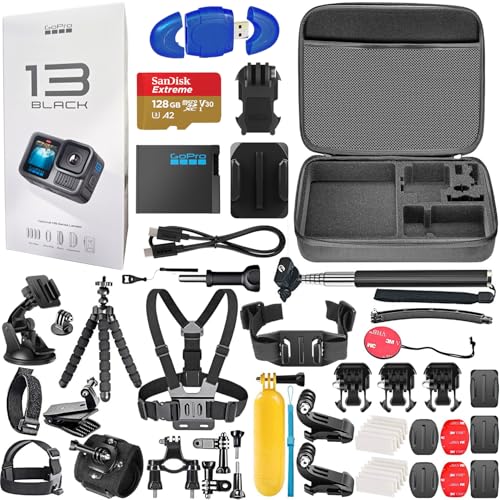
- GoPro HERO13 Black: check price on Amazon
- DJI Osmo Action 5 Pro: check price on Amazon
- Insta360 Ace Pro 2: check price on Amazon
- OM SYSTEM Tough TG-7: check price on Amazon
- AKASO Brave 7 LE: check price on Amazon
- Shore telephoto mirrorless kit (long-lens setup): sold as separate bodies and lenses through camera retailers
One promise up front about links: the five action and tough cameras below carry Amazon links because their exact models were verified against our pool. The sixth pick, the shore telephoto kit, is described in prose only. Lens and body combinations for beach shooting vary too much by budget and mount loyalty for a single listing to represent them honestly, and we would rather explain the recipe than point you at an arbitrary bundle.
Read the guide in the order the water dictates. Start with the quick picks if a trip is already booked, then use the choosing and technique sections to decide where you will shoot from, because position — in the impact zone, on a board, or behind a tripod on the headland — matters more to your results than any specification compared later in these pages.
Expect this guide to be opinionated about priorities. Resolution arguments fill forums, but surfers remember sessions, not specifications — so the judgements below keep returning to sealing, handling and the honest match between a camera and a position in the water. If a pick seems overqualified for its badge, that is because surviving the ocean with grace is a higher qualification than any number printed on a box.
Key Takeaways
- In-water surf work belongs to sealed action cameras; no interchangeable-lens body should swim without a proper housing.
- Field of view decides the story: ultra-wide mounts feel frantic and close, while a linear mode calms the distortion for faces and turns.
- Stabilisation matters less on a rigid board mount than on a handheld pole in chop, where smoothing rescues otherwise unusable clips.
- The OM SYSTEM Tough TG-7 is the stills-first exception — a real camera with a real zoom that swims without a case.
- A shore telephoto kit stays prose-only here because the right body and lens pairing depends on the system you already own.
- Rinse everything in fresh water after every session; salt left overnight is how good cameras quietly die.
In this guide
Quick Picks
| Pick | Badge | Why it earns its place |
|---|---|---|
| GoPro HERO13 Black | Best all-round surf action camera | The most complete board-and-water package in the pool, with magnetic mounting that speeds up angle changes between sets. |
| DJI Osmo Action 5 Pro | Best for dawn and dusk sessions | A large-sensor action camera whose low-light steadiness flatters the golden sessions surfers actually chase. |
| Insta360 Ace Pro 2 | Best for crisp stills from the water | Leica-co-engineered optics and an 8K ceiling give swimmers the sharpest frame-grabs and stills in this group. |
| OM SYSTEM Tough TG-7 | Best true stills camera that swims | A waterproof compact with a real zoom, macro talent and raw files — the photographer’s camera in a lineup of video machines. |
| AKASO Brave 7 LE | Best budget way into the water | A twin-screen, waterproof action camera at an entry price — the sensible first camera for a borrowed board and a new hobby. |
| Shore telephoto mirrorless kit (long-lens setup) | Best from the beach — prose-only pick | A full-frame or APS-C mirrorless body with a 100–400mm-class telephoto zoom: the classic beach recipe, described rather than linked. |
How did we choose these surfing cameras?
We began with a single disqualifying question: can this camera be in the ocean, on a wet board or under a shower of spray without a separate housing purchase standing between the buyer and the water? Models that failed that test were excluded from the linked picks no matter how strong their image quality, because a surf camera that needs a case you forgot at home photographs nothing at all. Sealing depth, port design and the maker’s own waterproof rating carried more weight than headline resolution.
Next we weighed handling with cold, wet hands. Surf sessions punish fiddly interfaces: tiny mode dials, buried menus and touchscreens that misread droplets all cost waves. Cameras earned credit for chunky record buttons, voice or glove-friendly controls, front screens a swimmer can frame with, and mounts that lock positively instead of relying on friction. We also favoured models whose batteries swap quickly on a beach towel, because a sealed unit with a dead cell ends the session as surely as a flat ocean.
Finally we split the field by intent rather than by brand. Some surfers want publishable stills pulled from a session; others want smooth video for coaching analysis; others again want a camera a child can drop on rocks without tears. The six picks map onto those intents deliberately, and the comparison table later in the guide keeps their compromises visible instead of crowning one universal winner the water would immediately contradict.
We also discounted spec-sheet heroics that the ocean neutralises. Extreme slow-motion modes that demand noon light, resolutions that throttle a camera to twenty hot minutes, andmarketing claims about durability all counted for little beside sealing, handling and honest battery behaviour. A surf camera’s brochure is written in a studio; its examination is held in six feet of moving salt water, and we marked accordingly.
Geography had a vote as well. A camera bought for tropical reef passes faces warm water, violent sun and long swims; the same model bought for a North Atlantic winter faces numb hands, grey noon light and batteries that lie about their charge. We favoured designs whose controls, screens and cells behaved across that whole span, because readers of a surfing guide are, by definition, people who travel toward weather.
Board, water or beach — where do the best cameras for surfing photography actually work?
Board-mounted shooting is the most forgiving place to start and the most limited. The camera is fixed, the framing repeats, and the surfer’s own body supplies the foreground in nearly every frame. It rewards wide fields of view and strong stabilisation, and it forgives modest sensors because the subject is close and the light offshore is usually generous. Its weakness is sameness: forty near-identical clips of knees and spray will teach you why professional surf films cut constantly to other angles.
Shooting while swimming or bodyboarding in the lineup is the craft’s deep end. You are reading sets, ducking waves, keeping a channel position and composing at the same time, often one-handed. Here a compact tough camera or a small action camera on a grip earns its keep, burst speed matters for stills, and a bright rear screen you can read through droplets is worth more than extra resolution you will never see at arm’s length in chop.
Beach shooting is a different discipline entirely — patience, reach and heat shimmer. From shore, the surfer is small, the lens is long, and the camera’s job is clean tracking autofocus and enough resolution to crop. That is telephoto territory, and no action camera in this guide pretends otherwise. Treat the prose-only shore pick as a recipe to build inside whichever lens system you already own, not as a gap in the lineup.
There is also the jetty, the pier and the headland — the elevated middle ground between swimming and the flat beach. Height restores the wave’s shape, lets you shoot down the line of a peeling break, and keeps gear dry while spray decorates everyone below. A compact long-zoom camera or the shore kit on a short tripod both thrive here, and for older photographers or healing shoulders, the headland is not a compromise at all: it is where the graphic, map-like surf images come from.

GoPro HERO13 Black — Best all-round surf action camera
GoPro built its name in exactly this water, and the HERO13 Black is the current fullest expression of that inheritance. It shoots high-resolution video with the tall, roomy framing surf editors love, because a near-square capture lets you reframe a vertical clip for a phone feed and a horizontal one for a television from the same take. For surfing photography that flexibility is not a gimmick: a wave ridden once cannot be ridden again for the camera, so a sensor that forgives your framing choice is a genuine creative insurance policy.
Its interchangeable lens mods are the surf-relevant headline. An ultra-wide mod stretches the sense of speed on a board mount, while the standard profile keeps faces and wetsuit logos honest when you swim out and shoot friends at conversational distance. The magnetic latch mount matters more than it sounds — swapping the camera from board to pole to chest harness with numb fingers, mid-session, without fumbling a thumbscrew into the sand, is the sort of small mercy that decides whether a second angle ever gets filmed at all.
Battery behaviour offshore is respectable rather than magical, and the honest routine is two cells rotated through a dry bag, swapped during the lull every surfer waits through anyway. Waterproofing to recreational depths without a housing covers board, swim and snorkel-depth work; only divers need the optional case. Touch controls still sulk when the screen is beaded with water, so set your mode before you paddle out and let the big record button do the talking.
Ownership details reward the organised. The camera’s desktop and phone editing tools handle the reframing workflow gracefully, spare lens protectors are cheap and everywhere, and a scratched protector swapped on the beach has saved more sessions than any firmware update. If your household already owns GoPro mounts from an earlier generation, they carry forward, which quietly makes this the cheapest upgrade path in the guide despite a flagship badge.
- Form: sealed action camera, waterproof without a housing for recreational depths
- Video: high-resolution capture with reframing-friendly tall sensor
- Lenses: interchangeable lens mods including an ultra-wide option
- Mounting: magnetic latch plus standard action-camera fingers
- Extras: front and rear screens, voice control for hands-busy starts
Strengths
- Reframing headroom means one take serves several edits
- Fast mount swaps suit multi-angle sessions
- Deep accessory ecosystem at every beach town
Trade-offs
- Touchscreen frustrates when wet, so pre-set modes
- Lens mods are extra purchases beyond the body
- Low dawn light is handled adequately, not beautifully
Best for: surfers and swimmers who film whole sessions and edit seriously afterwards.
Not suited for: shore photographers needing real telephoto reach across a wide break.

DJI Osmo Action 5 Pro — Best for dawn and dusk sessions
Surf rarely happens under kind light. The best swells arrive with dawn patrols and evening glass-offs, and that is precisely where the Osmo Action 5 Pro separates itself from the pack: its larger sensor holds colour and detail together as the light falls, so a backlit barrel shot keeps the wave’s green instead of collapsing into silhouette and noise. Photographers who shoot stills pulled from video will notice the difference first, but anyone reviewing an evening session will see cleaner shadows throughout.
DJI’s colour science flatters skin and sea together, which matters when the frame holds both a tanned shoulder and a grey-green wall of water. The camera’s subject-tracking and horizon-keeping stabilisation help the swimming photographer most: when you are treading water and panning with a rider, the horizon stays level even as your own body rolls, and clips come home looking calmer than the lineup felt. Front and rear touchscreens both stay usable with a deliberate wet fingertip, a small design courtesy the ocean rewards daily.
Endurance is the quiet headline. The Action 5 Pro runs long sessions on a cell and shrugs off cold water that makes rival batteries pessimistic, so a full morning tide is a realistic single-battery plan rather than an anxious one. Its magnetic quick-release mounting is secure in surf use, though we still recommend a tether on any board mount — magnets release fast by design, and the ocean accepts donations without receipts.
Two ownership notes matter at the beach. The camera charges quickly, which suits the dawn-patrol routine of topping up during coffee, and its low-light advantage compounds in video stills: frames pulled from an evening session stay presentable where rivals smear. DJI’s colour profiles also grade kindly alongside phone footage from friends, so mixed-camera edits of the same wave cut together without a colourist’s intervention.
- Form: sealed action camera with front and rear screens
- Sensor: larger-format sensor tuned for low-light video
- Stabilisation: horizon-keeping electronic smoothing
- Mounting: magnetic quick-release with standard adapter options
- Extras: strong cold-water battery behaviour, subject tracking
Strengths
- Cleanest dawn and dusk footage in this lineup
- Level horizons while shooting from a swimming position
- Long sessions per battery suit full-tide filming
Trade-offs
- Smaller third-party mount ecosystem than GoPro’s
- Still-photo experience is secondary to its video talent
- Quick-release demands a tether in heavy surf
Best for: video-first shooters who live for first-light and last-light sessions.
Not suited for: stills purists who want a zoom and a proper shutter feel.

Insta360 Ace Pro 2 — Best for crisp stills from the water
The Ace Pro 2 approaches the ocean like a camera first and a toy never. Its Leica-co-engineered lens and large sensor produce the most detailed captures in this roundup, and for surfing photography that detail is practical, not decorative: a swimmer shooting from the channel is always a little farther from the rider than planned, and resolution is what lets you crop into the turn without the image dissolving into watercolour. Its high-resolution video similarly yields stills that survive printing, which most action cameras only promise.
A flip-up rear screen sounds like a studio feature until you are floating at water level trying to frame a takeoff zone you can barely see over the chop. Tilting the display lets you hold the camera low, near the surface drama, while still composing like a photographer instead of guessing. The waterproof body handles immersion for typical surf and swim depths, and the wind-and-spray audio handling keeps voice notes and coaching commentary intelligible on breezy headlands between sets.
Low-light processing is the other quiet strength; the camera’s noise reduction keeps evening sessions watchable without smearing the texture of the wave face. The costs are size and appetite: this is among the larger action cameras here, it asks for fast, capacious cards at its highest settings, and its battery life trails the DJI when both are pushed hard. Shooters who value the frame over the runtime will accept that trade happily.
Plan storage like a professional and the Ace Pro 2 rewards you; improvise and it punishes you. Its highest modes fill cards at a rate that turns a week-long surf trip into a hard-drive logistics exercise, so travel with a laptop or a card reader and an evening offload ritual. Shooters who build that habit get the sharpest archive in this guide; shooters who will not should step down a model and spend the savings on swell forecasts and petrol.
- Form: sealed action camera with flip-up rear screen
- Optics: Leica-co-engineered lens over a large sensor
- Video: up to 8K capture for maximum crop freedom
- Screen: tilting display for low, water-level framing
- Extras: strong low-light processing, clear wind-handled audio
Strengths
- Sharpest detail for cropping distant riders
- Flip screen transforms water-level composition
- Pulled stills hold up unusually well in print
Trade-offs
- Bulkier in a wetsuit pocket than slimmer rivals
- Top settings devour card space quickly
- Battery endurance is good rather than class-leading
Best for: swimming photographers who crop hard and print their best frames.
Not suited for: minimalists who want the smallest possible board camera.

OM SYSTEM Tough TG-7 — Best true stills camera that swims
Every other linked pick in this guide is a video machine that also takes photographs. The Tough TG-7 reverses that priority, and surf photographers who think in stills should start here. It is a genuinely waterproof compact — no housing, no port anxiety — with a zoom lens that lets a swimmer frame a rider at several distances instead of accepting whatever the fixed wide angle delivers. Raw capture gives its files the editing latitude that JPEG-only action cameras cannot match when a backlit wave needs rescuing.
Its party tricks turn out to be surf tricks. The celebrated macro modes photograph the small world of the tideline — anemones, shell patterns, the board’s wax texture — while you wait for the tide, and the camera’s freeze-proof, crush-resistant build treats a drop onto wet rock as an inconvenience rather than a claim form. Underwater white-balance presets keep submerged frames from going swamp-green, which matters for the duck-dive and reef shots that give a surf gallery its variety.
Video is present and competent rather than class-leading, the sensor is small by mirrorless standards, and low-light stills ask for modest expectations after sunset. None of that dents its role: this is the camera a photographer carries into the water when the photograph, not the clip, is the point of the swim. Pair it with a bright wrist lanyard, because it sinks with great dignity.
The TG-7’s accessory system deserves more attention than it gets. Converter lenses widen or extend its reach, a dedicated underwater housing exists for those who outgrow its native depth rating, and the camera’s GPS and field-sensor logging stamps frames with the conditions that produced them — data a surf photographer grows to love when revisiting a break a season later and wondering what tide made the bank work.
- Form: waterproof rugged compact, no housing needed
- Lens: built-in zoom with strong macro capability
- Files: raw stills plus competent video modes
- Build: freeze-proof and crush-resistant sealed body
- Extras: underwater white-balance presets, accessory lens ring system
Strengths
- Real zoom framing while swimming or wading
- Raw files rescue backlit wave exposures
- Macro modes fill flat-spell galleries beautifully
Trade-offs
- Video trails the action cameras here
- Small sensor limits dusk image quality
- It sinks; a float strap is essential kit
Best for: stills-first photographers who shoot in the water and at the tideline.
Not suited for: video creators needing high-frame-rate slow motion.

AKASO Brave 7 LE — Best budget way into the water
Not every surf camera should cost as much as a board. The Brave 7 LE exists for the photographer who is borrowing equipment, teaching a teenager, or testing whether surf shooting is a passion or a passing phase before committing serious money. It is waterproof in its housing-free form for shallow recreational use, carries both front and rear screens so a swimmer can frame a selfie-style commentary or check a board mount’s angle, and records stabilised 4K video that looks entirely respectable in daylight.
Daylight is the operative word. In the bright, contrasty conditions of a mid-morning session the AKASO’s footage is cheerful and shareable, and its electronic stabilisation handles a pole mount in chop with more grace than its price suggests. The included accessory bundle — mounts, a remote, spare bits that premium brands sell separately — means the camera arrives ready for a board, a helmet and a bike ride home, which for a first kit is a real and underrated virtue.
Expectations must be set honestly. Low-light footage softens quickly, the app experience is functional rather than delightful, and the build invites care rather than abuse. Treat it as a season-one camera: it will teach you angles, timing and the discipline of rinsing your gear, and if the ocean claims it during a heavy set, the loss stings for an afternoon instead of a month.
There is a social virtue to a cheap camera that premium models cannot copy: you will lend it. The Brave 7 LE is the camera you hand to a grommet, strap to a borrowed soft-top, or give a travelling friend for their first reef trip, and some of the most joyful surf footage ever made exists precisely because nobody was precious about the equipment. Buy it for generosity as much as for thrift.
- Form: compact action camera with front and rear screens
- Video: stabilised 4K capture for daylight sessions
- Kit: generous included mount and accessory bundle
- Control: wrist remote included for start-stop at distance
- Extras: Wi-Fi transfer to the companion phone app
Strengths
- Lowest financial risk in the water
- Twin screens help framing from any position
- Bundle arrives session-ready without extras
Trade-offs
- Dusk and dawn footage loses detail fast
- App polish lags the premium brands
- Demands gentler handling than rugged rivals
Best for: beginners, lenders and families learning surf photography together.
Not suited for: creators publishing low-light work to a paying audience.
Shore telephoto mirrorless kit (long-lens setup) — Best from the beach — prose-only pick
This pick is deliberately not a link. From the sand, surfing photography becomes telephoto photography, and the right purchase is a recipe — a weather-sealed mirrorless body you may already own, plus a long zoom in the 100–400mm class (longer still on an APS-C body, where the crop stretches reach for free) — rather than any single boxed product. Buying the lens inside your existing system preserves your menus, your batteries and your muscle memory, and a second-hand long zoom from a reputable dealer is one of the best-value purchases in all of sports photography.
What the beach setup buys you is narrative. A compressed frame stacks rider, wave face and horizon into one graphic image; tracking autofocus follows a surfer across the break while you pan from a tripod or monopod; and high-resolution stills let you crop a distant takeoff into a publishable frame. Shoot bursts at the peak of each turn rather than holding the shutter through entire rides, expose for the whitewater so highlights survive, and expect heat shimmer on summer afternoons to soften more frames than your autofocus ever misses.
Budget the unglamorous accessories too: a sturdy monopod, a rain cover for sea spray, a polarising filter sized for the lens, and a chair you are willing to sit in for three hours. The shore photographer’s craft is patience organised by gear, and this kit — assembled inside your own system — is how the postcard images on surf-shop walls were actually made.
Second-hand discipline makes or breaks this pick’s value. Buy the lens from a dealer who grades honestly and offers returns, inspect for fungus and sand in the focus ring, and test tracking on moving traffic before pointing it at a break. A clean used telephoto in your existing system will out-photograph any new action camera from the beach, every single session, which is why seasoned shore shooters guard their lenses and lend their action cameras.
- Form: interchangeable-lens mirrorless body plus long telephoto zoom
- Lens class: 100–400mm or longer; APS-C crop extends effective reach
- Support: monopod or tripod for panning across the break
- Protection: rain cover against spray, polariser for glare control
- Extras: fast cards for burst sequences at the peak of turns
Strengths
- Only setup here that frames distant breaks tightly
- Burst stills and tracking focus suit classic surf imagery
- Lens holds value and serves other sports and wildlife
Trade-offs
- Heaviest, priciest route in this guide by far
- Useless in the water without an expensive housing
- Heat shimmer and spray tax image quality at range
Best for: patient beach photographers building classic, graphic surf stills.
Not suited for: anyone who wants to swim, float or mount a camera on a board.
Which features actually matter when a camera goes surfing?
Start with sealing, because the ocean does not negotiate. A maker’s waterproof rating should cover your actual use without a housing: board mounts and swimming sit comfortably inside recreational depth ratings, while freediving to a reef needs more. Check how the sealing is achieved — port covers, battery doors and lens mods are the leak points — and prefer designs whose doors lock positively. A camera that is waterproof only inside a case is a fine camera, but price the case into the comparison or the bargain is an illusion.
Field of view is your second decision, and it is a storytelling choice disguised as a specification. Ultra-wide views exaggerate speed and curl the horizon; they flatter board mounts and punish distant subjects. Linear or narrow modes straighten the world and suit faces, coaching analysis and anything a viewer must read clearly. Cameras offering several fields of view, or reframing headroom from a tall sensor, postpone that decision to the edit — a mercy when the surf gives you one chance per wave.
Then judge the unglamorous logistics. Battery swaps should be possible with sandy fingers on a windy beach. Cards should be a common format you already own. Screens should be readable at noon. Mounts should match the ecosystem your friends use, because borrowed mounts on a trip are worth more than theoretical superiority at home. Finally, weigh stills honestly: if photographs are your goal, the TG-7’s zoom and raw files or the Ace Pro 2’s cropping headroom will serve you better than a video star’s frame grabs.
Accessories deserve a line in the budget from day one. A float strap or tether for anything that enters the water, a dome port if split over-under shots seduce you, spare batteries in a dry bag, and a simple fresh-water rinse bottle in the car. None of these photograph anything by themselves, yet together they decide how many sessions your camera survives — which is the only specification the ocean ultimately grades.
One more filter separates tourists from regulars at a break: serviceability. Action cameras are effectively sealed units, so a cracked front element or a failed door usually means a maker repair or a replacement, not a local fix. Brands with painless warranty handling and cheap accidental-damage plans deserve a premium in your personal maths, because the question with surf gear is rarely whether it will meet the reef, but when, and how gracefully the story ends afterwards.
Do not overlook the humble matter of colour underwater and at the surface. Water filters red light within the first metres, so submerged frames drift blue-green unless the camera’s underwater white balance or a corrective filter intervenes. Models with dedicated underwater modes save real editing time, and photographers who shoot both above and below the surface in one session should test how gracefully a camera switches between its air and water colour behaviour before trusting it on a trip.
How do you shoot a surf session that produces keepers?
Prepare on land, because the water forgives nothing. Charge and format the night before, set resolution, field of view and stabilisation while your hands are dry, and fit the tether or float before the camera leaves the bag. Decide your primary position — board, swim or shore — and commit to it for the session’s first hour; hopping between positions every set produces fragments of three stories instead of one finished piece of work.
From a board mount, think in sequences rather than moments. Start recording before the takeoff, since the drop is the frame everyone wants and it lasts two seconds. Angle the camera slightly down the line so the wave face enters the frame, and wipe the port with a wet fingertip before each set — a droplet parked over the lens centre will star in every clip until you do. Between rides, glance at the front screen once to confirm the angle survived the last wipeout.
Swimming photographers work like lifeguards first and artists second. Enter through a channel, never through the impact zone; hold position where riders pass close on their line; and shoot in short bursts as the surfer commits to the turn nearest you. Keep one eye on the horizon for the set wave that will end your positioning, and treat every duck-dive with a camera as a two-handed job — photographers lose cameras, and occasionally themselves, by composing through a wave that demanded respect instead.
Close the session properly ashore. Rinse the camera under fresh water before the salt dries, dry it before opening any door, and back up the card before the evening edit tempts you to format in a hurry. Review with a notebook nearby: note which angle produced keepers and which produced forty clips of knees. Surf photography improves fastest when each session deliberately answers one question the previous session raised.
Review the morning’s work before the afternoon session, not after the trip. Surf light repeats daily, breaks repeat tidally, and the correction you identify at lunch — the mount two degrees low, the exposure a stop hot on whitewater — can be applied the same day while the swell still runs. Photographers who batch their reviewing to the journey home return with five days of the same fixable mistake, beautifully consistent and entirely avoidable.
Which of these cameras fits which kind of surf shooter?
The filming surfer — the one riding, not watching — should start with the HERO13 Black or the Action 5 Pro on a board or chest mount, choosing GoPro for reframing freedom and DJI for low-light grace. Both forgive the chaos of self-filming, and both produce footage a coach can actually analyse. Add the second camera later, pointed backwards, when the single angle begins to bore you; that boredom is the reliable sign you have outgrown it.
The swimming photographer splits by intent. Video swimmers belong with the Ace Pro 2 or the Action 5 Pro, whose screens and stabilisation serve a moving platform. Stills swimmers belong with the TG-7, trading cinematic motion for a zoom, raw files and photographs that stand alone on a wall. Either way, fitness is part of the kit list: the best water camera is the one held by someone comfortable in the lineup.
The beach storyteller and the budget learner sit at opposite ends of the same patience. The telephoto kit rewards the photographer who scouts breaks, reads tide charts and shoots whole mornings for a dozen frames. The Brave 7 LE rewards the newcomer who needs to learn those instincts cheaply, in the water, without insuring the lesson. Both are legitimate doors into the craft — they simply open onto different rooms of it.
Rent before you commit if a local shop allows it. A single weekend with each style of camera — action, tough compact, long lens — teaches more than a month of comparison charts, because surf photography is bodily: weight in a pocket, a screen in glare, a shutter under a thumb that has gone numb. The rental fee is tuition, and it is considerably cheaper than owning the wrong answer for three seasons.
What about split shots, follow-cams and the rest of the surf photographer’s bag?
Split-level photographs — half wave face, half reef below — are the surf image everyone attempts once and few master. They need a dome port, which pushes the waterline away from the lens so both halves can focus, and they need a small aperture and bright light to hold depth of field across the boundary. Among these picks, the action cameras accept dome accessories most readily, while the TG-7’s accessory ring opens a smaller but real path. Practise in a pool first: the waterline’s position in the frame is a physical skill, learned by feel, and the ocean charges tuition in missed waves.
Follow-cam work, where a second surfer or a swimmer trails the rider with a pole-mounted camera, rewards the lightest rigs and the calmest stabilisation. This is where the smaller DJI and GoPro bodies earn their keep over the bigger Ace Pro 2: an hour of holding a pole against a current is an hour of forearm arithmetic. Keep the pole short, keep the camera’s horizon mode engaged, and agree signals with your rider before the set arrives — mid-wave choreography negotiated by shouting rarely survives contact with a breaking lip.
The rest of the bag is unglamorous and decisive. A dry bag that actually seals, a microfibre cloth that lives in a zip pocket rather than loose with the wax, spare port covers, and a changing mat that keeps sand out of battery doors during swaps. Photographers romanticise lenses; professionals romanticise the mat. Sand introduced during a cheerful beach battery change is the number one cause of the slow seal failures that appear, mysteriously, three sessions later.
Sound deserves a sentence of its own. Surf footage lives or dies on its audio more than creators admit: the hollow thump of a barrel, the hiss of a closeout, a rider’s involuntary shout. Housings and waterproof membranes muffle everything, so record a minute of pure ocean ambience from the beach before you swim out. Editors lay that clean track under muffled water audio, and viewers feel the difference without ever knowing why the clip sounds expensive.
Finally, respect shapes the work in ways no setting can. Lifeguards, locals and lineup etiquette all outrank your photograph. Ask before shooting a crowded peak closely, never let a floating camera become a hazard in the impact zone, and share the good frames with the surfers in them. The surf community is small, its memory is long, and access to the best positions is granted by reputation long before it is granted by talent.
Currents deserve the respect usually reserved for weather. A water photographer works inside a moving system that rearranges sandbanks weekly and swimmers hourly, and the camera settings that triumphed at a beach break last month may be irrelevant at this month’s reef pass. Keep a simple log — tide, wind, swell direction, where you stood, what the camera wore — and within a season you will own something no review can sell you: a personal map between conditions and images, drawn at your own breaks, in your own light.
Comparison Table
| Pick | Form | Standout trait | Watch out for |
|---|---|---|---|
| GoPro HERO13 Black | Action camera | Reframe-friendly tall capture and lens mods | Wet touchscreen; pre-set before paddling out |
| DJI Osmo Action 5 Pro | Action camera | Low-light sensor and horizon-keeping stabilisation | Add a tether; magnets release by design |
| Insta360 Ace Pro 2 | Action camera | High-resolution detail and flip screen | Carry fast, large memory cards |
| OM SYSTEM Tough TG-7 | Rugged compact | Zoom, raw stills and macro in a sealed body | Fit a float strap before the first swim |
| AKASO Brave 7 LE | Action camera | Twin screens and a complete starter bundle | Keep it for daylight; dusk exposes its limits |
| Shore telephoto mirrorless kit (long-lens setup) | Mirrorless + telephoto | Compression and reach from dry land | Budget for support and spray protection too |
What mistakes ruin most beginners’ surf photographs?
The classic error is trusting the touchscreen in the water. Droplets register as touches, modes change themselves mid-session, and the photographer surfaces with forty minutes of time-lapse stills instead of video. Set everything ashore, lock the screen where the camera allows it, and start recordings with the physical button or voice control. A related sin is skipping the tether because the mount felt solid in the car park; mounts are tested by the third wave of the set, not the first.
Chasing the rider is the second failure. Beginners pan frantically, zoom with their arms by swimming after subjects, and fill cards with motion-blurred pursuit. Surf photography is an ambush craft: choose the section of wave where the turn will happen, pre-frame it, and let the surfer arrive. The same patience applies on the beach, where holding the shutter through entire rides produces two hundred frames of cruising and misses the compressed instant at the lip that was the photograph all along.
Neglect after the session quietly ends more cameras than wipeouts do. Salt dries into crystals that grind seals and corrode contacts; a camera rinsed ‘tomorrow’ a dozen times becomes a camera that fogs from inside. Rinse the day you shoot, dry before opening, store with the port covers as the manual directs, and inspect O-rings and doors monthly. The ocean is a wonderful subject and a merciless owner.
A quieter mistake is shooting everything at the widest setting because the surf looked small through it yesterday. Wide lenses shrink waves and riders alike; a season of footage in which every break looks knee-high is usually a field-of-view problem, not a swell problem. Alternate modes deliberately — a session wide, a session linear — and compare honestly. Variety in perspective is what separates a gallery from a very long screenshot of the same afternoon.
Finally, do not let the camera redesign your surf etiquette. Paddling into a peak you would never surf, purely for an angle, or drifting through a swimming area with a pole rig, trades other people’s safety and goodwill for your footage. The photographers who last at a break are the ones the lineup is glad to see arrive — and that reputation, once lost to a selfish session, no upgrade will ever buy back.
Final Recommendation
If one camera must be named for most readers, it is the GoPro HERO13 Black: the deepest accessory bench, reframing headroom that rescues imperfect mounts, and a mount system that swaps angles faster than the tide changes its mind. Choose the DJI Osmo Action 5 Pro instead when your sessions live at the edges of the day, and the Insta360 Ace Pro 2 when your stills must survive cropping and printing. The TG-7 remains the photographer’s swim camera, the Brave 7 LE the honest budget start, and the telephoto kit the beach’s uncompromised answer.
Whichever you choose, buy the tether, the spare battery and the rinse habit in the same week. Surf photography rewards the prepared far more than the rich: the best camera in this guide is the one that is charged, sealed, mounted and already in position when the set of the morning stands up on the horizon.
A last word on sequencing your purchases. Buy the camera that matches your position this season, not the photographer you hope to become in three years. Skills transfer between positions; sunk costs do not. A winter spent swimming with a tough compact teaches wave reading that a decade of beach shooting never will, and a season behind a telephoto teaches patience no action camera can fake. The water is the curriculum — these six are just different ways of enrolling.
Frequently Asked Questions
Can I use a normal mirrorless camera in the water with a waterproof bag?
Soft pouches and bags protect against splashes and brief shallow dips, and many photographers use them for wading shots. They are not a substitute for a rated camera or a rigid housing in surf, where impact and pressure work seams hard. For your first in-water season, a sealed action camera or the TG-7 removes that entire category of worry.
Is 360-degree video worth it for surfing?
A 360 camera lets you reframe after the ride, which suits solo surfers who cannot direct a filmer. The trade-offs are lower per-direction resolution and a heavier edit. Within this guide’s verified pool we favoured conventional action cameras; treat 360 as a second-camera luxury once your main angle is reliable.
How do I stop droplets ruining every frame?
Lick the port — the old lifeguard trick genuinely works, because saliva sheets water off instead of beading — or use a hydrophobic treatment made for lenses. Wipe before each set rather than after noticing the problem, and shoot a short test clip at the start to check the port’s state on the rear screen.
What frame rate suits surf slow motion?
Higher frame rates smooth the spray and the snap of a turn, and every linked action camera here offers slow-motion modes. Remember that high frame rates demand strong light and shorten battery life, so reserve them for the best sets rather than running them through an entire grey morning.
Do I need a drone instead of these cameras?
A drone gives the geography of a break beautifully and nothing of its intimacy, and many beaches restrict flying. Drones complement a water or beach camera; they do not replace either. Master one position on the water’s level first — the images surfers keep are almost always made from inside the scene.
How long will a waterproof camera stay waterproof?
Seals age, doors wear and a single grain of sand under a gasket defeats the rating. Rinse after sessions, keep seals clean and lightly maintained as the manual advises, and retire a camera from swimming duty if a door ever feels loose. Waterproof is a maintained condition, not a permanent property.
Should I buy a housing for an already waterproof camera?
Only when your use exceeds the built-in rating — proper diving depths, or heavy surf where impact forces water against seals harder than static pressure does. For ordinary board, swim and snorkel work the naked camera is the point of the design. If you do buy a housing, practise its controls in a pool; a housing’s buttons rearrange your habits completely.
Related Guides
Keep building your water and action kit with our guides to the best cameras for underwater photography and the best action cameras for travel and the best cameras for kayaking and paddle sports.


