reviewstook.com is reader-supported. When you buy through links on our site, we may earn an affiliate commission.
Where to buy
Every photographer’s first camera teaches them two things: how photography works, and whether they actually enjoy it. The best cameras for starter photography respect both lessons. They are forgiving while you learn — good automatic modes, focusing that helps instead of arguing, menus a human can memorise — and they stay useful after the lessons land, because a beginner who catches the bug will outgrow a toy in a single season. The six cameras below were chosen as first cameras in the truest sense: each one is a beginning you will not regret, at prices and sizes that leave room for the second purchase every photographer eventually makes, which is a lens, a tripod or a train ticket to somewhere worth photographing.
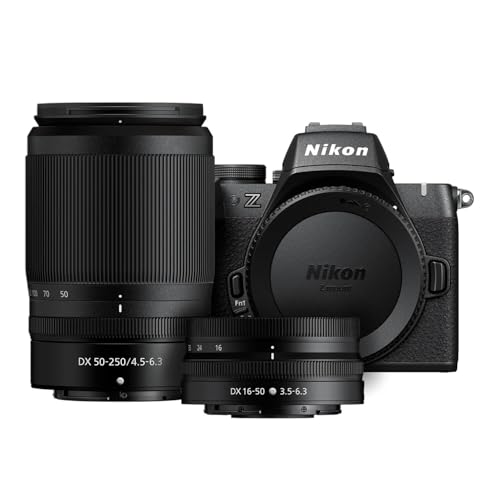
- Nikon Z50 II with Two Lenses: check price on Amazon
- Sony ZV-1F: check price on Amazon
- OM SYSTEM Olympus Tough TG-7: check price on Amazon
- Canon EOS R6 Mark II: check price on Amazon
- AKASO EK7000: check price on Amazon
- Canon EOS R50 (prose-only pick — see its section below): check availability at your preferred retailer
Notice what is not on this list: the complicated professional bodies and the fashionable fixed-lens status objects. A first camera’s job is to disappear between you and the picture while you build the only skills that matter — seeing light, choosing a moment, composing a frame. Features that help that process are in. Features that merely impress a specification sheet are out.
One promise about the advice that follows: nothing here requires you to know photography already. Where a term matters, it is explained where it stands. Where a camera asks something of you — patience, a bigger budget, a tolerance for menus — that cost is stated as plainly as its virtues.
Read the list as a set of doors rather than a ranking. Each camera opens onto a different first year of photography — systematic, social, adventurous, ambitious, improvised — and each of those years is a good one. The only genuine failure available to you is the camera that stays home, and every pick below was chosen, above all, to leave the house.
Key Takeaways
- The Nikon Z50 II two-lens kit is the most complete start here: real camera craft, two focal ranges, nothing else to buy on day one.
- Beginners who want zero friction should look at the Sony ZV-1F — a fixed-lens camera that removes lens decisions entirely and still makes lovely pictures.
- If your life is outdoors, the TG-7’s toughness is a feature no other beginner camera matches: it survives the learning process being dropped, soaked and frozen.
- Buying once is a legitimate strategy: the Canon R6 Mark II costs more now and saves a whole upgrade later.
- The cheapest honest start is the AKASO EK7000 — not a photographer’s camera in the classic sense, but a nearly free education in composition and nerve.
- Whatever you choose, spend your second hundred hours outside with it; cameras teach almost nothing indoors.
In this guide
Quick Picks
| Camera | Badge | Why it is here |
|---|---|---|
| Nikon Z50 II with Two Lenses | Best complete starter kit | Two lenses, grown-up focusing and a mount with years of growing room. |
| Sony ZV-1F | Best for zero-friction starts | Fixed lens, friendly automation and video manners for a first year of shooting everything. |
| OM SYSTEM Olympus Tough TG-7 | Best for outdoorsy beginners | Waterproof, drop-proof and macro-clever — the camera that goes where beginners actually play. |
| Canon EOS R6 Mark II | Best buy-once starter | A full professional-grade body that a beginner can grow into for a decade. |
| AKASO EK7000 | Best ultra-budget start | Costs less than a night out and teaches composition, timing and courage. |
| Canon EOS R50 | Best rival to consider | The other great beginner mirrorless — friendly, light and widely discounted; compare before you commit. |
How did we judge cameras for people who have never owned one?
The first test was the first hour. Hand the camera to someone who has never set an aperture and watch what happens: do they make a picture they like before frustration arrives? Menus written in plain language, automatic modes that expose sensibly, and a grip that tells your fingers where they belong all counted heavily — because a camera that punishes its first hour often never gets a second.
The second test was the sixth month. Once the beginner knows what a shutter speed is, does the camera open up or close down? Manual controls that exist but hide, systems with no lenses worth growing into, bodies that cap your ambitions — these fail the sixth-month test even when the first hour charms. Every pick here passes both, in different proportions.
The third test was honesty about total cost. A cheap body that demands expensive lenses, proprietary batteries at silly prices or a case full of accessories is not cheap. The totals below include the ownership reality — the second battery, the card, the next lens — because starter photography should be budgeted whole, like any hobby worth starting properly.
A fourth, quieter test ran beneath the others: repair and resale. Beginners’ cameras get knocked, and hobbies sometimes end; the brands here all have real service networks and liquid second-hand markets, so a first camera is never a stranded asset. A camera you can sell for a fair fraction of its cost, or repair for less than its replacement, lowers the stakes of starting — and lowering the stakes is, in the end, what this entire list is for.
The judging also weighted something rarely admitted in camera reviews: how a camera makes a beginner feel about themselves. Equipment that produces early wins builds photographers; equipment that produces early confusion builds cupboard ornaments. Every pick here was chosen to deliver a win in the first week — a sharp portrait, a frozen jump, a sunset that looks like the one you stood in — because momentum, in a new hobby, is the resource everything else is spent from.

Nikon Z50 II with Two Lenses — Best complete starter kit
Most starter kits are a compromise wearing a bundle’s clothing. This one is a curriculum. The standard zoom teaches everyday framing — family, street, landscape — while the telephoto teaches the harder lesson of reach: sports from the fence, wildlife from the path, portraits with backgrounds that melt. A beginner who works through both lenses in the first year has, without noticing, completed the core education of photography, and the camera body underneath them never once stood in the way.
The body itself is the grown-up kind of simple. Its subject detection finds people, animals and vehicles and tracks them with a confidence that rescues beginners from the classic first-year heartbreak — the perfect moment, softly focused. The viewfinder shows you the picture as it will look, exposure and all, which collapses the learning curve that film-era beginners spent rolls discovering. You see, you adjust, you learn: the loop is immediate, and immediacy is what turns practice into instinct.
What elevates it above rival kits is the future tense. Nikon’s Z mount is shared with professional bodies, so the fast prime lens a beginner buys in year two, the serious telephoto in year three, all fit and all stay. Nothing in the box becomes landfill when ambition grows. As a first purchase in a system you might inhabit for a decade, it is very hard to argue with.
Parents buying for a teenager should hear one more thing in its favour: it is a camera that survives being learned on socially as well as physically. It looks and behaves like a real photographer’s tool, which matters to a fifteen-year-old deciding whether this hobby is cool enough to persist with, and its output — properly focused, properly exposed, printable — rewards persistence immediately. Many hobbies die in the gap between effort and visible result; this kit keeps that gap as short as any beginner equipment we know, and the photographs a young shooter brings home in month one are the best argument for month two.
Its video deserves a sentence for the beginner whose ambitions are half-cinematic: clean, well-tracked footage of school plays, matches and family events, good enough that the camera can serve a household as its camcorder too. A starter camera that earns a second job justifies its cupboard space in homes where single-purpose gadgets get questioned, and the Z50 II has quietly become the family camera in many houses that bought it for one person’s hobby.
Longevity of support seals the recommendation. Nikon services these bodies for years, the used market absorbs them gratefully if the hobby fades, and the lenses hold their value like few consumer goods do. A beginner purchase is partly an option on a future self; this kit keeps every version of that future open, including the one where photography becomes the defining pleasure of your thirties.
One last beginner-specific comfort: the grip and control layout suit smaller hands and gloved ones better than most starter bodies, and the menus use words instead of icons where it counts. Nobody reviews a camera for a fourteen-year-old’s hands or a January morning, but beginners live in both, and equipment that fits the life gets carried into it.
- Format: APS-C mirrorless, two-lens kit
- Kit lenses: standard zoom plus telephoto zoom
- Autofocus: subject detection for people, animals, vehicles
- Viewfinder: electronic, showing exposure as it will record
Strengths
- A complete first year of photography in one box
- Focusing that rescues beginners from soft moments
- A mount that never becomes a dead end
Trade-offs
- Kit lenses are honest, not fast — low light asks patience
- Two lenses means learning to swap them gracefully
- Video is capable rather than class-leading
Best for: beginners who mean it — who want to learn photography properly from day one. Not suited for: anyone who wants a camera that is only ever a point-and-shoot.

Sony ZV-1F — Best for zero-friction starts
Some beginners do not want a system; they want a camera. The ZV-1F understands this completely. Its lens is fixed, wide and bright, its automation is genuinely trustworthy, and its entire personality says: carry me, point me, and let’s see what the day looks like. For a first year of photography built around travel, friends, food and the small theatre of everyday life, removing lens decisions is not a limitation — it is the feature that gets the camera used daily instead of admired monthly.
The wide lens shapes a particular education. You cannot zoom from the sofa; you must walk, crouch and choose, and those physical habits are the real foundations of composition. The sensor is large enough to give pleasing background blur for portraits and clean files in café light, and the colour science is tuned to flatter people, which matters when your first subjects are the humans who love you and will judge the camera by their own faces.
Video manners round it out for the generation that documents everything: it flips its screen for self-framing, focuses on faces and products obligingly, and records sound that does not embarrass the picture. As a stills-first camera it is a delight; as a hybrid diary of a first year — part album, part vlog — it may be the most honest beginner camera on this page.
It also makes an unusually good gift, which is not a trivial category. Cameras given to beginners often fail because the giver bought their own taste — too complex, too serious, too easy to feel guilty about not using. The ZV-1F asks nothing, intimidates nobody, and produces pictures the recipient is proud of on the first day, which is the entire psychology of a successful present. If the person you are buying for has said some version of “I just want nicer photos of my life,” believe them, and buy this rather than the system you wish they wanted.
Its one structural lesson is worth absorbing even if you never own it: a fixed wide lens at a bright aperture, on a sensor of this size, covers a startling fraction of what most people photograph. Beginners seduced by enormous zoom ranges are usually buying insurance against a fear — being too far away — that good photographers solve with their feet. The ZV-1F makes that solution the only option, and its owners’ pictures are frequently the better for it.
Carry it for a month and a subtler gift appears: people relax around it. A small, friendly compact does not announce a Photographer in the room, so family and friends behave like themselves rather than performing for equipment. Beginners consistently underestimate how much of portrait quality is permission — the subject’s ease — and this unassuming little camera collects permission everywhere it goes.
Battery life is sized for its philosophy — a day of wandering rather than a wedding — and it charges from the same USB ecosystem as a phone, which quietly removes the dedicated-charger friction that strands so many beginner cameras in a drawer. Convenience is a specification. For this camera’s owners, it is the specification.
- Format: compact camera, fixed wide lens
- Sensor: 1-inch type for clean low-light files
- Screen: flip-out for selfies and video
- Autofocus: face and eye detection, product showcase mode
Strengths
- Nothing to configure, nothing to swap, nothing to fear
- Wide lens teaches real composition habits
- People look good in its pictures immediately
Trade-offs
- No zoom — distant subjects stay distant
- No viewfinder for bright-day shooting
- A system you enjoy rather than grow
Best for: beginners who want a joyful everyday camera and video diary in one. Not suited for: wildlife, sports or anyone already dreaming of lenses.

OM SYSTEM Olympus Tough TG-7 — Best for outdoorsy beginners
Beginners drop things. They also wade into streams after a shot, leave cameras on wet grass, and learn about weather sealing by destroying its absence. The TG-7 is the only camera here that treats all of that as normal usage. Waterproof to real depths, resistant to drops, cold and crushing, it removes fear from the learning process — and fear, not ignorance, is what keeps most beginner cameras in the cupboard. A camera you can take swimming, skiing and caving is a camera that attends your actual life.
Its party trick is macro. The TG-7 focuses absurdly close, turning frost on a leaf, the engineering of a beetle, or the texture of a tidepool into subjects a beginner can reach on their first weekend. Close-up photography is a generous teacher — light, focus and patience all in miniature — and this camera’s microscope modes make it nearly effortless. Many owners bought it for the snorkelling and stayed for the tiny worlds in their own gardens.
Image quality is the honest trade: a small sensor that wants daylight and shows its limits at dusk. But consider the beginner’s real alternative — the photograph not taken because the good camera stayed home. The TG-7’s pictures from inside the waterfall, under the waterline and atop the windy ridge exist, and existence beats theoretical quality every time a family album is opened.
Its field sensors add a dimension no other pick offers: the camera remembers where it was, how deep, how high, how cold, and stamps that story onto the adventure. For a beginner keeping a log of a hiking season or a sailing course, those records turn photographs into a diary with evidence. It is a small thing until you are reconstructing the day you crossed the pass in a storm, at which point the camera that wrote it down for you becomes the trip’s historian as well as its witness.
Winter deserves a special mention, because cold is where beginner photography usually stops. Ordinary cameras fog, batteries fade and fingers refuse the controls; the TG-7 is rated for serious frost and can be operated with gloves, so the ski trip, the ice climb and the January beach all remain photographic territory. A first camera that extends your season by three months gives you a quarter more learning per year than its fair-weather rivals — an advantage that compounds quietly and considerably.
It is also, unexpectedly, the scientist of the list. The focus-stacking and macro lighting tools that serve its close-up modes make it a legitimate instrument for a beginner drawn to nature study — the school project, the garden survey, the rockpool census. A first camera that can grow a citizen scientist as readily as a photographer is doing double cultural duty, and schools have noticed: these are the cameras that live in geography departments.
And when it finally retires from active duty — years and many immersions later — it tends to become the household’s glovebox camera, the one that lives in the car for the unexpected. Few electronics earn a second career like that. It is the natural fate of a tool that was never precious, and a hint about how its owners come to feel about it.
- Format: rugged compact camera
- Build: waterproof, drop-proof, freeze-proof
- Macro: extreme close-focus modes with lighting aids
- Extras: GPS and field sensors for adventure logs
Strengths
- Survives the way beginners actually live
- Macro modes open a whole genre instantly
- Goes swimming, skiing and underground with you
Trade-offs
- Small sensor limits dusk and indoor quality
- No interchangeable lenses, ever
- Controls are compact-camera simple by design
Best for: hikers, swimmers, skiers and parents of small, destructive co-photographers. Not suited for: beginners whose ambitions are portraits and low light.

Canon EOS R6 Mark II — Best buy-once starter
There is a respectable school of thought that says: skip the starter camera entirely. If you are certain photography is your future — certain the way people are certain about a degree or a dog — then buying a body you will replace in eighteen months is the expensive route, and the R6 Mark II is the buy-once answer. It is a full professional-grade tool that happens to be kind to beginners: superb automatic modes, focusing that finds subjects before you understand how, and files so forgiving that early technical mistakes rarely ruin a picture worth keeping.
What you are buying is headroom measured in years. The sensor’s behaviour in bad light, the tracking’s composure with moving subjects, the video quality, the build — each is a ceiling you will not touch for a long time, which means your growth is limited by your eye rather than your equipment. For a beginner with ambitions in weddings, sports, wildlife or professional work of any kind, that is the correct limitation to have.
The costs are equally real and should be faced squarely. The body is the start of the spending, not the end: full-frame lenses are larger and dearer, the whole kit weighs more on a day out, and the menu depth that professionals prize can bury a novice for a weekend. Buy it with a single versatile lens, learn it slowly, and let it be the last body decision you make for a decade — that is the deal, and for the right beginner it is a bargain.
There is a psychological dividend to the buy-once route that deserves naming: you never spend a season wondering whether the camera is the problem. Every soft frame is yours to fix, every success is yours to claim, and that clean feedback accelerates learning in a way that gear doubt quietly poisons. Beginners on lesser bodies often stall at the suspicion that better equipment would rescue them; the R6 Mark II removes the suspicion, leaving only the work — which is where a serious beginner wanted to be all along.
Practical mercy exists alongside the grandeur: Canon’s guided interfaces and scene intelligence mean the flagship never has to be operated as one. A beginner can shoot the first month in the camera’s friendliest modes and peel back layers of control across a year, finding each new depth exactly when they are ready for it. That staircase, hidden inside a professional body, is what makes the buy-once strategy humane rather than masochistic.
Resale reality completes the buy-once logic. Should certainty curdle — it happens, and no guide should pretend otherwise — a body of this class sells quickly at a fair price to the enormous market of working photographers. The financial risk of the flagship route is therefore smaller than its sticker suggests, provided you buy the body and one lens first, and let ambition, not marketing, schedule the rest.
Be honest with yourself about one thing before choosing it, though: this route asks for a learner’s patience with a professional’s machine. The first month will include an evening with the manual and a few settings changed by accident. Beginners who relish that apprenticeship thrive here; beginners who want the camera to vanish should take the hint and look at the Sony instead.
- Format: full-frame mirrorless, 24.2MP
- Autofocus: people, animal and vehicle detection
- Low light: excellent high-sensitivity files
- Video: high-quality oversampled 4K
Strengths
- A decade of headroom in one purchase
- Forgiving files while technique develops
- Professional focusing from your first month
Trade-offs
- The priciest route into this list by far
- Full-frame lenses multiply the total cost
- Size and menus can intimidate the casual beginner
Best for: committed beginners certain photography is a long-term pursuit. Not suited for: the curious-but-unsure, who should start cheaper and decide later.

AKASO EK7000 — Best ultra-budget start
Let us be precise about what this little camera is. It is not a photographer’s instrument in the classic sense: no viewfinder, no manual craft to speak of, a lens that sees everything widely whether you asked it to or not. What it is, at a price lower than a single memory card for the Canon above, is a risk-free way to discover whether making pictures excites you at all — and a surprisingly real education in the two skills that precede all technique: being somewhere interesting, and pressing the button at the right second.
Mounted on a bike, a helmet, a dog or a dashboard, it goes to the places a beginner’s life actually happens, and its stills and frame grabs document that life with an energy that a careful camera on a shelf cannot match. Plenty of photographers trace their beginnings to a cheap action camera and a summer of adventures; the composition instincts formed there — get close, get low, wait for the moment — transfer intact to every serious camera afterwards.
Set expectations at the door and it will delight you. Daylight is its country; dusk is not. The files are modest and the controls are minimal. But as a first step — for a teenager, a traveller on a shoestring, anyone testing the waters — it converts the price of starting photography from a decision into an impulse, and some impulses change lives.
It pairs well, too, with a resolution worth making on day one: shoot stills deliberately, not just video. The EK7000’s stills mode is crude, and that crudeness is instructive — with no zoom worth the name and no settings to hide behind, every picture is a pure decision about position and timing. A month of that discipline builds instincts that transfer to any camera, rather like learning to drive in a car with no power steering. Nobody recommends it as a destination; as a beginning, it has a strange and genuine purity.
Parents should know it doubles as the camera you can hand to a child without a flicker of anxiety. If it survives skate parks and swimming pools — and it is built and priced to — it can survive a nine-year-old’s documentary of the summer holidays. Some families’ most treasured footage exists because a cheap, tough camera was allowed to go where the expensive one was forbidden, and that permission, paradoxically, is a photographic feature money usually cannot buy.
Treat it, finally, as a sketchbook rather than a portfolio camera and its philosophy clicks: photographers have always kept a cheap, fearless notebook for ideas, and the pictures that matter are often rehearsed there first. A beginner who learns to sketch daily with the EK7000 and then buys a system camera in year two arrives with an eye already trained — arguably the best-educated beginner of anyone on this page.
Its waterproof case and mounts, bundled or nearly free, also make it the natural camera of experiments you would never risk elsewhere: taped to a kite line, sunk in a rock pool, strapped to a skateboard. Experimentation is the beginner’s native language, and a camera that speaks it fluently at this price is a gift to anyone’s first year, whatever they graduate to afterwards.
- Format: action camera with waterproof housing
- Video: 4K with electronic stabilisation
- Mounts: a wide ecosystem of cheap attachments
- Control: simple buttons plus phone app
Strengths
- Costs almost nothing to start with
- Goes anywhere and fears nothing
- Teaches timing and nerve before technique
Trade-offs
- No manual craft to learn on it
- Low light defeats it quickly
- Files are modest beside every rival here
Best for: teenagers, travellers and the photography-curious on a strict budget. Not suited for: anyone who wants to learn exposure and lenses — start with the Nikon.
Canon EOS R50 — Best rival to consider
Honesty requires a seat at this table for the camera that competes head-on with our top pick, even though we present it here without a purchase link: Canon’s EOS R50 is the other beginner mirrorless that shops will urge on you, and the urging is not wrong. It is light, friendly, video-capable and frequently discounted, with Canon’s colour science flattering the family photographs that dominate a first year. A beginner choosing between it and the Nikon kit is choosing between two good schools, not between right and wrong.
The differences are matters of emphasis. The R50 leans toward video creators and the lightest possible carry; the Nikon kit leans toward stills craft and hands you the second lens in the box. Canon’s RF lens range for crop bodies is growing but thinner at the budget end than Nikon’s equivalent shelf, which matters in year two when the lens catalogue becomes your world. Neither fact is decisive alone; together they sketch two personalities.
Our advice is unglamorous: hold both if you possibly can. Beginner cameras are bought by the hand as much as by the head, and the one whose grip and menus feel like home is the one that will leave the house with you. If the Canon wins your hand, buy it with a clear conscience — and if the Nikon wins, the kit at the top of this page is waiting.
One more consideration belongs to families sharing a camera. The R50’s friendly automation and video polish make it the easier household appliance — the camera a partner or parent can pick up cold and use — while the Nikon rewards the single dedicated learner slightly more. Households differ; so do cameras. There is no universal winner here, only the right fit, and a beginner who chooses the R50 for the right reasons has chosen well.
Availability is its final, unglamorous strength: the R50 is stocked everywhere, discounted often, and supported by the largest camera ecosystem on earth, so a beginner who chooses it will never hunt for a battery, a case or an answer. In the real economics of starting a hobby, the camera surrounded by an infrastructure of help has a genuine edge — and any honest guide should say so, even about a pick it presents without a link.
If you audition it against the Nikon, audition honestly: same subjects, same light, your own hands, your own patience for the menus. Ten minutes of that tells you more than ten reviews, including this one. We would rather lose the argument to your hands than win it against your experience, because the camera you bond with is the camera that teaches you — and teaching, not selling, is the point of a starter list.
For the record, our own hands preferred the Nikon kit by a nose — the second lens and the viewfinder tipped it — but preference at this level is genuinely personal, and the R50’s supporters in any camera club will defend it with evidence, not excuses. That is what a healthy beginner market looks like: two good schools, arguing happily, both producing photographers.
Whichever school you join, join it fully for the first year: resist the forums’ invitations to defect after every new release, because fluency comes from one system’s habits becoming reflexes. The beginner who switches systems twice in a year owns three cameras’ worth of confusion and one camera’s worth of photographs. Loyalty, for twelve months, is a learning strategy disguised as a purchasing flaw.
- Format: APS-C mirrorless
- Emphasis: light body, creator-friendly video
- Autofocus: people and subject detection
- Note: presented prose-only here; compare in store
Strengths
- Featherweight body that begs to be carried
- Canon colour that flatters family pictures
- Frequently found at tempting discounts
Trade-offs
- Budget lens shelf is still growing
- Single-lens kits mean a second purchase sooner
- Stills ergonomics trail the Nikon’s slightly
Best for: beginners torn between stills and video who value lightness above all. Not suited for: shoppers who want the whole first year in one box.
What actually matters in the best cameras for starter photography — and what can wait?
Three things matter immediately. First, focusing that helps: subject detection and a viewfinder or screen that shows focus clearly, because nothing discourages a beginner like almost-sharp pictures of unrepeatable moments. Second, honest automatic exposure with an easy escape hatch — a mode dial that lets you take one control at a time as you learn, aperture this month, shutter speed next. Third, a size you will carry. The best beginner camera is the one in your bag on an ordinary Tuesday, not the champion of a comparison chart sitting at home.
Almost everything else can wait. Resolution beyond the modest is invisible in a beginner’s real output. Video beyond competent is a distraction until stills habits form. Weather sealing matters only if your life is wet — in which case it matters enormously, and the TG-7 exists. Even the lens mount, that great strategic question, matters less than the internet insists: every system here can carry a photographer for years, and switching later costs less pride than money.
What cannot wait is a second battery and a decent card. Beginners shoot in bursts of enthusiasm and delete nothing; a dead battery at the golden hour of a holiday is the hobby’s most preventable heartbreak. Budget both into the first purchase, whatever camera wins, and treat any kit that omits them as priced accordingly.
Carrying comfort belongs on the matters list too, disguised as a detail. A strap that digs, a body that bruises a hip, a bag that fights you — these are the frictions that quietly retire cameras. Before buying, wear the camera for ten minutes in the shop if you can. Beginners forgive a camera almost anything except being a nuisance to bring along, and they should, because bringing it along is the whole hobby.
Weight deserves the same honesty. Specifications list grams; beginners experience afternoons. A kit that feels fine for ten minutes in a shop can saw at a shoulder by hour three of a city walk, and the soreness teaches you to leave it home next time. When you audition cameras, walk the shop, stairs and all, and imagine the holiday you are actually taking — the camera that survives that imagination test is the one your future self is voting for.
How should a beginner spend the first hundred hours?
Shoot one subject until you are bored, then keep shooting. A garden, a dog, a street corner, a child’s football season — repetition is how the eye learns what light does at different hours and how a lens renders the same scene from different distances. The camera matters less in these hours than the honesty of reviewing what you made: after each outing, choose your three best frames and articulate, out loud, why they work. That articulation is the actual skill of photography forming.
Learn one control per fortnight. Aperture first, because depth of field is the most visible creative lever; then shutter speed and the motion it freezes or smears; then sensitivity and its costs. Photographers who grab all three at once drown in variables and blame the camera. The cameras on this page all allow that staged learning — automatic when you want it, manual in slices when you are ready — which is precisely why they are here.
Finally, print something. A beginner who prints one photograph a month learns faster than one who posts a hundred, because print is unforgiving about focus, exposure and clutter in a way a phone screen never is. Your first camera’s files — every body and compact on this list — are good enough to print handsomely at sensible sizes. Let them.
Keep a simple log alongside the shooting: date, place, one line about what you were trying. It sounds like homework and pays like an inheritance, because reviewing a season with notes turns vague improvement into visible cause and effect — the evening the aperture lesson landed is right there in the margin. Photographers who keep logs for one year rarely stop; the habit becomes part of the pleasure, and the log becomes the map of how a beginner turned into the person writing it.
Share the work, too. A local club, a class at the library, even a patient friend with a camera — beginners who show pictures to other humans improve at a rate solo shooters rarely match, because feedback closes the loop that solitary review leaves open. The cameras here are all common enough that any club will know them, which is one more quiet reason they, and not exotic alternatives, fill this list.
Set one small, dated goal to bind the hundred hours together: an exhibition of twelve prints at home, a photobook of the season, a portrait of everyone in the family. A deadline turns wandering practice into a project, and a project teaches editing — the ruthless, joyful choosing that separates a photographer from a person with a full memory card. Your first camera will be proud to be judged by what it helped you finish.
And keep the camera’s box, oddly enough — no, keep something better: keep your first hundred frames, unedited, undeleted, however embarrassing. In five years they will be the most valuable files you own, because they show the exact moment your eye switched on. Every photographer wishes they could see their own beginnings clearly. Yours are sitting on a card right now, asking only to be kept.
Which starter camera fits which kind of beginner?
The pattern-matcher in every camera shop will try to sell you the most expensive body you hesitate at. Resist, and match by temperament instead. The systematic learner — the person who reads manuals for pleasure — belongs on the Nikon kit, where every control repays study. The social documenter, whose camera is a diary of friends and trips, belongs on the Sony compact, where nothing interrupts the documenting. The outdoors obsessive belongs on the TG-7, the certain future professional on the Canon flagship, the shoestring explorer on the AKASO, and the video-leaning household on the R50.
Notice that none of those matches mentions a genre of photography. Beginners rarely know their genre yet; they know their lives. A camera matched to a life gets used in that life, and use is the only curriculum that has ever produced a photographer. Choose for the Tuesdays you actually live, and the spectacular Saturdays will take care of themselves.
Age matters to the match as well. A camera for a ten-year-old is a toughness question, answered by the TG-7 or the AKASO. A camera for a retiree beginning a long-planned hobby is a comfort and clarity question — big controls, a kind viewfinder, no nonsense — answered by the Nikon kit or, budget allowing, the Canon. The beginner is not one person, and any list that pretends otherwise is selling, not advising.
Comparison Table
| Camera | Type | Strongest suit | Watch out for |
|---|---|---|---|
| Nikon Z50 II with Two Lenses | Mirrorless kit | Complete craft education | Kit lenses are slow |
| Sony ZV-1F | Fixed-lens compact | Effortless everyday joy | No zoom or growth path |
| OM SYSTEM Olympus Tough TG-7 | Rugged compact | Survival and macro | Small-sensor limits |
| Canon EOS R6 Mark II | Full-frame mirrorless | A decade of headroom | Total cost of the system |
| AKASO EK7000 | Action camera | Cheapest honest start | No craft controls |
| Canon EOS R50 | Mirrorless body | Lightness and video | Thinner budget lens shelf |
What mistakes do beginners make when buying a first camera?
The most expensive mistake is buying for the photographer you fantasise about being rather than the one you are. Safari lenses for a person who photographs their street; a cinema camera for someone who takes twelve pictures a month. The cameras above are sorted by honest lives — daily carry, outdoors, ambition, shoestring — and the right choice is the one that matches your calendar, not your daydreams.
Second is spending the whole budget on the body. A mid-range body with a second lens, a battery and a bag teaches more photography than a flagship body naked. Third is its mirror image: buying the absolute cheapest body with no growth path and replacing everything within the year. The middle of this list — the Nikon kit above all — exists to thread that needle.
Fourth, and quietly the most common: never leaving automatic everything, then blaming the camera for ordinary pictures. Every pick here rewards the beginner who takes one control at a time. The camera is a teacher with a syllabus; the mistake is skipping class.
A fifth mistake deserves its own warning because shops encourage it: buying accessories before photographs. Filters, cages, exotic straps and software suites all promise transformation, and all of them are worthless until a few hundred honest frames reveal what you actually lack. The correct second purchase is almost always embarrassingly plain — a battery, a bag, a book of photographs by someone great — and the discipline of waiting is itself a photographic skill.
Final Recommendation
Start with the Nikon Z50 II two-lens kit unless your life points clearly elsewhere: it is the most complete, honest and future-proof first camera here. Take the Sony ZV-1F if you know yourself well enough to admit you want joy without homework, the TG-7 if your weekends are wet and vertical, and the Canon R6 Mark II if certainty and budget both run deep. Let the AKASO be a teenager’s or a traveller’s first taste, and hold the EOS R50 against the Nikon in a shop before deciding. Then stop shopping. The second hundred hours matter more than the first purchase, and every camera on this page is good enough to disappear while you spend them.
If you take one sentence from this entire guide, take this: your first camera’s most important specification is the number of days it spends outside your house in its first year. Choose the one that maximises that number for the life you actually lead, and the photography — the seeing, the timing, the joy of it — will follow as reliably as it has for every generation of beginners before you.
Related guides
Frequently Asked Questions
Is a phone not enough for a beginner?
A phone is a fine camera and a poor teacher. It makes excellent pictures while teaching almost nothing about how pictures are made, because it hides every decision. A dedicated camera’s gift to a beginner is not quality — it is visibility: aperture, shutter and focus become things you can see, touch and learn. If learning is the goal, the camera wins; if only pictures matter, the phone was already enough.
How much should a first camera cost?
Enough to be honest, not so much that fear follows it outdoors. For most beginners that means a kit from the middle of this list, bought whole with battery and card, with money held back for the second lens or the first trip. The two legitimate exceptions are at the extremes: the AKASO if you are merely curious, the R6 Mark II if you are entirely certain.
New or used for a first camera?
Used bodies from reputable dealers are excellent value, and photography’s elders have started there for generations. Two cautions: buy current enough to get modern subject-detect focusing, which genuinely helps beginners, and factor in a new battery, since used ones arrive tired. The kits recommended here are priced keenly enough new that the saving must be real to justify the risk.
Do I need to learn manual mode?
Eventually, partially, and at your own pace. Manual control is not a badge of seriousness; it is a tool for situations automatics misread. Learn aperture control first and you will understand eighty percent of creative exposure. The photographers who sneer at automatic modes are forgetting that the goal is the picture, not the purity of the process.
What is the best first lens after the kit?
A fast prime in the classic everyday range — the lens that teaches you to move your feet, opens up cafés and evenings, and shows you what shallow depth of field does to a portrait. It is the traditional second purchase in every system on this page, and the one that most often turns a beginner into a photographer.
Should a beginner learn on film instead?
Film teaches deliberation beautifully and expensively, at a pace that suits a patient temperament and a forgiving budget. Most beginners learn faster with digital’s immediate feedback — the loop of shoot, see, adjust is the engine of the first year. If film calls to you, answer it in year two, ideally with the student-focused guidance in our companion piece on cameras for starting film students; you will arrive with digital instincts already formed and get more from every roll.
What if I only photograph my children?
Then you are not “only” doing anything — you are doing the most demanding documentary work there is, on subjects who move fast, forgive nothing and matter enormously. Prioritise focusing speed and low-light grace: the Nikon kit for craft, the Canon flagship for certainty, the Sony compact for the school run. The right beginner camera for family life is the one that is charged, carried and fast enough for a childhood that will not repeat a moment.
Related Guides
When the first season ends, these companions will help: best cameras for sightseeing is a favourite next read, along with best cameras for starting film students and best cameras for studio.


