reviewstook.com is reader-supported. When you buy through links on our site, we may earn an affiliate commission.
Where to buy
Somewhere between the phone that does everything adequately and the interchangeable-lens system that demands a bag, a plan and a free afternoon, there is a camera category that nearly died and then quietly came back: the point and shoot. The best cameras for point and shoot photography in this guide share one promise — take it out of a pocket, raise it, press one button, and receive a photograph visibly better than the phone would have made, without a single decision in between. That promise sounds modest. Keeping it, in bad light, at arm’s length, with a moving child and a dying battery, is an engineering achievement.
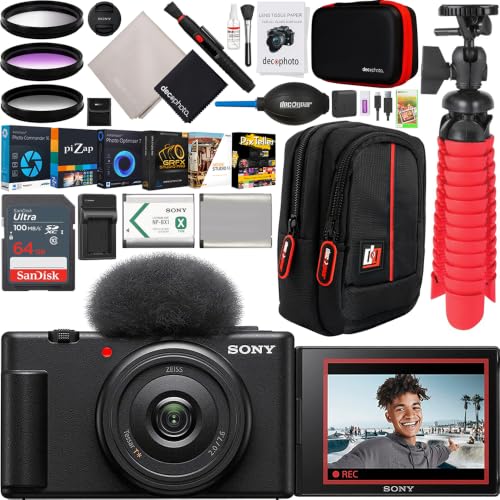
- Sony ZV-1F: check price on Amazon
- OM SYSTEM Tough TG-7: check price on Amazon
- DJI Osmo Pocket 3: check price on Amazon
- GoPro Hero: check price on Amazon
- Canon PowerShot G7 X Mark III: check current availability at your preferred retailer
- Sony RX100 VII: check current availability at your preferred retailer
Who still buys these? More kinds of people than the industry expected. Parents who want birthday photographs with real depth instead of computational guesswork. Travellers who refuse to spend a holiday looking at a phone. Grandparents who want a camera, not a computer with a lens attached. Teenagers raised on film-look apps who want the real texture those apps imitate. And a large, quiet group of phone photographers who simply noticed that their favourite pictures from five years ago — taken on a battered compact — look better than last month’s computationally perfect ones.
The six cameras below divide the category by personality. One is a fixed wide-angle pocket camera built for creators but beloved by snapshot shooters. One is armoured for beaches, pools and clumsy hands. One rides on a gimbal and shoots video so smooth it feels like a dolly. One is a tiny action camera that treats a holiday as a contact sport. And two are the classic enthusiast compacts — one for social sharing, one with a zoom and a viewfinder for people who still compose like photographers. All six ask almost nothing of you. They differ in what they give back.
A note on honesty before the picks: a point and shoot will not out-shoot a mirrorless system, and this guide will not pretend otherwise. What it will do — what the right one does brilliantly — is be present. The compact in a jacket pocket attends the walk, the dinner and the school gate that the system camera misses entirely, and presence is the first specification of snapshot photography. Judge these six by the photographs they will actually take in your life, not the ones a bigger camera could take in a life you do not lead.
Key Takeaways
- A point and shoot earns its money through presence: the camera in the pocket beats the system left at home, every ordinary day.
- A 1-inch sensor is the sweet spot of the category — visibly better than a phone in dim light, small enough to forget you are carrying it.
- Choose by environment first: the TG-7 for water and drops, the Pocket 3 for video, the RX100 VII for zoom range and a viewfinder.
- Fixed-lens cameras cannot grow, and that is their virtue — the decision ends at purchase and the photography begins.
- Fast startup and simple controls matter more than resolution for snapshot work; every pick here is ready in about a second.
In this guide
Quick Picks
| Camera | Badge | Why it is here |
|---|---|---|
| Sony ZV-1F | Best for everyday snapshots | A bright wide lens and a 1-inch sensor in a body that asks nothing and flatters everyone. |
| OM SYSTEM Tough TG-7 | Best for rough treatment | Waterproof, drop-proof and macro-capable — the camera you hand to a child at the beach without flinching. |
| DJI Osmo Pocket 3 | Best for video-first shooters | A gimbal-stabilised 1-inch camera that makes walking footage look professionally tracked. |
| GoPro Hero | Best tiny action option | GoPro’s smallest body: waterproof, mountable anywhere, and honest 4K for holidays with momentum. |
| Canon PowerShot G7 X Mark III | Best for sharing | The social compact: bright zoom, pleasing colour and a direct line from camera to phone to feed. |
| Sony RX100 VII | Best enthusiast compact | A real zoom, a pop-up viewfinder and flagship-grade autofocus in a genuinely pocketable body. |
How did we choose these point and shoot cameras?
The test for this category begins in a pocket and ends in a dim restaurant. Each candidate was judged first on carry: true pocket size, a lens that protects itself when off, a startup fast enough that the moment survives the camera’s waking. A compact that needs a case, a lens cap ritual or three seconds of booting has failed its only job before the shutter is considered. All six picks pass; they pass in different shapes, which is why the guide describes carry honestly for each.
Image quality came second, judged the way snapshots are actually judged — indoors, at dusk, at arm’s length, of people who will not pose twice. The 1-inch sensor class dominates this guide because it is where compact cameras decisively separate from phones: cleaner files at the sensitivities real rooms require, and genuine background separation at close range that no portrait mode has to fake. The two action-shaped picks use smaller sensors and earn their places through toughness and stabilisation instead of low-light purity.
Third came the honesty of the automation. A point and shoot lives or dies by its auto mode, because that is the mode it will be used in — by you on a busy day, by the relative you hand it to, by everyone. These six were chosen for exposure judgement, face detection and colour that behave sensibly without supervision. A compact that needs a photographer to rescue its decisions is a system camera in denial.
Finally, each pick had to answer the phone argument in one sentence a buyer could repeat. Toughness the phone cannot risk. A zoom the phone cannot match optically. A gimbal the phone does not have. A look the phone’s processing will not leave alone. If the sentence could not be written, the camera was cut — which is why this list is six cameras long instead of twenty.

Sony ZV-1F — Best for everyday snapshots
The ZV-1F was designed for vloggers, and then a funny thing happened: ordinary people adopted it as the snapshot camera they had been waiting for. The recipe is disarmingly simple. A 1-inch sensor behind a bright, ultra-wide fixed lens, in a body with so few controls that nobody has ever been intimidated by it. Raise it, and the wide lens takes in the whole table, the whole room, the whole group without the step-back shuffle. The bright aperture keeps indoor files clean at sensitivities where phones start smearing faces into watercolour.
Its snapshot virtues compound in daily use. The lens is wide enough that framing is forgiving — important when the photographer is also a participant. Background blur at close range is real, courtesy of physics rather than portrait-mode edges, so a coffee cup, a child’s hands or a dog’s nose separate from the scene with a softness phones imitate badly. The touchscreen is the interface, the menus are short, and the transfer-to-phone path is painless enough that photographs actually escape the card. It cannot zoom, and this guide will keep repeating that because it is the one fact a buyer must accept with open eyes: your feet are the zoom, and for the life this camera is built for — near, social, spontaneous — they are enough.
- Sensor: 1-inch, roughly 20 megapixels
- Lens: fixed ultra-wide, bright aperture, no zoom
- Video: 4K, with creator-grade audio
- Interface: touchscreen-led, deliberately simple
Strengths
- The easiest serious-looking snapshots in this guide
- Bright lens keeps dim-room photographs clean
- Small and light enough to become a genuine daily carry
Trade-offs
- No zoom at all; distant subjects stay distant
- No viewfinder for bright-day composing
- Fixed lens means the camera you buy is the camera forever
Best for: phone upgraders and social photographers who shoot near and often. Not suited for: wildlife, stage shows, or anyone whose subjects live far away.

OM SYSTEM Tough TG-7 — Best for rough treatment
Every family has a drawer of cameras that died at a beach. The TG-7 is the camera that drawer cannot kill. It is waterproof to real depths rather than splash-resistant in the legal sense, built to survive drops onto concrete, sealed against dust and sand, and willing to work in freezing weather that turns other cameras’ batteries and screens sulky. Hand it to a seven-year-old at the pool. Mount it on a paddleboard. Drop it in the rock pool it is photographing. It treats all of this as a normal Tuesday, and that indifference changes what photographs get taken — the underwater shot, the wave’s-eye view, the action sequence nobody would risk a phone for.
Beneath the armour it is a more serious camera than its looks suggest. It records raw files, which compacts rarely bother with. Its macro mode focuses almost at the front element, turning shells, coral polyps and snowflakes into frame-filling studies. GPS and environmental sensors log where and how deep each frame was taken, which holiday albums quietly appreciate years later. Image quality from its small sensor is the honest compromise here: fine in daylight and underwater brightness, ordinary in a dim restaurant where the 1-inch picks pull ahead. Buy it for where it can go, and it will repay you in photographs no other camera on this page would survive taking.
- Sensor: compact, roughly 12 megapixels, with raw capture
- Body: waterproof, drop-resistant, freeze-resistant, dust-sealed
- Macro: microscope mode focusing almost at the lens
- Extras: GPS and depth/temperature logging
Strengths
- Survives the environments that kill other cameras
- Raw files and a genuine macro mode
- The camera you can lend without a briefing or anxiety
Trade-offs
- Small sensor trails the 1-inch picks in dim light
- No viewfinder; the screen washes out in hard sun
- Zoom range is modest
Best for: beach families, snorkellers, skiers and the accident-prone. Not suited for: low-light social photography as a main event.

DJI Osmo Pocket 3 — Best for video-first shooters
The Pocket 3 breaks the category’s shape: it is a camera on the end of a small handle, stabilised by a three-axis gimbal that physically cancels your footsteps, your breathing and your boat. The result, for video, is footage with a floating smoothness that electronic stabilisation approximates and never equals. Its 1-inch sensor records stills that stand comparison with the other 1-inch picks here, but the honest framing is that this is the point and shoot for people whose memories increasingly move. A child’s first ride, a market walk in a foreign city, a grandmother’s kitchen technique — some subjects are diminished by being frozen, and this camera exists for them.
As a stills camera it is better than its silhouette suggests. The rotating screen switches between vertical and horizontal shooting with a flick, the autofocus tracks faces and products with a creator’s priorities, and the whole device starts fast and pockets like a sunglasses case. What it asks in return is a little care: a gimbal is a mechanism, not armour, and the Pocket 3 is the one pick here you should not hand to the seven-year-old at the pool. Treat it as the cinematographer’s compact — the camera that makes your travel footage look commissioned — and it has no rival on this page.
- Sensor: 1-inch, on a 3-axis gimbal
- Video: 4K at high frame rates, mechanically stabilised
- Screen: rotating, for vertical and horizontal shooting
- Tracking: face and subject tracking for solo creators
Strengths
- Stabilisation no other pocket camera can match
- Stills quality equal to the 1-inch class
- Vertical video without cropping or awkward grips
Trade-offs
- Gimbal mechanism needs more care than a fixed body
- Not waterproof; rain means putting it away
- No optical zoom; framing is wide by design
Best for: travellers and creators whose memories move. Not suited for: rough handling, water sports, or zoom-dependent subjects.

GoPro Hero — Best tiny action option
The smallest GoPro is the point and shoot reduced to its essence: a waterproof brick with a lens, a screen and one job. It mounts where cameras are not supposed to go — a helmet, a handlebar, a dog’s harness, the bow of a kayak — and it records the holiday from inside the action rather than from the shore. For stills it shoots honest wide photographs with that unmistakable action-camera sweep, and its simplicity is total: there are effectively no wrong settings, because there are barely any settings.
Place it in this guide honestly. Its small sensor and fixed ultra-wide lens make it the weakest conventional camera here — no zoom, no low-light finesse, stills that serve memory rather than printing. But point and shoot was always partly a philosophy: the camera that is there. The Hero is there at the waterfall, on the ski lift, in the surf, clipped to a backpack strap through a whole walking holiday, and the photographs it brings home have an energy the careful cameras cannot imitate. Families who already own a “real” camera often find the little GoPro becomes the holiday’s main storyteller, precisely because nobody has to be the photographer.
- Sensor: compact action sensor, wide fixed lens
- Video: 4K, with GoPro’s stabilisation
- Body: waterproof without a housing
- Mounting: the full GoPro accessory ecosystem
Strengths
- Goes anywhere, mounts to anything, fears nothing
- Zero-decision shooting for the whole family
- Video stabilisation that forgives any terrain
Trade-offs
- Stills are the weakest here for printing or dim light
- Ultra-wide look distorts faces at the frame’s edges
- Battery life is measured in adventures, not days
Best for: active holidays, water, bikes, snow and mounting creativity. Not suited for: portraits, low light, or zoom subjects.
Canon PowerShot G7 X Mark III — Best for sharing
If the ZV-1F is the snapshot camera for people who hate cameras, the G7 X Mark III is the one for people who love photographs and live on social platforms. Its 1-inch sensor sits behind a proper zoom — wide enough for interiors, long enough for a face across a café — with a bright aperture that keeps the background blur honest through much of the range. Canon’s colour flatters skin with the warmth that built this camera’s following among creators, and the whole design assumes the photograph’s destination is a phone within the minute: connectivity is a headline feature, not an afterthought.
It is also the most conventionally camera-like of the social compacts: a control ring around the lens, a tilting screen that flips up for selfies and down for overhead food shots, and menus that reward a curious owner without punishing a lazy one. Its compromises are the known ones of its generation — autofocus that is good rather than class-leading, 4K video with limitations, a price of admission above the TG-7’s. For the photographer whose life is documented daily and shared immediately, whose subjects are friends, meals, outfits and city walks, it remains the compact that feels designed by someone who understood the assignment socially as well as optically.
- Sensor: 1-inch, roughly 20 megapixels
- Lens: bright zoom covering wide to short-telephoto
- Screen: tilts up for selfies, down for overhead shots
- Sharing: built for fast phone transfer and direct posting
Strengths
- Zoom range the fixed-lens picks cannot offer
- Colour and skin tones with a loyal following
- Sharing workflow that keeps photographs circulating
Trade-offs
- Autofocus trails the newest Sony compacts
- No viewfinder
- Video features lag its creator reputation slightly
Best for: social-first photographers and everyday creators. Not suited for: fast action or buyers wanting a viewfinder.
Sony RX100 VII — Best enthusiast compact
The RX100 VII is the answer to a specific prayer: a real camera — zoom, viewfinder, serious autofocus — that still disappears into a jacket pocket. Its zoom reaches from wide interiors to genuine telephoto, the kind of reach that photographs a stage, a shy animal or a face across a square without cropping the file to lace. A pop-up electronic viewfinder hides in the body for bright days and deliberate composing. And its autofocus descends from Sony’s flagship line: eye detection and tracking that hold a moving child or a performing musician with a tenacity no other compact here attempts.
The price of this completeness is complexity and cost. The menus are a flagship’s menus, deep enough to reward setup and punish improvisation; the body is dense with small controls that big hands must learn. Battery life is the compact class’s usual compromise. But for the photographer who travels with one pocket free and standards intact — the enthusiast who already owns a system and wants its understudy, the professional who refuses to holiday with a work camera — the RX100 VII is the category’s summit. Everything else in this guide is simpler. Nothing else in it is this capable at this size.
- Sensor: 1-inch, roughly 20 megapixels
- Lens: zoom from wide to genuine telephoto
- Viewfinder: pop-up electronic, built into the body
- Autofocus: flagship-derived eye tracking
Strengths
- Reach and autofocus no other pocket camera matches
- A viewfinder for sun and for deliberate work
- Stills and video quality at the top of the class
Trade-offs
- The priciest philosophy here: small, but not cheap
- Menus and controls reward setup time
- Battery life demands a spare on long days
Best for: enthusiasts and travelling photographers with high standards. Not suited for: buyers who want the simplest possible camera.
Why did point and shoot cameras come back from the dead?
A decade ago the category was declared finished, killed by the phone. What the obituaries missed is that the phone killed the bad compacts — the slow, dim, plasticky ones — and left the idea itself intact. The survivors returned with larger sensors, real lenses and a new cultural wind: a generation raised on computational photography began to prize exactly what phones process away. Grain. Honest flash. Colours that stay where the light put them. The slightly imperfect, unmistakably optical photograph became a style, and then an aesthetic movement, and then a market.
There is also a simpler driver: phone fatigue. A compact is a single-purpose object in a life of multipurpose interruptions. It takes the photograph and then it is finished; it does not buzz with messages over the birthday candles. Parents in particular describe buying one as buying back the moment — the camera comes out, the picture happens, the device goes away, and the phone stays in the bag being a phone. The category’s revival is a technology story on the surface and an attention story underneath.
What does a 1-inch sensor actually buy you over a phone?
Physics, in three instalments. First, light: a 1-inch sensor has several times the surface area of a phone’s main sensor, so at the sensitivities indoor life requires, its files stay clean where phone files are scrubbed by noise reduction into watercolour. Faces keep their texture; hair stays hair. Second, depth: a real lens at a bright aperture separates a subject from its background optically, with the blur falling where optics put it rather than where an algorithm guesses a hairline ends. Third, honesty at the edges: no multi-frame merging means no ghosting on the child who moved, no smeared detail in the leaves behind her.
None of this makes the phone a bad camera — phones remain astonishing, and their computational tricks win in some scenes outright. The compact’s case is narrower and stronger: in the specific conditions of social photography — dim rooms, close subjects, movement — a bigger sensor and a real lens produce photographs with a quality people recognise instantly without being able to name. That recognition, repeated across a year of family photographs, is what the purchase actually buys.
Fixed lens or zoom: which kind of simple do you want?
The fixed-lens picks — the ZV-1F above all — offer the simplicity of no decision at all. The framing is always the same; you compose with your feet and your body; the lens can be brighter and smaller because it does one thing. Photographers who shoot socially, at conversational distances, often find a fixed wide lens liberating: the camera’s view becomes as predictable as their own, and predictability is speed. The cost is absolute. The stage, the bird, the face across the square are simply not photographable, and no setting changes that.
The zoom compacts — the Canon and the RX100 VII — trade a little brightness and a little size for the whole geography of everyday subjects. Their simplicity is of a different kind: not the absence of decisions, but the absence of limits. For most buyers, the honest question is autobiographical. Look at your phone album. If it is faces, tables, rooms and streets, a fixed lens will serve you beautifully. If it is full of pinched-zoom crops of distant things, you have already voted for the zoom with your thumbs.
How do you get good photographs from a camera with almost no controls?
By controlling the things that are not on the camera. Distance first: the snapshot improves more from two steps closer than from any setting ever made, and compact cameras are built to be carried into the middle of life rather than aimed at it from the edge. Light second: turn the subject toward the window, move the group out of the mixed lighting, wait for the cloud — the photographer’s oldest tools predate menus. Timing third: the expression after the pose relaxes, the laugh after the joke, is where compact cameras earn their keep, because they are ready and unintimidating enough to still be raised when it happens.
Within the camera, two habits matter. Use the flash more bravely than phone culture taught you — direct compact flash, the look a generation now imitates with filters, flatters skin at parties and freezes motion honestly. And learn your camera’s one or two scene assists — face detection left on, the screen’s brightness raised for sunny days — then stop. The compact’s gift is attention freed for the scene. Spending that attention on the camera is the one way to waste it.
What should you check in the shop before choosing?
Startup time, with your own hands, from pocket to first frame. This is the specification that decides whether a compact gets used, and it cannot be read off a box. Then the screen in bright light — walk to the shop window — because four of these six cameras ask you to compose on it always. Then the grip with one hand, at arm’s length, since that is the pose the camera will live in. Finally, the transfer test: take a photograph and get it onto your phone while the assistant watches. If any step of that journey annoys you in the shop, it will defeat you at home in month two.
Bring your real life into the test. Photograph the darkest corner of the shop, a face against the window’s backlight, something small and close. Compacts reveal their characters instantly under mild adversity, and the differences between these six — toughness, reach, brightness, simplicity — become obvious in ten minutes of handling. The right one will feel less like equipment and more like a habit you have already started.
How do compacts handle the family-holiday workload?
A holiday asks a camera to be a landscape tool at breakfast, a portraitist at lunch, a sports camera at the water park and a night owl at dinner. The zoom compacts cover the widest spread of that day; the TG-7 owns the wet chapters; the Pocket 3 turns the walking itself into footage; the little GoPro disappears onto a strap and narrates the adventures from inside. What none of them needs is the support ecosystem a system camera drags along — the bag, the second lens, the charger ritual, the low-level anxiety about theft and damage that taxes every outing.
Battery discipline is the holiday skill that matters. Compacts sip power compared with phones but their batteries are small; a spare in the pocket and a nightly charge is the whole system. Cards are cheap insurance against the lost-camera catastrophe, and the nightly transfer to a phone doubles as both backup and the holiday’s social ritual — the day’s photographs reviewed at dinner, argued over, and sent to the people who should have been there. A compact that joins that ritual gets carried the next day. One that makes it a chore gets left in the room, which is the only true failure mode in this category.
Are these cameras a sensible first camera for a teenager?
They may be the most sensible first cameras that exist. A teenager given a compact gets a device with one purpose, no notifications, and a photograph quality that rewards curiosity immediately — a gentler apprenticeship than a phone’s infinite editing or a system camera’s infinite options. The tough and action picks survive the life a teenager will actually subject them to. The fixed-lens Sony teaches composition the way fixed lenses always have: by making the photographer move. And the whole category teaches the archival habit early, because photographs that live on a card get curated, printed and kept in a way a camera roll’s ten thousand images do not.
The deeper gift is stylistic. Young photographers are currently rediscovering — through thrift-shop compacts and film cameras — that constraint produces a look. A modern point and shoot offers that look with reliability the thrift shop cannot guarantee: working batteries, a warranty, files that open. Parents worried about handing over an expensive system, and teenagers allergic to anything that smells like homework, meet happily in this category. Several of the photographers whose work fills galleries now started on exactly such a camera, carried everywhere because it asked for nothing.
What about video — is a compact still relevant beside a phone?
For casual clips, the phone’s convenience is real and this guide concedes it. The compact’s video case rests on three things phones cannot easily copy. A gimbal, in the Pocket 3’s case, which turns walking footage from seasick to cinematic. Real optical zoom, in the Canon and Sony compacts, which changes framing without the quality cliff of digital pinch. And separation of concerns: the camera that records the school play for forty minutes is not the phone whose battery must survive the day, nor the phone that will interrupt the recording with a call. Families who film regularly learn to value a dedicated device the way they value a dedicated anything — it is simply there for the job.
Audio deserves its sentence. Built-in microphones on the creator-aimed picks, the Sony and the Pocket 3 especially, capture voices with a clarity phone owners notice immediately when the clips are played on a television. The school play test — dialogue intelligible from row twelve — is where dedicated cameras quietly embarrass the general-purpose rectangle. If your memories increasingly speak, choose accordingly.
How long will a point and shoot stay satisfying?
Longer than its specification suggests, because the category’s satisfaction is mostly behavioural. The camera that is carried becomes the camera that improves — not itself, but its owner, whose eye develops across thousands of unselfconscious frames. Owners typically outgrow a compact in one of two directions: toward reach and control, which is the system camera’s door, or toward nothing at all, because the compact quietly became the permanent family camera and the phone went back to being a phone. Both are successful ownership stories. The failure story is the compact abandoned in month two, and it is almost always a story about friction — slow startup, annoying transfer, a lens that needed babysitting — which is why this guide weighted those unglamorous qualities so heavily.
Physically, expect years. Fixed lenses have no mount wear, compact bodies have few moving parts beyond a zoom mechanism, and the tough picks are built for abuse outright. Batteries are the consumable; buy the spare early and replace it when runtime fades. The photograph quality of a 1-inch compact will not date the way phone processing fashions date, because it was never a fashion. It is a sensor, a lens and light, and those age at the speed of physics, which is to say slowly.
Which of these belongs in a glovebox, a nappy bag, a life?
Think of the compact not as your camera but as the camera of a place. The TG-7 in the beach bag, already sandy, already trusted, photographing its fourth summer. The ZV-1F in the nappy bag, because the first year of a child’s life happens at arm’s length in dim rooms and no phone does it justice. The GoPro clipped in the car for the road trip’s inside story. The RX100 VII in the jacket of the person who travels for work and refuses to stop seeing cities. Matching the camera to the container it will live in is the most practical buying method this guide can offer, because a camera’s address determines its attendance, and attendance determines everything.
This is also why households end up owning two compacts without extravagance: different places, different jobs, both cheap beside a single system body that cannot be in two bags at once. The category’s prices make the logic easy, but the logic itself is older than digital — the box camera lived by the door for a century for exactly this reason. The best point and shoot is the one whose home is where your photographs happen.
How does the flash on a compact change the photograph’s whole mood?
Phone culture taught a generation that flash is a crime, and then that generation’s photographers began paying for filters that imitate it. Direct on-camera flash — hard, frontal, honest — flattens a scene into a graphic, celebratory look: skin bright and slightly glossy, backgrounds falling to black, colours saturated by proximity. It is the visual language of parties, backstage passes and family albums from the decades compacts ruled, and a real compact flash produces it with a punch no phone torch or LED can counterfeit. The 1-inch picks here fire flash with enough power to own a room rather than apologise to it.
The craft is in the distance. Compact flash flatters at conversational range and brutalises at point-blank, so the habit to learn is stepping back a pace and letting the zoom or a small crop do the closing-in. Bounce is rarely an option on bodies this small, which is precisely why the look is what it is: unrepeatable by software because it is a lighting position, not an effect. Photographers who embrace it find their evening albums develop a signature that guests recognise and request — the camera that comes out after dark, whose photographs look like the night felt.
What is the honest state of compact zoom quality?
Compact zooms were once the category’s shame — slow, soft, and dim at the long end. The current 1-inch generation changed the verdict. The Canon and the RX100 VII hold apertures bright enough, through enough of their range, that the zoom stops being a compromise and becomes the camera’s defining freedom: a face across the café rendered with real separation, a detail across the square isolated without a crop. Sharpness at the long end will not match a system telephoto, and this guide will not pretend otherwise, but at the sizes compact photographs live — screens, albums, modest prints — the difference hides below the threshold of caring.
The practical advice is to use the whole range without superstition. Beginners often camp at the wide end because stepping closer feels like cheating, or fear the long end because a forum called it soft. Both instincts waste the tool. Compose at the focal length the subject asks for, let the lens be a lens, and judge the results at the size you will actually share them. The zoom compacts in this guide were chosen because their ranges are honest working ranges, not marketing numbers with a usable middle.
How do you protect a compact camera without protecting it to death?
The compact’s paradox: it must be carried everywhere, and everywhere is hostile. The working solution is calibrated neglect. A wrist strap, always, because drops kill more compacts than water and sand combined. A soft pouch for the bag’s interior, where keys and coins do their scratching. A lens that closes its own cover — all six picks manage their own protection when off — and an owner who accepts that the body’s corners will polish with use. A compact that looks carried is a compact that worked; the museum piece in the drawer produced no photographs at all.
For the genuinely hazardous chapters, the category has its own answer rather than a care regime: the TG-7 and the little GoPro are the cameras you take into the surf, the snow and the toddler’s birthday, while the 1-inch picks stay on the towel. Households that shoot a lot often end up with exactly this pairing, one delicate and one armoured, and the total still undercuts a single system body. Protection, in this category, is a purchasing decision more than a behaviour.
Why do compact photographs print better than their reputation?
Because printing forgives resolution and punishes everything else — noise, smeared detail, merged-frame ghosts — which is precisely the trade a 1-inch compact wins against a phone. A clean 20-megapixel file from a real lens enlarges to the sizes homes actually hang with a composure that surprises people raised on spec-sheet comparisons. The colours, unprocessed by computational pipelines tuned for small screens, sit naturally on paper. Family photographers who print an annual album — the compact’s natural habitat — report the same discovery yearly: the photographs that hold the wall are the ones with honest optics behind them.
The habit matters as much as the quality. A compact’s card gets emptied, culled and printed in a way a phone’s ten-thousand-image roll never does, because the device imposes a rhythm: shoot, transfer, choose, keep. The printed album is the category’s quiet killer feature, and it is not in any specification table. Buy the camera whose files you will print, then print them, and the purchase justifies itself in a way no screen comparison ever settles.
What settings should you set once and then forget?
Three, on whichever pick you buy. Set the largest image size and the finest quality, because storage is cheap and regret is forever. Turn face detection on and leave it there, since the category’s subjects are overwhelmingly people and the feature costs nothing when they are absent. And set the auto-power-off generously enough that the camera is awake when the moment happens — a compact that has gone to sleep during the birthday song has failed its only examination.
Beyond those three, the discipline is restraint. Scene modes, filters and creative styles are pleasant toys, and the film-look styles on some of these bodies are genuinely characterful, but the owner who sets everything returns to a camera that behaves like a stranger’s. A point and shoot should feel like your camera within a week: same behaviour, same colours, same readiness. That familiarity, not any feature, is what turns a gadget into the family camera — the one whose photographs, years later, everyone agrees simply look like your life.
How should you choose between the two Sony compacts here?
The ZV-1F and the RX100 VII share a sensor class and almost nothing else, and the choice between them is the cleanest in this guide. The ZV-1F is a lens, a sensor and a button: wide, bright, fixed, and devoted to the near and the social. The RX100 VII is a system camera’s understudy: zoom, viewfinder, tracking autofocus, and a menu tree that assumes an enthusiast is driving. The first asks what you photograph. The second asks how seriously you photograph it.
Budget will usually arbitrate, and honestly. The RX100 VII costs like the summit product it is; the ZV-1F leaves money for the spare battery, the small tripod and the printing that turns photographs into an archive. Neither buyer is wrong. The snapshot shooter who buys the flagship gets a camera whose depths they will never plumb and whose zoom they may adore. The enthusiast who buys the simple one gets a daily carry of real charm and a hard ceiling they will meet monthly. Know which frustration you would rather own, and the choice makes itself.
A weekend with a compact: what changes when the phone stays home?
Try the experiment this category quietly proposes: one weekend day, compact only, phone left in a drawer. The first hour feels like a handicap; by lunch it feels like a holiday from being reachable, and the photographs develop a different character — fewer, chosen by presence rather than by reflex, each one preceded by the small deliberate act of raising a camera. Families report the strangest benefit last: people behave differently for a camera than for a phone. They pose less and participate more, because a camera signals an occasion while a phone signals content.
By evening the day’s take is small enough to review completely, which almost never happens with a phone roll, and curation is where albums — the kind relatives actually ask to see again — come from. None of this requires Luddism or a permanent phone exile. It requires one object that does one thing in the open, and it is the deepest reason this supposedly obsolete category keeps selling to people who own excellent phones. The compact is not competing with the phone’s camera. It is competing with the phone’s gravity, and for a growing number of photographers, it wins weekends.
Comparison: all six picks at a glance
| Camera | Sensor | Character | Choose it if… |
|---|---|---|---|
| Sony ZV-1F | 1-inch fixed lens | Effortless snapshotter | Your subjects are near, social and spontaneous |
| OM SYSTEM Tough TG-7 | Compact | Armoured adventurer | Water, drops and children are the brief |
| DJI Osmo Pocket 3 | 1-inch gimbal | Pocket cinema | Your memories move more than they pose |
| GoPro Hero | Compact action | Mount-anything narrator | The holiday is a contact sport |
| Canon PowerShot G7 X Mark III | 1-inch zoom | Social sharer | You post daily and want a real zoom |
| Sony RX100 VII | 1-inch zoom | Enthusiast summit | You want system reach in a pocket |
What are the most common mistakes when buying a point and shoot?
Buying zoom you will not use, or missing zoom you will
The category’s one irreversible decision is the lens. Fixed-lens buyers who secretly photograph stages and wildlife end up cropping mush; zoom buyers who only shoot tables carry size they never needed. Audit your phone album honestly before choosing — your past focal lengths are the best predictor of your future ones.
Ignoring the transfer path until the card is full
A compact’s photographs die in the camera when getting them out feels like paperwork. Test the phone transfer before you commit, set it up on the first evening, and make the weekly emptying of the card a two-minute ritual rather than a monthly excavation. The best camera in this guide is partly a workflow, and the workflow is the part owners most often skip.
Judging by megapixels in a category decided by sensors and lenses
Within this class, sensor size and lens brightness separate the photographs; headline resolution mostly separates the marketing. A bright 1-inch compact at moderate resolution will out-photograph a dim small-sensor camera with twice the megapixels in every real room you will ever shoot in.
Leaving it at home because it feels precious
A compact’s value is realised only in the wild. Buy the strap, accept the scratches, insure it if you must, but carry it — the pristine compact in the drawer is the most expensive photograph never taken, repeated daily. If preciousness is a real risk, the TG-7’s armour is a legitimate cure.
Final Recommendation
For most people, the ZV-1F is the sweet spot: the brightest, simplest route to photographs that visibly outclass a phone, at a size that guarantees attendance. Choose the Canon if your life needs a zoom and your photographs go straight to an audience; the RX100 VII if your standards are a professional’s and your pocket is the limit. Take the TG-7 wherever water, sand or children govern, the Pocket 3 when the memories move, and the little GoPro when the camera should be a participant rather than an observer. Then carry whichever you chose, daily, without ceremony — that habit, not the model number, is what this category sells.
Related guides
- Best Cameras for Samsung S7 Owners: Six Standalone Cameras That Pair With, and Outshoot, the Phone
- Best Cameras for Red Color: Six Picks That Keep Reds Rich, Detailed and True
- Best Cameras for Real Estate Agents: Six Picks for Listings You Shoot Yourself
Frequently Asked Questions
Is a point and shoot actually better than a modern phone?
In the conditions snapshots live in — dim rooms, close subjects, movement — yes, visibly: cleaner files, real background blur, no merging artefacts. In bright, static, wide scenes the phone’s processing can match or beat it. The compact wins where family photography actually happens.
What does “point and shoot” mean now that phones exist?
A dedicated camera with a fixed lens, automatic exposure and minimal controls, designed to be carried and used without deliberation. The modern versions add larger sensors and real optics, which is what separates them from both phones and the compacts of twenty years ago.
Can a point and shoot be my only camera?
For social, travel and family photography, comfortably. The limits appear at the extremes — distant wildlife, professional portraiture, serious low-light events. Most owners discover their photography lives well inside the compact’s borders, and the borders only become visible if a specialist hobby arrives.
Do these cameras shoot good video too?
All six record 4K video, and the Pocket 3 is a genuinely excellent video tool. The compacts’ advantages over phones are optical zoom, cleaner low-light files and a battery that is not also your phone’s. For dedicated filming, the gimbal camera is the standout.
How many megapixels do I need in a compact?
Enough is roughly what this whole class offers — files that print handsomely at home sizes and crop modestly for sharing. Chase sensor size and lens brightness instead; they decide the photographs you will actually notice a difference in.
What accessories does a point and shoot need?
A spare battery, a wrist strap you will actually use, and a card with room to be lazy. A small case for the bag, not for daily carry. Anything beyond that list works against the category’s whole philosophy of frictionless presence.
Related Guides
Keep exploring with our companion reading: best cameras for travel when space is tight, best cameras for family photos without the fuss and best cameras for beginners who hate manuals.


