reviewstook.com is reader-supported. When you buy through links on our site, we may earn an affiliate commission.
Where to buy
This guide begins with the honesty its subject demands. Night-time recording covers three different jobs — watching a property, recording the night itself, and keeping a camera rolling indoors — and the verified pool behind this guide contains webcams and action cameras rather than true infrared security cameras. So the list below does two things openly: it ranks the pool cameras that genuinely record well at night for the jobs they can do, and it includes, as clearly labelled prose-only picks with no links, the dedicated infrared security cameras that remain the right tool for unattended surveillance. No product here is pretending to be something it is not.
Whichever job is yours, buy the storage and the mounting in the same order as the camera — a night system is a small infrastructure, and it should arrive complete, be installed once, and then be left to its work.
- A dedicated infrared security camera: choose a current model from an established security maker
- A starlight low-light security camera: choose a current starlight model from an established security maker
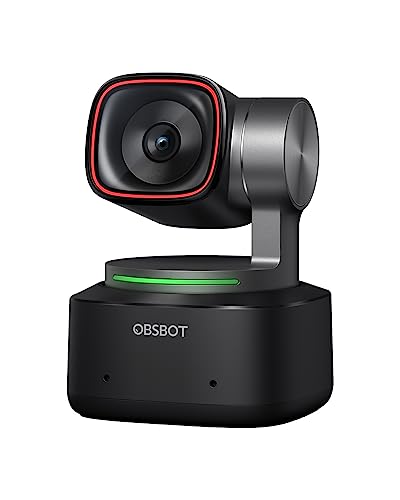
- OBSBOT Tiny 2: check price on Amazon
- DJI Osmo Action 5 Pro: see the current price on Amazon
- GoPro HERO13 Black: view this camera on Amazon
- Logitech Brio: look at it on Amazon
The best cameras for night time recording depend on a question most buyers never ask out loud: recording for what? A camera that watches the yard all night needs infrared eyes, motion detection and the indifference to record for a month without being touched. A camera that records the night itself — the wildlife in the garden, the weather, the street’s small hours — needs low-light sensitivity and endurance. A camera that keeps watch indoors over a sleeping baby, an elderly parent or a workshop needs discretion, audio and a phone alert that arrives in time to matter. Three jobs, three different cameras, and a market that profits from confusing them.
This guide separates the jobs and staffs each honestly. Our verified pool — the cameras we can link with a clear conscience — is built of webcams and action cameras, which between them cover the indoor watch and the night-recording jobs surprisingly well: a PTZ webcam that follows movement in a room, action cameras whose larger sensors record a garden’s night visitors in colour. What the pool does not contain is a true infrared security camera, and since that is the correct tool for unattended outdoor surveillance, two appear below as prose-only picks: described fully, recommended plainly, and carrying no link, because inventing one would serve nobody reading this at midnight with a genuine worry.
Night recording also carries responsibilities the daytime kind does not, and this guide treats them as part of the buying decision. Recording neighbours, passers-by and visitors has legal and neighbourly limits that vary by place; audio recording is more restricted than video almost everywhere; and a camera that records a household’s nights holds material that deserves serious thought about storage and access. The sections after the reviews cover those duties in plain language, because a camera bought for peace of mind should not become a source of the opposite.
Read the six as a staffing chart for the night. Two dedicated security picks — prose-only, and first for the surveillance job — then the pool’s genuine night workers for the indoor watch, the garden record and the property’s lit edges. Match the job before the camera, and the night becomes what it should be: recorded, reviewable, and otherwise left alone.
A word about expectations, set honestly before the products: no camera in any category watches a property the way a person would, and none prevents anything by itself. What the right night camera does is narrower and more valuable — it deters the opportunist who sees it, it alerts the household while an event is young, and it remembers, accurately, what the frightened human witness will misremember by morning. Bought for those three services and installed to deliver them, a night camera earns its place. Bought as a talisman, it will disappoint in proportion to the magic expected of it.
Key Takeaways
- Name the job first: surveillance, night recording or indoor watch — each crowns a different camera.
- True infrared security cameras are the surveillance specialists; they appear here prose-only, honestly, because the pool has none to link.
- The OBSBOT Tiny 2 is the indoor watch champion: it follows movement and keeps the room covered.
- Action cameras with larger sensors record gardens and yards in colour where light exists.
- Recording other people has legal and neighbourly limits — learn them before the camera goes up.
- Storage is part of the purchase: a month of nights is a lot of footage to keep, find and protect.
- Test on installation night, at midnight, on foot — or discover the system’s real settings on the one night that matters.
In this guide
Quick Picks
| Camera | Badge | Why it is here |
|---|---|---|
| A dedicated infrared security camera | Best for unattended outdoor surveillance — prose-only | Infrared illumination, person detection and all-night recording — the surveillance specialist, unlinked because the pool contains none. |
| A starlight low-light security camera | Best for colour recording of lit areas — prose-only | A security camera class that records in colour under minimal light — for yards and drives with some ambient light, prose-only here. |
| OBSBOT Tiny 2 | Best indoor night watch camera | A PTZ webcam that tracks movement in a room — the pool’s genuine indoor watch champion. |
| DJI Osmo Action 5 Pro | Best for recording the garden’s night | The pool’s strongest low-light action camera: colour recording of wildlife, weather and yards through the night. |
| GoPro HERO13 Black | Best rugged night recorder for vehicles and yards | A tough, stabilised recorder for the night drive, the yard and the worksite — anywhere the recording must survive the location. |
| Logitech Brio | Best desk and doorway watch for lit interiors | A sharp 4K webcam for the home office, doorway and desk watch in lit interiors — and a first-rate daytime camera besides. |
How did we judge cameras for recording the night?
We assessed each candidate against the three night jobs separately, because a camera can be superb at one and useless at another. For surveillance we weighted infrared or low-light legibility, motion detection that distinguishes a person from a moth, recording that continues through a power cut’s aftermath, and alerts that arrive while the event is still actionable. For night recording we weighted sensor size, colour honesty in mixed light, endurance across a whole night and the discretion of a device that records wildlife without announcing itself in lights and beeps. For the indoor watch we weighted audio, discretion, privacy controls and the kindness of the alert at 3 a.m.
We were equally deliberate about what we did not reward: headline resolution that dissolves in darkness, detection that fires for every passing cat until the owner disables it, and cloud subscriptions that hold a household’s night footage hostage. A night camera is a long relationship conducted in the dark, and this guide judged the relationship, not the first evening.
One further test was applied to every candidate, and it is the test the whole category should be bought by: the 3 a.m. test. When this camera alerts, wakes or records at 3 a.m., is the household better off — informed, reassured, able to act — or merely disturbed? Systems that pass the test are tuned, placed and thresholded until their interruptions are worth their news. Systems that fail it are muted within a month, and a muted watchman is furniture. Every ranking in this guide can be read as a 3 a.m. verdict, delivered in advance.
A dedicated infrared security camera — Best for unattended outdoor surveillance — prose-only
This pick leads the guide for the surveillance job, and it leads without a link, deliberately. A dedicated infrared security camera does the one thing no webcam or action camera in our pool can do: it illuminates its own scene with infrared light invisible to the eye, records a legible monochrome picture in total darkness, detects a person crossing the yard, and sends an alert while there is still time to act on it. For the buyer whose night worry is the shed, the car on the drive or the side gate, this category — from any established security maker, in its current generation — is the correct purchase, and a guide that steered that buyer to a webcam instead would be failing at its only job.
Choose within the category by power and placement rather than by headline resolution. A wired camera where a cable can honestly reach is the reliability champion; battery and solar models serve the far corners at the price of charging discipline and slightly lazier waking. Person detection matters more than pixel counts, because the alert that cries wolf for every moth and rainstorm trains its owner to ignore the one that matters. Local recording — a card or a home hub — keeps the footage in the household’s own hands, a consideration this guide returns to in the privacy sections.
Understand the category’s honest limits too. Infrared range is measured in metres, not fields; the far end of a long garden in darkness is a rumour even to a good security camera, and placement near the thing being watched beats specification-sheet reach every time. Faces at distance in monochrome identify clothing and build more reliably than identity, which is why the deterrence and the alert — the camera seen, the light, the phone buzzing — do most of the real protective work.
We record this pick as prose-only in the sources file, with no model endorsed and no link offered, because our verified pool contains no infrared security camera. When one enters the pool, this section gains a name. Until then the category advice stands on its merits — and readers who follow it will be better served than by any substitution we could have dressed up.
- Format: dedicated outdoor security camera
- Night vision: infrared illumination built in
- Detection: person and vehicle alerts
- Recording: local card, hub or cloud options
- Power: wired, battery or solar variants
Strengths
- Sees in true darkness, not just low light
- Records unattended for months
- Alerts distinguish people from weather
Trade-offs
- Footage is evidence, not entertainment
- Placement and privacy duties are real
- Good ones deserve proper installation
Best for: households whose first need is a watched perimeter at night. Not suited for: recording wildlife or the night sky for pleasure
A starlight low-light security camera — Best for colour recording of lit areas — prose-only
The second prose-only pick serves the commonest real-world case: the place that is not truly dark. Most drives, entrances and yards live under a porch light, a street lamp or the spill from a window, and in that half-light the starlight class of security camera — built around a large, sensitive sensor — records in colour where an infrared camera switches to monochrome. Colour is not vanity in evidence: the colour of the jacket, the car and the van is what a neighbour, an insurer or an officer asks for first, and it is what this class exists to provide.
Judge models within the class by their behaviour at your light level, not by the showroom’s. A camera that holds colour under your porch light but collapses at the gate’s shadow needs a second, infrared colleague for the gate — mixed systems are normal in real installations, and the two prose-only picks in this guide are designed to be combined exactly that way. Person detection and local recording carry the same weight as in the infrared pick; the class changes the picture, not the principles.
Placement craft matters here with special force, because colour recording is a negotiation with the light that exists. Aim the camera along the lit area rather than across its boundary, keep the brightest source — the porch lamp itself — out of the frame where it would blind the sensor to everything beside it, and test the picture at the hour that worries you, not at dusk when every camera is a hero. A starlight camera placed with that care will record a drive’s whole night in legible colour on a spoonful of light.
Like its infrared sibling, this pick is unlinked and unbranded in our sources: the verified pool has no starlight security camera, and we recommend the class, honestly, rather than a substitute from another category wearing its clothes. Buyers who need colour evidence from a lit entrance should buy this class from a maker they can hold to account, and install it by the placement rules above.
- Format: dedicated security camera, low-light class
- Night picture: colour under minimal ambient light
- Detection: person alerts with smart filtering
- Recording: local and cloud options
- Role: drives, yards and entrances with some light
Strengths
- Colour evidence identifies clothing and vehicles
- Works with porch and street light
- Full surveillance manners, prettier pictures
Trade-offs
- Needs some light — true darkness defeats it
- Costs more than basic infrared models
- Placement still matters more than specification
Best for: drives, entrances and yards that have porch or street lighting. Not suited for: unlit rural perimeters — infrared serves them better

OBSBOT Tiny 2 — Best indoor night watch camera
The Tiny 2 is the pool’s honest answer to the indoor watch. Its PTZ head and AI tracking mean one camera covers a room the way a fixed webcam cannot: it follows the toddler’s dawn expedition across the nursery, the dog’s patrol of the kitchen, the movement in the workshop that should not be moving. In lamplight and night-light — the illumination indoor nights actually have — its large sensor produces a picture with faces and detail, where a bargain webcam produces grey weather. For the household whose night concern lives indoors, it is a genuinely capable watchman.
Its daytime double life strengthens the case. This is a premium meeting and streaming camera that happens to stand the night watch, which means its purchase is justified across the whole day rather than by the worry alone — a consideration that matters in real households, where a single-purpose security device for the nursery competes with everything else a young family needs. Set it to its watch position in the evening, let it be the calls camera by day, and the device earns its shelf twice over.
Respect its two honest limits. It has no infrared, so a truly black room defeats it — a small night-light, which nurseries and elderly relatives’ rooms usually have anyway, is its working condition. And it is a webcam at heart: its alerting and recording run through a computer or its app ecosystem rather than a security system’s hardened pipeline, so the household that needs forensic-grade indoor surveillance should look to the prose-only category above. For the watch that is really about awareness — is the baby awake, did Gran stir, who is in the workshop — it is the best tool we can link, and we link it gladly.
Its tracking manners deserve a final note: it follows the largest or designated movement, which in a pet household means the cat may inherit the camera’s attention at the decisive moment. Position and settings — a defined watch zone where the platform allows — tame most of this, and the comedy of the cat’s close-up is a small tax on a capable system.
- Format: PTZ webcam with AI tracking
- Sensor: large 1/1.5-inch class sensor
- Tracking: follows a moving person in frame
- Control: voice, gesture and app control
- Role: indoor watch, nursery and workshop
Strengths
- Follows movement instead of staring at a wall
- Large sensor works in lamplight and night-light
- Doubles as a superb daytime meeting camera
Trade-offs
- No infrared — it needs a little light
- A webcam, not a security system: alerts are basic
- Must be placed where its view covers the room
Best for: indoor watch over nurseries, workshops, elderly relatives and home offices. Not suited for: unattended outdoor surveillance in true darkness

DJI Osmo Action 5 Pro — Best for recording the garden’s night
For the night as a subject rather than a threat, the Action 5 Pro is the pool’s finest recorder. Its larger sensor gathers the garden’s half-light — moonlight, the neighbour’s security lamp, the dawn that starts at 4 a.m. in June — and returns colour footage of the night’s actual inhabitants: the hedgehog’s rounds, the fox at the fence, the storm arriving over the rooftops. Its class-leading battery covers the whole performance where lesser action cameras record the first act and sleep through the finale.
Its time-lapse modes are the night recorder’s secret weapon. A whole night compressed into a minute — clouds racing, the garden brightening, the frost forming and melting — is both a joy and a genuinely useful record for gardeners, weather watchers and anyone whose property question is ‘what actually happens out there at night?’ Set it on a sheltered mount in the evening, collect it at breakfast, and the night hands over its diary without a single alert, subscription or infrared glow.
Be precise about what it is not. It detects nothing and alerts nobody; it records continuously or in lapses, and reviewing its night is the owner’s pleasure rather than a phone’s interruption. Storage is the working constraint — a night of high-quality footage is a large file — so the rhythm is record, review, keep the keepers, wipe. Households wanting a watchman should buy the prose-only security picks; households wanting the night itself, kept, should buy this, and many wise households will own one of each, because the jobs are different and both are real.
Its weatherproofing closes the case for the outdoor recorder: the camera that can be left on the fence post through a dewy night, a rainy night and a frosty night without a housing ceremony is the camera that actually accumulates a season of nights. Recording, like photography, is mostly attendance — and this is the pool’s most attendable night recorder.
- Format: waterproof action camera
- Sensor: larger, strong in low light
- Battery: class-leading endurance
- Modes: time-lapse and long recording
- Role: garden, yard and weather recording
Strengths
- Records night wildlife in colour
- Battery covers the whole night’s story
- Weatherproof — lives outdoors happily
Trade-offs
- No motion detection or alerts
- Continuous recording fills cards — plan storage
- A recorder, not a watchman
Best for: recording garden wildlife, weather, and lit yards for pleasure and review. Not suited for: alerting you to an intruder — that is the security picks’ job

GoPro HERO13 Black — Best rugged night recorder for vehicles and yards
The HERO13 records the nights that happen in motion and in rough places: the night drive through the mountains, the worksite yard where a recorder must survive knocks and weather, the boat coming home after dark. Its stabilisation holds the moving night steady, its night modes — light trails, vehicle lapses, the star-trail effects GoPro has cultivated — turn a night journey into a film rather than a log, and its build treats the recorder’s environment as a contact sport it intends to win.
For yard and site recording it plays the Action 5 Pro’s game with a different accent: mounted, wired to power, recording the night’s events in high resolution for the morning’s review. Its footage is the more detailed of the two in good half-light; the DJI’s is the cleaner in true gloom, and the honest buyer chooses by which of those their location offers. Either way the category truth holds — these are recorders, reviewing the night afterward, not watchmen interrupting it.
Its mount ecosystem gives it one night job no rival here matches: the vehicle as a recording platform, from the windscreen’s night-drive film to the trailer-mounted record of a long tow. Fleets and families who already run GoPros by day will find the night shift a free addition — the same mounts, the same batteries, the same muscle memory, pointed at the dark.
Choose it when the night recording must survive its location and move with its subject. The still garden belongs to the DJI; the watched room to the OBSBOT; the perimeter to the prose-only specialists. The moving, knocking, weather-beaten night belongs to this camera, and it records that night beautifully.
- Format: waterproof action camera
- Stabilisation: advanced electronic stabilisation
- Mounts: vehicle, post and helmet ecosystems
- Video: high-resolution, strong night modes
- Power: swappable batteries, USB power
Strengths
- Records the night drive and the yard alike
- Night effects modes for trails and lapses
- Survives the places recorders get knocked
Trade-offs
- Low light a step behind the DJI
- No detection or alerting
- Battery swaps on the longest nights
Best for: night drivers, yards, worksites and anyone recording in rough places. Not suited for: quiet indoor watching or true surveillance

Logitech Brio — Best desk and doorway watch for lit interiors
The Brio closes the list as the lit interior’s watchman. Positioned over a home office, a hallway door or a workshop bench in a room that keeps some light, its 4K sharpness identifies faces and details that the wider night cameras smear — the picture you would actually hand to someone and say ‘this person, at this time’. Through the recording software of the owner’s choice it stands a perfectly respectable watch over the spaces where a household’s valuables and entrances live, provided the light is part of the arrangement.
Its day job is its economic argument, as with the OBSBOT: this is one of the finest calls cameras ever made, and the household buying it for the desk gets the night watch over that desk as a second shift from the same device. In an era when the home office holds the household’s work, its data and increasingly its income, a watched desk is not paranoia but housekeeping, and the Brio does it with the sharpest eyes in the pool.
Its limit is absolute and must be read as such: no light, no picture. The Brio has no night mode worth the name, and deploying it in an unlit space is a category error this guide has been at pains to prevent. Pair it with the light the room already has — the hallway lamp, the office’s evening glow — and it performs; ask it to see in darkness and it will hand the job, silently, to the prose-only infrared pick where it always belonged.
That honesty is the note to end the reviews on, because it is the guide’s whole method: every camera here is excellent at its job and useless at someone else’s, and the night is recorded best by households who staff each job with its own tool. The Brio’s job is the lit interior, and at that job, with its day shift besides, it is superb.
- Format: 4K webcam
- Focus: autofocus with adjustable view
- Audio: built-in stereo microphones
- Mount: monitor clip and tripod thread
- Role: lit interior watch and calls
Strengths
- Sharp picture for identifying faces indoors
- Adjustable view covers a door or a desk
- Superb daytime calls camera as its day job
Trade-offs
- Needs light — no night vision at all
- Watch features depend on your software
- A camera for lit rooms only
Best for: home offices, lit hallways and desks needing a watched eye and a great calls camera. Not suited for: any unlit space or outdoor duty
What are the legal and neighbourly rules of recording at night?
Begin with the principle that unites most jurisdictions: you may generally record your own property for your own security, and the duties begin where the camera’s view and ears extend beyond it. A camera aimed at your drive that incidentally includes the street is one thing; a camera aimed at a neighbour’s windows or garden is another, legally and neighbourly, and audio — which hears through walls and hedges — is restricted more tightly than pictures almost everywhere. Learn your local rules before installation, not after the first complaint, because the conversation is easier before the camera goes up than after it has recorded the street’s summer.
The neighbourly layer outruns the legal one. Tell the neighbours the camera exists and what it covers; offer the courtesy of the footage if their property is ever troubled; aim to minimise what you collect of other people’s lives, using privacy masking where the camera offers it. A security camera that the street regards as a shared asset protects its owner twice — once by recording, once by the goodwill of the watched — while a camera regarded as a spy manufactures the very insecurity it was bought to cure.
Storage is a duty, not a detail. Night footage of a household and its visitors is intimate material: keep it on devices you control, protect accounts with strong passwords and two-factor sign-in, set retention to the shortest period that serves the purpose, and know how you would delete it all. The household that thinks about these questions before the first night is recorded will sleep better than the camera ever lets them — which is, after all, the product being bought.
How do you place night cameras so they actually catch what matters?
Placement beats specification at night even more than by day, because darkness shrinks every camera’s competent range. Put the camera near the thing watched — the door, the gate, the car — rather than surveying a grand expanse it cannot illuminate; a modest camera at the door outperforms a flagship at the eave, at night, every time. Height is a compromise between the vandal’s reach and the face’s angle: high enough to survive, low enough that a hood and a cap do not turn every visitor into a hat with shoulders.
Mind the light geometry. A camera aimed toward a street lamp or a porch light records silhouettes; a camera aimed along the light, with the subject lit from behind the camera’s position, records faces. Infrared cameras blind themselves on nearby reflective surfaces — the white wall beside the door returns the infrared as a whiteout — so angle away from close surfaces and test the actual night picture at the actual worrying hour. Ten minutes with a ladder and a phone at midnight teaches more than a month of specification comparison.
Test the alert, not just the picture. Walk the approach at night, at a normal pace, in normal clothes, and check that the detection fires, the alert arrives, and the recorded clip shows the approach rather than the departure. Systems fail this examination constantly in the real world — detection tuned for the driveway’s cat, alerts delayed past usefulness, clips that begin as the subject leaves — and every one of those failures is curable on installation night and expensive ever after.
How long should night footage be kept — and where does it all go?
Retention is a balance between the incident discovered late and the archive nobody should keep. Most household incidents announce themselves within days — the damaged gate noticed on Saturday, the missing parcel queried on Monday — so a rolling week or two of footage serves the security purpose for most homes, with incident clips exported and kept separately for as long as they matter. Keeping everything forever is not diligence; it is an ever-growing intimate archive with an ever-growing duty of care, and the disciplined household deletes on schedule with the same seriousness it records.
Storage arithmetic deserves one honest paragraph. Continuous high-quality recording consumes roughly a large card’s worth of space every few days per camera; motion-triggered recording cuts that by an order of magnitude and loses only the empty hours. Households should choose per camera: the recorder of the night’s pleasures runs continuous for the story; the watchman runs triggered for the evidence. Cloud storage buys off-site safety for the clips that matter — the incident survives the stolen camera — at the price of a subscription and a trust decision about whose servers hold the household’s nights. There is no universal answer; there is only the household’s own, made deliberately.
How do you review a night’s recording without losing your mornings?
The review is a triage, not a screening. Start with the alerts and the triggered clips, which is where the night’s events live; skim the continuous record at high speed only when a time is known — the hour the noise happened, the window when the gate was used. Garden and wildlife recorders invert the method: the pleasure is the screening, taken with breakfast, at natural speed, and the discipline is deleting the empty hours without nostalgia so the archive stays watchable. A night archive that cannot be reviewed is merely hoarding with better equipment.
Keep a tiny log — date, event, clip kept — in a notebook or a notes file. Incidents have a way of mattering later: the insurer’s question in March about January’s night is answered by the log in seconds and by the unaided memory never. The log is also the household’s privacy conscience in miniature, a record of what was kept and why, which is exactly the habit the recording duties in this guide have been arguing for from the first section.
How do you record wildlife at night without disturbing it?
The garden’s night inhabitants keep their own rules, and the recording that respects them gets the footage. Infrared security cameras illuminate with light the animals cannot see, which is why trail and garden watchers prize them — the badger’s visit recorded without a visible glow is behaviour, not performance. Visible-light recorders like the action cameras here should be placed where their presence is a fact of the landscape — mounted for days before the recording matters — so the inhabitants file them under furniture and resume their lives in front of the lens.
Position at the inhabitants’ height and on their routes: the gap in the fence, the pond’s shallow end, the run under the hedge that a week of flour-dusted curiosity or a cheap tracker’s worth of observation reveals. A camera on a route records a procession; a camera aimed at a lawn records a lawn, nightly, in high resolution. And keep the household’s own light discipline — the security lamp that blasts the garden at every moth rewrites the night for every creature in it, including the ones you bought the camera to watch.
What should you do when the camera records something that matters?
Preserve first, share carefully. Export the clip in its original quality, keep the unedited file untouched alongside any trimmed version, and note the time, the camera and the circumstances while they are fresh — that small discipline is what separates evidence from anecdote if the recording is ever needed by an insurer, a landlord or the police. Share with the people who need it through channels you control, and resist the neighbourhood group chat for anything involving identifiable people: a clip can travel further in an hour than its context travels in a year.
If the recording involves someone else’s misfortune or wrongdoing, let the proper channels lead. The camera’s owner is a witness, not a publisher, and the households that handle their one serious recording well are those that treat it with the gravity of the notebook in the earlier section — logged, preserved, handed over, and then left alone. The night camera’s proudest moment should be boring in the retelling: it recorded, we kept it properly, it helped.
How do power cuts, Wi-Fi drops and winter test a night system?
The night system earns its keep on the worst night, not the average one, and the worst night brings weather that interrupts power and internet alike. Wired security cameras on a hub with even a small battery backup ride out the short cuts that reboot a Wi-Fi camera into amnesia; local recording continues through the internet’s absence on any system that was designed to record at home rather than in a distant data centre. When choosing, ask the unglamorous question — what does this camera do in the hour after the power returns? — because the answer separates systems from gadgets more reliably than any resolution figure.
Winter is the annual audit: batteries shrink, condensation visits the housings that were sealed in summer’s dry air, and the long nights multiply every weakness by sixteen hours. The autumn maintenance — cards replaced, housings checked, batteries renewed, the midnight walk-test repeated — is the difference between a system and a hope. Night recording is a utility, and utilities are maintained on a calendar, not on a suspicion.
How many night cameras does a house actually need?
Fewer than the industry suggests, placed better than the industry advises. One camera at the main entrance, watching the approach a visitor must use, answers most households’ real questions; a second at the rear or the side gate completes the perimeter for most plots; a third, indoors or at the garage, is a decision for specific valuables rather than general anxiety. Each additional camera multiplies storage, alerts and duties as well as coverage, and a household that cannot review two cameras’ nights will not review six. Buy the entrance camera, live with it for a season, and let the gaps it reveals — named, specific gaps — choose the second. Coverage bought from experience fits the house; coverage bought from fear fits the brochure.
Comparison Table
| Camera | Type | Role in this guide | Key virtue |
|---|---|---|---|
| A dedicated infrared security camera | dedicated outdoor security camera | Best for unattended outdoor surveillance — prose-only | Infrared illumination, person detection and all-night recording — the surveillance specialist, unlinked because the pool contains none. |
| A starlight low-light security camera | dedicated security camera, low-light class | Best for colour recording of lit areas — prose-only | A security camera class that records in colour under minimal light — for yards and drives with some ambient light, prose-only here. |
| OBSBOT Tiny 2 | PTZ webcam with AI tracking | Best indoor night watch camera | A PTZ webcam that tracks movement in a room — the pool’s genuine indoor watch champion. |
| DJI Osmo Action 5 Pro | waterproof action camera | Best for recording the garden’s night | The pool’s strongest low-light action camera: colour recording of wildlife, weather and yards through the night. |
| GoPro HERO13 Black | waterproof action camera | Best rugged night recorder for vehicles and yards | A tough, stabilised recorder for the night drive, the yard and the worksite — anywhere the recording must survive the location. |
| Logitech Brio | 4K webcam | Best desk and doorway watch for lit interiors | A sharp 4K webcam for the home office, doorway and desk watch in lit interiors — and a first-rate daytime camera besides. |
What mistakes do night-recording buyers make?
The first is buying a camera for the wrong night job — the webcam expected to guard a dark yard, the action camera expected to send alerts — and this guide’s structure exists to prevent exactly that purchase. The second is aiming for coverage rather than for faces: the grand wide view that identifies nobody, installed with pride, reviewed with despair. The third is detection left at factory enthusiasm, firing for every moth until the owner mutes the alerts that were the entire point.
The fourth mistake is the untested system — the camera installed, assumed and discovered wanting on the one night it mattered, because nobody walked the approach at midnight in installation week. And the fifth is forgetting that a recording household has duties: to neighbours, to visitors, to the people who live in front of the lens. The camera that records a home should make it feel safer in every sense, including the sense that its own recordings are handled with care.
A sixth mistake is subtler and increasingly common: recording everything and protecting nothing — footage on an account with a reused password, clips shared to group chats, a camera whose firmware has not been updated since installation. A night system holds a household’s most private archive; its security deserves the same seriousness as the security it provides, and the five minutes spent on passwords, updates and sharing settings are part of the installation, not an optional extra for the cautious.
Final Recommendation
Staff the night by its jobs and the choices resolve. For the watched perimeter, buy the dedicated security cameras — infrared for true darkness, starlight for lit entrances — from a maker you trust; they are prose-only here because honesty outranks linkage. For the indoor watch, the OBSBOT Tiny 2; for the garden’s night story, the Action 5 Pro; for the rough and moving night, the HERO13; for the lit interior and the desk, the Brio. Each is the best tool we can name for its job, and none is asked to impersonate another.
Install with care, test at midnight, keep the duties as faithfully as the footage — and then let the night be the night again, recorded in the background of a household that sleeps the better for it. That sleep, in the end, is the specification every camera in this guide was bought for.
And when the system is in and tested, do the hardest thing in the whole guide: forget it, a little. Check the morning’s alerts with the coffee, glance at the garden’s night visitors with breakfast, and let the rest of the night belong to the household rather than to its recording. A night system that demands constant attention has failed at its only real job, which is to give attention back.
Related guides
Frequently Asked Questions
Can a webcam really work as a security camera?
For a lit interior with a computer or app recording, yes, within limits — the OBSBOT and Brio here do honest indoor watch duty. For unattended outdoor surveillance in darkness, no: that job needs the infrared security category, which is why it leads this guide as a prose-only pick rather than being impersonated by a webcam.
What is the difference between infrared and starlight cameras?
Infrared cameras bring their own invisible light and record in monochrome in total darkness. Starlight cameras use very sensitive sensors to record in colour under minimal existing light, but need some light to work with. Most real installations mix both: starlight where light exists, infrared where it does not.
How much light do action cameras need at night?
Enough to recognise the scene by eye is a fair rule: moonlight, street light or a lit yard. The Action 5 Pro works in less than most, but no action camera sees in true darkness, and none should be sold to you as a security watchman. They are the night’s recorders, not its guards.
Is it legal to record my neighbour’s property or the street?
Rules vary by place and by how the camera is aimed and used; recording your own property with incidental street coverage is widely accepted, while targeting a neighbour’s private spaces or recording audio is restricted in many places. Check local law and any data-protection duties before installing, and use privacy masking where available.
Do I need a subscription for night recording?
Not necessarily. Local recording to a card or home hub avoids subscriptions for many cameras; cloud plans add off-site backup of clips and smarter alerts. Read what the free tier actually records before buying — some cameras are dramatically less useful without their plan — and price the subscription into the camera’s real cost.
Why does my night camera keep alerting for insects and rain?
Infrared light attracts insects and illuminates rain and fog close to the lens, and motion detection reads them as events. Person-detection models, lower sensitivity for small near movement, and repositioning the camera away from its own light’s reflections cure most of it. Tune detection on installation night, with real walks at real distances.
What keeps recording running through a power cut or a router failure?
Cameras that record to a local memory card keep working when Wi-Fi drops, provided their power survives; cloud-only models may stop saving altogether. A small uninterruptible power supply feeding the router and one key camera bridges short outages and gives you footage of the minutes when alarms and lights behave oddly. Set the camera app to notify you when a device goes offline, and test the arrangement by switching the router off for an evening. Rechargeable models need a rotation plan so a flat battery never coincides with building work, deliveries or a holiday. Local copies matter most exactly when networks fail.
How should I aim a camera where car headlights sweep past?
Headlights aimed straight into a lens force the exposure down, plunging faces and number plates into darkness just as they pass. Offset the camera so vehicles cross the frame at an angle, mount it higher with a gentle downward tilt, and favour a view along a fence line or driveway edge over one staring down the road. Wide dynamic range settings help retain both lamp glare and shadow detail, though they cannot recover a plate burned completely white. Test with a willing driver at walking pace after dark, adjusting position before you need evidence from a stranger’s car.
When will loop recording erase the clip I actually need?
Most systems overwrite their oldest files once storage fills, so an incident noticed days later may already be gone. Learn your overwrite cycle at your chosen resolution: continuous recording on a small card can cycle in under two days. The moment anything happens, export the relevant hour to your phone or computer and also save a wider window around it, since context before and after often matters more than the event itself. Cloud archives and event bookmarks help only if motion detection fired. Make a monthly habit of opening one old recording to confirm the archive really holds what its timeline promises.
Review your angles once each season, not only after an incident. Hedges grow into the frame, neighbours park differently, new street lighting changes exposure, and a camera nudged by wind or a ladder can spend months faithfully recording the wrong strip of garden. A short evening walk-through with a second person, checking the live view on a phone at the distances you care about, confirms faces and plates are genuinely readable rather than merely visible. Save one still from each camera after adjusting, so next season’s comparison takes minutes instead of guesswork. Photograph each camera position with your phone during that walk-through, creating a dated record of the intended view for whoever maintains the system next.
Related Guides
Related reading: the best cameras for night shots and long exposures, the best cameras for monitoring a home, how to place security cameras without annoying neighbours.


