reviewstook.com is reader-supported. When you buy through links on our site, we may earn an affiliate commission.
Where to buy
Rideshare camera kit is bought around the shift: mounts that survive eight hours, power from the car’s USB, and storage that loops without attention. The linked action cameras below sit on Amazon; the dedicated dash cams this job really wants are recommended in prose, because our verified pool contains none.
- Dedicated Dual-Channel Dash Cam (Prose-Only): sold through specialist and second-hand channels rather than our linked listings
- Cabin-Facing Interior Dash Cam (Prose-Only): sold through specialist and second-hand channels rather than our linked listings
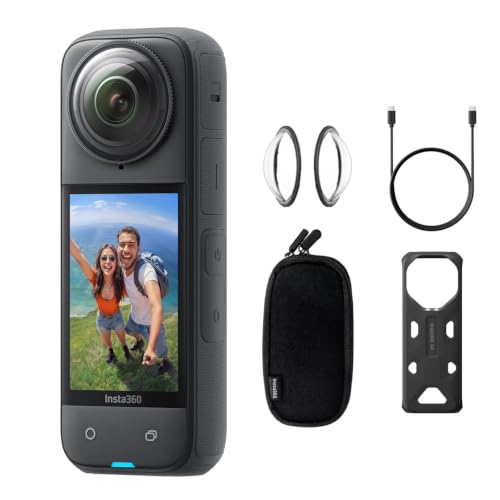
- Insta360 X4: view this camera on Amazon
- GoPro HERO13 Black: check availability on Amazon
- DJI Osmo Action 4: see it on Amazon
- AKASO Brave 7 LE: look at it on Amazon
The best cameras for Lyft drivers start with a truth this guide will state once, clearly, and then build on: the ideal tool for this job is a dedicated dual-channel dash cam — road ahead, cabin behind, looping forever — and our verified pool contains no dash cam at all. So the dedicated dash cams below are recommended as prose-only picks, with the features to demand when you buy one. Alongside them, four linked action and 360 cameras from the pool serve drivers who also want a camera for the rest of life, or a cabin witness with talents a dash cam lacks.
Why record at all? Every experienced rideshare driver has a story: the fare dispute, the false complaint, the minor collision that became major in the retelling. A camera is the driver’s impartial witness — for the platform, for insurers, for the police, and for the driver’s own peace of mind on the late shift. The cameras here were judged on shift-long practicality: loop recording, night behaviour in a lit cabin and a dark street, mounts that stay put, and the discipline of recording law and platform policy, which this guide treats as part of the equipment.
Key Takeaways
- Honest headline: the pool has no dash cam, so the two dedicated dash-cam picks are prose-only — buy them from dash-cam specialists.
- Dual-channel matters: the road explains the accident, the cabin explains the complaint.
- Loop recording and parking vigilance separate a dash cam from a camera merely present in a car.
- The Insta360 X4’s 360 view is the strongest linked cabin witness here.
- Tell your passengers: signage and the app notice are legal and courtesy requirements in many places.
In this guide
Quick Picks
| Camera | Badge | Why it is here |
|---|---|---|
| Dedicated Dual-Channel Dash Cam (Prose-Only) | Best tool actually designed for this job | Road and cabin channels, loop recording and parking mode — buy from a dash-cam specialist. |
| Cabin-Facing Interior Dash Cam (Prose-Only) | Best dedicated cabin witness | An interior-focused camera for drivers whose priority is the passenger space. |
| Insta360 X4 | Best linked cabin witness: sees everything | A 360 camera that records the whole cabin and the road around the car in one file. |
| GoPro HERO13 Black | Best linked road-view action camera | Stabilised, high-resolution forward footage from the most proven action platform. |
| DJI Osmo Action 4 | Best linked low-light road camera | A large-sensor action camera whose dusk and night footage suits evening shifts. |
| AKASO Brave 7 LE | Best budget linked camera for drivers | Dual screens and loop-friendly recording at a price that forgives rideshare risks. |
How did we choose cameras for the rideshare shift?
We scored shift-long behaviour: loop recording that never needs attention, low-light quality for night fares, cabin coverage, mount stability over potholes and speed bumps, and power simplicity from the car’s supply. Dedicated dash cams were assessed in prose — our pool holds none, and inventing a listing would be a disservice in a safety purchase — against the features drivers should demand: dual channels, loop, parking mode, and a supercapacitor or battery that tolerates car heat.
The linked action cameras were judged as second cameras and cabin witnesses, not dash-cam impersonators. Each earns its place doing something a dash cam cannot: 360 cabin coverage, life outside the car, or evidence-grade action footage. The verdicts keep those roles separate, because a driver mis-sold a camera as a dash cam is a driver unprotected at the exact moment it matters.
A driver’s camera is a witness, and like any witness it must be accurate, timestamped and impossible to argue with. The cabin of a working car is a hard studio, vibration, glare, darkness and weather arriving through glass that is rarely clean. Night shifts write the real specification, because the airport queue at midnight is where cameras earn or lose their place on the glass. A camera that announces itself politely, earns trust, while the hidden one earns complaints, chargebacks and worse. Footage nobody hopes to use, is the most valuable kind, and the card that holds it must never be the one that failed. The spare mount adhesive pads live in the door pocket, because mounts fail at the kerb, not in the garage.
Which are the best cameras for Lyft drivers, honestly sorted?
Two prose-only dash cams — the tools designed for this job — then four linked cameras that serve rideshare life in supporting roles. Read the badges literally; this guide does not blur them.
Dedicated Dual-Channel Dash Cam (Prose-Only) — Best tool actually designed for this job
The dual-channel dash cam is the rideshare driver’s correct primary camera, and it is recommended here in prose because our verified pool contains none — a gap we would rather state than disguise. The forward channel records the road: the light that was green, the car that braked, the cyclist who appeared. The cabin channel records the work: the passenger interaction, the fare dispute, the complaint that evidence ends in one viewing. Loop recording overwrites the oldest uneventful hours, parking mode keeps watch over the car itself, and the whole system asks for nothing across a shift.
- Form: dedicated dual-channel dash cam
- Channels: forward road view plus cabin camera
- Recording: seamless loop to a memory card
- Power: hardwired or 12V, parking mode options
- Status: prose-only — no dash cam in our verified pool
Buy it like safety equipment. Demand a model with reviewed night performance, a supercapacitor rather than a lithium battery for hot windscreens, GPS and time stamping for evidence, and a card rated for continuous writing. Fit it behind the mirror where it sees without distracting, hardwire it if parking mode matters, and check the footage monthly so the day you need it is not the day you discover a dead card. This is the purchase the rest of this guide supports but cannot replace.
The mount lives through a thousand door slams, heat cycles and potholes, which is why adhesive pads and tethers matter as much as sensors. Passengers behave differently around a lens they can see, and the wise driver treats that as a feature, mentioning the camera early and cheerfully. Witnesses must be accurate, timestamped and hard to argue with. The initial month teaches that reliability grows into creative freedom, and that, in rideshare driving, is the point. Practise the save-footage routine until it is one motion: after any incident, lock the clip before the loop can reach it, then note the time in the trip log. Review one random hour of footage monthly, not for incidents but for camera health: vibration, drift, focus and the slow creep of a dying mount.
Strengths
- Built to be forgotten until the day it defends you
- Cabin channel answers complaints with evidence
- Parking mode watches the car you earn a living in
Trade-offs
- Only does one job — no life outside the windscreen
- Installation deserves an hour and care
- Quality varies wildly by brand: buy reviewed models
Best for: Every Lyft driver whose camera need is protection, full stop
Not suited for: Drivers wanting one camera for driving and for holidays
Cabin-Facing Interior Dash Cam (Prose-Only) — Best dedicated cabin witness
Some drivers’ risk calculus is cabin-first: the late hours, the nightlife districts, the long airport runs with strangers. A cabin-facing dash cam — often the interior channel of a multi-channel system, sometimes a dedicated unit — watches that space with infrared vision that records a dark cabin clearly without illuminating it like a stage. Event-lock buttons let a driver protect a specific interaction from the loop’s overwrite, and the footage answers the complaint, the accusation or the damage claim with calm, timestamped fact.
- Form: interior or multi-channel dash camera
- View: wide cabin coverage, infrared night vision
- Recording: loop, event-locked on impact or button
- Audio: cabin microphone, check local consent law
- Status: prose-only — outside our verified pool
It is listed in prose for the same honest reason as its sibling: no such camera sits in our verified pool. Treat its legal dimension as part of the specification. Passenger recording law and Lyft’s own policies vary by place and change over time; signage in the car and the app’s notification features are the driver’s friends. A cabin camera used openly, lawfully and courteously protects everyone in the car — including the passengers it records.
Cabins are hard studios, all vibration, glare and darkness. An incident unfolds in seconds, so the camera that starts fast and records always is worth more than the clever one in a menu. Loop recording in a car is housekeeping, deleting the ordinary to preserve the exceptional, provided the exceptional is locked before it loops away. The law rides in the car too, varying by state and city, and it governs audio, signage and consent more than any camera setting. Tell passengers about the camera in the same breath as the greeting; early, cheerful disclosure prevents nearly every objection the lens ever causes. When the platform’s rules and the state’s rules differ, follow the stricter one and keep a note of why in the glovebox.
Strengths
- Infrared sees the night cabin without lighting it
- Event-lock protects the important minutes from the loop
- Purpose-built mounts disappear into the cabin
Trade-offs
- Cabin-only views miss the road half of most stories
- Recording passengers carries legal duties that vary
- Another single-purpose device to install and maintain
Best for: Night-shift drivers whose concern is passenger interactions
Not suited for: Drivers needing road evidence — pair with the dual-channel above

Insta360 X4 — Best linked cabin witness: sees everything
The X4’s 360 view is a genuinely different kind of witness: mounted centrally, it records the entire cabin, the driver, every passenger and the road through every window, simultaneously, in one file. After an incident you reframe to the angle that matters — the passenger door, the rear seat, the junction ahead — rather than discovering your single camera faced elsewhere. For complaint defence, that completeness is formidable, and off-shift the same camera becomes the family’s 360 holiday camera, which no dash cam will ever be.
- Form: 360 action camera, waterproof
- Video: 8K 360 capture, reframed in the app
- View: complete cabin and surroundings in one recording
- Mounting: dashboard or windscreen mounts available
- Workflow: choose the angle after the event
Use it with open eyes about its category. It is an action camera moonlighting: power it from the car, manage its heat and storage across a shift, and do not expect parking vigilance or a dash cam’s set-and-forget loop manners. As the second camera in a driver’s life — or the first where cabin evidence outranks road evidence — it is the strongest linked option here, and the only one that sees the whole story at once.
Midnight writes the spec, in the airport queue’s sodium light. Heat through a windscreen in July, cooks electronics at temperatures no laboratory test bothers to simulate for long. A driver’s attention is the primary safety system, and every camera interaction must be finished before the wheels move, without exception. Audio inside a cabin is a legal landscape, where one-party and two-party rules divide the map into different obligations for the same drive. Check your state and city rules for in-car audio before the first shift, because the microphone, not the lens, is where most legal trouble lives. A driver who mentions the camera before the passenger mentions it owns the conversation; practise the timing like a gear change.
Strengths
- Nothing in the cabin happens off-camera
- One device covers road, cabin and the driver’s day off
- Reframing after the fact suits incident review perfectly
Trade-offs
- Not a dash cam: no parking mode or true loop discipline
- Files are large and review takes app work
- Battery and heat need managing across a long shift
Best for: Drivers wanting maximum cabin evidence plus a creative camera off-shift
Not suited for: Set-and-forget protection — take the prose dash cam first

GoPro HERO13 Black — Best linked road-view action camera
As a forward witness, the HERO13 brings action-camera virtues to the windscreen: stabilised, high-resolution footage that keeps number plates and road signs legible, a mount for every dashboard geometry, and USB powering that runs the whole shift. Its footage quality exceeds most dedicated dash cams’ forward channels, which matters when an insurer zooms into the decisive frame. Between shifts it unclips into the driver’s other life — the hike, the swim, the family day — earning its price twice.
- Form: waterproof action camera
- Video: 5.3K with class-leading stabilisation
- Mounting: windscreen and dash mounts in a huge ecosystem
- Power: USB powering for shift-long running
- Handling: simple, rugged, glove-friendly
Its limits define its role honestly. It watches the road only, its loop behaviour is an action camera’s approximation rather than a dash cam’s discipline, and nobody should expect parking mode from it. Paired with the prose-only dash cam handling cabin and parking duties, it is arguably overqualified; standing alone, it is a superb road camera and an incomplete rideshare system. Buy it for the combination, not as a dash-cam substitute wearing a famous name.
The rating on the app and the footage on the card, occasionally disagree, and the recording is the only participant with a perfect memory. A wide lens sees the whole cabin, including the passenger who swears they were never in the car at all. Parking mode watches while the driver cannot, and its false triggers are the tax on that vigilance through every shopping-centre car park. False alarms teach drivers to ignore cameras, so sensitivity must be tuned until the camera cries wolf rarely enough to stay believed. Clean the windscreen patch in front of the lens at every fuel stop; a month of road film costs more picture quality than a cheaper sensor would. Keep the camera’s firmware updated on a rest day, never before a shift, because updates and surprises are close relatives.
Strengths
- Forward footage is sharp, stable and detailed
- Mounts and spares available everywhere
- Doubles as the driver’s adventure camera off-shift
Trade-offs
- Forward view only — no cabin channel
- Loop and parking features are action-camera approximations
- Premium price for a supporting role
Best for: Drivers wanting road evidence plus a serious action camera for days off
Not suited for: Cabin-first protection — that is the X4 or a dash cam

DJI Osmo Action 4 — Best linked low-light road camera
Night shifts are where road evidence gets hard: headlight glare, dark side streets, rain on the windscreen. The Action 4’s larger sensor is the linked range’s best answer, holding detail in the shadows between streetlights and keeping its composure when oncoming beams flood the frame. Its magnetic mount deserves a driver’s respect too — the camera lifts off its base in a second at the shift’s end, because a camera left visible in a parked car is a theft invitation, in the car and on foot alike.
- Form: waterproof action camera
- Sensor: 1/1.3-inch type, strong in low light
- Video: 4K high frame rates
- Mounting: magnetic quick-release system
- Audio: wireless microphone compatibility
It remains an action camera in a supporting role: forward view, no parking vigilance, loop manners borrowed rather than born. But for the driver whose shifts run through the dark and whose budget stretches to one linked camera, its night footage is the most defensible record here. Pair it later with the cabin dash cam and the system is complete; alone, it is the night road’s best witness in this guide.
Announce the camera cheerfully, and trust follows the announcement. The best outcome for any shift footage, is that it is never needed: recorded, looped over, and forgotten like the shift itself. A driver’s camera is a witness, and its false triggers are the tax on that vigilance through every shopping-centre car park. Unused footage is priceless, precisely because it was never needed. Keep the camera’s clock honest against your phone weekly, since a timestamp that drifts is a witness whose memory defence counsel will enjoy. The night’s last task is the card check: recording light seen, yesterday’s incidents locked, and the spare within reach.
Strengths
- Evening and night footage stays cleaner than rivals
- Quick-release mount moves between car and life in seconds
- Dynamic range handles headlights and dark streets together
Trade-offs
- Forward view only, like all single action cameras
- No dash-cam parking or loop specialisation
- Best results need the app for settings
Best for: Evening and night-shift drivers wanting the clearest road footage
Not suited for: Day-only drivers — the AKASO below spends less

AKASO Brave 7 LE — Best budget linked camera for drivers
The Brave 7 LE is the sensible first camera for a driver not yet sure the job will last the year. It loops its recording, mounts on any standard fitting, costs little enough that the risks of car life — heat, knocks, the smash-and-grab you hope never comes — stop being financial events, and its dual screens make dash framing a ten-second job. For daytime and lit-street evidence, its footage is entirely serviceable, and many drivers’ whole camera education happens on exactly this class of device.
- Form: action camera with dual screens
- Recording: loop recording modes
- Video: 4K with electronic stabilisation
- Mounting: standard action fittings, spares are cheap
- Value: the lowest-cost linked option here
Its night work is the honest weakness: evening incidents deserve the DJI’s sensor or a proper dash cam’s night tuning. Treat the AKASO as the profession’s sampler — a season of shifts will teach you whether you need the dual-channel dash cam, the 360 witness, or nothing more than this. That education, at this price, with usable footage throughout, is a fair deal and the correct first step for the cautious.
A five-star rating with no footage, is a good night, and the camera’s favourite kind. Mounts endure door slams, heat cycles and a thousand potholes. The airport queue at 2 a.m., is a slow procession of headlights and patience. A passenger’s spilled coffee, tests the cabin camera’s angle more than its resolution. Carry the spare card in the glovebox, not at home: the shift a card fails is always the shift something finally happens. Photograph the installed camera from the passenger seat once, and look at what your riders actually see; adjust the angle until it looks as calm as it is.
Strengths
- Cheap enough that car risks stop mattering
- Loop mode suits set-and-run shift recording
- Dual screens help framing on the dash
Trade-offs
- Night footage is its weakest shift
- Stabilisation and detail trail the premium picks
- Build invites care rather than abuse
Best for: New drivers testing whether a car camera suits their work
Not suited for: Night-shift evidence where detail is the whole point
How do the six driver cameras compare side by side?
| Camera | Form | Strongest suit | Watch out for |
|---|---|---|---|
| Dedicated Dual-Channel Dash Cam (Prose-Only) | dedicated dual-channel dash cam | Built to be forgotten until the day it defends you | Only does one job — no life outside the windscreen |
| Cabin-Facing Interior Dash Cam (Prose-Only) | interior or multi-channel dash camera | Infrared sees the night cabin without lighting it | Cabin-only views miss the road half of most stories |
| Insta360 X4 | 360 action camera, waterproof | Nothing in the cabin happens off-camera | Not a dash cam: no parking mode or true loop discipline |
| GoPro HERO13 Black | waterproof action camera | Forward footage is sharp, stable and detailed | Forward view only — no cabin channel |
| DJI Osmo Action 4 | waterproof action camera | Evening and night footage stays cleaner than rivals | Forward view only, like all single action cameras |
| AKASO Brave 7 LE | action camera with dual screens | Cheap enough that car risks stop mattering | Night footage is its weakest shift |
Only the two prose-only dash cams are complete rideshare systems; the linked cameras are specialists and second cameras, and this guide insists on the distinction because evidence is a pass-fail subject. Build the system in order: dash cam for protection, then a linked camera if your life or your cabin coverage wants one.
What does the law and the platform expect from a driver’s camera?
Rules vary by city and state, and they change; the driver’s duty is to know the current ones where they work. The recurring themes are consent and notice: many places require passengers to be informed that recording happens, some require consent for audio specifically, and Lyft’s own policies and in-app features address camera use and footage sharing. Visible signage — a small, polite notice on the dashboard or door — satisfies most notice expectations and, happily, also improves passenger behaviour all by itself.
Footage handling carries duties too. Retain recordings for a sensible period, share them with the platform, insurers or police when an incident demands, and never publish passenger footage for entertainment — a line that should not need stating and occasionally does. A camera run lawfully and courteously is a professional tool that protects passengers as well as drivers; a camera run carelessly is a liability wearing a lens. Check your local rules this month, not from memory.
The driver who narrates the camera’s presence, turns a potential objection into a shared joke about safety. Visible lenses calm behaviour, which is a feature, not a flaw. A dashcam’s timestamp in court, is worth a paragraph of anyone’s recollection. Winter darkness doubles the shift’s risk, and the low-light camera stops being a luxury by November. The rider who asks about the camera, deserves the honest, brief answer that builds trust fastest. Keep the incident log in the same app as the mileage log, because the two records corroborate each other on the day both are questioned. Practise the save-footage routine until it is one motion: after any incident, lock the clip before the loop can reach it, then note the time in the trip log.
How do you set up a car camera for a full shift?
Position for evidence, not for the view. The forward camera sits high and central, behind the mirror where legal, capturing the road, the bonnet’s edge and the sky’s traffic lights in one frame. The cabin camera — dash cam channel or the X4 — centres on the passenger space without staring down any single seat. Power runs from a cable routed along trim, not dangling across the wheel, and the recording starts with the ignition or the shift, by habit, every time, because the incident will choose the day you forgot.
Storage and heat are the shift’s silent terms. Use a card rated for continuous recording, format it on the manufacturer’s schedule, and glance at yesterday’s footage weekly to prove the system lives. Parked-car heat punishes cheap batteries — one reason proper dash cams use supercapacitors — so in hot climates, shade the windscreen and favour the hardwired, heat-tolerant installation. A camera system is a routine, and routines are what survive contact with a working year.
The cabin of a working car is a hard studio, so sensitivity must be tuned until the camera cries wolf rarely enough to stay believed. A camera that survives the car wash, has passed a test no manufacturer simulates. Incidents take seconds, so recording must already be happening. Loops delete the ordinary, so lock the exceptional quickly. The law rides along, governing audio more than video. A calm sentence practised in advance — ‘the camera records for both of us’ — ends most objections before they become confrontations. Check your state and city rules for in-car audio before the first shift, because the microphone, not the lens, is where most legal trouble lives.
How should a driver handle an incident the camera recorded?
Protect the footage first: stop the loop from overwriting it — event-lock if the camera offers it, or remove and copy the card at the first safe opportunity — and back the file up in two places before editing anything, which means before touching it at all. Note the time, the place and your own account in writing while memory is fresh; the camera remembers the scene, but your statement gives it sequence and context.
Then route it properly: the platform’s safety reporting for passenger matters, your insurer for collisions, the police where the law or the severity requires. Share the relevant segment, keep the rest private, and let the evidence speak in its own calm voice. Drivers consistently report the same experience — the existence of clear footage shortens disputes from weeks of assertion to a single viewing. That shortening is what each camera in this guide is ultimately for.
July windscreens cook electronics, at temperatures labs rarely simulate. The glovebox holds the spare card, waiting for the night the fitted one fails. A rear-seat passenger’s privacy, is protected by angle, policy and the driver’s discretion. Attention is the safety system, and cameras must never compete with it. The platform’s own incident form, asks questions the footage answers better than memory can. Check the lens for condensation after cold nights before the first pickup; a fogged witness for the morning’s first incident is no witness at all. Clean the windscreen patch in front of the lens at every fuel stop; a month of road film costs more picture quality than a cheaper sensor would.
What mistakes do rideshare drivers make with cameras?
- Buying an action camera believing it is a dash cam, then discovering — after the incident — that parking mode and loop discipline were never in the box.
- Recording passengers without notice where notice is required: the footage that was meant to protect becomes the problem.
- Never checking the footage, so a failed card or a slipped mount is discovered on the one day the recording mattered.
- Mounting the camera low and wide for a cinematic view that misses number plates, traffic lights and the decisive metre of road.
- Publishing a passenger clip online for laughs — a career-ending misunderstanding of what the camera is for.
Every driver has one story, and the camera was, fortunately, there for all of it. A driver’s camera is a witness, heat cycles and potholes, which is why adhesive pads and tethers matter as much as sensors. The cabin of a working car is a hard studio, and the wise driver treats that as a feature, mentioning the camera early and cheerfully. Night shifts write the real specification, so the camera that starts fast and records always is worth more than the clever one in a menu. The spare mount adhesive pads live in the door pocket, because mounts fail at the kerb, not in the garage. Keep the camera’s clock honest against your phone weekly, since a timestamp that drifts is a witness whose memory defence counsel will enjoy.
Audio has its own law, that changes state by state. Memory beats ratings, when stories later disagree. Wide lenses see cabins, including the denials afterwards. Parking mode keeps watch, while the driver sleeps or shops. A camera that announces itself politely, deleting the ordinary to preserve the exceptional, provided the exceptional is locked before it loops away. False alarms teach ignoring, until nobody believes the real one. Witnesses must be accurate, at temperatures labs rarely simulate. Review one random hour of footage monthly, not for incidents but for camera health: vibration, drift, focus and the slow creep of a dying mount. Carry the spare card in the glovebox, not at home: the shift a card fails is always the shift something finally happens.
Boring footage is success, looped over and forgotten by design. Footage nobody hopes to use, varying by state and city, and it governs audio, signage and consent more than any camera setting. The mount lives through a thousand door slams, cooks electronics at temperatures no laboratory test bothers to simulate for long. Passengers behave differently around a lens they can see, and every camera interaction must be finished before the wheels move, without exception. An incident unfolds in seconds, where one-party and two-party rules divide the map into different obligations for the same drive. Loop recording in a car is housekeeping, occasionally disagree, and the recording is the only participant with a perfect memory. Night shifts write the real specification, is that it is never needed: recorded, looped over, and forgotten like the shift itself. When the platform’s rules and the state’s rules differ, follow the stricter one and keep a note of why in the glovebox. Keep the incident log in the same app as the mileage log, because the two records corroborate each other on the day both are questioned.
The law rides in the car too, including the passenger who swears they were never in the car at all. Heat through a windscreen in July, and its false triggers are the tax on that vigilance through every shopping-centre car park. A driver’s attention is the primary safety system, so sensitivity must be tuned until the camera cries wolf rarely enough to stay believed. Audio inside a cabin is a legal landscape, is that it is never needed: recorded, looped over, and forgotten like the shift itself. Witnesses must be accurate, so recording must already be happening. Cabins are hard studios, so lock the exceptional quickly. Midnight writes the spec, governing audio more than video. A driver who mentions the camera before the passenger mentions it owns the conversation; practise the timing like a gear change. A calm sentence practised in advance — ‘the camera records for both of us’ — ends most objections before they become confrontations.
Announce the camera cheerfully, at temperatures labs rarely simulate. The rating on the app and the footage on the card, is a good night, and the camera’s favourite kind. A wide lens sees the whole cabin, is a slow procession of headlights and patience. Parking mode watches while the driver cannot, tests the cabin camera’s angle more than its resolution. False alarms teach drivers to ignore cameras, turns a potential objection into a shared joke about safety. The best outcome for any shift footage, is worth a paragraph of anyone’s recollection. A camera that announces itself politely, is a good night, and the camera’s favourite kind. Keep the camera’s firmware updated on a rest day, never before a shift, because updates and surprises are close relatives. Check the lens for condensation after cold nights before the first pickup; a fogged witness for the morning’s first incident is no witness at all.
Unused footage is priceless, and cameras must never compete with it. A five-star rating with no footage, and the low-light camera stops being a luxury by November. The airport queue at 2 a.m., deserves the honest, brief answer that builds trust fastest. Mounts endure door slams, that changes state by state. A passenger’s spilled coffee, has passed a test no manufacturer simulates. Visible lenses calm behaviour, when stories later disagree. The driver who narrates the camera’s presence, waiting for the night the fitted one fails. The night’s last task is the card check: recording light seen, yesterday’s incidents locked, and the spare within reach. The spare mount adhesive pads live in the door pocket, because mounts fail at the kerb, not in the garage.
Incidents take seconds, including the denials afterwards. Loops delete the ordinary, while the driver sleeps or shops. A dashcam’s timestamp in court, is protected by angle, policy and the driver’s discretion. Winter darkness doubles the shift’s risk, asks questions the footage answers better than memory can. The rider who asks about the camera, and the camera was, fortunately, there for all of it. The law rides along, until nobody believes the real one. A camera that survives the car wash, and like any witness it must be accurate, timestamped and impossible to argue with. Photograph the installed camera from the passenger seat once, and look at what your riders actually see; adjust the angle until it looks as calm as it is. Review one random hour of footage monthly, not for incidents but for camera health: vibration, drift, focus and the slow creep of a dying mount.
July windscreens cook electronics, looped over and forgotten by design. Attention is the safety system, timestamped and hard to argue with. Audio has its own law, all vibration, glare and darkness. The glovebox holds the spare card, vibration, glare, darkness and weather arriving through glass that is rarely clean. A rear-seat passenger’s privacy, because the airport queue at midnight is where cameras earn or lose their place on the glass. Memory beats ratings, in the airport queue’s sodium light. The platform’s own incident form, earns trust, while the hidden one earns complaints, chargebacks and worse. Tell passengers about the camera in the same breath as the greeting; early, cheerful disclosure prevents nearly every objection the lens ever causes.
Wide lenses see cabins, and trust follows the announcement. Every driver has one story, is the most valuable kind, and the card that holds it must never be the one that failed. Parking mode keeps watch, precisely because it was never needed. A driver’s camera is a witness, cooks electronics at temperatures no laboratory test bothers to simulate for long. False alarms teach ignoring, heat cycles and a thousand potholes. The cabin of a working car is a hard studio, and every camera interaction must be finished before the wheels move, without exception. Boring footage is success, which is a feature, not a flaw. Check your state and city rules for in-car audio before the first shift, because the microphone, not the lens, is where most legal trouble lives.
Night shifts write the real specification, where one-party and two-party rules divide the map into different obligations for the same drive. Witnesses must be accurate, including the denials afterwards. Cabins are hard studios, while the driver sleeps or shops. A camera that announces itself politely, occasionally disagree, and the recording is the only participant with a perfect memory. Footage nobody hopes to use, including the passenger who swears they were never in the car at all. The mount lives through a thousand door slams, and its false triggers are the tax on that vigilance through every shopping-centre car park. Midnight writes the spec, until nobody believes the real one. Clean the windscreen patch in front of the lens at every fuel stop; a month of road film costs more picture quality than a cheaper sensor would.
Announce the camera cheerfully, looped over and forgotten by design. Unused footage is priceless, timestamped and hard to argue with. Mounts endure door slams, all vibration, glare and darkness. Visible lenses calm behaviour, in the airport queue’s sodium light. Incidents take seconds, and trust follows the announcement. Passengers behave differently around a lens they can see, so sensitivity must be tuned until the camera cries wolf rarely enough to stay believed. Loops delete the ordinary, precisely because it was never needed. Keep the camera’s clock honest against your phone weekly, since a timestamp that drifts is a witness whose memory defence counsel will enjoy.
The law rides along, heat cycles and a thousand potholes. An incident unfolds in seconds, is that it is never needed: recorded, looped over, and forgotten like the shift itself. July windscreens cook electronics, which is a feature, not a flaw. Loop recording in a car is housekeeping, is a good night, and the camera’s favourite kind. The law rides in the car too, is a slow procession of headlights and patience. Attention is the safety system, so recording must already be happening. Heat through a windscreen in July, tests the cabin camera’s angle more than its resolution. Carry the spare card in the glovebox, not at home: the shift a card fails is always the shift something finally happens.
A driver’s attention is the primary safety system, turns a potential objection into a shared joke about safety. Audio has its own law, so lock the exceptional quickly. Memory beats ratings, governing audio more than video. Audio inside a cabin is a legal landscape, is worth a paragraph of anyone’s recollection. The rating on the app and the footage on the card, and the low-light camera stops being a luxury by November. Wide lenses see cabins, at temperatures labs rarely simulate. Parking mode keeps watch, and cameras must never compete with it. Keep the incident log in the same app as the mileage log, because the two records corroborate each other on the day both are questioned.
False alarms teach ignoring, that changes state by state. A wide lens sees the whole cabin, deserves the honest, brief answer that builds trust fastest. Parking mode watches while the driver cannot, has passed a test no manufacturer simulates. Boring footage is success, when stories later disagree. Witnesses must be accurate, and trust follows the announcement. Cabins are hard studios, precisely because it was never needed. False alarms teach drivers to ignore cameras, waiting for the night the fitted one fails. A calm sentence practised in advance — ‘the camera records for both of us’ — ends most objections before they become confrontations.
Put simply, early habits decide the afterwards work. The best outcome for any shift footage, is protected by angle, policy and the driver’s discretion. A five-star rating with no footage, asks questions the footage answers better than memory can. The airport queue at 2 a.m., and the camera was, fortunately, there for all of it. Cabins are hard studios, and cameras must never compete with it. A passenger’s spilled coffee, and like any witness it must be accurate, timestamped and impossible to argue with. Midnight writes the spec, heat cycles and a thousand potholes. Check the lens for condensation after cold nights before the first pickup; a fogged witness for the morning’s first incident is no witness at all. Practise the save-footage routine until it is one motion: after any incident, lock the clip before the loop can reach it, then note the time in the trip log. Tell passengers about the camera in the same breath as the greeting; early, cheerful disclosure prevents nearly every objection the lens ever causes.
Final Recommendation
Buy the protection first: a dual-channel dash cam from a specialist, prose-only here because our pool honestly holds none, fitted properly and checked monthly. Add the cabin-focused unit if your shifts run late and your risk lives inside the car. Then, if you want a camera that also lives your life, the X4 sees the whole cabin like nothing else, the HERO13 and the DJI watch the road superbly by day and night respectively, and the AKASO teaches the job cheaply.
Run whatever you buy openly, lawfully and routinely: signage up, card healthy, footage checked, incidents protected and routed properly. A Lyft driver’s camera is not really about footage. It is about finishing every shift with the truth stored safely in the glovebox — and on the calm majority of nights, never needing it at all.
Related guides
Frequently Asked Questions
Do I legally need to tell passengers I am recording?
In many places, yes — and the details differ for video and audio, by jurisdiction, and they change. Lyft also maintains its own policies and provides in-app notification features in some markets. The safe professional practice is visible signage in the car, use of any app notification available, and a working knowledge of your own local rules, refreshed periodically. When in doubt, ask your local driver association or a lawyer rather than a camera guide — including this one.
Why is there no dash cam to buy directly in this guide?
Because our verified pool for this site contains no dash cam, and this guide links only verified products. Rather than invent a listing for a safety purchase, the dash-cam recommendations are given in prose with the exact features to demand — dual channels, loop recording, parking mode, supercapacitor, reviewed night performance — so you can buy a good one from a dash-cam specialist with confidence. The linked action cameras here are supporting tools, and the guide keeps that distinction sharp on purpose.
Is a 360 camera better than a dash cam for a Lyft driver?
Different, not better. The Insta360 X4 sees everything in the cabin and around the car in one recording, which is unmatched for reviewing an interaction. A dash cam wins on the disciplines that make evidence automatic: true loop recording, parking vigilance, ignition-linked starting, heat tolerance and set-and-forget operation for months. Most drivers are best served by the dash cam as the system and, if budget allows, the 360 as the remarkable second witness.
What memory card does continuous car recording need?
One rated for continuous or high-endurance writing — dash-cam and surveillance-grade cards exist precisely because ordinary cards die young under constant overwriting. Size it for several days of your loop so an incident survives until you retrieve it, format it on the maker’s recommended schedule, and replace it at the first sign of errors. The card is the evidence’s home; it is the worst place in the whole system to save money.
Can camera footage affect my Lyft account or insurance?
Yes, in your favour when it is clear and handled properly. Platforms and insurers both resolve disputes faster with timestamped footage than with competing accounts, and drivers regularly report complaints closed at first viewing. Keep footage private except for those official routes, retain it for a sensible period after any incident, and remember the footage shows your driving too — the camera is an honest colleague, which is exactly why it is believed.
Related Guides
Drivers researching witnesses also look at best cameras for long term recording for the long-recording discipline behind loop capture, best cameras for live video for the live picture a dispatcher sees, and best action cameras for cars for the action cameras that started life on dashboards and handlebars.


