reviewstook.com is reader-supported. When you buy through links on our site, we may earn an affiliate commission.
Where to buy
Five entries in the list below are linked to Amazon; the remaining path is written up in prose because it sits outside our verified pool. Buy the family camera before the family occasion, not during it: a week of practice at home turns the holiday’s filming from a technical event into a pleasure.
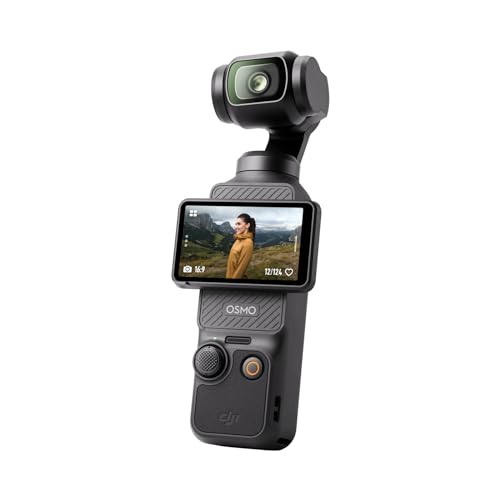
- DJI Osmo Pocket 3: check price on Amazon
- Sony ZV-1F (Black): check price on Amazon
- GoPro Hero: check price on Amazon
- Panasonic LUMIX S5II: check price on Amazon
- Sony Alpha 7 IV: check price on Amazon
A home movie is not judged like other films. Nobody at the screening, thirty years from now, will ask about its dynamic range; they will ask whether grandmother’s laugh is in it, whether the kitchen looks the way the kitchen looked, whether the child who is now introducing their own child was caught being entirely themselves on an ordinary Tuesday. The best cameras for home movies are therefore ranked by a family’s criteria: readiness in the seconds a moment allows, kindness to faces in ordinary indoor light, sound that keeps voices as they were, stabilisation that forgives the filmer’s excitement, and files that a normal household can store, find and play for decades.
The fleet reflects how families actually film now. A pocket gimbal for the parent who films while participating, a simple compact for the household’s shared camera, a small tough action camera for the children’s own footage and the wet and muddy days, and two mirrorless bodies for the family documentarian whose home movies have quietly become the family’s official history. A classic camcorder path is discussed in prose for the households that still, sensibly, love the form.
Everything here assumes the filmer is also a participant. Home movies are made from inside the family, not from a tripod at its edge, and the cameras that understand that, light, forgiving, instantly ready, are the ones whose footage gets watched at anniversaries.
Key Takeaways
- Readiness beats resolution: the moment allows seconds, not setup time.
- The Pocket 3 is the participating parent’s camera: gimbal calm, pocket size.
- Voices matter as much as faces; audio is a home movie specification.
- The compact GoPro Hero gives children and rough days a camera of their own.
- Mirrorless bodies serve the family documentarian, not the everyday moment.
- An archive the family can find and play is worth more than any specification.
In this guide
Quick Picks
| Camera | Badge | Why it is here |
|---|---|---|
| DJI Osmo Pocket 3 | Best Home Movie Camera Overall | Gimbal-smooth, low-light kind filming that joins in rather than observing. |
| Sony ZV-1F (Black) | Best Simple Family Compact | Point, smile, record: face-kind video with no learning curve for anyone. |
| GoPro Hero | Best for Kids and Rough Days | Small, tough, simple filming for children, water and adventures. |
| Panasonic LUMIX S5II | Best for the Family Documentarian | Stabilisation and colour for milestone films that deserve craft. |
| Sony Alpha 7 IV | Best Premium Family Body | Eye autofocus and lenses for weddings, reunions and growing archives. |
| Modern dedicated camcorder (Panasonic HC series class) | Best Traditional Camcorder Path (Prose-Only) | Zoom, grip and marathon recording in the classic home movie form. |
How did we choose cameras for home movies?
We filmed, in imagination, the family’s actual calendar: the birthday in a dim restaurant, the school play from row nine, the holiday morning in mixed light, the beach day, the grandparent interview that everyone means to record this year. Candidates were scored on how each occasion would actually go, not on their showroom virtues: how fast the camera is ready, whether a non-technical relative can be handed it without a briefing, whether the faces of the people who matter stay in focus while they move the way people actually move, which is to say, unpredictably and away.
Sound was scored as a first-class citizen, because home movies are half heard. The voice at seven, the song at the piano, the commentary of the uncle who narrates everything: built-in audio that respects voices at room distances, and honest paths to a wireless microphone for the interviews, separated the family cameras from the merely photographic ones.
Finally, we scored the archive’s future. Files must be playable on ordinary televisions and computers, storage must not punish a family for filming generously, and the camera’s ecosystem must not orphan the footage in a format or an app that vanishes. A home movie’s value compounds for fifty years; its camera should be chosen with at least the first twenty in mind.
The picks in detail

DJI Osmo Pocket 3 — Best Home Movie Camera Overall
The Pocket 3 understands the home movie’s central problem, that the filmer is also the father carrying the cake, the mother on the beach walk, the grandparent at the recital with one free hand. Its gimbal turns that one-handed, half-distracted filming into footage that glides, its one-inch sensor keeps the restaurant’s candlelight and the living room’s lamplight looking like themselves rather than like evidence, and its subject tracking holds a child in frame while the operator applauds, laughs and participates. It starts in a breath, lives in a pocket or a handbag, and its vertical mode serves the family’s other cinema, the clips that travel to relatives by phone the same evening.
The rotating screen and the wireless microphone options complete the family brief: interviews with grandparents, the home movie’s most precious genre, become a two-minute setup with sound worthy of the stories. Its footage needs almost nothing in the edit, which matters because family footage that needs work does not get finished, and unfinished footage does not get watched.
It is not waterproof, not child-proof and not zoom-equipped; the school play’s stage stays at its honest distance. Those roles belong to its fleet-mates below. As the camera that will actually be present, charged and ready, at the largest number of family moments, it is this guide’s first recommendation, and the one most likely to be thanked at a future anniversary screening.
- Form: pocket gimbal camera, one-inch sensor
- Stabilisation: three-axis mechanical
- Tracking: follows children and grandparents alike
- Audio: wireless microphone companions
- Role: everyday family filming, interviews, holidays
Strengths
- Films beautifully while its owner participates.
- Evenings and interiors look like themselves.
- Ready from a pocket in seconds.
Trade-offs
- No zoom for distant stages.
- Keep it from water and toddlers’ drops.
- Battery is a day’s, not a week’s.
Best for: parents and grandparents filming family life daily. Not suited for: school plays from row nine or pool days.

Sony ZV-1F (Black) — Best Simple Family Compact
Every household needs the camera that anyone can use: the teenager, the visiting cousin, the grandparent who declares themselves bad with technology and then films the best footage of the day. The ZV-1F is that camera in a serious form, a one-inch sensor and a bright wide lens behind an interface that asks almost nothing, eye autofocus that finds faces without being told, colour tuned to make the family look like the family on a good day, and a directional microphone that hears the person in front of it over the room behind. In black it also passes the household test of looking like a camera rather than a gadget, so it gets treated like one.
Its simplicity is engineered rather than accidental: fixed lens, forgiving exposure, files that play anywhere and need no grading. For the family whose filming is done by whoever is nearest, that consistency across operators is worth more than any single specification, because the archive’s quality stops depending on who held the camera.
It will not zoom to the stage, grow a lens collection or survive the pool. It is the household’s shared instrument for the ninety percent of family life that happens within arm’s reach and lamplight, and in that role it has no serious rival in this guide.
- Form: fixed-lens compact, one-inch sensor
- Focus: automatic eye tracking
- Audio: directional built-in array
- Lens: bright, wide, room-friendly
- Role: shared household camera, gatherings
Strengths
- Anyone in the family can film well with it.
- Faces and voices are flattered honestly.
- Files play anywhere, finished immediately.
Trade-offs
- Fixed wide framing only.
- No weather or water resistance.
- Session-length battery.
Best for: shared family use and everyday gatherings. Not suited for: distant stages or adventure days.

GoPro Hero — Best for Kids and Rough Days
Children should film their own childhoods a little, and the compact Hero is the camera a family can hand over without a flinch: small, simple, waterproof, and tough enough for the bicycle, the pool and the beach bag’s sandy democracy. Its footage, stabilised and honest 4K, cuts into the family film as the participant’s view, the ride, the jump, the underwater grin, that no parent’s camera can obtain from the outside. For the rough days of a family’s year, the camping trip, the ski weekend, the boating afternoon, it is also the adult camera of choice, because its loss or drowning would be a story rather than a tragedy.
Simplicity is again the design: fewer modes for small hands to mis-set, a clear recording state, an app that lets a parent harvest the day’s footage to the family archive without a seminar. Its size makes it the camera that rides along when the bigger ones are left for weight, and presence, as this series keeps concluding, is the archive’s first virtue.
Low light and audio are its honest limits; the evening belongs to the Pocket 3 and the ZV-1F. Assigned the daylight, the water and the children’s own authorship, the Hero completes the family fleet’s coverage in a way no single camera could.
- Form: compact waterproof action camera
- Video: stabilised 4K, simple modes
- Build: small, tough, pool-ready
- Sharing: app harvest to the family archive
- Role: children, water, adventures, spares
Strengths
- The children’s-eye view, safely obtained.
- Water and mud are locations, not risks.
- Simple enough for small hands.
Trade-offs
- Evenings belong to bigger sensors.
- Audio is honest, not rich.
- Fixed wide view.
Best for: kids’ filming, holidays and rough days. Not suited for: evening milestones or interviews.

Panasonic LUMIX S5II — Best for the Family Documentarian
Some families have a documentarian, the one who films the reunion properly, interviews the grandparents across a whole afternoon, and cuts a Christmas film the relatives request by name. The S5II is that person’s instrument at a sane price: full-frame colour with real depth for the milestone footage, stabilisation that leads its class so the handheld ceremony stays graceful, phase-hybrid autofocus that minds the subjects while the documentarian minds the occasion, and audio provision worthy of the interviews that are the archive’s crown jewels.
Its value position matters to families as much as to professionals: the saving against flagship bodies funds the lens, the microphone and the trip to the reunion, which are the ingredients the footage actually tastes of. Its files grade beautifully for the documentarian who edits, and its baked colour is kind for the one who, this year, does not.
It is a real camera system, with a system’s weight and learning curve, and it will not be handed to a cousin without a thought. The documentarian’s role is exactly the one that justifies it, and families lucky enough to have the role filled should equip it properly, because its output is the version of the family that the future will know.
- Form: full-frame mirrorless
- Colour: deep, gradeable, kind baked options
- Stabilisation: class-leading in-body
- Audio: proper inputs and monitoring
- Role: milestones, interviews, family films
Strengths
- Milestone footage with genuine craft.
- Interviews sound as good as they look.
- Value funds the rest of the production.
Trade-offs
- A system to learn and carry.
- Not a hand-it-to-anyone camera.
- Overkill for the everyday moment.
Best for: family documentarians and milestone films. Not suited for: casual shared use.

Sony Alpha 7 IV — Best Premium Family Body
At the fleet’s top sits the body for families whose occasions have become productions: the wedding filmed by the talented sibling, the reunion with a hundred relatives, the christening where the family has quietly appointed its historian. The Alpha 7 IV’s eye autofocus is its family feature above all, holding the right face in a crowd of faces with a reliability that feels like gratitude, while its sensor’s range keeps the church’s gloom and the marquee’s glare inside one honest exposure. Interchangeable lenses cover the day completely, a wide for the room, a fast prime for the portraits, a telephoto for the ceremony’s distance.
The ecosystem argument serves families too: lenses can be rented for the one big occasion, borrowed within photography friendships, and bought used as the archive’s ambitions grow. Its stills are the family’s best as well, so the historian’s camera covers the album and the film with one fluency.
It is the fleet’s largest commitment and the least handable to amateurs, and for most families it is the second camera story, the one the documentarian graduates to when the occasions demand it. The S5II will serve many historians for a decade; this is the body for the ones whose family productions have outgrown it.
- Form: full-frame mirrorless
- Focus: eye tracking across crowds
- Sensor: high resolution, wide range
- System: deepest lens and rental shelf
- Role: weddings, reunions, big occasions
Strengths
- The right face, in focus, in the crowd.
- One body for the film and the album.
- Lenses for every occasion exist.
Trade-offs
- The fleet’s largest commitment.
- Needs a committed operator.
- Too much camera for Tuesdays.
Best for: family historians filming major occasions. Not suited for: shared casual use or small budgets.
Modern dedicated camcorder (Panasonic HC series class) — Best Traditional Camcorder Path (Prose-Only)
We discuss the dedicated camcorder without a link because current models sit outside our verified pool, but the form deserves its paragraph of respect, because for pure home movie duty it still does three things the mirrorless world finds awkward: zoom, smoothly and far, from the school hall’s back row to the stage’s faces; record, for hours, in a grip designed for exactly that, with marathon batteries and no overheating drama; and behave, entirely, like a video camera, with no stills ambitions diluting its manners. Households that film plays, matches and ceremonies from the audience will find the modern camcorder, Panasonic’s HC series being the class’s familiar name, the most honest tool for that specific life.
Its trade-offs are the mirror image of its virtues: smaller sensors that concede the evening to the Pocket 3’s class, a form that photographs nothing, and an ecosystem the phone era has shrunk. For the ceremony-and-stage household those trades are worth it; for everyone else the fleet above covers the ground with more versatility.
We name the path so the guide’s map is complete: if your family’s filming is mostly from a seat, at a distance, for hours, start your search with the camcorders, verify the current model in your own research, and let the picks above handle everything the camcorder cannot.
- Form: dedicated camcorder
- Zoom: long, smooth, stage-ready
- Recording: marathon sessions by design
- Grip: built for one-handed filming
- Role: plays, ceremonies, matches from the seats
Strengths
- The back row can film the stage’s faces.
- Hours of recording without drama.
- Purpose-built manners, nothing diluted.
Trade-offs
- No verified listing in our pool today.
- Evenings favour larger sensors.
- Photographs nothing at all.
Best for: stage-and-ceremony households. Not suited for: everyday carry or stills.
Comparison table
| Camera | Form | Best at | Standout | Choose it for |
|---|---|---|---|---|
| DJI Osmo Pocket 3 | Gimbal compact | Everyday family film | Stabilisation and low light | Participating parents |
| Sony ZV-1F | Compact | Shared simplicity | Anyone-can-film design | Household camera |
| GoPro Hero | Action camera | Kids and water | Tough, small, simple | Adventures and children |
| Panasonic LUMIX S5II | Mirrorless | Milestone craft | Colour and stabilisation | Family documentarian |
| Sony Alpha 7 IV | Mirrorless | Big occasions | Crowd eye autofocus | Weddings and reunions |
| Dedicated camcorder | Camcorder | Stage distance | Zoom and endurance | Plays and ceremonies |
What makes a home movie worth watching in thirty years?
Voices, first of all. The future audience can reconstruct faces from photographs, but a voice exists only if somebody recorded it, which is why this guide scores audio like a headline and why the grandparent interview outranks every other genre in the home movie canon. Film the stories while the storytellers are here, with the microphone close and the afternoon unhurried, and the archive acquires the one asset no later money can buy.
Ordinariness comes second. Families film the occasions and skip the texture, yet it is the texture, the kitchen’s layout, the car’s interior, the dog’s younger self, the price of things said in passing, that makes the future audience lean forward. The everyday cameras in this fleet, the Pocket 3 and the ZV-1F, exist to lower the threshold of filming the ordinary until it becomes a habit, because the ordinary is the archive’s gold and it is mined on Tuesdays.
Presence completes the list: the filmer’s own voice, laugh and occasional appearance, because the future will want the person behind the camera too. Hand the camera around, set it on the shelf for the group scene, and let the documentarian be documented. Archives where the filmer is a ghost are felt, decades later, as a quiet absence at the centre of every frame.
How do you film family life well?
Keep the camera where life happens
Charged, carded and in the room where the family actually gathers, not in a study cupboard awaiting occasions. Readiness is a location decision before it is a technical one, and the small picks in this fleet were chosen to live on a shelf, in a bag, in a pocket, without ceremony. The moment will not send an invitation; the camera must already be at the party.
Film shorter, more often
Ninety honest seconds of a Tuesday outlast an hour of a staged occasion in the archive’s affections, and short filming is sustainable filming: no event becomes a production, no participant performs, and the camera’s presence stays welcome. Families who film little and often own the archives that feel like life; families who film only epics own trailers for a life that happened off-camera.
Back it up like it is irreplaceable
Because it is. Two copies, one outside the house, on a rhythm as dull as the bins going out. The cameras’ files are standard and copyable by design; the discipline is the household’s, and it is the single most valuable habit in this entire guide, worth more than every camera in it combined.
What mistakes do family filmers make?
Filming only the occasions
The archive becomes a trailer: birthdays, holidays and ceremonies, with the actual life, the breakfasts, the jokes, the house as it was, missing entirely. Future viewers do not lack occasions; they lack Tuesdays. Correct the ratio deliberately, and the small everyday cameras above are the correction’s instruments.
Being the ghost behind every frame
The filmer who never appears has edited themselves out of the family’s memory. Hand the camera over, use the timer and the shelf, accept the imperfect framing of a group scene that includes you. The future would rather have you slightly soft than entirely absent.
Letting the archive live on one card, one drive, one phone
Loss is the home movie’s only true enemy, and it is entirely preventable with the two-copy habit. Every other mistake in this section can be forgiven by time; a lost archive cannot be, because time is precisely what it contained.
Buying the production camera for a participation life
A big system that stays home has filmed nothing, however magnificent its specifications. Match the camera to the filmer’s real role, participant first, documentarian second, and let the fleet’s ladder be climbed by evidence rather than by aspiration.
Final Recommendation
Most families should start with the Pocket 3 as the participating filmer’s camera and the ZV-1F as the household’s shared one, adding the little Hero when children and water enter the story. The family documentarian graduates to the S5II, and to the Alpha 7 IV when the occasions become productions, while stage-bound households should audition the camcorder path for their seat-based filming. Keep the camera charged in the room where life happens, film the ordinary, record the voices, back everything up twice, and the home movies will do what they have always done at their best: keep the family present to itself, across every distance including time.
Related guides
- Best Cameras for Nature Pictures: Light, Simple Cameras for Walks and Family Days
- Best Cameras for Lifestyle Family Photography: Real Life, Beautifully Kept
Frequently Asked Questions
Is a phone not enough for home movies now?
For clips, often yes; for an archive, the dedicated cameras win on readiness, stabilisation, sound, storage discipline and being present without also being the household’s telephone, map and message centre. Families who film seriously usually discover the phone’s compromises at the exact moment that matters, which is why this fleet exists.
Which camera should grandparents buy?
The ZV-1F for its anyone-can-film simplicity, or the Pocket 3 if one person’s filming will carry the family and they enjoy a small learning curve. Both flatter faces and voices, both forgive, and both produce footage the family will actually receive and watch.
How do I film a school play from the back?
That is the camcorder’s homeland: zoom and marathon recording from the seat. Among the linked picks, the mirrorless bodies with a telephoto lens serve best, while the compacts should be saved for the celebration afterwards, where their wide, kind view is exactly right.
What matters more, 4K or stabilisation?
For home movies, stabilisation, and it is not close. A steady, well-lit film of a face will be watched for decades; a shaky one will be endured once. Every pick here stabilises competently or superbly, and the gimbal and in-body systems at the fleet’s heart are the archive’s best friends.
How should a family store decades of footage?
In standard formats, in two places, with folders named by year and occasion, and with the best material also kept in an edited family film that is easy to play. Storage will change across the decades; the habit of copying forward, calmly, at each change is what carries the archive across them.
How do the generations use the family camera differently?
Children film without reverence, which is their gift: the dog’s perspective, the den’s interior, the adults’ knees and laughter from a metre’s height. The little Hero exists to protect that gift from adult anxiety about equipment. Teenagers film with an audience already in mind, cutting for the relatives’ group chat, and the ZV-1F’s sharing manners and flattering colour serve their editorship while the habit of filming family, rather than only friends, is gently kept alive. Parents film as archivists under time pressure, which is the Pocket 3’s entire design brief. Grandparents film as historians with the longest view in the room, and their interviews and commentaries, recorded on whatever camera is kindest to them, become the archive’s foundation documents.
A household fleet that respects those four authorships, tough for the children, shareable for the teenagers, effortless for the parents, kind for the grandparents, will be used by all of them, and a used fleet is the only kind that produces a complete family record. Completeness across the generations is the home movie’s real quality standard, outranking every specification in this guide, which is why the fleet is a ladder of simplicities rather than a single champion.
Review the archive together once a year, at a birthday or a holiday, with the oldest footage the family owns. The screening does three kinds of work at once: it entertains, it teaches the young filmers what lasts, and it reminds the archivists which gaps, which voices, which rooms, still need filming while they can be. No camera purchase improves an archive as reliably as that annual hour of watching.
What does the family film need from its editor?
Less than feared. The modern family film is mostly selection: the year’s best ninety seconds per month, joined in order, with the sound left honest and the titles kept to dates and names. Every camera here produces files that ordinary software and televisions handle without conversion rituals, and the discipline that matters is finishing, a film a year, however rough, rather than a masterpiece perpetually in progress. Rough and watched beats polished and pending, in family archives as in most of life.
Keep the originals beneath the edit, always. The film is the doorway; the archive is the house. Future editors, perhaps the children at forty, will want the uncut mornings, the full interview, the long take of the kitchen in 2026, and they will bless the household that kept them, in two places, with names a stranger can read.
How do you record the grandparent interview properly?
Choose the room for its quiet and its light, a chair by a window in the late morning, and set the camera, the Pocket 3 on its small tripod or the S5II with its microphone, at the storyteller’s eye level, close enough that the voice is intimate and the frame is kind. Ask for the stories in the order memory offers them rather than the order history demands, and let the silences stay in the recording; the future will treasure the pauses where a face crosses seventy years in a second. Film more than feels necessary. The interview that seems long at the kitchen table will seem, one day, unforgivably short, and its outtakes, the laughter between stories, the corrections, the tea being poured, are not outtakes at all in the archive’s accounting.
Record the room as well as the person: a minute of the house’s sounds, the clock, the garden through the window, the photographs on the shelf filmed slowly enough to be read later. Context is the interview’s frame, and frames are what time removes first. Then back the files up that same evening, twice, with the date and the storyteller’s name in the folder, and tell the family it exists. An interview nobody knows about is an archive waiting to be lost by tidiness.
Finally, do not wait for the perfect occasion to do this. The interview’s only real deadline is the one nobody schedules, and the cameras in this guide, ready in seconds and kind in lamplight, have removed every technical excuse the postponement ever hid behind. This paragraph is the most important buying advice in the guide, and it is not about buying.
What changes when the family is scattered?
Distance has rewritten the home movie’s purpose: it is no longer only the future’s archive but the present’s presence, the film that keeps grandparents inside the children’s daily growth and cousins inside each other’s lives. That purpose favours the fleet’s sharing manners, the ZV-1F’s finished-looking files sent the same evening, the Pocket 3’s vertical clips cut for the family chat, the cameras whose footage needs no laboratory before it can be loved at a distance. A scattered family should weight those manners as heavily as any sensor, because a perfect film delivered at Christmas loses, in the family’s real economy, to a good film delivered on the day.
The scattered archive also needs a home that is not one person’s laptop: a shared, backed-up library the whole family can reach, with the year’s film placed where the relatives actually look. Building that library is a small act of family governance, and the cameras support it with standard files and painless transfers, but the decision to build it, like the decision to film the ordinary, is the household’s own. Make it early, while the archive is small enough to organise in an evening, and it will stay organised by its own momentum.
And film the reunions with the scattered archive in mind: the wide shots that establish who was there, the interviews that update each branch’s story, the children’s unrepeatable configurations of age and height. The reunion film is the scattered family’s annual general meeting, and the documentarian’s cameras in this fleet exist to give it the record it deserves.
How does a family film a whole year without it becoming a chore?
By lowering every threshold the chore hides behind. The camera lives charged in the kitchen’s orbit. The filming unit is the minute, not the event. The harvest is weekly and takes ten minutes, cards to the archive, the week’s best clip to the family chat, the rest filed by date without judgement. The edit is annual and deliberately modest. Each of those choices removes a friction that, multiplied across a year, is what actually kills family filming, and each is supported by the fleet’s design: readiness, forgiveness, standard files, kind colour that needs no session at a computer to be shareable.
Ritual helps where willpower fails: the Sunday film, the first-day-of-school shot in the same doorway, the birthday interview with the same three questions at every age. Rituals give the archive its spine, the repeating frames against which change becomes visible, and they give the filmer a structure that survives busy seasons. Families who build two or three such rituals own, within five years, a record of growth more moving than any single occasion’s film, because time itself becomes the subject.
And let the year include the camera’s rests. Not every gathering needs filming, and the family that trusts the filmer to sometimes simply be there will welcome the camera the rest of the time. The archive’s completeness is a means; the family’s ease is the end, and the cameras in this guide are at their best, light, quick and unobtrusive, exactly when they remember it.
What will the family’s future editor thank you for?
Names and dates, spoken aloud. The future editor’s hardest problem is never quality; it is identification, who is the baby, whose house is this, which year had the blue car. The filmer who narrates lightly, names in the commentary, the date mentioned at the Christmas film’s start, the doorway shot that shows the house number, is writing the archive’s index in the only medium guaranteed to stay with the footage. Add the written layer too, folders named with years and occasions, a simple text file per year listing the people and places, and the archive becomes legible to a grandchild who never met half its cast.
They will also thank you for restraint in deletion. Storage is cheap and getting cheaper; the boring clip of the kitchen in an ordinary year is precisely the clip whose value compounds longest, because ordinary kitchens vanish unrecorded from every family’s history. Keep the ordinary, delete only the truly empty, and let the future do its own editing with fuller information than the present can judge by.
And they will thank you for the unglamorous formats: standard files, standard names, copies in two places, nothing locked inside a discontinued app or a proprietary cloud that a company’s decision can orphan. The cameras in this guide all record in the open formats that give the archive its best chance of a fifty-year life. The rest of that life is the household’s habits, and habits, as this guide has argued in every section, are the real inheritance.
A short defence of the imperfect family film
Somewhere in every family’s archive is a film that is too dark, slightly soft and punctuated by the filmer’s thumb, and it is the one that gets requested by name. Perfection was never the home movie’s currency; presence was, and the cameras in this guide are best understood as presence machines, trading the last degrees of technical polish for the first degrees of being-there. That trade is why the little Hero’s beach footage can outrank the flagship’s ceremony film in the family’s affections, and why this guide’s ladder should be climbed by need rather than by embarrassment at owning the lower rungs.
The imperfect film also teaches the young. Children who grow up seeing family footage that is warm rather than flawless learn that filming is for everyone, and they pick up the camera, first the tough little one, then the household one, with an ease that a more intimidating tradition would have schooled out of them. The archive’s future authors are recruited by its present imperfections, which is as good a reason as any to keep the fleet kind, shareable and unprecious.
So film the year badly if badly is how the year allows, and film it kindly always. The future audience is not a jury; it is the family itself, older, gathered in a room that smells of the same cooking, asking for exactly what you are in a position to give them this weekend: themselves, as they were, with the voices intact.
Themselves, as they were, with the voices intact: hold that as the acceptance test when the next camera tempts you with specifications the family will never see. Ask whether it will be in the room, charged, when the ordinary miracle happens; whether the least technical person you love can make it record; whether its files will open on the television of 2050’s equivalent. The six paths above pass those tests in their proportions, from the pocket gimbal to the prose-only camcorder, and the right one is the one your household will actually use on a Tuesday. Tuesdays, accumulated, are a family’s true history, and history, unlike resolution, cannot be upgraded later.
What about the family’s old films and photographs?
Most households beginning a serious filming practice discover, in a cupboard, the previous archive: tapes, discs, a dead camcorder, envelopes of prints. The new fleet’s first noble job can be to rescue it, filming the projections and the albums where digitising services are impractical, and, more importantly, interviewing the elders about the old footage while they can still name its cast. The cameras above serve the rescue well, the S5II and Pocket 3 for the careful copy work, the ZV-1F for the album sessions, but the rescue’s real requirement is the same as the new archive’s: do it this year, in standard files, in two places, with the names attached.
The rescue also teaches the new practice its humility. Every format in that cupboard was once the future, and every one is now a small archaeology. The lesson is not to avoid buying; it is to buy for the footage’s portability across formats rather than for any format’s permanence, and to keep the copying-forward habit that carries a family’s memory across the technologies like a bucket brigade. Households that learn the lesson once rarely lose an archive again.
Screen the rescued material at the next gathering, with the elders narrating and the new camera recording the narration. In one evening the old archive gains its index, the new archive gains its foundation, and the family gains the experience that justifies every camera in this guide more eloquently than this guide can: itself, continuous, across sixty years, in one room.
Itself, continuous, across sixty years, in one room: that image is the home movie’s whole argument, and every camera in this guide is simply a means of extending the continuity by one more generation. Choose the means your household will actually operate, keep the two copies, speak the names aloud, and then go back to the party, camera in hand and heart in the room, because the footage matters precisely to the extent that the filmer was also there. Presence, recorded kindly and kept safely, is the entire product. Everything else in this long guide has been packaging.
Packaging aside, one practical sequence is worth stating plainly for the household starting from zero this weekend. Put the Pocket 3 or the ZV-1F on charge in the kitchen tonight. Film tomorrow’s ordinary day in ninety-second pieces without reviewing any of it. On Sunday evening, copy the card twice, name the folder with the date, and watch the pieces once, together, on the biggest screen in the house. That is the entire system in embryo, camera, ritual, archive and screening, and a family that repeats it for a year will own something no money can subsequently buy: the year itself, kept.
The year itself, kept, and then the next one, and the one in which the children start filming back. Archives have a way of recruiting their own successors when they are watched, shared and kept with visible love, and the cameras in this guide, kind to beginners and serious beneath their kindness, are built for that recruitment. Buy the one your household will pass around most freely. A camera that circulates gathers a family; a camera that sits in a drawer gathers only dust, whatever its specifications promised in the shop.
A camera that circulates gathers a family, and the gathering, repeated across years, becomes the thing itself: not a collection of files but a shared memory with many authors, in which the filmer’s ghost problem dissolves because everyone has been behind the lens and everyone has been in front of it. That is the home movie’s mature form, and it is achievable from every rung of this guide’s ladder, which is why the ladder’s rungs matter less than the climbing. Start where the household’s confidence starts, circulate the camera from the first weekend, and let the archive’s authorship widen with the years.
Let the archive’s authorship widen with the years, and keep its doors open in the most literal sense: the screening is a standing invitation, the library is findable by the whole family, and the camera’s shelf is a place any member may take it from without asking, because permission structures are archive structures. Families that run their memory as a commons end up with more of it, better kept and more loved, than families that run it as one person’s project, however gifted that person is. The documentarian’s mirrorless bodies have their honoured place in that commons, at its milestones; the commons itself runs on the little cameras, circulating, forgiving and always, always charged.
Always charged, always circulating, always forgiven its imperfections: that is the family camera’s job description, and the six paths in this guide are simply six ways of staffing it, from the pocket gimbal’s grace to the camcorder’s patient zoom. Staff it this season, while the cast is all available and the kitchen looks the way it looks now, and the future, which is closer than it feels and more sentimental than anyone admits, will take care of the gratitude.
The future will take care of the gratitude, and the present should take care of one more small thing: the filmer’s own inclusion in this weekend’s footage, before the weekend becomes history. Set the camera on the shelf, gather the household, and let the timer or the tracking do the honours, imperfectly framed and perfectly sufficient. Years from now that slightly crooked group shot, with everyone in it and the dog halfway out of it, will be the frame the family asks for first. Make sure it exists. Then put the camera back on its shelf, charged, where the next ordinary miracle can find it ready.
Ready for the next ordinary miracle is the state every recommendation in this guide has been quietly aiming at, from the gimbal’s instant glide to the household compact’s patience with any operator at all. Miracles, in family life, keep office hours and wear ordinary clothes; they are called breakfast, and the dog learning the stairs, and grandmother on the telephone laughing at something off-screen. The camera that catches them will not be the most impressive one the family owns. It will be the one that was there, and being there, as this guide has argued from its first paragraph to its last, is a design decision long before it is a lucky accident.
A design decision long before it is a lucky accident: choose the design that fits your household’s hands, voices and Tuesdays, and the accidents, when they come, will be the lucky kind, the laugh that happened while the camera was already rolling. That is the home movie’s oldest secret and its newest cameras’ shared purpose, and it is available this weekend at every rung of the ladder above. Climb onto the first rung, press the red button kindly, and let the family begin its long, ordinary, irreplaceable performance.
Its long, ordinary, irreplaceable performance is already in progress, in the next room, at the usual hour. The only question this guide has ever really been asking is whether a kind, ready, forgiving camera will be part of the audience. Answer it with any of the six paths above, keep the copies doubled and the names spoken, and the performance will still be running, in a room full of descendants, when everyone who read this page is part of the footage. That is not a bad immortality for the price of a camera and a habit.
For the price of a camera and a habit, and the habit, to say it one final time, is the senior partner in the arrangement. Cameras will be replaced; the habit of filming the ordinary, backing it up and gathering to watch it is the family’s real technology, older than any format in the cupboard and younger than the next baby. Buy the camera that serves the habit with the least friction your budget allows, and the habit will do the rest, year upon ordinary, irreplaceable year, until the archive is no longer something the family owns but something the family is, a memory with a play button, kept in two places and in everyone’s affections.
A memory with a play button deserves a final, practical benediction: may your batteries be charged, your cards be empty, your elders be talkative and your Tuesdays be filmed. The cameras above are ready when you are, and so, this weekend and for the fifty years after it, is the family, in the room, in the light, in the middle of the story the camera was bought to keep.
Charge it tonight. Film breakfast tomorrow. The archive has been waiting for exactly that much ceremony, and no more.
Related Guides
Families filming in high definition should compare our HD video camera guide. For the hobbyist behind the family camera, see our hobby photography picks, and for filming the family outdoors, our hiking and camping camera roundup.


