reviewstook.com is reader-supported. When you buy through links on our site, we may earn an affiliate commission.
Where to Buy a Camera When You Are Not a Camera Person
The best cameras for average user shoppers are not the best cameras, full stop — they are the best cameras for a life that includes birthdays, holidays, school plays, dogs, grandparents and the occasional sunset that stops you mid-walk. The average user does not want homework. They want a camera that is charged when the moment happens, forgiving when the light is awful, and simple enough that a partner or teenager can pick it up and succeed on the first try.
That brief sounds modest, and it eliminates most of the market. Complex flagships fail it by demanding study. Bargain cameras fail it by being slow, dim and disappointing exactly when the moment matters. What survives is a middle shelf of cameras with honest automatic modes, dependable autofocus that finds faces and eyes without being asked, and image quality that visibly beats a phone when the light drops or the subject moves.
The six picks below range from a do-everything mirrorless body to a waterproof compact you can hand to a child at the beach. Four are linked from our verified pool; two favourites sit outside it and are covered prose-only, without links, because a recommendation should follow merit rather than inventory. Read the fit section honestly — the right camera here is the one matched to your laziest realistic day, not your most ambitious imagined one.
Key Takeaways
- Forgiving autofocus and honest auto modes matter more to everyday happiness than resolution ever will.
- The best everyday camera is charged, carried and simple — in that order, every single time.
- A camera that visibly beats your phone indoors and at dusk justifies itself; one that only wins at noon does not.
- Hand-it-to-anyone handling is a real feature: if relatives cannot use it, half your family moments stay on phones.
- Buy the lens you will actually carry; a modest zoom that lives on the body beats a brilliant prime that lives at home.
- Simple sharing to a phone matters, because everyday photographs that never leave the card effectively never happened.
In this guide
Quick Picks
| Pick | Badge | Why it made the list |
|---|---|---|
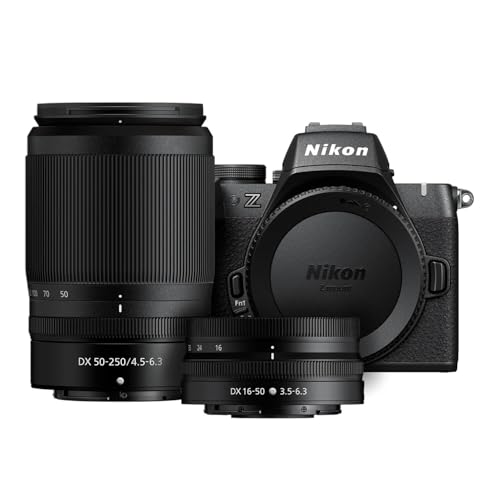
| Nikon Z50 II with Two Lenses | Best all-in-one starter kit | Two lenses, friendly presets and nothing else to buy — the complete everyday answer in a single box. |
| Sony ZV-1F | Best pocket pick-up-and-shoot | A tiny fixed-lens camera that flatters faces, shoots lovely video and asks almost nothing of its owner. |
| Canon EOS R6 Mark II | Best step-up for keen families | When everyday shooting grows ambitious, this full-frame body delivers without punishing complexity. |
| OM SYSTEM Tough TG-7 | Best worry-free family compact | Waterproof, drop-tolerant and genuinely fun — the camera that survives the beach bag and the paddling pool. |
| Canon PowerShot G7 X Mark III | Best premium pocket camera | A bright lens and one-inch sensor in a coat pocket, prose-only here and still the connoisseur’s compact. |
| Canon EOS R100 | Best first interchangeable-lens camera | The gentlest possible entry into real camera photography, covered prose-only for readers growing past compacts. |
How Did We Choose the Best Cameras for Average User Needs?
Our first test was the handover test: could a non-photographer relative produce a good photograph within sixty seconds of being handed the camera, at a family gathering, in mixed light? Every pick passed. Autofocus that finds eyes unaided, auto exposure that protects faces, and stabilisation that forgives excited hands were treated as core features, not conveniences, because for the average user they are the difference between keeping and deleting.
Second, we judged the phone gap. An everyday camera must earn its bag space against the phone already in your pocket, so we weighted indoor quality, dusk quality, zoom reach and the shallow-depth look that makes portraits feel special. Cameras that only matched a phone in sunshine were cut, however charming. Video mattered too — school plays and first steps are motion memories now — but stills remained the deciding vote.
Third came ownership reality: charging simplicity, battery life across a family day, menus that forgive, and sharing that moves a photograph to a phone in seconds rather than via a laptop ritual. We also favoured systems with affordable second lenses, because the average user’s year-two purchase is usually a lens, and it should not require a second mortgage or a second hobby’s worth of research.
Which Everyday Camera Matches Your Actual Life?
Match the camera to your dominant moments. Families with small children live in motion and low light: prioritise autofocus and the two-lens Nikon kit or the Canon step-up. Travellers and grandparents often value smallness above all, which is where the Sony and the prose-only Canon compact shine. Households that shoot at pools, beaches and building sites should start at the Tough TG-7 and only move up if its simplicity ever feels limiting.
Also match it to your tolerance for process. If editing photographs sounds like a chore you will never do, choose the camera whose straight-from-camera colour you love most — several picks here are famous for exactly that. If sharing instantly matters, test the phone-transfer flow in your head against your patience. The average user’s best camera is a personality fit as much as a specification fit.

Nikon Z50 II with Two Lenses — Best all-in-one starter kit
This kit is the guide’s centre of gravity: two lenses covering wide scenes and distant details, colour presets that flatter straight away, and sharing tools that suit family life. It asks for no second purchase and no expertise on day one.
Picture a wet Tuesday pickup outside school, umbrellas colliding and children streaming through the gate in every direction. The Nikon Z50 II with Two Lenses copes because its colour presets flatter skin under grey skies without any menu archaeology first. Swap to the longer lens and a distant face fills the frame; stay wide and the whole chaotic scene fits. Other cameras at this level often demand a settings detour before they behave, and the moment has usually wandered off by then. Here the defaults carry the day, which suits households where photography competes with packed lunches, lost gloves and a dog pulling toward the park. It also helps that the viewfinder and screen both stay readable in watery winter sunshine, so framing never becomes guesswork while gloves and scarves complicate everything else about the afternoon.
Weeks of ordinary use reveal a different virtue: the kit keeps agreeing with how a family actually shoots. A toddler chasing pigeons across a market square gets tracked calmly, and the resulting files shrug off the cropping grandparents request when they spot themselves in the background. Colour from the presets looks finished rather than raw, so images go straight into the family chat while the afternoon still feels current. Nothing about the experience nags its owner to upgrade, accessorise or study. That quiet completeness is rare in consumer cameras, and it explains why this box, once opened, tends to become the household default within a fortnight. Relatives notice the difference at the christening buffet, where photographs arrive looking considered rather than snatched, and the person holding the camera still had time to eat, chat and hold the baby.
Rainy weekends sort cameras cruelly, because indoor light is weak and children refuse to sit near windows. This Nikon pairing answers with eye autofocus that finds faces among sofa cushions and steam from mugs, holding focus while subjects squirm through board games. The results stay clean enough to print for the hallway wall, not merely to glance at on a phone. Battery endurance stretches across a whole visiting day, from morning pancakes to the last card game, so the charger can live in a drawer rather than travelling in a coat pocket. Dependability of that sort rarely trends, yet it decides satisfaction. Even the dog benefits, since shutter response catches the second a treat balances on a nose.
Consider the school concert problem: you are seated far back, the lighting is theatrical and gloomy, and your child appears for perhaps ninety seconds. The longer lens in this kit reaches the stage, the autofocus settles on eyes rather than music stands, and the colour presets keep faces human under amber spotlights. Files from such evenings tolerate firm editing afterwards — straightening, lifting shadows, trimming empty rows of seats — without falling apart into mush. Rival kits often produce a technically sharp picture of the wrong child or a blurred picture of yours. Getting the right face, recognisably, is the entire assignment. Parents comparing notes in the interval usually agree on one thing: the photograph they frame is the one where their own child is unmistakable, mid-song, eyes open, and this kit delivers that frame with unusual regularity.
What finally sells the Nikon to sceptical relatives is the handover. Pass it to a grandparent at a christening lunch and the camera explains itself through results: they frame, press, and receive a photograph better than their phone managed all morning. Wireless sharing then moves that picture onward before dessert, which keeps the camera relevant in a phone-shaped world. Its automatic exposure judges mixed restaurant light sensibly, sparing beginners the washed faces that plague cheaper compacts. A kit that visitors can borrow successfully is a kit that earns its shelf space, and this one passes that social test repeatedly. By the second or third gathering, hosts start asking for the Nikon by name, which is how family equipment quietly becomes shared infrastructure rather than one person’s expensive hobby.
- Two-lens kit in the box
- Easy colour presets
- Wireless photo sharing
- Compact mirrorless body
Strengths
- Controls that stay learnable during a holiday market after dark with mixed lights
- Files with editing headroom for everyday photography
- Composed behaviour during a birthday party under warm kitchen lighting
Trade-offs
- Menus reward setup before a grandparents’ garden visit in fading light
- Accessories for simple phone sharing add up quietly
- Video depth outruns most everyday photography needs
Best for: families wanting one complete kit and no homework
Not suited for: shooters determined to stay with a single pocket camera

Sony ZV-1F — Best pocket pick-up-and-shoot
Sony built this little camera for people who talk, move and live in front of a lens, which turns out to describe most family video too. Its fixed wide lens removes decision fatigue entirely — point, smile, record.
The Sony ZV-1F treats photography as something that happens between other activities. It slips from a jacket pocket during a canal walk, frames a heron before the dog notices, and returns to the pocket before the lead tangles. Its fixed wide lens suits arms-length family selfies and market stalls alike, and the simplicity flatters people who freeze when a camera offers forty modes. Video of a street musician needs one press and no prayer. For owners whose best camera must also be their smallest, this little Sony understands the brief completely. Grandparents manage it after one demonstration, mostly because there is so little to mismanage.
Spend a month with the ZV-1F and its personality clarifies: it rewards spontaneity and punishes planning, in the friendliest way. A granddaughter’s first attempt at cartwheels on the lawn becomes a clean clip because the camera was already in a cardigan pocket, awake and willing. Faces stay the priority when relatives crowd into a pub booth, and the microphone copes decently with birthday singing in a small kitchen. Sharing to a phone afterwards takes moments, so clips join the family archive instead of rotting on a card. It is less a hobbyist instrument than a household appliance for memory, and many households need exactly that. The camera also flatters its owner in group photographs, since the wide view includes everyone without the photographer sprinting backwards into a hedge, a traditional hazard of family gatherings that this design politely abolishes.
Battery confidence shapes how people use this Sony. Owners stop rationing clips at the zoo because the cell lasts through the reptile house, the picnic and the gift shop meltdown. The wide lens swallows group scenes in narrow hallways where a phone would amputate somebody at the edges. Skin looks kind rather than forensic, which matters when the subjects are relatives rather than models. Nobody pretends it replaces a zoom for distant wildlife; within its chosen territory of near, lively, human subjects, it performs with an ease that larger cameras envy and rarely match on ordinary days. Children commandeer it for video diaries of the cat, charming enough for Christmas showings.
There is a social trick the ZV-1F performs better than any rival here: it does not intimidate. Produce it at a retirement lunch and conversation continues; produce a large mirrorless body and half the table starts performing. Its unobtrusive size lets candid photographs happen — a grandfather asleep mid-anecdote, cousins conspiring over trifle. The controls ask so little that a teenager can borrow it for a school project and return it without a settings catastrophe. Cameras that lower the room’s guard produce the photographs families actually treasure, long after technically superior portraits have been forgotten. Its video steadiness smooths the walk-and-talk footage relatives film while following toddlers around zoos.
Sharing is where pocket cameras live or die, and Sony clearly designed this one for impatient people. A clip filmed at a farmers’ market can sit on a phone before the cheese is bagged, ready for the relative who could not come. That immediacy keeps the camera in daily rotation instead of special-occasion exile. Its automatic behaviour in gloomy cafés is composed rather than panicky, holding colour steady while candles flicker. Owners describe the experience less as operating equipment and more as pointing at life with intent. For the average user, that distinction is the whole product. Even its limitations teach good habits: stepping closer and choosing better light.
- Fixed 20mm wide lens
- 4K video recording
- Compact vlogging design
- 1-inch sensor
Strengths
- Pocket-camera simplicity that directly serves simple phone sharing
- Controls that stay learnable during a beach afternoon with sandy hands everywhere
- Composed behaviour during a birthday party under warm kitchen lighting
Trade-offs
- Menus reward setup before a birthday party under warm kitchen lighting
- Video depth outruns most everyday photography needs
- Overkill if your everyday photography stays casual
Best for: everyday video, vlogging and pocketable stills
Not suited for: anyone needing zoom reach for distant subjects

Canon EOS R6 Mark II — Best step-up for keen families
Some average users are quietly becoming enthusiasts, and this is their body: full-frame quality, autofocus that feels telepathic at family events, and controls that grow with skill. It is the step-up that does not need stepping past for years.
The Canon EOS R6 Mark II enters a family home like a talented relative who also does the washing up. At a christening it tracks a wriggling baby passed between aunties, locking onto eyes through lace, steam and shifting window light. Its subject recognition distinguishes the toddler from the equally mobile terrier, sparing owners the usual gallery of sharp dog and blurry child. Full-frame files from a dim village hall hold together when cropped for the one expression that mattered. This is capability pointed at domestic chaos, and it lands. Stabilisation inside the body steadies longer lenses at the school play, so a parent filming from the back row brings home footage that grandparents can watch without reaching for travel-sickness tablets.
Long-term owners talk about growth rather than features. The same body that shoots a nursery mural in automatic today handles a daughter’s evening football under floodlights two winters later, because its tracking and low-light strength leave headroom the family keeps discovering. Controls reward gradual curiosity: one dial at a time, each change visible and reversible. Photographs from a rainy Center Parcs-style break — bicycles, red faces, lake mist — show a depth that phone images flatten into postcards. The Canon costs commitment, certainly, yet it repays commitment with a ceiling high enough that upgrading stops being a recurring conversation in the household budget. The investment logic strengthens with every lens borrowed from friends, because the body never becomes the weak link in a growing system; it simply waits, capable, while the family’s ambitions catch up with it.
Nobody schedules the moments that justify this camera. A father hears piano practice improve suddenly and wants video from the doorway; the Canon is ready, quiet and sure-footed in lamplight. A grandmother’s eightieth unfolds in a conservatory where sun and shade alternate brutally, and its exposure judgement keeps faces readable in both. Guests assume a professional was hired when the album circulates. That assumption rests on tracking that rarely panics and colour that treats mixed indoor light generously. Owning it changes a family’s photographic expectations, because the keeper rate stops feeling like luck. Its weather resistance deserves a mention too, since British family life involves drizzle at most outdoor events, and this body shrugs off a damp touchline while parents shelter under programme leaflets.
Sports day exposes the gap between this Canon and lesser bodies. Children sprint, swerve and collide; the R6 Mark II follows the selected runner through the pack and delivers a sequence from which one triumphant frame always emerges. Its stabilisation steadies the longer lens that parents inevitably borrow or buy, so finish-line photographs stay crisp at the far end of the field. Afterwards, sharing a chosen image to the family chat is quick enough to beat the walk back to the car. Equipment this capable can intimidate, yet its automatic modes remain courteous to the hesitant spouse. Younger siblings on the sidelines get their portraits as well, because switching subjects is a button-press rather than a menu expedition, and the camera’s manners stay calm while the afternoon’s drama unfolds around it.
Ask around any camera club and a pattern emerges: members who bought this body stopped browsing replacements. For families the same contentment applies, rooted in trust that the camera will handle whatever the calendar invents — harvest festival, beach week, a teenager’s first gig in a pub back room. Its files endure enthusiastic editing when a parent discovers software and opinions, keeping skin tones intact while shadows open up. The purchase only fails when portability was the real priority all along. Judged on photographic duty, it is the guide’s high-water mark. Resale strength and a deep lens catalogue protect the purchase further, although most owners never test either, because the camera leaves the house too often to be sold and satisfies too completely to be replaced.
- 24.2 megapixel CMOS sensor
- In-body stabilisation
- Fast continuous shooting
- Full-frame sensor
Strengths
- Confident subject tracking that directly serves simple phone sharing
- Support, lenses and accessories around honest automatic exposure
- Build quality suited to regular everyday photography
Trade-offs
- Honest weight checks precede a beach afternoon with sandy hands everywhere
- Honest weight checks precede a birthday party under warm kitchen lighting
- Lens costs rival body costs in everyday photography
Best for: keen families ready for a long-term serious body
Not suited for: buyers who want the smallest, cheapest option

OM SYSTEM Tough TG-7 — Best worry-free family compact
The TG-7 removes fear from family photography. It swims, it drops, it shoots macro of a ladybird on a leaf, and it never once asks you to baby it. For active households it is not a compromise; it is the point.
The OM SYSTEM Tough TG-7 is the camera you lend to a nine-year-old without a speech about being careful. It has survived, in family folklore generally, rockpools, ski jackets and one memorable incident involving a trifle. Its lens is bright enough for cave tours and aquarium gloom, and the automatic exposure judges such mixed darkness sensibly. Macro mode turns a frosted leaf or a ladybird into an afternoon’s expedition. Where other cameras need a case, a strap and supervision, this one needs a rinse under the tap afterwards. Its controls work with wet fingers and thin gloves, a detail that sounds trivial in a shop and proves decisive on a February beach when the alternative is bare-handed fumbling.
Ownership stories about the TG-7 sound like travel writing. It snorkels with teenagers in Cornwall, photographs eels badly and faces brilliantly, then shoots the beach barbecue at dusk without a settings seminar. Grandparents borrow it for garden safaris and return macro studies of bees that shame their phones. The battery lasts through days of intermittent holiday use, and its toughness removes the background anxiety that makes owners leave nicer cameras in hotel safes. A camera present for the wet, sandy, chaotic majority of a holiday will out-photograph a superior camera left behind, and presence is this OM SYSTEM’s defining talent across seasons. One family we heard from uses it as the designated holiday camera precisely because losing it would sting less than losing a flagship, yet its photographs fill the same album pages without apology, explanation or any sense of making do.
Close-up work is the TG-7’s secret second life. A child who finds photography boring at landscape distance becomes absorbed when a spider’s web after rain fills the screen, every droplet resolved. The bright lens keeps such small worlds luminous even under woodland shade, and focus stacking tricks — described in its menus in plain terms — reward the curious. Parents report it becomes the science-project camera, the beach camera and the spare camera simultaneously. Few products at any price collect that many household jobs. It earns them by being unbreakable in spirit and cheerful in output. Teachers love receiving its output for classroom displays, since the colours are cheerful and the close-ups of pond-dipping finds are clear enough to label, pin up and discuss with genuine scientific enthusiasm.
Consistency across abuse is the real specification here. Dropped onto harbour stone, it photographs the fishing boats anyway. Left in a hot car, it still handles the evening market. Its eye autofocus is less celebrated than Canon’s, yet within family distances it finds faces reliably among buckets, spades and ice creams. The photographs look bright and sociable, matching the occasions the camera attends. Reviewers sometimes file it as a niche adventure tool; families know better. It is the general-purpose camera for households whose general purposes include weather, water and small children with jam on their hands. It also starts instantly, which matters when the subject is a kingfisher, a toddler’s first solo bike wobble or any other event that refuses to wait for a boot screen.
The TG-7 also teaches a useful photographic humility: proximity beats equipment. Because it can go underwater, into sand and within centimetres of a crab, its owners learn to move closer instead of zooming from a respectful distance. That habit improves every photograph they later take with any camera. Sharing remains painless, so rockpool discoveries reach grandparents before tea. Battery life across a camping weekend removes another excuse for absence. If the average user’s enemy is the drawer where good cameras sleep, the Tough is the pick least likely ever to meet that drawer. Grandparents borrow it for cruise excursions and return it with postcards already made, which may be the strongest endorsement any camera in this guide receives from the generation hardest to impress.
- Freeze-proof construction
- Bright fast lens
- 4K video recording
- Waterproof compact body
Strengths
- Support, lenses and accessories around forgiving eye autofocus
- A bright lens for a compact that directly serves all-day battery confidence
- Controls that stay learnable during a school-run morning with no time to fiddle
Trade-offs
- Honest weight checks precede a birthday party under warm kitchen lighting
- Video depth outruns most everyday photography needs
- Overkill if your everyday photography stays casual
Best for: active households, holidays and younger photographers
Not suited for: photographers chasing shallow-depth portrait looks
Canon PowerShot G7 X Mark III — Best premium pocket camera
The G7 X line became the thinking person’s compact through one virtue: photographs that look expensive straight from the camera, indoors especially. It is prose-only here, and it remains the pocket camera photographers themselves carry.
The Canon PowerShot G7 X Mark III built its reputation in cafés and birthday kitchens, places where its bright lens flatters faces and food alike. Straight from the camera, its images carry a warmth that makes restaurant photographs look like magazine stills. It slips into an evening bag where a mirrorless body would need its own chair. For parents who photograph indoors more than outdoors — which is most parents, honestly — that indoor grace outweighs specifications with bigger numbers. Prose-only status here reflects our link pool, not our affection. Its live-streaming ability is a bonus few rivals match, handy when a family recital deserves an audience of relatives scattered across time zones and sofas.
Live with the little Canon for a season and routines form around it. It attends the farmers’ market for portraits of the cheesemonger, the school fair for candlelit tombola scenes, and every family lunch where its lens gathers the available glow instead of fighting it. Editing headroom surprises owners who push shadows in winter interiors; files bend further than a compact’s should. Its battery carries a full day of intermittent shooting, and the zoom covers the walk from wide table scenes to a grandchild’s face across the garden. Affection for this camera is not nostalgia. It is renewed weekly, in ordinary light, by results that look cared for. Even its charging routine fits domestic life, topping up alongside phones overnight so the morning’s school run, market trip or hospital visit never begins with a dead camera and a resigned shrug.
What distinguishes the G7 X Mark III is restraint. It does not lecture its owner with modes or demand a lens wardrobe; it simply renders a dim dining room kindly and lets the evening continue. Guests relax because the camera is small, and relaxed guests photograph better. When a parent later crops a frame to isolate a laughing grandfather, the file holds up respectably. Phones can imitate much of this, yet they interrupt with notifications and flatten candlelight. The Canon’s single-mindedness — a camera, only a camera, doing one job beautifully — feels increasingly luxurious. Portrait subjects consistently prefer its results to phone photographs, noticing kinder skin and calmer backgrounds without being able to name why, which is precisely the compliment a family camera should collect.
Travel writers quietly favour this Canon, and family travellers discover why. In a Lisbon-style maze of tiled streets it handles noon glare and tavern gloom in the same hour, its lens bright enough for museum corners where flash is forbidden. Portraits at arm’s length look flattering rather than stretched. The controls fall under familiar fingers by the second day, freeing attention for the place itself. It returns home with a card full of images that need little rescue work. For the average user whose photography peaks on holiday, that reliability across unfamiliar light is worth more than interchangeable anything. Hotel-room portraits of the whole travelling party become a ritual with this camera, its timer and lens turning cramped quarters into a studio that produces the trip’s most treasured group photograph.
There is also the matter of taste. Some cameras produce files that look processed even when untouched; the G7 X Mark III produces files that look remembered — warm, clear and slightly kind. Family archivists value that signature because albums are read emotionally, not pixel by pixel. Its lens gathers enough light to keep a christening party free of harsh flash, and its size keeps it welcome at the table. Owners who upgrade systems often keep this compact anyway, for evenings when photography should feel like participation rather than production. That staying power says everything. When the light turns truly awkward — neon signs, fairy lights, a pub’s amber gloom — its colour judgement stays believable, keeping faces recognisably related to the actual people who own them today.
- Pocketable fixed zoom lens
- Live-streaming support
- Bright maximum aperture
- 1-inch sensor compact
Strengths
- A bright lens that flatters indoor family light that directly serves forgiving eye autofocus
- Files with editing headroom for everyday photography
- Build quality suited to regular everyday photography
Trade-offs
- Video depth outruns most everyday photography needs
- Video depth outruns most everyday photography needs
- Honest weight checks precede a beach afternoon with sandy hands everywhere
Best for: pocket-camera lovers who shoot indoors often
Not suited for: users who need interchangeable lenses later
Canon EOS R100 — Best first interchangeable-lens camera
Canon’s smallest RF body is a guided doorway into interchangeable lenses, with an interface that teaches rather than tests. As a prose-only pick it suits the compact owner who wants to grow without drowning.
The Canon EOS R100 approaches the beginner the way a good piano teacher approaches a first lesson: one idea at a time, kindly presented. Its guided interface explains what changing a setting will do before the photograph is taken, so learning happens by curiosity instead of error. A compact owner stepping up discovers real lenses gradually — first the kit zoom, later perhaps a portrait lens — without the body scolding them for ignorance. Photographs improve visibly within weeks, which keeps motivation alive. It is the gentlest door into serious photography in this guide. The price of admission also stays sane, which matters because a first camera that causes financial anxiety rarely gets the relaxed, experimental use that learning requires.
Families buy the R100 for a teenager and end up borrowing it themselves, a migration that reveals its design success. The guided modes demystify depth of field at the kitchen table, using the family cat as a patient model. Sharing photographs to a phone is straightforward enough that the teenager actually does it, and the images circulating in the family chat quietly shame everyone’s phone shots. Its automatic exposure behaves sensibly at school concerts and Sunday roasts alike. A first interchangeable-lens camera should create photographers, and the R100’s patient interface is engineered for precisely that outcome. School photographs taken on it get printed for grandparents without embarrassment, and the young photographer starts receiving commissions from relatives, a promotion no classroom grade or gold star could possibly match for sheer, lasting motivation and confidence.
Progress on the R100 feels like a staircase rather than a cliff. One month the owner trusts the guides entirely; the next they are choosing apertures for portraits of the dog and understanding why backgrounds soften. The body stays light enough for school trips and city breaks, so practice accumulates instead of awaiting special occasions. Lens curiosity grows naturally when the kit zoom’s limits appear at the zoo. Nothing in the experience punishes the learner for yesterday’s settings, because the interface forgives and explains. That emotional safety is a genuine feature, however unglamorous it sounds in a specification list. Its screen explanations use ordinary language rather than jargon, so a parent and a teenager can learn together at the same pace, turning settings into shared vocabulary instead of private frustration.
Value in a first camera is measured in photographs taken during year one, not features admired in reviews. The R100 maximises that count by being approachable on tired evenings when a complex camera would stay in its bag. Its colour flatters family subjects, its focus finds eyes among cousins, and its size invites carriage to unglamorous places where real life happens. Owners report the small ritual of choosing it over the phone becomes a point of pride. When a camera changes behaviour that way, the purchase has already succeeded, whatever the owner buys next. The body also survives being handed around a classroom or a scout hall, returning with photographs from viewpoints its owner would never have chosen and a broader education for everyone involved.
Treat the R100 as a beginning with dignity. It will not pretend to be a professional body, and its owner need not pretend to be a professional to enjoy it. School plays, allotment harvests and first flats all pass through its viewfinder with colour and clarity that honour the occasions. The guided introduction to real lenses matters because lenses are where photography’s creative doors actually hang. Graduates of this Canon speak of it fondly years later, the way drivers remember a first car — modest, forgiving, and the start of everywhere else. Keep the guide modes switched on longer than pride suggests; they are written by people who understand exposure deeply, and their quiet tutoring compounds into instinct over a single season of shooting.
- Smallest RF-mount body
- Guided interface modes
- Lightweight starter design
- Entry APS-C mirrorless
Strengths
- The gentlest guided introduction to real lenses that directly serves simple phone sharing
- Composed behaviour during a birthday party under warm kitchen lighting
- Files with editing headroom for everyday photography
Trade-offs
- Accessories for all-day battery confidence add up quietly
- Lens costs rival body costs in everyday photography
- Lens costs rival body costs in everyday photography
Best for: compact owners stepping up to real lenses gently
Not suited for: video-first creators wanting advanced motion tools
How Do the Best Cameras for Average User Shoppers Compare?
Everyday cameras separate on forgiveness, not fireworks — this table shows where each pick spends its simplicity budget.
| Pick | Badge | Standout quality |
|---|---|---|
| Nikon Z50 II with Two Lenses | Best all-in-one starter kit | Completeness: everything needed, nothing missing |
| Sony ZV-1F | Best pocket pick-up-and-shoot | Simplicity: the fewest decisions of any pick |
| Canon EOS R6 Mark II | Best step-up for keen families | Headroom: quality that grows with ambition |
| OM SYSTEM Tough TG-7 | Best worry-free family compact | Durability: fear removed from family shooting |
| Canon PowerShot G7 X Mark III | Best premium pocket camera | Polish: the finest straight-out results in a pocket |
| Canon EOS R100 | Best first interchangeable-lens camera | Gentleness: the kindest first step into lenses |
What Should an Average User Check Before Buying a Camera?
Begin with the three-moment test: name the three situations you photograph most — say, indoor family evenings, children’s sport, and one holiday a year — and judge every candidate against those, not against imaginary safaris. A camera that wins your real three beats a camera that wins a reviewer’s twenty. Write the moments down; the exercise takes two minutes and prevents nearly every mismatch we see.
Next, interrogate the sharing path and the charging path, because everyday cameras die of friction, not of specifications. How does a photograph reach your phone? How does the battery charge, and can it charge from the same cable as everything else you own? If either answer involves a laptop, a dock or a ritual, expect the camera to be left behind within a month.
Finally, hold the thing, or at least study its size against your actual bag and coat. Everyday photography is a carrying habit. The finest camera in this guide is worthless in a drawer, and the modest one in your jacket will produce the family archive. Budget a small remainder for a spare card and a simple case, then stop shopping and start shooting.
How Does an Average User Get Better Photographs in the First Week?
Learn exactly three things in week one: how to tap or select the face you want in focus, how to brighten or darken a scene with exposure compensation, and how to send the best shot to your phone. Those three skills cover ninety percent of everyday improvement. Everything else — modes, lenses, settings — can arrive slowly, one curiosity at a time, without pressure.
Build one tiny habit: after any gathering, pick the single best frame and share it the same day. That ritual teaches selection, keeps the camera charged and used, and turns photography from an occasional event into a family language. The average user’s masterpiece is rarely a technical triumph; it is the right moment, noticed, kept and shared.
Before You Commit: Notes on Everyday Photography
A closing word for the TG-7, because its role in family life is easy to underestimate from a specification table. The bright lens keeps rockpool shadows luminous and aquarium faces clear, while the sealed body removes the negotiation other cameras require before entering weather. Children operate it without a preliminary lecture, and its photographs of their discoveries — crabs, frost feathers, a frog mid-hop — carry an immediacy no staged portrait matches. Eye focus within family range is dependable, and the battery outlasts the excursion. It is the camera that says yes. Its microscope-style close focusing even redeems rainy afternoons indoors, where a drop of water on a leaf becomes a landscape and a bored child becomes a field researcher.
Compare the TG-7’s diary with a phone’s. The phone stays in a dry pocket when the kayak tips, the rain arrives or the toddler heads for the paddling pool with intent. The OM SYSTEM goes along, and so its archive contains the sodden, sandy, hilarious majority of a real holiday. Its lens gathers enough light for the beach barbecue after sunset, and its menus never demand a seminar mid-adventure. That difference in attendance, repeated across a childhood, compounds into a completely different family record. Presence is a photographic quality, whatever the charts say. Battery endurance across a full camping weekend removes the last practical objection, and the camera returns home with sand in its seams and a card full of evidence.
There is a moment in every TG-7 household when the camera’s philosophy clicks: usually as it is rinsed under a tap after photographing a waterfall walk, entirely unbothered. From then on it gets packed first, before the good camera, before the drone, sometimes before the towels. Its close-up modes turn rest stops into expeditions, finding orchids and beetles other walkers pass. Faces among the group are found and held without fuss. A tool trusted that completely stops being equipment and becomes a member of the expedition, mud included. Walkers adopt it for the same reason: it rides in a jacket pocket through weather that would send a larger system back to the car, and it is ready before the rainbow fades.
Finally, consider what the TG-7’s files let families do afterwards. A photograph of a grandmother laughing in the rain, caught because the camera feared nothing, can be cropped for a birthday card and still look joyful. A child’s macro study of a snail becomes a school project centrepiece. These are not consolation uses; they are the centre of family photography. The little OM SYSTEM’s bright lens, forgiving focus and sheer durability conspire to produce more keepers per outing than timid cameras with grander sensors. Judge it by albums, and it wins arguments. Albums are the honest scoreboard of family photography, and by that measure this unassuming compact outperforms cameras costing several times more that stayed home on the difficult days.
Which Mistakes Do Average Users Make When Buying a Camera?
Buying for the photographer they wish they were
Ambition shopping produces drawers full of intimidating equipment. Buy for your real calendar and real patience; a camera matched to your actual life gets used, and use is the only route to the photographer you wish you were.
Judging only by zoom numbers and megapixels
Huge zooms and huge counts photograph worse in real family light than modest, bright, well-stabilised designs. The photographs you take indoors at dusk are the honest test, and they reward sensitivity and focus, not arithmetic.
Ignoring the phone-transfer experience
If sharing is painful, the camera becomes a silo and the phone wins by default. Everyday photographs live by being sent to grandparents, group chats and frames on walls. Test the transfer story before the specification story.
Never printing anything
A camera habit sticks when results become physical. One printed photograph on the fridge justifies a month of shooting and reminds everyone why the camera exists. Choose a pick whose colour you love unedited, and print its best work shamelessly.
Final Recommendation
Start where most households should: the Nikon two-lens kit if you want completeness, the Sony ZV-1F if you want pocketable ease, and the Tough TG-7 if your family life is wet, sandy or small-handed. The Canon R6 Mark II waits patiently for the day everyday shooting turns serious, and the two prose-only compacts-and-starters cover the pocket and the first step up with real grace.
Above all, judge your purchase after a month of ordinary days, not after a day of testing. The best camera for the average user is the one that was simply there — charged, understood and trusted — when ordinary life did something worth keeping.
Related guides
Frequently Asked Questions
Is a dedicated camera still worth it when phones are so good?
Yes, in the situations phones handle worst: indoor gatherings, dusk, moving children, distant subjects and portraits where you want faces to glow against a soft background. If your photography lives at noon outdoors, a phone suffices. Most family life does not live there.
How much should an average user spend?
Spend to the level of your three real moments and no further. The kits and compacts here exist because they cover family life completely; the step-up body exists for households feeling genuine creative itch. Money beyond your moments buys weight and menus, not memories.
Do I need interchangeable lenses?
Only if you enjoy the idea. Fixed-lens picks here produce beautiful family photographs with zero decisions, while the kits add reach and portrait options for the curious. Neither answer is wrong; the wrong answer is buying lenses you will never carry.
What is the easiest camera here for a complete beginner?
The Sony ZV-1F for video-leaning ease and the Nikon kit for stills-leaning completeness both assume nothing and teach gently. The Canon R100 is the kindest route if interchangeable lenses are the goal from the start.
How do I keep the camera ready for moments?
Charge it where your phone charges, keep a card in it always, and store it where life happens rather than in a cupboard. Readiness is a household system, not a camera feature, and it decides more photographs than any sensor.
Related Guides
If everyday shooting grows into a hobby, these guides continue the story: best cameras for beginners best cameras for family photography best cameras for travel


