reviewstook.com is reader-supported. When you buy through links on our site, we may earn an affiliate commission.
Where to buy
Five of the six cameras below are linked to their Amazon listings; the street photographer’s favourite at the end is discussed without a link because it sits outside the pool verified for this article, and photo retailers stock it when they can get it. Everyday cameras should be bought with the carrying system in the same basket, because the carry is half the product: the wrist strap you will actually use, the small pouch that fits your everyday bag, the spare battery that lives in the coat you wear most. A camera bought alone gets carried for a fortnight; a camera bought as a kit gets carried for years, and the difference between those two outcomes is the entire subject of this guide. Buy it, in other words, the way you would buy a pair of boots you intend to walk in daily, for the fit and the habit rather than for the shelf at home.
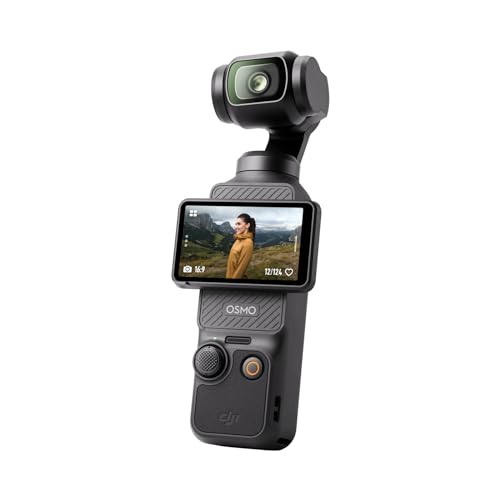
- DJI Osmo Pocket 3: check price on Amazon
- Sony ZV-1F: check price on Amazon
- Insta360 GO 3S: check price on Amazon
- Nikon Z50 II: check price on Amazon
- GoPro HERO: check price on Amazon
- Ricoh GR-series compact: available from photo retailers (prose-only pick in this guide)
Everyday photography is a genre with one rule: the photograph exists only if the camera was there. The best cameras for everyday life are therefore not the best cameras by any laboratory measure; they are the cameras that survive contact with an ordinary Tuesday, carried without a decision, ready without a ritual, and good enough that the results reward the carrying. A school run, a dog walk in sideways rain, a grandmother’s kitchen at six in the evening, a city breaking into spring on the walk to work: this is the material of a life, and it is photographed by the camera in the coat pocket or it is not photographed at all, because nobody goes back for the big camera for a moment that will be over in nine seconds.
Consider what a day actually contains, photographically: perhaps four moments that ask to be kept, none of them announced, most of them indoors or in motion or in failing light, and all of them belonging to people who will not pose twice. An everyday camera is therefore a readiness instrument before it is an image instrument, and this guide’s rankings, read carefully, are rankings of readiness wearing the clothes of image quality: who wakes fastest, who focuses without being asked, who survives the weather the day actually has, who is still being carried in month six.
The phone has colonised most of this territory, and honestly, for the record shot and the shared joke it deserves to. The dedicated everyday camera earns its pocket by being better at the parts of ordinary life the phone flattens: the dim restaurant, the fast child, the evening street with its lamps and shadows, the photograph you intend to print, frame or keep for thirty years rather than scroll past in a month. It also returns something the phone cannot, the feeling of photographing on purpose, one device, one job, no notifications standing between the eye and the moment.
A word on what everyday does not mean in this guide: it does not mean careless, cheap or second-rate, and several cameras below are serious instruments by any standard. It means daily, the way a good knife or a good pair of shoes is daily, chosen for the hand and the habit rather than the showcase, and maintained by use rather than by storage. The photographers whose work fills the history of the medium were, in large part, everyday photographers with everyday cameras and extraordinary persistence, which is the company this guide invites its readers to join.
Six cameras are ranked below, and they are temperaments as much as tools: the pocket gimbal for the person whose days are becoming a film, the simple compact for the family documentarian, the wearable for the life lived hands-first, the small system camera for the enthusiast who wants real photography daily, the indestructible action camera for the rough-edged life, and the street classic that a generation of photographers carries the way other people carry a notebook. Read the six with your own ordinary week in mind, its routes, its rooms, its weather and its people, because the right answer is legible in that week and in no catalogue, and the wrong answers, however excellent, will announce themselves within a month as a camera that lives, beautifully and uselessly, in a drawer.
Key Takeaways
- The camera you carry beats the camera you own, daily.
- The Pocket 3 turns ordinary days into watchable film.
- One fixed lens, learned deeply, outperforms a bag of options.
- Everyday files should need no editing to be worth keeping.
- Buy the strap and pouch with the camera; carry is half the product.
- A year of daily frames is worth more than a holiday of masterpieces.
- Readiness, waking, focusing, surviving weather, is the real ranking.
- Share three frames a week, print a dozen a season, back up always.
- Judge the purchase in a year by the archive it made, and by nothing else at all.
In this guide
Quick Picks
| Camera | Badge | Why it is here |
|---|---|---|
| DJI Osmo Pocket 3 | Best Everyday Video Companion | Your day, filmed smoothly, from a coat pocket. |
| Sony ZV-1F | Best Everyday Point-and-Shoot | Family life in better light than a phone manages. |
| Insta360 GO 3S | Best Wearable Everyday Camera | Hands-free frames from inside your own day. |
| Nikon Z50 II | Best Everyday System Camera | Real photography, small enough for daily duty. |
| GoPro HERO | Best for Rough Everyday Life | Rain, bikes, beaches and children cannot kill it. |
| Ricoh GR-Series | Best Everyday Street Classic | The photographer’s notebook, disguised as a compact. |
How did we choose cameras for everyday life?
The judging method was unfashionable: carry. Each candidate was weighed as a daily object, its size against a coat pocket and a small bag, its readiness from rest to first frame, its manners in the hands of someone thinking about something else, which is the permanent condition of everyday life. A camera that demands a lens decision, a mode dial consultation or a bag reorganisation before it can photograph a moment has failed the genre’s first test regardless of its files, because the moment’s whole value is that it did not wait.
Image quality was judged in everyday light rather than studio light: kitchens at night, streets at dusk, interiors lit by one lamp and a television, the grey mornings of a northern winter. Files were asked to be pleasing without editing, because everyday photographs that need an evening in software are everyday photographs that stay unshared and eventually unlooked-at. Finally, each camera was judged as a habit: whether owning it plausibly makes a person photograph more of their life in month six than in week one, which is the only ranking that a year of days will actually confirm.
The judging also listened to owners rather than only handling cameras, and owners of everyday cameras speak a distinctive dialect: they talk about where the camera lives, what it has survived, and which of its frames is on the wall, and they almost never mention its specifications unprompted. That testimony shaped the weightings here, particularly the demotion of zoom and the promotion of manners, because a camera’s social acceptability, in a family, in a street, in a workplace, is an everyday specification as real as its sensor, and considerably harder to retrofit.
The picks in detail

DJI Osmo Pocket 3 — Best Everyday Video Companion
For a growing number of people the everyday record is becoming a film rather than an album, and the Pocket 3 is the camera that made that shift practical. It lives in a jacket pocket, wakes in a second, and its gimbal turns the walk to school, the market run, the evening dog loop into footage with the smoothness of intention, as if someone had planned the shot, when in fact someone merely pressed a button while living. Its face tracking keeps the family vlog framing itself, its screen flips for the to-camera sentence, and its one-inch sensor gives dusk and lamplight a warmth that makes ordinary streets look like the way they felt.
The daily discipline it asks is minimal: charge it with the phone’s cable, empty it weekly, keep its case on between outings because the gimbal head is a precision instrument wearing a camera as a hat. In return it produces the artefact families report rewatching most, the ordinary week in motion, the child’s height against the door frame measured in footage rather than pencil, the dog’s puppyhood at full gallop. Its stills are respectable and beside the point; this is the pick for the person who has noticed their memories are increasingly moving ones.
Choose it as the everyday camera if your instinct, phone in hand, is always to press video. Choose below it if your instinct is the still frame, because the Pocket will spend its life as a very good camera used against its grain, and everyday tools should be bought with the grain of their owners.
- Form: gimbal pocket camera
- Waking: ready in about a second
- Sensor: one-inch, kind to dusk
- Tracking: faces framed without attention
- Role: the daily film of an ordinary life
Strengths
- Walking footage looks planned and calm.
- Pocket-sized enough for genuine daily carry.
- Evenings and interiors flatter family life.
Trade-offs
- Gimbal head wants its case, always.
- Stills play second fiddle to film.
- Not the camera for rain or the beach.
Best for: daily vloggers and film-minded families. Not suited for: stills-first photographers or rough weather.

Sony ZV-1F — Best Everyday Point-and-Shoot
The ZV-1F is the family documentarian’s answer, a compact that asks nothing and gives back the two things phone photographs of family life most often lack: light and separation. Its bright lens gathers the kitchen at supper time and the restaurant at celebration time without the smeared, flashed look that dates phone pictures on sight, and its sensor renders the people you love with a depth that makes a printed photograph on a wall look like a decision rather than an enlargement. It starts fast, focuses on eyes, and can be operated by every generation of the family after a briefing measured in seconds, which means the documentarian occasionally appears in the documentation.
Its wide fixed lens turns out to be the everyday focal length more often than photographers expect: across the table, across the room, the group on the steps, the child and the dog and the whole of the garden party in one honest frame. There is no zoom to reach for and therefore no decision to make, and the photographs come out composed by feet and by attention, the oldest discipline in photography, disguised as a limitation. Files move to the phone for sharing in the time a kettle takes, which keeps the camera inside the family’s actual communication rather than outside it as a special occasion.
It will not satisfy the enthusiast’s hands, there is nothing to grow into and little to adjust, and it will not survive the beach’s worst or the toddler’s most determined throw. As the camera that lives in the family bag and photographs the family, weekly, for years, it is the easiest recommendation in this guide.
- Form: fixed-lens compact, one-inch sensor
- Lens: bright, wide, decision-free
- Focus: eyes found without instruction
- Sharing: phone transfer in moments
- Role: the family’s daily documentarian
Strengths
- Supper-table light becomes good photographs.
- Every generation can operate it well.
- Prints look like photographs, not enlargements.
Trade-offs
- No zoom and nothing to grow into.
- Not built for sand, sea or throws.
- Enthusiasts will itch for controls.
Best for: families documenting daily life together. Not suited for: hobbyists wanting a system to develop.

Insta360 GO 3S — Best Wearable Everyday Camera
The GO 3S proposes a different everyday entirely: the camera worn rather than carried, a thumb-sized lens on a pendant, a clip or a cap, filming the day from the point of view of the person living it. The cook’s hands at the board, the cyclist’s commute, the parent’s-eye view of the small hand in theirs crossing the road: these are frames no held camera can take, because the held camera changes the moment into a performance of the moment. Worn, the camera is forgotten within the hour, and the footage it brings home has the unselfconscious quality that families and creators both chase and rarely catch.
Its case is the base station, screen, remote and charger in one, and the rhythm it teaches is episodic: wear it for the school run, the ride, the market, then dock it and let the day’s fragments transfer while you make tea. Battery life fits that episodic shape rather than continuous recording, and the low light of evening interiors is beyond its small sensor’s best work, so the GO’s day ends when the lamps come on and the other picks take the evening shift.
As a sole everyday camera it is a manifesto rather than a compromise, and some lives, active, outdoor, hands-occupied, genuinely suit it. For most people it is the second everyday camera, the one for the hours when hands are full and life is moving, and judged in that role it has no competition in this guide at all.
- Form: thumb-sized wearable camera
- Mounts: pendant, clip, cap and stand
- Rhythm: episodic filming, docked charging
- View: the wearer’s own point of view
- Role: hands-free hours of an active day
Strengths
- Frames no held camera can reach.
- Forgotten within an hour of wearing.
- Case solves screen, remote and charging.
Trade-offs
- Battery fits episodes, not whole days.
- Evening interiors exceed its sensor.
- Footage workflow runs through its app.
Best for: active, hands-full daily lives. Not suited for: evening family photography as a sole camera.

Nikon Z50 II — Best Everyday System Camera
Some people want their everyday camera to be a real camera, with a viewfinder, interchangeable lenses and the full grammar of photography available on a Tuesday, and the Z50 II is the size at which that stops being a contradiction. With a compact prime fitted it rides in a small bag or a deep coat pocket’s ambition, wakes ready, and its subject-detection autofocus and bright electronic viewfinder make the daily photograph, the street portrait, the market, the grandchild at the piano, feel like photography rather than recording. Nikon’s colour has a long everyday pedigree, the files are pleasing without ceremony, and the controls reward the hands that use them daily by becoming invisible.
The system’s promise is that the everyday camera can also be the weekend camera, the holiday camera and the learning camera, with lenses arriving as interests declare themselves: the fast prime for the evenings, the wider zoom for the trips, each making the daily body more itself rather than replacing it. For the enthusiast whose phone has begun to feel like a ceiling, this is the pick that turns daily life into a practice, and a practice, compounded over years of ordinary days, is how photographers are actually made.
The honesty notes are size and commitment: it is the largest pick here, a bag camera rather than a pocket one, and it asks its owner to learn it, after which it disappears, but the learning is a real first month. Buy it when the intention is photography as a daily craft; buy the compacts above when the intention is the record without the craft, and do not confuse the two intentions, because both are honourable and they buy different cameras.
- Form: APS-C mirrorless system body
- Viewfinder: bright EVF for deliberate framing
- Autofocus: subject detection from flagship line
- Growth: lenses as interests declare themselves
- Role: daily craft for the enthusiast
Strengths
- Real photography at daily-carry size.
- Files please without editing ceremony.
- One body serves weekday and holiday.
Trade-offs
- A bag camera, not a pocket camera.
- First month asks for real learning.
- Lens appetite grows with the owner.
Best for: enthusiasts photographing daily on purpose. Not suited for: anyone wanting zero decisions before coffee.

GoPro HERO — Best for Rough Everyday Life
Everyday is not always gentle, and for the lives that include bicycles in rain, dogs in rivers, children on scooters, boats, beaches and building sites, the little GoPro is the everyday camera that never asks to be left at home for its own protection. It is waterproof as bought, shrugs off the drops that end other cameras’ stories, and its ultra-wide, always-in-focus character makes it the press-and-trust camera of active life: mount it, clip it, hold it, and the day records itself in a wide, bright, stabilised rush that suits the energy of the material.
Its daily uses creep up on owners: the commute that became a time-lapse habit, the swim sessions, the allotment diary filmed from a post, the dog’s-eye projects and the children’s own films, shot on a camera they are allowed to drop. Image quality in daylight is far beyond its size’s reputation, and the discipline it teaches, charge it, empty it, wipe the lens, is measured in seconds.
Evenings are its boundary, the small sensor and wide lens flatten lamplight and faces at distance, and it will never be the camera for the portrait on the wall. As the everyday camera of a rough-edged life, or the second camera that takes the weather shift in any life, it earns its place by the oldest everyday logic in this guide: it is there, working, on the days the delicate cameras stayed home.
- Form: compact waterproof action camera
- Build: drops, rain and immersion shrugged off
- View: ultra-wide, everything in focus
- Habits: time-lapse, mounts and child crews
- Role: the rough day’s everyday camera
Strengths
- Never left home for its own safety.
- Daylight footage beyond its size’s reputation.
- Children and weather cannot end it.
Trade-offs
- Evenings flatten under its small sensor.
- Portraits are not its language.
- Wide view distorts close faces.
Best for: active, outdoor, weather-beaten daily lives. Not suited for: evening interiors or portrait ambitions.
Ricoh GR-Series — Best Everyday Street Classic
The GR series is the everyday camera’s purest expression, a fixed-lens compact with a large sensor and a cult built over decades, discussed here without a link as it sits outside this article’s verified pool. Its philosophy is total commitment to the carried moment: it fits a shirt pocket, starts faster than thought, has one lens of a classic reporting focal length, and produces files, especially in its beloved monochrome rendering, with a character that photographers describe the way musicians describe a favourite instrument. Street photographers carry it the way writers carry a notebook, not for assignments but for the sentence that might occur.
What it teaches its owner is the everyday genre’s core skill: seeing. With no zoom to negotiate and no system to expand, the GR’s photographer learns their own city’s light by heart, the corner that flames at six, the underpass that composes itself, and builds over years a body of work about an ordinary place that no holiday photography can rival for depth. Its snap-focus discipline, pre-set distances for instant street frames, is a whole education in one feature.
The costs are the cult’s costs: it is a specialist’s camera with a price and an availability that reflect devotion rather than mass production, its fixed lens forgives nothing about distance, and it lacks the video and the hand-holding that the picks above offer beginners. For the photographer who knows the everyday genre is their genre, it is not a purchase but an enlistment, and they rarely regret it.
- Form: pocket compact, large sensor
- Lens: one classic fixed focal length
- Speed: starts and snaps without ceremony
- Files: monochrome rendering with a following
- Role: the street photographer’s daily notebook
Strengths
- Truly pocketable, truly instant.
- Teaches seeing like no other tool.
- Files have a recognisable character.
Trade-offs
- Fixed distance forgives nothing.
- Devotion pricing and patchy availability.
- No video safety net for beginners.
Best for: committed street and daily-life photographers. Not suited for: families wanting one forgiving camera.
Comparison table
| Camera | Carry shape | Everyday strength | Evening manners | Watch out for |
|---|---|---|---|---|
| DJI Osmo Pocket 3 | Coat pocket | The day as film | Warm and capable | Gimbal needs its case |
| Sony ZV-1F | Family bag | People in real light | Bright lens delivers | No zoom, no growth |
| Insta360 GO 3S | Worn on the body | Hands-free point of view | Its day ends early | Episodic battery |
| Nikon Z50 II | Small camera bag | Deliberate daily photography | Fast lenses await | Learning month |
| GoPro HERO | Anywhere, anyhow | Rough and wet days | Flattens and fades | Wide view only |
| Ricoh GR-Series | Shirt pocket | Street seeing, daily | Character over comfort | Specialist’s demands |
How do you build an everyday photography habit?
Attach the camera to an existing routine
Habits do not survive on intention; they survive on attachment. The camera goes where an existing ritual already goes, the dog lead’s hook, the work bag’s pocket, the coat that the school run wears, so that carrying it requires no decision on any given morning. Photographers who rely on remembering to bring the camera photograph on the days they remember; photographers whose camera lives with the lead photograph every day, and the archive shows the difference within a month.
Set a frame quota so low it feels like cheating
One deliberate frame a day, not a good frame, not a publishable frame, one frame chosen rather than snapped past, is the quota that builds the eye without building resentment. Most days will produce more once the camera is in hand; the quota’s job is only to put it there. Review the week’s frames on one evening, keep the honest ones, and let the archive accumulate the way a diary does, by accretion rather than by expedition.
Print something every season
A dozen prints a quarter, on a wall or in a small book, closes the loop that screens leave open and teaches the eye what it actually values, which is rarely what the internet values. The everyday archive’s purpose is a life remembered accurately and affectionately, and print is where that purpose becomes visible to the people the life is shared with.
What should you look for in an everyday camera?
Readiness first: from pocket to photograph in the time a moment allows, with autofocus that needs no supervision and exposure that can be trusted in the light kitchens and streets actually have. Size second, measured against your real carry rather than your aspirational one, the bag you take on wet Thursdays, not the bag in the advertisement. Third, files that please without work, because the everyday photograph’s enemy is the editing queue. After those come the honest luxuries, a viewfinder for the deliberate, weather resistance for the active, video for the film-minded, each weighted by the life you actually lead rather than the one the brochure leads.
Distrust two things in this category specifically: zoom ranges, which everyday life rarely needs and always pays for in size and light, and specification races generally, because the everyday genre was settled years ago at the level of the good enough, and its remaining variable is the photographer’s presence. Buy presence.
What mistakes do people make buying an everyday camera?
Buying for the best day instead of the ordinary one
The camera bought for the holiday, the wedding and the safari spends the year in a drawer, because ordinary days will not carry it. Buy for the Tuesday and the great days will be photographed slightly less perfectly and infinitely more often, which across a life is the winning trade by an enormous margin.
Confusing more camera with more photography
Systems grow; habits shrink under their weight. The enthusiast who trades a carried compact for an uncarried system has not upgraded their photography but retired it, and the second-hand market’s saddest shelves are full of exactly that trade, made in good faith every spring.
Letting the perfect be the archive’s enemy
Everyday photographs judged by exhibition standards get deleted, and the deleted archive is the one that, at seventy, would have been priceless precisely for its ordinary honesty. Keep the frame that shows the day as it was; the genre’s whole value is that it was not a performance.
Forgetting the people in front of the lens
A camera carried daily changes the carrier’s household, and the families who thrive with one have an unspoken treaty: photograph generously, share promptly, stop when asked, and appear in the record yourself by handing the camera over. The archive of a life should contain its photographer, or it tells the story wrong.
Final Recommendation
Decide first whether your everyday record is film or stills, because that single answer halves this list: the film-minded take the Pocket 3 and never look back, the stills-minded choose among the rest by temperament. Families take the ZV-1F and hand it around. Active lives take the GO 3S for the hands-full hours or the GoPro for the rough ones. The enthusiast takes the Z50 II and a prime and builds a practice. The street photographer knows about the GR already and needed no guide. In every case, buy the strap and the pouch in the same basket, attach the camera to a routine you already keep, and judge the purchase in a year by the archive it made, which is the only review that finally matters.
One last consideration belongs to the hesitant, who suspect their life is not photogenic enough for a dedicated camera. The archive’s evidence runs the other way: it is the unphotogenic life, the ordinary street, the unrenovated kitchen, the commute in the rain, that time makes precious, because those are the things that change without announcing it and are gone before anyone thinks to commission a portrait of them. The everyday camera exists for exactly that material. Buy it for the life you have; it is the one that will need remembering.
Frequently Asked Questions
Why not just use my phone every day?
For a great deal of everyday recording you should, and this guide’s cameras justify themselves at the phone’s edges: dim rooms, fast subjects, printed enlargements, weather, and the simple creative fact that a single-purpose device changes how its owner pays attention. The honest test is your own archive: if the photographs you wish existed are missing because the phone’s were not good enough or not taken seriously, a dedicated everyday camera is the answer to a real problem.
Is one fixed lens really enough for daily life?
For most days, demonstrably: the classic focal lengths of the compacts here match the distances daily life happens at, across tables, rooms and streets, and the discipline of one view simplifies every decision until only seeing remains. Reach is the genuine exception, children’s sport and wildlife among them, and those belong to the system pick or to a second, specialised camera rather than to a compromise carried daily.
How do I keep an everyday camera ready?
Charge it where the phone charges, empty it on the same weekly rhythm, keep its strap attached and its pouch in the bag it lives in, and resist the drawer: an everyday camera stored beautifully is an everyday camera retired. The routine matters more than the routine’s details, and a fortnight of keeping it is enough to make it permanent.
What about photographing other people daily?
With the treaty this guide describes: generosity, prompt sharing, and stopping when asked, plus the ordinary courtesies of public photography in your own place’s customs and laws. The everyday archive is a social object, and its maker’s reputation for kindness is part of its value to everyone in it.
What is the best everyday camera for a complete beginner?
The one whose first photograph is a success: in this guide, the ZV-1F, because its automatic manners, eye focus and bright lens conspire to make a beginner’s early frames good enough to encourage the second week, which is where habits are decided. The Pocket 3 is the matching answer for the beginner whose instinct is video. Begin with forgiveness; the deliberate cameras will still be there when the eye has grown into wanting them, and a beginner who starts with a specialist’s tool often concludes, wrongly, that the fault is theirs.
How long should an everyday camera last?
Years, and the picks here are bought on that assumption: the compacts as sealed units with no moving temptations, the system body as the centre of a growing kit. Judge cost across the archive it will make, thousands of days’ frames, and even the GR’s devotion pricing resolves into pennies per memory, which is the correct unit for this entire category.
How does everyday photography change across a life?
The archive’s subject migrates, and a good everyday camera migrates with it. The student photographs friends and streets; the parent photographs children with an intensity that later embarrasses everyone pleasantly; the grandparent photographs a smaller, closer world, gardens, kitchens, the faces at the table, with a photographer’s whole training behind the simplicity. Cameras that serve one chapter and obstruct the next get sold; the picks here were chosen for their chapter-crossing manners, small enough for the young, simple enough for the busy, honest enough for the reflective, and the GR and the Z50 II in particular have owners measured in decades.
There is a practical corollary: buy the everyday camera for the chapter you are entering, not the one you are leaving, and do not apologise for the trade when the chapter turns. The archive is the continuity; the cameras are its changing instruments, and a life photographed on five successive well-chosen tools is a life photographed well.
What do a thousand ordinary frames teach a photographer?
They teach the light of one place the way a musician learns an instrument’s temper: which window at which hour, which street after rain, how the kitchen looks in November at four. They teach the photographer’s own family of subjects, the recurring faces and corners that become, without any decision, the work. And they teach economy, because a person who photographs daily stops spraying at occasions and starts waiting inside them, which is the difference between a record and a body of work. No course teaches these things at the speed an everyday camera does, which is why this modest category has quietly produced so much of the photography the world keeps.
How do the seasons test an everyday camera?
Winter is the everyday genre’s examination: the light leaves early, the weather turns hostile, gloves defeat fine controls, and the year’s most photographable life, the lit windows, the markets, the family indoors, happens in exactly the conditions that separate the picks here. The bright-lens compacts and the Pocket earn their winter keep at four in the afternoon; the GoPro and the GO shrug off the weather itself; the system camera with a fast prime becomes the evening instrument of the house. Summer reverses the test, glare and dust and the long bright evenings, when any camera shines and the discipline is simply to keep carrying it when the days feel too full of light to need one.
Owners who photograph through a full year of their own weather stop asking which camera is best in the abstract, because they have watched each of their days vote. That is why this guide’s rankings are by temperament and by life rather than by a single ladder: the winter cyclist and the summer gardener are both everyday photographers, and the camera that serves one faithfully may sit out the other’s season entirely.
What about children as everyday photographers?
The everyday archive doubles when the children in it become its co-authors, and the picks divide by trust: the GoPro can be handed over outright, the ZV-1F can be handed over with a strap and a sentence, and the others wait for older hands. A child’s everyday photography has a quality no adult can commission, the world at a metre’s height, the dog as a landscape, the undersides and the dens and the true scale of a garden, and families who keep those frames find them, decades later, among the archive’s most irreplaceable objects.
Start the habit the way the guide advises starting your own: attach it to a routine, the Saturday walk, the allotment visit, set the quota at one frame, and print the results with the same seasonal respect as your own. The camera a child learns on matters less than the treaty around it, that their photographs are theirs, reviewed with interest and never deleted by an adult’s tidier judgement.
How do you photograph the same place for years?
Every everyday photographer eventually finds their repeated frame: the same corner on the commute, the same window, the same tree at the end of the street, photographed across seasons until the set becomes a single long work about time itself. The practice asks nothing of the camera except presence and consistency, which is why the fixed-lens picks, the GR above all, own this territory: the same view, honestly rendered, accumulating difference. Choose your frame deliberately once you notice it choosing you, stand in the same spot, and let the years do the composing.
The repeated frame is also the everyday archive’s answer to the charge of triviality. One photograph of a street in snow is a snapshot; forty, across a decade of winters, with the shops changing and the trees thickening and the photographer’s own life passing through the edges of the frame, are a document no commissioned work could buy. This is the long game the everyday genre is secretly playing, and it is won by carrying, which returns this guide, for the last time, to its first law.
How should you choose if your everyday is mostly other people?
Some lives are photographed socially, the family, the team, the congregation, the regulars of a place, and the camera for that life is judged on its manners in company: quiet, quick, unintimidating, and kind to faces in bad light. The ZV-1F is the social pick of this guide, because nobody performs for it and everybody can operate it, and the Pocket 3 follows for the social life that moves. The system camera and the GR serve the photographer whose people are subjects in a more deliberate sense, portraits and street encounters, where the camera’s presence is part of the negotiation and its files reward the formality.
Whichever you choose, invest in the social skills as deliberately as the equipment: ask, show the picture, send the picture, and be the photographer people are pleased to see arriving. An everyday archive is built on welcome, and welcome is a specification no manufacturer lists.
What does it cost to run an everyday camera for a year?
Less than almost any other hobby’s arithmetic: a battery or two in rotation, a card that empties weekly and lasts for years, the strap replaced when it frays, and the printing, a dozen frames a season, which is the only line item that grows if you let it. The compacts ask for nothing else; the system camera invites lens spending that is desire rather than necessity, and the honest owner budgets it as such. Against that modest ledger stands the yield, a year’s days made permanent, which is why the everyday camera, chosen from this guide and carried as it prescribes, is routinely the best-value object a photography-minded person owns.
How do you share an everyday archive without boring everyone?
Selectivity is the social skill that matches the camera’s technical ones. The everyday photographer produces a river; the audience wants a cup. Share the week’s best three rather than the day’s forty, print the season’s dozen rather than projecting the year’s thousand, and let the archive’s depth be known by its highlights’ quality rather than its volume’s insistence. The people in the photographs are the first audience and the most forgiving; the wider circle is won by editing, which is not dishonesty but hospitality, the photographer’s labour spent so the viewer’s time is not.
There is a second sharing that matters more and happens later: the archive handed on. Keep it findable, dated and backed up in the dull ways this guide’s companions describe, because the everyday photographs of a life are, in the end, an inheritance, and inheritances are lost by filing failures more often than by fire. The camera you choose today is the first link in that chain; choose it as if the chain matters, because to someone, eventually, it will be the whole story.
What separates a snapshot habit from a daily practice?
Attention, paid in one specific currency: the pause. The snapshot habit records what has already been noticed by everyone; the daily practice pauses inside the ordinary and looks again, at the light on the stairs, the stranger’s gesture, the child’s concentration, until the frame inside the moment declares itself. The cameras in this guide differ in how they reward that pause: the GR and the Z50 II, with their viewfinders and their deliberate controls, are built for it; the compacts and the wearable serve the faster genres of the everyday, the seized and the lived. Neither is the lesser art. But the photographer who feels the genre pulling them toward the pause should buy the camera that honours it, because a daily practice sustained for years is the rarest and most valuable outcome this entire category can produce.
How do you start this week, with whichever camera you choose?
Day one, charge it, strap it, and put it where the routine is. Day two, take the quota frame on the most ordinary errand you run. Day three, photograph a person you love in the light your home actually has at supper. Day four, carry it somewhere it might get wet or dusty, within its manners, and notice that the day survived. Day five, print one frame, any frame, and put it where you will see it at breakfast. By the weekend the camera will have stopped being a purchase and become a habit with a lens, and the rest of the year, the archive, the eye, the repeated frame, the seasons, follows from those five unremarkable days more reliably than from any resolution made in a shop.
How do work and commute photography fit an everyday practice?
The commute is the everyday photographer’s most reliable studio: the same route, the same light at the same hour, a cast of strangers and regulars, and a journey that must be made whether or not it is photographed. The pocketable picks own this territory, the GR by vocation, the Pocket for the moving version, the ZV-1F for the route that includes the school gate and the office’s human geography. A commuter who photographs the route for a season owns a work about their city that no weekend expedition assembles, because the route shows its whole repertoire only to the person who passes daily: the fog morning, the first spring evening, the day the light came through the station like a cathedral.
Work itself is photographed with the treaty turned up to its most formal: permission where the workplace requires it, discretion everywhere, and an eye for the craft and the colleagues rather than the documents and the screens. Many photographers find the work chapter of the archive, in retrospect, among its most valuable, because a working life is a third of a life and the least photographed of the three. The camera that is allowed in, small, quiet and known, is the camera that gets those frames, which is one more argument this guide makes for manners over specifications.
A note on the everyday camera as a gift
These cameras are given as often as they are bought, to the parent whose phone archive has become a bottleneck of love, to the teenager whose eye has outgrown the family tablet, to the retiring colleague whose days are about to become their own again. Give the forgiving picks to the first two, the ZV-1F above all, with the strap attached and the first outing planned together, because a camera given with a walk is a habit founded, while a camera given with a manual is a drawer furnished. Give the GR or the Z50 II to the third, whose gift is really time and permission, and include, if you can, the print of one of their own frames from years ago, to remind them what the instrument is for.
How do you keep the habit alive in the flat middle months?
Every daily practice meets its February: the light is the same, the route is the same, the quota frame feels like a tax, and the camera’s novelty, which carried the first month, has been spent. The photographers who last treat the flat months as the practice’s actual substance rather than its failure, because the eye is built precisely when the subjects stop volunteering. The remedies are structural, not motivational: change one variable, the monochrome mode, the evening hour instead of the morning, the route walked backwards, the month of photographing only hands, only reflections, only the colour red, and let the constraint do the seeing for a while.
The archive itself is the other remedy, consulted deliberately: print the flat month’s frames and look at them as a stranger would, because the work is almost always better than the making felt, and the discovery that February’s ordinary frames hold the year’s most honest photograph has restarted more daily practices than any new lens. The cameras here support the long game equally; the game is the owner’s, and it is won in the months nobody posts about.
Related Guides
For the travel version of this kit, see our compact travel camera roundup, and for the family archive, our guide to printing and albums. Also relevant: our guide to cameras for street photography, the compact camera comparison and our introduction to a photo-a-day practice.


