reviewstook.com is reader-supported. When you buy through links on our site, we may earn an affiliate commission.
Where to Buy a Camera for 250 Dollars Without Buying Regret
Two hundred and fifty dollars is the most interesting budget in photography, because it sits exactly on the border between toys and tools. Below it, cameras mostly apologise; at it, real capability begins — genuine 4K action cameras, compacts with honest lenses, and, through the used market, system cameras that were serious equipment a few years ago. The best cameras for 250 dollars are therefore not found by sorting a shop by price. They are found by knowing which compromises at this level are cosmetic and which are fatal, and this guide exists to draw that line in permanent ink.
A warning before the picks: prices at this level move constantly with sales, seasons and stock, so this guide deliberately prints no per-product prices. Treat 250 dollars as the neighbourhood, check the current figure on the linked listings before deciding, and be willing to stretch or wait by a small margin when a sale moves a better camera into reach — at this budget, timing is a feature. What does not change with the sales is the analysis: what each camera does, where its ceiling sits, and who should walk past it to a different pick.
Six routes follow, and they are genuinely different answers rather than six shades of the same compact: a current GoPro at its friendliest size, two AKASO action cameras at different ambition levels, a DJI action camera whose combo bundles haunt this price tier during sales, a zoom compact for travellers, and the used-market mirrorless route that patient buyers use to smuggle a whole camera system under the budget line. Choose by the photographs and footage you actually intend to make, because at 250 dollars the wrong excellence is just as wasted as the right one is priceless.
Key Takeaways
- At this budget, decide the camera type first — action, compact or used system — because cross-type comparisons mislead.
- Prices here move weekly; use live listings and sales timing as part of the purchase, not as an afterthought.
- Action cameras dominate this tier new; system cameras dominate it used. Both statements should shape your shortlist.
- A used camera bought by shutter count and condition can out-photograph everything new at this price.
- Reserve a slice of the budget for a card, a case and a spare battery; a camera without them is not yet bought.
- Low light is this tier’s universal tax — manage it with light and expectations rather than denial.
- Buy the completion kit — card, case, spare battery — in the same transaction, or the camera is not actually bought yet.
- Judge the purchase in October by the work on its card, never by the deal you negotiated in the shop in spring.
- When the camera is outgrown, hand it on working with its charger; budget cameras recruit more photographers than advertisements do.
- Compare capability on paper before comparing prices on a screen; discounts should set the date of purchase, never its direction.
- Test everything in the first week, in your own light and on your own subjects, while the returns door is still open.
- Tether action cameras and keep the cleaning cloth in the case; the archive matters more than the object carrying it.
- Name the one limitation you accept before buying; a limitation chosen in advance never feels like a betrayal later.
In this guide
Quick Picks
| Pick | Badge | Why it made the list |
|---|---|---|
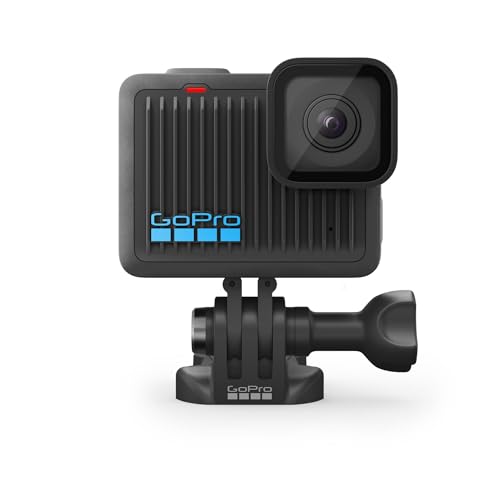
| GoPro Hero | Best current action camera at this tier | GoPro’s compact 4K action camera: the real ecosystem, stabilisation and toughness at the friendliest size the brand makes. |
| AKASO Brave 7 LE | Best value action camera with a front screen | A dual-screen 4K action camera with a waterproof build and a bundle of accessories, undercutting the big brands hard. |
| AKASO EK7000 | Best ultra-budget action starter | The famous inexpensive 4K action camera: mounts, case and remote included, priced to leave most of the budget unspent. |
| DJI Osmo Action 3 Outdoor Combo | Best when sales bring it into this tier | DJI’s stabilised, quick-mounting action camera in a combo with straps and mounts — a tier-jumper when discounted. |
| Kodak Pixpro AZ528 | Best zoom compact for travel at this tier | A bridge-style compact with a very long optical zoom, for travellers and wildlife-watchers who need reach no phone offers. |
| Canon EOS M50 (Used Market Route) | Best system camera via the used market | A capable interchangeable-lens mirrorless camera that used prices regularly pull under this tier — the patient buyer’s system steal. |
How Did We Choose These Cameras for the 250-Dollar Tier?
We judged every candidate as a complete purchase: camera, the memory card it needs, the case that keeps it alive, and the realistic street price behaviour of its category across a season rather than on one screenshot day. Cameras whose headline price excluded essentials a beginner cannot skip were marked down, as were models whose specifications promised flagship behaviour their sensors could not cash. At this budget, honesty is the scarcest feature in the entire market, so we bought it wherever we found it.
We also insisted each pick be the best answer to a distinct brief, because a single ‘best camera’ at this price is a fiction. Action sports, family video, travel zoom photography and system-building are different sports with different winners, and pretending otherwise is how buyers end up filming a school play on an action camera and wondering why the stage is a bright dot. Six winners follow, each crowned in its own event, with their ceilings stated as plainly as their virtues.
Detailed Picks: Six Ways to Spend 250 Dollars Well

GoPro Hero — Best current action camera at this tier
The little Hero is the answer for buyers who want the action-camera category’s centre of gravity — GoPro’s stabilisation, colour, app and mountain of mounts — in its smallest, simplest body. It records 4K footage that looks unmistakably like the brand’s flagships on a family screen, shrugs off water and knocks without a case, and mounts to everything the action world has invented in twenty years. For most people shopping this tier for an action camera, the analysis can honestly stop here.
What the compact body trades away is the flagship theatre: no front screen for self-framing, fewer exotic frame rates, and stills that serve the story rather than headline it. In exchange you get a camera so small and uncomplicated that it actually gets carried — clipped to a bag, living in a jacket — and action cameras earn their keep entirely through presence. A flagship left in a drawer films nothing; this camera films the holiday.
Budget the essentials with it: a fast memory card, a spare battery for long days, and one mount that matches your actual sport rather than a bundle of twelve that match nobody’s. Bought that way, the Hero is the safest pair of hands in this guide — the pick for buyers who want the category’s proven centre rather than its edges, at a price that leaves room for the accessories that complete it.
Parents filming sport from the touchline should note the app workflow: frame from the phone, start and stop remotely, and pull the highlights the same evening while the match is still the family’s conversation. At this tier, the speed from event to shared memory is a quality of life no specification captures.
- Video: 4K action footage with GoPro stabilisation
- Build: waterproof, compact and mount-friendly
- Ecosystem: mounts, batteries and app support from the market leader
- Use: travel, sport and family action
Strengths
- The proven ecosystem at its simplest
- Stabilisation and colour punch above its size
- Small enough to be genuinely carried
Trade-offs
- No front-facing screen
- Fewer flagship frame-rate toys
- Stills are supporting actors
Best for: families, travellers and athletes wanting the safe action choice.
Not suited for: self-filming presenters or specification collectors.

AKASO Brave 7 LE — Best value action camera with a front screen
The Brave 7 LE exists for the buyer who looked at the GoPro’s missing front screen and walked away. Its dual displays make it the self-filmer’s action camera at this tier: frame yourself on the bike, at the summit, mid-vlog, without a phone, a guess or a ruined take. Around that headline it assembles the full action brief — 4K video, stabilisation, waterproofing, a remote, and a box of mounts that gets a beginner filming on day one without a second purchase.
Footage quality is the honest negotiation: bright, lively and entirely respectable on screens and social platforms, a step behind the market leader in stabilisation polish and low-light grace. For the overwhelming majority of this tier’s buyers — holidays, sport, family archives — that step is invisible in the finished memories, while the money saved is very visible indeed, funding the spare batteries and cards this guide keeps insisting are part of the camera.
Treat it as a system to be set up once and then forgotten: update its firmware, learn its app’s moods, and standardise on its batteries if you buy two. Value action cameras reward owners who finish the setup weekend and then simply film for years, and punish perpetual tinkerers with a hundred small settings. For self-filming adventurers on a real budget, it is the smartest money in this entire list.
Vloggers who hike should test the front screen’s discipline early: it invites constant checking, and the best action footage still comes from mounting the camera, trusting the frame and living the moment. Use the screen to set the shot, then forget it exists until the summit — the Brave rewards that maturity with footage that looks twice its price.
- Video: 4K with electronic stabilisation
- Screens: front and rear, for self-framing and review
- Build: waterproof body with case options for depth
- Bundle: mounts and accessories typically included
Strengths
- Front screen solves self-framing
- Accessory bundle completes the purchase
- Strong value against the big brands
Trade-offs
- Stabilisation a step behind the leader
- Low light is modest
- App and firmware need a setup weekend
Best for: self-filming adventurers and value hunters.
Not suited for: pixel perfectionists or night filming.

AKASO EK7000 — Best ultra-budget action starter
Sometimes the correct camera for a budget is the one that leaves most of it unspent, and the EK7000 is that argument with a lens. For a fraction of this tier’s ceiling it delivers the complete action-camera experience — 4K recording, waterproof case, mounts for bikes and helmets, a wrist remote — which makes it the perfect instrument for the question this budget most often hides: does the person actually enjoy filming their sport? Answer that with the EK7000, and every later upgrade is evidence-based.
Its footage is cheerful daylight work: bright, stable enough, and entirely adequate for family screens and first channels, with the expected taxes in low light and fine detail. What surprises new owners is how much of action filming is not the camera at all — mounting, angles, story, the discipline of the short clip — and how completely this little box teaches all of it. Many respected channels’ first seasons were shot on cameras of exactly this class, because audiences forgive footage and never forgive absence.
Buy it as a starter and a spare even if the budget allows more: the camera you lend, mount somewhere risky, or hand to a child without a flicker of anxiety. In a healthy kit it graduates to second angle and hazard duty, where its disposability becomes a creative licence the expensive cameras will never have. At this price, that is not a compromise; it is a strategy.
Skiers and riders mounting it for the first time should heed the category’s oldest lesson: tether it. A short safety cord between camera and mount converts every crash from a loss report into a story, and costs less than the lift pass. Budget cameras earn their keep by being risked, and tethers are how professionals risk things responsibly.
- Video: 4K action recording with stabilisation
- Build: waterproof inside its included case
- Extras: wrist remote and a mount bundle in the box
- Role: the starter that proves the hobby before funding it
Strengths
- Complete kit for a fraction of the budget
- Perfect hobby-testing instrument
- Fearless second and hazard camera
Trade-offs
- Daylight is its comfort zone
- Detail and polish are entry-class
- Case needed for waterproofing
Best for: beginners testing action filming, and as a spare.
Not suited for: anyone’s only camera for evening events.

DJI Osmo Action 3 Outdoor Combo — Best when sales bring it into this tier
Price tiers are weather, and the Osmo Action 3 is the storm that periodically blows a genuinely premium action camera into this budget’s harbour. When the combo appears at this level — as it does in sales seasons — it outclasses everything around it: stabilisation with horizon-keeping that forgives tilted mounts, a magnetic quick-release that makes moving the camera between chest, bike and hand a two-second act, and low-light manners a generation ahead of the budget natives.
The combo in this listing is aimed at exactly the hiking-and-cycling crowd: chest and backpack strap mounts that put the camera where the story is, on the body, hands-free. DJI’s colour and its microphone options give growing creators a path the budget brands cannot match, and the whole system feels engineered by people who film outdoors professionally and got tired of everyone else’s compromises.
The discipline this pick demands is commercial rather than photographic: verify the current price before falling in love, because outside its sale windows it belongs to the tier above, and this guide will not pretend otherwise. Buyers with patience — who can wait for the season, set an alert and pounce — routinely own this camera for 250-dollar money. Buyers in a hurry should take the GoPro or the Brave and start filming today, because a season spent waiting is footage never made.
Cold-weather riders single out its battery behaviour for praise, since action cameras historically die young in winter. A camera that keeps recording on the February descent earns a loyalty no summer specification earns, and it is one more reason this combo is the connoisseur’s target whenever the price weather turns.
- Video: 4K with strong stabilisation and horizon keeping
- Mounts: magnetic quick-release system
- Combo: chest and backpack strap mounts for hiking and cycling
- Build: waterproof with cold-resistant battery claims
Strengths
- Premium stabilisation and horizon keeping
- Quick-release mounts are genuinely fast
- Best low-light manners in this list
Trade-offs
- Only visits this tier during sales
- Verify the live price before committing
- Accessories beyond the combo add up
Best for: patient buyers who time the sales.
Not suited for: anyone filming this weekend, whatever the price.
Kodak Pixpro AZ528 — Best zoom compact for travel at this tier
There is one thing no phone and no action camera at any price in this guide can do: put a distant subject large in the frame with real optical reach. The AZ528’s long zoom is its entire argument and it is a good one — the heron across the lake, the child on the far touchline, the moon rising over a holiday town all become photographs instead of bright disappointments. For travellers and garden wildlife watchers shopping this tier, reach is not a specification; it is the difference between the hobby existing and not.
Handling teaches more than its price suggests. The bridge body offers a real grip, a viewfinder-style shooting posture and manual options that let a beginner grow into exposure control, while its automatic scenes carry the first season. Photographs in good light are bright and detailed at ranges nothing else here can attempt, and the zoom’s sheer fun factor — the gasp when a distant subject fills the frame — should not be underestimated as a motivator for a new photographer.
Pay its taxes knowingly: the small sensor asks for daylight, low light is a negotiation, and video is a supporting feature rather than a headline. Buyers whose photography is distant and sunlit will never meet those taxes; buyers whose life is evening and indoors should take the hint and choose from the action or used-system picks instead. Matched to its brief, the AZ528 is the only door at this price into a whole genre of photography.
School-sport parents are this camera’s quiet constituency: from the far sideline, the zoom turns a speck in a team shirt into your child, mid-action, frame-filling. No parent has ever regretted reach at a sports day, and no action camera has ever provided it — the AZ528’s whole case rests on that Saturday-morning truth.
- Lens: long optical zoom reaching distant subjects
- Type: bridge compact with a proper grip and viewfinder-style handling
- Modes: automatic scenes plus manual options to learn with
- Use: travel, zoo, school sport and garden wildlife
Strengths
- Optical reach nothing else here offers
- Handling teaches real photography
- Daylight detail at impossible distances
Trade-offs
- Small sensor wants daylight
- Video is secondary
- Bulkiest pick in the guide
Best for: travellers, wildlife watchers and sports-day parents.
Not suited for: evening, indoor or video-first buyers.
Canon EOS M50 (Used Market Route) — Best system camera via the used market
The used market is this budget’s cheat code, and the EOS M50 is its most reliable exploit: a genuinely capable mirrorless camera — real viewfinder, tilting screen, 4K video, a lens mount with years of affordable glass — that second-hand prices regularly deliver beneath this tier’s ceiling, usually with its kit lens. For a buyer whose ambition is photography itself rather than a category of gadget, no new camera at this money is in the same conversation.
Buying it well is a skill this guide has taught before and repeats without apology: purchase from sellers who accept returns, read the shutter count, inspect the sensor with a small-aperture sky photograph, confirm the battery holds its charge, and budget for a card and a clean. The M50’s popularity is the used buyer’s friend — parts, batteries, advice and lenses circulate abundantly, and its community has documented every quirk it owns.
Understand the platform’s twilight honestly: Canon’s lens investment now flows to its newer mount, so the M50 system is a finished library rather than a growing one. For a 250-dollar education that library is more than sufficient — the kit zoom, the fast prime, the portrait lens all exist at friendly used prices — and the skills transfer completely when graduation day comes. Patient, checklisted and unhurried, this is the highest-ceiling purchase in the entire guide.
Students are this route’s natural aristocracy: course-compatible files, manual control, and a system assembled across birthdays from the used shelf, each lens a lesson bought at a fraction of its launch price. A teenager who builds an M50 kit across two years owns something no single gift can confer — a system that is biographically theirs.
- Type: APS-C mirrorless with interchangeable lenses
- Buying route: used bodies and kit lenses via reputable sellers
- Checks: shutter count, sensor cleanliness, battery health
- Growth: lenses and skills that transfer to future bodies
Strengths
- System quality smuggled under the budget
- Full learning controls and viewfinder
- Abundant used lenses and knowledge
Trade-offs
- Requires careful used-buying discipline
- Lens platform is a finished library
- No warranty unless the seller offers one
Best for: patient beginners and students building a system.
Not suited for: buyers who need new, warranted and instant.
How Do the Six Best Cameras for 250 Dollars Compare?
| Pick | Best at | Watch out for | Ideal owner |
|---|---|---|---|
| GoPro Hero | Safest action purchase here | No front screen | Families and travellers |
| AKASO Brave 7 LE | Self-framing on a budget | Polish trails the leader | Solo adventurers |
| AKASO EK7000 | Leaves the budget alive | Entry-class footage | Starters and second angles |
| DJI Osmo Action 3 Outdoor Combo | Tier-jumping quality when discounted | Price must be verified live | Patient hikers and riders |
| Kodak Pixpro AZ528 | Reach for distant subjects | Daylight-dependent | Travellers and watchers |
| Canon EOS M50 (Used Market Route) | Highest ceiling in the guide | Used-market homework required | Students and system builders |
How Should You Split 250 Dollars Between Camera and Everything Else?
Reserve roughly a fifth of the budget for the unglamorous completion kit before choosing the camera, because every pick in this guide is unfinished without it: a fast, honest memory card from a reputable source, a case or pouch that fits how the camera will travel, and a spare battery for any camera that will work full days. Buyers who spend the entire sum on the body own a camera that stays home for want of a card, which is the most expensive configuration of all.
The split also disciplines the shortlist usefully. A camera whose price leaves the completion kit unaffordable is, in truth, over budget, and the honest move is one tier down or one sale season later. Retailers understand this arithmetic and price anchor models accordingly; the buyer who does it consciously stops being the target of the bundle and becomes the author of it.
Why Do Action Cameras Own This Price Tier, and When Is That a Trap?
Because their economics are perfect for it: small sensors, fixed lenses, no viewfinders, and enormous production volumes aimed at exactly this wallet. The trap is categorical — an action camera is a witness, not a portraitist. Its ultra-wide lens flatters landscapes and flattens faces, its talents assume daylight and motion, and families who buy one as ‘the camera’ discover at the first school play that they have purchased a superb instrument for a life they do not lead.
Diagnose your actual subjects before admiring any pick, including ours. If your camera roll dreams are birthdays, grandparents and the dog indoors, the used system route or the zoom compact serves you and the action cameras do not, however excellent they are at being themselves. The most expensive camera mistake at any budget is the right camera for somebody else’s life, and at 250 dollars the market sells that mistake with particular enthusiasm.
How Do You Time a Purchase at a Budget Ruled by Sales?
Learn the calendar’s rhythm: the major sale seasons move cameras between tiers with metronomic reliability, and last year’s model — often ninety percent of the current one — falls furthest. A buyer who can name their pick in spring and purchase it in a sale window routinely owns a camera from the tier above, which is precisely the DJI pick’s strategy in this guide. Set alerts, decide your walk-away alternative in advance, and treat a missed sale as information rather than emergency.
Urgency is the counterweight, and it is sometimes right. A camera bought today at full tier price films the summer; a camera bought in November at a saving films the winter. When the occasion is the point — the trip, the season, the child’s one year at this age — buy the good-enough camera now and let the perfect price go. The photographs of the summer will not console themselves with the discount you achieved in autumn.
What Should You Check in the First Week With Any Camera Here?
Everything, while returns are still a door rather than a wall. Film and photograph in your real conditions — your light, your subjects, your computer — and review at full size for the flaws that hide in demonstrations: focus habits, stabilisation behaviour, battery truth, the app’s character. Run the camera through one complete working day of your actual use, because a camera that survives your Tuesday will survive your year, and one that annoys you by Friday will be a drawer resident by Christmas.
Register warranties, update firmware, format the card in the camera, and set the date — the small ceremonies that convert a purchase into an instrument. Then put the manual’s existence somewhere findable and go make the first hundred photographs or the first hour of footage without judging any of it. At this budget especially, the camera’s job is to start a practice; evaluation can wait until the practice has something to say.
How Does the Used Market Really Work at This Budget?
It works on patience and checklists. The best value pools where enthusiasts upgrade — last generation’s capable bodies, kit lenses shed by system builders — and it punishes hurry and rewards the buyer who can inspect, test and walk away. Buy from platforms with returns, favour sellers who state shutter counts and faults plainly, and remember that a slightly cosmetically tired camera with a low count is the market’s sweet spot: professionals’ backups and hobbyists’ second bodies live there, priced by their scratches and valued by their insides.
Factor the true used price honestly: body, a lens, a fresh battery, a card, possibly a sensor clean. Assembled with discipline, that total still buys the highest photographic ceiling in this guide, as the M50 pick argues. Assembled carelessly, it buys other people’s problems — which is why the checklist is not caution theatre but the entire business model of the route.
Why Is Low Light the Honest Tax of This Entire Tier?
Physics charges for light, and at 250 dollars nobody has paid. Small sensors gather little, kit lenses open modestly, and processing at this level trades detail for noise reduction with a visible hand. Every pick here has an evening personality — the action cameras are honest witnesses, the zoom compact negotiates, the used system with a fast prime genuinely performs — and buyers should choose with their evenings in mind rather than discovering the tax at the first birthday party.
The mitigations are craft, not denial: add light where you can, steady the camera against the world, expose for the subject’s face, and embrace the grain of a real moment over the blur of a missed one. Photographers raised at this tier learn light earlier than wealthy beginners, because their equipment refuses to hide it from them — one more way in which a small budget, honestly spent, is a teacher rather than a sentence.
What Is the Right First Accessory for Each Route Here?
For the action cameras, the mount that matches your actual sport — chest for riding and hiking, helmet or bar for the bike — bought singly and well rather than in a bundle of twelve strangers. For the zoom compact, a case that fits its travel life and a spare battery, because reach is useless on a dead camera at the far end of a zoo. For the used system, the fast prime lens, immediately, because it converts the purchase from a camera into an education within one afternoon.
Notice what is absent: filters, gadget bags, cleaning theatricals, extended warranties of doubtful parentage. At this budget every accessory must answer to a photograph it enables, and the three named above answer instantly. Everything else can wait for the evidence of the first season’s work, when the camera itself will tell you, precisely, what it lacks.
How Long Should a 250-Dollar Camera Serve Before Upgrading?
Longer than the internet suggests. The action cameras here film happily for years; the zoom compact serves a travel habit indefinitely; the used system grows by lenses for as long as its owner is learning, which is the honest unit of measurement. Upgrade when a named wall appears in real work — the evening the action camera could not see, the stage the zoom could not reach, the lens the system never made — and not when a launch event manufactures dissatisfaction on schedule.
Judged that way, most buyers in this guide are purchasing a three-to-five-year companion, which reframes the arithmetic entirely: the cost per year of a well-chosen 250-dollar camera is less than a single family meal out, for the device that will record the family’s decade. Few purchases in a household clear that bar, and none of them do it by accident — only by the matching of camera to life that this guide has argued from its first page.
What Should Gift-Buyers at This Budget Do Differently?
Buy the completion kit with the camera, always: card, case, battery, and for the used route, the inspection done before the wrapping rather than delegated to the recipient’s luck. A gift that works completely on its first morning is remembered as generosity; a gift awaiting three accessories is remembered as a project. Include the receipt without embarrassment — at this tier, an exchange towards the right pick is a feature of the gift, not a failure of it.
Choose for the recipient’s demonstrated life with the ruthlessness of the earlier sections: the rider gets the action camera, the traveller gets the zoom, the student gets the used system, and nobody gets the camera the giver would have wanted at their age. The 250-dollar tier is where that discipline matters most, because it is exactly rich enough to buy the wrong excellence convincingly.
How Do You Know You Bought Well at This Price?
By October. A well-bought camera at this tier has a season of real work on its card, a place it lives, a spare battery that has been needed, and an owner who can name its one limitation precisely because they have met it in honest service. A badly bought one has a clean screen, a full accessory bundle and a drawer. The difference was never the model; it was the match, made in the week of purchase, between the camera’s talents and a life that actually required them.
If your camera passes that October test, resist the upgrade forums with the serenity of the well-matched. Your next purchase, when the named wall finally appears, will be as deliberate as this one — and deliberateness, compounded across a photographic life, is worth more than any single camera at any price this guide will ever review.
How Do You Compare Two Cameras When Their Prices Cross Weekly?
Compare the cameras, not the prices, and let the purchase date handle the arithmetic. Write down — literally, on paper — the three capabilities your subjects demand, and score each candidate against them without looking at any listing. The camera that wins on capability is your pick; the price merely decides when and from whom you buy it. Buyers who let a temporary discount reorder their priorities own a procession of bargains that never quite film their lives, which is the most expensive outcome this tier offers.
Keep the comparison honest about totals: body, card, battery, case, and for action cameras the one mount that matters. A camera that is cheaper naked and dearer complete is not cheaper, and retailers at this tier are artists of exactly that illusion. The discipline takes ten minutes with a notebook and repays itself on the first purchase it corrects.
What Does ‘Good Enough’ Actually Look Like at This Tier?
It looks like footage your family re-watches and photographs you are proud to print at ordinary sizes, made by a camera whose limits you can recite and route around. Perfectionism is the tier’s native predator: it convinces buyers that the next model up would have saved the holiday video, when the evidence of a thousand family archives says the holiday video was saved by the camera being present, charged and pointed at the right grandmother. Good enough, present and working, is the highest specification in real photography.
That is not an argument against ambition — the used-system pick in this guide exists precisely for the ambitious. It is an argument for locating ambition correctly: in subjects, practice and the second lens, rather than in the marginal difference between adjacent models. At 250 dollars the camera is the beginning of the budget’s story, and buyers who treat it as the whole story end it early.
How Should Parents Buy at This Tier for a Teenager?
Match the category to the teenager’s demonstrated output, as our teenage guide argues at length: action for the rider, system for the photographer, zoom for the watcher of distant things. Then buy the completion kit as part of the gift and the spare battery as the stocking filler, because a teenager’s camera dies socially the first time it dies literally at the wrong moment. The used route deserves special consideration here, since a system assembled partly from a teenager’s own earnings teaches ownership no new box can.
Agree the expectations in the same conversation as the gift: care, lending, and what an accident costs, decided while everyone is calm. A 250-dollar camera is an ideal size for that lesson — valuable enough to respect, replaceable enough to forgive — and many families find the camera ends up teaching responsibility as a side effect of teaching photography.
Why Do Specifications Mislead More at This Price Than Any Other?
Because the gap between a specification and its implementation is widest where budgets are tightest. Two cameras can share a resolution figure and differ enormously in the stabilisation, lens quality and processing that decide whether the footage is watchable; a zoom number says nothing about the sensor starving at its far end; a waterproof claim says nothing about the case it depends on. At flagship prices the implementations converge; at this tier they scatter, which is why this guide argues from behaviour and brief rather than from brochure arithmetic.
The buyer’s defence is demonstration over declaration: sample footage in your conditions, reviews that show failures as well as triumphs, and the first-week testing discipline described earlier. A camera at this price that survives your own Tuesday has told you more truth than its entire specification sheet, and the returns window exists precisely so that truth can be afforded.
How Can a Small Camera Budget Still Produce a Family Archive?
By consistency, which costs nothing. The families whose archives glow are not the ones with the best cameras; they are the ones where somebody filmed the ordinary Tuesdays as faithfully as the weddings, backed the files up twice, and kept a ruthless little favourites folder that future decades can actually browse. Every camera in this guide is sufficient for that project, and the project’s real equipment list is a card reader, two drives and a person who cares — the cheapest kit in this entire article.
Start the archive discipline with this purchase: one folder per year, the camera’s files copied monthly, the best ten printed annually. A 250-dollar camera feeding that system for five years produces a family treasure that a flagship feeding a chaotic camera roll never will. Budgets constrain equipment; they have never once constrained devotion, which is the archive’s actual raw material.
What Is the Kindest Way to Outgrow a Camera at This Tier?
Pass it on, working, with its charger and one story about what it filmed. Budget cameras make superb first cameras for the next person — the child, the sibling, the friend whose interest is unproven — and a hand-me-down with a history recruits photographers the way no advertisement can. The EK7000 and its kin were practically designed for this second life, and even the system camera’s body, superseded by its owner’s graduation, becomes somebody else’s cheat code into photography.
Sell honestly if you sell: state the shutter count, include the spare battery, price the scratches as scratches. The used market that this guide sends its readers into is built entirely of other people’s kindness and candour, and contributing both is how a buyer at this tier repays the system that served them. Equipment karma is not a superstition at 250 dollars; it is the market’s operating principle.
How Should You Protect a Budget Camera So It Earns Its Keep for Years?
The economics of care invert at this tier: the camera is inexpensive, but its work is irreplaceable, so protect the work rather than the object. A strap or tether on every outing, a case that matches the bag it actually travels in, cards copied before they are formatted, and batteries rotated rather than abandoned flat — these habits cost almost nothing and are the entire difference between a five-year companion and a one-season gadget. Budget cameras rarely die of their price; they die of the carelessness their price licenses.
Clean lenses with the cloth you keep in the case, keep sand and sunscreen — the two great camera killers of the holiday season — off the seals and screens, and let the camera dry before it is sealed into a bag after wet work. None of this is preciousness; it is the same discipline professionals apply to expensive bodies, applied here to the archive the body is building, which was the valuable part all along.
Which Mistakes Should You Avoid?
Sorting by price and buying the top result. At this tier the top of a price sort is a marketing position, not a verdict. Decide the camera type and the brief first; the shortlist should be three named models, not a page of strangers.
Spending the whole budget on the body. No card, no case, no spare battery means no camera in practice. The completion kit is part of the purchase, and a tier down with the kit beats a tier up without it, every single time.
Buying an action camera as the family camera. It will film the holiday’s adventures beautifully and the school play as a bright dot in a dark hall. Match the category to the subjects, as the picks above insist, before admiring any stabilisation demo.
Fearing the used market into a worse new camera. A checklisted, return-protected used purchase is the highest-ceiling route at this price. Fear should produce inspection, not a retreat into a new camera with half the capability.
Printing no prices in your own notes and then trusting memory. Prices at this tier move weekly and models share names across generations. Keep the exact model and listing you mean to buy written down, and verify it on the day, not from a screenshot of last month.
Final Recommendation
Spend the tier by brief and the answer is clear: the GoPro Hero for the safest action purchase, the Brave 7 LE for self-filming value, the EK7000 to test the hobby or serve as a fearless spare, the DJI Action 3 combo when the sales weather is kind, the Kodak AZ528 when your subjects are distant and sunlit, and a carefully bought used EOS M50 when the ambition is photography itself.
Whichever route you take, complete the kit, verify the live price, and judge the purchase in October by the work on its card. Two hundred and fifty dollars, matched honestly to a life, buys not a compromise but a beginning — and beginnings, in photography, are where all the good stories come from.
Check the live listings, complete the kit, and then go and film the life the camera was matched to. That is the whole method, and at this budget it has never once been beaten by a longer specification sheet.
Related guides
Frequently Asked Questions
Can I really get a good camera for 250 dollars?
Yes — provided ‘good’ is matched to a brief. Action cameras at this tier are genuinely good at action; the zoom compact is genuinely good at reach; a used system camera is genuinely good at photography. What 250 dollars cannot buy is one camera that is good at all of those at once, which is why this guide crowns six winners instead of pretending to find one.
Should I buy new or used at this budget?
New for action cameras, where warranties and bundles favour the current models and the technology moves fast. Used for system cameras, where last generation’s capability dwarfs anything new at the price. The zoom compact sits between: new is simple, used is cheaper, and condition matters more than the badge either way.
Why does this guide not print each camera’s price?
Because at this tier prices move with sales and stock faster than any article can track, and a printed figure would mislead more than it informed. The picks are chosen for this neighbourhood; the linked listings show today’s truth, and the sales-timing section explains how to make that truth kinder.
Is 4K important at this price?
Useful, not decisive. The action picks record it comfortably and it buys reframing room, but stabilisation, lens and light decide whether footage is watchable long before resolution is consulted. Never trade a better lens or a front screen you need for a resolution figure you will not miss.
What memory card should I buy with these cameras?
A fast card from a reputable maker, sized for your longest day rather than your archive — action shooters fill cards quickly, stills shooters slowly. Buy it from a source you trust, because counterfeit cards are this tier’s quiet plague, and format it in the camera before its first real outing.
When do sales actually move these cameras between tiers?
The pattern is reliable even if the dates wander: major holiday sale seasons, new-model launches that discount their predecessors, and retailer clearance cycles. If your purchase can wait for one of those windows, the DJI pick’s strategy applies across the whole guide — last season’s excellence at this season’s budget.
What if I can stretch slightly above 250 dollars?
Stretch for capability, not for decoration: the next tier’s real gains are low-light performance, front screens on action cameras and newer system bodies. If a sale moves one of those within your stretch, take it; if the stretch buys only cosmetic upgrades and a thinner completion kit, stay at the tier and buy the kit properly instead.
Are refurbished cameras a safe middle route?
From the manufacturer or a reputable retailer with a warranty, yes — refurbished units are inspected, warranted and often indistinguishable from new in service. They occupy the honest middle between the new and used routes in this guide, and at this tier they are frequently where the smartest money in the whole market is quietly spent.
Related Guides
Spend the rest of the kit budget wisely with these companion guides on mounts, cards and the used market: best action camera mounts for bikes and hiking how to buy a used mirrorless camera safely best memory cards for 4k action cameras


