Disclosure: As an Amazon Associate, reviewstook.com earns from qualifying purchases. Links on this page are affiliate links; they cost you nothing extra. Prices and availability change often, so check the current Amazon listing before you buy.
Every day, millions of listeners plug a cable into a phone or laptop and hear music, without ever asking what usb audio explained really involves: how does a connector designed for files and keyboards carry the sound of a string quartet? The answer is a small marvel of standardisation. USB audio is a defined way for digital sound to travel from a host — a computer, phone, or tablet — to a device that converts it into the analogue signal your headphones and speakers actually play, governed by device classes that let almost any compliant hardware work with almost any host, no drivers, no drama. This explainer opens the whole chain in plain language: bits and sample rates without the mystique, the DAC’s starring role, the difference between the USB audio classes, why your dongle matters more than your cable, how microphones run the same road in reverse, and where the genuine limits — power, noise, and Bluetooth envy — actually lie.
Key takeaways
- USB carries sound as digital data; the conversion to analogue happens in a DAC inside your headphones, dongle, interface, or speaker.
- Sample rate and bit depth describe the digital original’s resolution — useful context, but not a quality score to shop by alone.
- USB Audio Class 1 and Class 2 differ mainly in bandwidth and how modern operating systems greet them; class-compliant gear is the plug-and-play ideal.
- The weakest link in most USB audio chains is a bargain dongle’s DAC and amplifier, not the cable and not the file.
- USB microphones and interfaces run the same standard in reverse, converting analogue voices into digital audio for the host.
- Latency, power draw, and electrical noise are the three practical gremlins — all manageable once you know where they live.
In this guide
What actually travels down a USB cable when you press play?
Numbers, in a very organised hurry. Digital audio begins as a measurement of sound taken tens of thousands of times per second: each measurement is a sample, the number of measurements per second is the sample rate, and the precision of each measurement is the bit depth. A compact disc’s famous figures — 44,100 samples per second, 16 bits each — describe a stream of numbers detailed enough that, converted back into a waveform, human ears cannot distinguish the reconstruction from the performance. When you press play, your phone or computer does not send music down the USB cable in any analogue sense; it sends that stream of numbers, packaged into USB frames with timing information, to whichever device has volunteered to turn numbers back into sound.
That volunteering is formalised by the USB audio standard, which defines how a device announces itself: I am an audio output, I accept these sample rates and formats, I have this many channels, here is how my volume and controls behave. The host reads that announcement and simply starts sending the stream — which is why a compliant DAC, headset, or speaker works the moment it is plugged into a laptop, a phone, a games console, or a tablet from entirely different makers. This class system is one of computing’s quiet triumphs: an interoperability treaty that lets a tiny dongle and a studio interface speak the same first sentences. Everything else in this explainer is refinement of that single arrangement: numbers out of the host, conversion at the far end, sound in your ears.
Where does the DAC fit, and why does it get the credit?
The digital-to-analogue converter is the translator at the end of the road, and its job is harder than it sounds. It must take the arriving numbers and reconstruct a smooth, continuous electrical waveform — the staircase of samples becoming the curve of music — then hand that waveform to an amplifier stage that gives it enough controlled power to move headphone drivers or feed speakers. Every USB audio device you own contains this pairing somewhere: inside wireless-style USB-C earbuds, inside the little dongle that replaced your phone’s headphone socket, inside desktop DAC units, inside USB speakers, and inside the audio interface on a creator’s desk. When listeners say one setup sounds cleaner, wider, or more controlled than another, they are usually praising — or blaming — this conversion and amplification stage, because it is the last place the signal is still being interpreted before it becomes sound.
This is why the dongle hierarchy exists. The DAC chip and amplifier in a well-made dongle are engineered with care about noise floors, output power, and how gracefully they drive real headphones; a bargain no-name dongle may use whatever silicon was cheapest that quarter, with hiss under quiet passages and insufficient power for demanding headphones as its signatures. The cable, by contrast, merely has to deliver data intact, which any intact cable does — digital streams do not gradually become warmer or brighter in transit, they arrive correctly or they audibly fail. Listeners building a small wired setup should therefore spend their attention, and their money, at the conversion end of the chain. Readers choosing the listening end itself may cross over to selecting headphones for editing and critical listening once the signal path makes sense.
What do sample rates, bit depths, and hi-res labels really mean?
Higher sample rates capture higher frequencies than the CD standard; higher bit depths capture a wider dynamic range between the quietest and loudest representable sounds. Both are real engineering, and both are routinely oversold. Human hearing tops out well below the frequencies that high sample rates exist to capture, and the practical benefit of hi-res formats in ordinary listening is contested even among engineers who record at those rates for production headroom. The honest summary is that the recording, its mastering, and your conversion hardware will shape what you hear far more than whether a file is CD-resolution or several times beyond it — a superbly mastered CD-quality stream through a good DAC beats a careless hi-res file through a noisy dongle every day of the week.
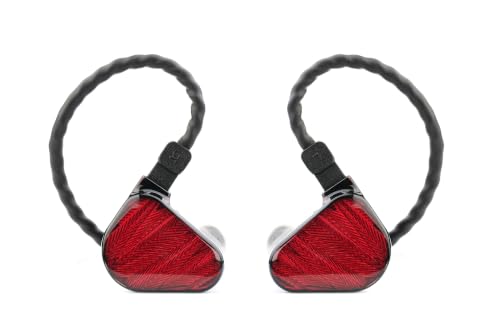
Where the numbers do matter practically is compatibility. A USB audio device advertises the rates it accepts; feed it something beyond its ceiling and the host will resample — usually competently, occasionally with settings worth checking. Operating systems add their own layer, sometimes resampling everything to a system rate unless an application takes exclusive control, which is why audiophile software offers exclusive modes and why two listeners can hear the same file through the same dongle on different systems and compare slightly different notes. None of this requires anxiety. It requires knowing that the chain has settings, that defaults are designed for convenience, and that the last few percent of fidelity live in those menus for listeners who enjoy visiting them — a theme this cluster’s neighbouring review of a certain measurement-led earphone, a wired earphone tuned by measurement, explores from the transducer side.
What is the difference between USB Audio Class 1 and Class 2?
The classes are generations of the standard’s ambition. Class 1, the elder, travels over USB’s older full-speed connection and comfortably covers CD-and-slightly-beyond resolutions — up to 96kHz at 24 bits in its usual implementations — which is why a generation of DACs, headsets, and USB speakers built on it still serve perfectly well. Class 2 rides the high-speed connection and lifts the ceiling dramatically, carrying high sample rates and more channels, and it is the class modern hi-res DACs and serious interfaces speak. The practical difference for a buyer is greeting behaviour: modern operating systems — current macOS, Windows, Linux, and mobile platforms — include class drivers that welcome both, with Class 2 support having become standard in recent Windows versions after years of needing maker-supplied drivers on that platform.
Why should a listener care about a protocol generation? Because class compliance is the difference between a device that works everywhere forever and a device that works where its maker’s driver team has been. A class-compliant DAC can move from laptop to phone to console to a friend’s computer without a thought, and will still work when its manufacturer has moved on — an underappreciated form of longevity in a hobby full of orphaned hardware. When shopping any USB audio device, the phrase class compliant in its description is worth more than several lines of resolution boasting, and this guide’s buying advice returns to it as the single most future-proof line on any specification sheet.
How do USB microphones and interfaces run the road in reverse?
USB audio is a two-way street, and the inbound lane is how most podcasts and calls exist. A USB microphone contains the mirror-image converter — an analogue-to-digital converter — that measures your voice thousands of times per second and sends the resulting numbers to the host as an audio input stream, announced through the same class system. An audio interface extends the idea into a studio front door: microphone and instrument inputs converted inbound, monitor outputs converted outbound, headphone amplification, and hardware controls, all travelling over one USB connection. The same principles govern quality in reverse: the converter and the microphone preamplifier are where fidelity is won, specifications about rates matter less than the analogue stages, and class compliance decides whether the device is a plug-and-play citizen or a driver-dependent guest.
Creators choosing that front door will find this site’s dedicated guidance on how to choose an audio interface for recording and choosing a USB microphone for podcasting useful next steps, because the explainer’s job here is the map, and theirs is the territory. One principle travels across all of it: keep the chain short and the gain staging sane. A microphone run too quietly and boosted later inherits noise; one run too hot clips in a way no software un-clips. USB makes the connection effortless, but the recording discipline remains gloriously analogue in its habits.
What about latency, power, and noise — the three gremlins?
Latency is the delay between a sound entering or leaving the system and its arrival at the other end, created by the buffers that keep streams smooth. For listening, it is invisible. For recording — singing into a USB microphone while monitoring yourself — a large buffer makes your own voice echo back late enough to disturb performance, which is why interfaces offer low-latency and direct-monitoring paths that let you hear yourself before the computer’s round trip. Gamers meet the same gremlin in voice chat and in the delay between an on-screen event and its sound through some wireless paths, one of several reasons wired USB audio retains devotees in competitive play, a world this cluster’s mice built for MMO gaming and their many buttons visits from the gear side.
Power is the gremlin of the pocket. USB audio devices drink from the host: a dongle sips, a bus-powered interface drinks more deeply, and phones notice thirsty accessories in their battery percentages and occasionally refuse the thirstiest outright. Demanding headphones add a second power story at the amplifier stage — a dongle can convert beautifully and still lack the output to drive high-impedance or insensitive headphones to honest volume with control, which is a specification to check rather than a disappointment to discover. Noise, the third gremlin, arrives electrically: poorly isolated conversion stages can admit the host’s internal electrical chatter as faint hiss or whine that tracks processor activity. Good design exiles it; distance helps — a DAC at the end of a short cable lives further from the noise than silicon inside a crowded laptop — and any listener who hears their mouse movements as faint zippers in quiet passages has met this gremlin personally and should shop conversion hardware accordingly.
How does USB audio compare with Bluetooth and the old headphone socket?
Against the analogue socket it replaced, USB audio’s great shift is location: conversion moved out of the phone — where it shared space with radios and processors and varied wildly between models — into the accessory, where it can be chosen. A listener with a good dongle now carries their sound quality with them between phones, which is why the socket’s disappearance, mourned at the time, quietly standardised wired listening around USB. The socket’s ghost survives inside every dongle, of course: the last few centimetres of any wired chain are analogue, because ears are.
Against Bluetooth, the comparison is a fair fight with different winners. Wireless wins the life of movement — commutes, gyms, calls while cooking — and modern codecs have narrowed the quality gap to a sliver for most listeners. USB wired wins on absolutes: no battery in the listening device to die or age, no pairing rituals, no codec negotiations, no wireless latency worth discussing, and a direct line to the full resolution of whatever you play. The mature listener’s answer, as with so many comparisons on this site, is bilingualism: wireless for the moving day, a USB dongle and a good wired earphone for the listening chair — each technology spared the other’s compromises, and the music indifferent to which road it travelled, so long as the conversion at the end was worthy of it.
How should you build a small USB audio setup that sounds genuinely good?
Work backwards from your ears. Choose the headphones or earphones first, because they dominate what you hear; then choose conversion that can drive them properly — a class-compliant dongle or desktop DAC whose output suits their impedance and sensitivity, from a maker who publishes honest specifications. Keep the host side clean: a streaming service or library at the best quality tier you can reasonably use, system volume handled sensibly so the conversion stage works in its comfortable range, and any exclusive-mode options explored if critical listening is the evening’s purpose. Add a short, intact, ordinary cable and refuse, politely, the entire genre of cable mysticism — the standard delivers the numbers correctly, and your money belongs where the numbers become sound.
For creators, mirror the build: microphone or interface chosen for its analogue stages, gain set so peaks stay healthy, monitoring arranged to defeat latency, and class compliance checked so the device can follow you between machines and years. In both directions, the setup philosophy is identical and slightly unfashionable: fewer, better-chosen components, each understood. USB audio rewards that philosophy because the standard itself does the complicated part — interoperability — leaving the listener free to spend attention on the two ends of the chain where quality actually lives: the music going in, and the transducer at the ear.
Which misunderstandings about USB audio refuse to die?
The first is that a more expensive cable improves sound; in a digital chain the cable’s job is intact delivery, and intact is a threshold, not a gradient. The second is that higher sample-rate numbers on a box guarantee higher fidelity in the chair, when the recording, the conversion, and the headphones each outrank the format. The third is that USB audio is inherently inferior to specialist hi-fi connections — a confusion of eras, since the same conversion chips and engineering appear across connection types, and USB’s class system is the most interoperable digital audio arrangement ever standardised. The fourth is that a phone’s included or cheapest dongle represents the medium; it represents its price point, as a bundled anything does.
The fifth misunderstanding is subtler: that digital means identical everywhere. The numbers arriving are identical, yes — and then conversion, amplification, and headphones interpret them, which is why two USB setups can share a file and share nothing else. Understanding that division — identical data, interpretive hardware — is the whole subject in one sentence, and the listener who grasps it stops shopping for magic in the data path and starts shopping wisely at its end. That, more than any specification, is what an explainer exists to deliver.
How does USB audio work inside the devices you already own?
The standard’s ubiquity becomes clear on a household inventory. The USB-C earbuds in a drawer are a DAC and amplifier wearing earphones as a disguise. The games controller with a headset attached is negotiating USB audio with the console. The conference speakerphone on the office desk, the soundbar fed by a television’s USB service port in some setups, the turntable that digitises vinyl for a laptop, the karaoke microphone in the children’s toy box — all are citizens of the same class system, announcing themselves and exchanging streams in the treaty’s grammar. Even the car participates: a phone plugged into a dashboard is frequently an audio device enrolment away from being the stereo’s source, with the head unit’s converters doing the final translation. Recognising the pattern is the explainer’s real gift — once seen, the listener stops meeting each device as a new mystery and starts asking the two questions that organise them all: where does conversion happen here, and how good is the stage that performs it?
That inventory also explains the standard’s resilience. USB audio did not win by being the finest imaginable connection; it won by being adequate everywhere, defined openly, and implemented in silicon so inexpensive that no category of device had an excuse to skip it. In technology, the standard that ships in everything defeats the standard that wins arguments, and the listener’s benefit is the one this guide opened with: nearly any source can speak to nearly any listener’s gear, today, with the cable already in the bag. The remaining quality frontier was never the treaty — it is the conversion and the transducer, which is why the audio world’s money and ingenuity have migrated to exactly those two addresses.
What happens inside the host — players, resampling, and exclusive modes?
The host’s half of the story deserves its own chapter, because two listeners with identical hardware can be served different sound by their software alone. A music application hands its stream to the operating system’s audio engine, which typically mixes all the system’s sounds — the track, the notification chime, the video in another tab — into one stream at one sample rate, resampling ingredients as needed. That convenience is correct for ordinary life and subtly lossy for critical listening, which is why serious player applications offer an exclusive path: the application takes sole control of the USB device, matches its rate to each file, and lets the music travel unmixed and unresampled. The audible difference ranges from negligible to worthwhile depending on the chain, but the conceptual difference matters to understand — the standard delivers what the host sends, and the host’s mixing desk is a place where quality decisions are quietly made on the listener’s behalf.
Volume architecture lives in the same territory. A chain may offer volume at the application, at the system, inside the USB device’s own announced controls, and at an analogue knob on a desktop unit, and gain staging — keeping each stage in its healthy range rather than strangling one and straining another — is the quiet skill that separates clean loud listening from distorted or hissy loud listening. The practical rule travels well: set the source near its comfortable maximum without clipping, and make the final, everyday adjustment at the last stage before the headphones, preferably the device’s own hardware control where one exists. Listeners who internalise that single habit will extract more honest quality from modest gear than gadget-chasers extract from flagships run carelessly, which is perhaps the most useful sentence in this entire explainer.
Where is USB audio heading next?
The standard’s future is evolution rather than replacement, because its installed base is the argument no successor can answer. Newer USB generations raise the bandwidth and power available through the same familiar connectors, which translates in audio terms to more channels, higher resolutions carried without strain, and bus-powered devices — interfaces, speaker systems, ambitious dongles — fed more generously by a single cable. Spatial audio is the frontier with the most visible momentum: object-based formats that describe sound in three-dimensional space need a pipe that can carry many channels and their metadata from host to renderer, and USB’s class framework is the natural road between the streaming services experimenting with spatial catalogues and the headphones and soundbars learning to render them. The listener-facing result, over the next hardware cycle, is likely to be spatial and personalised listening arriving through the same humble port, with head-tracking and room simulation performed at the conversion end this explainer has taught you to watch.
Power and intelligence are migrating down the cable too. Conversion devices increasingly carry their own processing — equalisation stored in the dongle rather than the app, hearing profiles, adaptive features — turning the accessory into a small computer that happens to end in sound. That trend strengthens this guide’s oldest advice rather than dating it: the far end of the chain is where interpretation happens, so the far end is where buying judgement belongs. The treaty will keep the doors open between everything; what walks through them, and how beautifully it is translated on arrival, remains — as it has been since the first dongle — a matter of the hardware you choose to trust with the last centimetre of the music’s journey.
How does USB audio serve accessibility and everyday practicality?
An explainer about standards should spare a chapter for the people the standard quietly serves best. Hearing-aid and cochlear-implant users increasingly meet audio through digital paths where a clean, direct, controllable feed matters more than any audiophile refinement, and USB’s predictable, driver-free behaviour makes assistive setups portable between the machines of a working life. Listeners who rely on system-level equalisation, mono summing, or balance controls benefit from the host’s audio engine in ways a purely analogue chain never offered, because software accessibility travels with the numbers until the final conversion. Captioned and described media, screen-reader speech at intelligible quality through a chosen headset, the video call whose audio finally behaves — these are USB audio’s unglamorous triumphs, delivered by the same class system that carries the string quartet.
Practicality for everyone else follows the same lines. One cable that charges the phone while the dongle plays, one interface that serves the laptop at home and the borrowed machine at the studio, one headset that enrols identically on a console, a computer, and a tablet — the standard’s gift is the removal of small frictions that, multiplied by every day, were the actual texture of digital audio’s first decades. Listeners too young to remember driver discs and proprietary docks experience this as the nature of things. It is not nature. It is a treaty, maintained by an industry that agreed — unusually, and to its credit — that sound should simply work, and this explainer’s closing advice is to buy and build in ways that honour the treaty’s spirit: compliant devices, honest conversion, and transducers worthy of the music that the numbers, patiently, have carried all this way.
What does troubleshooting teach about how the system really works?
Every gremlin in USB audio is a lesson in the architecture wearing a disguise. Sound that crackles when the computer works hard is teaching buffers: the stream’s parcels are arriving late because the host is busy, and a larger buffer in the recording software, a less burdened system, or a different port’s controller is the cure the architecture prescribes. A device that appears on one machine and not another is teaching enumeration: the announcement conversation failed somewhere — a cable that carries power but not data, a hub negotiating badly, a port with its own opinions — and swapping the cable first is not folk wisdom but protocol logic, because the cable is the conversation’s medium. Audio that plays at the wrong pitch or speed, rare and comical, is teaching clocking: somewhere a sample rate was misunderstood between host and device, and the settings that fix it are the ones this explainer described in the host chapter.
The microphone that records the whole room’s echo is teaching acoustics rather than USB — the converter faithfully digitised a bad room — while the interface that hums when a laptop charger connects is teaching grounding, an analogue lesson arriving through a digital pipe. Working through two or three of these, with the map this guide has drawn, converts a listener from a passenger into a citizen of the system: faults stop being omens and become sentences in a language you now read. That fluency, more than any purchase, is the durable upgrade an explainer can give, and it is why the troubleshooting mindset — change one thing, know why, listen again — has appeared in this site’s guides to keyboards, trackballs, and televisions alike, wearing different clothes.
How do gamers, streamers, and callers each use the same standard differently?
Three neighbouring tribes lean on USB audio for three different virtues, and comparing them summarises the standard’s range. The gamer prizes the outbound path’s immediacy and the inbound path’s clarity: a USB headset or a wired earphone and separate microphone, chosen so that footsteps arrive without wireless delay and callouts leave without compression artefacts, in sessions where milliseconds and intelligibility are both competitive resources. The streamer prizes control: an interface whose gain can be ridden by hand, whose monitoring defeats latency, and whose conversion keeps a voice broadcast-clean for hours, because a streamer’s voice is their studio. The professional caller — the teacher, the consultant, the remote team’s backbone — prizes neither drama nor fidelity but behaviour: a device that enrols identically every morning, sounds intelligible in every meeting application, and never becomes the reason a call starts with five minutes of can-you-hear-me.
That one treaty serves the tournament, the broadcast, and the boardroom without amendment is the strongest evidence for this explainer’s opening claim: USB audio is one of computing’s successful standards, boring in the way bridges are boring, and deserving of the same respect. Choose your conversion for your tribe’s virtue, keep the chain short and the gain sane, and the bridge will carry you — as it carries, at this moment, a substantial fraction of all the music being heard on Earth.
How does USB audio handle the living room — televisions, soundbars, and consoles?
The standard’s domestic empire extends well past the desk. Games consoles speak USB audio to headsets and licensed peripherals as a matter of architecture, which is why a single quality headset can serve a console, a PC, and a handheld across an evening without adapters or argument. Televisions use USB in quieter roles — service, media, and accessory power among them — while the soundbar world increasingly meets USB at its edges, in setup, updates, and source duties. The living-room lesson mirrors the desk’s: wherever a digital source must become sound in a chosen device, some descendant of the class treaty is usually mediating, and the quality question still lives at the conversion stage — in the soundbar’s own processing, the headset’s dongle, the console’s output design — rather than in the cable that connects them.
For the household builder, the practical yield is a shopping instinct: favour devices that state their class compliance and their conversion credentials plainly, keep one known-good USB audio path — a trusted dongle and earphone — as the household’s reference and troubleshooter, and treat any living-room audio mystery with the same one-change-at-a-time discipline the troubleshooting chapter taught. The treaty has already done the hard part, which is making everything speak; the household’s part is merely to choose, among all that fluent hardware, the translators worth listening to.
What does a musician’s home-studio day teach about the standard?
Follow one interface through one ordinary recording day and the whole explainer becomes a diary. Morning is a podcast episode: the microphone’s analogue voice digitised at the interface, monitored without latency through its headphone output, recorded by software that sees the device — thanks to class compliance — as simply there. Midday is a guitar part, the instrument input converted with its gain staged by ear and meter, the performer hearing themselves in the present tense rather than a buffer behind it. Afternoon is the mix, played out through the same box into monitors and headphones alternately, the conversion stage now serving as the room’s honest witness; evening is a video call with a collaborator in another timezone, the interface moonlighting as the call’s microphone and ears without a single setting changed in anger. Four professions in one box, all of them the same treaty at work: analogue becomes numbers, numbers travel, numbers become sound.
The day’s lessons are the guide’s lessons wearing work clothes. The analogue stages — microphone, preamplifier, the room’s treatment — decided the recording’s fate before the numbers existed. The digital path, once competently arranged, simply refused to be the problem. And the device’s class citizenship meant the day was spent on music rather than on drivers, which is the standard’s entire promise kept in miniature. A listener who never records a note still benefits from understanding that day, because the same architecture, reversed and miniaturised, is what carries their morning album from a phone to a dongle to an ear — the studio and the listening chair are the two ends of one idea, and USB audio is the idea’s name.
What is the shortest complete picture of USB audio, for the reader in a hurry?
Compress the whole explainer into one breath and it reads like this. Your music begins as numbers. USB carries the numbers, intact, under a class treaty that lets nearly any host speak to nearly any audio device without drivers. At the far end, a DAC turns the numbers into a waveform and an amplifier gives that waveform the strength to move your headphones — and that conversion stage, together with the headphones themselves, is where sound quality is actually decided. Sample rates and bit depths describe the numbers’ resolution, worth understanding and rarely worth obsessing over; cables merely carry, and carry is a threshold, not a talent. Microphones and interfaces run the same road in reverse for the voices of the world’s calls and recordings. Latency, power, and noise are the three gremlins, each with a known address. Everything else in this guide — the classes, the exclusive modes, the gain staging, the studio day, the living room — is that paragraph unfolded, and a reader who keeps the paragraph can shop, troubleshoot, and build with a confidence that no specification sheet, read alone, ever gave anyone.
What myths about cables, files, and formats should a newly fluent listener retire?
Fluency deserves a graduation ceremony, and retiring misconceptions is it. Retire the belief that a digital cable can be musical; it can be intact, or it can be broken, and between those states there is no nuance for sale. Retire the belief that a larger format number sanctifies a poor recording, and its mirror, that CD resolution is a ceiling on pleasure — generations of beloved listening happened at exactly that resolution through far worse converters than a modern dongle. Retire the belief that the phone’s cheapest dongle and a considered DAC are the same product because both are small; the conversion stage is a place, and places differ. Retire, finally, the belief that understanding the chain spoils the music. Every listener who has learned what a DAC does reports the opposite: the music acquires a mechanism, the mechanism acquires a history, and pressing play becomes a small act of appreciation for the treaty, the translators, and the numbers — still arriving, tens of thousands of times per second, exactly as promised.
What is the one purchase this explainer would bless for almost every listener?
Explainers should end with something usable, so here is the closest thing to universal advice the subject allows. Own one good conversion path and know it well: a class-compliant dongle or small desktop unit from a maker who publishes honest specifications, matched to the headphones you actually use, kept with the cable you trust in the bag or the drawer where listening happens. That single, known-good path becomes your reference for every comparison, your troubleshooter for every mystery — is it the device, the file, or the chain? — and your guarantee that whatever host you meet next, from a new phone to a borrowed laptop to a console at a friend’s house, your music will arrive translated by a stage you chose. Everything beyond it is refinement for its own delightful sake. The standard made the doors universal; that one purchase decides what walks through them, and it is the smallest, smartest money in the whole of digital audio.
What is the graduation test — how do you know the explainer has done its work?
Try the next audio purchase you meet, in any category, against five questions this guide has built. Where does conversion happen in this product, and is that stage engineered or merely present? Is it class compliant, so that it will enrol anywhere I take it, this year and in five years? Does its output honestly suit the headphones or speakers it will feed, in power and in noise? Are its celebrated numbers describing the music, or describing the numbers? And is my money landing at the ends of the chain — the source’s quality, the conversion, the transducer — rather than evaporating in the middle, where the standard already guarantees perfection for free? A reader who asks those five in a shop, of a dongle or an interface or a pair of USB earbuds, has graduated from this explainer with honours, because the questions are the subject — the rest, as the musicians say, is repertoire.
What is the last thing a newly fluent listener should do tonight?
Run one honest experiment with the equipment already in the house, because fluency that never touches a cable is just vocabulary. Take the earphones you own, find the best conversion path available to you — the dongle in the drawer, the laptop’s output, a friend’s little DAC if one can be borrowed — and play one beloved track through two different paths at matched, modest volume, listening not for which is louder but for which is clearer in the quiet places: the reverb’s tail, the bass line’s pitch, the voice’s room. Whatever the result, you will have heard the explainer’s thesis with your own ears — identical numbers, interpretive hardware — and every future purchase, recommendation, and troubleshooting session in your listening life will be quietly better for it. Then put the better path on, turn the volume to the level your hearing deserves for the next fifty years, and listen to the whole album. That, after all, was the point of the treaty, the translators, and this entire explanation.
What does USB audio teach about reading technology marketing generally?
Graduate once more, this time into scepticism as a transferable skill, because the audio shelf’s habits are every shelf’s habits wearing different numbers. A specification paraded largest is usually the one the product wants judged, which is rarely the one that matters: resolution figures on a DAC matter less than its noise and output, just as a camera’s megapixels and a laptop’s gigahertz have each had their decade of over-promotion. Compatibility language, by contrast, is marketing’s honest corner — class compliance, standard support, the boring phrases — because it can be checked in thirty seconds with a borrowed machine, and makers know it. And the accessory priced like jewellery for a job the standard does for free — the miraculous cable, the enchanted adapter — is a genre that recurs wherever a treaty has made the middle of a chain perfect and left only the ends worth buying. A listener who learns to read this one shelf fluently will find, to their quiet amusement, that they can suddenly read them all, which may be the most valuable thing an explainer about a cable standard has ever smuggled into a reader’s life.
Frequently asked questions about USB audio
Does USB audio sound better than a headphone socket?
It can, because the conversion happens in an accessory you choose rather than in circuitry buried inside a phone. A good USB dongle’s DAC and amplifier will outperform the average built-in socket output, particularly with demanding headphones, while a bargain dongle may merely match it. The socket itself was never the problem — the problem was that its quality was fixed by the phone maker. USB audio hands that decision to you, which is an improvement in agency as much as in sound.
Why does my USB dongle hiss with sensitive earphones?
Because every amplifier has a noise floor, and very sensitive in-ear monitors reveal floors that ordinary headphones hide. The hiss is the conversion stage’s self-noise, sometimes joined by electrical chatter from the host. The remedies are a dongle known for a low noise floor with sensitive IEMs, sensible volume staging — avoid running the source extremely low and the amplifier extremely high — and, where needed, an inline impedance accessory of the kind some earphone makers include, which can lower the audible floor while shifting the sound slightly.
What sample rate should I set?
Match the content and stop worrying. Most music libraries live at CD resolution or its close streaming equivalents, and a system set to a sensible rate with competent resampling will serve everything. Listeners with hi-res libraries can set the chain to follow the source rate, or use an exclusive mode in their player for critical sessions. The audible stakes of this setting are small beside fit, conversion quality, and the recording itself — spend your fuss budget there first.
Can one USB port really carry microphones and headphones together?
Yes — headsets, USB microphones with headphone outputs, and interfaces all do exactly this, because the standard carries input and output streams simultaneously over the same connection. This is the arrangement behind most podcasting, streaming, and call setups: your voice travels inbound as numbers while the return feed travels outbound through the same cable. Latency management, covered earlier, is the one discipline this convenience asks of you when recording.
Do I need drivers for a USB DAC or interface?
For class-compliant devices on modern systems, generally no — the operating system’s built-in class drivers handle them, which is the standard working as designed. Some professional interfaces offer maker software for routing, firmware, and advanced features beyond the class basics, and that software is an addition rather than a lifeline. When shopping, class compliant remains the phrase that promises the device will work on your next computer and your friend’s console without a downloads page.
Why do my headphones sound quiet through a dongle?
Output power is the usual answer: the dongle’s amplifier stage cannot supply what your headphones need to reach honest volume with control, a mismatch most likely with high-impedance or low-sensitivity models. Check output specifications when buying conversion for demanding headphones, consider a dongle or desktop unit with a stronger amplifier stage, and rule out the simple culprits first — a system volume limiter, a hearing-protection cap in settings, or a cable not fully seated, each of which has embarrassed an expert.
Why do the sample-rate and bit-depth figures matter less than the analogue stage after the DAC?
The numbers describe the digital container, not the sound that finally reaches your ears. Once a competently designed converter is working at CD resolution or above, the differences between higher sample rates and deeper bit depths shrink below what most listening, in most rooms and through most headphones, can reliably reveal. What happens immediately after conversion is less forgiving. The analogue stage has to filter the DAC’s output, hold a steady low-noise signal, and drive your headphones without distortion, and weaknesses there are audible on every track regardless of the file’s specification. A modest converter chip followed by a clean, well-powered analogue section will usually sound better than an impressive specification sheet followed by a noisy, weak one. That is why two devices advertising identical rates can sound plainly different, and why the sensible buying order is conversion quality and amplifier behaviour first, headline numbers second.
How do USB Audio Class 1 and Class 2 differ in driver behaviour across operating systems?
Class 1 is the older, simpler generation, and its great virtue is universality. It tops out at CD-plus resolutions, yet almost everything recognises it instantly: current and older computers, games consoles, phones, and tablets all carry suitable built-in drivers, so a Class 1 device normally starts working the moment it is plugged in. Class 2 raises the ceiling, adding higher sample rates and the asynchronous clocking described earlier, but support arrived unevenly. macOS and Linux have handled it natively for many years, as do modern mobile systems, while older versions of Windows needed a driver supplied by the device maker before a built-in Class 2 driver finally appeared in later releases. The practical lesson is to check the combination, not just the device: a Class 2 DAC that is effortless on one system may need an extra installation step on another, whereas Class 1 trades ultimate resolution for the certainty of working almost anywhere.
So, what is the one idea to keep about USB audio?
That the music travels as numbers and becomes sound only at the far end — in a converter you can choose, feeding headphones you can choose, under a standard designed so that almost everything works with almost everything else. Hold that picture and the whole subject organises itself: formats are the numbers’ resolution, classes are the treaty’s generations, dongles matter because they hold the translator, and cables are just the road. Build your chain with that understanding, spend at the ends rather than the middle, and the humble USB port becomes what it has quietly been all along — one of the best-sounding doors into music that computing ever standardised.