Disclosure: As an Amazon Associate, reviewstook.com earns from qualifying purchases. Links on this page are affiliate links; they cost you nothing extra. Prices and availability change often, so check the current Amazon listing before you buy.
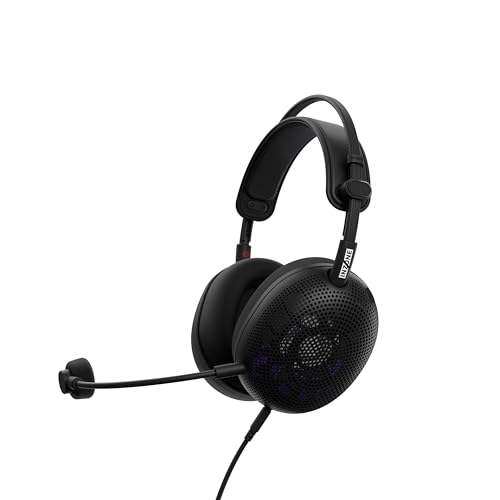
The inzone h6 air is the INZONE product that sounds like it was designed by Sony’s headphone division rather than its gaming division — because in every way that matters, it was. The verified listing describes a wired open-back gaming headset with a microphone, in black, built ultra-lightweight for all-day comfort, with a detachable high-fidelity microphone, an audiophile brief, and a USB-C audio box in the chain, for PC, PS5, and mobile. Open-back is the phrase to hold onto. Almost every gaming headset ever sold is closed-back, sealing the ear in a cup; an open-back design lets air and sound pass through the earcup grille, trading isolation for a spacious, natural soundstage and ears that never overheat. This guide examines what that trade means for gaming, for music, and for the shared rooms most people actually play in — and compares the H6 Air with Sony’s own closed wired H3 and wireless flagship H9, the two alternatives its buyers genuinely weigh.
To understand the H6 Air you have to understand the grievance it answers. Gaming headsets evolved in loud environments — tournaments, shared bedrooms, open-plan offices — and their design language of sealed cups, heavy clamp, and noise isolation is a response to noise. But a large population of players games in a quiet room, alone or with considerate company, and for them the sealed headset’s virtues are wasted while its costs are paid in full: the hot ears by hour two, the pressure headache, the soundstage that feels like the game is happening inside a cupboard inside your skull. Audiophile headphones solved this decades ago with open backs, at the price of leaking sound in both directions. The H6 Air is Sony betting that the quiet-room gaming population is now large enough, and grown-up enough in its tastes, to want the audiophile answer with a gaming microphone attached. This guide tests that bet from every side: soundstage, leakage, the USB-C audio box, the microphone, and the long-session comfort that is the design’s deepest claim.
One expectation should be set before the details begin. Open-back is not better sound in the abstract; it is a different physical arrangement with a characteristic set of gifts and debts. The gifts are space, air, natural tonality, and comfort across hours. The debts are leakage — your game is audible to the room, and the room is audible to you — and a low end that arrives with less physical pressure than a sealed cup produces. A buyer in the right room experiences the H6 Air as a revelation. A buyer in the wrong room experiences it as a puzzlingly expensive way to hear their household. This guide is organised to tell you which room you have, because that single fact predicts satisfaction with this headset more reliably than any measurement of the headset itself.
Key takeaways
- Open-back earcups deliver a wide, natural soundstage and cool ears — and leak sound in both directions by design
- Ultra-lightweight construction plus no clamp-heavy seal makes it the long-session INZONE
- The USB-C audio box puts a dedicated conversion stage in the chain for PC, PS5, and mobile
- The detachable high-fidelity microphone keeps the component option open for streamers and callers
- Buy it for a quiet room; in a loud shared space, the closed H3 or the noise-cancelling H9 in this guide are the honest answers
Where to buy the Inzone H6 Air
The linked listings in this guide go to Amazon, and each product section carries a plain link so you can check price on Amazon and confirm the listing before ordering. For the H6 Air, confirm the listing names the H6 Air specifically — Sony’s INZONE H-series contains the H3, H5-class models, H7, and H9 in overlapping price territory, and the Air’s open-back design is unique enough that a substituted model is a completely different product. Confirm the contents include the headset, the detachable microphone, and the USB-C audio box, since the box is part of the intended signal chain rather than an accessory. The finish of the verified listing is black. If the H6 Air is unavailable in your region, the alternatives section maps the H3 and H9 honestly so you can see which of the Air’s virtues each substitute keeps and which it surrenders.
In this guide
Quick picks at a glance
| Product | Design | Best for |
|---|---|---|
| Sony INZONE H6 Air | Wired open-back, ultra-lightweight | The subject of this guide: quiet-room players who want space and all-day comfort |
| Sony INZONE H3 | Wired closed-back | Shared rooms and budgets that need isolation from a wired Sony |
| Sony INZONE H9 | Wireless closed-back with noise cancelling | Loud environments and wireless freedom at flagship level |
How these picks were chosen
All three headsets were verified against Amazon’s catalogue data before this guide was drafted: each listing title had to name the exact model, describe the design the guide discusses, and carry an official product image. The comparison is structured as one question in three forms — how much isolation do you need, and what will you pay for its absence or its presence? The H6 Air, the H3, and the H9 are the same brand’s answers at three points on that single axis, which makes the comparison unusually clean: drivers and tuning philosophies differ, but the buyer’s real decision is environmental. Products outside the family are discussed in prose where they illuminate the open-back choice, but they are not linked, because they could not be verified to this guide’s standard and because the Sony ladder answers the question completely.
Open-back sound: what actually changes
Close your eyes with a closed headset and a game sounds like a very good recording happening in a small, well-treated room inside your head. Open the backs and the room’s walls move outward: sounds acquire distance and air, the centre image steps forward out of the skull, and the whole presentation relaxes into something the brain accepts as a place rather than a feed. The mechanism is partly the absence of cup reflections colouring the sound and partly the simple fact that your ears remain in acoustic contact with the real room, so the game’s space blends with your space instead of replacing it. For competitive play the consequence players report most is localisation comfort: cues sit in a wider, more natural field, and judging whether a sound is near or far — historically the weak point of all headphone gaming — becomes easier to trust. For cinematic play the consequence is scale without pressure: a battlefield sounds large because it is presented largely, not because it is presented loudly.
The tonal consequences follow from the same physics. An open back cannot trap and pressurise low frequencies the way a sealed cup does, so the H6 Air’s bass arrives as tone and texture rather than as thump against the eardrum. Explosions sound enormous in space and modest in impact. Whether that is a loss depends entirely on your taste in games: the player who wants a grenade to feel like a punch will call it lean, and the player who wants to hear the footsteps after the grenade will call it correct. The midrange and treble, freed from cup colouration, take on the naturalness the listing’s audiophile language points at — voices, acoustic instruments, and environmental detail sound like themselves. This is also why the headset moonlights for music better than any closed gaming headset in this guide: music was mixed for rooms and speakers, and an open headphone is the closest a headphone comes to that original geometry.

Sony INZONE H6 Air Wired Open-Back Gaming Headset
Badge: The main pick — the audiophile’s gaming headset
- Design per the verified listing: wired open-back gaming headset with microphone, black
- Comfort brief: ultra-lightweight for all-day comfort
- Microphone: detachable, high-fidelity
- Signal chain: USB-C audio box included; platforms: PC, PS5, and mobile
- Character: audiophile-leaning tuning in a gaming product
Comfort is where the Air’s design converges into a single argument. Open backs remove the seal, so there is no pressure chamber against the ear and no heat trap; ultra-lightweight construction removes the neck’s share of the burden; and a gaming headset’s clamp can relax because it is no longer responsible for isolation. The compound effect across a long day is difficult to overstate for players who have only known closed headsets: the H6 Air is the headset you put on for a morning session and discover, at dinner, that you have worn through three separate activities without the small accumulating grievances — hot ears, a tender crown, jaw pressure — that usually ration gaming time. For work-from-home players who game at the same desk, it doubles as the rare headset that can stay on through calls and music without becoming the thing you are enduring. Comfort of this order is not a luxury feature; it is the feature that decides how much of a headset’s sound quality you ever actually get to use.
The USB-C audio box deserves explanation because it is easy to mistake for a mere adapter. In the chain between a console, PC, or phone and the headset, something must convert digital audio to the analogue signal the drivers consume, and where that conversion happens decides its quality. A controller’s jack and a phone’s internals do the job to their own standards; a dedicated audio box does it to Sony’s, with the gaming features of the INZONE line — spatial processing support and voice/game balance in the ecosystem’s pattern — riding in the same unit. Practically, it also solves the modern socket problem elegantly: one USB-C connection serves the PC, the PS5, and the phone in your pocket, and the headset itself stays a simple analogue device that will work with anything, forever, through any future adapter. That separation of concerns — smart box, honest headset — is the same component philosophy Sony applies in its stage monitors, and it ages far better than intelligence baked into a battery-powered shell.
The detachable microphone completes the brief with the same philosophy. For team play it is present, positioned, and described by its maker as high-fidelity — and in a quiet room, which is this headset’s habitat, a microphone does not need heroic noise rejection because there is little noise to reject, so its quality can go toward clarity instead. For music, calls where you would rather use another microphone, or a broadcast setup with a desk microphone, it detaches and the H6 Air becomes a pair of open-back headphones with a gaming pedigree. That dual citizenship is the product in one sentence: it refuses to choose between the audiophile’s listening life and the gamer’s playing life, and it pays for the refusal with the one currency this guide keeps naming — isolation, which its intended owner does not need.
Strengths
- The widest, most natural soundstage in the INZONE line, with localisation you can trust
- All-day comfort from light weight, open backs, and no seal pressure or heat
- Doubles as a genuinely musical headphone, not just a gaming peripheral
Trade-offs
- Leaks sound both ways: unsuitable for loud rooms, shared quiet spaces, and late-night thin walls
- Bass arrives as texture rather than physical impact, which cinematic players may miss
- Wired, with a cable and audio box to manage, in a wireless-drifting market
Best for: quiet-room PC and PS5 players, long-session comfort seekers, and music lovers who game. Not suited for: shared loud spaces, competitive play in noisy venues, or anyone whose household will hear every match.

Sony INZONE H3 Wired Gaming Headset
Badge: The closed-back wired alternative
- Design per the verified listing: wired over-ear gaming headset with microphone, white
- Sound: personalised 360 Spatial Sound for gaming
- Certification: Discord Certified, per the listing
- Comfort brief: long-wear comfort design; boom microphone
The H3 is the H6 Air’s mirror image and the correct purchase for the rooms the Air cannot serve. Its closed-back cups seal the game in and the household out, which in a shared living room, a student house, or a bedroom next to a sleeping partner is not a feature but the whole product. It keeps the family essentials — 360 Spatial Sound for gaming, a boom microphone with Discord certification behind it, a long-wear comfort brief, and a wired connection that asks nothing of batteries — at the family’s most accessible point. What it surrenders is exactly the Air’s territory: the soundstage narrows into the familiar in-head presentation, the ears warm across a long evening, and music sounds like a gaming headset playing music rather than like a headphone. None of that makes it a lesser product; it makes it the honest tool for noisier lives. Buyers hesitating between the two should not compare sound quality in the abstract at all — they should compare their room at 9 p.m. on a weekday against each design’s assumptions, and let the room vote.
Strengths
- Closed-back isolation suits shared and noisy rooms
- The family’s spatial sound and certified voice at its most accessible price position
- Wired simplicity with no battery or pairing management
Trade-offs
- Narrower, in-head soundstage than the open-back Air
- Sealed cups warm up across long sessions
- Less convincing as a music headphone
Best for: shared rooms, student houses, and budget-conscious Sony loyalists. Not suited for: quiet-room listeners chasing soundstage and all-day airiness.

Sony INZONE H9 Wireless Noise Cancelling Gaming Headset
Badge: The wireless flagship alternative
- Design per the verified listing: wireless over-ear noise-cancelling gaming headset, black
- Connection: 2.4GHz wireless; platforms: PC, PS5, Switch, and mobile
- Battery: up to 32 hours per the listing
- Sound: 360 Spatial Sound; Discord Certified
The H9 answers the noise problem with technology rather than with a seal alone: active noise cancelling that erases the room’s low roar — fans, traffic, a household in motion — while its wireless connection removes the cable from the equation entirely. It is the flagship expression of the closed philosophy, with the battery life to sustain long days and the spatial sound the family is known for. Against the H6 Air the contrast is philosophical. The H9 builds you a private room wherever you are; the Air assumes you already have one and spends everything on what happens inside it. Players in genuinely loud environments, players who move between couch and desk, and players for whom a cable is a daily irritation should buy the H9 without a backward glance. Players in quiet rooms should notice that they would be paying flagship money to cancel a silence they already own, while giving up the open soundstage and the featherweight comfort that are the Air’s whole reason to exist.
Strengths
- Active noise cancelling makes any environment playable
- Wireless freedom with long battery life across PC and console
- Flagship build and the family’s full spatial sound treatment
Trade-offs
- Heavier, warmer, and clamp-dependent like every closed wireless flagship
- Battery ageing sets the product’s lifespan clock
- Its premium buys isolation a quiet room makes worthless
Best for: loud homes, couch-and-desk players, and wireless devotees. Not suited for: quiet-room audiophile-leaning players, who are the Air’s constituency.
Three INZONE philosophies compared
| Headset | Back design | Isolation strategy | Connection |
|---|---|---|---|
| H6 Air | Open | None — by design | Wired via USB-C audio box |
| H3 | Closed | Passive seal | Wired |
| H9 | Closed | Active noise cancelling | 2.4GHz wireless |
Read the table as a question about your room wearing a product comparison’s clothes. The three headsets share a brand, a spatial sound story, and a gaming brief; they diverge on the single axis of how the world outside the game is handled. Admit the world, seal it out passively, or erase it actively — each answer is correct in the environment it assumes and quietly miserable in the others. This is why the guide refuses to rank them: ranking assumes one room, and you do not live in the review’s room. Readers still deciding may find it useful to compare gaming headsets with surround sound across brands once their own room has cast its vote.
Buying guide: is your room an open-back room?
Answer three environmental questions before any product question. First, who else can hear you play, and who can you hear? A partner asleep in the next room with thin walls, a baby in the same room, housemates studying at the same table — each is a vote for a closed design, and they outvote soundstage every time, because a headset that cannot be used at your normal playing hours is not a headset you own in any useful sense. Second, how loud is your room at playing time, honestly measured across a week rather than in a quiet moment? A PC with aggressive fans, a window on a busy road, a boiler cupboard behind the desk — steady noise sources are what active cancelling and sealed cups exist to defeat, and an open back admits them all into your game’s quiet moments. Third, how long are your sessions, and what ends them? If the honest answer is that your current headset’s heat or weight ends more sessions than your schedule does, the Air’s comfort argument stops being a preference and becomes the deciding specification.
Then consider your second life for the headset, because the Air’s dual citizenship is a real part of its value. If the same purchase must serve music listening at a desk, video calls, and general headphone duties, the open-back’s musical naturalness and the detachable microphone make it the only one of the three that a headphone person would choose for the non-gaming hours — and for many buyers the non-gaming hours are the majority. If, instead, the headset will live exclusively in a gaming station, judge it purely as gaming equipment and let the H3’s isolation or the H9’s wireless argue their cases. Finally, remember the source chain: the included USB-C audio box means the Air arrives with its conversion handled, so the buying decision does not need to budget a DAC to hear it properly — one of the quiet ways its total cost is lower than its ticket suggests when compared with audiophile open-backs that assume a stack you may not own.
How to set up the Inzone H6 Air
Step 1: Connect through the audio box first
Make the USB-C audio box your default connection on PC, PS5, and mobile, since it carries the conversion and the INZONE feature set the headset was designed around. Keep the direct analogue connection as your fallback for devices the box does not suit. Whichever route you use, seat every connector fully — a half-seated USB-C is the modern version of the classic one-ear mystery.
Step 2: Fit for air, not for seal
Adjust the headband so the cups rest on your ears with the lightest pressure that keeps them stable when you turn your head. Open-back fit is a different skill from closed-back fit: you are not chasing a seal, so resist the instinct to clamp down. If the headset feels almost suspiciously unnoticeable in the first minute, you have fitted it correctly — that unnoticeability is the product.
Step 3: Set spatial sound and the game/voice balance
Enable your platform’s spatial audio for headsets, then use the INZONE ecosystem’s balance controls to set game and chat levels with a teammate’s help. Open-back headsets present voices in the mix with unusual naturalness, so resist over-boosting chat out of closed-headset habit; start from equality and adjust in small steps across a session rather than in the menu before one.
Step 4: Learn your leakage radius honestly
Play a loud scene at your normal volume, take the headset off, and listen from where your household actually sits — the sofa, the doorway, the next room with its door in its normal position. Knowing your real leakage radius lets you schedule and set volumes like an adult: full volume for the afternoon session, a notch or two down for the evening, and no surprises for anyone. This five-minute experiment prevents the only social problem this design can cause.
Step 5: Settle the microphone’s two lives
Decide where the detachable microphone lives when it is off the headset — a specific drawer, a hook by the monitor — because a detachable part without a home becomes a lost part by the second month. Test the headset in its headphone mode for music and calls so both of its lives are configured before you need them. Desk neighbours in this cluster include the 480Hz OLED gaming monitor and competitive gaming keyboards.
Common mistakes with open-back gaming headsets
The first mistake is buying one for a room it cannot work in — a loud, shared, thin-walled space — and then blaming the design for physics it advertised on its own listing. The second is judging the bass in the first action scene against a closed headset’s memory and returning the Air before a single quiet, detailed game has shown what the trade bought. Third, owners clamp the fit as if chasing a seal and recreate the pressure the design exists to remove. Fourth, forgetting that leakage runs both ways during voice chat: a loud television in the room will reach your microphone and your teammates, because the microphone lives in the same open air as your ears. Fifth, using an open-back at full volume beside a sleeping household and concluding the product is antisocial, when the leakage-radius experiment in the setup steps exists precisely to calibrate that behaviour in advance.
Music, films, and the second life of an open-back headset
It is worth dwelling on the music case, because for a large share of buyers it will quietly become the primary case. Open-back headphones are the default recommendation of the hi-fi world for home listening for the same reasons rehearsed throughout this guide: space, air, natural tone. The H6 Air brings that presentation to a product with a gaming microphone and a gaming price position, which collapses what used to be two purchases — a gaming headset and a listening headphone — into one for the quiet-room owner. Acoustic, jazz, classical, and live recordings benefit most; electronic and hip-hop listeners will feel the bass trade most; everyone benefits from ears that stay cool through a whole album. Films at a desk or in a bedroom gain the soundstage’s scale and lose the explosions’ physicality, a trade most dialogue-driven viewing wins easily. The pattern to notice is that the Air’s second life is not a consolation for its gaming compromises — it is the same virtues, recognised by a different hobby. Buyers whose listening hours outnumber their gaming hours should weigh this section as heavily as any FPS paragraph in the guide.
The soundstage idea, explained for headset natives
Players who have only ever used closed gaming headsets sometimes struggle to evaluate an open-back’s party trick because they have no reference for it, so a plain description is owed. In a closed cup, the game’s audio is injected into a sealed volume a centimetre from your eardrum, and your brain — which locates sounds by comparing what arrives at two ears set in open air — receives a signal with almost none of the environmental information it evolved to use. Processing can simulate width, and good closed headsets simulate it well, but the simulation is drawn on a small canvas. An open back enlarges the canvas physically: the drivers work into open air, your ears keep their natural acoustic relationship with the room, and the game’s sounds present with the spatial cues of distance and direction far less translated. The subjective report is consistent across decades of hi-fi listeners encountering their first open headphone: the sound stops being a performance for your eardrums and becomes a place you are sitting in. Games, which are literally simulated places, benefit from that shift more than almost any other content — a corridor sounds like a corridor’s length, a battlefield like a field. That is the entire technical romance of this product, and it is why its owners become evangelical in a way closed-headset owners rarely do.
Glasses, hair, hats, and other real-world fit questions
The Air’s comfort case strengthens further in the details of actual heads. Glasses wearers are the clearest winners: a closed headset’s seal depends on pads pressing over spectacle arms, which breaks the seal, tilts the glasses, and aches by the hour, while the Air’s light, unsealed contact barely acknowledges the frames exist. Players with long or thick hair, which defeats headband adjustment and pad seals alike, find the same indifference working for them. Streamers who wear caps, players in warm climates, and anyone whose scalp simply runs hot all meet a headset that does not treat their biology as an edge case. The one fit constituency the Air does not specially serve is the very active player — the VR-adjacent mover, the standing-desk swayer at maximum enthusiasm — because a light, relaxed fit is a calm fit, and vigorous movement is the closed clamp’s last honest argument. For the seated, settled, long-session player the Air was drawn for, its fit is less a specification than a relief.
Work, calls, and the nine-to-five life of a gaming headset
Since the pandemic rearranged desks permanently, a gaming headset’s weekday hours often exceed its gaming hours, and the Air is unusually qualified for the double shift. Its open backs keep you connected to your own home — a doorbell, a child, a kettle are audible rather than sealed out — which many home workers actively prefer to the sensory deprivation of cancelling headsets during the working day. Its microphone handles the call schedule with the clarity its listing promises, and its comfort brief was written for exactly the eight-hour wear pattern that work imposes and gaming merely borrows. Its appearance, microphone detached, is a pair of black headphones that no client will remark on. There is even an argument that the open design is the socially correct choice for a shared home office: you can hear your name called without a tap on the shoulder that makes both parties jump. Products are rarely honest about their second jobs; this one’s second job may be the reason a plurality of its owners would give for buying it again.
Longevity: the wired, battery-free argument one more time
Every wireless headset carries an expiry date written in electrochemistry, and every closed headset carries a wear schedule written in pad foam and hinge plastic. The H6 Air’s ageing profile is gentler than both, and it is worth stating why, because longevity is where its price quietly justifies itself. There is no battery to fade, no firmware ecosystem to be abandoned, no proprietary wireless dongle to lose compatibility with a future console. The headset itself is an analogue transducer — the most durable category in all of consumer audio, with quality examples routinely serving for decades — and its intelligence lives in a small replaceable USB-C box rather than in the shell. Its wear items are the honest ones: ear pads that will eventually want replacing, a cable that should be routed kindly, a detachable microphone whose connector wants the same care as any small connector. An owner who treats those three kindly owns a headset whose sound in year five is its sound in week one. In a product category that has trained buyers to expect a three-year replacement cycle, that is not a minor virtue; compounded across a decade, it is the cheapest headset in this guide to own per hour of use.
A short decision framework
Ask your room three questions and yourself one. Room first: at your normal playing time, is your space quiet enough that you can hear a conversation through your door — and is there nobody on the other side of the wall who would object to hearing your game at the level of a quiet television? If either answer is no, the closed models in this guide are your shortlist and this section is your permission to stop reading comparisons. If both answers are yes, ask how your sessions end: if heat, weight, or pressure ends them before your schedule does, the Air is not merely suitable but specifically corrective, and it should be bought for that reason alone. Finally ask yourself the taste question: do you listen to music on headphones at home, and do you value space and naturalness over impact? A yes makes the Air two products in one purchase. A no, with quiet room and long sessions, still leaves the Air ahead on comfort — it merely makes the margin honest rather than enormous.
Genre notes: where the Air’s soundstage earns its keep
Open-world games are the showcase genre, because their sound design is architectural: towns with layered ambience, weather systems, wildlife at judged distances, interiors that should sound smaller than the fields outside them. The Air renders those judgments of scale natively, and exploration games become measurably more immersive without a single decibel of extra volume. Horror benefits inversely — its scares are spatial, and an open soundstage places the thing behind you with a credibility that can be genuinely unsettling at midnight, which players should consider a feature and the household’s light sleepers may not. Simulation and strategy titles, with their long hours and gentle soundscapes, exploit the comfort more than the stage, and are where the Air’s all-day brief converts into performance across a campaign. Competitive shooters have been covered: superb in quiet rooms, disqualified in loud venues. Racing titles split the difference — engine and environment detail is beautifully natural, while the sub-bass theatre of a closed cup is missed by players who drive by feel as much as by ear. The through-line, once again, is information over impact, space over pressure — a doctrine the buyer should recognise as their own taste before the box is opened.
Film and series viewing at the desk follows the music pattern: dialogue is effortless, scores have room to breathe, and the biggest action sequences trade physical slam for spatial coherence. For a bedroom or study screen — the second television that so many of these headsets end up serving — that trade is usually the right one, because bedroom viewing happens at civilised volumes where slam was never available anyway and clarity was always the point.
One audience deserves a direct address before the verdict, because reviews of gaming headsets rarely speak to them: older players, returning players, and players whose gaming began before headsets were gaming-branded at all. Many of them own, or remember, the open-back hi-fi headphones of an earlier era and have watched the gaming market sell their children sealed plastic ever since. The H6 Air reads, to that audience, less like a novelty than like the industry remembering something it knew. If your reference for headphone sound was set by a good open-back in a quiet room, this headset will feel like a homecoming with a microphone attached, and no amount of closed flagship processing will talk you out of the recognition.
Couples who game together in the same room form a smaller, happier niche for this design than any marketing would predict: two open-back headsets let two players hear their own games and still talk to each other like humans in a room, without the raised-voice-through-sealed-cups pantomime that closed headsets impose on shared play. It is an odd, specific domestic bliss, and owners who discover it tend to mention it before they mention the soundstage.
Pet owners, improbably, report a version of the same benefit: a dog’s request, a cat’s mischief, a knock at the door all remain audible through an open back, so the headset never quite removes you from the household you are responsible for. Sealed and cancelling headsets make better escapists; the Air makes a better resident. Which of those you need at 9 p.m. is a question about your life, and this guide’s consistent advice is to let your life, not a frequency graph, answer it.
Students in quiet single rooms — the classic dormitory of one — are another natural constituency, provided the walls and the neighbours are as described in the buying guide’s questions. For them the Air replaces a gaming headset and a listening headphone and a call headset in a single purchase that fits a student budget’s total-cost logic better than three mediocre specialists would, and it will still be working, unchanged, at graduation.
A final practical note on volume habits, because open-back listening changes them for the better: with no seal to overcome and no room noise to defeat, most owners settle at lower listening levels than they used with closed headsets, and their ears end long sessions fresher for it. Lower volume plus zero heat plus negligible weight is a compound comfort that no single specification captures, and it is the thing owners are actually describing when they call this headset effortless.
Desk setup aesthetics, a factor buyers pretend not to weigh and always do, also favour the Air more than its siblings: an open grille and a featherweight frame read as hi-fi equipment rather than as gaming apparatus, which matters in the adult, multi-use rooms where this headset will spend its life. It is the rare gaming product that a minimalist desk absorbs without apology.
And the second-hand outlook closes the ownership argument as it did for the stage monitors elsewhere in this cluster: a wired analogue headset with a replaceable smart box holds its value and its usefulness across owners, because there is no battery odometer ticking inside it. A used H6 Air in good order is most of a new one in a way no used wireless flagship can claim, which makes both buying used and selling on unusually civilised options here.
Buyers upgrading from a beloved old open-back hi-fi headphone, finally adding a microphone for the gaming years, will find the transition nearly seamless: the same air, the same stage, a boom where the silence used to be. That continuity — one listening life, uninterrupted by a change of hobby — may be this product’s most quietly radical offer.
The reverse journey is equally common and equally painless: the gamer who discovers, through this headset, that they are also a headphone listener, and whose music hours quietly overtake their gaming hours within a year. The Air does not mind which of its two lives you live more. It was built, unusually, for both at once.
Keep the pads clean, route the cable kindly, give the detachable microphone a home, and the headset will repay the small courtesies for years — the complete maintenance philosophy of a product with no software to update and no battery to nurse.
One last scenario for the undecided: the home with one quiet study and one loud everything-else. Buy the Air for the study without hesitation and keep whatever sealed headset you already own for the sofa. Headsets, like rooms, are allowed to specialise — and a two-headset household sounds extravagant only until it is compared with the price of one flagship that compromises in both rooms.
That specialisation, honestly, is the mature stage of any hobby’s equipment: not one product pretending to be universal, but the right tool kept in the right room. The Air is a specialist that knows its room completely, and within that room it has no serious rival in its own family.
Judge it there — door closed, evening settling, a game you love unfolding in a space that finally sounds as large as it looks — and the Air’s argument makes itself in the first hour.
Few products in this cluster reward the right environment as completely, or punish the wrong one as predictably — which is precisely what makes the buying decision, once the room has been honestly assessed, so unusually easy.
Trust the room’s verdict, whichever way it falls, and you will end up with the right Sony on your head.
That, in one sentence, is the whole review.
Everything else here is evidence for it.
Final recommendation
The INZONE H6 Air is the right headset for a specific and growing kind of player: the quiet-room, long-session, music-loving gamer who has been enduring closed headsets out of habit. For that player it offers the INZONE line’s most natural sound, its most forgiving comfort, and a component elegance — detachable microphone, separate audio box, honest analogue headset — that will outlast several console generations. If your room is loud or your walls are thin, buy the H3 for its seal or the H9 for its cancelling and wireless, and do not let anyone tell you the open-back was the audiophile’s correct answer; in your room it is not an answer at all. The H6 Air’s excellence is conditional, and the condition is a door you can close. Behind that door, it is superb.
Frequently asked questions
How much sound does the Inzone H6 Air leak?
Enough that a person in the same quiet room will follow your game’s broad shape — explosions, music, raised voices in cutscenes — without hearing fine detail, and enough that a closed door reduces it to a murmur. Think of it as a television playing at low volume in reverse: fine in a living space, inconsiderate beside a sleeper. The leakage-radius test in the setup section turns this from a guess into a number for your own home, and most owners find the reality more manageable than the fear of it.
Is the bass weak on an open-back headset?
It is different in kind: present, textured, and honest, but without the pressurised thump a sealed cup delivers to the eardrum. Players raised on closed headsets often describe the first hour as lean and the second week as correct, because the brain recalibrates to tone over impact. If your favourite games and music are built on physical low-end sensation, audition before buying or keep a closed headset for those titles; if your taste runs to detail and space, the Air’s low end will read as a virtue from the first evening.
Why does it include a USB-C audio box?
Because something must convert digital audio to analogue, and the box does it under Sony’s control rather than leaving it to a controller jack or a phone’s internals. It also unifies the connection across PC, PS5, and mobile, and carries the INZONE feature support the headset is designed around. The headset itself remains a standard analogue device, which is why it will still work with future equipment long after today’s USB standards have been revised — the intelligence lives in a replaceable box, not in the headphones.
Can I use it for competitive FPS play?
Yes — in a quiet room it is arguably the line’s best competitive tool, because its soundstage makes distance and direction judgements more natural and its comfort survives tournament-length days. The condition is the venue: a loud LAN hall or a noisy team house defeats the open design, and there the H9’s cancelling is the professional choice. Home-based competitive players, who are now the majority of competitive players, are exactly the Air’s constituency.
Does the microphone work for streaming and calls?
It is designed and described as a high-fidelity detachable microphone, and in the quiet rooms this headset is built for, it serves team chat, calls, and casual streaming with clarity — a microphone’s hardest enemy is room noise, and the Air’s habitat has little. Serious streamers will eventually graduate to a desk microphone, at which point the H6 Air’s detachable design becomes the feature: remove the boom, keep the headphones, and the headset’s second life begins without a new purchase.
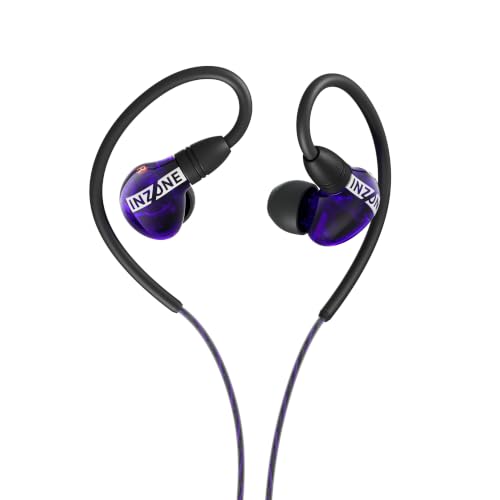
How does it compare with the INZONE E9 in-ears?
They are opposite answers to the same discomfort with ordinary headsets. The E9 removes the headset entirely — in-ears, total seal, no microphone — for competitive players with component setups. The H6 Air keeps the over-ear form but opens it, retaining a microphone and gaining space and air at the cost of isolation. A player who wants silence from the room chooses the E9’s seal; a player who wants the room and the game to coexist chooses the Air. Reading the INZONE E9 guide in this cluster alongside this one makes the fork clear.
Can I use it on a plane or train?
Physically yes, socially and practically no — and the reasons are this guide’s whole thesis in miniature. On a train your game leaks to the carriage and the carriage leaks into your game, while a sealed or cancelling headset gives you a private room. Travel is the closed design’s home fixture, exactly as the quiet study is the Air’s. Keep the Air for the destination, where a hotel room at midnight is precisely its habitat, and travel with something sealed.
Does it work without the audio box?
The headset is an analogue device and will work through a standard connection where one is available; the audio box is the intended and best route on its named platforms because it carries the conversion and feature support under Sony’s control. Think of the box as the headset’s DAC and the analogue path as its insurance policy — the guarantee that no future socket change can orphan a pair of headphones whose only demand is an analogue signal.
Related guides
Continue with the best gaming headsets overall, the wired in-ear alternative in this cluster, and Sony’s stage monitors for the music side of your desk.