Disclosure: As an Amazon Associate, reviewstook.com earns from qualifying purchases. Links on this page are affiliate links; they cost you nothing extra. Prices and availability change often, so check the current Amazon listing before you buy.
The hd 480 pro search is a small lesson in how headphone names travel. Shoppers type it looking for an affordable closed-back studio headphone — a tool for tracking, monitoring and everyday production work that does not cost reference-headphone money. What the current Amazon catalogue actually offers under that name, verified for this article through the retailer’s own product data, is a listing titled “HD 480 PRO Plus Professional Closed-Back Studio Headphones”. This review takes that listing at face value and on its own terms: it assesses the HD 480 PRO Plus as the budget closed-back workhorse it presents itself as, explains where the “Plus” naming leaves the plain-name searcher, and sets the headphone against two verified alternatives from the studio shelf — one a long-running budget classic, the other a modern reference model — so you can see exactly what each step up the price ladder buys.
Key takeaways
First, the naming: the product you can verify and buy today is the HD 480 PRO Plus, a closed-back studio headphone in black, and this article reviews that product under its exact listing name rather than pretending a differently-named model stands behind the link. Second, the job: closed-back studio headphones exist to isolate — to keep the click track out of the microphone and the room out of your ears — and a budget model should be judged on isolation, durability, comfort over a session and a tuning honest enough to work with, not on audiophile romance. Third, the ladder: the HD 280 Pro remains the budget benchmark with decades of studio service behind it, and the HD 490 Pro shows what modern reference money buys; the HD 480 PRO Plus makes its case as the accessible entry point to that same working category, for buyers whose budget is the deciding fact.
In this guide
HD 480 Pro in depth: the verified listing reviewed

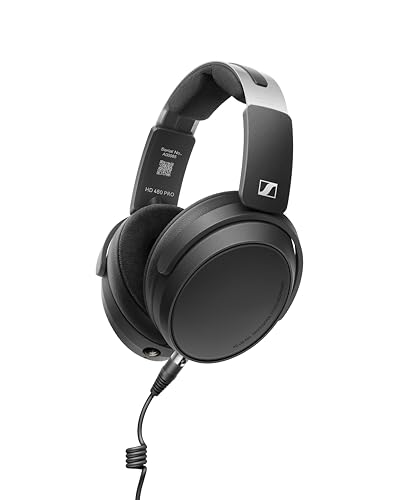
HD 480 PRO Plus — the budget closed-back for tracking and everyday studio work
Badge: Best for beginners and home recordists who need isolation on a budget
- Type: closed-back studio headphones (per the verified listing)
- Role: professional monitoring positioning — tracking, recording and everyday production
- Colour: black (per the verified listing)
- Listing name: HD 480 PRO Plus — see the naming discussion in this review
Start with the closed back, because it is the product’s entire argument. A closed-back headphone seals the ear inside a cup that resists sound travelling in either direction: the backing track stays out of the vocal microphone, and the room — the computer fan, the household, the street — stays out of the performer’s concentration. That is why closed-backs, and not their open-backed siblings, are the headphones that live in recording spaces, and why a budget closed-back is one of the most genuinely useful purchases a home recordist makes. The HD 480 PRO Plus presents itself squarely in that tradition: a professional-positioned closed-back studio headphone at the accessible end of the market, in the sober black that studio tools wear.
Judged as a working tool, the questions that matter are practical ones. Isolation first: a closed design at this level gives the working separation tracking needs — enough that a singer can ride a loud guide track without it printing onto the vocal take at normal levels. Comfort next: tracking sessions run long and repeat takes multiply them, so a headphone that clamps moderately, pads adequately and stays tolerable across an afternoon is worth more than a marginally better-sounding one that becomes a headache by the second hour; budget studio headphones live or die on this unglamorous axis, and buyers should weight it accordingly. Durability follows: studio tools are dropped, sat on, cable-yanked and case-less, and the value of a budget model is partly that its replacement cost does not sting — it is the headphone you hand to a guest vocalist without a speech about being careful.
On tuning, set the expectation the category teaches: a working closed-back aims for clarity and presence in the ranges where tracking decisions live — the voice, the click, the cue mix — rather than for the wide, relaxed soundstage of an open-back listening headphone. For the beginner building a first recording setup, that is the correct set of priorities, and it doubles happily for the everyday second jobs these headphones always acquire: video editing, podcast monitoring, gaming in a shared room, and late-night listening that must not leak into the next room. What it is not is a mixing reference: final mix decisions deserve a flatter, better-known tool, and the alternatives below map that upgrade path honestly.
Strengths
- Closed-back isolation serves the tracking job the category exists for
- Accessible positioning makes it a rational first studio headphone and a guilt-free spare
- Sober, tool-like design suits studios, classrooms and shared workspaces
Trade-offs
- The listing’s “Plus” naming means buyers must read the exact title to know what they are ordering
- Budget closed-backs are working tools, not mixing references or audiophile listening instruments
- Specification detail in the listing is thinner than the established models it competes with
Best for: home recordists, podcasters, students and beginners who need an isolating studio headphone on a budget. / Not suited for: mixing engineers choosing a reference, or listeners shopping for an open, spacious sound.
The benchmark it must answer: HD 280 Pro

Sennheiser HD 280 Pro — the budget studio classic
Badge: Best for buyers who want the proven budget standard with deep attenuation
- Type: closed-back studio and live monitoring headphones (per the verified listing)
- Isolation: up to 32dB attenuation (per the verified listing)
- Cable: coiled cable (per the verified listing)
- Roles named in the listing: monitoring, recording and fieldwork
Any budget closed-back is measured, fairly or not, against the HD 280 Pro, because Sennheiser’s model has been the default inexpensive studio headphone for so long that its sound and its quirks are a shared reference among engineers. The verified listing states its case plainly: closed-back monitoring with attenuation rated up to 32dB — strong isolation by the standards of passive headphones — a coiled cable that stretches across a studio without trailing, and a brief spanning the studio, live monitoring and fieldwork. Its tuning is the working kind: present and analytical rather than flattering, which is why generations of recordists have trusted it to reveal a bad take. Its comfort is the known compromise — the clamp that helps the isolation is felt across long sessions, and owners either adapt or pad. Against the HD 480 PRO Plus, the 280’s argument is certainty: known sound, known spares, known behaviour, a product whose manual is the collective memory of the internet. A buyer choosing between them is choosing between the established standard and the newer accessible alternative, and the honest deciding factors are the day’s prices, the fit on your own head, and how much weight you give a track record measured in decades.
Strengths
- Strong passive attenuation makes it a tracking and fieldwork staple
- Decades of service mean known behaviour, available spares and endless user knowledge
- Coiled cable and folding practicality suit working environments
Trade-offs
- Clamping force that aids isolation can tire the wearer over long sessions
- Analytical tuning is a tool’s tuning, not a listener’s pleasure
- Design and materials reflect its workhorse brief rather than any luxury ambition
Best for: recordists and field workers who want the proven budget standard. / Not suited for: listeners wanting a relaxed, spacious sound, or wearers who know strong clamp bothers them.
What the step up buys: HD 490 Pro

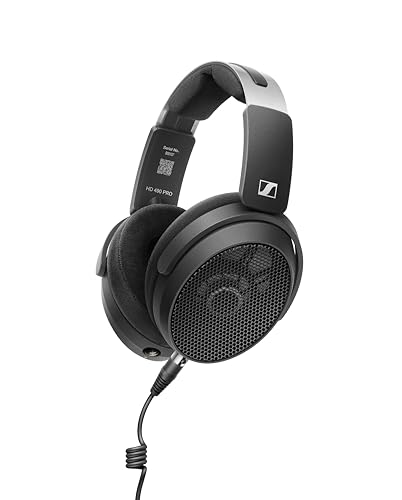
Sennheiser HD 490 Pro — the modern open-back reference
Badge: Best for producers and mixers ready to invest in a reference tool
- Type: open-back reference studio headphones (per the verified listing)
- Cable: 1.8m cable included (per the verified listing)
- Pads: swappable ear pads for mixing and producing voicings (per the verified listing)
- Roles named in the listing: mixing, producing and monitoring
The HD 490 Pro is included in this article not as a rival to a budget closed-back — it is a different tool for a different job — but as the map of where the road leads. Open-backed, reference-tuned and built for the mixing and producing stages where isolation is irrelevant and accuracy is everything, it shows what the money buys when a home recordist graduates: a soundstage that places instruments in space, a tuning designed to translate to other systems, and the thoughtful touch of swappable ear pads that shift the voicing between producing and mixing work. Its verified listing names exactly that brief. The practical lesson for the hd 480 pro shopper is about sequence rather than substitution: tracking first, with an isolating closed-back you can afford now; reference later, when your mixes are good enough that the headphone is the limiting factor. Studios run on that sequence, and a beginner who follows it spends money in the order the work demands.
Strengths
- Open-back reference design serves mixing and producing, the stages closed-backs cannot
- Swappable pads provide two working voicings in one headphone
- Modern build and comfort suit the long sessions reference work requires
Trade-offs
- Open back leaks sound both ways — useless for tracking near a microphone
- Reference money is several multiples of the budget models in this article
- It answers a later question in a recordist’s life than the one this keyword asks
Best for: producers and mixers investing in a reference headphone. / Not suited for: tracking, shared rooms, or budgets at the entry level this article is about.
How this review was put together
The linked products rest on the verified Amazon listings named in the sources file, checked through the retailer’s product data on the date recorded there — including the HD 480 PRO Plus’s exact listing title, which the review quotes and discusses openly instead of silently renaming. The HD 280 Pro’s attenuation figure and the HD 490 Pro’s cable and pad details come from their listing titles on the same basis. Wider judgements — how closed-backs behave in tracking, why clamp and isolation trade against each other, the order in which a recordist should buy tools — are category reasoning from how studios actually work, and no hands-on testing is claimed anywhere in this article. Where a model’s deeper specifications are not established by its listing, the review says what the listing supports and stops there.
The naming question, answered fully
Because the keyword and the listing differ by one word, the difference deserves a complete explanation rather than a footnote. Headphone ranges accumulate names across decades: model numbers get reused in spirit, regional variants appear, and “Plus” editions arrive that share a base model’s brief while differing in bundle, finish or revision. The shopper who typed “hd 480 pro” was almost certainly describing a job — an affordable closed-back studio headphone — rather than reciting a catalogue entry, and the market’s current answer to that job under that name is the HD 480 PRO Plus listing reviewed here. The correct buying behaviour follows: read the exact listing title, confirm the closed-back studio description matches the job you have, and judge the product on the terms the alternatives section sets out. What you should not do is assume the “Plus” is either a meaningful upgrade over a plain model you have never seen, or a deception; it is a name, and the product beneath it is assessable on its own merits, which is what this review has done.
Buying guide: closed-back studio headphones at the budget end
Name the job before the headphone
Studio headphones split by job, and buying the wrong job is the expensive mistake. Tracking — recording a performance while hearing a guide — demands isolation, which means closed-back: the HD 480 PRO Plus and the HD 280 Pro in this article. Mixing and critical listening demand accuracy and space, which means open-back and more money: the HD 490 Pro’s territory. Editing, podcasting and video work sit happily in the closed-back camp, with comfort promoted to first priority. Write your job in one sentence before shopping; the correct shelf chooses itself.
Isolation is a number with a context
Attenuation figures, like the HD 280 Pro’s up-to-32dB listing claim, describe best-case reduction, strongest in the higher frequencies and weakest against low rumble. In practice, any competent closed-back gives a vocalist enough separation to track confidently; the differences between models matter most in loud environments — a drummer’s room, a field recording beside traffic — and least in a quiet home studio. Buy isolation for the loudest room you actually record in, not the loudest you can imagine.
Comfort is a specification you test with time
Clamp force, pad depth, headband padding and weight decide whether a headphone survives your longest session, and none of them appears honestly in a photograph. The budget buyer’s discipline is to weight comfort reports as heavily as sound reports, to remember that pads are replaceable on many working models, and to use the first week of ownership as the test the shop could not give you — a full session, at full length, before the return window becomes a memory.
Cables and connectors: the unglamorous deciders
Studio headphones live on cables. A coiled cable, like the HD 280 Pro’s, suits a fixed workstation; a straight cable suits a performer who moves; a detachable cable, where offered, converts the commonest headphone death — the yanked, frayed lead — into a cheap replacement. Check also the connector story: the studio world speaks in 6.35mm plugs, the laptop world in 3.5mm, and the adapter should be in the box or in your basket, not discovered missing at the first session.
Using a budget closed-back well: a practical how-to
Set levels for the performer, not for yourself
When tracking, the cue mix in the performer’s headphones is a performance tool: the guide loud enough to play against, the performer’s own voice present enough to pitch by, and the overall level capped at a point that protects hearing across a long session. Check for bleed with the microphone live and the headphones at working volume before the first take — thirty seconds of silence recorded through the mic tells you whether the click will haunt the mix.
Break the seal deliberately between takes
Closed-backs isolate so well that a performer can feel sealed off from the room and from you. Build the human rhythm in: headphones off or one cup lifted between takes, talkback or a simple hand signal agreed in advance, and regular breaks where the cups come off entirely. Comfort in a session is social as much as physical, and the best budget headphone is the one embedded in a session that respects both.
Care that keeps a workhorse working
Wipe pads after sessions — they are the wear item and the hygiene item in one. Coil cables loosely rather than wrapping them around the cups, store the headphones on a hook rather than under a pile, and keep a spare adapter captive to the cable with a twist of tape if your setup swaps between plug sizes. None of this is precious; it is the difference between a tool that lasts years and one that becomes intermittent by Christmas.
Mistakes buyers make in this category
Mixing on the tracking headphone and blaming the mix
A closed-back bought for isolation will present bass and space differently from the speakers and open-backs your audience effectively hears through. Tracks mixed entirely on one can sound startling elsewhere. The budget discipline is cross-checking: the car, the phone speaker, a friend’s system — and, when the work justifies it, the reference headphone this article maps as the step up. The mistake is not owning a budget closed-back; it is asking it to be the only witness.
Chasing a name instead of the listing
This article’s own keyword is the example: names drift, Plus editions appear, and listings are the ground truth. The buyer who reads the exact title, the type line and the included items will never be surprised by a headphone; the buyer who shops by a remembered name eventually will be. Five seconds of reading is the cheapest accuracy in audio.
Judging isolation in a quiet shop
A closed-back tried in silence isolates perfectly, because there is nothing to isolate from. Judge by your loudest real scenario — or trust the attenuation figures and the category’s reputation — and remember that fit decides isolation as much as design does: glasses arms, hair and a loose fit all leak, on every model, at every price.
Final recommendation
For the buyer the keyword describes — a first or budget closed-back for tracking, editing and everyday studio work — the HD 480 PRO Plus is a legitimate, honestly-positioned answer: the right type of headphone, in the right sober form, at the accessible end of the market, provided you order it as the Plus listing it actually is. Choose the HD 280 Pro instead if the proven standard’s track record, strong stated attenuation and coiled-cable practicality matter more to you than the day’s price difference. And keep the HD 490 Pro in view as the deliberate later step, for the day your mixes outgrow the tracking tool. Take the shortest version of this article to the listing page with you: confirm the Plus title, confirm the closed-back type against your job, and let the budget do the rest. Bought in that order, for those jobs, each of the three earns its place — and the beginner who starts with an isolating closed-back they can afford today will make better recordings this month than the one still saving for a reference they do not yet need.
Related guides
the best studio headphones compared
the HEDDphone D1 and the high end of headphone design
fixing a headset microphone that stops working
gaming earbuds for after the session ends
gaming monitors for the editing desk
Closed-back versus open-back: the beginner’s complete explanation
Since this article’s whole structure rests on the distinction, it deserves one slow, complete pass. A headphone driver moves air to make sound, and it moves air in both directions — forward toward your ear, and backward into the cup. A closed-back headphone seals that rear wave inside the cup. The seal is what isolates: outside sound struggles to get in, the driver’s sound struggles to get out, and the wearer sits in a private acoustic room. The costs of the seal are a presentation of sound that feels closer and more intimate, some resonance the designer must tame, and ears that warm over a long session. An open-back headphone vents the cup through a grille, letting the rear wave escape. Sound leaks in both directions — useless near a microphone or a sleeping partner — but the presentation opens up: instruments sit in a space that resembles a room rather than a head, which is why mixing engineers and critical listeners pay open-back prices.
Neither design is better; they are answers to different questions, and the working recordist typically owns one of each across a career, in the order this article recommends. The beginner’s error is to buy by the romance of one design — the open-back’s audiophile reputation, usually — and discover at the first recording session that the click track has printed itself, faintly and forever, onto the vocal. The HD 480 PRO Plus and the HD 280 Pro exist to prevent exactly that discovery, and the HD 490 Pro exists for the day the discovery runs the other way and the mix needs a wider witness.
Anatomy of a studio headphone purchase: the parts that decide satisfaction
The driver and the tuning
Inside each cup a driver does the work, and the manufacturer’s tuning — the balance of bass, midrange and treble it is voiced to produce — is the headphone’s character. Studio tunings aim for honesty over flattery: a vocal should sound like the vocal, because decisions are being made about it. When you read that a working headphone sounds “analytical” or “plain”, translate it as a compliment about its priorities. Pleasure-first tunings exist on the consumer shelf and are legitimately enjoyable; they are simply not witnesses you would cross-examine a mix with.
Pads, clamp and the physics of a session
Pads are the interface between the headphone and the human, and they carry three jobs: sealing for isolation and bass, cushioning for comfort, and spacing the driver from the ear. Their material and depth shape all three, which is why pad condition changes a headphone’s sound as it ages and why fresh pads can resurrect an old favourite. Clamp force is the headband’s spring pressure — the isolation’s ally and the long session’s tax — and it relaxes slightly with use on most models, a fact worth knowing before returning a headphone on day two for a tightness that week three would have cured.
Impedance and what it means for your volume
Studio headphones span a range of electrical impedances, and the practical consequence is volume: high-impedance models play quieter from a phone or a laptop’s modest output, and are designed for the stronger headphone amplifiers in audio interfaces and studio gear. A beginner plugging a high-impedance classic into a phone concludes wrongly that it sounds thin; it sounds underpowered. Before buying any studio model, match its impedance class to the device that will actually drive it — for home recordists, the interface’s headphone output is the reference point, and it drives the models in this article as they were designed to be driven.
Three sessions, three headphones: the article’s trio at work
A vocal session in a spare bedroom
The singer stands at a microphone in the corner that the household allows, the guide track is loud because singers sing better against conviction, and the room contains a computer whose fan has opinions. This is the closed-back’s home fixture: the HD 480 PRO Plus or the HD 280 Pro on the singer’s head, the click and the backing sealed away from the microphone, the fan sealed away from the singer. The session succeeds or fails on performance and isolation, and the budget headphone that provides the second has done its entire job.
An editing and podcast evening
The same closed-backs, second job: cutting dialogue, riding levels, checking that a room’s echo is as controlled as you hoped. Comfort leads here, and the closed back keeps a partner’s television out of the edit. This is the session where the budget models earn their keep a hundred evenings a year, long after the recording sessions that justified them.
The mix, when it is ready for one
Weeks later, the track is arranged and recorded, and the question changes from “did we capture it” to “will it survive the world’s speakers”. Now the open-back HD 490 Pro earns its price — space, translation, the confidence to set a reverb tail. The progression across these three sessions is the article in miniature: three headphones, three jobs, one order to buy them in.
Troubleshooting the budget headphone complaints
One side has gone quiet or silent
Work from the plug outward: reseat the connector fully, try the headphone in a second device to separate headphone faults from source faults, and flex the cable gently along its length while listening — a crackle that follows a particular bend locates the break. Cable failure is the budget headphone’s commonest death and the reason detachable cables are prized where offered; where the cable is fixed, the repair-versus-replace calculation is honestly part of the budget model’s economics.
The sound is thin and the isolation is poor
Check the seal before the specification: pads fully over the ears rather than resting on them, glasses arms considered, hair tucked, and the headband adjusted so the cups sit square. A closed-back leaking at the pad is an open-back with none of the benefits, and most “this headphone has no bass” reports in the category are fit reports in disguise.
It is uncomfortably tight
New studio headphones clamp hardest in their first days. The gentle remedies are time and the classic overnight stretch over a stack of books to the width of your head — no further. If a full session still hurts after a week of honest use, believe your head rather than the reviews: fit is individual, the return window is the tool provided for exactly this discovery, and the other model in this article’s budget pair may simply be shaped for you.
The second jobs: what a budget closed-back does all week
Studio headphones are bought for sessions and kept for everything else, and a buyer’s guide that ignores the second jobs undersells the purchase. Video calls and meetings inherit the isolation and the clear midrange, needing only a separate microphone — which our headset-microphone troubleshooting coverage can help you keep working. Video editing and streaming monitoring are the same editing session described earlier, repeated across the creator economy. Gaming in a shared space takes the closed back’s privacy and the wired connection’s freedom from latency, as the FAQ notes. Late-night practice — the guitarist through a modeller, the keyboard player through the interface — is a closed-back’s gift to a household’s sleep. Even plain music listening, the job these headphones are supposedly too honest for, suits many owners perfectly well: a generation raised on studio tunings often prefers their clarity to a consumer model’s bloom. Count the second jobs when you price the purchase, because a tool used daily for five purposes is a different value from a tool used monthly for one, and the budget closed-back is the daily kind.
Buying used, buying spares and other budget arts
The budget studio category has a healthy second-hand life, and the rules for it are short. Pads and hygiene: budget for fresh pads on any used pair, both for the seal and for the obvious reason. Cables: test along their whole length, as the troubleshooting section describes, because a used headphone’s cable has lived its first life already. Spares thinking applies to new purchases too — the studio that depends on a model keeps a second pair, and at the HD 480 PRO Plus’s end of the market, the spare is a rational line item rather than an extravagance. Finally, the classroom and the project studio should note the fleet logic: identical headphones across seats and stations make sessions predictable, spares interchangeable and instruction simpler, and budget models are the only tier where fleet buying is painless. The Plus’s positioning serves that logic as naturally as it serves the single beginner.
What “professional” means on a budget headphone — and what it does not
The word professional appears in the HD 480 PRO Plus’s listing title, as it does across this category, and a careful buyer should know its exchange rate. It signals the product’s intended world — monitoring work, with the durability, isolation and honest tuning that world requires — rather than a certification, a standard or a promise about who uses it. Professionals, in practice, use everything from budget workhorses to references costing many times more, choosing by job exactly as this article teaches. Read “professional” as a description of the design brief and you will read it correctly; read it as a rank and you will be shopping by adjective, which is how the category’s few disappointments happen. The headphone’s merits — closed-back isolation, working tuning, tool-like build, accessible price — stand without the adjective, and this review has rested its recommendation on them.
A short history of the budget studio headphone, and why it matters to your purchase
The budget closed-back is one of audio’s most stable inventions, and its stability is a buying asset. The form was settled decades ago — a sealed cup, a durable frame, a tuning that tells the truth — because the job it serves has not changed: a performer, a guide track, a microphone that must not hear either the track or the room. Models in this class stay in production for extraordinary spans by consumer-electronics standards, the HD 280 Pro’s long service being the standing example, and that longevity produces the category’s hidden benefits: parts remain available, user knowledge accumulates into a searchable commons, and a headphone bought today will be understood, repairable and replaceable for years. Newer entrants like the HD 480 PRO Plus trade on the same settled form, which is precisely why a careful review can assess one confidently from its listing and its category: the variables are known, the jobs are known, and the buyer’s task is matching, not gambling. In a technology market addicted to churn, the budget studio headphone is a purchase you make once and understand forever — and there are worse things to say about anything with a cable.
Setting up your first tracking session with a closed-back: the complete walkthrough
Before the performer arrives
Connect the headphones to the interface’s headphone output — not the computer’s own socket, whose amplification and monitoring latency belong to a different, worse setup — and set the interface to direct monitoring if it offers it, so the performer hears themselves without the round-trip delay of the software. Build the cue mix: the guide track, the click if the song wants one, and the performer’s own channel, balanced so the voice sits in the track rather than on top of it. Record thirty seconds of silence with the headphones at session volume and the microphone open, then listen back for bleed; the troubleshooting habit from earlier in this article starts here, before it can cost a take.
During the session
Watch levels on both sides of the glass that is not there: the recording level, which must never clip, and the performer’s headphone level, which creeps upward as ears tire and should be checked rather than obeyed. Agree the between-takes ritual — cups off, talk freely — and honour the breaks, because a budget headphone’s clamp and a singer’s patience exhaust on similar schedules. If the performer complains the mix feels distant or thin, check the seal and the cue balance before touching the recording chain; the headphone end of the system is where session problems most cheaply live.
After the last take
Listen to the best take on the same headphones that tracked it, then on anything else available — the discipline of the second witness starts with the first mix decision, not weeks later. Log what the session taught you: the cue balance that worked, the level the performer liked, the pad that needs replacing soon. Coil the cable loosely, hang the headphones up, and the budget workhorse is ready to do it all again — which, across the years of a home studio’s life, is the whole of its charm.
The verdict restated for three kinds of buyer
For the beginner assembling a first recording setup, the HD 480 PRO Plus is the purchase this article exists to bless: the correct closed-back type, a working tuning, a price that leaves budget for the microphone and interface that matter more, and a name to order carefully — the Plus listing — rather than carelessly. For the working recordist adding a pair or replacing a casualty, the decision between the Plus and the HD 280 Pro is a genuine coin-toss settled by the day’s prices, your head’s verdict on each model’s clamp, and your loyalty to the known standard; either will track a vocal properly tonight. For the advancing producer, both budget models are the first chapter rather than the story, and the HD 490 Pro waits at the chapter where mixing becomes the work. Reviews that pretend one headphone serves all three readers serve none of them; this one has tried to give each reader their own answer, because in studio headphones the job is the specification and the budget is the judge.
One more angle: the headphone as a learning instrument
There is a benefit to starting on a budget working headphone that price-focused reviews rarely mention: it teaches the ear what honesty sounds like before taste has a chance to harden into preference for flattery. A beginner who tracks and edits for a year on a plainly-tuned closed-back learns to hear compression artefacts, room echo, sibilance and the difference between a loud mix and a good one, because the headphone is not conspiring to make everything sound pleasant. That education transfers upward — the reference headphone bought later is appreciated for what it adds rather than merely owned — and it also transfers outward, to monitors, to other people’s systems, to the car stereo where the audience actually lives. Tools that tell the truth are teachers. The budget studio headphone, bought first and used hard, is frequently the best-value education in a home studio’s entire inventory, and it is the final reason this article recommends the sequence it does: the isolating workhorse now, the reference when your ears can invoice it.
Frequently asked questions
Is the HD 480 PRO Plus the same product as the HD 480 Pro I searched for?
The verified Amazon listing under this name is titled “HD 480 PRO Plus Professional Closed-Back Studio Headphones”, and it is the product this article reviews and links. Names in headphone ranges drift across years and regions, and a “Plus” edition is the market’s current form of this model line. Read the listing title as the product’s identity — closed-back, studio-positioned, black — and the purchase will match your intention.
Are closed-back headphones like these good for mixing?
They are usable for editing, rough balances and checking a mix’s translation, and professionals do reach for known closed-backs as one reference among several. As a sole mixing tool they are the wrong shape: their sealed presentation of bass and space differs from the open world the mix must live in. The article’s sequence applies — track on the closed-back, and let an open-back reference like the HD 490 Pro become the mixing investment when the work earns it.
How much isolation do I actually need for home recording?
Less than the loudest specification suggests. In a typical home room, any competent closed-back keeps a guide track out of a vocal microphone at sensible monitoring levels, and keeps the household’s ordinary noise out of your concentration. Isolation becomes the deciding specification in loud or professional environments — drum rooms, live stages, field recording — which is where the HD 280 Pro’s stated attenuation earns its reputation.
Can I use a studio headphone like this for gaming and films?
Yes, and many owners do exactly that as the headphone’s second job. The closed back suits shared rooms and late nights, the tuning presents dialogue and effects clearly, and a wired connection means no latency questions of the kind our gaming-earbud coverage wrestles with. What it lacks against a gaming headset is a microphone and game-specific features — for voice chat you will need a separate mic, which is a setup question rather than an obstacle.
What should a beginner’s first recording chain spend money on, in order?
The interface and the microphone capture the performance; the headphones let you hear it. Within headphones, the order this article teaches is isolation first — a closed-back you can afford, like the subject of this review — because without it, tracking itself is compromised. Acoustic treatment of the room and a reference headphone follow as the work grows. Beginners who invert the order own beautiful mixing headphones they cannot record through, which is the category’s most expensive lesson.
Do budget studio headphones last?
The working models do, because their market punishes fragility: studios buy in multiples and remember failures. The lifespan limiters are pads and cables rather than drivers, and both are manageable — pads wipe and eventually replace, cables survive loose coiling and die by tight wrapping and yanks. Treat the HD 480 PRO Plus as the tool it is priced as, and it will repay the treatment across years of sessions.
Should students and classrooms buy this class of headphone in bulk?
Yes, and the budget closed-back is arguably designed by its economics for exactly that buyer. Identical units across a class make instruction predictable, the isolation keeps a room of students from leaking into each other’s work, spares are affordable enough to keep on a shelf, and the sober design survives institutional handling. The fleet advice from earlier applies: order a spare pair or two with the main purchase, standardise on one model so pads and cables interchange, and treat pads as the scheduled consumable they are. A music-technology classroom equipped this way spends its budget on the computers and interfaces that differentiate the teaching, which is the correct order of priorities.
How do I store headphones that are used by several people?
On hooks or a stand, by the door of the room they serve, with pads wiped between users and a named day each term or season when pads are inspected and replaced as needed. Shared headphones fail socially before they fail electrically — nobody owns their care — so the storage system has to make the careful action the easy action: a hook at hand height, a cloth beside it, and cables hanging loose rather than wound tight around cups. Studios that run guest sessions professionally have followed exactly this unglamorous system for decades.
Is it worth paying more for the HD 490 Pro as my only headphone instead?
Only if your work has no tracking in it. A mixer, editor of finished audio or critical listener with no microphone sessions can rationally make an open-back reference their single headphone. The moment a microphone and a guide track enter your life, the open back’s leakage becomes a defect no accuracy repays, and the closed-back — at whatever tier your budget allows — becomes the necessary first purchase. That is why this article keeps returning to sequence: the question is rarely which headphone is best, and almost always which headphone your next year of work needs first.
Are replacement pads and parts easy to find for budget studio models?
For established models like the HD 280 Pro, trivially — its long production run supports a deep spares ecosystem, which is one of the quieter arguments for the proven standard. For newer budget entrants the honest answer is to check at purchase time: search for the model’s pads and cable as if you already needed them, and let the result inform the decision. A headphone whose wear items are findable is a headphone with a future; one whose are not should be priced as disposable, however good it sounds on day one.
How loud should I monitor while tracking and editing?
Lower than instinct suggests, and consistently — consistency matters more than the exact level, because your judgements calibrate to the level you habitually use. A practical anchor is the conversation test: if you could not hold a spoken conversation over the monitoring without raising your voice, a long session at that level is taxing your ears and skewing your sense of the mix’s excitement. Performers tracking a loud guide are the exception to manage actively, with the cue level checked at breaks as the walkthrough describes. Hearing is the one piece of studio equipment that cannot be replaced at any price, and the budget headphone’s isolation is, used properly, a protection: a sealed ear needs less volume to hear the same detail.
Why do my recordings sound different on these headphones than on my speakers?
Because every listening device is a different witness, and headphones are the most intimate witness of all: no room, no distance, the sound coupled directly to your ears. Differences between your headphone impression and your speaker impression are information, not malfunction — they are exactly what cross-checking exists to collect. Work the take until it survives both witnesses and the phone speaker besides, and you have learned the central skill the budget headphone was bought to teach. Studios call it translation, and it is the difference between a mix that is good in your room and a mix that is good.
What is the difference between studio headphones and ordinary headphones, really?
Intent, made physical. An ordinary headphone is designed to make music enjoyable for a listener, and its tuning may flatter bass, smooth rough edges and forgive bad recordings. A studio headphone is designed to let a worker make decisions, so its tuning exposes rather than forgives, its build assumes daily handling rather than careful ownership, and its parts — pads, cables, adapters — follow the working world’s conventions. Neither intent is superior; a long train journey argues for the listener’s headphone as surely as a vocal session argues for the worker’s. The confusion only becomes a problem when one is asked to do the other’s job, which is the mistake this entire article has been organised to prevent.
Can I plug a studio headphone straight into my laptop for editing?
Yes, for editing and everyday monitoring, with two footnotes. The connector sizes differ between the studio and computer worlds, so the adapter from the buying guide needs to be present. And the laptop’s own output is the weakest amplifier in your chain — adequate for the efficient models in this article’s budget pair at sensible volumes, less happy driving demanding high-impedance designs. For tracking you should be on the interface’s output anyway, for the monitoring reasons the walkthrough explains; for editing on the sofa, the laptop socket and a budget closed-back are a perfectly respectable partnership.