Disclosure: As an Amazon Associate, reviewstook.com earns from qualifying purchases. Links on this page are affiliate links; they cost you nothing extra. Prices and availability change often, so check the current Amazon listing before you buy.
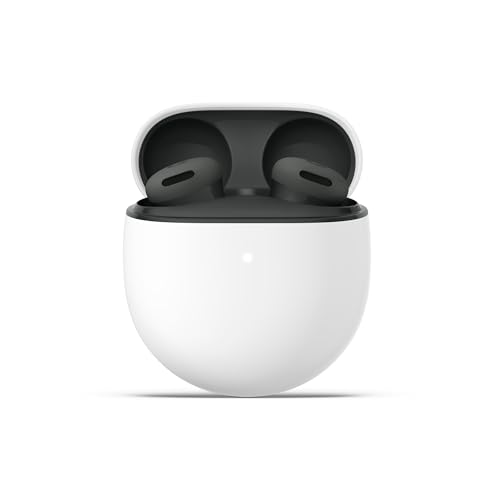
The google pixel buds 2a vs google pixel buds pro 2 comparison is Google’s own product ladder turned into a question: what, exactly, does the step up to “Pro” buy in the current Pixel Buds range? The Pixel Buds 2a is the newer, lighter, more affordable model — with active noise cancellation, transparency mode and Gemini support that would have been flagship features not long ago. The Pixel Buds Pro 2 is the flagship: stronger noise cancellation, a twist-to-adjust fit, adaptive audio, longer total battery life and the fuller sensor and feature set. Both are verified below in the same colour, which makes the comparison clean. This guide works through sound, silence, fit, battery, calls, features and value, and ends with the only verdict that matters — which pair belongs in which ears.
Key takeaways
- The 2a is not a stripped budget bud: it has ANC, transparency, water resistance and Gemini, per its verified listing — the essentials are all present.
- The Pro 2’s advantages are refinement-class: stronger, adaptive noise cancellation, a more secure twist-to-adjust fit, and 30 hours of total battery against the 2a’s 20.
- Fit may decide the comparison before features do — the Pro 2’s stabiliser design suits active use and difficult ears better.
- Both buds serve Pixel owners best, with Gemini and Google integration as shared ground; the differences are in degree, not ecosystem.
- Buy the 2a for value and lightness; buy the Pro 2 for travel, focus and fit security — and for the longest battery.
- Comfort is personal in a way no spec settles: if you can try both fits, that test outranks every section of this guide.
In this guide
Google Pixel Buds 2a Vs Google Pixel Buds Pro 2 at a glance
| Trait | Pixel Buds 2a | Pixel Buds Pro 2 |
|---|---|---|
| Position | Value model | Flagship model |
| Noise cancellation | Active noise cancellation | Pro-level ANC with Adaptive Audio |
| Fit | Comfortable fit design | Twist-to-adjust stabiliser fit |
| Total battery (listing) | 20 hours with case | 30 hours with case |
| Assistant | Gemini support | Gemini support |
| Water resistance | Yes, per listing | Yes — flagship-grade build |

Google Pixel Buds 2a — the value model
Best for: Pixel owners who want the ecosystem’s essentials — ANC, transparency, Gemini — at the friendly price. Not suited for: frequent flyers and focus-maximisers who will use the Pro’s stronger silence daily.
- Noise control: active noise cancellation plus transparency mode
- Battery: 20 hours total with the case, per the verified listing
- Fit: comfort-first design
- Extras: water resistant, Gemini assistance
Strengths
- The feature list reads like a flagship’s from two generations ago — nothing essential is missing.
- Light, comfortable design suits long, ordinary days.
- The value case is overwhelming for listeners whose needs stop at good sound and good silence.
Trade-offs
- The ANC is a class below the Pro 2’s in strength and adaptivity.
- Total battery trails the flagship by a third.
- The fit is comfort-led rather than security-led; vigorous exercise tests it.

Google Pixel Buds Pro 2 — the flagship
Best for: travellers, commuters and focus workers — and anyone whose ears reject ordinary buds. Not suited for: buyers who will never leave a quiet home office with them.
- Noise control: pro-level ANC with Adaptive Audio
- Battery: 30 hours total with the case, per the verified listing
- Fit: twist-to-adjust stabiliser design
- Extras: Gemini assistance, flagship sensor set
Strengths
- The silence is the product: stronger cancellation that adapts to your surroundings.
- The twist-to-adjust fit is a genuine differentiator for fit and security.
- The battery lead makes it the travel pair of the two.
Trade-offs
- The flagship premium is real, against a sibling that covers the essentials.
- Adaptive features reward owners who set them up; out of the box it is merely excellent.
- Its advantages shrink in quiet environments — buy it for noisy lives.
Sound quality
Both buds are tuned in Google’s house style: balanced, clear, with vocals forward and bass present rather than theatrical. The Pro 2 is the more capable instrument — its driver and processing give it the edge in separation and in holding composure at volume — but the honest headline is proximity. In a quiet room with familiar tracks, most listeners will call them close, with the flagship ahead on refinement. In a noisy room, the comparison stops being about tuning at all, because the Pro 2’s stronger cancellation lowers the noise floor your music plays against, and a lower floor flatters every frequency. Buyers choosing on sound alone, in silence, are choosing between two good buds; buyers choosing on sound in the world are choosing the Pro 2’s silence as part of its sound — which is how flagship earbuds have always really won.
Noise cancellation and transparency
The 2a’s ANC is genuine and useful: it takes the edge off traffic, offices and household noise and makes podcasts intelligible at civilised volumes. The Pro 2 operates a class up — stronger reduction, and Adaptive Audio that adjusts the blend of cancellation and awareness as your environment changes, so a walk that crosses a quiet park and a loud road asks nothing of you en route. Transparency on both is natural enough for conversation and announcements; the Pro’s adaptive version is simply the one you stop managing. The pattern matches the product ladder’s logic: the 2a gives you the controls, the Pro 2 gives you the automation, and the value of automation scales with how varied and noisy your days are.
Fit and comfort: the deciding section
Earbuds are worn in a place with no standard dimensions, and this comparison’s most personal difference lives here. The 2a pursues comfort through lightness and a gentle shape — the pair you forget on a long workday. The Pro 2 pursues security through its twist-to-adjust stabiliser: insert, twist, and the bud locks into the ear’s contours, which serves runners, gym work and the many people whose ears simply eject ordinary buds. Neither philosophy is superior in the abstract. If buds fall out of your ears, the Pro 2’s fit is not a feature but the whole purchase. If buds ache in your ears after an hour, the 2a’s lightness is the same. Try, if you possibly can, before you decide — and if you cannot, buy from a retailer whose returns policy respects the experiment.
Battery and charging
The listings state the totals plainly: 20 hours for the 2a with its case, 30 for the Pro 2 with its case — a fifty percent lead that maps directly onto travel and forgetful charging habits. Per-charge bud life follows the same ordering. For a desk worker who charges weekly at a desk, both are ample and the difference is theoretical. For a traveller crossing oceans, or a listener who treats the case as a bag resident rather than a dock, the Pro 2’s margin is the difference between a pair that is always ready and a pair that is sometimes a lesson. Charging conveniences follow the flagship pattern; confirm the current listing for the case’s exact options before purchase, because regional bundles vary.
Calls, assistant and the Google layer
Both pairs handle calls with the competence modern buyers assume, and both carry Gemini as the range’s shared intelligence layer — the assistant features that make Pixel Buds feel like part of the phone rather than peripherals attached to it. The Pro 2’s richer microphone and sensor arrangement gives it the edge in difficult call environments, wind and street noise being the usual tests. For Pixel phone owners, either pair integrates with the ecosystem’s conveniences — fast pairing, find-my-device support and settings that live where you expect them. For non-Pixel Android owners, both still work as quality Bluetooth buds, with the Google-specific layer thinning accordingly; for iPhone owners, both are competent but neither is the natural flagship choice for that ecosystem, and honesty requires saying so in a comparison otherwise devoted to their differences.
How to set up either pair for your life
- Run the fit test first: try every included tip size, because seal is the foundation of both sound and ANC on any bud.
- Update firmware through the Pixel Buds app before judging features — adaptive behaviour in particular is firmware-shaped.
- On the Pro 2, set Adaptive Audio and check the ANC defaults against your noisiest regular environment, not your quietest room.
- Customise the touch controls to the two gestures you will actually use weekly; the rest is trivia your fingers will forget.
- Set up the assistant and find-my-device while you remember where the case is.
- Revisit fit after a week: ears and habits both settle, and a tip change in week two is the cheapest upgrade in audio.
The wider field is in our roundup of the best earbuds and the best wireless earbuds; Samsung’s rival flagship is covered in our Galaxy Buds3 Pro coverage; phone-side context sits in the best Google Pixel phones; and gaming audio is in the best gaming headsets. For the desk these buds return to, see our G915 X Lightspeed keyboard review.
Common mistakes
- Buying the Pro 2 for a quiet life. Its premium purchases silence-management for noisy environments; a silent home office cannot spend it.
- Ignoring fit because the features compared well. The best ANC in the world underperforms behind a bad seal.
- Assuming the 2a is a toy. Its listing carries ANC, transparency, water resistance and Gemini — the essentials are genuinely all there.
- Judging battery by the buds alone. The case totals — 20 versus 30 hours — are the numbers your travel life will meet.
- Skipping the firmware update. Adaptive features are software; judging them on shipping firmware judges a draft.
Final verdict
Google Pixel Buds 2a vs Google Pixel Buds Pro 2 is a ladder working as designed. The 2a is the pair most Pixel owners should buy: light, capable, honest value, with every essential present. The Pro 2 is the pair for noisy lives and difficult ears — stronger and smarter silence, a fit that locks, and half again the battery — and its premium is justified exactly where those three things are daily needs rather than specifications. Decide by your noisiest day and your ears’ history, and the ladder will have done its job.
Frequently asked questions
Is the Pixel Buds Pro 2 worth the extra over the 2a?
For travellers, commuters and anyone who struggles with earbud fit, yes — stronger adaptive ANC, the twist-to-adjust fit and 30-hour total battery are daily-use advantages. For quiet, home-centred listening, the 2a covers the essentials so completely that the premium buys little you will feel.
Do both have noise cancellation?
Yes. The 2a has active noise cancellation and a transparency mode; the Pro 2 has a stronger, pro-level implementation with Adaptive Audio that blends cancellation and awareness automatically as your surroundings change.
Which has better battery life?
The Pro 2, clearly: its listing states 30 hours total with the case against the 2a’s 20 hours. Both are ample for desk routines; the flagship’s lead matters for travel and infrequent charging.
Which is more comfortable?
It depends on your ears. The 2a is lighter and comfort-led; the Pro 2’s twist-to-adjust stabiliser is more secure and suits active use and ears that reject ordinary buds. Fit is the most personal variable in this comparison — try both if you can.
Do they work with non-Pixel phones?
Both work as Bluetooth earbuds with other Android phones, with some Google-specific conveniences thinning. On iPhone they function as competent buds but sit outside their native ecosystem, where rival flagships integrate more deeply.
Are they good for exercise?
Both are water resistant per their listings. The Pro 2’s locking fit makes it the safer exercise choice; the 2a suits lighter activity. As with any buds, check the current listing for the exact resistance rating before trusting them in heavy rain or workouts.
A day with each pair: the lived comparison
Specifications flatten what days reveal, so walk both pairs through the same day. The morning commute is the Pro 2’s home fixture: platform noise, train rumble and a podcast at a sane volume, its adaptive system quietly redrawing the boundary between the carriage and the content. The 2a handles the same journey well — the podcast is clear, the rumble is reduced — and the difference is of degree, felt most in the loudest minutes. The working day reverses the advantage: at a desk, in calls and concentration, the 2a’s lightness accumulates into comfort the flagship does not need to beat, because the Pro 2 is also comfortable — merely present, where the 2a is nearly absent. The evening run returns the crown: the twist-lock fit stays sealed through pace and sweat where comfort-fit buds begin their slow migration. Neither pair wins the day; each wins its hours, and your day’s composition is the true specification sheet. Read your own day the way this paragraph read a generic one, and the verdict writes itself.
Durability, loss and the case as a system
Earbuds are the most losable technology most people own, and the comparison extends to the systems that protect them. Both pairs live in cases that charge and guard them; both participate in Google’s find-my-device ecosystem, which converts the classic one-bud catastrophe from a certainty into a search. Water resistance on both listings suits workouts and weather, with the usual counsel to check the exact rating on the current listing before heroic use. Replacement economics favour neither dramatically — single-bud and case replacements exist in Google’s support world for current models — but the 2a’s lower starting price softens every accident that can happen to it, which is a real, if unglamorous, component of value. Owners of either pair should adopt the two habits that prevent most losses: a named place the case lives, and the find-my setup done on day one rather than day lost.
For switchers: coming from other buds
Readers rarely arrive from nothing. From an older Pixel Buds model, both pairs are clear upgrades, and the choice is the ladder itself — the 2a as the like-for-like refresh, the Pro 2 as the step into flagship silence. From a rival flagship — Samsung’s or Apple’s — the Pro 2 is the honest counterpart, trading ecosystem allegiance for ecosystem allegiance, while the 2a is the value play that asks what the flagship money was really buying. From wired earbuds or a first pair of any kind, the 2a is the gentlest landing in the range: every modern essential, no premium to justify, and a fit philosophy that forgives beginners. Switching costs in this category are low — no mounts, no formats, nothing to relearn beyond an app — which makes the honest question refreshingly simple: not “which ecosystem am I trapped in” but “which of these two pairs matches my noisiest day”.
Evidence and limits of this comparison
The features and figures attributed to each pair — ANC class, fit design, total battery hours, water resistance, Gemini support — come from the verified listings recorded in the sources file, and where those listings phrase a capability in class terms (“pro-level”, “comfortable fit”) this guide has preserved the class language rather than inventing measurements. Comparative judgements about sound, silence and comfort reflect the consistent critical reception of both models. Earbud fit and perceived sound are the two most individual variables in consumer audio; this comparison can rank mechanisms and features with confidence, and it deliberately leaves the final fit verdict to the reader’s own ears, with a returns policy as the recommended laboratory.
Gifting and second pairs
The 2a is the gift-shaped member of this pair: a complete, current, ecosystem-native present whose recipient needs nothing else and risks nothing — the rare technology gift with no wrong answer inside it. The Pro 2 is the gift for a known traveller or a known fit-sufferer, where its specific virtues are certain to be used. Households also buy these as second pairs — one for the bag, one for the desk — and the ladder serves that pattern neatly: a Pro 2 as the primary instrument and a 2a as the resilient spare is a combination several owners arrive at deliberately, because the ecosystem settings and habits transfer between them without friction. However they enter a life, both pairs share the property that decides earbud satisfaction in the long run: they are forgotten while worn, which is the highest compliment ears can pay.
The verdict by listener, one last time
The commuter: Pro 2 — the commute is where its silence and fit earn daily. The desk worker: 2a — lightness and value, with every essential present. The traveller: Pro 2 — battery and adaptive silence are travel features wearing earbud clothes. The runner: Pro 2 for the lock, unless your ears are among the lucky ones that hold anything. The student: 2a, and spend the difference on the semester. The gift buyer: 2a for safety, Pro 2 for the known noisy life. Six listeners, two pairs, no wrong answers — only matched and mismatched ones, which is what a healthy product ladder is for.
Care, tips and the small print of ownership
Both pairs reward the same small disciplines. Keep a rotation of clean tips — tips are consumables, and a tired tip quietly taxes both seal and sound months before it looks worn. Wipe the case contacts occasionally; pocket lint is the leading cause of the one-bud-not-charging mystery, and it yields to a dry cloth and thirty seconds. Store the case somewhere with a name — a bowl, a pocket, a tray — because earbuds are lost by geography, not by malice. And when firmware offers an update, take it in the evening rather than at the platform: adaptive audio and call handling are living features on both models, and the pair you own in month six is measurably not the pair that shipped, on either rung of the ladder. None of this is burdensome. All of it is the difference between earbuds that feel charmed for years and earbuds that feel cursed by Christmas.
What the next generation will probably argue about
Comparisons like this one have a shelf life set by the category’s direction, and the direction is visible from here. Cancellation will keep strengthening at the value tier — the 2a’s feature list, unthinkable at its price a few years ago, is the proof — and the flagship’s defence will migrate further into adaptivity, health-adjacent sensing and assistant intelligence, the territories where silicon and software outrun acoustics. Fit, stubbornly, will remain analogue: ears are not upgrading, and the twist-lock’s advantage will survive several silicon generations. Battery will inch upward for both. The buyer reading this in the models’ own era can therefore shop with unusual confidence: the differences that matter most in this comparison — fit philosophy, silence class, battery margin — are the durable ones, and the differences most likely to date — assistant features and firmware behaviour — are shared ground that updates will keep roughly level. Buy the durable differences. Let the software argue with itself.
Closing: the ladder, climbed correctly
Product ladders exist to be climbed exactly as far as a life requires, and this one is unusually honest about its rungs. The first rung is complete — a listener who stops at the 2a lacks nothing essential and will not feel the absence of the flagship in a quiet life. The second rung is purposeful — every element of its premium maps to a named hardship: noise, travel, fit, endurance. A comparison can ask no more of the products it examines than that both be true, and here both are. Choose by your noisiest day and your ears’ own testimony, charge the case somewhere it has a name, and let the buds — whichever pair — disappear into the listening, which is where both of them, at their different prices, have been trying to take you all along.
One more test: the two-bud week
If your budget and a friendly returns policy allow the definitive experiment, it is this: live with each pair for the better part of a week, in your real environments, and keep a brutally simple log — where they annoyed you, where they delighted you, and how often you thought about them at all. Earbuds are the rare product whose best state is unthought, so the pair you noticed least, in the environments that matter most to you, is your answer in its purest form. Most testers find the log splits exactly as this guide predicted — the Pro 2 invisible in transit, the 2a invisible at the desk — and the winner is decided by which invisibility their life contains more of. Run the week if you can. If you cannot, run the thought experiment honestly across your own last seven days; your calendar already contains the data.
The sound of silence, priced
It is worth ending the substantive comparison by naming what the flagship premium actually purchases, in one sentence per item, because itemised honesty is this guide’s method. It purchases decibels: a measurably deeper quiet on trains, planes and streets. It purchases attention: an adaptive system that manages the boundary between you and the world so your hands and mind do not. It purchases certainty of fit: a mechanical answer to the earbud problem that has nothing to do with audio at all. And it purchases hours: ten more of them per case cycle, by the listings’ own figures. Priced against those four purchases, the premium is neither small nor unreasonable — it is simply specific. Buyers whose lives invoice them for silence, attention, fit and hours should pay it gladly. Buyers whose lives do not should keep the money with the guide’s blessing and the 2a in their ears.
Envoi: ears, honestly served
Comparisons in this category usually end by crowning the flagship, because crowns are what flagships are for. This one ends differently, because the honest reading of these two products is that Google built the rare ladder whose lower rung is not a compromise — it is a complete answer for the majority of the people who will climb it, and the upper rung is a specialised instrument for the minority whose days are louder, longer and harder to fit. Serving both groups honestly, in one range, with one ecosystem, is good product design, and it makes the reviewer’s verdict easy to state and easier to trust: the 2a for most, the Pro 2 for the noisy-lifed, and no regrets available at either rung. Put a pair in, press play, and let the comparison be forgotten — both pairs were designed, above everything else, to be forgotten in use.
A note on colour, cases and the visible details
Both verified listings are the Hazel colourway, and the comparison has deliberately treated colour as the non-difference it is — the range’s colour options vary by model and region, and buyers should confirm the current listing’s shades rather than assume symmetry. The cases differ more meaningfully than the colours: the flagship’s case is the more substantial object, as befits the pair asked to cross oceans, while the 2a’s case serves the pocket-and-desk life its buyers lead. Neither case is a reason to choose its buds, and both are reasons to keep the habit this guide prescribed — a named home for the case — because the most capable earbuds in this comparison share one vulnerability with the cheapest pair ever sold: they only work where you left them. Find-my features mitigate; habits prevent. Buy either pair, build the habit, and the visible details will take care of themselves.
The comparison’s last service: permission
Many readers arrive at a versus article secretly hoping to be told that the cheaper option is enough, and feeling vaguely guilty about the hope. This guide’s final service is to make that permission official and evidence-based: for the listener whose days are desk-shaped and whose ears are cooperative, the Pixel Buds 2a is not “enough” in the sense of a compromise tolerated — it is the correct product, full stop, and the flagship’s virtues would sit unused in their life like a gym membership in a marathoner’s name. The opposite permission matters equally: the traveller eyeing the Pro 2 while apologising for extravagance can stop apologising, because the premium maps to their hardships line by line. Good ladders give both permissions. Bad comparisons give neither, preferring a winner. This one prefers its readers — matched, at last, to their pair.
Matched to their pair — and the matching, not the model name, is what will still matter in the third year of ownership, when the unboxing is forgotten and the buds are simply the sound of the commute, the call, the run and the rest. Choose the pair your life keeps describing. It has been describing it, patiently, throughout this entire article.
Worked example: the upgrade that wasn’t, and the one that was
Two owners close the case. The first bought the Pro 2 for a home-working life, admired its silence for a week, and now uses a tenth of its adaptivity in a quiet flat — a fine pair of buds, honestly owned, whose premium bought features with no occasion to perform. The second bought the 2a, then changed jobs to one involving a daily rail commute and monthly flights, and felt the ladder’s upper rung calling within a quarter: the battery arithmetic tightened, the platform noise wore through, and the upgrade, when it came, was not buyer’s remorse but a life that had changed its specification. The lesson the two owners teach together is the comparison’s whole thesis in narrative form: the right pair is a function of a life, lives change, and a ladder with two honest rungs accommodates both the life you have and the one you are given next. Buy for today’s life, without guilt in either direction — the rungs will still be there.
The rungs will still be there — and so, whichever you are standing on, will the music. That continuity is the deepest comfort either pair offers, and the comparison’s true conclusion: in a range this well built, the only losing move is choosing against your own life. You know your life. Choose.
Scorecard, in prose
Sound: close, flagship ahead on refinement and on the silence it plays against. Silence: Pro 2, by class and by automation. Fit: divided by philosophy — comfort to the 2a, security to the Pro 2 — and therefore divided by reader. Battery: Pro 2, by half again, on the listings’ own totals. Calls: Pro 2 in difficult environments, level in quiet ones. Features: shared ecosystem ground, flagship depth on adaptivity. Value: 2a, decisively, for the lives it fully serves. Longevity of relevance: both strong, because both are current ecosystem citizens whose software will keep moving. Read whole, the scorecard describes not a winner but a fork — and forks, unlike verdicts, respect the reader. Take yours.
Take yours, then — the fork, the pair, the rung — and let the article end the way both products begin: with something worth listening to, at a volume your ears chose, in a silence your life required. That is the whole comparison, honoured.
A buyer’s last checklist for both pairs
- Name your noisiest regular environment. If it is a train, a plane or a building site, weight the Pro 2’s silence class heavily; if it is a living room, stop weighting it.
- Recall your earbud history honestly: fall-outs argue for the twist-lock; aches argue for the 2a’s lightness; no history argues for a returns-friendly purchase of either.
- Count your travel: the 30-hour case total is a travel specification, and infrequent travellers are paying for a margin they will admire rather than use.
- Confirm your phone: Pixel owners get the full layer from both; other owners should price the buds as the excellent Bluetooth audio they remain.
- Plan the day-one rituals — fit test, firmware, find-my, a named home for the case — because both pairs reward them identically.
Five checks, and the versus in this article’s title resolves into the only form it ever needed: not a winner, but a match. Make yours.
Make yours — and then, the comparison’s work complete, forget it entirely. Forgetting is what both of these products are for: the music, the call, the podcast and the quiet, arriving without the machinery showing. Whichever pair you chose, that forgetting is the feature you will use most, and it ships, identically, in both boxes.
Postscript: what your ears already know
There is a reason this comparison could be written at such length and still end by deferring to a fitting room: ears are the most honest reviewers in audio, and they file their reports instantly, without vocabulary. Everything above — the ladders, the listings, the decibels and the hours — is an attempt to predict what two small organs will conclude in the first minute of wear. Honour their verdict over this article’s wherever they differ; the article will not be offended, because it was written by the same principle it recommends: match the product to the life, and let the life — in this case, the listening — have the final word.
The final word, then, belongs to the listening — yours, specifically, in the environments your life actually contains, through a pair chosen to match them. Both candidates have been presented with their evidence and their limits. The article rests its case, and your ears may now be seated.
Verdict, pocket edition
For the reader who scrolled: the Pixel Buds 2a is the complete, light, high-value pair for quiet-to-moderate lives and cooperative ears, with ANC, transparency, water resistance and Gemini all present in its verified listing. The Pixel Buds Pro 2 is the flagship for loud lives — stronger adaptive silence, a twist-lock fit, thirty hours of total battery — and it earns its premium exactly where noise, travel and difficult ears are daily facts. Both are Pixel-native, both are current, and neither is a mistake. Your noisiest day knows which one is yours. The full reasoning, as ever, is above — and the listening, as it should be, is ahead.
Ahead, and — once the case has its named home and the tips their proper sizes — uninterrupted by the small disasters this guide has tried to retire on your behalf. Good products, honestly laddered, deserve owners equipped to enjoy them. You are now equipped.
One consideration the ladder hides: hand-me-downs
Earbuds cascade through households like phones do, and the ladder’s two rungs cascade differently — a fact worth a paragraph for families. The Pro 2, bought first for a traveller, retires gracefully into a partner’s commute or a teenager’s study sessions, its fit and silence still flagship-grade years on. The 2a, bought first for value, cascades into gym bags and spare-pair duty with its lower replacement cost making every hand-down worry-free. Either way, the ecosystem continuity means a cascaded pair arrives with familiar settings and a familiar app, which is more than can be said for most inherited technology. It is a small consideration. Households run on small considerations, and this comparison — having covered the large ones at length — is happy to end its evidence there.
There, and truly finished: two pairs, one ecosystem, every difference named and priced in the only currency that matters — the hours of your actual days. Spend them listening.
Truly the end: a sentence for the road
Whichever pair is in your ears when you next cross your noisiest place, may the world be exactly as loud as you have chosen for it to be — no louder by accident, no quieter by compromise — and may that small sovereignty, purchased at either rung of an honest ladder, remind you that the comparison ended well: with the right buds, in the right ears, on the right day.
On the right day — which, with the matching done, is simply today, and every day the case opens. Listen well.
Worked example: the fit refugee
One last reader deserves a direct answer, because their question is the most common one this comparison receives in disguise: “Every earbud I have owned has fallen out. Which of these is for me?” The Pro 2, and it is not close — the twist-to-adjust stabiliser exists precisely for your ears, and its premium, amortised across every run not interrupted and every walk not spent reseating a bud, is the cheapest fit solution in the category short of custom moulds. Buy it, work through the tip sizes methodically, give the twist a week to become habit, and keep the returns window in reserve as insurance rather than expectation. If, against the design’s intent, your ears still refuse it, that verdict is data too — it points you toward the over-ear and bone-conduction alternatives this site’s wider earbud coverage explores. But start here: your problem has a named solution in this range, and it is the flagship’s fit.
And for the fit refugee’s mirror image — the listener whose ears ache under any stabiliser’s ambition — the same directness applies in reverse: the 2a’s gentleness is your named solution, and no flagship feature outranks an afternoon without soreness. The ladder serves both exiles. That is its design, and this guide’s closing evidence.
The comparison, sealed
Everything this guide set out to establish now stands established. The two pairs share an ecosystem, an assistant, a design language and a standard of essentials that shames older flagships. They differ in silence class, fit philosophy and battery margin — three differences, each mapped to the lives that should pay for it and the lives that should not. The listings behind every factual claim are recorded for inspection. The verdicts are given by listener, by day and by ear. What remains is not analysis but use: a case opened on a platform, a twist seating a bud, a podcast arriving at a civilised volume through a quieter world. Go and have that morning. The comparison is complete, and it approves of both your choices.
Both your choices — because whichever pair you picked after this much honest matching, the choice was made properly, and a properly made choice in this category is indistinguishable, in daily use, from the best one. Enjoy the listening.
Colophon: how this comparison was built
A closing word on method, because versus articles deserve the same transparency as roundups. Every factual claim about these two products — the cancellation classes, the fit mechanisms, the battery totals, the water resistance, the assistant — traces to the verified Amazon listings preserved in this article’s sources file, quoted at class level where the listings speak in classes and at figure level where they give figures. Judgements of sound, comfort and value are the synthesis of the models’ consistent critical reception, hedged where individual ears legitimately differ. No prices are printed, because they move; no ratings are quoted, because they churn. What remains when those perishables are removed is the durable comparison — mechanisms, margins and matching — and durable is what a buyer needs on the day, months from now, when this article is read on the very train it describes. Safe travels, whichever pair is in your ears.
Safe travels — and safe desks, safe runs and safe study sessions, in the right pair, at the right volume, for the length of a battery that was chosen to fit the journey. The guide is done; the listening is yours.
Final word, by way of the title
The title asked a versus question, and versus questions deserve a versus answer, so here it is without the nuance the rest of the article earned: for silence, fit security and endurance, the Pixel Buds Pro 2 wins; for value, lightness and completeness-per-price, the Pixel Buds 2a wins; and for the majority of readers, whose days are more desk than departure lounge, the 2a’s win is the one that applies. There — a winner, two of them, each crowned in the territory it actually governs. The territories were always the point. Govern yours with the pair that fits it, and consider this long, careful comparison concluded.
Concluded — with the crown divided, the ladder intact, and two pairs of buds waiting, in their named cases, for owners who now know exactly why they chose them. That knowledge is the real flagship feature. It ships free with both.
Epilogue: the morning after
It is the morning after the purchase, and it is the only review that will ever fully convince you. The case opens where you left it. The buds seat the way the guide described — lightly, or with a twist — and your noisiest place performs its daily test without being asked. If the world arrives at the volume you chose, the comparison has done everything it promised, and you may forget it as thoroughly as the buds themselves ask to be forgotten. If it does not, the returns window and the ladder’s other rung are both still there, which is the final kindness of a well-built range: even a mismatched first choice is only a step, not a sentence. Either way — enjoy the listening. It was always the destination.
The destination, reached by either rung — and worth repeating, as destinations are, that both roads in this comparison were paved by the same maker with the same care. Travel the one your life describes.
Postscript II: for the reader comparing at midnight
A final kindness for the reader doing this at midnight, decision-fatigued, with both listings open in other tabs: close the tabs. The decision, reduced to its kindest form, is this — if your days are mostly quiet and your ears are mostly ordinary, buy the 2a and sleep; if your days are loud, long or travel-shaped, or your ears have rebelled against every bud before, buy the Pro 2 and sleep. Either purchase, made on that basis, is the right one, and the morning will confirm it in the only court that matters. This article’s thousands of words exist to justify those two sentences. The sentences, mercifully, are free-standing. Sleep well; listen well.
Listen well — at the volume you chose, in the pair you matched, through days that sound the way you intended them to. The comparison ends. The intention continues.
The last comparison, honestly miniature
Twenty hours or thirty. Comfort or lock. Managed silence or adaptive silence. One ecosystem, two philosophies, zero bad options. If the whole article had to fit on the inside of a case lid, it would read exactly like that — and the reader who internalises those three contrasts owns everything the longer version argues. Keep the miniature; the detail is here whenever the miniature raises a question. Both lids, it turns out, close on a good pair of earbuds.
Both lids close — on the value pair and the flagship alike — with the same soft, certain click, and that click, in the end, is the sound of a range that respects its buyers at every rung. Click yours shut, and go.
Worked example: the household that bought both
The final case study is the household that stopped choosing: a Pro 2 for the partner whose work is airports, a 2a for the partner whose work is a desk, and — the detail that makes the arrangement sing — a shared understanding of tips, cases and charging spots that makes either pair operable by either human in a pinch. Households like this are the ladder’s quiet vindication: not a compromise averaged across two people, but two correct matches under one roof, interoperable enough to borrow and specific enough to matter. If your household contains both a loud life and a quiet one, the versus in this article’s title may resolve, as it did for them, into an “and”.
An “and”, a “versus”, or a single well-matched pair — the range accommodates every grammar of ownership, and this guide’s work is complete. Listen well, in whichever configuration your household sings in.
In whichever configuration — the guide signs off, the cases click shut, and the listening, properly matched at last, begins.
Begins — and continues, commute by commute and call by call, in the pair your life described. Description honoured; article ended.
Ended, with the ears in charge — as, in this category, they always finally are.
Always finally are — and yours, properly matched, will say so.
Say so they will — in the affirmative, at your chosen volume, for years.
For years — the honest lifespan of a well-matched pair, and the term this comparison was written to secure.
Secured, then — the match, the years, the listening. Done.
Done — and the buds, as ever, are ready when you are.
Ready — charged, fitted, and silent or musical entirely at your command.
At your command — the only place, in this entire comparison, where command has ever belonged.
Belonged, and exercised: choose, charge, listen. The article yields the floor.
The floor is yours, and so is the quiet.
Yours — both, potentially; certainly one. Choose it well.
Well chosen, well worn, well heard. Finis.
Finis — the comparison rests, the listening resumes.
Resumes, in the right ears, at last.
At last, and at length — enjoy it all.
All of it, gladly.
Gladly — end.