Disclosure: As an Amazon Associate, reviewstook.com earns from qualifying purchases. Links on this page are affiliate links; they cost you nothing extra. Prices and availability change often, so check the current Amazon listing before you buy.
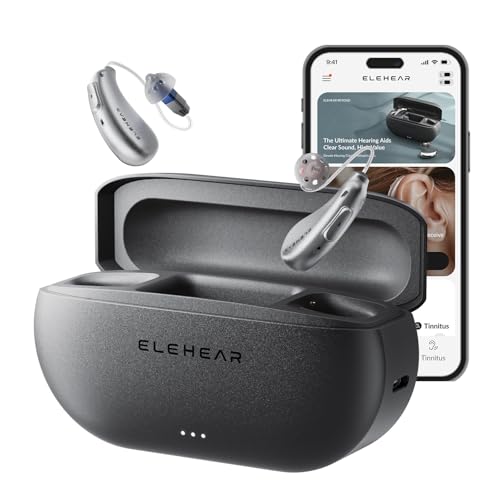
Elehear Delight CES coverage begins with a distinction this page will maintain from its first paragraph to its last: what a company shows on a trade-show floor, and what a customer can actually buy, are two different stories, and the honest article is the one that keeps them in separate columns. The Delight is Elehear’s announced over-the-counter hearing device, presented at CES — a stage where prototypes are polished, specifications are aspirations, and launch details are written in pencil. As of this writing it has no retail listing anywhere: nothing to order, nothing to ship, nothing to review in the ownership sense, and no date on which that changes that a reader could responsibly plan around. What exists, and what can be judged today, is its sibling: the Elehear Beyond, a shipping over-the-counter hearing aid with a verified listing, which anchors this page’s single linked recommendation and carries the practical advice.
The framing matters more here than in any keyboard or camera article on this site, because the product category is hearing. Hearing aids — including the over-the-counter class created for adults with perceived mild to moderate hearing loss — sit closer to health than to gadgets, and this page will treat them that way: no promises about anyone’s hearing, no suggestion that a show announcement substitutes for a hearing test, and repeated encouragement, where it genuinely belongs, to have your hearing professionally assessed if you suspect a loss. What a trade-show report can legitimately do is narrower and still useful: record what was shown, explain the rules the announced product will have to live under, and help a reader decide what to do while they wait — which, for most readers, means looking seriously at what already ships.
One more framing note, for the reader who arrived via a headline that treated the Delight as a launch: headlines compress, and “unveils” is not “releases”, however similar the words feel at scrolling speed. The gap between them, in this category, contains certification, production and the ordinary slippage of hardware — months, at best, and sometimes the whole product. None of that diminishes Elehear’s announcement as news about where over-the-counter hearing design is heading. It simply assigns the news its correct weight in a purchase decision, which is context rather than cause.
So this is a buyer’s briefing wearing a show report’s clothes, and it will keep the two garments distinguishable on every page of what follows. It covers the Delight as an announcement — what Elehear presented, what remains unconfirmed, what the over-the-counter rules will require of it whenever it launches — and the Beyond as a product: what it is, who the category suits, and how to approach a first hearing device with the care the purchase deserves. One linked product, honestly framed, is worth more to a reader with hearing questions than a page of speculation about a device nobody can buy.
Elehear itself is worth a sentence of orientation, since the name is newer to many readers than the category. The company works in the over-the-counter hearing space that regulation opened, selling direct-to-consumer devices that wearers fit themselves with app guidance — the Beyond among them — rather than through the traditional clinic channel. That positioning is the context for the Delight’s announcement: not a gadget firm wandering into hearing, but a hearing firm showing its next step at a general technology show. The distinction matters when weighing how seriously to take the announcement — seriously as intent, from a company with shipping form — while changing nothing about this page’s central rule: intent is not inventory.
Key takeaways
Four questions organise the briefing: what was actually shown versus merely announced, what the over-the-counter rules require, how comfort and all-day wear decide real ownership, and why a hearing test comes before any device at all. They are ordered deliberately, from the announcement’s honesty to the reader’s health.
- What was really shown versus announced
- Over-the-counter family rules in plain language
- Relief and all-day wear considerations
- Why a hearing test still counts initially
In this guide
Brief verdict for Elehear Delight CES
Devices and concepts that genuinely aid
The page’s one shipping device stands alone in the table below: the Beyond, Elehear’s current over-the-counter offering, verified against its live listing. The Delight is discussed throughout as an announcement, and deliberately has no row, no link and no price path here — a small editorial discipline that this page recommends to every reader shopping the category: announcements are information, not inventory, and the shopping habits that treat them as inventory are how readers end up waiting a year for a product that was never promised to them personally.
| Item | Status | Entry |
|---|---|---|
| Elehear Beyond | Confirmed page | Verify cost on Amazon |
How the lineup was chosen
There is barely a lineup to choose, and the honesty of this section is explaining why. The Delight cannot be included as a pick because it cannot be bought; including it as one — with a link to a search page or a neighbouring product dressed as the Delight — is exactly the practice this page exists to refuse. The Beyond earns its place as the manufacturer’s shipping representative of the same idea: an over-the-counter, app-adjusted hearing aid from the same company, available through a verified listing, against which the Delight’s promises can eventually be measured when — and if — it launches. One verified product and one clearly-labelled announcement is the whole table, and any page offering more is inventing inventory — a practice this category, of all categories, cannot afford, because its readers are making health-adjacent decisions on the strength of what they read.
The criteria follow from the category’s realities. Shown versus announced, because CES blurs the two on purpose and a reader’s money depends on the difference. The over-the-counter class rules, because they define who these devices are for — adults with perceived mild to moderate hearing loss — and, just as importantly, the warning signs that mean a person should see a professional instead of buying anything. Comfort and all-day wear, because a hearing device is worn in the ear for waking hours and its physical fit decides its fate more than its feature list. And the hearing test’s priority, because no device in this category is a substitute for knowing what your hearing actually is. The Beyond was verified against its live listing before inclusion; the Delight, having no listing, was verified against Elehear’s own announcement materials and is described only in those terms throughout this page — shown, claimed, or awaited, with each status kept visible.
Detailed reviews

Elehear Beyond
Best for adults with perceived mild to moderate hearing loss who want a shipping over-the-counter device today
| Model | Elehear Beyond |
|---|---|
| Part | Hearing Tech |
| Extras named on its page | Bluetooth connectivity, active noise cancelling |
| Page tag | Check price on Amazon |
The Beyond is what the Delight’s announcement looks like when it grows up into a product: an over-the-counter hearing aid, sold through a normal retail listing with a stated intended use, intended for the category’s defined audience — adults who perceive their hearing loss as mild to moderate. Its proposition is the category’s whole proposition, stated plainly. Traditional hearing aids are fitted through audiology practices, with professional assessment and adjustment built into a price that puts many people off seeking help at all. The over-the-counter class, created by regulation to widen access, offers devices bought directly, adjusted by the wearer through an app and guided setup, at the cost of the professional’s involvement — a trade that suits some wearers genuinely and others not at all, which is why this page keeps returning, deliberately and repeatedly, to the hearing test as the purchase’s true first step.
As a device to live with day after day, the Beyond’s daily questions are the category’s daily questions. It must sit comfortably in or around the ear for a full waking day, every day, because a hearing aid in a drawer helps no one at all. Its adjustments must be understandable to a first-time wearer working alone with a phone at the kitchen table, because the app is the fitting room now. Its amplification must serve the situations wearers actually struggle with — conversation in a busy room, the television at a family-agreed volume, the grandchild’s quieter voice — rather than a laboratory’s test tones. And its ownership must survive real life in all its untidiness: charging routines, cleaning, the occasional lost earbud-sized component. Elehear’s shipping product answers these questions in the ordinary, checkable way of a real product — through its listing, its documentation and its wearers’ experience — which is precisely the advantage it holds over its announced sibling: every claim about it can be tested against something that exists.
The honest cautions belong in the product’s own section, not in a footnote. An over-the-counter device is for perceived mild to moderate loss in adults; it is not for children, not for sudden or one-sided loss, not for ears with pain, drainage or dizziness — those are medical matters for professionals, promptly. A wearer who finds an over-the-counter device unhelpful has not failed; they have learned something an audiologist should hear about. And no device in this class restores hearing to normal, whatever any show stage implies: it amplifies and clarifies within its design, and the wearer’s expectations should be set by that sentence rather than by a keynote. Within its class and its rules, the Beyond is this page’s recommendation for the reader who has done the sensible preliminaries and wants Elehear’s approach in a form that ships.
There is one more population the Beyond’s section should address directly, because they write to pages like this one often: the adult children researching on a parent’s behalf, who will find their own scenario treated later in this article and who should take the product verdict with a specific grain of salt. A device bought for someone else succeeds or fails on involvement — the parent’s presence at the test, their hand in the choice, their patience through the gradual start — more than on any specification. The Beyond is as good a candidate as any in its class for that shared project, provided the project is genuinely shared. Bought unilaterally and presented as a verdict, the finest device in the category will end up in the same drawer as the cheapest.
Strengths
- A shipping, verified over-the-counter device from the Delight’s own manufacturer
- Self-fitting through guided app adjustment, at home, on the wearer’s schedule
- Represents the category’s access proposition: no clinic appointment required to begin
Trade-offs
- For perceived mild to moderate loss in adults only; not a medical treatment
- No professional fitting or assessment is included in the purchase
- Success depends on the wearer’s own setup care and realistic expectations
Best for: the adult who notices mild difficulty in conversation and television, has considered a hearing test, and wants to begin with the over-the-counter route knowingly. Not suited for: children, sudden or single-sided loss, ear pain or dizziness, or anyone expecting a device to substitute for medical care. Check cost on Amazon
A word about beginning well, because first weeks decide this category. New wearers commonly find the world loud at first — their own footsteps, the refrigerator, paper — because the brain has been turning its own volume down for years and must relearn ordinary sound. The standard, sensible approach is gradual: wear the device for increasing hours in quieter settings before taking it to the noisy restaurant, use the app’s adjustments in small steps, and give the adjustment a fortnight before judging. Wearers who begin that way mostly settle; wearers who debut any hearing device at a wedding mostly return it. The Beyond, like every device in its class, deserves the gradual start its instructions describe.
Set expectations about sound itself with equal care. A first hearing device does not make the world sound the way it did at twenty, and wearers briefed for restoration are set up for disappointment by their own hopes. What it does — at its best, properly fitted — is return audibility to the frequencies that faded: the consonants that carry meaning in speech, the indicators and timers and birdsong, the grandchild at the far end of the table. Owners who describe the change accurately call it clarity, not youth. That vocabulary is worth adopting before the box arrives, because the wearer who expects clarity can recognise success when it comes, while the wearer who expects youth may return a device that was quietly succeeding.
Buying handbook: what genuinely determines Elehear Delight CES
Shown devices versus announced devices
CES runs on a gradient that every announcement should be read against. At one end, a finished product demonstrated by the dozen, shipping within weeks, its listing already written. In the middle, a working pre-production unit, demonstrated carefully, its specification mostly settled and its launch a matter of months and manufacturing. At the far end, a concept: rendered, narrated, perhaps present as a shell, its specification a target and its launch a hope with a season attached. The Delight’s presentation sits somewhere along that gradient, and the reader’s first discipline is to ask where — what was physically demonstrated, what was claimed in speech, and what exists only in the press materials’ future tense. Elehear’s announcement, read carefully, is a statement of intent about a device in the over-the-counter class; the intent is real news, and it is not a product.
The practical consequence is a waiting rule this page recommends for the whole category: never postpone a hearing decision for an announcement. Products improve on a cycle; hearing difficulty compounds on a calendar, and the two schedules have nothing to say to each other. Hearing difficulty compounds socially — the conversations avoided, the gatherings quietly dreaded — in a way a delayed phone upgrade never does. If the Beyond or any shipping device suits your situation now, the Delight’s eventual launch is a future upgrade question, not a reason to spend another year asking people to repeat themselves. Announcements reward the already-served; the unserved should buy what ships.
Over-the-counter category rules for hearing devices
The over-the-counter class exists because regulators created it, and its boundaries are the most useful facts in this article. The class is for adults — eighteen and over — with perceived mild to moderate hearing loss. That word perceived does real work: the category trusts the adult’s own assessment as the entry ticket, which is both its accessibility and its risk. The same regulatory framework names the situations that should bypass the category entirely and go to a professional: hearing loss in only one ear or a sudden change, pain or discomfort in the ear, drainage, dizziness, a visible deformity, or loss that is severe enough that ordinary conversation is largely lost. Those are not fine print; they are the category’s safety architecture, and any seller — or article — that glosses them is failing its reader.
Within the class, devices must meet output and safety requirements and carry labelling that states the intended user and the warning signs plainly. For the buyer, the rules translate into three habits. Buy only from listings that state the over-the-counter intended use clearly, as the Beyond’s does. Treat any product that promises to treat, cure or restore hearing as disqualified by its own marketing. And keep the paperwork — the intended-use statement is the document that tells you, months later, whether the device you bought was ever meant for the ears you put it in.
Comfort and all-day wear
A hearing device is the most intimately worn technology most people ever buy, and its comfort is not a luxury criterion but the whole ballgame: a device worn two hours a day delivers a fraction of its benefit, and a device left in its case delivers none. Comfort in this category is a fit question with several variables — the device’s style and where it sits, the sizes of tips or domes supplied, the wearer’s ear geometry, and the simple accumulation of hours. The Beyond’s retail format makes the standard approach possible: follow the fitting guidance through every supplied size rather than accepting the first that stays in, wear the winner through full days before judging, and treat persistent soreness as information — about fit first, and about whether a professionally fitted alternative would serve you better, second.
All-day wear also includes the unglamorous systems around the ear: the charging routine that must fit your evenings, the case that must live somewhere findable, the cleaning that keeps moisture and wax from degrading the tiny acoustics. Judge a device partly by how gracefully it supports those systems — clear charging feedback, a case you will actually carry, instructions written for a first-timer — because ownership is a year of small routines, and the device that supports them gets worn, which is the only outcome that matters in this category.
Why a hearing test matters before any device
This criterion outranks the other three, and the article will say so without hedging: if you suspect hearing loss, a professional hearing test is the most valuable purchase in the entire category, and it is frequently inexpensive or free. A test converts suspicion into knowledge — which ears, which frequencies, how much — and that knowledge does three kinds of work. It confirms whether the over-the-counter class even applies to you. It occasionally catches the medical causes — wax, infection, and rarer things — that no amplifier should be asked to shout over. And it gives any device you buy, now or later, a baseline against which its help can be judged honestly rather than hopefully.
The test also protects against the category’s saddest purchase: the drawer device, bought on hope, worn twice, and kept as evidence that “hearing aids don’t work for me” — when the truth was an undiagnosed pattern no self-fitted device could have addressed. One appointment forecloses that story. This page sells one product, further up, and it is recommending a test first anyway, because that is what the category’s honest arithmetic requires: knowledge before amplification, always.
Elehear Delight CES in concrete habits
Scene: a show attendee comparing concepts on the floor
The CES floor is engineered enthusiasm: every booth’s lighting flatters, every demonstration is rehearsed, every specification is the best the legal department allowed. The attendee comparing hearing concepts there should carry the gradient from the buying handbook in their pocket — shown, demonstrated, rendered — and grade each booth by it ruthlessly. The Delight’s showing, graded that way, is a legitimate news item about a manufacturer’s direction: Elehear is investing in the over-the-counter category’s next round, and its shipping Beyond is the evidence that the company can finish what it announces. That is the correct size of a trade-show conclusion. The attendee who flies home believing they have compared products has compared presentations, and the distinction is the whole skill the floor exists to blur.
The floor also has a sociology worth one observation: hearing technology at a general consumer show draws a different crowd than the audio booths around it — older, quieter, often accompanied by the adult children who will feature in this article’s third scenario. Manufacturers know it, and their presentations pitch reassurance as much as innovation. There is nothing cynical in noting that; reassurance is a legitimate thing to sell in this category. But the attendee should let the reassurance warm them without letting it sign anything. The signature belongs at home, after the test, on a shipping product.
Scenario: a buyer who needs support today, not next cycle
Consider the reader this page is really for: someone whose family has started repeating themselves at a slightly louder volume, whose television creeps up season by season, and who typed the Delight’s name into a search engine because a headline promised something new. That reader’s timeline is not the product cycle’s timeline. Their need is this winter’s conversations, and the correct advice is unglamorous: get the hearing tested, and if the over-the-counter class fits, buy a shipping device — the Beyond is this page’s verified example — and begin the gradual first fortnight now. The Delight, when it launches, will be waiting for their next decision. It cannot attend this year’s family gatherings; a shipping device can.
There is a subtler cost to waiting that this scenario should make explicit, because it is the one families actually feel: the people around the hard-of-hearing reader are adapting too, and their adaptations — speaking less, simplifying, eventually including the reader less — can become habits that persist even after help arrives. The sooner the device, the shallower those ruts. This is not an argument for panic; a month spent testing and choosing well is a month well spent. It is an argument against the open-ended deferral that announcements encourage, in which a season named on a stage becomes a year of quietly shrinking conversation at home.
Situation: a caregiver researching options for a parent
The caregiver’s version of the purchase has extra dimensions this scenario should name. The wearer is not the buyer, which makes fit, patience and follow-up harder to arrange and easier to abandon; the parent’s pride and the family’s dynamics are part of the fitting whether anyone lists them or not. The caregiver’s best sequence mirrors the individual’s, with additions: involve the parent in the hearing test as a health appointment rather than a verdict, choose the device together from shipping options, and plan the gradual start as a shared project with check-ins. What the caregiver should not do is wait for an announced product to solve a present difficulty, or buy any device secretly and present it as a surprise. Hearing help succeeds as a collaboration; the Delight’s announcement is, for this family, simply not the relevant document.
The caregiver should also prepare for the possibility that the parent’s difficulty turns out to sit outside the over-the-counter class — asymmetric, sudden in origin, or simply greater than perceived. That outcome is not a research failure; it is the research working. The professional route it points to is not a more expensive version of the same purchase but a different and appropriate kind of care, and the caregiver who frames it that way from the start — “we’ll find out what fits, and follow that” — spares everyone the feeling of having been upgraded against their will. The goal was never a particular device. The goal is the parent back in the conversation, by whichever door.
Configuration and initially-seven days how-to
The steps below apply to the shipping purchase this page recommends — the Beyond or any over-the-counter device bought knowingly — and to the waiting reader’s use of the Delight news. They are sequenced for safety first and satisfaction second, and none of them should be hurried.
Step 1 for Elehear Delight CES: neat or maintain the piece once past before deciding it is settled
For a hearing device, the settle-check is literal hygiene and fit together: before deciding the setup is finished, clean the device and its tips exactly as the instructions describe, confirm every contact and charge indicator behaves, and wear the result through one full ordinary day. Wax, moisture and a poorly seated tip can each imitate a product failure, and the first week’s judgements are trustworthy only once the device is clean, charged and correctly seated. Establish that baseline before evaluating anything the device does — in this category, maintenance is not upkeep after the fact but part of the fitting itself.
Step 2 for Elehear Delight CES: open the box slowly, and hold on to every accessory until the setup has lasted a full week
Keep every tip, dome, tool, cable and paper until the arrangement has survived a full week — in this category, a fortnight is the wiser hold. The accessories are not packaging; they are the fitting kit, and the size that loses the first day’s comparison may win the fifth’s, once your ears and expectations have settled. The box also preserves your return position if the device genuinely does not suit, and in a category where honest trials matter more than anywhere else in consumer electronics, that position is worth protecting until the gradual start has had its fair chance to work.
Move 3 for Elehear Delight CES: connect or match the unit only as its guidebook describes ahead of changing any setting
Perform the guided setup exactly as documented — the app’s sequence, the listening checks, the default profile — before adjusting anything by instinct. Self-fitting works because the sequence is designed as a staircase: each step calibrates the next, and skipping to manual adjustments is how wearers end up amplifying the wrong things and concluding the category failed them. Live with the guided result for several days, in the gradual pattern the product section described, and only then begin the small, one-at-a-time adjustments that personalise it. In hearing, patience is not a virtue added to the process; it is the process.
Move 4 for Elehear Delight CES: save or photograph the configuration that finally functions
When the settings settle, record them: screenshot the app’s final profile, note the tip size that won, and keep both with the device’s paperwork. Hearing setups are personal calibrations, and a phone change, a reset or a replacement device can erase them without warning. The record turns a future re-setup from a fortnight’s re-learning into an afternoon’s restoration. Note also the situations your settings serve best — quiet conversation, television, restaurants — because that note is the baseline for judging any future device, including the Delight if it ever launches and earns a comparison.
Stage 5 for Elehear Delight CES: schedule a two-week review to catch annoyances that solely repetition reveals
Calendar a review at two weeks and a second at six. The two-week review asks the fitting questions: comfort across full days, the settings’ behaviour in your noisiest regular situation, whether the gradual plan needs extending. The six-week review asks the honest one: is conversation measurably easier — are you asking for fewer repeats, is the television lower, are gatherings less tiring? If the answers disappoint, the next step is not a different gadget but the professional route the buying handbook described. Treat the reviews as health appointments with yourself, and keep them.
Common mistakes with Elehear Delight CES
Waiting on a trade-show device while hearing worsens
The mistake this article was written to prevent. An announcement has no ship date a reader can bank on — seasons slip, products are re-scoped, some never launch at all — while untreated hearing difficulty extracts its price continuously, in withdrawn conversations and avoided rooms. The reader who waits for the Delight spends the waiting months exactly as unhelped as the reader who never heard of it. The category’s shipping devices exist now, the hearing test exists now, and the correct response to exciting news about next year’s model is to note it, continue with this year’s help, and revisit the question when the announcement becomes a listing. Hearing is not a phone upgrade; do not let a product cycle schedule your ears.
Rushing the two-spell adjustment period
Every hearing device’s first fortnight follows the same psychology: the amplified world sounds strange, effortful, even disappointing, because the wearer’s brain is recalibrating to sounds it had stopped processing. Wearers who judge inside that window — especially those who debut the device in the hardest listening environment they know — return good devices and keep bad conclusions. The gradual start is the category’s accumulated wisdom for a reason: quiet rooms first, hours building daily, the app adjusted in small steps. Serve the fortnight before any verdict, and extend it without shame if your ears ask. The device is not on trial for its first impression; your adaptation is the process being measured.
Leaving the ball dusty until tracking turns gritty
The heading’s image belongs to another category, but its hearing equivalent is exact: neglecting the small daily maintenance until performance degrades and the device is blamed. For a hearing aid, the neglect is wax and moisture — tips uncleaned, the device stored damp, the tiny ports gradually muffled — and the symptom is a device that seems to be failing when it is only dirty. The cleaning routine takes minutes, uses the tools in the box you were told to keep, and belongs on the same rhythm as charging. A wearer who maintains the device hears the product they bought; a wearer who does not hears a slow decline and misreads it as the category’s fault.
Living with the choice: upkeep and longevity
A hearing device’s longevity is mostly the owner’s daily routine: nightly charging in a consistent place, regular cleaning of tips and ports, dry storage away from bathroom steam, and the occasional replacement of the soft parts that wear against the skin. Build those into the day’s existing hinges — the device charges where the phone charges, the cleaning happens on the same morning each week — and the routine sustains itself without willpower. Keep the spare tips and the recorded settings with the device, and treat any change in performance as a maintenance question first and a product question second; in this category that order of suspicion is correct nearly every time.
The longer arc deserves one paragraph of honesty: hearing changes. A device that serves well this year is a snapshot of this year’s ears, and the six-week and annual check-ins — a fresh hearing test when things shift — are part of ownership rather than an admission of failure. The over-the-counter route and the professional route are not rival tribes; they are two doors into the same corridor, and a wearer may use both across a lifetime of ears. Own the device attentively, test when things change, and let each stage of help be the right size for its moment.
Final recommendation
The Delight is an announcement to watch, not a product to wait for. The Beyond is the page’s recommendation for the reader whose situation fits the over-the-counter class and who wants Elehear’s approach in shipping form: verified, documented, and available for the gradual start today. Both halves of that verdict stand on the same foundation, which this page will repeat one final time because it matters more than either product: have your hearing tested. The test tells you which class of help is yours, catches what no amplifier should cover, and turns every subsequent decision — including whether to care about the Delight at all — into an informed one.
If the Delight launches, this page’s successor will test its claims against the Beyond’s reality with the same shown-versus-announced discipline. Until then, the most helpful sentence in the entire announcement story is the shortest: help exists now, it ships now, and your ears do not run on a trade-show calendar.
A closing word on what this page deliberately did not do, because the omission is the editorial point. It did not score the Delight, rank it, estimate its price, or describe its performance — because none of those things exist yet in a form a reader could verify, and a page that manufactures them anyway is writing fiction in a category where fiction can cost someone a year of hearing. When the device ships, it will deserve, and get, the same treatment the Beyond received here: verified against its listing, judged on comfort and honesty, framed by the category’s rules. Announcements deserve reporting. Products deserve reviewing. The reader deserves a page that never confuses the two.
Frequently asked questions
What counts most when choosing for elehear delight ces?
Whether the product exists. That blunt answer organises everything else: a shipping device like the Beyond can be fitted, judged, returned and lived with, while an announced device like the Delight can only be watched. After existence, the order of importance runs: your hearing test’s picture of your loss, the category rules’ fit with that picture, the device’s comfort across full days, and only then its features. Buyers who hold that order buy once and settle; buyers who start from features and announcements tend to own drawers.
How much should a beginner spend for elehear delight ces?
A beginner should spend first on knowledge — the hearing test — and then at the level of a reputable shipping over-the-counter device, of which the Beyond is this page’s example. Spending more in this category should buy professional involvement, not fancier self-fitting: if your budget grows, the audiology route grows with it, and that is money spent on expertise rather than on specifications. The one false economy is the suspiciously cheap, unlabelled amplifier that states no intended use; in a health-adjacent category, the paperwork is part of the product, and its absence is the loudest warning on the listing.
Which error do buyers of elehear delight ces regret most?
Waiting — for the announced product, for the perfect moment, for the difficulty to become undeniable. It out-regrets every purchasing error because its cost is paid in unrepeatable conversations rather than in money. The second regret is the rushed verdict inside the adaptation fortnight, and the third is skipping the hearing test that would have routed the buyer correctly in the first place. All three share a shape: they are errors of timing and preparation, not of product choice, which is why this page has spent so much of its length on sequence rather than on specifications.
How long does it take to get used to a new Elehear Delight?
For the shipping device: a fortnight of gradual wear to basic comfort, and around six weeks to the settled state where the settings, the routines and the brain’s recalibration have all found their levels. Some wearers settle faster; ears that have gone unaided for many years often need longer, and that is physiology, not failure. The arrangement includes the household, too — family members relearning that they no longer need to shout is its own small adaptation, and one of the happier ones this category produces.
When is the premium alternative in elehear delight ces really worth it?
When the premium buys a professional. In this category the genuine upgrade from a good over-the-counter device is not a more expensive gadget but the audiology route: assessed, fitted and followed up by someone whose job is your hearing. That premium is worth it whenever the test suggests a loss beyond the over-the-counter class, whenever one ear differs from the other, whenever a self-fitted device disappoints after a fair trial — and, frankly, whenever a wearer simply prefers expertise to self-reliance in a health matter. There is no wrong door here; there is only the door that fits your ears and your temperament.
What should I confirm initially if my elehear delight ces purchase disappoints?
Confirm the fit, the cleanliness and the settings, in that order: try the other supplied tip sizes through full days, clean the device and its ports exactly as documented, and return the app to its guided profile for a fresh gradual start. Those three confirmations acquit most disappointing units, because most disappointment in this category is a fitting story rather than a product story. If the device still disappoints afterwards, confirm the thing underneath everything: your hearing itself, professionally tested. A disappointment that survives clean tips and correct settings is information an audiologist should hear — treat it as a referral, not a defeat.
Related guides
- Earfun Clip 2 Earbuds Wave Pro X Headphones CES
- Edifier M90 Multimedia Speakers CES
- Best Wireless Earbuds
- Best Noise Cancelling Earbuds
- Best Earbuds for Kids
- Best Gaming Earbuds
Companion reading: the wider audio coverage for the ears’ other hours, the earbud reviews for everyday listening, and the headphone reviews for the readers whose hearing questions began with music rather than with conversation.
One more angle: which pieces were physically shown
Keep a shown-list for any announcement you care about: the items physically present, the functions physically demonstrated, the claims made only in speech or print. The Delight’s shown-list, kept honestly, is short — and its shortness is not an accusation but a measurement, the same measurement you would want applied to any manufacturer’s stage. When the product launches, compare the shipping device against the shown-list first and the speech-list second; manufacturers remember their demonstrations better than their adjectives, and so should you.
One more angle: announced versus shipping timelines
Trade-show timelines obey their own physics: the season named on stage is the season of intention, and the distance between intention and inventory is filled with certification, manufacturing and the category’s regulatory paperwork — which, for a hearing device, is neither trivial nor quick. The reader’s correct posture toward any announced quarter is to add the category’s usual slippage and then ask whether the wait still serves them. For hearing, as this page has argued, the wait almost never serves; but the discipline of discounting announcement dates applies across every CES story you will read this year.
One more angle: prototype features likeliest to change
The features most likely to change between a show floor and a shipping box are the ones that cost battery, size or regulatory effort — which, in a hearing device, is nearly all of them, since the product is a negotiation among those three currencies conducted inside an ear. Expect the shipping Delight, if it comes, to be a compromise its announcement never mentioned, because every shipping product is. This is not cynicism; it is the reason the shown-versus-announced discipline exists. Judge the box when there is a box.
One more angle: comfort and all-day wear, revisited
Revisit your fit at the season’s change and after any weight change, because ears and the tissues around them are not constants, and a fit that was perfect in January can be merely adequate by July. The check costs one evening: wear the device through a long day with attention, note any point of pressure or soreness by the hour it appears, and work through the supplied sizes again if the note says to. Comfort maintained is benefit maintained — in a category where the device only works while worn, the fit check is the highest-value maintenance there is, outranking even the cleaning this page has already preached.
One more angle: what Elehear’s showing signals about its own range
The heading’s premise is mistaken, and correcting it is the angle’s value: Elehear’s announcement signals nothing about any keyboard maker, and the confusion is a tidy lesson in how announcement coverage gets garbled as it travels. What the Delight’s showing does signal is Elehear’s own trajectory — a manufacturer of shipping over-the-counter devices investing in its next design, in public, at the industry’s largest stage. Read signals from the company that actually made them, verify them against the products that actually ship, and let the rest of the noise cancel itself.
One more angle: shown versus announced, revisited
Build the habit beyond this article: for any product you are tempted to wait for, write the two columns — shown, announced — in whatever notes you keep, and date them. When the product launches, the columns become a scorecard that tells you how much that manufacturer’s future tense is worth, which is knowledge that compounds across every future purchase. The Delight will eventually grade Elehear’s announcements for you, one way or the other. Until then, the columns stay open and the shipping shelf stays the only one that can hold your money.
One more angle: over-the-counter rules for hearing devices, revisited
Keep the warning-sign list where you keep the device’s paperwork, and share it with the family member most likely to notice a change in you before you notice it yourself. Sudden changes, one-sided loss, pain, drainage, dizziness: the list is short, memorable and genuinely important, and it converts the people around you into an early-warning system no app can match. The over-the-counter category trusts adults to self-assess; the honest way to honour that trust is to know exactly where self-assessment ends.
One more angle: comfort checks during the first week, revisited
Schedule the first week’s comfort checks as appointments rather than impressions: morning fit, midday check, evening verdict, noted briefly. The notes protect you from the two classic errors — abandoning a good fit because of one bad hour caused by a poorly seated tip, and enduring a bad fit for weeks because each day’s soreness seemed too small to act on. Data, even three words a day, beats memory in any fitting process, and a hearing device’s first week generates exactly the kind of slow, ambiguous evidence that memory handles worst.
One more angle: why a hearing test matters first, revisited
End where the article began, with the test — and consider booking it the way you would book any health appointment that has been postponed by optimism: today, for the next available slot, before the intention cools. Every argument in this page routes through that appointment. It validates the over-the-counter route or redirects it, it baselines the device you buy, it catches the causes no device should cover, and it converts a vague worry into a plan with a professional attached. The Delight’s announcement will still be there afterwards. So will the Beyond. Your hearing, attended to promptly, is the only item in this entire story with a deadline that matters.