Disclosure: As an Amazon Associate, reviewstook.com earns from qualifying purchases. Links on this page are affiliate links; they cost you nothing extra. Prices and availability change often, so check the current Amazon listing before you buy.
Readers asking headsets vs headphones what is the difference usually want a buying answer, so here it is in one sentence: a headset is headphones with a dedicated microphone built in, typically on a boom arm, and that single addition changes who the product is designed for, how it sounds to other people, and how well it fits a day of calls or a night of gaming. Everything else, the drivers, the cushions, the wireless radios, overlaps so completely between the two categories that the microphone, and the priorities it reveals, are the real dividing line. If your voice matters to your work or your team, the headset exists for you. If only your ears matter, headphones spend the whole budget on what you hear.
This comparison works through the difference properly: a quick verdict, an early side-by-side table, criterion-by-criterion sections with a winner declared in each, and a decision guide organised by real jobs rather than by product categories. Five current models, three headsets and two headphones, are examined in detail as representatives of their sides, each verified against its manufacturer’s listing through the Creators API on the date recorded in this article’s source notes. By the end you will know not just what the difference is, but which side of it your own day sits on, and the answer is not always the one the marketing expects.
Headsets Vs Headphones What Is The Difference: The Quick Verdict
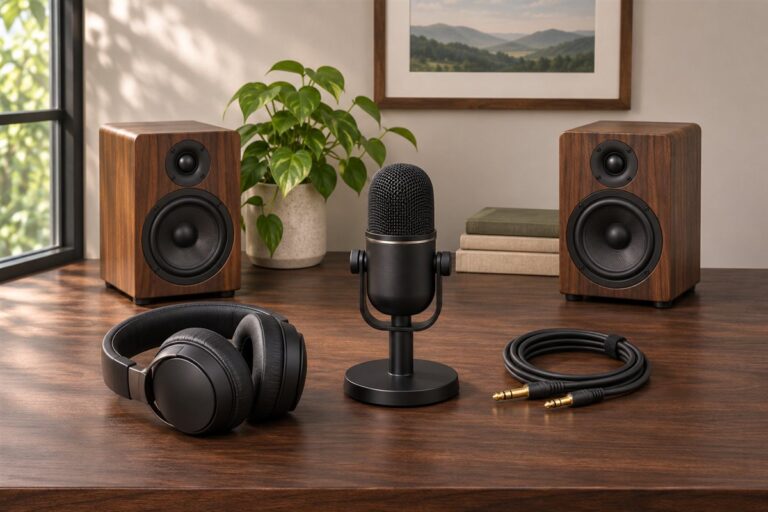
A headset integrates a microphone designed to be heard: usually a boom that places the capsule near your mouth, with tuning and processing built around speech. Headphones integrate, at most, small microphones in the ear cups, designed first for noise cancelling and transparency and second for calls. That placement difference is physics, not marketing. A microphone near the mouth hears your voice loudly and the room quietly. A microphone at the ear hears your voice and the room at similar levels and must guess, with software, which parts to keep. Everything in this comparison flows from that geometry: headsets win calls, headphones win almost everything that is purely listening, and the interesting fights happen in comfort, gaming, and hybrid work, where both claims are legitimate.
Quick verdict by job
- Calls and meetings all day: headset, and it is not close.
- Competitive and team gaming: headset, for the microphone your team hears.
- Music, films, and travel: headphones, for tuning, cancelling, and comfort per unit of money.
- Creating, mixing, and recording: headphones, usually wired, with a separate microphone when you need one.
- Hybrid days of calls and music: genuinely contested; the decision guide below settles it by call hours.
In this guide
The difference at a glance
| Criterion | Headset | Headphones |
|---|---|---|
| Defining feature | Built-in boom or dedicated microphone | No boom; small cup microphones if any |
| How you sound to others | Clear, close, consistent; the design priority | Adequate in quiet rooms, fragile in noise and wind |
| How things sound to you | Good; gaming and call tuning lead | The best tuning and cancelling live here |
| Noise cancelling | Present on office models, rare on gaming models | A flagship specialty, class-leading depth |
| Comfort pattern | Built for long wear; lighter, call-day focus | Built for long wear; listening-session focus |
| Typical connection | USB, dongle, or 3.5mm; platform-certified options | Bluetooth and 3.5mm; travel-focused features |
| Best environment | Desk, office, gaming setup | Everywhere, especially mobile and travel |
| Weakest point | Music refinement and travel features | Your voice, outdoors or in noise |
Read the table as priorities rather than capabilities. Plenty of headsets play music enjoyably and plenty of headphones survive video calls; the question is where each design spent its money and its engineering attention. A boom microphone, its processing, and the certifications behind an office headset cost real budget. A flagship headphone spends that same budget on drivers, cancelling microphones, and travel polish. Knowing which expenditure matches your day is the whole decision, and the criterion sections that follow price each one honestly.
Criterion one: the microphone, where headsets win outright
Your voice is the headset’s home ground, and the margin is larger than most buyers expect until they hear themselves. A boom places the microphone a short, fixed distance from your mouth, so your voice arrives strong and the room arrives weak, and the processing then removes much of the room that remains. The result is consistency: you sound like yourself in a quiet study and in a kitchen with a kettle on, and your level barely changes as you turn your head or lean back. Office headsets add certification programmes for the major meeting platforms, which guarantee the mute, answer, and volume controls behave as the software expects, a small thing that matters several times a day.
Headphones answer calls with microphones built into the ear cups, positioned for cancelling and transparency. In a quiet room, modern flagship headphones sound perfectly respectable, and for occasional calls that is enough. Outdoors, in wind, in a busy office, or in a car, the same geometry that makes them discreet makes them fragile: your voice is one sound among many at a similar distance, and the processing that rescues it also flattens it. The practical test is simple. If people regularly ask you to repeat yourself, move closer, or comment on background noise, your headphones have told you their limit, and no setting changes the geometry. Verdict: headset, decisively, for anyone whose voice carries their work or their team.
Criterion two: sound quality, where headphones win on points
For pure listening, headphones hold the advantage because the category is larger, older, and more competitive at every price. The flagship tier offers tuning, driver refinement, codec support, and cancelling that no headset line attempts to match, and the professional tier offers wired reference models that headsets do not imitate at all. A headset’s listening side is engineered to a brief: clear voices, exciting game audio, and enough musical ability for the hours between calls. Gaming headsets add positional processing and game-focused tuning that can be genuinely effective in play, and office headsets deliberately keep music pleasant and background-safe rather than thrilling.
The honest nuance is that the gap narrows as prices fall. In the budget and mid bands, a well-made gaming headset and a well-made headphone at similar money are closer in listening quality than their reputations suggest, because both are built around similar drivers and the headset’s microphone costs less than the flagship features it forgoes. The gap widens again at the top, where headphone money buys things headsets simply do not offer. Judge by your listening hours: a listener who wears the product for music six hours a day should let sound lead; a worker who hears mostly voices, in calls and in games, will never miss the flagship’s last refinement. Verdict: headphones, clearly at the flagship tier, narrowly in the middle bands.
Criterion three: noise cancelling and isolation
Headphones own this criterion at the top end, because cancelling is their flagship arms race: multi-microphone systems, adaptive processing, and transparency modes polished for travel. If your problem is an aircraft cabin, a train, or an open-plan office’s roar, the best headphones quiet the world more completely than any headset. Office headsets have adopted cancelling in recent generations, and good ones reduce the distraction meaningfully while adding the sidetone and call controls a workday needs, but they are catching up rather than leading. Gaming headsets mostly rely on passive isolation from their ear cups, which blocks higher sounds well and engine drone poorly, and in a quiet home that trade is sensible.
Remember that cancelling serves two different people in this comparison. On headphones, it serves only you. On a headset, your microphone’s noise handling serves the people listening to you, and it is possible to need one without the other: a home worker in a quiet house with a noisy street outside the callers’ perception needs neither much, while a worker in a calm office whose children are audible to clients needs microphone discipline more than personal silence. Buy the kind of quiet your problem actually is. Verdict: headphones for your own silence; headsets for your callers’ silence.
Criterion four: comfort and the shape of a day
Both categories design for long wear and achieve it differently. Office headsets are often the lightest products in this article, with single-ear options for people who must hear the room, and controls arranged for a hand that reaches without looking. Gaming headsets distribute weight for sessions measured in hours, with deep cushions and headbands tuned for stationary wear. Headphones split between travel designs that clamp a little for security and fold for bags, and home designs that float for an evening. Glasses wearers should test any candidate with their own frames, because cushion pressure against spectacle arms is the most common comfort failure in both categories and no specification predicts it.
The boom itself is a comfort factor people underestimate. A headset wearer spends the day with a small arm near the face, which most people forget within a week and some people never do; a headphones wearer on a long call spends it slightly muffled to their own ears, speaking louder than they realise because their voice sounds distant to themselves. Headsets answer that with sidetone, a controlled amount of your own voice fed back so you speak naturally. If you finish call days with a tired voice, sidetone and a boom are a genuine ergonomic upgrade, not a luxury. Verdict: a draw decided by your day: headsets for call-shaped days, headphones for listening-shaped ones.
Criterion five: connections, platforms, and controls
Headsets speak the language of desks: USB connections that computers handle predictably, wireless dongles that pair instantly and reach across a room, platform certifications, physical mute buttons, and busy lights that tell a household you are on a call. Headphones speak the language of movement: Bluetooth multipoint between phone and laptop, travel cases, wear detection, and apps tuned for music. Gaming headsets straddle both, with low-latency dongles for play and Bluetooth as a second mode for everything else, a combination that makes them the most flexible connectors in this comparison and explains much of their popularity with hybrid workers who also play.
Latency deserves its own sentence because it only matters in one direction. For calls and music, ordinary Bluetooth delay is invisible. For competitive gaming and for watching your own hands play an instrument, delay is a defect, and wired or dedicated low-latency wireless connections, common on headsets and rare on travel headphones, are the fix. If your evenings are competitive, this criterion alone can decide the purchase before the microphone is even discussed. Verdict: headsets for desk and gaming ecosystems; headphones for mobile ecosystems.
Strengths and trade-offs, both sides in one place
The headset case
- Strengths: your voice is clear, close, and consistent in real rooms, not just quiet ones
- Strengths: call controls, mute discipline, and platform certification remove daily friction
- Strengths: low-latency and USB connections suit gaming and office systems
- Trade-offs: music tuning and cancelling trail comparably priced headphones
- Trade-offs: a boom is one more thing to wear, carry, and eventually wear out
- Trade-offs: travel features, cases, and polish are an afterthought in most lines
The headphones case
- Strengths: the best sound, cancelling, and travel design in personal audio live here
- Strengths: one product covers music, films, travel, and casual calls gracefully
- Strengths: no boom to wear or store; socially invisible in public
- Trade-offs: your voice degrades exactly when conditions worsen
- Trade-offs: call controls and meeting-platform behaviour are secondary features
- Trade-offs: competitive gaming latency and team communication are not the brief
Five models that show the difference
Three headsets and two headphones, each verified against its manufacturer’s listing through the Creators API on the date in this article’s source notes. Check price on Amazon for current figures on any of them.

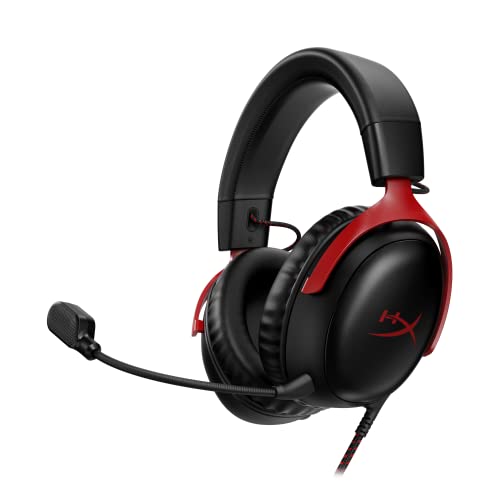
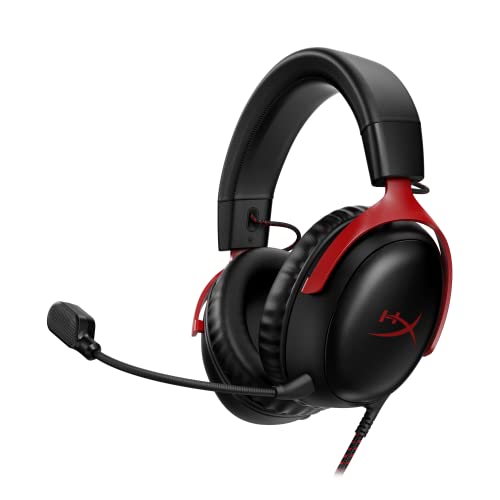
HyperX Cloud III — the gaming headset archetype
Badge: Best example of the headset idea for play
- Type: wired gaming headset for PC and consoles per the listing
- Connections per the listing: USB-C, USB-A, and 3.5mm
- Build per the listing: memory foam, durable frame
- Microphone per the listing: ultra-clear 10mm mic, detachable
The Cloud line is the gaming headset in its classic form: a detachable boom that makes you intelligible to a team, wired connections that remove latency and charging from the conversation entirely, and comfort engineered for sessions rather than commutes. Remove the boom and it moonlights as ordinary headphones for a train, which is this category’s neatest trick. What it will not do is cancel an aircraft cabin or flatter a delicate recording the way a flagship headphone does, and it was never priced or promised to.
- Strengths: team-grade voice clarity; zero-latency wired play across PC and consoles
- Strengths: detachable mic converts it to discreet headphones in seconds
- Strengths: durable frame and memory foam suit daily gaming wear
- Trade-offs: no wireless freedom at the desk
- Trade-offs: no active cancelling for travel or open-plan noise
- Trade-offs: music tuning is energetic rather than refined
Best for: gamers whose team communication matters. Not suited for: frequent flyers or call professionals on video all day. Check price on Amazon

Logitech G PRO X 2 Lightspeed — the pro gaming headset
Badge: Best wireless gaming headset example
- Type: wireless gaming headset per the listing
- Connections per the listing: Bluetooth, USB, and 3.5mm aux
- Drivers per the listing: 50mm graphene drivers
- Microphone per the listing: detachable boom mic; surround processing listed
Logitech’s pro gaming line shows the headset category at its most ambitious: low-latency wireless for competitive play, a detachable broadcast-style boom, driver technology borrowed from the audiophile conversation, and the flexibility to take a phone call over Bluetooth between matches. It is the strongest evidence that the headset side of this comparison is not a compromise category, merely a differently aimed one. Its price reaches toward flagship headphones, and the justification is the full gaming chain, microphone included, rather than listening alone.
- Strengths: low-latency wireless plus wired and Bluetooth fallbacks
- Strengths: detachable boom with voice-focused processing for team play
- Strengths: driver and build quality at the top of the gaming category
- Trade-offs: flagship-level pricing demands gaming commitment to justify
- Trade-offs: no travel-grade noise cancelling
- Trade-offs: size and styling are desk-first, not street-first
Best for: serious PC and console players who also take calls. Not suited for: music-first listeners or travellers. Check price on Amazon
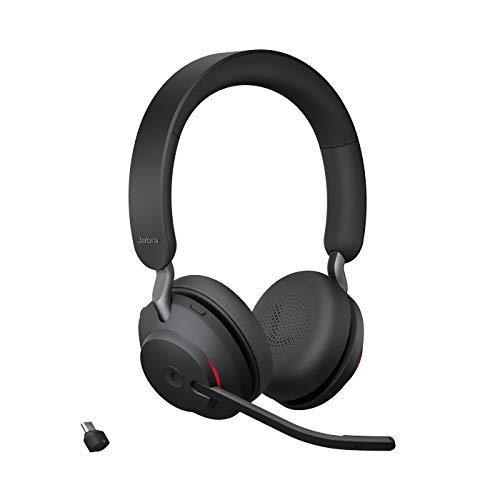
Jabra Evolve2 65 — the office headset archetype
Badge: Best example of the headset idea for work
- Type: Bluetooth wireless headset for calls and music per the listing
- Connections per the listing: USB-C adapter included, dual-ear design
- Battery: up to 37 hours per the listing
- Platform per the listing: works with Microsoft Teams
Jabra’s Evolve line is what the word headset means in an office: a boom that keeps your voice professional in a real home, a computer dongle that connects without pairing rituals, controls and indicators designed around meetings, and enough musical ability for the focus hours between calls. It demonstrates the category’s core bargain clearly: give up the last word in music and travel polish, gain a voice that never embarrasses you in front of a client. For workers whose reputation travels by microphone, that bargain is the correct one at almost any price.
- Strengths: professional call clarity with meeting-platform behaviour
- Strengths: dongle connection is instant and stable at a desk
- Strengths: light, all-day office comfort with a proper mute discipline
- Trade-offs: music is a supporting feature, not the headline
- Trade-offs: cancelling, where present in the line, trails flagship headphones
- Trade-offs: styling belongs to the office, not the street
Best for: remote and hybrid professionals in meetings daily. Not suited for: audiophile listening or gaming-first buyers. Check price on Amazon

Sony WH-1000XM6 — the flagship headphone archetype
Badge: Best example of the headphones idea for listening
- Type: over-ear wireless headphones per the listing
- Noise cancelling: adaptive, 12-microphone array per the listing
- Battery: up to 30 hours per the listing
- Calls: handled by the built-in microphone array, no boom
Sony’s flagship shows what the headphones side does with the budget a headset spends on its boom: the quietest background in the comparison, travel polish, and call quality that is genuinely good in calm conditions thanks to that large microphone array and its processing. It is also the clearest illustration of the category’s limit, because all that microphone sophistication still sits at your ears rather than your mouth, and a windy street will find it out. Buy it for listening and travel, use it happily for ordinary calls, and do not ask it to be a professional voice instrument.
- Strengths: benchmark cancelling and transparency for travel and offices
- Strengths: refined sound and all-day comfort; multipoint for phone and laptop
- Strengths: respectable calls in quiet to moderate conditions
- Trade-offs: voice quality falls behind any boom headset in noise or wind
- Trade-offs: no low-latency gaming mode of consequence
- Trade-offs: meeting-platform controls are basic beside an office headset
Best for: travellers, commuters, and music-first listeners with ordinary call needs. Not suited for: professionals whose voice is their product. Check price on Amazon

Audio-Technica ATH-M50x — the studio headphone archetype
Badge: Best example of headphones as a professional tool
- Type: wired professional studio monitor headphones per the listing
- Design per the listing: professional grade, critically acclaimed monitoring design
- Cable: detachable, per the model’s long-standing design
- Microphone: none; a separate mic is the studio way
The M50x represents the oldest answer to this article’s question: in studios, the microphone is a separate, specialised instrument, and headphones are for hearing. Its detachable cables, folding build, and decades-long production run show the professional headphone tradition described elsewhere on this site: repairable, consistent, and indifferent to fashion. Paired with any separate microphone, it outperforms a headset for recording and streaming voice while monitoring honestly. Without one, it cannot take a call at all, which is the purest possible statement of the difference this article exists to explain.
- Strengths: honest monitoring sound trusted across studios and creators
- Strengths: detachable cables and durable build promise a long service life
- Strengths: pairs with a proper microphone for broadcast-quality voice
- Trade-offs: no microphone, no wireless, no cancelling
- Trade-offs: wired life does not suit commuting or travel
- Trade-offs: clamp and pads favour work sessions over all-day casual wear
Best for: creators, musicians, and listeners who value a long-lived wired tool. Not suited for: anyone who needs calls or wireless from the same product. Check price on Amazon
gaming headsets compared in full
wireless gaming headsets for cable-free play
office headsets for meeting-heavy days
The decision guide: choose by your week, not by the label
Count your call hours honestly for one ordinary week, including team gaming, because voice time is the pivot of this entire comparison. Under roughly an hour a day of calls, in reasonably quiet places, buy headphones and let listening lead; your call quality will be adequate and everything else will be better. Between one and three hours a day, the answer depends on conditions: quiet home office, headphones still serve; noisy household, shared space, or clients on the line, a headset begins to pay for itself in not repeating yourself. Above three hours a day of voice, buy the headset without a debate, and if music matters too, let the headset be a good one rather than asking headphones to survive your workday.
Gamers should decide by team and genre. Competitive and social play, where callouts win rounds and friends judge your microphone nightly, is headset territory, wired for simplicity or low-latency wireless for freedom. Solo and cinematic play is listening, and headphones, even a wired studio pair, serve it better. Creators should split the product deliberately: headphones for monitoring, a microphone chosen for the voice, because the combined product always compromises the half of the job your audience hears. Travellers and commuters should buy headphones and accept their call ceiling, because the journey is listening-shaped and the calls are short. Students split by accommodation: library and lecture life is headphones; part-time call-centre and tutoring work is a headset, and the same person may genuinely need the headset first.
The hybrid answer deserves respect rather than mockery. A good headphone plus a modest dedicated microphone, or a headset with a detachable boom that disappears for the train, covers both worlds at a combined cost often below one flagship asked to do everything. The market’s insistence that one product must win is a sales position, not an engineering one. Your week is the specification; write it down, count the voice hours, note the noisiest environment your voice must survive, and the category chooses itself.
headsets for Zoom and Teams days
wireless headsets built for work
noise cancelling headphones for listening-first days
How to set up whichever side you choose
Headset owners get their value from placement and settings. Position the boom a couple of finger-widths from the corner of your mouth, not directly in front of it, so your voice is clear without breath blasts. Set the input level in your system or call app so normal speech sits comfortably below the maximum, then leave it alone; automatic gain fighting a badly placed boom is the sound of most bad calls. Learn the hardware mute and trust it over software mute, use sidetone if your voice tires, and update the firmware through the companion app before judging call quality, because microphone processing is the most frequently improved part of these products.
Headphone owners on calls should manage the environment the geometry demands: face the conversation away from noise sources, keep the wind off the ear cups outdoors, and hold the phone’s microphone as a fallback in the worst conditions, since several phones let a call continue through the handset mic while audio stays in your ears. For listening, work through the equalizer once with a familiar recording, set transparency to a level where your own voice sounds natural, and store the pair in its case so the cushions that seal your cancelling survive. Both sides benefit from the same final habit: a ten-second test recording or a test call before the meeting that matters, because every fault in this article announces itself early to anyone who listens for it.
Where the categories came from, and why they are converging
The headset is older than the headphone as a consumer idea, because it began as work equipment: telephone operators, pilots, dispatchers, and military radio users needed hands free, ears covered, and a voice channel that cut through noise, and the boom microphone near the mouth was the engineering answer from the start. Headphones grew from the opposite direction, out of radio listening and then high-fidelity music, where the only direction of travel was toward the ear. For decades the two products lived in different shops and different catalogues, and the question in this article’s title would have seemed odd, because nobody confused a switchboard tool with a hi-fi component.
Two revolutions merged the shelves. The first was the mobile phone era’s call centre and office culture moving into homes, which created the office headset as a consumer product and taught ordinary buyers words like boom, dongle, and certification. The second was gaming, which took the headset’s shape, added the listening ambitions of headphones, and sold the result to millions of people who had never worked a switchboard in their lives. Remote work completed the merger: the same person now takes a stand-up call at nine, plays with friends at nine in the evening, and listens to music in between, and understandably asks why one product should not do all of it.
The honest answer is that convergence is real but bounded by physics and budget. Detachable booms, dual-mode wireless, and microphone processing have narrowed the voice gap for headphones and the listening gap for headsets, and the best current products on both sides are more versatile than their ancestors. What convergence cannot repeal is geometry and allocation: a microphone at the ear will never hear what a microphone at the mouth hears, and a fixed budget spent on cancelling cannot also be spent on certification. Expect the middle to keep improving and the extremes to keep specialising, and choose your position on that spectrum by your week, exactly as the decision guide recommends.
What each side costs, and what the money buys
Without naming figures for individual products, the bands behave consistently enough to plan around. In the budget band, headsets and headphones are closest in listening quality, and the choice is almost purely the microphone question, because neither side can afford luxuries. In the mid band, the categories diverge in character: headphone money buys real cancelling and comfort, headset money buys connection flexibility, dongles, and call features, and this is the band where the decision guide’s call-hours arithmetic matters most, because both products are good and only one matches your week. In the flagship band, the products stop competing entirely: flagship headphones buy silence and sound that no headset attempts, flagship headsets buy a gaming or office system, low-latency wireless, broadcast-grade voice, and ecosystem polish, that no headphone attempts. Buyers who cross-shop at the flagship level are usually not choosing between products at all; they are choosing between two different definitions of a good day, which is why this article keeps returning to the week rather than the wallet.
Ownership costs follow the same split. Headsets wear out at the boom, the mute switch, and the ear pads, and the better office and gaming lines sell those parts. Headphones wear out at the pads, the cable where one exists, and eventually the sealed battery, which sets the product’s horizon. A buyer comparing total cost should ask both sides the same unfashionable questions: which parts are sold, for how long, and what the product becomes when its battery fades. The professional traditions behind both categories answer those questions well; the fashion-driven corners of both answer them badly, at every price.
Six reader profiles, settled one by one
Abstract criteria land better on named lives, so here are the six profiles that account for most readers of this comparison, with the reasoning shown rather than just the answer. The first is the remote worker in a flat with a partner, a dog, and four video calls a day. Her voice is her professional presence, her room is not reliably quiet, and her afternoons include focus music. She is the office headset’s reason to exist: the boom keeps the dog out of the meeting, the dongle removes pairing friction, and the music between calls is good enough that a second product can wait until a birthday rather than a payday. If her company reimburses one device, this is the one.
The second profile is the commuter who flies twice a month and takes two short calls a day from quiet airport corners. His hours are overwhelmingly listening hours, his enemy is engine drone, and his calls are brief and forgiving. He is the flagship headphone’s natural owner, and a headset would spend his money on a boom he uses twenty minutes a day while leaving his real problem, the cabin, unsolved. The third profile is the competitive player whose team scrim runs four nights a week. Her microphone is judged nightly by people whose rounds depend on her callouts, and latency is a competitive variable. She buys the gaming headset, wired or low-latency wireless, and if she also loves music she saves separately for headphones rather than compromising the team tool.
The fourth profile is the podcaster starting out with one purchase to cover recording, editing, and the occasional interview call. He should resist the headset entirely: wired studio headphones for honest monitoring and a separate microphone for the voice his audience hears will outproduce any combined product at similar money, and each half can be upgraded independently as the show grows. The fifth profile is the student in a shared house, with lectures by day, a part-time support job with voice shifts twice a week, and a strict budget. The support job is voice-shaped and supervised, with quality monitored, so the headset wins despite the student life around it; a detachable boom keeps it presentable for the library, and the lectures survive perfectly well through it.
The sixth profile is the hybrid executive assistant whose day is a braid of calls, dictation, travel, and focus work, with no single dominant strand. She is the genuine two-device case, and the mature answer is to stop forcing a winner: an office headset that lives at the desk, and travel headphones that live in the bag, each bought a tier lower than the flagship she was considering, will outperform the single flagship at both jobs across a year. Profiles like hers are why this comparison refuses a universal verdict. The categories are tools; weeks differ; and the reader who matches tool to week, rather than to aspiration or advertisement, is the reader this article was written for.
How to compare the two fairly before you buy
Most showroom and returns-window comparisons are rigged by accident, because each category is tested on the other’s home ground. Correct the bias with a two-part test that takes twenty minutes. Part one tests the voice: record yourself reading the same paragraph through each candidate, once in your quietest room and once beside a running tap, a fan, or an open window, then listen to the recordings through a third device at the volume a colleague would use. Note intelligibility first, then naturalness, then how much of the room travelled with you. This test, honestly done, settles the microphone criterion with your own ears and your own environment, and it regularly reverses decisions made from specification sheets.
Part two tests the listening: play the same three recordings you know deeply, one vocal, one dense, one quiet, at your real listening volume, wearing each candidate for at least five minutes so comfort can speak. If noise cancelling is in play, test it against the noisiest sound you can legitimately produce or visit, and test transparency by holding a short conversation without removing the product. Score fit last and weight it first in your decision, because a product that hurts at minute twenty will be a product in a drawer by month two, whichever category won the other tests. Keep the paragraph recordings; if you buy and later doubt the choice, they are the evidence of what you actually heard, unedited by memory and marketing.
Common mistakes to avoid
The first mistake is buying headphones for a voice-shaped job because a flagship’s call claims sounded close enough; close enough in a quiet showroom is not close enough in a windy street with a client waiting. The second is the reverse, buying a gaming headset for a travel-shaped life and discovering the cancelling and case were never part of its design. The third is judging microphones by specification sheets instead of by recordings; your own voice, recorded in your own room, is the only review that counts. The fourth is forgetting the detachable-boom middle path, which solves the public-appearance problem that puts many buyers off headsets. The fifth is assuming price erases the geometry: the most expensive headphones ever made still keep their microphones at your ears. The sixth is buying for the job you wish you had, the streaming career or the executive call schedule, rather than the week you actually live; the decision guide above is deliberately unsentimental about that.
Five buying situations, decided properly
The definitions earlier in this guide matter only when they change a purchase. These five common situations show how the headset-versus-headphone decision plays out in practice, and where the honest answer is sometimes neither product alone.
The hybrid worker on calls all morning
If your day is back-to-back meetings, your voice is part of your work product, and a dedicated headset earns its place. A boom microphone positioned near your mouth stays intelligible in a kitchen, a shared flat, or a breezy room in a way that headphone microphones buried in an earcup cannot match. Pair it with awareness of your surroundings: many hybrid workers choose a single-ear or open-style work headset for calls and keep their music headphones for focused listening, rather than asking one device to win both jobs.
The competitive gamer in a shared house
Team communication under time pressure is the gaming headset’s home ground: a clear boom microphone, easy muting, and game-and-chat balance controls solve real problems every session. The catch is the audience around you. Open-backed listening headphones leak, as covered elsewhere in this guide’s family of articles, and a sensitive microphone can carry household noise to your team. In a shared house, a closed headset with a decent boom usually serves everyone better than a technically finer headphone plus a microphone your teammates dread.
The music-first listener who occasionally takes calls
Occasional calls do not justify buying a headset. Any competent modern headphone handles a phone call at a desk in a quiet room perfectly well, and the money saved buys better sound, better pads, or a longer-lasting product. The honest threshold is frequency and environment: a few calls a week in quiet rooms, choose headphones; daily calls in noisy places, the microphone becomes a work tool and deserves work-tool money.
The student in lectures, libraries, and group projects
Students move between silent study, recorded lectures, and collaborative work, and the deciding factors are usually weight, battery discipline, and how the device behaves in quiet public rooms. Headphones suit the listening majority of student life, and the built-in microphone is adequate for group calls from a dorm room. A headset makes sense for language students, teaching assistants, and anyone presenting or tutoring online regularly, where being understood clearly is the whole assignment.
The parent buying for a child
For children, the priorities reorder completely: fit on a smaller head, volume-limiting behaviour, durability against drops and backpacks, and a microphone that works for school calls. A child-specific headset often beats adapting an adult headphone, because the fit and the volume behaviour were designed for the user. Check that the volume limiting cannot be casually defeated in settings, and prefer designs whose pads and cables survive being replaced rather than products that must be discarded whole when one part fails.
The rule underneath all five
Notice what decided each case: not sound quality in the abstract, but the microphone’s job, the room, and the people nearby. Write down your noisiest regular environment and your most important call of the week before you shop. If the product you are considering would handle that call, in that room, without apology, it is the right category — whichever label it carries.
Frequently asked questions
What is the main difference between a headset and headphones?
A headset has a dedicated microphone built in, usually on a boom arm positioned near your mouth, while headphones either have no microphone or small ear-cup microphones intended mainly for noise cancelling and casual calls. That single difference drives the rest: headsets are designed around how you sound to others, headphones around how the world sounds to you.
Can I use headphones for work calls and meetings?
Yes, if your calls are occasional and your room is quiet. Modern flagship headphones handle calm indoor calls well. If calls are frequent, long, or taken in noisy or outdoor conditions, a boom headset will make you consistently clearer with less effort, and your colleagues will notice the difference before you do. Count your weekly call hours and let that number decide.
Do headsets sound as good as headphones for music?
Good headsets sound enjoyable for music, and gaming models can be genuinely exciting, but the finest tuning, codec support, and noise cancelling are developed for headphones, and the gap grows with price. If music is most of your listening, buy headphones. If music fills the gaps between calls and games, a quality headset will not disappoint you.
Is a gaming headset or headphones better for gaming?
For team and competitive play, a headset: the boom microphone, low-latency connection, and game tuning serve the whole activity. For solo, story-driven, or cinematic play, headphones usually serve better, because the experience is listening and immersion. Many serious players own the headset for team nights and reach for headphones for everything else.
Can I add a microphone to headphones instead of buying a headset?
Yes, and it is often the best hybrid answer. A separate USB or desk microphone gives you recording-grade voice while keeping the headphones you love for listening, and some wired headphones accept an inline or boom-style add-on cable microphone. The trade is deskbound convenience: the combination shines at a desk and travels poorly compared with an integrated headset.
Which is better for travelling?
Headphones, comfortably. The category owns noise cancelling, travel cases, folding designs, and battery life tuned for journeys, while headsets are built for desks and gaming setups. If your travel includes long working calls from hotel rooms, a compact office headset can earn its bag space as a second device, but the primary travel product is a headphone.
Can I add a microphone to headphones I already own?
Often, yes, and it is the most underused option in this whole comparison. If your headphones have a detachable cable, an inline or boom microphone cable can convert them into a capable headset for calls and gaming at a fraction of a new product’s cost. Owners of non-detachable models can use a standalone USB or desk microphone for computer work, which usually outperforms any headset microphone anyway. The conversion route makes the most sense when you love how your headphones sound and your only gap is being heard — exactly the gap a microphone, and only a microphone, fills.
Do headsets sound worse than headphones at the same money?
As a broad tendency, some of what you pay for in a headset goes to the microphone, its processing, and call or gaming features rather than to drivers and tuning, so a same-budget headphone often sounds a little finer for music. Treat this as a tendency, not a law: well-made headsets sound genuinely good, and plenty of headphones are tuned poorly. The practical reading is that listeners who never use a microphone should not pay for one, while people who are heard for a living should not apologise for funding the microphone first.
What about earbuds with microphones — where do they fit?
Earbuds blur the categories entirely, which is instructive. A set of earbuds with a good microphone behaves as a headset for calls and a headphone for listening within the same hour, and for many people — especially those whose calls happen while walking, commuting, or working with their hands — that hybrid is the practical answer the headset-versus-headphone debate was looking for. The limits are the familiar ones: microphones near your ear rather than your mouth struggle in wind and noise, and long call days can outlast either the battery or your ears’ tolerance for in-ear fit. Judge earbuds by the same rule as everything else in this guide: the noisiest room and the most important call decide.
A note on children, shared devices, and other edge cases
A few situations fall outside the profiles and deserve direct answers. For children in online classes, a simple, sturdy headset with a boom is usually the right purchase even though the listening is educational rather than musical, because teachers judge participation by voice clarity and a child cannot be expected to manage a separate microphone. Volume limiting matters more than category here, so choose a model with a sensible maximum output and check the school platform’s requirements before buying. For shared household devices, the headset’s dongle or wired simplicity wins quietly: it connects to the family computer without pairing politics, and its mute button prevents the classic accident of a private conversation broadcast to a meeting. For anyone with hearing considerations, transparency quality and the ability to wear one side only can matter more than every criterion above, and both categories offer candidates; test with your own ears and, where relevant, with the professional who advises you, rather than trusting any general guide, including this one. Edge cases reward the same habit as the main decision: describe the actual use in one sentence, and the correct category is usually visible inside the sentence.
Final verdict
The difference between headsets and headphones is one microphone and everything it implies. Buy the product whose design priority matches the direction your audio mostly flows: toward your ears, choose headphones and enjoy the best listening technology in personal audio; from your mouth, choose a headset and be the clearest voice in every room you enter. Count your call hours, respect the geometry, and the category will choose itself, leaving your budget to choose well within it. When the count sits exactly on the border, let your noisiest regular environment break the tie, because that is where the two categories diverge most and where regret, in either direction, is usually born.