Disclosure: As an Amazon Associate, reviewstook.com earns from qualifying purchases. Links on this page are affiliate links; they cost you nothing extra. Prices and availability change often, so check the current Amazon listing before you buy.
Type headphone pro into a search box and you will meet three different things wearing the same two words: a marketing label that simply means the expensive tier of a product line, a genuine category of headphones built for professional audio work, and, increasingly, literal product names, because several brands now sell a model actually called Headphone Pro. That confusion is expensive. Readers pay flagship money for a badge that added nothing but gloss, or they dismiss a genuinely well-built pair because the word pro on the box looked like advertising. This guide untangles the term: what pro means in each of its jobs, which differences are real and measurable, which claims on a spec sheet deserve scepticism, and how to decide whether a pro-tier pair is the right spend for the way you actually listen.
A note on scope before we start. This is an explainer and buying guide, not a review of one product, because the keyword itself is ambiguous and honest advice has to start by respecting that ambiguity. Where a specific model helps make a point, it is named as an example. Four current models are examined in detail further down as case studies in what the label does and does not deliver, each verified through the Creators API listings described in this article’s source notes. Everything else is framework: the questions to ask of any headphone, at any price, that arrives wearing the word pro.
Headphone Pro: What the Word Pro Actually Means, and When It Is Just Paint
The word pro does at least four different jobs in the headphone market, and they are worth separating cleanly. The first job is tier naming inside a consumer line. When a brand sells a standard model and a pro model side by side, pro usually marks the step up: better noise cancelling, an extra codec, a nicer case, longer battery, sometimes an additional microphone or two. The differences are real but incremental, and the honest way to read the badge is as a trim level on a car, not as a professional qualification. You are buying the better-equipped version of a consumer product, which is a perfectly good thing to buy, as long as the price gap matches the feature gap.
The second job is the original one: professional audio. Studio and broadcast headphones earned the pro label over decades by being tools. They are built to be repaired, with replaceable cables, ear pads, and headbands. They are tuned toward accuracy rather than excitement, so a mixing engineer hears problems instead of flattery. They use connections studios actually have, they survive being dropped on concrete floors daily, and their manufacturers publish honest specifications and sell spare parts for years. Models in this tradition, such as the long-running studio lines from beyerdynamic, Audio-Technica, and Sennheiser, rarely shout about lifestyle features, and their pro claim rests on serviceability and consistency rather than on any single specification.
The third job is gaming and creator marketing, where pro often means tuned for competition or endorsed within esports culture: low-latency wireless, a broadcast-grade microphone, lightweight builds for long sessions. Some of that is substantive, particularly microphone quality and latency, and some of it is decoration. The fourth job is the newest: pro as a literal product name. When a company launches a model called Headphone Pro, the word stops describing a tier and starts identifying a specific pair of headphones, which then gets reviewed, compared, and searched for exactly like the keyword behind this article. If you arrived here looking for that specific model, the case-study section below includes the most prominent current example and puts it next to the established flagship competition it is priced against.
Key takeaways
- Pro is a tier label, a professional category, a gaming flavour, and sometimes a literal product name; identify which job it is doing before you value it.
- Genuinely professional headphones prove it through repairability, spare parts, honest specifications, and neutral tuning, not through the badge.
- Consumer pro tiers usually add incremental comforts: better cancelling, more codecs, longer battery, nicer materials.
- Judge the price gap between standard and pro versions feature by feature; the badge itself is worth nothing.
- For most listeners, fit, tuning, and battery matter more than which tier name is printed on the box.
In this guide
What genuinely pro-grade headphones do differently
Repairability is the clearest dividing line between a professional tool and a consumer product wearing the label. A studio headphone expects its cable to be stood on, its pads to wear smooth, and its headband to crack eventually, so all three are designed to be replaced with basic tools, and the parts stay in the catalogue for years. Consumer flagships have improved here, with replaceable pads now common, but glued batteries and sealed constructions still limit their working life. If a so-called pro model cannot have its pads or cable replaced by the owner, its claim rests on features rather than on professional design, and it should be priced and judged as a consumer product.
Tuning philosophy is the second difference, and it is audible within a minute. Professional models aim for a reference response: bass that reports rather than thumps, midrange that keeps voices and instruments honest, treble that reveals sibilance and cymbal detail without exaggerating them. Consumer flagships, including most pro-tier ones, are tuned for pleasure, with lifted bass and a gentle sparkle that flatters modern production. Neither is wrong; they answer different questions. A creator checking a mix needs the truth. A commuter at the end of a long day needs the pleasure. Trouble starts when a buyer purchases one philosophy expecting the other, which is why the use-case sections in this guide matter more than any ranking.
The third difference is specification honesty. Professional manufacturers tend to publish the conditions behind their numbers: the test signal, the weighting, the tolerance between units. Consumer marketing prefers the largest defensible number with the conditions in small print, a pattern you will see dissected in the spec section below, from noise cancelling depth measured at a single frequency to battery life measured with every feature off. A pro badge from a brand with a professional catalogue behind it carries an implicit promise about that honesty; a pro badge from a brand with no professional presence carries no such promise, and the spec sheet deserves a colder read.
Finally, professional lines think in fleets and years. Consistent sound between units matters when a studio buys ten pairs. Long production runs matter when a broadcaster standardises on one model. Warranty handling and parts availability matter when downtime costs money. Individual buyers benefit from all of this indirectly: a model built for fleets tends to be the model still supported, still padded, and still sounding like itself half a decade after purchase. That longevity, more than any launch-day feature list, is what the word pro should make you look for.
The spec sheet, translated: which pro claims deserve your trust
Driver size is the most abused number in the category. A larger driver can move more air, but tuning, enclosure design, and the ear’s own sensitivity decide what you actually hear, and excellent headphones exist at many driver sizes. Treat diameter as a description, not a grade. The same scepticism applies to frequency response ranges printed on boxes: extending beyond human hearing is easy to claim and irrelevant to what reaches your ears, while the shape of the response within the audible range, which boxes never print, is everything.
Noise cancelling figures need the same cold read. A claim of cancelling up to a given depth is measured at the frequency where the system works best, usually a low hum, and says little about performance on voices, keyboard clatter, or the irregular noises of a real office. Adaptive systems that adjust to your surroundings and to fit are genuinely useful, but the honest test is your own environment: aeroplane drone, train rumble, open-plan chatter. Battery figures are the friendliest numbers to interpret once you know the trick: the headline figure almost always assumes noise cancelling off and a moderate codec, and the same model’s figure with cancelling on and a high-resolution codec running can be half as much. Both numbers are usually available; compare like with like across brands.
Codec support is a claim worth trusting literally, because it is binary and checkable. A pro-tier wireless model should offer a high-quality codec appropriate to your phone: LDAC or a comparable option for Android listeners who want it, AAC handled well for iPhone listeners, and a wired fallback for desks and planes. Bluetooth version numbers matter less than connection behaviour: multipoint pairing that actually holds two devices, stable range through a home, and a companion app whose equalizer and firmware updates are maintained. Ingress protection ratings, where quoted, describe resistance to sweat and light rain on the stated scale and are worth having on a pair that will commute or train, but they never make a headphone waterproof in the swimming sense.
Microphone claims close out the sheet. Pro-tier call quality comes from microphone count, placement, and processing working together, and it collapses fastest in wind, which no current model fully defeats. If calls are central to your day, weight real call samples and the headset comparison later in this article more heavily than any printed specification. The pattern across all of these claims is the same: the pro label guarantees nothing, the conditions behind the number explain everything, and thirty seconds spent finding the conditions is the highest-value reading in headphone shopping.
Four headphones that test the pro label
The four models below were chosen as case studies, one for each way the pro idea shows up in the current market: a model literally named Pro from a value-focused brand, two established flagships that define the tier the label points at, and a feature-led contender whose name promises professional ambition. Each was verified against its manufacturer’s Amazon listing through the Creators API on the date in this article’s source notes. Check price on Amazon for current figures; the point of this section is what each model demonstrates about the label, not a ranking.
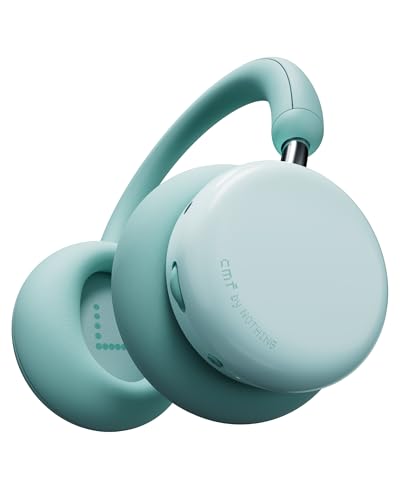
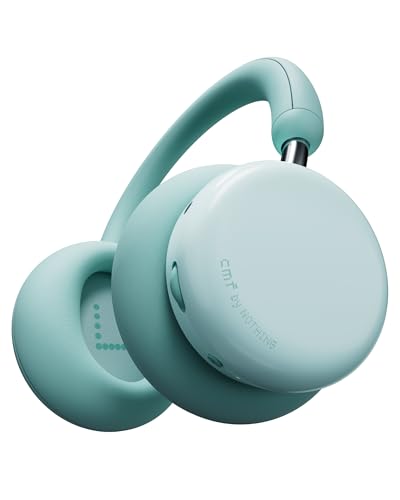
CMF Headphone Pro — when Pro is the product’s actual name
Badge: The literal Headphone Pro
- Form: over-ear wireless, Bluetooth 5.4 per the listing
- Noise cancelling: active, with 50 hours of ANC playtime per the listing
- Controls per the listing: physical bass and treble slider, custom EQ and spatial audio
- Audio per the listing: Hi-Res LDAC support
CMF, the value-focused sub-brand of Nothing, named its over-ear model Headphone Pro outright, which makes it the answer to the most literal reading of this keyword. The interesting question is whether the product behaves like a pro tier or like a badge. On the evidence of its listing, it argues its case with features rather than luxury: high-resolution codec support, a hardware slider for bass and treble that adjusts sound without opening an app, custom EQ for listeners who want to correct the tuning, and battery endurance that competes with models at several times the price. That is the value-brand interpretation of pro: the checklist of the flagship tier, delivered without the flagship materials budget.
- Strengths: flagship-style feature list at a value tier; physical sound controls are genuinely convenient
- Strengths: LDAC support and custom EQ reward listeners who like to tune
- Strengths: long ANC playtime suits travel and work weeks
- Trade-offs: build and finish reflect the price, not the badge
- Trade-offs: tuning leans energetic out of the box; the EQ exists partly because you may need it
- Trade-offs: the brand’s long-term parts and support story is still being written
Best for: buyers who want the pro feature checklist without flagship pricing. Not suited for: buyers expecting flagship materials or a reference tuning. Check price on Amazon

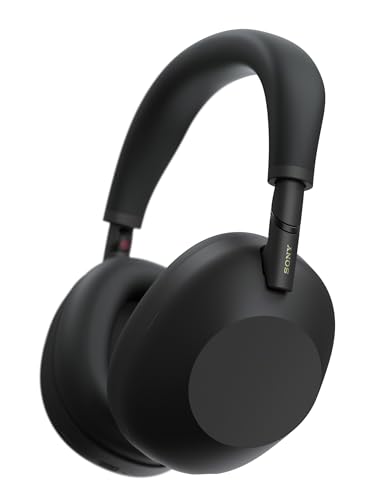
Sony WH-1000XM6 — the flagship tier the label points at
Badge: The benchmark consumer flagship
- Form: over-ear wireless
- Noise cancelling: adaptive, with a 12-microphone array per the listing
- Battery: up to 30 hours per the listing
- Positioning per the listing: studio-quality sound positioning in Sony’s flagship line
Sony’s flagship line never needed the word pro, which is itself instructive: at the top of the consumer market, the product line’s reputation does the work the badge does elsewhere. What you get for the tier is the full stack executed well: class-leading cancelling that adapts to pressure and surroundings, a tuning aimed at mainstream pleasure with the processing to personalise it, call quality built on a large microphone array, and the battery and comfort to wear the result all day. If a mid-priced model calls itself pro, this is the experience it is implicitly promising to approach.
- Strengths: benchmark noise cancelling and transparency; polished app and controls
- Strengths: strong calls and multipoint behaviour for workdays
- Strengths: comfortable, travel-ready build with a proper case
- Trade-offs: flagship pricing is the entry fee for the full stack
- Trade-offs: tuning is pleasurable rather than reference-neutral
- Trade-offs: sealed flagship construction limits owner repair compared with studio models
Best for: travellers and commuters who want the tier’s best all-round execution. Not suited for: creators who need a neutral studio tool. Check price on Amazon

Sennheiser Momentum 4 — the heritage brand’s answer
Badge: Best battery in the flagship conversation
- Form: over-ear wireless, folding design per the manufacturer’s range
- Noise cancelling: adaptive noise cancellation with transparency per the listing
- Battery: 60 hours per the listing
- Sound: Sennheiser Signature Sound per the listing
Sennheiser arrives in this category with a genuine professional catalogue behind it, in studio and broadcast audio, and its flagship consumer model shows a different set of priorities: endurance and sound first. The battery figure, quoted with cancelling in the conversation rather than hidden behind best-case conditions, is roughly double the mainstream flagship norm and changes how often you think about charging at all. The tuning leans toward the brand’s hi-fi heritage, which makes it the consumer flagship most likely to satisfy a listener coming from wired audiophile headphones.
- Strengths: exceptional battery life reduces charging to a weekly habit
- Strengths: sound tuning with genuine hi-fi pedigree; comfortable long-session fit
- Strengths: adaptive cancelling and transparency cover commuting well
- Trade-offs: cancelling strength trails the very best on aircraft drone
- Trade-offs: touch controls divide opinion; some prefer buttons
- Trade-offs: case and materials feel functional rather than luxurious
Best for: listeners who prioritise sound and battery over ultimate cancelling. Not suited for: frequent flyers whose first priority is silence. Check price on Amazon

Soundcore Space One Pro — the feature-led contender
Badge: Pro ambition from a value brand
- Form: over-ear wireless, foldable design per the listing
- Noise cancelling: adaptive active noise cancelling per the listing
- Battery: 60 hours of playtime per the listing
- Audio per the listing: Hi-Res LDAC support
Soundcore’s Space One Pro shows the third pattern: a value brand using the pro name to signal its most ambitious model rather than a separate professional product. The substance behind the signal is a foldable design that travels well, adaptive cancelling, high-resolution codec support, and battery endurance that matches or beats flagships. What the tier below the flagships typically concedes is refinement: app polish, microphone performance in difficult wind, and the last increment of cancelling depth. For many buyers that trade is the smartest in the market, which is precisely why the pro label needs the framework in this article rather than blind trust or blind dismissal.
- Strengths: foldable, travel-friendly design with long battery life
- Strengths: LDAC and adaptive cancelling at a mid tier
- Strengths: app EQ gives control over the sound signature
- Trade-offs: call quality in wind is a step behind flagships
- Trade-offs: materials and case feel built to a price
- Trade-offs: pro here means top of this brand’s range, not a professional tool
Best for: value-focused buyers who want flagship features with sensible compromises. Not suited for: buyers who make critical calls outdoors daily. Check price on Amazon
Beyond the linked case studies, a few names deserve prose-only mention because they define the term’s other meanings. Apple’s AirPods Pro established pro as an earbud tier name for a generation of buyers. Studio standards such as the Audio-Technica ATH-M50x and the beyerdynamic pro lines define the professional meaning and are discussed, with a verified listing, in the headset comparison elsewhere on this site. Dedicated gaming pro lines from the major esports brands define the third meaning. None of those need a link here; they need a reader who knows which meaning is on the box in front of them.
the flagship noise cancelling field compared
does driver size actually matter
Buying guide: choosing by the job, not the badge
Start from your dominant use, because each use crowns a different winner. The commuter and traveller should rank noise cancelling, comfort over hours, case protection, and battery in that order, and will find the flagship tier genuinely earns its money; the pro label is least misleading here, because the tier’s additions map directly onto travel pain. The creator and musician should ignore wireless tiers almost entirely and shop the professional category: wired, neutral, repairable, with replaceable cables and pads, judged on published specifications and parts availability. A creator who also travels is the one buyer who may honestly need two pairs, and mid-priced examples of each beat one flagship asked to do both jobs.
The gamer should read pro as a microphone and latency claim: a detachable or broadcast-style boom microphone, a low-latency wireless mode, and comfort for long sessions matter, while hi-res codecs and travel cancelling do not. The office worker lives on calls, so microphone performance in real rooms, multipoint pairing, and a mute control you can find blind outrank everything else; a dedicated headset may serve better than any headphone, a comparison this site covers in depth. The everyday listener, the largest group, should buy fit and tuning: the pair whose sound you enjoy at low volume, whose pads your ears tolerate for an evening, and whose battery you will rarely think about. That pair exists at every tier, and the pro badge is the least useful guide to finding it.
Price framing helps keep the badge honest. Think of the market in three broad bands: a budget band where the essentials are now surprisingly complete, a mid band where comfort, codecs, and cancelling become genuinely good, and a flagship band where you pay for refinement, silence, and polish rather than for new categories of function. A pro model should justify itself within its band by the feature gap over its own standard sibling, not by the word on the box. When the gap is a codec you cannot use, a case you will not carry, and a badge, the standard model is the better buy and the difference belongs in your pocket.
gaming headsets where pro means microphone first
DACs and amps for wired professional listening
How to audition, set up, and live with a pro-tier pair
Auditioning is a skill, and ten disciplined minutes beat an hour of random listening. Bring three tracks you know deeply: one vocal recording for midrange honesty, one dense production for separation, and one quiet passage for background hiss and comfort of the treble. Listen at the volume you actually use, because many tunings impress at high volume and fatigue at low. Switch noise cancelling off and on in the noisiest environment available to you, and make a short phone call to a patient friend, ideally near a road, because microphone quality is the feature you cannot judge from a showroom’s silence.
Setup in the first week decides long-term satisfaction. Update the firmware before judging anything, because launch software is routinely revised. Work through the companion app’s equalizer with your vocal test track, making small changes and living with each for a day rather than chasing perfection in an evening. Check the fit with your glasses if you wear them, test multipoint with your real phone and computer, and learn the physical controls until they are automatic. Register the warranty, keep the receipt with the serial number, and note which parts, pads, cables, and cases the manufacturer sells; that list is your evidence of whether the pro claim includes professional support.
Living with the pair, two habits extend its life more than any other. Store it in its case rather than on a hook by the headband if the design stretches easily, and wipe pads down after hot or long sessions, because pad condition quietly governs both comfort and bass seal. Replace pads when they flatten rather than when they disintegrate, and treat a worn cable as routine maintenance on wired models rather than as a failure. A professional product rewards this mindset because it was designed for it; a consumer flagship rewards it too, just within limits its sealed battery eventually sets.
Common mistakes to avoid
The first mistake is paying the pro premium for features your phone or your life cannot use: a high-resolution codec your handset does not transmit, spatial audio you dislike, or cancelling tiers aimed at aircraft you never board. The second is expecting a consumer pro tier to do a studio tool’s job, then blaming the product for a tuning philosophy that was printed on its box in everything but words. The third is the mirror error: buying a neutral studio headphone for commuting pleasure and finding it honest to the point of joylessness on a train. The fourth is trusting headline battery and cancelling numbers across brands without checking the test conditions, which differ enough to reverse rankings. The fifth is ignoring the returns window: fit is personal, ears differ, and the only reliable audition is your own head over several days. The sixth is forgetting that last year’s flagship, discounted into the mid band, is often the best pro purchase in the market, badge or no badge.
Pro earbuds: the same word in a smaller product
Many readers arrive at this keyword from earbuds, where the pro tier is now the default flagship shape, so the translation is worth making explicit. In earbuds, pro typically buys four things: active noise cancelling where the standard model has none or a weaker version, wireless charging for the case, a more elaborate microphone system for calls and transparency, and fit hardware such as additional ear tip sizes or foam options. Those are meaningful, daily differences, and because earbuds are small, sealed, and battery-limited by physics, the repairability argument that defines professional over-ear headphones barely applies: almost no earbud at any tier is meaningfully repairable, and the case battery is as sealed as the buds themselves.
That changes the buying advice. With earbuds, judge the pro tier purely as a feature bundle against your week, the way the decision framework below describes, and give no weight to professional connotations at all. With over-ear headphones, the professional tradition is real and available at similar money, so a buyer who values longevity can choose it deliberately. Confusing the two categories is how readers end up expecting studio serviceability from an earbud, or earbud convenience from a studio headphone, and being disappointed by products that are exactly what their category promises. The word is the same; the artefact underneath it is not, which has been this article’s argument from the first paragraph.
One more earbud-specific caution belongs here, because it is the category’s most common false economy. Fit is destiny in earbuds: a pro model that will not seal in your ears cancels worse than a standard model that seals perfectly, and no specification captures that. If you are choosing between tiers in earbuds, spend your trial time on fit and seal across tip sizes before you compare any other feature, and be willing to let a cheaper model win on the strength of your own ears. Retailers’ returns policies exist precisely because this cannot be known from a product page, yours or anyone else’s.
A short history of the word, and why it spread everywhere
The professional meaning came first, and it came from work. Broadcasters, recording studios, and telephone operators needed headphones that survived daily abuse, sounded consistent from unit to unit, and could be repaired on site, and manufacturers built distinct professional lines to serve them, often sold through different catalogues at different prices from their consumer ranges. Those lines were unglamorous and extraordinarily long-lived; designs from that era are still in production because workplaces standardise slowly and value a product that has not changed underneath them. When you see a studio model that looks dated beside a glossy flagship, you are usually looking at that professional logic: the design is old because changing it would be a cost to its actual customers.
The consumer meaning arrived when flagship tiers needed names. As phones and laptops adopted pro for their own top models, headphone brands followed the vocabulary their customers were already using to describe phones, tablets, and computers. The label proved commercially powerful because it flatters twice: the product sounds serious, and the buyer sounds discerning. Earbuds accelerated the trend, because a small product line benefits from simple good-better naming, and the success of prominent pro earbuds taught the whole industry that the word moves units. Gaming completed the spread, borrowing the language of professional competition for products aimed at players who aspire to that level, which is honest when it describes latency and microphones and decorative when it describes lighting.
Understanding that history protects your wallet in a specific way: it tells you the label’s meaning depends on which tradition the brand is drawing from. A company with decades of professional catalogue can invoke the first meaning credibly, and its consumer pro model usually inherits real engineering discipline even when it is not itself a studio tool. A company founded last year invoking the same word is borrowing prestige it has not yet earned, which does not make its product bad, but does mean the badge should be given no weight at all in your decision. Judge the artefact: the parts list, the published conditions, the repairability, the tuning. The word is a summary other people wrote; the artefact is the evidence.
Standard versus Pro within one line: a decision framework
When a brand sells both versions, the decision between them is the cleanest in headphone shopping, because the tuning team, fit, and design language are shared and only the feature stack changes. Work through the differences in the order below, and stop paying as soon as the remaining differences stop mattering to you. Noise cancelling is usually the headline gap: the pro version cancels more deeply, adapts to your environment, or handles wind better. Value it by your noisiest weekly hour, not by your quietest. Battery is the second gap, and the honest comparison uses both models’ figures under the same conditions, cancelling on, same codec, because headline figures are often measured differently even within one brand’s own page.
Codecs and connectivity form the third gap. If your phone transmits a high-resolution codec and you listen in quiet places, the pro version’s codec support is a real, audible-in-principle upgrade; if you listen on trains through a phone without that codec, it is a line on a box. Multipoint pairing, wear detection, and wireless charging live in the same group: each is a small daily convenience, and together they are often the true substance of a pro tier. Microphones form the fourth gap and the one most often underweighted. If your workday runs through your headphones, a pro tier’s extra microphones and processing can be the entire justification for the upgrade, and the only way to judge is call samples or a returns-protected trial in your own rooms and streets.
| Typical gap | Who should pay for it | Who can skip it |
|---|---|---|
| Deeper, adaptive noise cancelling | Flyers, train commuters, open-plan workers | Home listeners in quiet rooms |
| Longer battery under load | Multi-day travellers, forgetful chargers | Desk listeners near a charger |
| High-resolution codec support | Android listeners with matching phones and quiet listening habits | Anyone whose phone or environment cannot reveal it |
| Better microphones and call processing | Remote workers and sales roles | Listeners who take calls on a separate headset |
| Materials, case, and finish | Daily carriers who value durability and feel | Careful home users |
The framework generalises beyond any single brand: list the gaps, price each one against your own week, and buy the cheaper model when the priced gaps sum to less than the difference on the tag. Buyers who do this arithmetic consistently discover that the standard model is right about half the time, which is exactly what a healthy tier structure should produce. A pro tier that is right for everyone would mean the standard model should not exist; a pro tier that is right for no one is a badge in search of a budget. Both exist in the wild, and the arithmetic is how you tell them apart.
The economics of longevity: what pro should mean over five years
A headphone’s true cost is its price divided by the years it stays in service, and the pro question looks different through that lens. A sealed consumer flagship with a glued battery has a built-in horizon: when the battery fades, the product fades, however good its drivers remain. A repairable professional model with replaceable pads, cables, and headband parts can be refreshed for the cost of accessories, which is why studios keep them for a decade. Between those poles, the practical questions are concrete. Are pads sold separately, and at what price relative to the headphone? Is the cable detachable and standard? Does the manufacturer list spare parts at all, and for how long after a model is replaced?
Wireless buyers should add firmware to that list. A pro-tier model from a committed brand receives updates that fix pairing bugs, improve cancelling, and occasionally add features, extending the product’s useful life in software as well as hardware. A model abandoned at launch software ages faster than its materials suggest. None of this appears in the word pro, but all of it is what the word should prompt you to check, and it is the deepest sense in which the professional tradition still matters to a consumer purchase: professionals buy time, not launches, and a buyer who thinks the same way gets the same benefit.
What pro means for gamers and creators, specifically
Two audiences meet the word pro more often than anyone, and each deserves a direct translation. For gamers, a pro model should be judged on the competitive chain: a low-latency connection that keeps footsteps and dialogue in step with the screen, a microphone your teammates can understand without repetition, positional audio that helps rather than impresses, and comfort that survives a long session without hot spots. Anything beyond that chain, including dramatic styling and lighting, is decoration priced as performance. The honest pro gaming products are often visually plain, because their budget went into the chain; the dishonest ones reverse that allocation, and the framework in this article, features priced against your own week, exposes the difference quickly.
For creators, musicians, podcasters, and streamers, the word should be judged on the production chain: a tuning honest enough to make decisions on, a microphone or a wired connection to a proper interface that records your voice cleanly, isolation appropriate to your room, and parts you can replace the night before a deadline rather than after it. A creator’s headphone is closer to a tradesperson’s tool than to an entertainment product, which is why the professional category, wired and repairable, still dominates serious desks even as consumer flagships dominate travel. Creators who also appear on camera should weigh one more factor honestly: how the headphone looks and how its microphone sounds to an audience are part of the product they ship, and a model chosen for the audience’s ears as well as their own is a legitimate business decision, not vanity.
Both audiences share one trap worth naming: buying the pro model used by the professionals they admire, in a different environment from their own. A tournament player on a wired stage connection, a mixing engineer in a treated room, and a streamer with a separate studio microphone are each using their pro product inside a system. Copying the headphone without the system copies the least important part. Copy their reasoning instead: they chose for a chain, a room, and a job, and the badge on the box was the last thing decided, if it was decided at all.
What pro should mean after the first month: ownership, parts, and support
Launch reviews judge a headphone on its first week. Owners live with it for years, and the qualities that separate a genuinely professional-grade product from a marketing label mostly appear after the unboxing: how it wears, what breaks, what can be replaced, and how the maker treats you when something goes wrong. Judge the products in this guide against these ownership tests before the label persuades you.
Wear parts and the replacement question
Ear pads and headbands are consumables. On heavily used headphones, pads typically soften, crack, or flatten long before the drivers fail, and a flattened pad changes both comfort and sound by moving the driver relative to your ear. A product earns the pro label in part by making pads easy to remove, easy to source, and reasonably priced years after launch. Before buying, check whether pads, cables, and cases are listed as orderable parts rather than assuming they exist; a headphone you cannot re-pad is a headphone with an expiry date.
Cables, connectors, and the dignity of wired fallback
Wireless convenience dominates modern buying, but creators and frequent travellers still meet the wired world daily: aircraft screens, studio interfaces, older laptops, and the day the battery dies at the wrong moment. A pro-grade product treats wired use as a first-class mode rather than an emergency afterthought, with a cable in the box, sensible behaviour when powered off, and no penalty in comfort or controls. If your work involves any shared or studio equipment, weigh the wired story as heavily as the wireless one.
Support horizons and firmware promises
App-dependent features create a new kind of ageing: a headphone can be physically perfect and still lose features if its app is abandoned. Look for makers with a track record of supporting older models, publishing update notes, and keeping basic functions independent of the app. Equaliser settings that live on the device, controls that work without a phone, and Bluetooth that pairs with anything are the marks of a product designed to be owned for a long time rather than replaced on the maker’s schedule.
Comfort as a professional specification
For anyone who wears headphones as a tool of the trade, comfort is not a luxury section at the end of a review; it is the specification that decides whether the other specifications get used. Weight distribution, clamp force, pad depth for glasses wearers, and heat build-up across a long session all belong in a professional assessment. The honest method is unglamorous: wear the headphone for your longest realistic session before the return window closes, with your glasses on and your usual work in front of you, and believe that result over any first-impression verdict, including your own from the first ten minutes.
The resale and hand-down test
A useful final check: imagine selling or handing down this headphone in three years. Products with replaceable parts, standard cables, a known name, and features that do not depend on a fragile app hold their value and their usefulness. Products built around sealed construction and a single companion service do not. You are not buying for the resale market, but the test exposes which products were designed as durable tools and which were designed as seasonal accessories wearing a professional label.
Frequently asked questions
Is there a specific product called Headphone Pro?
Yes, in more than one catalogue, which is part of the confusion. CMF by Nothing sells an over-ear model named Headphone Pro, examined as a case study above, and other brands have used the same name in earbud and headphone lines. If you are shopping for a specific model, confirm the brand as well as the name, because reviews, accessories, and pads are not interchangeable between unrelated products that share it.
What is the difference between pro and regular headphones?
In consumer lines, the pro version usually adds incremental upgrades: stronger noise cancelling, more codec support, longer battery life, better microphones, and nicer materials or case. In professional audio, the difference is categorical rather than incremental: wired connections, neutral tuning, and construction designed for repair and spare parts. Work out which comparison a given product is inviting before deciding whether the gap is worth paying for.
Are pro headphones worth it for music listening?
They are worth it when the specific upgrades match your listening: travellers gain real silence, long-session listeners gain comfort and battery, and tuning enthusiasts gain EQ and codec options. They are not worth it as a generic sound-quality promise, because a well-chosen standard model often shares the same drivers and tuning team. Spend on the feature you will use weekly, not on the tier name.
Do professionals actually use consumer pro models in studios?
Rarely for critical work. Studios standardise on wired reference models built for repair and consistency, because a mix must translate and a broken cable must be a thirty-second fix. Consumer flagships appear in studios as a translation check, a deliberate listen on the kind of headphone the audience owns, which is a compliment to their popularity rather than to their neutrality.
Why do pro models from different brands vary so much in price?
Because the word describes position within each brand’s own range, not a shared standard. One brand’s pro is its flagship; another’s is a mid-tier step; a professional line’s pro may be its entry model. Compare any candidate against its own siblings and against rivals in the same price band, and let the feature list, not the badge, carry the argument.
What should I check first when a headphone calls itself pro?
Check repairability and support: replaceable pads and cable, parts listed for sale, and a warranty you can actually use. Then check the conditions behind the two headline numbers, battery and cancelling. Those three checks, which take minutes, separate professional substance from marketing paint more reliably than any review score.
Is a pro model worth it for someone who only listens to music?
It can be, but only when the specific upgrades match ordinary listening: better pads and build for daily wear, stronger battery discipline, and a tuning you prefer. The features that justify pro pricing for creators — low-latency modes, wired performance, call quality for meetings, multipoint behaviour — add little to a purely musical life. Read the pick descriptions in this guide with your own routine beside them, and pay only for the upgrades that appear in your week. A standard model chosen well beats a pro model chosen by label every time.
How long should a pro-grade headphone realistically last?
With replaceable pads and cables and ordinary care, the physical product should serve for many years; drivers and hinges rarely fail first in this class. The realistic limits are consumables and software: batteries in wireless models gradually hold less charge over years of cycles, and app features depend on continued support. You can extend the useful life by treating the battery kindly — avoiding leaving the headphone flat for long periods — and by choosing models whose core listening experience does not depend on the app at all.
Does pro ever just mean a different colour and a case?
Sometimes, and learning to spot that pattern protects your money across every product category, not just headphones. The warning signs are a specification sheet identical to the standard model, a feature list written in adjectives rather than functions, and a launch story built around who the product is for rather than what it does differently. The defence is the discipline used throughout this guide: name the concrete differences, price them honestly against your own routine, and let the label earn its premium item by item. Where a maker cannot list the differences, assume there are none worth paying for, and buy the standard model with confidence.
Final recommendation
Treat pro as a question, not an answer. Asked properly, it prompts the checks that matter: which tier, which philosophy, which conditions behind the numbers, and which parts you can replace in three years. The case studies above show the label at its most literal, its most polished, its most endurance-focused, and its most ambitious, and the right choice among them depends entirely on the job in your life. Decide the job first, let the badge argue for itself afterwards, and you will rarely overpay for paint or underbuy for the work.
a wired reference classic reviewed in depth