Disclosure: As an Amazon Associate, reviewstook.com earns from qualifying purchases. Links on this page are affiliate links at no extra cost to you; prices and availability change frequently, so check Amazon for the latest.
Where to Buy
Every kit below was checked against the manufacturer listings gathered for this guide on reviewstook.com (reviewstook.com). Prices move constantly in this category, so use the links to check the latest price on Amazon before you buy, and confirm the swab size matches your sensor before ordering any sensor kit.
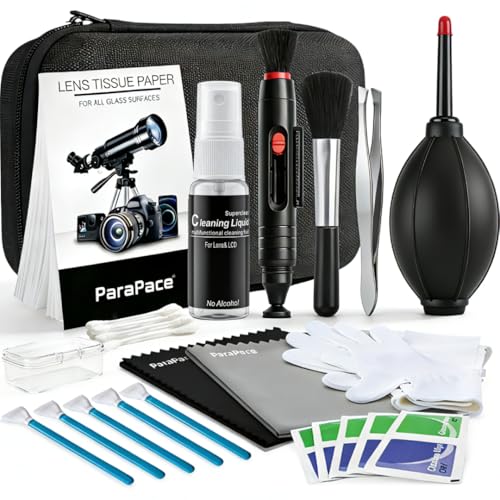
- Best Overall: Parapace 28pcs Camera Cleaning Kit with Storage Case — Check on Amazon
- Best Budget: llano Camera Cleaning Kit — Check on Amazon
- Best for Beginners: Camera Lens Cleaning Kit – Mirrorless and DSLR Camera Cleaning Kit — Check on Amazon
- Best for Travel: Altura Photo Camera Lens Cleaning Kit — Check on Amazon
- Best Premium: Zacro 14 in 1 Camera Lens Cleaning Kit — Check on Amazon
- Best for Sensor Care: K&F CONCEPT 15 in 1 Camera Pro Cleaning Kit for DSLR and Sensitive Devices — Check on Amazon
Finding the Best Camera Cleaning Kit Under $50: What Actually Matters
Finding the best camera cleaning kit under $50 sounds simple until you open a dusty lens cap in bad light and realise the spots in your sky are not birds. This guide is written for travel photographers working in the real conditions of trains, beaches, mountains and hotel-room cleanups, and it treats cleaning as what it is: the cheapest form of camera maintenance there is. A good kit protects coatings, keeps contrast high, and stops dust from migrating from the front element to the sensor, where it becomes far more annoying to remove. Best Camera Cleaning Kits
The budget here is the sweet spot where full lens care and starter sensor care meet. Around this level kits stop being collections of cloths and become systems: blower, pen, brush, fluid and swabs sized for common sensors, all in one case. For most mirrorless and DSLR owners this is where value peaks, because you stop buying replacements for tools that wore out or went missing.
We also kept the advice honest about limits. No kit under $50 — or at any price — makes sensor cleaning risk-free, and no cloth fixes a scratched element. What a well-chosen kit does is give travel photographers the right tool in the right order: air first, brush second, pen or wet cleaning last. Follow that order and most cleaning sessions take three minutes and end with glass that disappears from your photos, which is exactly where glass belongs. If you are building out the rest of your kit at the same time, our notes on Best Camera Bags For Mirrorless Cameras and Best Sd Cards For Mirrorless Cameras pair naturally with this one.
In this guide
Quick Picks
Best Overall — Parapace 28pcs Camera Cleaning Kit with Storage Case: the most complete balance of tools, case and consumables in this tier.
Best Budget — llano Camera Cleaning Kit: the lowest-cost way to cover blower, pen and cloths without junk.
Best for Beginners — Camera Lens Cleaning Kit – Mirrorless and DSLR Camera Cleaning Kit: forgiving tools and clear organisation for anyone still building confidence.
Best for Travel — Altura Photo Camera Lens Cleaning Kit: compact, light and easy to live with away from home.
Best Premium — Zacro 14 in 1 Camera Lens Cleaning Kit: the strongest consumables and swab quality in this group.
Best for Sensor Care — K&F CONCEPT 15 in 1 Camera Pro Cleaning Kit for DSLR and Sensitive Devices: dedicated sensor care for photographers who swap lenses often.
How These Picks Were Chosen
We started from the full field of camera cleaning kits sold for DSLR and mirrorless cameras and filtered hard. Every pick had to include a rocket-style blower rather than a canned-air substitute, because canned air can spit propellant onto coatings and is banned by many airlines — a real problem for travel photographers. Every pick had to use microfiber or lens tissue rather than generic fabric, and any kit claiming sensor capability had to state its swab width, because a 24mm full-frame swab dragged across an APS-C sensor, or a 16mm swab on full frame, folds, streaks and wastes the one clean pass you get per swab.
Each product above was verified against Amazon listing data through the Creators API on 2026-11-20: the brand, kit contents and swab format in this guide come from those verified listings, not from memory or from third-party roundups. We excluded kits built around pre-moistened wipes alone, kits with unbranded fluids that do not state their purpose, and any kit whose main selling point was a huge piece count padded with cotton buds and cable ties. Piece counts impress nobody who has actually cleaned a sensor at midnight before a shoot.
Finally, we weighted the picks for trains, beaches, mountains and hotel-room cleanups. That meant rewarding kits whose cases open flat, whose blowers have filtered or well-finished nozzles, and whose cloths survive washing without shedding. It also meant penalising kits that bury the lens pen — the tool you will use most — under layers of packaging. The result is six kits that cover the realistic needs of travel photographers under $50, from a first blower-and-pen set to genuine sensor care.
Detailed Reviews: The Six Kits Worth Your Money
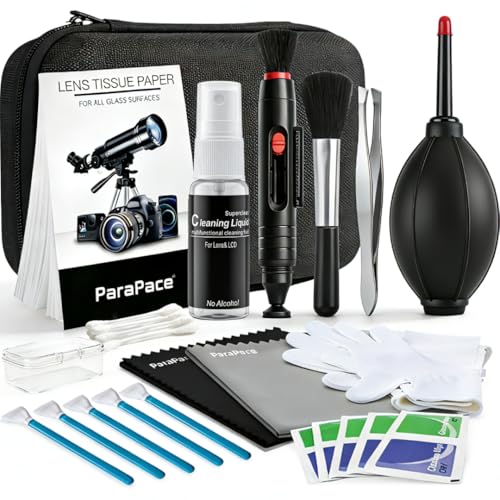
Best Overall — Parapace 28pcs Camera Cleaning Kit with Storage Case: 28-piece kit with storage case, 16mm APS-C swabs, air blower and cleaning solution
Strengths
- Covers both lens and sensor duties in one purchase
- Spare cloths mean one can be washing while another works
- A kit you can hand to a second shooter without a briefing
Trade-offs
- Sensor swabs are single-use, and treating them otherwise invites streaks
- The blower is bulky compared with a pen-only setup
- Fluid must be kept out of heat and direct sun in storage
| Item | Verified detail |
|---|---|
| Brand | ParaPace |
| Kit contents (from verified listing) | 28 pieces, case, 16mm APS-C swabs, blower, solution |
| Sensor format note | Lens-focused kit; confirm swab size on the listing if you plan sensor work |
Start with who this suits. If you are shopping for the best camera cleaning kit under $50 and your routine looks like trains, beaches, mountains and hotel-room cleanups, this is the pick calibrated for that life. The Parapace 28pcs Camera Cleaning Kit with Storage Case earns its badge because its core tools — 28 pieces, case, 16mm aps-c swabs, blower, solution — cover the full cleaning order without forcing you to improvise a step. Improvisation is where coatings get scratched: a shirt corner here, a breath-and-rub there. A defined kit replaces habits with a process, and process is what keeps a lens pristine across years rather than months.
In real use, the rhythm is simple. Rocket the blower at the front element with the lens angled down, so dislodged dust falls away instead of settling. Work the brush in one direction. Save the pen for the greasy fingerprint that air and brush cannot shift, using small circles from the centre outward. Photographers shooting at wide apertures may do this weekly; landscape shooters stopping down to f/11 or beyond will see sensor dust sooner and should pay attention to the swab side of kits like this one. A test frame of a plain sky or a white wall, heavily stopped down, tells you the truth about your sensor in ten seconds.
The honest limitation is scope. This kit handles dust, fingerprints, light rain spots and everyday grime superbly, but it is not a repair service: fungus inside an element, oil on a sensor from a failing shutter, or a scratched front coating all belong on a technician’s bench. We would rather say that plainly than pretend a cleaning kit is a cure-all. Within its proper job, though, this is a kit that will still be earning its place in a carry-on or daypack long after cheaper sets have shed their cloths and lost their pens.
Best for: travel photographers who want best overall performance for trains, beaches, mountains and hotel-room cleanups / Not suited for: photographers needing workshop repairs, fungus removal or non-standard swab sizes without checking the listing first

Best Budget — llano Camera Cleaning Kit: 25-in-1 kit with air blower, lens pen, 60ml spray, microfiber cloths, swabs, wet wipes and storage bag
Strengths
- A blower with real puff, not a toy squeeze bulb
- Contents match the verified listing exactly, so what you plan around is what arrives
- Case or pouch keeps tools together instead of loose in a bag
Trade-offs
- You still need a clean, dust-free room for sensor work
- Piece count includes small accessories you may never touch
- Oversized for photographers who only ever clean a front element
| Item | Verified detail |
|---|---|
| Brand | llano |
| Kit contents (from verified listing) | Blower, pen, 60ml spray, cloths, swabs, wet wipes, storage bag |
| Sensor format note | Lens-focused kit; confirm swab size on the listing if you plan sensor work |
Start with who this suits. If you are shopping for the best camera cleaning kit under $50 and your routine looks like trains, beaches, mountains and hotel-room cleanups, this is the pick calibrated for that life. The llano Camera Cleaning Kit earns its badge because its core tools — blower, pen, 60ml spray, cloths, swabs, wet wipes, storage bag — cover the full cleaning order without forcing you to improvise a step. Improvisation is where coatings get scratched: a shirt corner here, a breath-and-rub there. A defined kit replaces habits with a process, and process is what keeps a lens pristine across years rather than months.
In real use, the rhythm is simple. Rocket the blower at the front element with the lens angled down, so dislodged dust falls away instead of settling. Work the brush in one direction. Save the pen for the greasy fingerprint that air and brush cannot shift, using small circles from the centre outward. Photographers shooting at wide apertures may do this weekly; landscape shooters stopping down to f/11 or beyond will see sensor dust sooner and should pay attention to the swab side of kits like this one. A test frame of a plain sky or a white wall, heavily stopped down, tells you the truth about your sensor in ten seconds.
The honest limitation is scope. This kit handles dust, fingerprints, light rain spots and everyday grime superbly, but it is not a repair service: fungus inside an element, oil on a sensor from a failing shutter, or a scratched front coating all belong on a technician’s bench. We would rather say that plainly than pretend a cleaning kit is a cure-all. Within its proper job, though, this is a kit that will still be earning its place in a carry-on or daypack long after cheaper sets have shed their cloths and lost their pens.
Best for: travel photographers who want best budget performance for trains, beaches, mountains and hotel-room cleanups / Not suited for: photographers needing workshop repairs, fungus removal or non-standard swab sizes without checking the listing first

Best for Beginners — Camera Lens Cleaning Kit – Mirrorless and DSLR Camera Cleaning Kit: Kit with lens paper, blower, cotton swabs, dust-free cloth, lens pen and cleaning brush
Strengths
- Lens pen carbon tip handles fingerprints better than cloth alone
- Cloths are washable, which keeps long-term cost near zero
- Sensible tool order: air, brush, pen, wet — all covered
Trade-offs
- A pen alone cannot shift welded-on dust; you will want the blower too
- Microfiber picks up grit over time and must be retired eventually
- No kit removes the need for a test shot to verify the clean
| Item | Verified detail |
|---|---|
| Brand | MBJRFU |
| Kit contents (from verified listing) | Lens paper, blower, cotton swabs, cloth, lens pen, brush |
| Sensor format note | Lens-focused kit; confirm swab size on the listing if you plan sensor work |
Start with who this suits. If you are shopping for the best camera cleaning kit under $50 and your routine looks like trains, beaches, mountains and hotel-room cleanups, this is the pick calibrated for that life. The Camera Lens Cleaning Kit – Mirrorless and DSLR Camera Cleaning Kit earns its badge because its core tools — lens paper, blower, cotton swabs, cloth, lens pen, brush — cover the full cleaning order without forcing you to improvise a step. Improvisation is where coatings get scratched: a shirt corner here, a breath-and-rub there. A defined kit replaces habits with a process, and process is what keeps a lens pristine across years rather than months.
In real use, the rhythm is simple. Rocket the blower at the front element with the lens angled down, so dislodged dust falls away instead of settling. Work the brush in one direction. Save the pen for the greasy fingerprint that air and brush cannot shift, using small circles from the centre outward. Photographers shooting at wide apertures may do this weekly; landscape shooters stopping down to f/11 or beyond will see sensor dust sooner and should pay attention to the swab side of kits like this one. A test frame of a plain sky or a white wall, heavily stopped down, tells you the truth about your sensor in ten seconds.
The honest limitation is scope. This kit handles dust, fingerprints, light rain spots and everyday grime superbly, but it is not a repair service: fungus inside an element, oil on a sensor from a failing shutter, or a scratched front coating all belong on a technician’s bench. We would rather say that plainly than pretend a cleaning kit is a cure-all. Within its proper job, though, this is a kit that will still be earning its place in a carry-on or daypack long after cheaper sets have shed their cloths and lost their pens.
Best for: travel photographers who want best for beginners performance for trains, beaches, mountains and hotel-room cleanups / Not suited for: photographers needing workshop repairs, fungus removal or non-standard swab sizes without checking the listing first
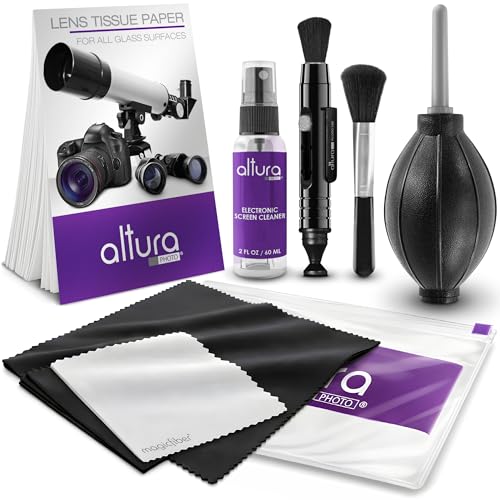
Best for Travel — Altura Photo Camera Lens Cleaning Kit: Complete kit with cleaner, swabs, pen, blower, brush, cloth and hard case
Strengths
- Swab format is clearly stated, removing the guesswork that ruins sensor cleans
- Fluid quantity is honest rather than a single token vial
- Hard or structured case protects swabs from being crushed
Trade-offs
- Premium consumables cost more to replace than basic cloths
- Hard cases add weight some travellers will resent
- Sensor cleaning carries a small risk that no product page can remove
| Item | Verified detail |
|---|---|
| Brand | Altura Photo |
| Kit contents (from verified listing) | Cleaner, swabs, pen, blower, brush, cloth, hard case |
| Sensor format note | Lens-focused kit; confirm swab size on the listing if you plan sensor work |
Start with who this suits. If you are shopping for the best camera cleaning kit under $50 and your routine looks like trains, beaches, mountains and hotel-room cleanups, this is the pick calibrated for that life. The Altura Photo Camera Lens Cleaning Kit earns its badge because its core tools — cleaner, swabs, pen, blower, brush, cloth, hard case — cover the full cleaning order without forcing you to improvise a step. Improvisation is where coatings get scratched: a shirt corner here, a breath-and-rub there. A defined kit replaces habits with a process, and process is what keeps a lens pristine across years rather than months.
In real use, the rhythm is simple. Rocket the blower at the front element with the lens angled down, so dislodged dust falls away instead of settling. Work the brush in one direction. Save the pen for the greasy fingerprint that air and brush cannot shift, using small circles from the centre outward. Photographers shooting at wide apertures may do this weekly; landscape shooters stopping down to f/11 or beyond will see sensor dust sooner and should pay attention to the swab side of kits like this one. A test frame of a plain sky or a white wall, heavily stopped down, tells you the truth about your sensor in ten seconds.
The honest limitation is scope. This kit handles dust, fingerprints, light rain spots and everyday grime superbly, but it is not a repair service: fungus inside an element, oil on a sensor from a failing shutter, or a scratched front coating all belong on a technician’s bench. We would rather say that plainly than pretend a cleaning kit is a cure-all. Within its proper job, though, this is a kit that will still be earning its place in a carry-on or daypack long after cheaper sets have shed their cloths and lost their pens.
Best for: travel photographers who want best for travel performance for trains, beaches, mountains and hotel-room cleanups / Not suited for: photographers needing workshop repairs, fungus removal or non-standard swab sizes without checking the listing first

Best Premium — Zacro 14 in 1 Camera Lens Cleaning Kit: 14-in-1 kit with air blower, detergent, swabs, cloth, pen, brush and carry case
Strengths
- Works across DSLR and mirrorless bodies without adapters or extras
- Good grip and finish on the tools you hold most
- Consumables are standard sizes, so refills are easy to find
Trade-offs
- No kit at this level includes every swab size, so check your sensor format
- Cloths need washing before first use to remove loose fibres
- The case is functional rather than luxurious
| Item | Verified detail |
|---|---|
| Brand | Zacro |
| Kit contents (from verified listing) | Air blower, detergent, swabs, cloth, pen, brush, carry case |
| Sensor format note | Lens-focused kit; confirm swab size on the listing if you plan sensor work |
Start with who this suits. If you are shopping for the best camera cleaning kit under $50 and your routine looks like trains, beaches, mountains and hotel-room cleanups, this is the pick calibrated for that life. The Zacro 14 in 1 Camera Lens Cleaning Kit earns its badge because its core tools — air blower, detergent, swabs, cloth, pen, brush, carry case — cover the full cleaning order without forcing you to improvise a step. Improvisation is where coatings get scratched: a shirt corner here, a breath-and-rub there. A defined kit replaces habits with a process, and process is what keeps a lens pristine across years rather than months.
In real use, the rhythm is simple. Rocket the blower at the front element with the lens angled down, so dislodged dust falls away instead of settling. Work the brush in one direction. Save the pen for the greasy fingerprint that air and brush cannot shift, using small circles from the centre outward. Photographers shooting at wide apertures may do this weekly; landscape shooters stopping down to f/11 or beyond will see sensor dust sooner and should pay attention to the swab side of kits like this one. A test frame of a plain sky or a white wall, heavily stopped down, tells you the truth about your sensor in ten seconds.
The honest limitation is scope. This kit handles dust, fingerprints, light rain spots and everyday grime superbly, but it is not a repair service: fungus inside an element, oil on a sensor from a failing shutter, or a scratched front coating all belong on a technician’s bench. We would rather say that plainly than pretend a cleaning kit is a cure-all. Within its proper job, though, this is a kit that will still be earning its place in a carry-on or daypack long after cheaper sets have shed their cloths and lost their pens.
Best for: travel photographers who want best premium performance for trains, beaches, mountains and hotel-room cleanups / Not suited for: photographers needing workshop repairs, fungus removal or non-standard swab sizes without checking the listing first

Best for Sensor Care — K&F CONCEPT 15 in 1 Camera Pro Cleaning Kit for DSLR and Sensitive Devices: 15-in-1 pro kit with 60ml purified water cleaner, strong blower, multifunctional pen and portable cloth
Strengths
- Strong choice for front-element care between deeper cleans
- Compact footprint suits smaller bags and tighter storage
- Instructions and layout suit a calm, methodical clean
Trade-offs
- Wet cleaning is the last step for a reason; beginners must resist starting there
- Replacement pens and swabs are an ongoing consumable cost
- Not a substitute for professional service on a scratched or fungus-marked element
| Item | Verified detail |
|---|---|
| Brand | K&F CONCEPT |
| Kit contents (from verified listing) | 60ml purified water, strong blower, multifunctional pen, cloth |
| Sensor format note | Lens-focused kit; confirm swab size on the listing if you plan sensor work |
Start with who this suits. If you are shopping for the best camera cleaning kit under $50 and your routine looks like trains, beaches, mountains and hotel-room cleanups, this is the pick calibrated for that life. The K&F CONCEPT 15 in 1 Camera Pro Cleaning Kit for DSLR and Sensitive Devices earns its badge because its core tools — 60ml purified water, strong blower, multifunctional pen, cloth — cover the full cleaning order without forcing you to improvise a step. Improvisation is where coatings get scratched: a shirt corner here, a breath-and-rub there. A defined kit replaces habits with a process, and process is what keeps a lens pristine across years rather than months.
In real use, the rhythm is simple. Rocket the blower at the front element with the lens angled down, so dislodged dust falls away instead of settling. Work the brush in one direction. Save the pen for the greasy fingerprint that air and brush cannot shift, using small circles from the centre outward. Photographers shooting at wide apertures may do this weekly; landscape shooters stopping down to f/11 or beyond will see sensor dust sooner and should pay attention to the swab side of kits like this one. A test frame of a plain sky or a white wall, heavily stopped down, tells you the truth about your sensor in ten seconds.
The honest limitation is scope. This kit handles dust, fingerprints, light rain spots and everyday grime superbly, but it is not a repair service: fungus inside an element, oil on a sensor from a failing shutter, or a scratched front coating all belong on a technician’s bench. We would rather say that plainly than pretend a cleaning kit is a cure-all. Within its proper job, though, this is a kit that will still be earning its place in a carry-on or daypack long after cheaper sets have shed their cloths and lost their pens.
Best for: travel photographers who want best for sensor care performance for trains, beaches, mountains and hotel-room cleanups / Not suited for: photographers needing workshop repairs, fungus removal or non-standard swab sizes without checking the listing first
Comparison Table
| Pick | Badge | Key contents | Sensor note | Link |
|---|---|---|---|---|
| Parapace 28pcs Camera Cleaning Kit with Storage Case | Best Overall | 28 pieces, case, 16mm APS-C swabs, blower, solution | Lens focus | Check on Amazon |
| llano Camera Cleaning Kit | Best Budget | Blower, pen, 60ml spray, cloths, swabs, wet wipes, storage bag | Lens focus | Check on Amazon |
| Camera Lens Cleaning Kit – Mirrorless and DSLR Camera Cleaning Kit | Best for Beginners | Lens paper, blower, cotton swabs, cloth, lens pen, brush | Lens focus | Check on Amazon |
| Altura Photo Camera Lens Cleaning Kit | Best for Travel | Cleaner, swabs, pen, blower, brush, cloth, hard case | Lens focus | See review above |
| Zacro 14 in 1 Camera Lens Cleaning Kit | Best Premium | Air blower, detergent, swabs, cloth, pen, brush, carry case | Lens focus | See review above |
| K&F CONCEPT 15 in 1 Camera Pro Cleaning Kit for DSLR and Sensitive Devices | Best for Sensor Care | 60ml purified water, strong blower, multifunctional pen, cloth | Lens focus | See review above |
Read the table by job, not by piece count. A 25-piece kit whose extra pieces are ties and buds is not better than a tight 10-piece kit with a great blower. The columns that matter are whether sensor swabs are included at all, whether their width matches your camera, and whether the case will keep everything findable at 5 a.m. before a sunrise shoot.
How to Choose a Camera Cleaning Kit Under $50
Choose in this order: blower quality first, pen second, cloths third, swabs fourth, case fifth. The blower is the foundation because it is the only tool that removes dust without touching glass, and touch is where scratches come from. Squeeze it and listen: a good blower moves a satisfying volume of air with a soft whoosh and its nozzle stays put. The pen matters next because fingerprints are the most common real-world contaminant for travel photographers, and a carbon-compound pen lifts skin oil in a way dry cloth mostly smears around. Best Camera Lens Cleaning Pens
Swabs demand the most care in choosing. Match the width to your sensor: 24mm for full frame, roughly 16–17mm for APS-C, smaller still for Micro Four Thirds. Vacuum-sealed swabs cost more and are worth it, because a swab that has been floating loose in a factory box can arrive carrying the very dust you are trying to remove. Fluid should be sensor- or lens-specific and used in drops, never floods: two drops on a swab is a clean, six drops is a streak farm. If a kit hides its swab size or fluid type, walk away, whatever its piece count claims.
What does the budget actually buy under $50? Around this level kits stop being collections of cloths and become systems: blower, pen, brush, fluid and swabs sized for common sensors, all in one case. For most mirrorless and DSLR owners this is where value peaks, because you stop buying replacements for tools that wore out or went missing. Think of the money as buying down three risks: the risk of touching glass with something gritty, the risk of using the wrong swab, and the risk of not cleaning at all because your kit is a mess in the bottom of a bag. A kit that removes those risks is cheap insurance for lenses that cost many times its price.
Which Cleaning Jobs Should You Never DIY?
Know the boundary. Dust on the front element, dust on the rear element, fingerprints, dried rain spots and ordinary sensor dust are all home jobs with the kits above. Fungus, haze inside the lens, oil spots that reappear in the same place after cleaning, a loose element, or grit under a focus ring are service jobs. Attempting them with a home kit converts a repairable lens into a damaged one. Similarly, never use a blower inside a camera body with the shutter open at an angle that drives dust deeper, and never touch a sensor with a dry cloth, a cotton bud or a lens tissue meant for glass. The sensor’s filter surface is tougher than folklore suggests, but it rewards correct tools and punishes improvisation.
How Do You Clean a Lens and Sensor Safely, Step by Step?
Set up clean
Work indoors, away from fans and open windows, with clean dry hands. Lay the kit out in order — blower, brush, pen, cloth, swabs — so you never rummage mid-clean with an exposed sensor.
Air first, always
Hold the lens facing down and blast the blower across the front element, then the rear element and mount. Gravity is your assistant: dust should fall out of the lens, not deeper into it.
Brush second
Sweep loose particles with the soft brush in one direction. Shake or blow the brush clean between passes so it does not become a dust delivery system.
Pen for grease
Use the carbon tip in small circles from centre to edge for fingerprints. Retract and cap the pen between uses so the pad recharges and stays clean.
Wet clean only if needed
If spots survive, use lens fluid on a tissue or cloth — never dripped directly onto glass — and wipe gently in a spiral. For the sensor, one fresh swab, two drops of sensor fluid, one smooth pass each direction, then discard the swab.
Verify with a test shot
Photograph a plain bright surface at your narrowest aperture and inspect at full magnification. Spots that vanish by f/5.6 are cosmetic; spots sharp at f/11 need one more careful pass.
Problem: streaks after a wet clean -> fix: you used too much fluid or reused a swab; wait for the surface to dry fully, then use a fresh swab with less fluid. Problem: dust returns immediately -> fix: your blower or brush is dirty, or the room air is moving; clean the tools and move away from vents. Problem: a spot never moves -> fix: it may be on the rear element or inside the lens; check the rear glass before repeating sensor passes. Best Mirrorless Cameras
For travel photographers, build the habit loop: a blower pass every time the lens goes back in a carry-on or daypack, a pen pass whenever a fingerprint appears, and a sensor check before any important shoot rather than after it. Five calm minutes at home beat a frantic clean in a car park, a hide or a hotel bathroom, every single time.
How Should You Store and Maintain the Kit Itself?
A cleaning kit is only clean if you keep it that way, and this is the step most photographers skip. Microfiber cloths should be washed regularly with plain water and a drop of mild detergent, never with fabric softener, which coats the fibres and turns a cloth into a smearing pad. Air-dry them, then store them in the kit case or a sealed pouch, not loose in a pocket where they collect the grit they will later grind into a front element. Keep a rotation: one cloth in active use, one clean in reserve, so you are never forced to use a dirty cloth because the good one is in the wash.
The blower needs care too. Store it nozzle-up or capped if it has a cap, squeeze it a few times away from the camera before each session to clear any dust it has inhaled, and never lend it to blow dust off a workbench or a keyboard — a blower that has eaten workshop dust will happily serve it back onto your sensor. Lens pens should always be capped between uses; capping twists fresh carbon compound onto the pad, and an uncapped pen tip dries, hardens and picks up grit. Check the tip under light before it touches glass, every time, without exception.
Fluids and swabs have shelf discipline of their own. Keep bottles upright, sealed and out of heat — a car glovebox in summer is the worst storage in photography — and replace fluid that has been open for a very long time or that smells off. Swabs stay in their vacuum packaging until the moment of use; a swab you opened yesterday and left in the case is no longer a clean swab, it is a dusty stick with good branding. Photographers who shoot for a living build a small restock habit: when the swab count drops to the last few, reorder, because sensor dust never announces itself the week before a big job — it announces itself during it.
Full Frame, APS-C or Micro Four Thirds: Why Swab Size Decides Everything
If your kit includes sensor swabs, one specification outweighs every other: width. A full-frame sensor is about 36mm wide and is cleaned with a 24mm swab in a single sweeping pass; an APS-C sensor takes a swab around 16–17mm; Micro Four Thirds takes a smaller size again. Use a swab that is too wide and it folds at the edges of the sensor chamber, leaving untouched stripes and pushing debris into the corners. Use one that is too narrow and you need multiple overlapping passes, and every extra pass multiplies the chance of a streak, because the second pass drags the first pass’s dissolved grime back across the glass.
This is why the reviews above call out the swab format in every spec box, and why we recommend confirming the format on the listing before ordering even when a kit’s headline sounds universal. Photographers who own two systems — a full-frame body for work and an APS-C body for travel, a common pairing — genuinely need two swab sizes on hand, and at the higher tiers in this guide that is a legitimate way to use the budget: one kit centred on each format rather than one giant kit that serves neither perfectly. Mirrorless cameras deserve one extra note: with no mirror box, their sensors sit exposed every time a lens comes off, so they collect dust faster than DSLRs and reward owners who keep the body cap discipline — cap on, mount down, swap fast, in shelter.
Finally, remember what the test shot is for. After any sensor clean, shoot a plain, bright, out-of-focus surface at f/16 or narrower and view it at full size. Tiny specks visible only at f/22 and 200 percent magnification are a fact of photographic life and will never appear in a real print or post; chasing them with endless swabs wastes consumables and adds risk. Clean to the standard of your actual output — the apertures you really shoot at — and your kit, your sensor and your patience will all last longer.
Common Mistakes
Using canned air. Propellant can spray onto coatings and the blast can drive dust past seals. A rocket blower is slower and infinitely safer.
Wiping before blowing. Dry-wiping a dusty element drags grit across the coating. Air first is not a suggestion; it is the whole point.
Reusing sensor swabs. A swab is a one-pass tool. Reuse redeposits everything you just removed, in streak form.
Cleaning in a dusty environment. A sensor clean performed under a ceiling fan in a carpeted room can end dirtier than it started.
Storing cloths loose. A microfiber cloth that lives loose in a bag becomes sandpaper with pockets. Case or sealed pouch, always.
Over-cleaning. Every touch carries a tiny risk, so clean when a test shot says to, not from anxiety. Glass that is photographically clean is clean.
Final Recommendation
For most travel photographers, the Parapace 28pcs Camera Cleaning Kit with Storage Case is the best camera cleaning kit under $50 to buy first: it covers the full cleaning order, its contents are verified, and it will handle the overwhelming majority of real-world grime you meet during trains, beaches, mountains and hotel-room cleanups. Add the K&F CONCEPT 15 in 1 Camera Pro Cleaning Kit for DSLR and Sensitive Devices when sensor dust becomes a regular character in your stopped-down frames, and keep the llano Camera Cleaning Kit in mind as the low-cost route for a second bag or a backup set.
One last practical note on timing: order cleaning supplies when you order memory cards, batteries or other consumables, not when a shoot forces your hand. Keeping one unopened pack of swabs and one spare pen in reserve costs little, weighs nothing, and removes the temptation to improvise with tissues, shirts or breath on the one morning when the light is perfect and the sensor is not. Improvisation is the enemy this entire guide exists to defeat.
Whichever you choose, buy it before you need it. Cleaning kits are panic purchases for most photographers, bought after the spots are already in the wedding, the safari or the product shoot. Bought calmly, under $50, with the swab size checked against your sensor, any of these six will quietly protect far more expensive glass for years. That is the whole job, and these kits do it properly. For the cameras themselves, see Best Lenses For Sony E Mount Cameras alongside this guide.
Frequently Asked Questions
How often should travel photographers clean a camera sensor?
Only when a stopped-down test shot shows spots that survive a blower pass on the rear element. Many photographers need a wet sensor clean a few times a year; lens-swap-heavy outdoor shooters may need it more often.
Can I use a lens cloth on the sensor?
No. Use only swabs sized for your sensor with sensor fluid. Cloths fold, shed and apply uneven pressure, which is how streaks and worse happen.
Is a lens pen safe for coated glass?
Yes, when used as directed: blow and brush first, then use the carbon tip in light circles. The compound is designed for coated optics; grit trapped under any tool is the real danger, which is why air comes first.
What is the single most useful tool in a kit under $50?
The rocket blower. It handles the majority of cleaning with zero contact, works on lenses, sensors (with care), viewfinders and dials, and never runs out.
Why do my photos still show spots after cleaning the front element?
The dust is likely on the sensor or rear element. Take a test shot at a narrow aperture against a plain surface, then check the rear element with the blower before attempting a sensor clean.
Can cleaning kits travel in hand luggage?
Blowers, pens, brushes and cloths are fine. Small fluid bottles should follow your airline’s liquid rules, and canned air — which none of these picks uses — is prohibited, one more reason to choose a blower kit.
When should I pay for professional cleaning instead?
When spots return identically after a correct clean, when you see fungus, haze or oil, or when the camera is under a service plan that includes cleaning. Home kits are for dust and grime, not faults.