Disclosure: As an Amazon Associate, reviewstook.com earns from qualifying purchases. Links to Amazon on this page are affiliate links; they cost you nothing extra. Prices and availability change often, so check the current Amazon listing before you buy.
Where to buy
All six picks for best smartwatches for swimming below are sold on Amazon. Use the links to check the current listing for your phone, wrist size, and color before ordering. Start with the Garmin Swim 2 if you want the shortest shortlist.
- Garmin Swim 2 — check price on Amazon
- Garmin Forerunner 55 — check price on Amazon
- Fitbit Charge 6 — check price on Amazon
- Amazfit GTS 4 — check price on Amazon
- Fitbit Versa 4 — check price on Amazon
- Amazfit GTS 4 Mini — check price on Amazon
Read the full guide ↓
Finding the best smartwatches for swimming starts with a simple filter that eliminates most of the smartwatch market: the watch must be rated for sustained swimming, not just splashes. A rating of 5 ATM, or water resistance to 50 meters, is the practical baseline for regular pool use, because it is tested for the pressure of swimming strokes rather than a quick rinse under a tap. Every pick in this guide meets that baseline, tracks pool swimming as a dedicated activity, and comes from a brand with a real swim-tracking track record. From there, the right choice depends on whether swimming is your main sport, your cross-training, or simply one part of an active week.
That is why this guide mixes specialists and all-rounders on purpose. The Garmin Swim 2 is a pool tool first. The Fitbit Charge 6 is a slim health tracker that swims. The Amazfit models split the difference with bright screens and long battery life at value prices. We also considered how each watch handles the unglamorous details that decide whether you keep using it: buttons you can press with wet hands, straps that dry quickly, and apps that show your swim clearly afterwards. If you are still deciding between a watch and a band, start with our best smartwatches overview and the smartwatch buying guide, then come back here for the swim-specific shortlist.
A quick honesty note on open water: only some picks here include GPS-based open-water swim modes, and GPS accuracy in water will always be noisier than on land because the signal drops each time your wrist submerges. Pool swimmers should prioritize length counting, stroke detection, and rest timers. Open-water swimmers should prioritize GPS, display brightness, and battery life in GPS mode. This guide flags which is which for every pick, so you do not pay for the wrong kind of capability.
In this guide
Quick Picks
| Pick | Badge | Key spec |
|---|---|---|
| Garmin Swim 2 | Best Overall for Swimming | 5 ATM water resistance (50 meters) |
| Garmin Forerunner 55 | Best for Runner-Swimmers | 5 ATM water resistance (50 meters) |
| Fitbit Charge 6 | Best Slim Tracker for Swimming | Water resistant to 50 meters |
| Amazfit GTS 4 | Best Value AMOLED for Swimming | 5 ATM water resistance |
| Fitbit Versa 4 | Best for Everyday Wear Plus Swimming | Water resistant to 50 meters |
| Amazfit GTS 4 Mini | Best Compact Pick for Swimming | 5 ATM water resistance |
How These Picks Were Chosen
These picks were chosen from manufacturer specifications, official product listings, and reputable roundup coverage, with every headline spec cross-checked against the brand’s own published data before inclusion. The non-negotiable criteria were: a 5 ATM or 50-meter water rating suitable for swimming, a dedicated pool swim mode (not merely a generic workout timer), wrist heart rate tracking, and a companion app that reports distance and pace for completed swims. Battery life in both smartwatch and GPS modes, control style in the water (buttons versus touchscreen), and band comfort were the main tie-breakers.
No hands-on testing is claimed in this guide. Instead, the method was research-led: shortlist the models that swim specialists and general reviewers consistently recommend, verify each model’s water rating and swim features against the manufacturer’s own pages, and drop any model whose swim support could not be verified. Where a model is an older generation, that is stated plainly in its review rather than hidden. Pricing is never printed here because it changes constantly; each pick says to check price on Amazon for the live figure.
The 6 Best Smartwatches for Swimming

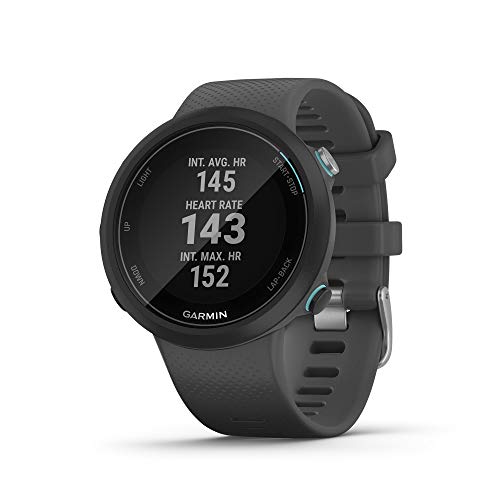
Garmin Swim 2 — Best Overall for Swimming
The Garmin Swim 2 suits dedicated lap swimmers and triathletes who want a watch built around the pool first and everything else second. If most of your training happens in lanes, with occasional open-water sessions, this is the most swim-focused tool in this guide. It also suits runners and cyclists who want one Garmin for land and water without paying for a flagship multisport watch.
- 5 ATM water resistance (50 meters)
- Built-in GPS for open-water swims
- Pool and open-water swim modes with stroke detection
- Battery life up to 7 days in smartwatch mode
- 42mm case, 1.04-inch display
Strengths
- Dedicated pool and open-water modes track distance, pace, stroke count, stroke type, and SWOLF in one place
- Underwater wrist heart rate works during swims, which many general smartwatches cannot do reliably
- Physical buttons are far easier to use with wet hands than a touchscreen alone
Trade-offs
- Display and smart features feel dated next to newer AMOLED watches
- No music storage or contactless payments, so it is a training tool rather than a full smartwatch
- Pool-only swimmers who never swim outdoors pay for GPS they may rarely use
What sets the Swim 2 apart is focus. Instead of burying swimming inside a long list of generic sport modes, Garmin gives you drill logging, rest timers, critical swim speed testing, and auto rest detection designed for interval sets. In the pool it records lengths without you pressing a button at every wall, and in open water the GPS track lets you review your line and pacing afterwards in Garmin Connect. The 5 ATM rating means it is built for sustained surface swimming, and the always-readable display stays legible under bright pool lighting and outdoor sun. For swimmers comparing notes with our guide to best smartwatches for hiking, the contrast is instructive: hiking watches prioritize maps and battery for days on trail, while the Swim 2 prioritizes what happens between the flags.
The honest limitation is age and scope. The Swim 2 is a specialist from an earlier generation, so expect a smaller, lower-resolution screen, no touchscreen, and a companion app experience centered on training data rather than apps and media. If you want one watch for notifications, music, payments, and swimming, a broader model below will fit better.
Best for: Lap swimmers and triathletes who train in the pool several times a week / Not suited for: Buyers who want music, payments, and a large app library on the wrist
Check on Amazon — check price on Amazon for the current listing, color options, and band sizes before you buy.

Garmin Forerunner 55 — Best for Runner-Swimmers
The Forerunner 55 suits runners who swim as cross-training and want one affordable Garmin to cover both. If your week mixes easy runs, workouts with daily suggested sessions, and one or two pool swims, this watch keeps everything in Garmin Connect without forcing you into a premium multisport price. It also suits beginners who want guidance rather than raw data alone.
- 5 ATM water resistance (50 meters)
- Built-in GPS with daily suggested workouts
- Pool swim profile included
- Battery life up to 2 weeks in smartwatch mode, up to 20 hours in GPS mode
- 42mm case
Strengths
- Daily suggested workouts adapt to your recent training and recovery, which helps new runners structure a week
- Two-week smartwatch battery life means far less charging anxiety than a typical full smartwatch
- Lightweight 42mm case stays comfortable for sleep tracking and all-day wear
Trade-offs
- Swim metrics are more basic than the Swim 2, with less drill and technique detail
- Monochrome-style display looks plain next to color AMOLED rivals
- No touchscreen, so menu navigation is buttons only
Think of the Forerunner 55 as a running coach that swims well, rather than a swim watch that runs. In the water it covers the essentials — distance, pace, stroke identification, and SWOLF — and that is enough for cross-training where the swim supports the run. On land, PacePro, race time prediction, and recovery advice give it depth that pure swim trackers lack. The 5 ATM rating covers showers, rain, and pool work without worry. Readers also weighing best smartwatches for sleep tracking will appreciate that the light case and long battery make overnight wear realistic, so sleep and recovery data stay consistent across a training block.
The honest limitation is swim depth. Serious swimmers doing structured drill work will outgrow its pool toolset quickly, and there is no open-water GPS swim mode with the same polish as dedicated swim models. Buy it for running first and swimming second, and the balance feels right; reverse that priority and choose the Swim 2 instead.
Best for: Runners who swim once or twice a week for cross-training / Not suited for: Dedicated lap swimmers who need drill logging and advanced pool metrics
Check on Amazon — check price on Amazon for the current listing, color options, and band sizes before you buy.
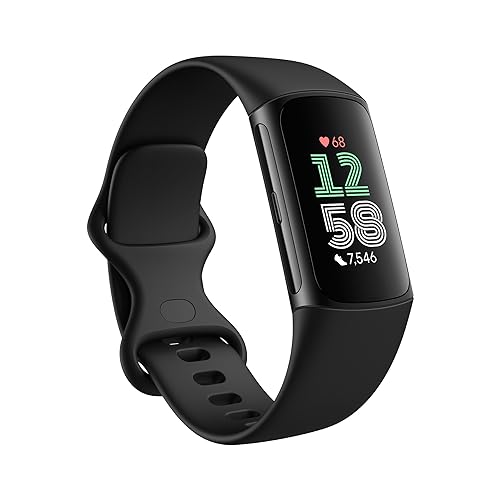
Fitbit Charge 6 — Best Slim Tracker for Swimming
The Charge 6 suits swimmers who prefer a slim band to a full watch and who live inside the Fitbit and Google ecosystem. If you want automatic activity recognition, strong sleep tracking, and a tracker you can forget you are wearing in the pool, on a run, and in bed, this is the natural pick. It also suits Android users who want Google Maps and YouTube Music controls on the wrist.
- Water resistant to 50 meters
- Built-in GPS
- 40+ exercise modes including swimming
- Battery life up to 7 days
- Heart rate, SpO2, sleep and stress tracking
Strengths
- Slim, light band format is comfortable for long swims and for sleeping
- Built-in GPS is unusual at this size and price tier
- Fitbit app presents swim, sleep, and readiness data in a friendly, readable way
Trade-offs
- Some advanced insights sit behind Fitbit Premium after the included trial
- Swim tracking is automatic and simple rather than deep and drill-focused
- Small screen limits maps and on-wrist data during workouts
In the pool, the Charge 6 keeps things simple: start a swim, or let automatic exercise detection catch it, and review distance, duration, and heart rate afterwards. That simplicity is the point. Many casual swimmers do not want to manage intervals and drills; they want credit for the workout and a clear picture of the week alongside steps, sleep, and stress. The 50-meter water resistance covers pool swimming and showering, and the band dries quickly and sits flat under a wetsuit cuff or a long-sleeve top. If you are comparing slim trackers with the options in best smartwatches under $100, the Charge 6 is the premium end of that conversation, trading a larger screen for polish and ecosystem depth.
The honest limitation is the subscription model and the ceiling on swim detail. After the included Premium trial, features such as the full Daily Readiness Score require paying, and competitive swimmers will find the swim reports basic. It is an excellent health tracker that swims, not a swim computer.
Best for: Casual swimmers who want a slim, comfortable everyday tracker / Not suited for: Competitive swimmers who need intervals, drills, and detailed technique data
Check on Amazon — check price on Amazon for the current listing, color options, and band sizes before you buy.

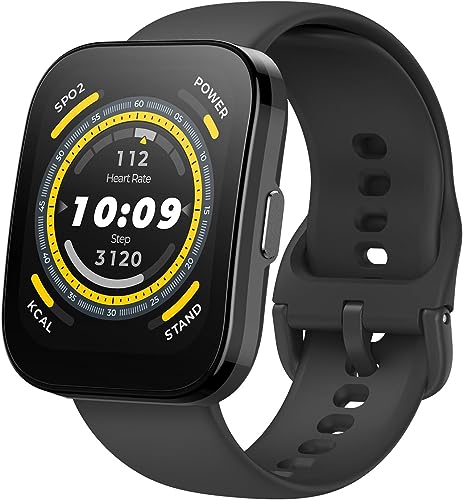
Amazfit GTS 4 — Best Value AMOLED for Swimming
The GTS 4 suits swimmers who want a big, bright, modern smartwatch screen without a flagship price. If you take calls on the watch, use Alexa, track pool and open-water swims, and still want a watch that looks sharp at work, this is the value center of the guide. It suits Android and iPhone users equally, since it does not lock you into one phone ecosystem.
- 5 ATM water resistance
- 1.75-inch AMOLED display
- Dual-band GPS
- 150+ sports modes including pool and open-water swimming
- Battery life up to 8 days in typical use
Strengths
- Large AMOLED display is easy to read at a glance in bright light
- Dual-band GPS improves open-water and city run tracking over single-band rivals
- Bluetooth calling and Alexa add everyday smartwatch utility beyond sport
Trade-offs
- Touchscreen can be fiddly with wet hands compared with button-driven Garmins
- Zepp app is capable but less deep for structured swim training than Garmin Connect
- Battery life drops quickly with heavy GPS and always-on display use
For swimming, the GTS 4 offers dedicated pool and open-water modes that record distance, pace, stroke, and SWOLF-style efficiency data, and its 5 ATM rating is the correct baseline for regular lap swimming. The large display helps if you check splits at the wall, though you will want to lock the screen in the water and rely on the side button where possible. Out of the pool, it is the most conventionally smart watch in this list for the money: notifications, calls, music controls, sleep and SpO2 tracking, and a wide library of watch faces. Shoppers cross-shopping best smartwatches under $150 will find the GTS 4 near the top of that tier as well, because its street position regularly sits in that band while its feature list reads a tier higher.
The honest limitation is wet-weather control and training depth. A touchscreen-first watch is never as confident in the water as a button-first watch, and swimmers following structured plans will find Garmin’s ecosystem more rigorous. As an all-rounder that swims well, though, it is hard to beat for value.
Best for: All-round buyers who want a bright smartwatch that handles regular pool swims / Not suited for: Swimmers who need button-only control and advanced drill tools
Check on Amazon — check price on Amazon for the current listing, color options, and band sizes before you buy.
Fitbit Versa 4 — Best for Everyday Wear Plus Swimming
The Versa 4 suits buyers who want a proper smartwatch shape with Fitbit’s approachable health platform and reliable pool tracking. If your swimming is part of a general fitness routine — a few pool sessions alongside walks, runs, and gym work — and you value sleep and readiness guidance, the Versa 4 fits that balanced life well. It also suits Google account users who want Maps and Wallet on the wrist.
- Water resistant to 50 meters
- Built-in GPS
- 40+ exercise modes including swimming
- Battery life 6+ days
- Daily Readiness Score and sleep tracking
Strengths
- Comfortable, lightweight case wears well all day and overnight
- Six-plus-day battery life beats most full smartwatches
- Fitbit’s sleep and readiness presentation is among the easiest to understand
Trade-offs
- No third-party app store, so smartwatch flexibility is limited
- Music storage was removed compared with older Versa models
- Swim metrics cover the basics rather than advanced technique analysis
The Versa 4 treats swimming as one part of a complete health picture. It tracks pool swims with distance and pace, pairs that with continuous heart rate, SpO2, sleep stages, and a Daily Readiness Score that helps you decide whether today is a hard session or an easy one. The 50-meter rating means you never need to take it off for the pool or shower, and the quick-release bands let you swap from a sport band for swimming to something smarter afterwards in seconds. For readers comparing it with the slimmer tracker in this guide, our notes in best smartwatches for men cover how case shape and band choice change everyday comfort for larger and smaller wrists.
The honest limitation is smartwatch scope. Google has kept the Versa line focused: you get Google Maps and Wallet, notifications, and Fitbit health tools, but not the open app ecosystem of Wear OS or watchOS. Swimmers who accept that focus get a comfortable, long-lasting watch; tinkerers should look at the GTS 4 or a Galaxy-class watch instead.
Best for: Everyday fitness swimmers who prioritize sleep, comfort, and battery life / Not suited for: Buyers who need a wide third-party app library on the watch
Check on Amazon — check price on Amazon for the current listing, color options, and band sizes before you buy.
Amazfit GTS 4 Mini — Best Compact Pick for Swimming
The GTS 4 Mini suits swimmers with smaller wrists who find full-size watches bulky in the water and during sleep. If you want the GTS formula — AMOLED screen, GPS, Alexa, long battery — in a lighter, more compact case, this is it. It also suits budget-minded buyers who still want a real display and real GPS rather than a basic band.
- 5 ATM water resistance
- 1.65-inch AMOLED display
- Built-in GPS with multiple satellite systems
- 120+ sports modes including swimming
- Battery life up to 15 days in typical use
Strengths
- Compact, light case is noticeably more comfortable for smaller wrists
- Fifteen-day typical battery life is excellent for a color-display watch
- Pool swimming mode and 5 ATM rating cover regular lap swimming properly
Trade-offs
- Smaller screen shows less data at a glance during sets
- Speaker and call quality are more limited than on the full-size GTS 4
- Zepp app swim analysis is shallower than Garmin’s for structured training
Do not let the Mini name fool you into thinking this is a toy. The GTS 4 Mini carries the same 5 ATM swimming baseline as its bigger sibling, with pool swimming tracking, heart rate and SpO2 monitoring, and multi-system GPS for open-water routes. In practice the smaller case is an advantage in the water: less drag on the wrist, less catching on lane ropes and wetsuit cuffs, and a fit that stays put during flip turns. Battery life is the other headline — up to fifteen days in typical use means you can train through a full two-week block without hunting for the charger. It earns its place in best apple watch alternatives conversations too, for iPhone owners who want long battery life and a square AMOLED watch without entering the Apple Watch price tier.
The honest limitation is screen real estate and depth. Mid-set, the smaller display shows fewer fields, and like the GTS 4 it relies on touch input that is less assured with wet fingers. Swimmers with larger wrists may also find the strap and case proportions small. For compact-wrist swimmers, those trade-offs are exactly the right ones.
Best for: Swimmers with smaller wrists who want GPS and AMOLED on a budget / Not suited for: Swimmers who need the largest possible data display during sets
Check on Amazon — check price on Amazon for the current listing, color options, and band sizes before you buy.
Comparison Table
| Pick | Badge | Standout spec | Also note |
|---|---|---|---|
| Garmin Swim 2 | Best Overall for Swimming | Built-in GPS for open-water swims | Pool and open-water swim modes with stroke detection |
| Garmin Forerunner 55 | Best for Runner-Swimmers | Built-in GPS with daily suggested workouts | Pool swim profile included |
| Fitbit Charge 6 | Best Slim Tracker for Swimming | Built-in GPS | 40+ exercise modes including swimming |
| Amazfit GTS 4 | Best Value AMOLED for Swimming | 1.75-inch AMOLED display | Dual-band GPS |
| Fitbit Versa 4 | Best for Everyday Wear Plus Swimming | Built-in GPS | 40+ exercise modes including swimming |
| Amazfit GTS 4 Mini | Best Compact Pick for Swimming | 1.65-inch AMOLED display | Built-in GPS with multiple satellite systems |
Specs above are the verified headline figures from the manufacturer and listing sources recorded in the research notes for this guide. Always confirm case size, band size, and phone compatibility on the live listing, because brands sell the same model name in several sizes and regional variants.
How to Choose a Smartwatch for Swimming
Start with the water rating, and ignore marketing language. Look for 5 ATM or 50 meters as the minimum for regular swimming. Ratings described only as splash-proof, rain-proof, or IP68 without an ATM figure are not a promise for lap swimming, because the test conditions differ. If you swim in the sea, rinse the watch in fresh water afterwards regardless of rating, and avoid pressing buttons underwater unless the manufacturer explicitly allows it, since button presses can compromise seals on some designs.
Decide between buttons and touch before you decide between brands. In the water, physical buttons win. You can start, pause, and lap a workout with wet hands, gloves, or cold fingers, and you never fight a touchscreen that interprets water droplets as taps. Touchscreen watches counter with brighter, larger displays and better everyday smart features. Many swimmers solve this by locking the screen during swims and reviewing data afterwards. If you train with structured intervals, put button control at the top of your list; if you swim steady laps for fitness, either style works.
Match the swim software to your training. Casual swimmers need automatic length counting, distance, pace, and heart rate. Structured swimmers also need rest timers, drill logging, and stroke-type breakdowns. Open-water swimmers need GPS swim mode and a display they can read in sunlight. Check what the companion app shows after the swim, not just what the watch records: Garmin Connect, Fitbit, and Zepp present the same raw swim very differently, and the app is where you will actually live with the data. Readers training for events may also want to compare best running watches and best garmin watches for the land side of a triathlon plan.
Think about the other twenty-three hours. A swim watch you only wear in the pool gives you fragmented health data. Sleep tracking, resting heart rate trends, and recovery scores only become useful with consistent wear, which means comfort and battery life matter as much as swim features. Slim trackers and compact watches win overnight; larger AMOLED watches win for notifications and calls. Choose the watch you will actually wear all day, then confirm it swims — not the other way around. Our best fitness watches guide covers that all-day balance in more depth.
Check band and fit details. Silicone and fluoroelastomer bands handle chlorine and salt best and dry fastest. Leather, woven, and metal bands should be swapped out before swimming even if the watch head itself is rated. The watch should sit snugly above the wrist bone for heart rate accuracy in the water; too loose and the sensor loses contact at every stroke. If you wear a wetsuit, confirm the strap is long enough to go over the cuff or plan to wear the watch under it.
Key Takeaways
- 5 ATM / 50 meters is the minimum rating for regular swimming; splash resistance is not enough.
- Buttons beat touchscreens in the water; lock the screen if your watch is touch-first.
- Pool swimmers need length counting and rest timers; open-water swimmers need GPS swim mode.
- Rinse after sea and pool sessions, and swim with a sport band, not leather or metal.
How to Set Up Your Watch for Your First Pool Swim
- Charge the watch fully and update its software and companion app before your first session, so pool lengths and firmware fixes are current.
- Set your pool length correctly in the swim settings — 25 meters, 25 yards, or 50 meters — because every distance and pace figure depends on it.
- Fit the band one notch tighter than usual, positioned above the wrist bone, so the heart rate sensor stays in contact during strokes.
- Choose the pool swim profile, wait for any GPS or sensor ready indicators to settle, then start the activity at the wall.
- Swim complete lengths with a clear push-off and glide at each turn; the watch detects turns from the change in motion, and half-lengths or mid-pool stops confuse the count.
- Use the lap or pause control during rest intervals if your watch supports it, rather than stopping the whole activity.
- End and save the swim at the wall, then sync and review distance, pace, stroke, and heart rate in the app while the session is fresh in your mind.
Two habits fix most swim-tracking complaints. First, consistency: swim the same way you swam when the watch learned your stroke, and avoid switching stroke type mid-length, because mixed lengths are the hardest for any watch to classify. Second, patience at the wall: a brief, distinct pause and a strong push-off give the accelerometer a clean turn signal. If a length is missed, most apps let you edit the swim afterwards — use that rather than discarding the session.
How to Care for a Swim Watch
Rinse the watch under fresh tap water after every sea swim and most pool sessions, then pat it dry with a soft cloth. Chlorine and salt both degrade straps and seals over time, and soap residue can irritate skin trapped under a damp band, so give your wrist and the band a chance to dry fully between sessions. Periodically remove the band and clean around the sensor and charging contacts. Store the watch away from extreme heat, and never charge it while it is wet. If you notice condensation under the glass, stop swimming with it and contact the manufacturer, because that signals a seal problem that will only get worse. For strap swaps and sizing help, see our notes alongside best watch bands and the watch strap size guide.
Problem: the watch misses lengths or adds extra lengths. Fix: confirm the pool length setting, push off firmly at each wall, and avoid stopping mid-length; then update the software, since length-counting algorithms improve over time. Problem: heart rate drops out during swims. Fix: tighten the band, move the watch slightly higher on the forearm side of the wrist bone, and clean the sensor. Problem: the touchscreen acts on its own in the water. Fix: enable the screen lock or water mode before you start, and use buttons for laps until you are out of the pool.
Pool Swimming vs Open-Water Swimming: Different Sports, Different Watches
Pool and open-water swimming look similar from the deck and demand almost opposite things from a watch. Pool swimming is a controlled environment: fixed length, warm water, lane lines, and a wall every twenty-five or fifty meters. The watch’s job there is bookkeeping — count lengths it cannot see, detect turns it can only infer from acceleration, classify strokes from wrist motion, and time rests precisely. Accuracy comes from algorithms and from your consistency. A watch that excels in the pool is one whose length counting you trust enough to stop counting in your head, because mental lap counting is exactly the cognitive load a swim watch exists to remove.
Open-water swimming removes every control. There is no wall, no fixed length, and no black line to follow. The watch’s job becomes navigation and endurance: hold a GPS track from a wrist that submerges on every stroke cycle, stay readable in glare and spray, and last for swims measured in hours rather than lengths. Distance figures will always be estimates reconstructed from surface moments, and experienced open-water swimmers judge a watch by whether its errors are consistent — a watch that reads two percent long every swim is a useful tool, while one that swings wildly is not, even if it occasionally nails a known course exactly.
This distinction explains the shape of the shortlist above. The Garmin Swim 2 is the rare model engineered for both worlds, with drill tools for the pool and GPS for the lake. The Fitbits and the compact Amazfit Mini lean pool-and-fitness: excellent bookkeeping for lengths and health, lighter open-water ambition. The full-size GTS 4 leans the other way with dual-band GPS for cleaner outdoor tracks. None of these leanings is a flaw. The flaw would be buying a pool bookkeeper for a season of ocean racing, or paying for satellite hardware to count lengths in a twenty-five-meter pool. Name your water first; the watch follows.
Temperature deserves a mention that spec sheets skip. Cold open water thickens wetsuit neoprene at the wrist, which can loosen a watch fitted on dry land, and cold hands make small buttons and touch targets harder to hit at the start of a session. Set up the activity before you enter the water, start it on the beach or deck, and let the first minutes be warmup while sensors settle. In warm pools the opposite problem appears: heat and humidity fog cheaper displays from the inside only when seals have already failed, so treat any internal condensation as a warranty conversation, not a quirk to live with.
Finally, consider what happens to the data afterwards. A season of swims becomes valuable when you can see pace trends by month, compare the same session across weeks, and spot the technique block that moved your efficiency score. That long view lives in the companion app, and it is why this guide weighs Garmin Connect, Fitbit, and Zepp as heavily as hardware. Export options matter too: swimmers who later adopt a dedicated training platform should confirm their app can share or export sessions, so a year of water time is never trapped in a single ecosystem.
Common Buying Mistakes
Buying on splash resistance alone. The most expensive mistake in this category is assuming any water-resistant watch can swim. Hand-washing and rain ratings do not cover the repeated pressure of strokes. Always confirm an ATM rating or an explicit swimming claim from the manufacturer before the watch touches the pool.
Setting the wrong pool length. A watch set to 25 meters in a 25-yard pool will misreport every distance and pace figure by roughly ten percent, and swimmers often blame the watch. Set the length on day one, and re-check it when you visit a new pool.
Swimming in the wrong band. Leather and metal bands suffer in chlorine, stay damp against the skin, and can loosen in the water. Swap to the sport band for swim days; it takes seconds on quick-release models and protects both the band and the sensor fit.
Expecting land-grade GPS in open water. GPS signals do not penetrate water, so open-water tracks are reconstructed from the moments your wrist breaks the surface. Slightly jagged tracks and modest distance error are normal for every brand. Judge an open-water watch on consistency, not perfection.
Ignoring the app subscription. Some platforms reserve their best recovery and readiness insights for a paid tier. That does not make the watch a bad buy, but it belongs in the total cost picture. Check what remains free after any included trial ends, especially if readiness scores are a main reason you are buying.
Training With Your Swim Data: From Numbers to Progress
A swim watch earns its price across a season, not a session, and the mechanism is feedback. The first feedback loop is pacing honesty. Most recreational swimmers swim their easy lengths too fast and their fast lengths too slow, compressing every workout into a single medium effort. A month of recorded swims makes that pattern undeniable: pace per length, rest intervals, and heart rate traces show exactly where the effort actually went. Swimmers who review that picture weekly — not after every swim, which invites obsession over noise — typically redistribute effort within a few sessions, swimming the easy work easier so the hard work can finally be hard. The watch did not coach that change; it simply made self-deception harder, which is most of what data is for.
The second loop is technique, tracked through efficiency rather than speed. SWOLF trends, stroke counts per length, and stroke-type consistency reveal whether drill work is transferring. A swimmer whose stroke count drops at the same pace has become more efficient in a way the stopwatch alone would hide. This is where the specialist tools in this guide separate from the generalists: drill logging and per-length detail let you attribute an improvement to the specific block of training that caused it, while simpler trackers confirm the improvement without explaining it. Both have value; competitive swimmers should weight the explanation, fitness swimmers the confirmation.
The third loop is load management, and it is where swim watches repay triathletes and cross-trainers most. Swimming is uniquely deceptive training stress: the water supports your weight, cools you, and lets you work hard with low perceived impact, so swimmers routinely under-record how much a hard pool block costs their running legs two days later. A watch that logs swims into the same recovery picture as runs and sleep — the Garmin and Fitbit ecosystems both do this in their own ways — prevents the classic error of stacking a breakthrough swim week on top of a breakthrough run week and calling the resulting breakdown bad luck.
Set the feedback rhythm deliberately. Glance at the summary after each swim only to confirm the session saved. Review trends once a week, comparing like with like: the same session type, the same pool, similar rest. Judge technique changes over months, fitness changes over weeks, and single workouts not at all. Swimmers who adopt that rhythm keep their watches for years and improve steadily; swimmers who interrogate every length usually abandon both the watch and the analysis by spring. The best smartwatch for swimming, in the end, is the one whose data you develop a sustainable relationship with — and every pick above can support that relationship at its own level of depth.
Final Recommendation
For most swimmers, the Garmin Swim 2 is the right answer: it is the only pick here designed around swimming from the first screen to the last report, with drill tools, underwater heart rate, and button control that all serve the pool. Runner-swimmers should choose the Forerunner 55 instead and accept simpler swim data in exchange for a genuine run coach. If you want a bright modern smartwatch that swims well and costs less than the specialists, the Amazfit GTS 4 is the value pick, while the Fitbit Charge 6 wins for anyone who prefers a slim band to a watch. Whichever you choose, set the pool length correctly on day one — it is the smallest setting with the biggest effect on every number that follows.
Top pick: Garmin Swim 2 — check price on Amazon.
Runner-up: Garmin Forerunner 55 — check price on Amazon.
Frequently Asked Questions
Can you swim with a 5 ATM smartwatch?
Yes. A 5 ATM rating means the watch is tested to withstand pressure equivalent to 50 meters of water, which covers surface swimming in pools and open water. It does not cover diving, high-pressure water sports, or hot tubs and saunas, where heat and steam are separate risks. Always follow the manufacturer’s specific guidance for your model.
What is SWOLF and why does it matter?
SWOLF is a swimming efficiency score that combines the time taken for a length with the number of strokes used. Lower is generally more efficient. Tracking SWOLF over weeks shows whether technique work is paying off, even when pace alone does not change. Most dedicated swim watches in this guide record it automatically.
Do smartwatches track heart rate accurately while swimming?
Wrist heart rate in water is harder than on land because water interferes with the optical sensor and the wrist flexes during strokes. Dedicated swim watches with underwater heart rate support give useful trends and averages, but for precise interval heart rate, a chest strap rated for swimming remains the reference standard.
Can I wear my swim smartwatch in the sea and in a hot tub?
Sea swimming is fine for properly rated watches, provided you rinse them in fresh water afterwards to remove salt. Hot tubs, saunas, and hot showers are different: heat can age seals and adhesives, and most manufacturers exclude them from water-resistance coverage. Take the watch off for heat, keep it on for swims.
How do I stop my watch from miscounting pool lengths?
Set the correct pool length, push off firmly at each wall with a short glide, avoid stopping mid-length, and keep a consistent stroke within each length. Fit the band snugly so the watch does not rotate on your wrist. If counts are still off, update the software and review the swim in the app, where most platforms allow edits.
Is a touchscreen or buttons better for swimming?
Buttons are better in the water. They work with wet hands and never misread droplets as taps. Touchscreens are better on land for maps, menus, and notifications. If you choose a touchscreen watch for swimming, use its screen-lock or water mode during every swim and rely on buttons or auto-detection for laps.
What band is best for swimming?
Silicone and fluoroelastomer sport bands are best: they resist chlorine and salt, dry quickly, and hold the watch firmly for heart rate tracking. Swap leather, fabric, and metal bands out before swimming, even when the watch itself is fully rated, to protect the band and keep the fit secure.