You can add a return address to a label in three ways: let the shipping form print it, use a ready-made address sticker or write it by hand. Whichever you choose, keep it separate from the destination address and easy to read. This guide covers all three methods, a worked example from beginning to end, common situations such as reused boxes and gifts, and the mistakes that cause returned parcels to go astray.

Why It Matters
A return address gives the carrier a place to send the parcel back if delivery fails. It also helps the recipient see who sent it. Without one, an undeliverable parcel may be hard to return.
It also helps in less obvious ways. If a label is damaged in transit, a clear return block on the box may let staff trace the parcel back to you. And for a business, a consistent return address on every parcel looks organised and reassures customers that the parcel is genuine.
In this guide
Method 1: Print It With the Label
- Open your shipping form or account tool.
- Find the sender or origin section and fill in the name and address.
- Save it as the default if the tool allows, so you do not retype it every time.
- Print one label and check that the return block sits in the upper left or in the area the label template gives it.
Method 2: Use an Address Sticker
- Prepare a small block of text with your name and address.
- Print it onto small adhesive sheets or a roll.
- Stick it on the parcel’s upper left corner, away from the destination address and barcode.
- Smooth it down so the edges do not lift.
Method 3: Write It by Hand
- Use a dark marker with a medium tip.
- Write in clean block capitals, one item per line.
- Leave a clear gap between the return block and the destination block.
- Let the ink dry fully before handling the parcel.
Comparing the Methods
| Method | Good for | Watch out for |
|---|---|---|
| Printed with label | Regular senders | Out of date saved details |
| Sticker | Reused boxes and mixed carriers | Edges peeling in damp areas |
| Hand-written | Occasional parcels | Smudges and poor legibility |
Placement Reminders
- Never place a sticker over the destination address or barcode.
- Keep the block on the same face as the label.
- If you use a business name, make sure it matches the name on your account.
A return block normally runs to three or four short lines: a name, a street line, and a town or city with the postal code. Add a country line for international parcels. Keep the text smaller than the destination block so the eye goes to the delivery address first, but large enough to read at arm’s length. Check the carrier’s current instructions for any rules about where the return details should sit and how the label should look.
Worked Example: Sending a Parcel in a Reused Box
This walkthrough assumes you are reusing a cardboard box that carried something else before. The steps are general, so adapt them to your shipping service.
- Look over every face of the box. Remove or fully cover old labels, barcodes and address markings, since an old barcode can be scanned by mistake.
- Choose the largest flat face, free of seams and tape ridges, for the main shipping label.
- Fill in the sender section in your shipping tool with the name and address where returned parcels should go. Check the spelling and postal code.
- Print the label, and look it over for a clear destination block, a crisp barcode and the return block in the upper left.
- Press the label flat on the box, smoothing from the center outward so no wrinkles cross the barcode.
- If your form does not print a return block, add a sticker or a neat hand-written block on the upper left of the same face, clear of the barcode.
- Cover the finished label with clear tape only if the carrier’s current instructions allow it, taking care not to tape over the barcode in a way that causes glare.
- Keep a copy of the label details or the tracking number until the parcel is delivered.
Common Scenarios
Sending a gift where the sender should not be obvious
You can still include a return address. If you prefer to keep a home address private, consider a business address, a collection point or another address the carrier accepts for returns, and check the carrier’s current instructions.
Sending from a workplace
Include the company name and department or floor so returned mail reaches the right desk. Match the name that internal staff use to sort the mail.
Shipping from a rented room or shared house
Include a unit or room number, since returned mail without it may be lost among others.
Envelopes and small flat packages
Space is tight. Print a compact return block in the corner and keep the destination block clear. A small sticker works well here.
Mistakes to Avoid
| Mistake | Why it causes trouble |
|---|---|
| Covering part of the barcode with a sticker | Scanners may fail to read it, delaying the parcel. |
| Placing the return block above the destination block in similar size | Sorters or machines may mistake one for the other. |
| Writing in pale ink or a fine pen | Faint writing cannot be read in poor light or by machine. |
| Leaving an old return address from a past move | Returned parcels go to the wrong place. |
| Putting the block on a different face than the label | Staff may not find it, which defeats its purpose. |
Keeping Details Current
Return details go stale when you move or change a business name. Set a reminder to check saved forms, address stickers and stored templates once or twice a year. Throw out old sticker sheets so they are not used by mistake. If you use a shared address, tell everyone who packs where the up-to-date version is kept.
When you reuse a box, make sure no older return block remains in view. Two return blocks on one parcel can confuse both the carrier and the receiver.
Glossary
- Return address: where a parcel goes if it cannot be delivered.
- Destination address: the delivery address of the recipient.
- Origin or sender field: the part of a shipping form where you enter your details.
- Template: the saved layout that decides where blocks sit on a label.
- Address sticker: a small adhesive label carrying your name and address.
- Legibility: how easily text can be read by people and scanners.
What to Include and What to Leave Out
A return address has one job: to let a carrier send the item back to you if it cannot be delivered. That means it needs to be complete enough for a delivery person or sorting machine to read at a glance. For domestic mail in the United States, a standard return address contains your name or business name, a street address or PO box, the city, the state abbreviation and the ZIP code. Add an apartment, suite or unit number on the same line as the street address or on its own line directly above the city line, following the format your carrier prefers.
You can leave out anything that is not needed for return. A phone number or email is optional, and a personal mobile number is not always wise to print on a parcel that may pass through many hands. If the shipment is a business order, a company name and a customer service phone or email on the label can help buyers contact you, but check the shipping service’s rules to see what it expects.
Tidy Formatting That Scans Cleanly
- Use capital letters if you write by hand, since they are easier for people and machines to read.
- Avoid decorative fonts and tiny type on printed labels.
- Keep the return address in the upper left corner, away from the destination address.
- Use a dark ink on a light background, and avoid highlighter over the text.
- Do not wrap the address around a corner or edge of the package.
Choosing a Format for How Often You Ship
The right way to add a return address depends on volume. Sending one birthday package a year does not justify buying a printer or a stamp, while shipping dozens of orders a week makes handwriting impractical. Think about how many items you send, how much time you want to spend and how consistent you want the result to look.
Occasional Senders
For a handful of packages a year, handwriting or a small roll of pre-printed address labels is plenty. A set of several hundred address labels is typically inexpensive and lasts for years for an average household. Keep one sheet in a drawer near your tape and scissors so that you never have to hunt for it.
Regular Sellers and Small Businesses
If you sell online, the best habit is to let the shipping platform or label printer add the return address automatically. Most carrier and marketplace tools let you save a default ship-from address, which then prints on every label. That keeps the address consistent and reduces typos. Check your saved address periodically, especially after a move.
Offices and Shared Spaces
In a shared workplace, a stamp or a printed label keeps return addresses uniform without anyone needing to write them out. A self-inking stamp is easy to reload, and a label template in a word processor makes it simple to update when details change.
Fixing Label Problems Before They Cost You a Package
A return address only helps if it survives the trip. Many failures come from small details that are easy to prevent.
- Ink smudges. Let ink dry before taping over it, and avoid water-based pens on glossy surfaces.
- Adhesive failure. Labels can peel in humid conditions or on dusty cardboard. Wipe the surface first and press the label down firmly from the center outward.
- Faded print. Thermal labels can darken or fade if left in sun or heat. Store unused labels in a cool, dry place.
- Old information. Cross out or cover previous labels and addresses on reused boxes so that only one address set is visible.
- Tape over barcodes. Clear tape over an address is generally fine, but heavy wrinkles or glare can interfere with scanning, so keep the tape flat.
If a package comes back to you, check what went wrong before you reship it. The cause could be a missing apartment number, an unreadable label, a wrong ZIP code or a delivery restriction at the destination. Your return address is the reason you get that second chance, which is why it deserves the same care as the delivery address.
Writing Addresses Clearly by Hand
If you do write by hand, a few habits make a big difference. Use a pen with permanent, waterproof ink such as a fine marker or gel pen rated as permanent. Press lightly enough not to tear thin envelopes. Write in straight horizontal lines, with each part of the address on its own line, and leave a little space around the text so scanners can find it.
Print numbers carefully. A looped seven, a closed four or a one that resembles a seven can send mail to the wrong place. Putting a bar through the stem of a seven is a style some people use, but plain, separate digits are safest. Write the ZIP code last on the final line, and write state abbreviations in capital letters. If you have a long street name, abbreviate it using standard forms such as ST, AVE or RD instead of squeezing letters together.
Handwritten labels on dark or patterned boxes can be hard to read. Place a plain white label or a strip of light tape on the box and write on it. A block of white also protects the writing from scuffs, because you can press clear tape over the top.
When Printing Is Worth the Effort
Printed labels look professional and avoid the handwriting problem entirely. A basic home inkjet or laser printer is enough, and so is a thermal label printer if you ship often. Test one label on plain paper first to be sure the address aligns with the sticker boundaries, then print on the real sheet. Wasted sheets add up quickly, so a test print is a cheap precaution.
Privacy and Safety Considerations
Printing your home address on every parcel is routine for many people, but there are cases where you may want more discretion. If you sell items to strangers, for example, you may prefer a PO box, a mailbox rental, a business address or a work address, with permission from your employer. Check the service’s rules, because some carriers or marketplaces have conditions about which addresses are acceptable and how they must match your account.
It also helps to be careful about what you leave on discarded packaging. Shipping boxes and envelopes often carry names and addresses. Before you recycle or throw them out, tear off or black out labels with a marker, or peel the label off and shred it. This is especially useful when you receive packages at home but want to keep your details private.
Be wary of unsolicited requests to confirm your address through links in messages. Delivery scams often imitate carriers. If you receive a message about a package, check the status through the carrier’s official website or app instead of clicking the link in the message.
A Simple Routine You Can Repeat
A consistent routine prevents most errors. Before sealing the package, read the destination address aloud and compare it to the order or the contact details you were given. Check that the return address matches your current location. Make sure both addresses are on the same side of the package, with no tape across the writing. Take a photo of the finished label for your records, which also helps if you need to file a claim or answer a question from the recipient.
If you use a reused box, flatten and cover or remove any old labels. If you pack in a padded envelope, press along the label edges with your thumb. If the package has to travel a long distance, add a second copy of the address inside the box. That way, even if the outer label is damaged, someone opening the parcel can still identify both sender and recipient. For valuable items, ask the carrier about tracking and insurance options before you send, because those services are what let you follow up if the package is delayed.
Ready to Buy? Start Here
If this guide helped you decide what to look for, these products are a place to start.
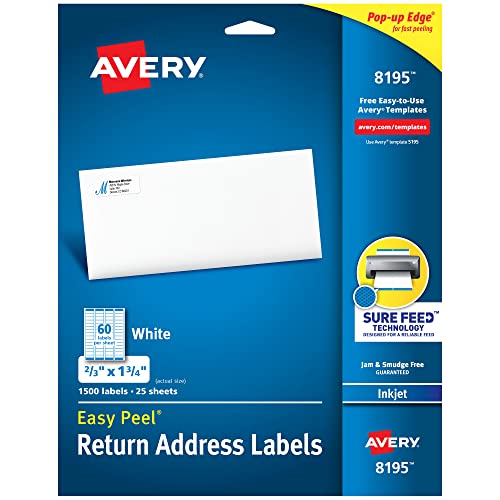
View Avery Easy Peel Return Address Labels 8195 on Amazon
As an Amazon Associate we earn from qualifying purchases. Prices and availability are shown on Amazon.
A Layout Checklist for Return Address Labels
A return address is small, but it has to be correct and easy to read. These points apply whether you write by hand or print.
- Place the address in the top left corner of the envelope or parcel, or follow the carrier’s instructions.
- Write your full name or business name on the first line.
- Add the street address, then the town or city, region and postal code.
- Use clear, dark ink on a light background for good contrast.
- Keep the label flat, with no wrinkles across the text.
- Leave empty space around the address so it does not run into other markings.
Check spelling and numbers twice. A single wrong digit can send a returned item astray.
Handwritten, Printed or Stamped: A Quick Look
Each method has its place. This table compares them in general terms.
| Method | Good for | Consideration |
|---|---|---|
| Handwritten | A few items, personal mail | Neat handwriting matters |
| Printed sticker sheet | Many envelopes with the same address | Check that your printer accepts the sheet |
| Label printer roll | Frequent mailing | Quick, tidy and consistent |
| Self-inking stamp | High volume and a fixed address | Ink may smudge on glossy surfaces |
If you work from home and prefer not to share your address, consider a mailbox service or a business address, and follow any local rules about what a return address must include.
Keep a spare sheet of labels in a drawer, away from heat, so the adhesive stays fresh until you need it.
Test your finished label by holding it at arm length and asking someone else to read it aloud. If they stumble, increase the size or contrast before you print a whole batch.
Placement and Consistency: The Two Habits That Make Return Addresses Work
A return address only does its job if two conditions hold at once: it sits where the people and systems handling the parcel expect to find it, and it says the same thing, the same way, every time. Most return address failures are not failures of handwriting or printing; they are failures of placement, where a good address hides in an unexpected spot, or of consistency, where variations creep in until the address becomes ambiguous. This section treats those two habits in depth, because getting them right costs nothing and prevents nearly every avoidable return problem.
Placement: where eyes and systems look first
On a parcel, the convention is strong and worth following exactly: the destination address occupies the prominent position on the largest face, and the return address sits smaller, conventionally toward the upper left of that same face or on the same face in the position your label layout provides. The point of a convention is that a handler who has two seconds to decide where an undeliverable parcel goes looks in the expected place first. An address placed on a different face, on the bottom, or wrapped around an edge may still be found eventually, but eventually is where delays and misroutes live.
On envelopes and small items the same logic compresses: destination central, return address small in the upper left of the front, or on the back flap where local convention allows. Keep the return address clearly subordinate in size so it can never be mistaken for the destination, because the single most dangerous return address is a large, prominent one that a hurried sort reads as the delivery address. If you use a printed shipping label that includes the return address in its layout, trust the layout: its positions were designed so machines and handlers read the right address as the destination, and moving elements around defeats that design.
Keep the area around the return address uncluttered. Tape edges, seams, old labels and decorative stickers near it all compete for attention and can obscure a line of the address. On a reused box, the return address deserves the same discipline as the destination: any previous address, yours or anyone else, should be removed or fully covered, because a parcel carrying two plausible sender addresses invites the network to choose the wrong one when the parcel needs to come back.
Consistency: one address, written one way
Choose a single canonical form of your return address and use it everywhere: same name form, same street format, same abbreviations, same postcode position. Inconsistency feels harmless, a flat number included here and omitted there, a street written in full once and shortened the next time, until a returned parcel depends on the one element that happened to be missing that day. A canonical form removes decisions at packing time, which matters most for businesses and shared households where several people prepare parcels and each would otherwise improvise a slightly different version.
Write the canonical form down where packing happens, or better, remove handwriting from the equation for repeat work. A saved template in your label software, a pre-printed sticker or a stamp all enforce consistency mechanically: the address that comes out is the address that was checked once, carefully, when the template was made. That one careful check then protects every parcel, instead of every parcel depending on a fresh act of attention. When the address changes, after a move or a change of premises, update the template, the stickers and the stamp together, and destroy old stock, because consistency with an old address is worse than inconsistency with a new one.
What consistent placement looks like across common situations
For a home sender posting occasionally, consistency means one method used every time: the same corner of the parcel, the same sticker design or the same handwriting layout, so the habit survives gaps of weeks between parcels. For a small seller, it means the return address built into the shipping label template, appearing identically on every parcel, with a matching sticker for the rare hand-carried item. For a workplace, it means the organisation address in its agreed form, not the sender personal address, applied the same way by whoever packs, so returns reach the building rather than an individual desk that may be empty.
International parcels reward the same habits with one addition: the return address should follow the addressing conventions of the country it returns to, written clearly enough for a handler in another system to route it home. Keep the format tidy, complete and unabbreviated where space allows, and avoid local shorthand that only makes sense domestically. The parcel that travels furthest is the one whose return address can least afford to be cryptic.
A two-minute audit of your current setup
Collect the last few parcels or labels you sent, or the materials you send with: stickers, stamps, templates, a photographed example. Lay them side by side and compare the return address as a stranger would. Is it in the same place each time? Does it say exactly the same thing? Could any version be mistaken for a destination address? Is any version out of date? Most people find at least one drift, a missing line, an old postcode, a nickname instead of a full name, and fixing it at the materials level, one corrected template or sticker design, fixes every future parcel at once. Repeat the audit after any move, and the return address becomes one of the few parts of shipping you never have to think about again.
Methods in Depth: Stamps, Templates and the Details That Decide Legibility
The earlier sections compared the main methods of adding a return address. This section looks closer at two options that deserve more attention than they usually get, the self-inking stamp and the saved digital template, and then at the small details of legibility that decide whether any method works when a tired handler reads your parcel under time pressure. Method choice is partly about volume, but it is just as much about the kind of mistakes you personally make: the stamp forgives inconsistency, the template forgives handwriting, and handwriting forgives nothing but costs nothing.
The stamp: the overlooked middle option
A self-inking stamp carrying your return address sits between handwriting and printing, and for a certain sender it is the sweet spot: no printer, no software, no sheets of stickers, just one firm press on the parcel or envelope. It enforces consistency perfectly, because the address is fixed at the moment the stamp is made, and it works on envelopes, jiffy bags and flat parcel faces with equal ease. Its limits are surface and size. A stamp needs a reasonably flat, dry area to print completely, struggles on very rough or curved packaging, and produces an impression whose quality depends on a steady, even press. Test it on your actual packaging; on the right surfaces it is fast and clean for years, on the wrong ones it smudges and fades at the edges of the impression.
Care is minimal but real. Keep the stamp pad from drying by storing the stamp as its maker directs, replace or re-ink the pad when impressions turn pale, and make one test impression on scrap before a batch of parcels, because a fading stamp announces itself gradually and a half-printed return address is worse than a bold handwritten one. When you move, the stamp must be replaced, not amended; treat the old one as you would old stickers and remove it from the packing area so it cannot be grabbed by habit.
The saved template: consistency inside the shipping flow
For anyone printing shipping labels, the return address belongs inside the label template or the platform address settings, entered once and checked carefully at that moment. The discipline is in the checking: read the saved address aloud, character by character for the postcode, and print one test label before trusting it, because a template error repeats perfectly on every parcel until someone notices. The same applies to address books inside selling platforms and carrier accounts, which are templates by another name. Keep one master record per account, update it in one deliberate session after any change of address, and then spot-check the next few labels printed from each account, since accounts do not update each other.
Templates also carry a privacy choice worth making deliberately. The return address on a label is visible to everyone who handles the parcel. A business will normally use its trading address without a second thought. A home-based seller should decide consciously which address they are content to publish on every parcel, and use that address consistently, rather than drifting between home and alternatives parcel by parcel. Consistency and privacy pull in the same direction here: one considered address, used every time, beats a rotation of addresses chosen in a hurry.
Legibility: the details that decide whether the address can be used
Whatever the method, legibility is decided by small things. Contrast first: dark print on a light, plain area of the parcel, never across a printed pattern, a seam or a strip of tape. Size second: the return address may be smaller than the destination, but every line must still be readable at arm length without effort; if you have to squint, so does the handler. Spacing third: lines separated clearly, with the postcode or equivalent given its own clear space, since that element does most of the routing work when a parcel is being sent home.
Handwriting adds its own rules, covered elsewhere in this guide, but one bears repeating here because it interacts with method choice: if your handwriting is only legible when you are fresh and unhurried, it is not legible enough for parcels packed at the end of a busy day. That honest self-assessment, more than volume, is the real trigger for moving to a sticker, a stamp or a template. The goal is not elegance. The goal is an address that survives your worst packing day, a dark hallway and a handler third language, and still brings the parcel home.
One address across every channel
Finish by auditing the places your return address lives: label templates, platform accounts, sticker stock, the stamp, the note by the packing bench. They should all carry the identical canonical form chosen earlier in this guide. Businesses grow channels one at a time, a marketplace here, a carrier account there, and each new channel quietly creates a new copy of the address that can drift from the others. A single audit after setting up any new channel, comparing its saved address against the master form, keeps the whole system telling one story, which is all a return address has ever needed to do.
Special Cases: Gifts, Workplaces, Shared Homes and Seasonal Surges
The standard advice in this guide covers the ordinary parcel. Four recurring situations bend it slightly, and each has a settled way of thinking that prevents the common error. None requires new equipment; all reward a moment of thought before the parcel is sealed rather than regret after it has travelled.
Gifts and surprises
A gift parcel carries a small social puzzle: the return address is necessary for the parcel safety, yet the sender may not want to announce themselves on the outside of a surprise. The resolution is to keep the return address present but discreet: complete and legible, in its conventional position, at a modest size. The network needs it only if delivery fails, and the recipient rarely studies the sender corner of a parcel that arrives successfully. What you should not do is omit the return address entirely for the sake of the surprise, because a failed delivery then has nowhere to go, and a lost gift is a far worse outcome than a slightly reduced mystery. If the surprise truly matters, warn the recipient that a parcel is coming without saying what it is, which protects both the delivery and the secret.
Workplaces and institutions
Parcels sent from a workplace should carry the organisation return address in its agreed form, including any department or building detail that internal mail handling needs, because a returned parcel addressed only to a large organisation name can wander inside the building for days. The reverse also applies: personal parcels sent from work addresses create confusion when they return to a workplace the sender has left. Keep the territories clean. Business parcels carry the business address, personal parcels carry the home address, and anyone who packs for others follows the same rule, so a return always lands in the system that can act on it.
Shared homes and temporary addresses
In a shared house or a short let, the return address must answer one question honestly: where will this parcel actually be received if it comes back in two weeks time? Use the address where you, or someone who will act for you, will still be. A name line that identifies you within the household helps the parcel survive the shared hallway. Students, seasonal workers and anyone mid-move should think in terms of the most stable address available to them, and update templates and sticker stock the moment the stable address changes, because parcels have a way of returning at exactly the moment an old address stops working.
Seasonal surges and borrowed hands
At busy seasons, businesses and families alike borrow hands for packing, and return address quality is one of the first casualties: each helper improvises, positions wander, handwriting tires. Prepare for the surge at the materials level. Pre-printed stickers or a stamp remove handwriting from the system entirely, a printed example parcel or a photograph of one shows helpers the exact placement, and a five-minute briefing at the start of the first session is repaid on every parcel that follows. The goal is that a parcel packed by your least experienced helper on the busiest day carries the same return address, in the same place, in the same words, as every other parcel you send all year.
The example parcel on the shelf
One humble object ties this whole guide together: an example parcel. Prepare one box exactly as a finished shipment should look, with the destination in place and the return address in its correct position, in the correct words, at the correct size, and keep it where packing happens. It answers, silently and instantly, the questions that arise mid-batch when attention is thin: where does the return address go, how big should it be, what exactly does ours say? Photograph it as well, so the example survives being recycled and can be shared with anyone packing away from the bench. Every helper, every family member, every future version of you on a tired evening can copy an example without interpretation, which is precisely why examples outperform instructions. Make yours once, make it carefully, and the return address stops being a decision you remake on every parcel and becomes what it should always have been: a settled habit, visible at a glance, repeated without thought, and quietly protecting every parcel you send.
FAQ
Can I use a business address?
Yes, as long as someone can collect returned mail there. Check that it matches what the carrier has on file.
Do I need to include a phone number?
Only if the form or carrier asks. Some people leave it off the outside for privacy.
Where should the return address go on a small envelope?
The upper left corner of the same face as the destination address is the usual spot. Keep it clear of the barcode and leave a gap between the two blocks.
What if my address has a long business name?
Shorten it to the name your account uses, or split it over two lines. Do not shrink the text so far that it becomes hard to read.
Should I add a return address to every parcel, even to friends?
It is a good habit. If the recipient has moved or the label is damaged, the parcel has a way home. Check the carrier’s current instructions, since some services require a sender address.
How big should a return address label be?
Small enough to fit in the upper left corner without crowding the destination address, but large enough to read easily. A label around 2/3 inch by 1 3/4 inches is a common size for address labels. Use at least a readable font size and avoid tiny text.
Can I use a P.O. box as a return address?
Generally yes, since the carrier only needs a place to return the item. Some marketplaces and shipping services may require a physical street address for the sender, so check the rules of the service you are using before printing labels.
What happens if there is no return address on a package?
If the package cannot be delivered, the carrier may not be able to send it back and it could end up undeliverable or sent to a mail recovery center. Including a return address gives you the best chance of getting the item back.
Do I need a return address on an envelope for a greeting card?
It is not always required, but it is a good idea. If the envelope is undeliverable because of a moved recipient or a typo, the card can come back to you. It also lets the recipient know who sent it.
How can I update the return address after I move?
Change the saved ship-from address in any shipping or marketplace accounts, replace old labels and stamps, and update printed stationery. Consider forwarding mail through the postal service for a time, and recheck the first few labels you print to be sure the new address appears.
Should the return address go on the same face as the destination?
Yes, in the conventional position for the label or parcel type you are using, smaller than the destination and clearly separate from it. Same-face placement is where handlers look first when a parcel cannot be delivered. If you use a printed shipping label, the return address position is built into the layout, so there is nothing extra to place.
Is it a problem if my return address is handwritten sometimes and printed other times?
The method can vary; the content and placement should not. Keep the wording, order of lines and position identical across methods, and make sure handwritten versions are written slowly enough to be read by a stranger. If you find the handwritten versions drifting or becoming hard to read, that is the signal to move that work to a sticker, stamp or template.
What should I do with old return address stickers after moving?
Destroy them rather than using them up. An out-of-date return address is worse than none, because it confidently directs an undeliverable parcel to a place you no longer are. Print or order the new design first if you ship often, so there is no gap in which the old stock tempts you, and update software templates at the same time.
Can the return address be larger than the destination address?
It should not be. The destination must remain the dominant address on the parcel so no handler or sorting process can mistake which address the parcel is travelling to. Keep the return address complete but modest in size, and let position and clarity, rather than size, do the work of making it findable when it is needed.
The Short Version
Print it with the label, use a sticker, or write it neatly. Keep it apart from the destination block, update saved details when you move and keep barcodes clear. Remove old labels on reused boxes, and check the carrier’s current instructions for placement rules.