Disclosure: As an Amazon Associate, reviewstook.com earns from qualifying purchases. Links on this page are affiliate links at no extra cost to you; prices and availability change frequently, so check Amazon for the latest.
Prebuilt Gaming PC Pros and Cons: The Honest Balance Sheet
Any honest account of prebuilt gaming pc pros and cons has to resist two loud simplifications: the enthusiast claim that prebuilts are always a rip-off, and the marketing claim that they are always the smart choice. The truth is a balance sheet, and like most balance sheets it depends on what you value — your time, your appetite for troubleshooting, the games you play, and how long you keep a machine. This article lays out every significant advantage and disadvantage we think a buyer should weigh, with the evidence and the exceptions attached, and then shows how the six verified configurations in this cluster sit against each point.
Some entries on this list will matter enormously to you and others not at all, and that is the point: pros and cons are not universal constants, they are weights in a personal calculation. Convenience is worth a great deal to a buyer with a demanding job and a free evening a week; it is worth almost nothing to a hobbyist who enjoys an evening with a screwdriver more than an evening with a game. Neither buyer is wrong. What would be wrong is deciding without seeing the whole sheet, which is why this page exists alongside the more practical Prebuilt Gaming PC Buying Guide and the direct value verdict in Is A Prebuilt Gaming PC Worth It.
One scope note before the ledger: this article judges prebuilts as a category, using current, honestly specified machines as its reference — towers that name their components, like the six in this cluster. The worst prebuilts ever sold, with hidden parts and sealed cases, would fail on nearly every line below, and the best custom builds would pass on nearly every line. Categories do not sit on desks; specific machines do. Use the balance sheet to form your questions, then apply them to specific configurations.
In this guide
Key Takeaways
- The core pro: one tested system, one warranty, zero assembly risk, and your time returned to you.
- The core con: you pay for assembly and support, and you accept the builder component choices — including the unglamorous ones.
- Upgradeability is not a category trait; it is a per-machine trait decided by case, power supply, and component standards.
- The price gap between prebuilt and self-built has narrowed enough that time and risk, not money alone, should drive the decision.
- Quality variance between builders is the real risk — solved by auditing specifications, not by abandoning the category.
Where to Buy
Every configuration named in this article was checked against the verified pick sheet for this cluster before inclusion, and each link below goes to the exact configuration described in the text. Prebuilt line-ups change without warning — a builder swaps a power supply, a storage size, or a wireless card while keeping the model name — so always re-read the full specification on the product page before you order, and use the links here to check the latest price on Amazon rather than trusting a figure quoted anywhere else. reviewstook.com recommends only configurations whose processor model, graphics card, memory, and storage are all named explicitly; if any one of those four lines is vague on a listing you are considering elsewhere, treat that vagueness as information in itself.
Best Budget — ZYNEEX Prebuilt Gaming Desktop — GeForce RTX 3050 6GB, 16GB DDR4 3200MHz, 1TB NVMe SSD. Check on Amazon
Best Balanced — CyberPowerPC Gamer Xtreme (Intel Core i5-14400F, RTX 5060) — GeForce RTX 5060 8GB, 16GB DDR5, 1TB PCIe 4.0 SSD. Check on Amazon
Best Overall — CyberPowerPC Gamer Master (Ryzen 7 8700F, RTX 5060 Ti) — GeForce RTX 5060 Ti 8GB, 16GB DDR5, 1TB PCIe 4.0 SSD. Check on Amazon
Best for Streaming — KOTIN Gaming PC Desktop (Ryzen 7 8700F, RTX 5060 Ti) — GeForce RTX 5060 Ti 8GB, 16GB DDR5, 1TB SSD. Check on Amazon
Best Premium — MSI Codex Z2 Gaming Desktop (Ryzen 7-8700F, RTX 5070) — GeForce RTX 5070, 32GB DDR5, 2TB SSD. Check on Amazon
Best Flagship — Alienware Aurora Gaming Desktop (RTX 5080, Core Ultra 9 285) — GeForce RTX 5080, 32GB DDR5, 1TB SSD. Check on Amazon
The Pros, Weighed Properly
One warranty, one throat to choke. When a self-built PC fails, the fault could live in any of six components from four vendors, and proving which one is your evenings work. When a prebuilt fails, it is one conversation with one company that warranted the system as a system. For buyers who are not their own IT department, this is not a minor convenience; it is the difference between a problem and a project. Tested as a system is the companion advantage: a meaningful share of first-time self-builds fail to boot for reasons that take a novice days to isolate, while a prebuilt arrives having already run as a complete machine.
Time and immediacy are the pros buyers feel most. The research in this cluster still applies — you should audit what you buy — but the sourcing of nine compatible components, the assembly, the cable work, and the troubleshooting lottery are all outsourced. Delivery to first game is an evening, most of it updates. Support and financing structures follow from buying a product rather than a pile of parts: large builders offer support channels, warranty extensions, and return windows that component vendors do not match, and marketplace return protection covers the fragile first weeks when defects appear. Finally, access: prebuilts put current graphics cards into buyers hands as complete systems even when the standalone card market is turbulent, because system integrators buy at a scale individuals cannot.
The Cons, Weighed Just as Properly
You pay for the service. Assembly, testing, support infrastructure, and margin are real costs, and at some tiers a patient builder shopping component sales can reproduce a specification for less. The honest question is not whether the premium exists but what it buys and whether you value it — the comparison in Prebuilt Gaming PC Vs Gaming PC Build prices the trade in detail. You accept the builder choices, and builders optimise for their costs as well as your experience: the power supply, motherboard, and storage are where specification sheets go quiet, which is why the audit habit matters. A prebuilt with an unnamed power supply is a con you chose by not checking.
Proprietary designs are the sharpest con where they occur: some large-brand towers use non-standard motherboards, power supplies, or case layouts that make later upgrades awkward or impossible, converting a platform into an appliance. This is a per-model trait, not a category law — conventional towers from integrators and specialists use standard parts throughout — but it must be checked model by model. Bloatware and configuration drift round out the list: trial software that needs removing on day one, and listings whose fitted components quietly change while the model name stays the same, which is why verifying the delivered machine against the order is a standing step in our setup guide, How To Set Up Prebuilt Gaming PC.
How the Six Reference Configurations Score Against This Balance Sheet
Read these six verified machines as case studies in the ledger above. The integrator towers score on standard layouts and upgrade paths; the large-brand flagship scores on support and design while carrying the proprietary-design caveat in its trade-offs; the entry assembler tower scores on price honesty while carrying the smaller-support caveat. Every con in this article appears somewhere below in a specific, named form — which is exactly how cons should be bought: knowingly, at a price that reflects them.

Best Budget — ZYNEEX Prebuilt Gaming Desktop
Strengths
- A full terabyte of NVMe storage at the entry tier, where many rivals still ship half that capacity
- The RTX 3050 is a genuine discrete graphics card with modern upscaling support, so this is real gaming hardware rather than a styled office tower
- The Ryzen 5 5500 and RTX 3050 pairing is honestly matched — neither component is waiting on the other in mainstream titles
Trade-offs
- Expect sensible settings rather than maximum settings in the most demanding new releases
- The DDR4 platform is mature and affordable, but it is at the end of its upgrade road
- A smaller assembler means a smaller support network than the largest national brands
| Component | Specification (verified) |
|---|---|
| Processor | AMD Ryzen 5 5500 |
| Graphics | GeForce RTX 3050 6GB |
| Memory | 16GB DDR4 3200MHz |
| Storage | 1TB NVMe SSD |
| Other | ARGB air cooling; Wi-Fi; Windows 11 |
A first-time buyer, a student, or an esports-focused player whose library leans toward competitive and mainstream titles and who wants a tower that works on day one without a second purchase hiding behind the first one. If your gaming is a mix of shooters, sports titles, indie games, and a back catalogue you have been meaning to finish, this tier covers it without drama.
In daily use the machine feels quick because the storage is a proper NVMe drive and the memory is sufficient for Windows, a launcher, voice chat, and a game to coexist. Load times are short, the desktop is responsive, and high-refresh play in lighter titles is entirely realistic. Where you will notice the tier is in heavy new releases at their highest presets, where turning a few settings down is the honest price of entry-level hardware.
The honest limitation is the graphics ceiling. This is a 1080p machine in the true sense: excellent at that resolution with sensible settings, not a shortcut to high-refresh 1440p. Buy it for the monitor you own today, not for a monitor you might buy in two years.
Best for: buyers matching the profile above, on a monitor matched to this tier. / Not suited for: buyers whose library, resolution, or budget contradicts the trade-offs listed here.

Best Balanced — CyberPowerPC Gamer Xtreme (Intel Core i5-14400F, RTX 5060)
Strengths
- A current-generation RTX 5060 brings modern upscaling and ray-tracing support to a mainstream tower
- The Core i5-14400F is a well-balanced modern processor that does not hold the graphics card back at 1080p or 1440p
- DDR5 memory and PCIe 4.0 storage put the machine on a current platform rather than a clearance one
Trade-offs
- 16GB of memory is the correct minimum rather than a generous allowance for heavy multitaskers
- CyberPowerPC is a large system integrator, so support is structured rather than personal
- No headline feature beyond the core specification — it wins on balance, not on a single flourish
| Component | Specification (verified) |
|---|---|
| Processor | Intel Core i5-14400F |
| Graphics | GeForce RTX 5060 8GB |
| Memory | 16GB DDR5 |
| Storage | 1TB PCIe 4.0 SSD |
| Other | WiFi Ready; Windows 11 Home; GXiVR8060A47 |
The mainstream buyer who plays a bit of everything — new releases, competitive titles, and older favourites — and wants one tower that handles all of it at high settings without paying flagship money. It is also the natural recommendation for a household PC that games in the evening and does school or office work in the day.
Day to day, this is the configuration that disappears into the background in the best way. Games install quickly, alt-tabbing to a browser or guide is painless, and the RTX 5060 has enough headroom that most titles can be left at high presets with upscaling available when a demanding release arrives. For streaming, the NVIDIA encoder keeps the cost of broadcasting low.
The limitation is headroom for the heaviest multitasking. If you routinely stream, record, edit clips, and keep dozens of browser tabs open while gaming, the 32GB premium configurations further down this page will serve you better than adding memory later and hoping the slots cooperate.
Best for: buyers matching the profile above, on a monitor matched to this tier. / Not suited for: buyers whose library, resolution, or budget contradicts the trade-offs listed here.


Best Overall — CyberPowerPC Gamer Master (Ryzen 7 8700F, RTX 5060 Ti)
Strengths
- The RTX 5060 Ti is more graphics card than 1080p needs and exactly right for high-refresh 1440p, which gives the machine a long useful life
- The Ryzen 7 8700F is a current-generation eight-core-class processor with real headroom for streaming and future titles
- CyberPowerPC’s Gamer Master line uses standard tower layouts that are straightforward to upgrade later
Trade-offs
- Some of what you pay for is reserve capacity that a basic 60Hz monitor cannot show you
- 16GB of DDR5 is sufficient for gaming but not the final word for creators who edit large projects
- As with any large integrator, check the exact power supply fitted to your unit on arrival
| Component | Specification (verified) |
|---|---|
| Processor | AMD Ryzen 7 8700F |
| Graphics | GeForce RTX 5060 Ti 8GB |
| Memory | 16GB DDR5 |
| Storage | 1TB PCIe 4.0 SSD |
| Other | WiFi Ready; Windows 11 Home; GMA2900A3 |
A buyer who wants one machine to last — flawless high-refresh 1080p today, confident 1440p tomorrow, and enough processor for streaming, recording, or light content work on the side. If you keep computers for four or five years rather than replacing them every two, this is the tier where that habit starts to pay.
In practice the 5060 Ti changes how you set games up: instead of negotiating with the settings menu, you start at high or ultra and adjust only the most expensive effects. Frame rates in competitive titles are high enough to justify a fast monitor, and upscaling support means that as games grow heavier, the machine has a lever to pull before it has a problem.
The limitation is economic rather than technical. Paired with an old 60Hz display, a meaningful share of this machine’s ability is invisible. Budget for a high-refresh monitor alongside it, or step down a tier and put the difference toward the screen.
Best for: buyers matching the profile above, on a monitor matched to this tier. / Not suited for: buyers whose library, resolution, or budget contradicts the trade-offs listed here.
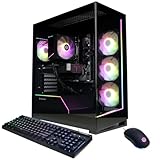

Best for Streaming — KOTIN Gaming PC Desktop (Ryzen 7 8700F, RTX 5060 Ti)
Strengths
- The specification names its 650W Gold power supply explicitly, which is the single best sign of a thoughtfully built prebuilt
- DLSS 4 support and WiFi 6 cover both the performance-longevity and connectivity boxes in one tower
- The Ryzen 7 8700F and RTX 5060 Ti pairing is the proven sweet spot for gaming plus streaming
Trade-offs
- KOTIN is a smaller brand than MSI or Alienware, so long-term support depends on a narrower organisation
- 16GB of memory, again, is standard rather than generous for the heaviest multitaskers
- ARGB showpiece styling will not suit every room or every taste
| Component | Specification (verified) |
|---|---|
| Processor | AMD Ryzen 7 8700F |
| Graphics | GeForce RTX 5060 Ti 8GB |
| Memory | 16GB DDR5 |
| Storage | 1TB SSD |
| Other | WiFi 6; Windows 11 Home; DLSS 4; ARGB cooling; 650W Gold PSU |
A streamer or aspiring creator who wants the 8700F and 5060 Ti combination with the power supply question already answered properly. It also suits any buyer who has read enough prebuilt horror stories to care about the unglamorous components as much as the headline ones.
The Gold-rated power supply matters in ways you feel indirectly: stable power under load, quieter operation than a strained budget unit, and a realistic path to a future graphics upgrade without replacing the PSU at the same time. Combined with WiFi 6 and current upscaling support, the machine asks very little of its owner beyond being used.
Brand scale is the honest caveat. The hardware specification is strong and verified, but if white-glove national support coverage matters more to you than any single component, one of the larger brands on this page is the safer home for your money.
Best for: buyers matching the profile above, on a monitor matched to this tier. / Not suited for: buyers whose library, resolution, or budget contradicts the trade-offs listed here.

Best Premium — MSI Codex Z2 Gaming Desktop (Ryzen 7-8700F, RTX 5070)
Strengths
- 32GB of DDR5 and 2TB of storage as standard remove the two most common upgrade errands entirely
- The RTX 5070 is a clear step above the 5060 class, aimed squarely at high-refresh 1440p and entry 4K with upscaling
- MSI is a major manufacturer with the support infrastructure to match, and USB Type-C plus VR-Ready labelling round out a complete specification
Trade-offs
- You pay a premium-tier price for a premium-tier specification — value hunters should look at the 5060 Ti machines first
- 1TB would be enough for many buyers, so part of the spend is storage some owners will never fill
- A machine this capable deserves a monitor to match, which is a real additional cost if you do not own one
| Component | Specification (verified) |
|---|---|
| Processor | AMD Ryzen 7-8700F |
| Graphics | GeForce RTX 5070 |
| Memory | 32GB DDR5 |
| Storage | 2TB SSD |
| Other | USB Type-C; VR-Ready; Windows 11 Home; A8NVP-436US |
A buyer who plays demanding single-player releases at 1440p, creates content, or simply refuses to think about upgrades for several years. The combination of a stronger graphics card, double memory, and double storage makes this the configuration for people whose previous PC annoyed them in small ways every week.
The lived experience is headroom everywhere: large game libraries installed at once, editing timelines that do not stutter, virtual reality that runs without a settings negotiation, and multitasking that never forces you to close anything. It is the first configuration on this page where the honest advice is to stop reading specifications and start thinking about your monitor and chair instead.
The limitation is that premium tiers have diminishing returns for lighter libraries. If your gaming is mostly esports and indie titles, this machine will spend its life under-used, and a 5060 Ti configuration plus a better monitor is the smarter allocation.
Best for: buyers matching the profile above, on a monitor matched to this tier. / Not suited for: buyers whose library, resolution, or budget contradicts the trade-offs listed here.


Best Flagship — Alienware Aurora Gaming Desktop (RTX 5080, Core Ultra 9 285)
Strengths
- The RTX 5080 is flagship-class graphics that makes 4K with upscaling and high-refresh 1440p both genuinely comfortable
- The Core Ultra 9 285 is the strongest processor in this roundup, with abundant cores for creation and streaming workloads
- Wi-Fi 7 and 2.5Gb Ethernet give it the most complete connectivity of any machine here, inside a distinctive Aurora chassis
Trade-offs
- Flagship pricing buys flagship performance, but the value curve is steepest at the tiers below this one
- Alienware’s proprietary design language can make some future upgrades less standard than in a conventional tower
- 1TB of storage is, oddly, the one specification where the cheaper MSI above it offers more
| Component | Specification (verified) |
|---|---|
| Processor | Intel Core Ultra 9 285 |
| Graphics | GeForce RTX 5080 |
| Memory | 32GB DDR5 |
| Storage | 1TB SSD |
| Other | 2.5Gb Ethernet; Wi-Fi 7; Windows 11 Home; ACT1250 |
An enthusiast who plays at 4K or high-refresh 1440p, creates seriously, and wants a single flagship tower from a brand with a long gaming history. It is also the pick for buyers who value industrial design and are willing to pay for a machine that looks like nothing else on the desk.
At this level the conversation changes from settings to experiences: path-traced scenes become playable with upscaling and frame generation, large creative projects render without planning your day around them, and a high-end monitor finally has a partner worthy of it. The machine is quiet confidence rather than a compromise negotiated title by title.
The honest limitation is proportionality. Most players, on most monitors, in most games, will not see a difference large enough to justify stepping from the premium tier to this one. Buy it because you will use the headroom or because you simply want the flagship — both are legitimate, but know which one is true.
Best for: buyers matching the profile above, on a monitor matched to this tier. / Not suited for: buyers whose library, resolution, or budget contradicts the trade-offs listed here.

Comparison Table: The Six Reference Configurations Side by Side
Use this table the way experienced buyers do: find the graphics card first, then check that memory and storage do not undercut it. A strong card paired with too little memory or storage is a compromise wearing a headline; a balanced row is a machine that will feel right for years.
| Machine | Processor | Graphics | Memory | Storage |
|---|---|---|---|---|
| ZYNEEX Prebuilt Gaming Desktop | AMD Ryzen 5 5500 | GeForce RTX 3050 6GB | 16GB DDR4 3200MHz | 1TB NVMe SSD |
| CyberPowerPC Gamer Xtreme (Intel Core i5-14400F, RTX 5060) | Intel Core i5-14400F | GeForce RTX 5060 8GB | 16GB DDR5 | 1TB PCIe 4.0 SSD |
| CyberPowerPC Gamer Master (Ryzen 7 8700F, RTX 5060 Ti) | AMD Ryzen 7 8700F | GeForce RTX 5060 Ti 8GB | 16GB DDR5 | 1TB PCIe 4.0 SSD |
| KOTIN Gaming PC Desktop (Ryzen 7 8700F, RTX 5060 Ti) | AMD Ryzen 7 8700F | GeForce RTX 5060 Ti 8GB | 16GB DDR5 | 1TB SSD |
| MSI Codex Z2 Gaming Desktop (Ryzen 7-8700F, RTX 5070) | AMD Ryzen 7-8700F | GeForce RTX 5070 | 32GB DDR5 | 2TB SSD |
| Alienware Aurora Gaming Desktop (RTX 5080, Core Ultra 9 285) | Intel Core Ultra 9 285 | GeForce RTX 5080 | 32GB DDR5 | 1TB SSD |
Two patterns are worth noticing. First, every configuration here names its exact processor and graphics card — that transparency is itself a quality signal. Second, the jump from 16GB to 32GB of memory and from 1TB to 2TB of storage happens at the premium tier, which is exactly where heavy multitaskers and large-library owners should be shopping anyway.
How Should You Think About Value Without Chasing a Price?
Prices on prebuilt PCs move constantly – between sale events, component cycles, and configuration revisions, the same tower can present very differently from one month to the next. That volatility is exactly why experienced buyers think in tiers and specifications rather than in fixed figures. A machine is good value when its components are balanced, current, honestly named, and matched to your monitor and library – and it stays good value when prices wobble, because the specification does not change when the discount does.
The value traps are consistent enough to memorise. Paying a premium tier price for a lower tier specification, hidden behind lighting and adjectives. Saving a small amount by accepting memory or storage below the practical minimum, then paying it back in upgrades and irritation. Buying headroom you will never use – the flagship for a light library on a basic monitor – while starving the components you use every day. And the reverse: buying the minimum for a demanding library and shopping again within a year, which is the most expensive outcome of all.
Judge value across the machine whole life: the purchase, the upgrades it will or will not need, the monitor it deserves, and the years it will serve before relevance fades. The cheapest machine that genuinely fits your gaming is good value. The machine one tier above it, bought for headroom you will actually grow into, can be equally good value. Everything else – underbought, overbought, or misdescribed – is expensive at any price. Use the links in this article to check the latest price on Amazon for the configurations that fit, and let the specification, not the discount banner, make the decision.
How Should You Judge Warranty, Support, and Returns?
Two towers with identical components are not identical products, because one of them will eventually need help. Before ordering, spend a few minutes on the unglamorous questions. How long is the warranty, and does it cover parts and labour or parts only? When something fails, do you ship the whole tower at your inconvenience, or will the builder send a replacement component with instructions – the difference between a week without a PC and an afternoon with a screwdriver? Is support reachable by phone and chat, in your timezone, and do owners describe it as competent? Large brands justify part of their price here; smaller assemblers often compete with surprisingly personal support. Both models can be good, but no information available is also a model, and it is the bad one.
Returns deserve the same attention. Marketplace purchases generally carry protective return policies in the first weeks, which is precisely when manufacturing defects reveal themselves. Use that window deliberately: in the first fortnight, run the machine hard. Play your most demanding game for long sessions, test every port you will ever use, confirm the wireless and Bluetooth work with your actual peripherals, and check that the machine you received matches the specification you ordered, component by component. A gaming PC that survives two weeks of heavy use almost always survives for years; the early window is when weak units identify themselves, and it costs you nothing but attention to catch them.
Keep records as you go: the order confirmation, the exact configuration as listed on the day you bought it, and photographs of the machine on arrival. Configurations change silently in this market, and if a dispute ever arises, the listing as it stood at purchase – not as it stands today – is the document that matters. A screenshot takes ten seconds and settles arguments that memory cannot.
What Does a Realistic Upgrade Path Look Like?
A prebuilt is not a sealed appliance unless its builder made it one. In a conventional tower with standard components, the realistic upgrades form a ladder. Storage is first and easiest: adding a second solid-state drive is a short job on most motherboards and instantly relieves the most common pressure. Memory is next, provided the motherboard has free slots or accepts larger modules – one more reason to check whether a 16GB machine ships as a single module or a pair, and how many slots remain. The graphics card is the transformative upgrade, and it is gated by two things: physical space in the case and power supply capacity and connectors.
This ladder is why the unglamorous specifications matter at purchase time. A named power supply with headroom converts a future graphics upgrade from a two-component project into a one-component swap. A current motherboard platform – DDR5 memory and a recent socket – keeps processor upgrades possible for years, while an end-of-life platform caps the machine at the best processor of a finished generation, which may still be a fine bargain if the price reflects it. Neither choice is automatically wrong; what is wrong is paying current-platform money for a finished platform without noticing.
Plan the ladder honestly at purchase. If you know a monitor upgrade is coming, buy the graphics headroom now. If you know your library grows faster than your storage, favour the larger drive or confirm the empty slot exists. And keep the packaging and documentation from any component you replace: when you eventually sell or hand down the machine, a tidy history and a box of original parts are worth real money and real trust.
How Long Will a Good Prebuilt Gaming PC Actually Last?
Longevity has two meanings that buyers often merge. The first is survival: will the machine still work in five years? With reasonable care – clean vents, sensible placement, no sustained abuse – modern components are durable, solid-state storage has no moving parts to wear, and the components most likely to fail announce themselves early, which is what warranties and the first-weeks shakedown are for. The second meaning is relevance: will it still play the games you want, the way you want to play them? That clock runs faster, and it runs at different speeds for different owners.
An esports-focused machine ages slowly, because competitive titles are engineered to run on the widest possible hardware base and change their demands gently. A machine bought for maximum-settings single-player releases ages fastest, because those titles are designed to sell new hardware. Most libraries sit between the two, and most well-bought machines serve them well for four to five years, helped substantially by upscaling, which lets an ageing card trade a little internal resolution for a lot of frame rate. Stepping up one graphics tier at purchase is the most reliable way to buy an extra year or two of relevance; stepping up two tiers buys less additional time than the price suggests.
Plan the end of the story at the beginning. A tower built from standard components can be upgraded, handed down to a younger player, repurposed as a family or media machine, or sold with its history documented – all of which return value that a sealed, proprietary design cannot. Longevity is not only about how long the machine stays fast; it is about how many useful lives it can have after the first one.
Why Does the Graphics Card Matter More Than Anything Else?
Every buying decision about a gaming PC starts with the graphics card, because the graphics card does the work that defines gaming: drawing each frame. The processor prepares the scene, the memory holds the data, and the storage delivers it — but the card renders it, dozens or hundreds of times per second, and the resolution and settings you can enjoy are set by its capability more than by any other component. This is why two towers with identical processors can feel like machines from different generations, and why a listing that leads with processor branding while whispering about the graphics card deserves suspicion.
The current landscape sorts into recognisable tiers. Entry cards such as the RTX 3050 class handle 1080p with sensible settings and excel in esports titles. Mainstream cards such as the RTX 5060 run new releases at high settings at 1080p and credibly at 1440p with upscaling. The 5060 Ti class adds the headroom for high-refresh 1440p. The RTX 5070 class is premium 1440p hardware, and the RTX 5080 class is flagship hardware for 4K with upscaling and for buyers who simply refuse to negotiate with a settings menu. None of these tiers is a trap in itself; the trap is paying for one tier and receiving another, which is why exact model names matter more than any adjective a seller attaches to them.
Video memory is the specification inside the specification. At 1080p, modest memory capacities remain workable, but modern texture budgets keep growing, and cards with more memory age more gracefully at 1440p and above. Upscaling technology — DLSS on NVIDIA cards, FSR on AMD cards — has changed the ageing curve for everyone: a card that renders internally at a lower resolution and reconstructs a sharp image can stay relevant years longer than raw specifications suggest. When you compare two otherwise similar prebuilts, prefer the one whose graphics card is newer, better supported, and more generously supplied with memory; it is the component you will feel every single day.
What Are the Most Common Buying Mistakes – and How Do You Avoid Them?
The first mistake is buying a gaming label instead of gaming hardware. Towers with aggressive styling and colourful fans are placed in gaming categories with integrated graphics, very small storage, and memory below any sensible minimum, because the case photographs well and the headline price looks like a bargain. The defence is a single habit: find the exact graphics card model in the specification. If no discrete card is named, the machine is not a gaming PC for modern titles, whatever the category, the lighting, or the seller description says.
The second mistake is buying yesterday flagship at today prices. Older high-end graphics cards were excellent in their era, but they lack modern upscaling, draw substantial power for their performance, and age poorly against current entry cards that outperform them with modern features. The third mistake is ignoring the power supply: an unspecified or very low-wattage unit closes the upgrade path and risks the whole system under sustained load. The fourth is accepting memory or storage below the practical minimum to save a small amount now and pay it back, with interest in frustration, every week you own the machine.
The final mistake is mismatch: a premium tower on a slow monitor, a budget tower expected to drive a huge high-resolution display, a streaming ambition paired with the minimum processor and memory. Every one of these errors is visible before purchase, in the specification, for free. The buyers who regret gaming PCs almost never regret a resolution or a brand; they regret a specific, checkable component choice. Check the components, in order – graphics card, exact processor, memory, storage, power supply – and the regrets mostly disappear.
Who Else Will Use This Machine – and Why Does That Matter?
Many gaming PCs are shared machines wearing a gaming costume: homework in the afternoon, office work in the morning, a family photo library, a younger sibling first games. Shared use changes the right answer in specific ways. Storage grows faster when several people libraries coexist, which argues for the larger drive. Memory pressure grows when the machine is never truly idle, which argues for headroom. And reliability and support matter more, not less, when other people deadlines depend on the same tower that runs your games.
It also changes the setup work worth doing. Separate user accounts keep libraries, saves, and settings from colliding. Parental controls and content settings are a configuration task to finish on day one, not an afterthought. A simple backup routine – the machine that holds a family photographs and schoolwork deserves one – turns a hardware failure from a catastrophe into an inconvenience. None of this is specific to any brand; it is the difference between a machine bought for a person and a machine bought for a household.
If the PC is purely yours, enjoy the simpler calculus: your library, your monitor, your settings. If it is shared, buy one tier of storage and memory above the pure-gaming answer and set the machine up properly at the start. The cost is small, the peace is large, and the machine will be thanked by people who never look at a specification sheet.
What Else Belongs in the Budget Besides the Tower Itself?
The tower is the largest purchase, not the only one, and honest budgeting counts the whole desk. The monitor comes first, for the reasons covered elsewhere in this article: it is the component you actually look at, and a mismatch there wastes the tower ability every day. A keyboard and mouse you enjoy using come next – gaming is an hours-long physical activity, and peripherals are the parts your hands grade, not the benchmark charts. Players in this cluster often pair a new tower with a mouse chosen for their grip and game type, and the time spent choosing is repaid every session.
Then come the quiet essentials. A headset or speakers and a microphone if you play with others. A surge protector, because the cheapest insurance in the whole setup is the one between a flagship tower and a storm. Desk space and cable management enough that the tower breathes and the setup stays pleasant. And, for buyers who will stream or work from the machine, a camera and lighting modest enough to be honest about – audiences forgive simple production and do not forgive bad audio, so the microphone outranks the camera every time.
None of this argues for buying everything at once. It argues for sequencing: tower and monitor together, because they define each other; peripherals as your hands demand them; the rest as needs prove themselves. A budget that reserves a sensible share for the screen and the essentials produces a setup that feels complete, while a budget spent entirely on the tower produces a powerful machine attached to compromises you notice daily.
Why Do Thermals, Airflow, and Noise Decide How a PC Feels to Own?
Specifications describe what a machine can do in a benchmark; thermals decide what it can do in your room, in summer, in the third hour of a session. A graphics card and processor under gaming load convert nearly all their power draw into heat, and that heat must leave the case continuously. Builders who prioritise airflow – vented or mesh panels, sensibly placed fans, coolers sized to the processor rather than to the price – produce machines that hold their performance quietly. Builders who seal hot components behind decorative glass produce machines that get louder and slower the longer you play.
You cannot fully judge thermals from a listing, but you can read the signals. Named coolers, visible front or top ventilation, and a power supply with capacity to spare all suggest a builder thinking about sustained load. A very small case around very powerful components is a question worth asking rather than an automatic disqualification – good small designs exist – but the burden of proof sits with the design. Placement at home matters just as much: a tower needs clearance around its intakes and exhausts, belongs off thick carpet, and should never be sealed inside a closed cabinet while gaming.
Noise is the daily consequence. Most owners forgive a machine that is audible under full load; few forgive one that whines, rattles, or cycles its fans distractingly at the desktop. Fan bearing noise and aggressive fan curves are the complaints that fill owner discussions of otherwise well-specified machines, and they are exactly what the first-two-weeks test is for: play your most demanding game for long sessions early, while returning or exchanging is still painless, and listen to the machine as carefully as you watch the screen.
Frequently Asked Questions
What is the biggest advantage of a prebuilt gaming PC?
A single warranty and support channel for a system that arrives assembled and tested. For most buyers that combination — zero assembly risk plus one company responsible for the whole machine — outweighs every other entry on the list.
What is the biggest disadvantage of a prebuilt gaming PC?
You pay for assembly and support, and you accept the builder component choices. Where a builder cuts a corner — an unnamed power supply, a proprietary layout — you inherit it, which is why auditing the specification matters.
Are prebuilt gaming PCs harder to upgrade?
Some are, most are not. Conventional towers built from standard components upgrade like any PC: storage, memory, then graphics card. Proprietary large-brand designs can restrict upgrades, so check the specific model, not the category.
Do prebuilts cost more than building your own?
Generally yes at the same specification, though the gap varies by tier and by component market conditions, and it narrows or occasionally inverts during shortages and sales. What the premium buys is assembly, testing, warranty, and time.
Is bloatware a serious problem on prebuilt PCs?
It is a chore rather than a problem: trial software and promotional utilities are common and removable in minutes during first-day setup. Budget the ten minutes and it never troubles you again.
How do I avoid the worst prebuilts?
Audit before ordering: exact graphics card and processor models named, 16GB or more of memory, NVMe storage, a named power supply, and warranty terms in plain language. The full method is in How To Choose A Prebuilt Gaming PC.
Should beginners buy prebuilt or build?
Beginners who want to play games rather than learn PC assembly as a hobby are usually better served by a good prebuilt. Beginners who are curious about how PCs work may enjoy building — the machine is the same, the hobby is different.
Final Recommendation
Weighed whole, the prebuilt balance sheet favours buyers who value time, certainty, and support, and taxes buyers who value total component control and the build itself. Neither weighting is a character flaw. Decide which buyer you are, then hold any specific machine to the standard its category promises: named components, a real power supply, standard parts where upgrades matter, and support you can describe before you need it.
For the step from judgement to shortlist, the verified configurations above and the criteria in Prebuilt Gaming PC Buying Guide are the working tools — and the verdict on whether the premium itself is justified lives in Is A Prebuilt Gaming PC Worth It.


