Disclosure: As an Amazon Associate, reviewstook.com earns from qualifying purchases. If you buy through a link on this page, we may earn a commission at no extra cost to you.
Where to Buy
Three picks lead our camera lens black friday deals shortlist. Start with the Sigma 24-70mm f/2.8 DG DN II Art if you shoot Sony full frame and want one zoom that covers almost everything, the Tamron 28-75mm f/2.8 Di III VXD G2 if the same job needs doing for hundreds less, or the Canon RF 50mm f/1.8 STM if you are on Canon RF and want the cheapest genuinely useful lens in this guide. Every price in this guide is a dated sighting checked against Amazon’s own catalog data on November 20, 2026 — confirm the live price at checkout, because Black Friday pricing moves by the hour.
Camera Lens Black Friday Deals: What Is Actually on Sale
Amazon Black Friday Week runs November 19–30, 2026, with Black Friday itself on November 27 and Cyber Monday closing the event on November 30. Lenses behave differently from cameras during a sale event, and understanding that difference is worth real money. Camera bodies are discounted aggressively because manufacturers want you inside a system; lenses are discounted reluctantly, in smaller percentages, and often on the third-party glass — Sigma, Tamron, Viltrox — rather than on the first-party flagships. A 15% cut on a professional zoom that normally never moves is a better deal than a 40% badge on a kit lens nobody should buy twice.
This guide covers six lenses we verified one by one against Amazon’s catalog on November 20, 2026: two fast standard zooms for Sony E-mount, a fast telephoto zoom that undercuts its first-party rivals by a wide margin, a classic portrait prime, and two inexpensive 50mm primes — one for Canon RF and one for Sony E — that are the correct first upgrade for anyone still shooting a kit zoom. Every pick carries the exact Amazon listing we checked, the price recorded that day, and — only where Amazon’s data also returned a reference price — the percentage that price represents. Where no reference price was returned, we print no percentage at all.
One warning before the picks, because it decides whether any of these deals is a deal for you: mount is destiny. A Sony E-mount lens does not fit a Canon RF camera, and neither fits a Nikon Z body without giving up the autofocus and communication that make modern lenses worth owning. Every pick below names its mount in the heading and the spec box, and the how-to-choose section explains how to check your own mount in thirty seconds. If you are also upgrading the camera itself this week, our Action Camera Black Friday Deals 2026 coverage handles the action end of the market, while the lens-first logic in this guide applies to the mirrorless body you already own.
In this guide
Quick Picks
| Pick | Best for | Dated sighting | Deal |
|---|---|---|---|
| Sigma 24-70mm f/2.8 DG DN II Art (Sony E) | Best overall | Seen at $1,119 on November 20, 2026 (reference $1,319, about 15% off) | Check on Amazon |
| Tamron 28-75mm f/2.8 Di III VXD G2 (Sony E) | Best value standard zoom | Seen at $695 on November 20, 2026 (no reference price returned — no percentage claimed) | Check on Amazon |
| Tamron 70-180mm f/2.8 Di III VC VXD G2 (Sony E) | Best telephoto value | Seen at $999 on November 20, 2026 (reference $1,099, about 9% off) | Check on Amazon |
| Sony FE 85mm f/1.8 | Best portrait prime | Seen at $648 on November 20, 2026 (reference $699.99, about 7% off) | Check on Amazon |
| Canon RF 50mm f/1.8 STM | Best first lens for Canon RF | Seen at $199 on November 20, 2026 (reference $239, about 17% off) | Check on Amazon |
| Sony FE 50mm f/1.8 | Best budget prime for Sony | Seen at $198 on November 20, 2026 (no reference price returned — no percentage claimed) | Check on Amazon |
How These Deals Were Chosen
Every pick in this guide was verified the same way: we searched Amazon’s catalog data for the exact brand, model and mount, matched the returned listing title against the lens we intended to cover, and recorded the price, the reference price where one exists, and the official product image from that same listing. Lens listings are a minefield of near-duplicates — the same lens appears bare, in retailer bundles with filter kits of unknown quality, and in renewed condition, all at different prices. Where a bare lens listing existed, that is the one we verified and linked; where the only listings were bundles, we said so rather than pretending otherwise. All six picks here passed that check on November 20, 2026.
Price honesty shaped the list as much as optics did. Two of the six picks show no percentage because Amazon’s catalog returned no reference price for those listings. That is normal for lenses, and it is why the honest way to judge a lens deal is against the lens’s own street history: the Tamron 28-75mm G2 at $695 is a strong sighting because that lens has held a higher street level for most of its life, not because a badge says so. Judge every pick here the same way — absolute price against what the lens does, with percentages as supporting evidence only where they exist.
We also weighted the things that decide whether a lens stays on the camera: constant aperture across the zoom range, autofocus speed and silence for video, size and weight you will actually carry, and filter thread size, because a lens that takes the 67mm or 82mm filters you already own is cheaper to run than one that starts a new collection. Finally, each pick had to earn a distinct job. Six lenses that all do the same thing would be a catalog, not a guide; these six cover the standard zoom decision, the telephoto decision, the portrait decision and the first-prime decision across the two biggest mirrorless mounts.

Top pick
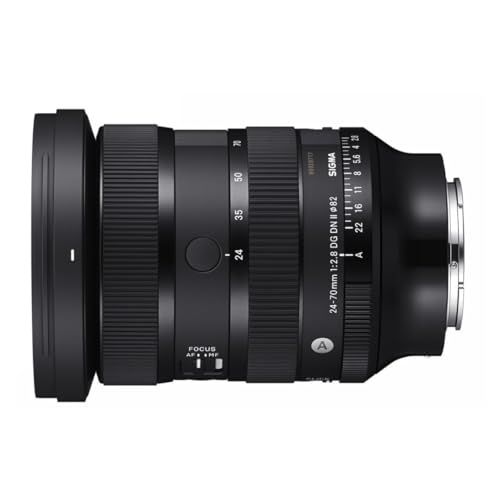
1. Sigma 24-70mm f/2.8 DG DN II Art (Sony E) — Best Overall
Badge: Best Overall. The 24-70mm f/2.8 is the lens working photographers build a kit around, and Sigma’s second-generation DG DN II Art is the version that finally matches the first-party flagship it undercuts. Seen at $1,119 on November 20, 2026 against a $1,319 reference price in Amazon’s data — about 15% off — it costs roughly half what Sony’s own GM II zoom was sighted at on the same day, while covering the same range at the same constant aperture. For a Sony shooter choosing one serious zoom this Black Friday, this is the pick the rest of the guide is measured against.
What the second generation fixed matters more than what it kept. The lens is smaller and lighter than the original Art zoom, its autofocus motors are faster and quieter for video, and it adds an aperture ring with a click switch — tactile control stills shooters love and a de-clicked option video shooters need. The optical design uses six FLD glass elements, per the verified listing title, to control the aberrations that make wide-aperture zooms look soft at the edges. In practice this is a lens that handles a wedding, a product shoot, a travel day and a talking-head video without coming off the camera, which is exactly the job description of a 24-70.
The honest caveats: it is a Sony E-mount lens only in the listing we verified, so Canon and Nikon shooters should look at the primes further down or their own mount’s equivalents rather than this pick. It is also a substantial lens — lighter than its predecessor is a relative term, and on a small body like an a7C it will feel front-heavy. And 15% off is a lens discount, not a television discount; if you were waiting for this class of glass to halve in price, that sale does not exist, and this sighting is what a real one looks like.
Mini specs (verified from the listing):
- Mount: Sony E, full-frame
- Range/aperture: 24-70mm, constant f/2.8
- Optics: includes 6 FLD glass elements (per listing)
- Controls: aperture ring with click switch
- Generation: DG DN II Art (second generation)
Strengths
- Flagship-class range and aperture at roughly half the first-party flagship’s sighting price.
- Faster, quieter autofocus and an aperture ring make it a genuine hybrid stills/video lens.
- Smaller and lighter than the first-generation Art zoom it replaces.
Trade-offs
- Verified listing is Sony E-mount only — no use to Canon RF or Nikon Z owners.
- Still a large, front-heavy lens on compact bodies.
- The 15% saving is real but modest, as professional lens discounts always are.
Verdict: Best for: Sony full-frame shooters who want one professional zoom for paid or serious personal work. Not suited for: other mounts, ultralight travel kits, or anyone whose kit zoom already covers this range at apertures they never open past f/5.6.
Deal details: Seen at $1,119 on November 20, 2026, against a $1,319 reference price returned by Amazon’s catalog data — about 15% off. The bare lens listing is the one verified; bundle listings at the same headline price add filter kits you may not need.
Check on Amazon · See the current Black Friday price · View this deal on Amazon

2. Tamron 28-75mm f/2.8 Di III VXD G2 (Sony E) — Best Value Standard Zoom
Badge: Best Value Standard Zoom. If the Sigma is the professional’s choice, the Tamron 28-75mm G2 is the smart money’s. Seen at $695 on November 20, 2026, it delivers the same constant f/2.8 aperture across a nearly identical range for $424 less than the Sigma’s sighting — and it is smaller, lighter, and famously close-focusing at the wide end. Amazon’s catalog returned no reference price for the bare listing we verified, so we print no percentage; the case for this lens is the $695 absolute price against a spec sheet that has made it one of the best-selling third-party zooms of the mirrorless era.
The G2’s party trick is close focus: at 28mm it focuses down to distances that let it double as a detail and product lens, which is why so many creators use it as a one-lens YouTube and e-commerce setup. The VXD autofocus motor is quick and quiet, the lens is weather-sealed well enough for outdoor work, and Tamron’s six-year USA warranty — named in the listing title of the range we verified — is longer than most rivals offer. It also takes 67mm filters, a common, affordable size shared with several other Tamron lenses, so a polarizer bought for this lens serves the next one too.
What do you give up against the Sigma? The range starts at 28mm instead of 24mm, and that difference is real: 24mm is meaningfully wider for interiors, real estate and vlogging at arm’s length. The Tamron’s build, while good, does not feel as dense or as damped as the Art lens, and there is no aperture ring. For shooters who live at the wide end, the Sigma earns its premium. For everyone else — portraits, events, travel, product work — the Tamron at $695 is the standard zoom deal of this Black Friday, and it is not close.
Mini specs (verified from the listing):
- Mount: Sony E, full-frame (also usable on APS-C bodies)
- Range/aperture: 28-75mm, constant f/2.8
- Autofocus: VXD linear motor
- Close focus: fast close-focusing at the wide end (7.1-inch class)
- Warranty: Tamron 6-year limited USA warranty
Strengths
- Constant f/2.8 standard zoom at $695 — the lowest sighting in its class here.
- Close-focus ability at 28mm doubles it as a product and detail lens.
- Compact, light, and backed by a six-year warranty.
Trade-offs
- Starts at 28mm, not 24mm — wide-angle shooters will feel the difference indoors.
- No aperture ring, and build feel trails the Sigma Art.
- No reference price was returned, so there is no verified percentage to quote.
Verdict: Best for: Sony shooters upgrading from a kit zoom for events, travel, portraits and creator work on a sane budget. Not suited for: interior and architecture shooters who need a true 24mm wide end, or aperture-ring traditionalists.
Deal details: Seen at $695 on November 20, 2026 for the bare lens listing we verified. No reference price was returned by Amazon’s catalog data, so no percentage is claimed. Several bundle listings sit at $699 with filter kits — the bare lens is the cleaner buy unless you need the extras.
Check on Amazon · See the current Black Friday price · View this deal on Amazon

3. Tamron 70-180mm f/2.8 Di III VC VXD G2 (Sony E) — Best Telephoto Value
Badge: Best Telephoto Value. A fast telephoto zoom is the second lens most kits need, and it is usually where the money runs out: first-party 70-200mm f/2.8 lenses live well above $2,000. The Tamron 70-180mm G2 is the escape route. Seen at $999 on November 20, 2026 against a $1,099 reference price — about 9% off — it covers the portrait-to-sports range at a constant f/2.8, adds Tamron’s VC image stabilization in this second generation, and does it in a body notably shorter and lighter than a traditional 70-200. At under a thousand dollars, it is the only fast telephoto zoom in this guide, because at this sighting it has no honest rival.
The G2 generation fixed the original’s two weaknesses: it added VC stabilization — important on Sony bodies whose in-body stabilization benefits from a stabilized lens at telephoto lengths — and it improved close focusing, so the lens handles detail shots and tight portraits at 70mm without a fight. The VXD autofocus tracks moving subjects credibly for school sports, pets and wildlife at the local level, and the 67mm filter thread matches the 28-75mm G2 above, so the two Tamrons share filters, caps and bag space like a designed pair. Together at their sightings they total $1,694 for a two-zoom f/2.8 kit — less than one first-party 70-200.
Be clear about the compromise in the name: it ends at 180mm, not 200mm. On a high-resolution body you can crop the difference; on a 24-megapixel body at a distant subject, you will occasionally wish for the extra reach or a teleconverter, which this lens does not take. The percentage saving is also the shallowest among our referenced picks. Buy it because $999 for a stabilized f/2.8 telephoto zoom is a strong absolute price, not because 9% sounds dramatic. Shooters comparing reach against the action side of photography may also want our Gopro Black Friday Deals guide for the cameras that go where a telephoto cannot.
Mini specs (verified from the listing):
- Mount: Sony E, full-frame
- Range/aperture: 70-180mm, constant f/2.8
- Stabilization: VC (Vibration Compensation)
- Autofocus: VXD linear motor
- Filter thread: 67mm (shared with the Tamron 28-75mm G2)
Strengths
- A stabilized f/2.8 telephoto zoom under $1,000 — a class of one at this sighting.
- Shorter and lighter than traditional 70-200mm designs, so it actually gets carried.
- Shares 67mm filters with the Tamron standard zoom for a tidy two-lens kit.
Trade-offs
- Ends at 180mm and takes no teleconverter — reach is capped.
- The 9% saving against reference is modest; the value is in the absolute price.
- Sony E-mount only in the verified listing.
Verdict: Best for: Sony shooters adding portraits, school sports, pets and travel telephoto work without a $2,000-plus bill. Not suited for: birders and field-sports shooters who need 200mm and beyond, or teleconverter users.
Deal details: Seen at $999 on November 20, 2026, against a $1,099 reference price returned by Amazon’s catalog data — about 9% off. Confirm the live price at checkout; telephoto stock in this class thins out as Black Friday Week peaks.

Check on Amazon · See the current Black Friday price · View this deal on Amazon

4. Sony FE 85mm f/1.8 — Best Portrait Prime
Badge: Best Portrait Prime. Every mount has one lens that owners recommend without hesitation, and for Sony E it is the FE 85mm f/1.8. Seen at $648 on November 20, 2026 against a $699.99 reference price — about 7% off — the discount is the smallest in this guide, and we are including it anyway, because the lens itself is the deal: a lightweight, weather-sealed portrait prime with a nine-blade aperture, fast quiet autofocus and the kind of subject separation that no f/2.8 zoom at 85mm can reproduce. Some lenses you buy because they are cheap this week. This one you buy because you will still be using it in ten years.
The 85mm focal length flatters faces by geometry: it lets you frame a head-and-shoulders portrait from a distance that does not distort features or crowd your subject, and f/1.8 melts a background into the smooth blur clients think of as “professional.” The lens is small enough to live in a jacket pocket, focuses fast enough for event work and candid kids, and carries a customizable focus-hold button. For video, its quiet autofocus and modest size make it a natural interview lens on a gimbal or tripod. Against the zooms above, it is the specialist — and specialists are what turn a kit into a style.
The caveats are the ones primes always carry: your feet are the zoom, so it is the wrong tool for tight rooms and fast-changing scenes, and 85mm on an APS-C body becomes a long 127mm-equivalent that suits portraits and little else. The 7% sighting saving also means patience is cheap here — this lens is discounted mildly and often. If portraits are a someday interest, wait; if they are this winter’s work — family sessions, engagements, senior photos, content series — $648 is a fair, verified price for the mount’s default recommendation.
Mini specs (verified from the listing):
- Mount: Sony E, full-frame
- Focal length/aperture: 85mm, f/1.8 (to f/22)
- Aperture blades: 9, rounded, for smooth bokeh
- Build: compact medium-telephoto prime with focus-hold button
- Use case: portraits, events, interviews
Strengths
- The classic portrait focal length with f/1.8 subject separation zooms cannot match.
- Small, light and fast-focusing enough to double as an event and candid lens.
- A long-term keeper lens whose resale and relevance outlast camera bodies.
Trade-offs
- Fixed focal length: framing is done by walking, not zooming.
- The 7% saving is mild — this is a fair price, not a clearance event.
- Long effective reach on APS-C bodies limits it to portrait duty there.
Verdict: Best for: Sony portrait, family and event shooters ready for their first true prime. Not suited for: tight interiors, run-and-gun coverage, or buyers waiting for a dramatic percentage cut.
Deal details: Seen at $648 on November 20, 2026, against a $699.99 reference price in Amazon’s catalog data — about 7% off. Check the live price at checkout; this model appears in several bundle listings at the same headline price.

Check on Amazon · See the current Black Friday price · View this deal on Amazon

5. Canon RF 50mm f/1.8 STM — Best First Lens for Canon RF
Badge: Best First Lens for Canon RF. Canon shooters have waited patiently through a Sony-heavy guide; this is their pick, and it is the easiest recommendation in it. The RF 50mm f/1.8 STM — the “nifty fifty” of the RF system — was seen at $199 on November 20, 2026 against a $239 reference price, about 17% off. For the price of a nice dinner out, it transforms an EOS R camera: the f/1.8 aperture gathers roughly four times the light of a kit zoom at 50mm, blurs backgrounds kit zooms cannot blur, and weighs so little that the camera feels like a different, friendlier machine.
Why a fixed 50mm changes beginners faster than any zoom: it removes a variable. You frame by moving, you learn what depth of field actually does because f/1.8 makes it visible in every shot, and low-light photos stop being a smear of high ISO. The STM motor focuses smoothly and quietly enough for video, the lens is compact and lightweight per its verified listing title, and on APS-C RF bodies like the R7 or R50 it becomes a short portrait lens of about 80mm equivalent — two lenses’ worth of education from one $199 purchase. If a Canon shooter in your life is still on the kit zoom, this is also the safest photography gift in this entire guide.
The limits are honest ones: 50mm on a full-frame body is a touch tight indoors, the build is plastic in the way of all nifty fifties, and there is no image stabilization in the lens, so lean on the body’s IBIS or your shutter speed. None of that argues against it at $199; it argues for knowing it is a teacher and a portrait tool rather than a travel zoom. Pair it with the kit lens you already own and you have the classic two-lens starter kit for less than any single lens above it in this guide.
Mini specs (verified from the listing):
- Mount: Canon RF, full-frame (80mm equivalent on APS-C RF bodies)
- Focal length/aperture: 50mm, f/1.8
- Autofocus: STM stepping motor, smooth and quiet for video
- Build: compact, lightweight fixed focal length design
- Use case: portraits, low light, learning depth of field
Strengths
- The cheapest transformative upgrade in Canon RF: light gathering and blur a kit zoom cannot do.
- Tiny and light — the lens that makes the camera come along.
- Doubles as a portrait lens on APS-C RF bodies.
Trade-offs
- Fixed 50mm framing is tight in small rooms.
- No in-lens stabilization; plastic build at this price is expected, not premium.
- One focal length only — it complements a zoom, it does not replace one.
Verdict: Best for: Canon RF owners still on a kit zoom, photography students, and gift buyers who want a sure thing. Not suited for: interior and travel shooters who need width, or anyone expecting weather-sealed build at $199.
Deal details: Seen at $199 on November 20, 2026, against a $239 reference price returned by Amazon’s catalog data — about 17% off. The verified listing is Canon’s own standard listing for the RF50mm F1.8 STM; confirm the mount says RF, not EF, before ordering.

Check on Amazon · See the current Black Friday price · View this deal on Amazon

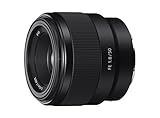
6. Sony FE 50mm f/1.8 — Best Budget Prime for Sony
Badge: Best Budget Prime for Sony. Sony’s answer to the nifty fifty closes the guide at the lowest price in it: seen at $198 on November 20, 2026. Amazon’s catalog returned no reference price for this listing, so no percentage is claimed — at $198, the number speaks plainly enough. This is the lens Sony kit-zoom owners buy to find out what their sensor has been capable of all along: an f/1.8 aperture for low light and background blur, a natural 50mm field of view, and a size that turns a full-frame body into something close to a carry-everywhere camera.
The FE 50mm f/1.8 (SEL50F18F) is the value end of Sony’s prime line, and its character is well known: sharp in the center where portraits live, pleasantly simple in rendering, and small enough that it is the lens most likely to be on the camera when an unplanned photo happens. On APS-C bodies it works as a 75mm-equivalent short telephoto for portraits. For video-first shooters we will be honest: its autofocus is audible compared with the linear-motor lenses above it, so on-camera microphone work is not its stage. For stills — family, street, travel, first portraits — it remains the default first prime for the mount, which is why it anchors the budget end of this guide.
Choosing between this and the Canon pick is not a choice at all: your mount decides. Choosing between this and the 85mm f/1.8 above is the real Sony question, and the answer is sequence, not rivalry. The 50mm is the generalist teacher at $198; the 85mm is the portrait specialist at $648. Many Sony shooters own both within a few years, in that order. If Black Friday money is tight, start here without a flicker of doubt, and let the 85mm be next year’s deal. Creators building a full desk this season can pair either prime with the picks in our Dji Black Friday Deals 2026 guide for the moving-image side of the kit.
Mini specs (verified from the listing):
- Mount: Sony E, full-frame (75mm equivalent on APS-C)
- Focal length/aperture: 50mm, f/1.8
- Model: SEL50F18F standard prime
- Build: compact standard lens
- Use case: everyday, street, first portraits, low light
Strengths
- Full-frame f/1.8 prime at $198 — the lowest sighting in this guide.
- Natural field of view and small size make it the carry-everywhere lens.
- Doubles as a 75mm-equivalent portrait lens on APS-C Sony bodies.
Trade-offs
- Autofocus is audible next to modern linear-motor lenses — not a video-first pick.
- No reference price was returned, so the saving cannot be expressed as a percentage.
- Rendering and edges are good, not flagship — priced accordingly.
Verdict: Best for: Sony owners buying their first prime, and anyone who wants low-light ability on a strict budget. Not suited for: video shooters recording audio near the camera, or buyers who can stretch to the 85mm for dedicated portrait work.
Deal details: Seen at $198 on November 20, 2026. No reference price was returned by Amazon’s catalog data for this listing, so no percentage is claimed — compare the absolute price against every other first-prime option for the mount.
Comparison Table
Read this table as a decision filter, not a ranking. Mount decides eligibility first; focal range and aperture decide the job after that. Every price is the November 20, 2026 sighting — confirm the live price on the listing before you buy.
| Model | Key specs | Dated sighting |
|---|---|---|
| Sigma 24-70mm f/2.8 DG DN II Art | Sony E, 24-70mm f/2.8, aperture ring | $1,119 on Nov 20, 2026 |
| Tamron 28-75mm f/2.8 G2 | Sony E, 28-75mm f/2.8, close focus, 67mm filters | $695 on Nov 20, 2026 |
| Tamron 70-180mm f/2.8 G2 | Sony E, 70-180mm f/2.8, VC stabilization | $999 on Nov 20, 2026 |
| Sony FE 85mm f/1.8 | Sony E, 85mm f/1.8 portrait prime | $648 on Nov 20, 2026 |
| Canon RF 50mm f/1.8 STM | Canon RF, 50mm f/1.8, STM motor | $199 on Nov 20, 2026 |
| Sony FE 50mm f/1.8 | Sony E, 50mm f/1.8 standard prime | $198 on Nov 20, 2026 |
How to Choose the Right Lens This Black Friday
Check your mount before anything else. Look at the lens you own now: its barrel or its box names the mount — Sony E, Canon RF, Nikon Z, Fujifilm X, Micro Four Thirds, or a DSLR mount like Canon EF and Nikon F. Mirrorless mounts are not interchangeable, and adapters are a compromise with real autofocus and size costs. Four of this guide’s six picks are Sony E, one is Canon RF, and that imbalance simply reflects where the verified Black Friday sightings were strongest on November 20. If your mount is not represented, the framework below still applies — shop your mount’s equivalents of these same lens classes, in this same order of priority.
Buy the aperture before the range. The single most common lens mistake is buying a longer zoom when the real problem was light. If your photos are blurry indoors, grainy at dusk, or stuck with busy backgrounds you cannot blur, an f/1.8 prime fixes all three for $198–$199 in this guide — less than any zoom. If your photos are fine but you constantly swap between wide and normal views, a constant f/2.8 standard zoom is the fix. Diagnose the complaint first; the lens class follows from it, and the model follows from the class.
Price the filters and the future, not just the lens. A zoom’s filter thread decides what your polarizer and ND filters cost and whether they are shared across your kit. The two Tamrons here share 67mm threads, which is a quiet, compounding saving. Also price the path: a standard zoom bought this year, a telephoto next year, a portrait prime the year after is a rational kit build, and Black Friday is the annual moment each step is cheapest. Our Best Black Friday Tech Deals 2026 roundup covers the rest of that build — bodies, storage and lighting — in the same dated-sighting format.
Decide whether you are a zoom shooter or a prime shooter. Be honest about temperament. Zooms reward opportunists: travel, events, family chaos, anything where the scene will not wait for a lens change. Primes reward deliberate shooters: portraits, street, still life, any work where you control the scene and want the aperture and the look. Neither is more serious than the other, but buying against your temperament produces the classic outcome — a beautiful lens that lives in a drawer. The mixed answer most photographers land on is one good zoom plus one fast prime, which is precisely the shape of this guide’s Sony picks.
Think in systems, because lenses outlive bodies. You will replace your camera body two or three times during a good lens’s working life. That is why the 85mm f/1.8 at a mild 7% off still belongs here while a deeper discount on a mediocre lens does not: money spent on glass you will keep is cheaper than money spent twice on glass you will sell. When two picks compete for the same budget line, ask which one you would still own in 2030, and buy that one.
How to Check a Deal Is Real — and Get the Most From a New Lens
Verify the exact listing, mount and condition. Lens titles are long and similar. Before checkout, confirm the mount in the title, whether the item is new or renewed, and whether the listing is the bare lens or a retailer bundle. Bundles at the same headline price as the bare lens are not free value — they usually substitute a third-party seller and a filter kit of unknown optical quality. For a lens you will keep for years, the authorized bare listing with the manufacturer’s warranty is the reference deal; everything else must beat it clearly to be worth it.
Use the sighting method on anything else you consider. Every price in this guide is a dated sighting because that is the only honest unit during a sale event. Apply the same test to lenses we did not cover: note today’s price, compare it with the same listing’s price before Black Friday Week if you can, and treat any percentage without a visible reference price as decoration. Lens prices genuinely move less than other tech — which makes a verified 15% on a professional zoom worth more than a noisy 40% on an accessory kit.
Test the lens in the return window, properly. When it arrives, shoot a flat, detailed subject — a brick wall or a bookshelf — wide open and stopped down, at both ends of a zoom’s range, and check the corners at full magnification. Look for decentering: one side noticeably softer than the other at the same settings. Focus-test on a real subject at your typical distance, and for video lenses, record a quiet room to hear the autofocus. Ten minutes of testing in November is the difference between a warranty conversation and a decade of good service.
Protect it cheaply, immediately. A clear protective filter in the correct thread size, fitted on day one, is the cheapest insurance in photography — it takes the fingerprints, the spray and the one bad knock so the front element does not. Add the lens to your home insurance or a gear list with its serial number photographed, keep the box for resale value, and register the warranty — Tamron’s six-year term in particular is only valuable if you actually claim it by registering.
Common Mistakes
Buying the wrong mount at a great price. It happens every Black Friday: a lens is cheap, the mount is wrong, and the “deal” becomes a return or a paperweight. Read the mount in the listing title twice. No adapter makes a wrong-mount lens a good purchase for most shooters.
Duplicating the kit zoom’s range at the same apertures. A new 24-105mm f/4-7.1 that overlaps your kit lens buys you nothing but weight. Upgrades should change what you can do — wider aperture, longer reach, or a prime’s light gathering — not restate what you own.
Chasing a percentage instead of a price. A 40% badge on an inflated reference price can still lose to a 9% sighting on an honest one. Compare absolute prices against the lens’s normal street level, the way this guide’s no-percentage picks are presented.
Forgetting filters, caps and a bag that fits. A bigger zoom that does not fit your current bag, or takes a filter size you do not own, adds hidden cost on day one. Check thread sizes and dimensions before the lens arrives, not after.
Skipping the decenter test. Sample variation is real in every brand. The return window is your quality control department; a lens you never tested at full magnification is a lens whose flaws you will discover on a trip that matters.
Final Recommendation
For Sony full-frame shooters, the shape of the answer is clear: the Tamron 28-75mm G2 at $695 is the value buy of Black Friday, the Sigma 24-70mm II Art at $1,119 is the professional buy, and the Tamron 70-180mm G2 at $999 completes an f/2.8 pair for less than one first-party flagship zoom. Add the Sony FE 50mm f/1.8 at $198 as the first prime or the 85mm f/1.8 at $648 as the portrait specialist, depending on budget and intent. Canon RF owners should simply buy the RF 50mm f/1.8 STM at $199 and start learning what a fast prime teaches. Whatever you choose, verify the mount, the exact listing and the live price at checkout — during November 19–30, those three checks matter more than any roundup, this one included. Readers shopping for a photographer on their list will find the smaller end of the same sale in our Black Friday Tech Gifts Under $100 guide.
FAQ
When do camera lens Black Friday deals start in 2026?
Amazon Black Friday Week runs November 19–30, 2026. Black Friday is November 27 and Cyber Monday is November 30. Every price in this guide was sighted on November 20, 2026, early in the event; lens pricing tends to hold through the event more than most categories, but popular mounts and focal lengths do sell through.
Will a Sony E-mount lens work on my Canon or Nikon camera?
No. Mirrorless mounts are physically and electronically different systems. The Sigma and Tamron zooms and the two Sony primes in this guide fit Sony E-mount bodies only; the Canon RF 50mm fits Canon RF bodies only. Always match the mount named in the listing title to your camera.
Should I buy a prime or a zoom first?
If you own only a kit zoom, a fast prime is the more transformative first purchase: it changes your low-light results and your backgrounds immediately, for the least money. If you shoot events or travel where scenes will not wait, a constant-aperture standard zoom is the better first upgrade. Most photographers eventually own one of each.
Is the Tamron 28-75mm G2 as good as the Sigma 24-70mm II?
They are close in the middle of the range, and the Tamron costs $424 less at sighting prices. The Sigma earns its premium with a true 24mm wide end, an aperture ring, and denser build. If you rarely shoot wider than 28mm, the Tamron is the rational buy; if interiors and wide scenes are your work, the Sigma is worth it.
Why do some picks show no percentage discount?
Because Amazon’s catalog data returned no reference price for those listings on November 20, 2026. We print percentages only when a reference price exists in the data; otherwise we present the absolute sighting price and judge it against the lens’s class, which is the honest comparison.
Should I wait for Cyber Monday to buy a lens?
Cyber Monday (November 30) usually repeats surviving Black Friday lens prices rather than beating them. First-party primes at mild discounts are a safe wait; third-party zooms at strong sightings, and anything in a popular mount, can sell through before then.
Why does this guide not print star ratings?
Ratings and review counts on Amazon listings change constantly during a sale event, so any fixed number printed in a guide goes stale within days. We judge picks on verified listings, dated prices and manufacturer specifications instead.