Disclosure: As an Amazon Associate, reviewstook.com earns from qualifying purchases. Links on this page are affiliate links at no extra cost to you; prices and availability change frequently, so check Amazon for the latest.
Where to Buy the Best AM5 Motherboard For Gaming Under $1000
Every board below was verified against the maker’s Amazon listing before this guide was published, and reviewstook.com only links to listings we could confirm. Start with the pick that matches your build, then check the latest price on Amazon before you commit, because AM5 board pricing moves often with sales and bundles.
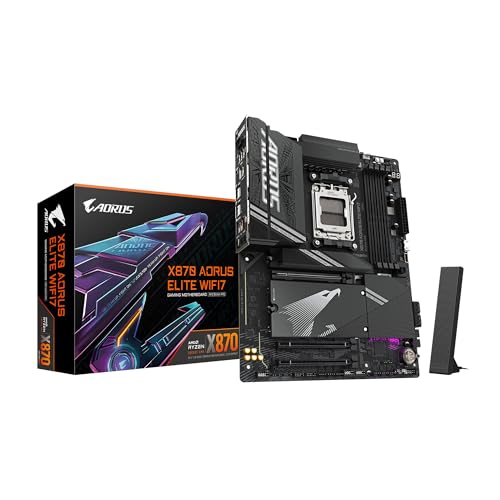
- Best Overall for Gaming: GIGABYTE X870 AORUS Elite WIFI7 — Check on Amazon
- Best Budget Gaming: ASUS ROG Strix B850-A Gaming WiFi — Check on Amazon
- Best Gaming Value: MSI MAG B850 Tomahawk MAX WiFi — Check on Amazon
- Best Compact Gaming: GIGABYTE B850 AORUS Elite WIFI7 — Check on Amazon
- Best Premium Gaming: ASUS ROG Strix B650-A Gaming WiFi — Check on Amazon
- Best for High-End Gaming: GIGABYTE B650 AORUS Elite AX — Check on Amazon
Finding the best am5 motherboard for gaming under $1000 is really a question about foundations. The motherboard decides which processors you can run today and upgrade to tomorrow, how fast your memory and storage can be, how your machine connects to the world, and how painful or pleasant the build itself feels. Get it right and you will not think about it again for years. Get it wrong and every later upgrade starts with an apology. This guide is written for a gaming-focused builder, and it is organised around one priority: frame-rate foundations: a stable power design, fast storage for game libraries, quick networking and room for a stronger graphics card later.
A quick orientation helps before the picks. AM5 is AMD’s current desktop platform, and every board here supports the Ryzen 7000, 8000 and 9000 series processors named in its verified listing, paired with DDR5 memory. The chipsets in this guide run from B650 through B850 to X870, and the differences that actually matter are power delivery, M.2 and expansion slots, networking, USB and the small build-friendly details. If you are still deciding on companion parts, our notes on related components are worth a look as you plan: Best Power Supplies and Best Internal Ssds cover two of the choices that interact most with the board.
The six picks below were not chosen by sorting a spreadsheet. Each one earned its place by being the right answer to a recognisable build: a first machine, a small machine, a value machine, a gaming machine, a machine meant to be upgraded. Read the badges as shortcuts, read the detailed reviews as the real argument, and use the comparison table and buying guide to check our reasoning against your own plans. Where a board is weak, we say so plainly, because a foundation part bought on flattery is an expensive lesson.
In this guide
Quick Picks: Best AM5 Motherboard For Gaming Under $1000
- Best Overall for Gaming: GIGABYTE X870 AORUS Elite WIFI7 — the foundation a gaming build would choose for itself.
- Best Budget Gaming: ASUS ROG Strix B850-A Gaming WiFi — the premium gaming board of the B850 group, combining storage depth, current wireless and the ROG software and styling ecosystem.
- Best Gaming Value: MSI MAG B850 Tomahawk MAX WiFi — the performance-leaning B850 option, built around power delivery, memory headroom and the fastest wired networking in this group.
- Best Compact Gaming: GIGABYTE B850 AORUS Elite WIFI7 — arguably the sweet-spot board of this entire group: current chipset, strong power design, fast networking and enough storage for most gaming and creator builds.
- Best Premium Gaming: ASUS ROG Strix B650-A Gaming WiFi — a gaming-flavoured B650 board with strong storage and networking, aimed at builders who want the ROG look and ecosystem touches.
- Best for High-End Gaming: GIGABYTE B650 AORUS Elite AX — a well-rounded step-up board for builders who want stronger power delivery and modern connectivity while staying on the proven B650 chipset.
How These Picks Were Chosen
We started from the full field of AM5 boards a buyer at this budget would realistically cross-shop, then verified every candidate against its live Amazon listing through the Creators API on 2026-11-20, recording the exact product title, brand and ASIN for each survivor. Only boards whose listings we could confirm appear here with links. That verification step matters more than it sounds: motherboard model names are long, regional variants are common, and a single wrong character in a model name can send you to a different board with a different layout.
From the verified field we scored the things that change ownership: power design, because it decides which processors the board can feed calmly today and after an upgrade; storage, because M.2 count and generation decide how painless growth is; networking, because built-in wireless and faster wired LAN are expensive to retrofit well; and build experience, because latches, labels and BIOS recovery features decide how a build feels at midnight. For this guide’s lens, we weighted frame-rate foundations: a stable power design, fast storage for game libraries, quick networking and room for a stronger graphics card later. Boards that were strong on paper but weak on that lens were demoted, and boards with unclear listings or unverifiable specifications were excluded entirely rather than guessed at.
We also excluded whole categories on purpose. Boards from earlier AMD sockets cannot run current Ryzen processors and were never considered, however cheap they appear. No-name boards with unverifiable listings were cut, because a motherboard is the one part where support, BIOS updates and warranty decide long-term value. And we refused to print prices or popularity figures anywhere in this guide: both change constantly, and a foundation purchase should be made on specification and fit, checked against the live listing at the moment you buy.
Finally, a word on honesty about budgets. AM5 is a current platform with DDR5 memory, and its boards carry a real floor price set by the socket, the chipsets and the power hardware involved. Where this guide’s budget sits below or near that floor, we tell you so directly and show you the closest legitimate options, rather than inventing a bargain that does not exist. You will find the fuller context in our wider board coverage at Motherboard Buying Guide.
Detailed Reviews of the Best AM5 Motherboard For Gaming Under $1000

Best Overall for Gaming — GIGABYTE X870 AORUS Elite WIFI7
Strengths
- USB4 is the headline connectivity feature in this group, valuable for fast docks, drives and future peripherals
- Four M.2 slots and PCIe 5.0 give a high-end build storage and graphics headroom in equal measure
- WIFI 7, 2.5GbE, EZ-Latch fittings and a stated 5-year warranty complete a flagship-lite package
Trade-offs
- X870 positioning puts it at the top of this list in tier terms, which a modest build cannot justify
- The verified title does not headline the power design, so overclocking-focused buyers should study the full specification
- Full ATX only, and many of its advantages only appear with equally premium supporting parts
| Form factor | ATX |
|---|---|
| Chipset | X870 |
| Power design | Not stated in the verified listing title |
| M.2 storage | 4x M.2 |
| Graphics slot | PCIe 5.0 |
| Wireless | WIFI 7 |
| Wired networking | 2.5GbE LAN |
| Headline USB | USB4 |
The short version: this is the top-step board here: an X870 platform with USB4 and four M.2 slots for builders assembling a machine they intend to keep and expand for years. That character is what you are really buying, because on paper many AM5 boards look alike until you live with one. Installed, powered and loaded with the parts a build at this level actually uses, the GIGABYTE X870 AORUS Elite WIFI7 makes its priorities obvious quickly: the layout either welcomes your hands and cables or it does not, the BIOS either behaves predictably or it does not, and the feature set either matches the machine you described to yourself or quietly argues with it.
In daily use, expect the board to fade into the background in the ways that matter. Boots are governed far more by memory training and your storage than by branding, and this board’s verified specification — Not stated in the verified listing title power design where stated, 4x M.2 for storage, WIFI 7 wireless and 2.5GbE LAN — covers the everyday demands of a modern Ryzen system without drama. For a gaming build, think in upgrade steps: the graphics card you will want in two years, the second drive your library will demand, the faster internet connection your home may get. The right board makes each step a swap, not a rebuild.
The honest limitation is written in its trade-offs above, and it is worth reading them as a description of a different buyer rather than as a defect. Every board in this guide gives something up; the question is whether what this one gives up is something you would have used. If the answer is no, its strengths land cleanly. If the answer is yes, the neighbouring picks in this guide exist precisely to cover that gap, and stepping one badge up or down is a better answer than forcing a mismatch.
Long-term, this is a board to think about in platform years. AM5’s appeal is the upgrade path, and a board bought well today should greet a stronger processor, a bigger graphics card and another drive as routine events. Judge the GIGABYTE X870 AORUS Elite WIFI7 against the two-year version of your machine, not only the parts in your basket this week, and its place in this line-up will make sense either as the right foundation or as a clear sign to take the next pick instead.
Best for: builders whose plans match its strengths above. / Not suited for: builders whose plans depend on the features listed in its trade-offs.
Check on Amazon to see the current listing, confirm the exact model name, and check the latest price on Amazon.

Best Budget Gaming — ASUS ROG Strix B850-A Gaming WiFi
Strengths
- Four M.2 slots is joint-best storage support in this group, ideal for game libraries and project drives
- 14+2+2 power stages, DDR5 AEMP memory support and PCIe 5.0 give it a thoroughly modern core specification
- Wi-Fi 7 with Q-Antenna and a USB 20Gbps Type-C port round out a premium connectivity set
Trade-offs
- Premium ROG positioning means value-focused builders will find the same chipset elsewhere with fewer frills
- Four M.2 slots only pay off if you actually populate them; one-drive builds carry unused capacity
- Full ATX dimensions exclude compact cases
| Form factor | ATX |
|---|---|
| Chipset | B850 |
| Power design | 14+2+2 power stages |
| M.2 storage | 4x M.2 |
| Graphics slot | PCIe 5.0 |
| Wireless | Wi-Fi 7 with Q-Antenna |
| Wired networking | 2.5G LAN |
| Headline USB | USB 20Gbps Type-C |
The short version: this is the premium gaming board of the B850 group, combining storage depth, current wireless and the ROG software and styling ecosystem. That character is what you are really buying, because on paper many AM5 boards look alike until you live with one. Installed, powered and loaded with the parts a build at this level actually uses, the ASUS ROG Strix B850-A Gaming WiFi makes its priorities obvious quickly: the layout either welcomes your hands and cables or it does not, the BIOS either behaves predictably or it does not, and the feature set either matches the machine you described to yourself or quietly argues with it.
In daily use, expect the board to fade into the background in the ways that matter. Boots are governed far more by memory training and your storage than by branding, and this board’s verified specification — 14+2+2 power stages power design where stated, 4x M.2 for storage, Wi-Fi 7 with Q-Antenna wireless and 2.5G LAN — covers the everyday demands of a modern Ryzen system without drama. For a gaming build, think in upgrade steps: the graphics card you will want in two years, the second drive your library will demand, the faster internet connection your home may get. The right board makes each step a swap, not a rebuild.
The honest limitation is written in its trade-offs above, and it is worth reading them as a description of a different buyer rather than as a defect. Every board in this guide gives something up; the question is whether what this one gives up is something you would have used. If the answer is no, its strengths land cleanly. If the answer is yes, the neighbouring picks in this guide exist precisely to cover that gap, and stepping one badge up or down is a better answer than forcing a mismatch.
Long-term, this is a board to think about in platform years. AM5’s appeal is the upgrade path, and a board bought well today should greet a stronger processor, a bigger graphics card and another drive as routine events. Judge the ASUS ROG Strix B850-A Gaming WiFi against the two-year version of your machine, not only the parts in your basket this week, and its place in this line-up will make sense either as the right foundation or as a clear sign to take the next pick instead.
Best for: builders whose plans match its strengths above. / Not suited for: builders whose plans depend on the features listed in its trade-offs.
Check on Amazon to see the current listing, confirm the exact model name, and check the latest price on Amazon.

Best Gaming Value — MSI MAG B850 Tomahawk MAX WiFi
Strengths
- An 80A SPS VRM specification and DDR5 Memory Boost quoted at 8400+ MT/s (OC) show clear performance intent
- 5G wired networking is the fastest LAN specification in this pick list, ahead of the 2.5GbE boards
- Wi-Fi 7, PCIe 5.0 x16 and Gen5 M.2 support complete a thoroughly current platform
Trade-offs
- The verified title does not state the total M.2 count, so multi-drive builders should check the layout carefully
- Its performance focus is wasted on a build that will only ever run a modest processor at stock settings
- Full ATX only, and MAG-series styling is understated rather than showy
| Form factor | ATX |
|---|---|
| Chipset | B850 |
| Power design | 80A SPS VRM (as stated in the verified title) |
| M.2 storage | M.2 Gen5 (count not stated in the verified title) |
| Graphics slot | PCIe 5.0 x16 |
| Wireless | Wi-Fi 7 |
| Wired networking | 5G LAN |
| Headline USB | Not stated in the verified listing title |
The short version: this is the performance-leaning B850 option, built around power delivery, memory headroom and the fastest wired networking in this group. That character is what you are really buying, because on paper many AM5 boards look alike until you live with one. Installed, powered and loaded with the parts a build at this level actually uses, the MSI MAG B850 Tomahawk MAX WiFi makes its priorities obvious quickly: the layout either welcomes your hands and cables or it does not, the BIOS either behaves predictably or it does not, and the feature set either matches the machine you described to yourself or quietly argues with it.
In daily use, expect the board to fade into the background in the ways that matter. Boots are governed far more by memory training and your storage than by branding, and this board’s verified specification — 80A SPS VRM (as stated in the verified title) power design where stated, M.2 Gen5 (count not stated in the verified title) for storage, Wi-Fi 7 wireless and 5G LAN — covers the everyday demands of a modern Ryzen system without drama. For a gaming build, think in upgrade steps: the graphics card you will want in two years, the second drive your library will demand, the faster internet connection your home may get. The right board makes each step a swap, not a rebuild.
The honest limitation is written in its trade-offs above, and it is worth reading them as a description of a different buyer rather than as a defect. Every board in this guide gives something up; the question is whether what this one gives up is something you would have used. If the answer is no, its strengths land cleanly. If the answer is yes, the neighbouring picks in this guide exist precisely to cover that gap, and stepping one badge up or down is a better answer than forcing a mismatch.
Long-term, this is a board to think about in platform years. AM5’s appeal is the upgrade path, and a board bought well today should greet a stronger processor, a bigger graphics card and another drive as routine events. Judge the MSI MAG B850 Tomahawk MAX WiFi against the two-year version of your machine, not only the parts in your basket this week, and its place in this line-up will make sense either as the right foundation or as a clear sign to take the next pick instead.
Best for: builders whose plans match its strengths above. / Not suited for: builders whose plans depend on the features listed in its trade-offs.
Check on Amazon to see the current listing, confirm the exact model name, and check the latest price on Amazon.

Best Compact Gaming — GIGABYTE B850 AORUS Elite WIFI7
Strengths
- A 14+2+2 power phase design paired with PCIe 5.0 and three M.2 slots makes this a strong all-round foundation
- WIFI 7 and 2.5GbE cover both wireless and wired networking at current standards
- EZ-Latch fittings and a stated 5-year warranty make building and long ownership easier
Trade-offs
- Newer B850 positioning means it costs more in tier terms than the B650 boards with similar headline layouts
- Three M.2 slots is good rather than class-leading; the X870 pick carries four
- Full ATX only
| Form factor | ATX |
|---|---|
| Chipset | B850 |
| Power design | 14+2+2 power phase |
| M.2 storage | 3x M.2 |
| Graphics slot | PCIe 5.0 |
| Wireless | WIFI 7 |
| Wired networking | 2.5GbE LAN |
| Headline USB | USB-C |
The short version: this is arguably the sweet-spot board of this entire group: current chipset, strong power design, fast networking and enough storage for most gaming and creator builds. That character is what you are really buying, because on paper many AM5 boards look alike until you live with one. Installed, powered and loaded with the parts a build at this level actually uses, the GIGABYTE B850 AORUS Elite WIFI7 makes its priorities obvious quickly: the layout either welcomes your hands and cables or it does not, the BIOS either behaves predictably or it does not, and the feature set either matches the machine you described to yourself or quietly argues with it.
In daily use, expect the board to fade into the background in the ways that matter. Boots are governed far more by memory training and your storage than by branding, and this board’s verified specification — 14+2+2 power phase power design where stated, 3x M.2 for storage, WIFI 7 wireless and 2.5GbE LAN — covers the everyday demands of a modern Ryzen system without drama. For a gaming build, think in upgrade steps: the graphics card you will want in two years, the second drive your library will demand, the faster internet connection your home may get. The right board makes each step a swap, not a rebuild.
The honest limitation is written in its trade-offs above, and it is worth reading them as a description of a different buyer rather than as a defect. Every board in this guide gives something up; the question is whether what this one gives up is something you would have used. If the answer is no, its strengths land cleanly. If the answer is yes, the neighbouring picks in this guide exist precisely to cover that gap, and stepping one badge up or down is a better answer than forcing a mismatch.
Long-term, this is a board to think about in platform years. AM5’s appeal is the upgrade path, and a board bought well today should greet a stronger processor, a bigger graphics card and another drive as routine events. Judge the GIGABYTE B850 AORUS Elite WIFI7 against the two-year version of your machine, not only the parts in your basket this week, and its place in this line-up will make sense either as the right foundation or as a clear sign to take the next pick instead.
Best for: builders whose plans match its strengths above. / Not suited for: builders whose plans depend on the features listed in its trade-offs.
Check on Amazon to see the current listing, confirm the exact model name, and check the latest price on Amazon.

Best Premium Gaming — ASUS ROG Strix B650-A Gaming WiFi
Strengths
- Three M.2 slots and 2.5G wired networking plus WiFi 6E make it an easy board to live with day to day
- 12 + 2 power stages give mainstream and upper-mainstream Ryzen chips a solid electrical foundation
- The ROG Strix presentation, including Aura Sync lighting support, suits a visible gaming build with a windowed case
Trade-offs
- Its graphics slot is PCIe 4.0 rather than 5.0, which matters more to future-proofing arguments than to current graphics cards
- Gaming styling and branding are part of what you pay for, which pure value hunters may not care about
- Full ATX dimensions, so small-case builders should look at the micro-ATX picks instead
| Form factor | ATX |
|---|---|
| Chipset | B650 |
| Power design | 12 + 2 power stages |
| M.2 storage | 3x M.2 |
| Graphics slot | PCIe 4.0 |
| Wireless | WiFi 6E |
| Wired networking | 2.5G LAN |
| Headline USB | USB 3.2 Gen 2×2 Type-C |
The short version: this is a gaming-flavoured B650 board with strong storage and networking, aimed at builders who want the ROG look and ecosystem touches. That character is what you are really buying, because on paper many AM5 boards look alike until you live with one. Installed, powered and loaded with the parts a build at this level actually uses, the ASUS ROG Strix B650-A Gaming WiFi makes its priorities obvious quickly: the layout either welcomes your hands and cables or it does not, the BIOS either behaves predictably or it does not, and the feature set either matches the machine you described to yourself or quietly argues with it.
In daily use, expect the board to fade into the background in the ways that matter. Boots are governed far more by memory training and your storage than by branding, and this board’s verified specification — 12 + 2 power stages power design where stated, 3x M.2 for storage, WiFi 6E wireless and 2.5G LAN — covers the everyday demands of a modern Ryzen system without drama. For a gaming build, think in upgrade steps: the graphics card you will want in two years, the second drive your library will demand, the faster internet connection your home may get. The right board makes each step a swap, not a rebuild.
The honest limitation is written in its trade-offs above, and it is worth reading them as a description of a different buyer rather than as a defect. Every board in this guide gives something up; the question is whether what this one gives up is something you would have used. If the answer is no, its strengths land cleanly. If the answer is yes, the neighbouring picks in this guide exist precisely to cover that gap, and stepping one badge up or down is a better answer than forcing a mismatch.
Long-term, this is a board to think about in platform years. AM5’s appeal is the upgrade path, and a board bought well today should greet a stronger processor, a bigger graphics card and another drive as routine events. Judge the ASUS ROG Strix B650-A Gaming WiFi against the two-year version of your machine, not only the parts in your basket this week, and its place in this line-up will make sense either as the right foundation or as a clear sign to take the next pick instead.
Best for: builders whose plans match its strengths above. / Not suited for: builders whose plans depend on the features listed in its trade-offs.
Check on Amazon to see the current listing, confirm the exact model name, and check the latest price on Amazon.

Best for High-End Gaming — GIGABYTE B650 AORUS Elite AX
Strengths
- A 14+2+1 power phase design that gives higher-draw Ryzen processors a calmer, better-fed platform
- PCIe 5.0 M.2 storage support plus 2.5GbE wired networking and WiFi 6E cover both fast local storage and fast networking
- Builder-friendly touches in the verified spec, including EZ-Latch fittings and Q-Flash BIOS updating
Trade-offs
- It sits a clear step above the simplest boards in positioning, so the saving versus a basic board has to be justified by its extras
- The verified title does not state the total M.2 count, so storage planners should confirm the layout before committing to many drives
- Full ATX only, which excludes compact cases
| Form factor | ATX |
|---|---|
| Chipset | B650 |
| Power design | 14+2+1 power phase |
| M.2 storage | PCIe 5.0 M.2 (count not stated in the verified title) |
| Graphics slot | PCIe x16 slot (generation not stated in the verified title) |
| Wireless | WIFI 6E |
| Wired networking | 2.5GbE |
| Headline USB | USB-C 3.2 Gen 2 |
The short version: this is a well-rounded step-up board for builders who want stronger power delivery and modern connectivity while staying on the proven B650 chipset. That character is what you are really buying, because on paper many AM5 boards look alike until you live with one. Installed, powered and loaded with the parts a build at this level actually uses, the GIGABYTE B650 AORUS Elite AX makes its priorities obvious quickly: the layout either welcomes your hands and cables or it does not, the BIOS either behaves predictably or it does not, and the feature set either matches the machine you described to yourself or quietly argues with it.
In daily use, expect the board to fade into the background in the ways that matter. Boots are governed far more by memory training and your storage than by branding, and this board’s verified specification — 14+2+1 power phase power design where stated, PCIe 5.0 M.2 (count not stated in the verified title) for storage, WIFI 6E wireless and 2.5GbE — covers the everyday demands of a modern Ryzen system without drama. For a gaming build, think in upgrade steps: the graphics card you will want in two years, the second drive your library will demand, the faster internet connection your home may get. The right board makes each step a swap, not a rebuild.
The honest limitation is written in its trade-offs above, and it is worth reading them as a description of a different buyer rather than as a defect. Every board in this guide gives something up; the question is whether what this one gives up is something you would have used. If the answer is no, its strengths land cleanly. If the answer is yes, the neighbouring picks in this guide exist precisely to cover that gap, and stepping one badge up or down is a better answer than forcing a mismatch.
Long-term, this is a board to think about in platform years. AM5’s appeal is the upgrade path, and a board bought well today should greet a stronger processor, a bigger graphics card and another drive as routine events. Judge the GIGABYTE B650 AORUS Elite AX against the two-year version of your machine, not only the parts in your basket this week, and its place in this line-up will make sense either as the right foundation or as a clear sign to take the next pick instead.
Best for: builders whose plans match its strengths above. / Not suited for: builders whose plans depend on the features listed in its trade-offs.
Check on Amazon to see the current listing, confirm the exact model name, and check the latest price on Amazon.
Comparison Table
| Board | Form factor | Chipset | M.2 | Wireless | LAN | Link |
|---|---|---|---|---|---|---|
| GIGABYTE X870 AORUS Elite WIFI7 | ATX | X870 | 4x M.2 | WIFI 7 | 2.5GbE LAN | Check on Amazon |
| ASUS ROG Strix B850-A Gaming WiFi | ATX | B850 | 4x M.2 | Wi-Fi 7 with Q-Antenna | 2.5G LAN | Check on Amazon |
| MSI MAG B850 Tomahawk MAX WiFi | ATX | B850 | M.2 Gen5 (count not stated in the verified title) | Wi-Fi 7 | 5G LAN | Check on Amazon |
| GIGABYTE B850 AORUS Elite WIFI7 | ATX | B850 | 3x M.2 | WIFI 7 | 2.5GbE LAN | |
| ASUS ROG Strix B650-A Gaming WiFi | ATX | B650 | 3x M.2 | WiFi 6E | 2.5G LAN | |
| GIGABYTE B650 AORUS Elite AX | ATX | B650 | PCIe 5.0 M.2 (count not stated in the verified title) | WIFI 6E | 2.5GbE |
Read the table as a map of compromises rather than a league table. The boards cluster into natural groups: the micro-ATX pair for smaller cases, the B650 generation that defined the platform’s value era, the B850 boards that refresh it with newer networking and power designs, and the X870 step for builders who want USB4 and maximum storage. Your case size removes some rows immediately, your networking needs remove others, and what remains is usually a shortlist of two — at which point the detailed reviews above are the tiebreaker.
How to Choose the Best AM5 Motherboard For Gaming Under $1000
Start with the processor, not the board. The chip you choose today, and the chip you honestly expect to want later, decide how much power design you need. Modest Ryzen processors are undemanding and every board here will run them happily; the higher-core-count chips reward the stronger power designs found in the step-up picks, especially under sustained all-core work. If an upgrade is part of the plan, buy the board for the future chip and the present one will be effortless. Our processor guidance at Best Power Supplies pairs naturally with this step.
Next, let the case choose the form factor. ATX boards bring the most slots and the easiest building experience; micro-ATX boards fit smaller cases and simpler builds, and the two micro-ATX picks in this guide are genuinely strong rather than cut down. Then count storage honestly: drives you own, drives you will add, and no more. Finally, decide networking before you buy, because adding good wireless later costs more and looks worse than choosing a board that has it. Sibling guides in this series cover adjacent budgets and angles if your plans shift: Best Am5 Motherboard Under $1000 and Best Am5 Motherboard For Beginners Under $1000 are the natural next reads.
Chipset literacy helps you stop paying for letters. B650 established the platform’s value formula and still serves mainstream builds well. B850 refreshes it with newer standard equipment, including current wireless and stronger power designs on boards like the picks above. X870 adds the fullest connectivity, headlined here by USB4. None of these letters changes frame rates by itself; they change equipment levels. Buy the equipment you will use, and let the chipset be the consequence of that decision rather than the starting point.
What Does This Budget Actually Buy on AM5?
At this level, the budget buys a genuine current-platform foundation: DDR5 support, at least one very fast M.2 slot, modern USB and a processor upgrade path that older platforms cannot offer. What it does not buy, on any board, is immunity from planning. You still choose between size and expansion, between wireless and wired emphasis, between storage depth and simplicity. The step-up money in this range buys equipment and headroom rather than speed, so spend it only where your plans are concrete. Treat any leftover budget as belonging to memory, storage or the graphics card, where it will be felt immediately.
How Do You Install and Set Up an AM5 Motherboard?
Work in a clear, static-aware space with the case open and its side panels off. Fit the processor into the AM5 socket by aligning the corner markers, lowering it flat and closing the retention mechanism without forcing anything; the mechanism feels firmer than older sockets, and that is normal. Seat the cooler according to its own instructions, install memory in the slots the board manual names for a two-stick kit, and mount the board on the case standoffs that match its form factor, checking that no extra standoff touches the board where no mounting hole exists.
Connect the main and processor power cables until their latches click, fit the M.2 drive under its heatsink or latch where provided, and route front-panel connectors with the manual open beside you — those small pins are the most common first-build stumbling block. On the first boot, enter the BIOS, confirm the processor and memory are recognised, update the BIOS if your processor needs a newer version, then enable the memory’s rated profile and install your operating system. Take the whole process slowly; a careful first build is faster than a hurried rebuild.
Problem: the machine powers on but shows no picture. Check that the display cable is in the graphics card rather than the board if you have a card fitted, reseat the memory firmly, and give a first AM5 boot patience, because initial memory training can take noticeably longer than later boots. Problem: memory will not run at its rated speed. Update the BIOS, confirm the sticks are in the recommended slots, and step the speed down one notch for stability. Problem: a drive is missing. Reseat the M.2 card, confirm it is in a slot that supports its type, and check the manual for any slot-sharing notes.
Deeper Considerations Before You Buy
BIOS and software support decide how a board ages. AM5 is a platform that has already seen several processor generations, and each new family arrives with BIOS updates that a board maker must publish promptly and clearly. Established makers with a visible track record of updates, readable release notes and a recovery feature such as BIOS flashback give you insurance against the one update that matters most: the one that lets your next processor work. Before buying, it is worth a few minutes on the maker’s support page to see how current the downloads are for the exact board you are considering.
Power supply and case choices should be made alongside the board, not after it. The case decides which form factors fit and how many front-panel connectors the board must provide; the power supply decides how cleanly the build cables up and whether a future graphics card is a simple swap. Treating the three parts as one decision avoids the classic mismatch of a micro-ATX case, an ATX board and a power supply whose cables cannot reach. Our related guides linked in this article cover those companion choices in the same practical spirit.
Expansion is the argument for paying a little more, and it should be made honestly. A second full-length slot, extra fan headers, more USB at the rear and additional M.2 capacity only matter if your plans include capture cards, extra drives, many fans or a forest of peripherals. Write the two-year plan for the machine before you buy the board: if the plan is one graphics card, two drives and a headset, the mainstream picks here are not a compromise at all. If the plan involves streaming hardware, storage growth and a processor upgrade, the step-up boards earn their positioning quickly.
Warranty and support are part of the product, even though they never appear in a photograph. Two boards in this guide state a five-year warranty in their verified listings, which is a meaningful ownership signal for a part you intend to keep through at least one processor upgrade. For the others, check the maker’s stated terms for your region before buying, register the product when it arrives, and keep the invoice somewhere findable. A motherboard is rarely the part that fails, but when one does, paperwork and a responsive support process are the difference between an inconvenience and a stalled machine.
Common Mistakes
- Buying the board before the case. Form factor mismatches are the most avoidable failure in PC building; the case decides what fits.
- Chasing a chipset letter instead of equipment. Slots, networking and power design change your ownership experience; the letter alone changes nothing you can feel.
- Ignoring the memory support list. A listed DDR5 kit is the cheapest stability insurance available on AM5.
- Skipping the BIOS check. A newer processor on an older BIOS is a solvable problem only if you check before the build, not during it.
- Paying for slots you will never fill. Unused M.2 and expansion capacity is not future-proofing; a plan is future-proofing.
- Forgetting the small cables. Front-panel, fan and USB headers decide whether a finished build feels finished.
Most of these mistakes share one root: buying a specification sheet instead of a machine. The fix is equally consistent — describe the computer you are actually building, in the case you actually own, for the work and games you actually play, and then let that description choose the board. Every section of this guide is built to help you do exactly that.
Final Recommendation
If you read nothing else, take this: for most readers of this guide, the GIGABYTE X870 AORUS Elite WIFI7 is the pick to beat, because it answers this budget and this lens with the fewest compromises. Value hunters should study the ASUS ROG Strix B850-A Gaming WiFi closely, and builders whose plans are bigger than their first basket should look hard at the ASUS ROG Strix B650-A Gaming WiFi before deciding the step up is not worth it. Whichever you choose, confirm the exact model on the live listing, check the latest price on Amazon, and keep the board’s support page bookmarked for BIOS updates. A sibling perspective in this series, Best Am5 Motherboard For Compact Builds Under $1000, is worth a read if your budget or build style shifts as you plan.
The AM5 platform rewards buyers who think in years. A board chosen for its power design, its slots and its support will carry a processor upgrade, a graphics upgrade and a storage upgrade without complaint, and that longevity is the real bargain at any figure in this guide’s title. Build carefully, update thoughtfully, and the foundation will simply never be the part you worry about.
Frequently Asked Questions
Is WiFi on a motherboard as good as a wired connection?
For most gaming and everyday use, modern built-in WiFi such as WiFi 6E or WiFi 7 is entirely capable, with latency that is fine for online play in a home with decent signal. Wired networking still wins for absolute consistency, for very fast local transfers and in homes with thick walls or crowded airwaves. If your desk can take a cable, use it; if it cannot, the wireless boards in this guide are proper solutions rather than compromises.
Do I need to update the BIOS before installing a newer Ryzen processor?
Possibly. Boards ship with the BIOS version that was current when they left the factory, and a processor released later may need a newer version. Check the board maker’s CPU support list for your exact chip, and prefer boards and retailers where the update path is clear. Features such as Q-Flash and BIOS flashback, where fitted, let you update without a compatible processor installed, which removes most of the risk from the process.
How many M.2 slots do I actually need?
One is enough for a single fast system drive, and two covers the great majority of gaming and general builds once a second drive joins for games or projects. Three or four slots suit large libraries, content creation and anyone consolidating several older drives. Match the board to the drives you own and realistically expect to add, rather than to an imaginary maximum.
Should I choose ATX or micro-ATX?
Choose the largest board your case comfortably fits and your plans justify. ATX brings more slots, more M.2 capacity and easier cable work. Micro-ATX suits smaller cases and simpler builds, and the better micro-ATX boards here keep strong power designs and fast storage. Measure the case first, then check that the board’s layout leaves the graphics card, cooler and front-panel cables room to coexist.
Can I reuse my old case, cooler and power supply?
Often, yes. The case must fit the board’s form factor, the cooler must have an AM5-compatible mounting kit, and the power supply must suit the graphics card you plan to run. Checking those three compatibilities before ordering the board turns a pile of old parts into the cheapest upgrade path available, and it is one of the best reasons to stay organised about boxes and mounting hardware.
What should I do if the new build does not start?
Work calmly and in order: confirm both motherboard power cables are fully seated, reseat the memory until both latches engage, check that the front-panel power switch connector is on the right pins, and try one memory stick at a time. Many boards offer debug LEDs or codes that point at the failing stage. Only after those basics should you suspect a faulty part, because assembly details cause far more first-boot failures than dead hardware does.
What memory should I pair with an AM5 motherboard?
AM5 uses DDR5 only, so older DDR4 kits cannot be carried over. A two-stick kit from the board maker’s memory support list is the safest route to running the rated speed reliably, and enabling the memory profile in the BIOS is a normal, expected step after the first successful boot. Our DDR5 guide linked in this article goes deeper on speeds, timings and dual-channel behaviour.
