Disclosure: As an Amazon Associate, reviewstook.com earns from qualifying purchases. Links on this page are affiliate links; they cost you nothing extra. Prices and availability change often, so check the current Amazon listing before you buy.
The question of 900 degree vs 1080 degree racing wheel deserves a slower answer than most roundups give it. Rotation range sounds like a spec-sheet footnote until you catch a slide in a vintage road car and discover your hands have run out of lock, or spend a rally stage sawing at a wheel that needs half a turn too many.
This comparison separates the two camps by car type, force feedback behaviour, and desk reality, then maps each rotation range to the verified wheels below so the decision survives contact with your actual game library.
900 Degree Vs 1080 Degree Racing Wheel and home testing: a clear head helps here. Plenty of buying guides treat 900 degree vs 1080 degree racing wheel as a specification contest, yet owners mostly remember whether the purchase quietly solved a wheel that either feels twitchy in road cars or exhaustingly busy in tight rally stages during ordinary weeks. The question inside 900 degree vs 1080 degree racing wheel is rarely which option wins a benchmark, since sim racers moving up from a controller or an entry wheel usually care more about the second month of ownership than the first evening. Anyone researching 900 degree vs 1080 degree racing wheel will meet confident claims from every brand involved, so this guide slows down and separates the durable differences from the launch-week noise.
Key takeaways
- 900 degrees suits most road and GT cars without constant remapping
- 1080 degrees earns its keep in trucks, vintage cars, and drift builds
- Software lock settings matter more than the headline maximum
- Pedal and shifter quality outlast rotation bragging rights
In this guide
Quick picks for 900 Degree Vs 1080 Degree Racing Wheel
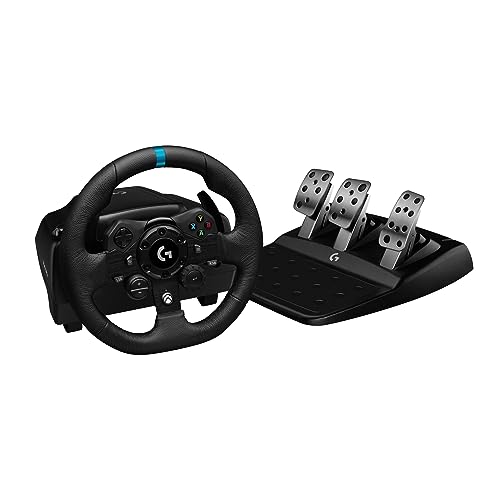
- Logitech G923 — Best value 900-degree wheel: gear-driven TRUEFORCE wheel with pedals for Xbox and PC at an entry tier
- Thrustmaster T300 RS GT — Smoothest belt-driven 1080 option: belt-driven wheel with 1080 degrees and a three-pedal GT pedal set
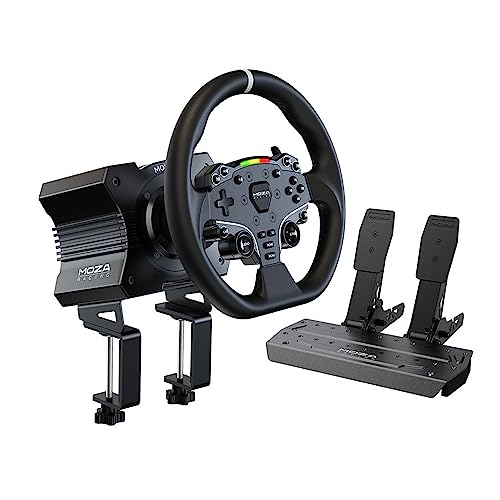
- MOZA R5 Bundle — Best direct-drive step up: 5.5 Nm direct-drive base, wheel, and pedals in one ready-to-race box
900 Degree Vs 1080 Degree Racing Wheel at home is, in the end, a question of setup care. Long sessions reveal more about 900 degree vs 1080 degree racing wheel than any unboxing can, because heat, noise, fit, and small software habits compound quietly over time. Support and firmware behaviour decide real-world satisfaction in 900 degree vs 1080 degree racing wheel more often than peak numbers do, especially once a product line ages past its launch drivers. When two the 900-versus-1080 rotation choice options look identical on paper, the tie-breaker is usually how gracefully each one fails, beeps, throttles, or asks for maintenance.
How these the 900-versus-1080 rotation choice picks were chosen
Wheels were shortlisted only where the Creators API returned an exact model match with an official image, and the three survivors deliberately span belt-driven value, an entry direct-drive bundle, and the classic Gran Turismo licensed option.
900 Degree Vs 1080 Degree Racing Wheel and noise: a clear head helps here. Documenting your 900 degree vs 1080 degree racing wheel setup with two phone photos before changing anything makes rollback painless when an experiment disappoints. Small ergonomic details decide 900 degree vs 1080 degree racing wheel satisfaction disproportionately, since a control placed two centimetres wrong gets cursed hundreds of times a year. Before ordering anything for 900 degree vs 1080 degree racing wheel, write down the three constraints of a desk-clamped or cockpit-mounted racing setup used for evening league races that cannot change, then let those constraints veto products early and cheaply.
The picks in detail
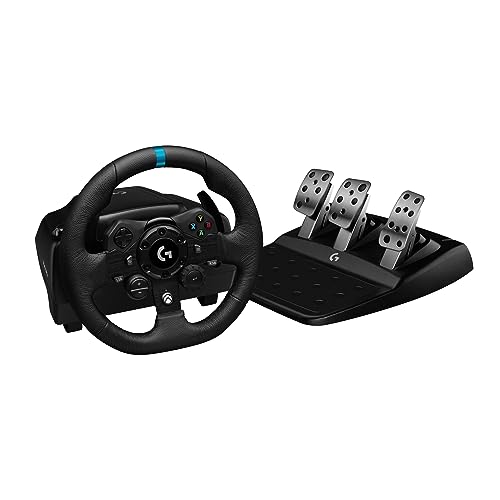
Logitech G923 — Best value 900-degree wheel
The G923 is the wheel most 900-degree buyers actually cross-shop, pairing a gear-driven base with TRUEFORCE vibration detail drawn from game audio and physics channels.
Its leather-wrapped rim and dual-clutch launch assist suit road and GT content well, and the included pedal set is serviceable long enough to plan a later load-cell upgrade.
- Rotation: 900 degrees lock to lock
- Drive: gear-driven with TRUEFORCE feedback
- Pedals: three-pedal set included
- Platform: Xbox and PC (this listing)
Strengths
- Predictable 900-degree behaviour in road cars
- Huge library of shared community settings
- Pedals included keep the first purchase simple
Trade-offs
- Gear drive feels notchier than belt or direct drive
- Brake pedal spring is stiff for smaller drivers
- No path beyond 900 degrees for truck sims
Best for: road, GT, and rally-cross players who want one box that works tonight
Not suited for: truck-sim specialists or anyone already planning a direct-drive cockpit
Ownership notes within 900 degree vs 1080 degree racing wheel for the Logitech G923: plan its place in a desk-clamped or cockpit-mounted racing setup used for evening league races before it arrives, keep its cables and accessories together from day one, and judge it after a full week of ordinary use rather than the first excited hour, because that is when its real character replaces the unboxing impression.
900 Degree Vs 1080 Degree Racing Wheel decisions improve when routine maintenance comes first. Wear items inside 900 degree vs 1080 degree racing wheel deserve a named replacement plan, because the product that cannot be refreshed cheaply becomes e-waste on the first tired component. Guests and family members interact with 900 degree vs 1080 degree racing wheel purchases differently from their owners, and designs that forgive unfamiliar hands age more gracefully in shared spaces.
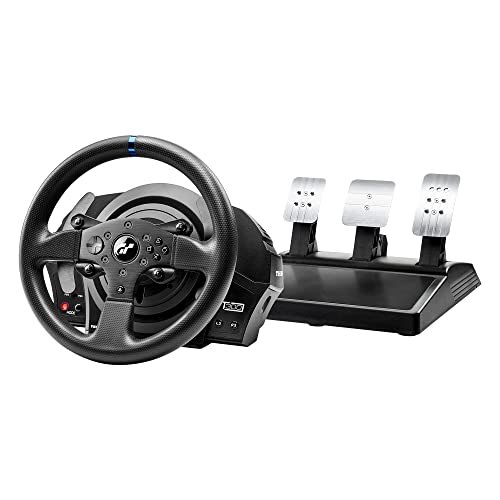
Thrustmaster T300 RS GT — Smoothest belt-driven 1080 option
The T300 RS GT stretches to 1080 degrees through a smooth belt-driven base, making it the natural bridge for players who split time between GT racing and slower, heavier machinery.
Brushless motor cooling keeps force consistent over long stints, and the GT pedal set adds a conical brake mod that teaches pressure braking better than most bundled pedals.
- Rotation: up to 1080 degrees
- Drive: belt-driven brushless motor
- Pedals: T3PA GT three-pedal set
- Platform: PlayStation and PC (this listing)
Strengths
- Belt drive feels cleaner than gear systems
- Full 1080 range covers trucks and vintage cars
- Detachable rim invites later wheel upgrades
Trade-offs
- Fan can be audible in a quiet room
- Pedal set still trails a true load cell
- Quick release system is an older design
Best for: mixed-library racers who want one wheel for GT nights and truck evenings
Not suited for: players who demand direct-drive sharpness today
Ownership notes within 900 degree vs 1080 degree racing wheel for the Thrustmaster T300 RS GT: plan its place in a desk-clamped or cockpit-mounted racing setup used for evening league races before it arrives, keep its cables and accessories together from day one, and judge it after a full week of ordinary use rather than the first excited hour, because that is when its real character replaces the unboxing impression.
900 Degree Vs 1080 Degree Racing Wheel in practice turns on measuring more than headlines. Durability questions matter in 900 degree vs 1080 degree racing wheel because replacement cycles are long, and a slightly better-built option often ends up cheaper across two upgrade rounds. Ownership cost in 900 degree vs 1080 degree racing wheel is mostly attention: the option that needs the least fiddling after setup returns hours to sim racers moving up from a controller or an entry wheel across a year.

MOZA R5 Bundle — Best direct-drive step up
The R5 bundle replaces belts and gears with a 5.5 Nm direct-drive motor, so whichever rotation you dial in arrives without the filtering that softens cheaper bases.
MOZA Pit House software handles per-game rotation profiles cleanly, and the included SR-P Lite pedals can accept a load-cell style upgrade kit later.
- Torque: 5.5 Nm direct drive
- Rotation: software-set, wide range
- Pedals: SR-P Lite set included
- Platform: PC
Strengths
- Direct drive detail transforms either rotation choice
- Software profiles per game are painless
- Upgrade path through the MOZA ecosystem
Trade-offs
- PC only, no console licence
- Desk clamp sold separately for non-cockpit use
- Pedals are the bundle weak point
Best for: committed PC racers ready to leave belt and gear wheels behind
Not suited for: console racers or casual once-a-month drivers
Ownership notes within 900 degree vs 1080 degree racing wheel for the MOZA R5 Bundle: plan its place in a desk-clamped or cockpit-mounted racing setup used for evening league races before it arrives, keep its cables and accessories together from day one, and judge it after a full week of ordinary use rather than the first excited hour, because that is when its real character replaces the unboxing impression.
900 Degree Vs 1080 Degree Racing Wheel and comfort: a clear head helps here. Software updates reshape 900 degree vs 1080 degree racing wheel products after purchase, sometimes fixing launch flaws and sometimes moving settings, so a calm update policy protects a working setup. Six months into owning any the 900-versus-1080 rotation choice product, the specification sheet is forgotten and the daily rituals remain: the wake-up behaviour, the cleaning routine, the little noises.
Comparison table
| Product | Role | Best for |
|---|---|---|
| Logitech G923 | Best value 900-degree wheel | road, GT, and rally-cross players who want one box that works tonight |
| Thrustmaster T300 RS GT | Smoothest belt-driven 1080 option | mixed-library racers who want one wheel for GT nights and truck evenings |
| MOZA R5 Bundle | Best direct-drive step up | committed PC racers ready to leave belt and gear wheels behind |
900 Degree Vs 1080 Degree Racing Wheel without shared use considered is only half researched. A written shortlist of three 900 degree vs 1080 degree racing wheel candidates, each with one sentence explaining its role, prevents the late-night fourth option that restarts the whole search. Once a 900 degree vs 1080 degree racing wheel choice is made, stop reading comparison threads for a month; post-purchase research mostly manufactures regret without adding information. If two the 900-versus-1080 rotation choice finalists remain tied, choose the one with the calmer failure mode, since every product in this category eventually has a bad day.
What the numbers actually describe
Rotation is measured lock to lock, from full left stop to full right stop, and it describes how far the rim travels rather than how strong the motor feels. A real road car sits near 900 to 1080 degrees, which is why simulators model that range for road content and far less for single-seaters. The motor only reports what the game requests, so a 1080-capable wheel driven by a game that asks for 540 behaves exactly like a 540 wheel.
900 Degree Vs 1080 Degree Racing Wheel ownership is mostly planning once the box is open. Ambient conditions in a desk-clamped or cockpit-mounted racing setup used for evening league races shift how 900 degree vs 1080 degree racing wheel hardware behaves across the year, with summer heat and winter dry air each writing their own chapter. The resale listing you may write one day rewards 900 degree vs 1080 degree racing wheel owners who kept the box, the spare parts bag, and the original cables from the first week.
Where 900 degrees quietly wins
GT3 and touring content maps beautifully onto 900 degrees because the virtual cars themselves rarely exceed that travel on road circuits. Hand-over-hand moments stay rare at 900, keeping your hands near the paddle shifters where endurance races are actually managed. Most belt and gear wheels sold for years defaulted to 900, so community-shared settings and force feedback profiles assume it as the baseline.
900 Degree Vs 1080 Degree Racing Wheel for sim racers moving up from a controller or an entry wheel usually hinges on measuring. Cleaning and inspection intervals for 900 degree vs 1080 degree racing wheel gear are short but real, and owners who schedule them seasonally almost never meet the dramatic failures forums describe. A product journal sounds excessive for 900 degree vs 1080 degree racing wheel, yet three dated notes about settings that worked will rescue a future troubleshooting session completely.
Where 1080 degrees earns its space
Truck simulators reward 1080 because slow, heavy steering is the entire fantasy, and compressing it into 900 makes parking feel hurried. Vintage cars with unassisted steering racks use the extra travel constantly, especially in hairpins where lock arrives progressively rather than suddenly. Drift builds benefit from the longer throw because corrections become finer-grained, letting you hold an angle with wrist movements instead of armfuls.
900 Degree Vs 1080 Degree Racing Wheel without measuring considered is only half researched.
Software lock beats hardware maximum
Every serious wheel lets you cap rotation per game, so buying the wider range and limiting it down is safer than buying narrow and wishing upward. Automatic lock features read the car from the simulator and set travel for you, which removes the pre-race ritual entirely on supported titles. Save one profile per game rather than per car; per-car profiles multiply until nobody remembers which one the league night needs.
900 Degree Vs 1080 Degree Racing Wheel ownership is mostly total cost once the box is open.
How to choose: a buying guide for 900 Degree Vs 1080 Degree Racing Wheel
Start from your three most-played titles and list the real cars you drive in them, because a Formula car uses barely 360 degrees while a road-going hatchback uses nearly the full 900, and a lorry sim happily eats 1080.
900 Degree Vs 1080 Degree Racing Wheel and double-checking: a clear head helps here. A sensible ceiling for 900 degree vs 1080 degree racing wheel is the point where extra spending stops changing daily experience for sim racers moving up from a controller or an entry wheel and starts funding specifications nobody feels. The cheapest defensible route through 900 degree vs 1080 degree racing wheel is the option that solves the core problem once, because buying twice after a false economy costs more than patience. Where 900 degree vs 1080 degree racing wheel gear will be used daily for years, cost per year of service is a kinder metric than the sticker gap between two finalists.
900 Degree Vs 1080 Degree Racing Wheel in practice turns on the learning curve more than headlines. Gift and shared-household purchases inside 900 degree vs 1080 degree racing wheel should favour the forgiving option over the ultimate one, since the recipient never asked for a hobby. Waiting a week rarely hurts a 900 degree vs 1080 degree racing wheel decision, because the category moves slowly and a calmer head notices which requirement was vanity all along. For sim racers moving up from a controller or an entry wheel, the tie-breaking question in 900 degree vs 1080 degree racing wheel is usually about time: which option returns the most evenings to actual use instead of configuration.
Check the software story before the hardware story: per-game rotation profiles, automatic lock matching, and a sane settings app will shape your evenings far more than an extra few degrees of travel you may never request.
900 Degree Vs 1080 Degree Racing Wheel without fine adjustment considered is only half researched. A fair test for any the 900-versus-1080 rotation choice candidate is whether it still feels like the right purchase once the packaging is recycled and the routine is boring again. resale and hand-me-down value rarely headline 900 degree vs 1080 degree racing wheel discussions, yet flexible products that suit a second owner hold their worth noticeably better. Judge the 900-versus-1080 rotation choice options by a normal week of use rather than a single exciting first hour, since novelty hides exactly the annoyances that a wheel that either feels twitchy in road cars or exhaustingly busy in tight rally stages is made of.
Setup and everyday use, step by step
900 Degree Vs 1080 Degree Racing Wheel for sim racers moving up from a controller or an entry wheel usually hinges on noise. Treat the first setup of any 900 degree vs 1080 degree racing wheel purchase as a calibration session, with time reserved for adjustment, instead of expecting perfection inside the first ten minutes. None of the steps in this 900 degree vs 1080 degree racing wheel routine needs specialist tools, but each one protects the next, and skipping ahead is how small misalignments become weekend projects.
- Mount the wheelbase firmly and confirm the clamp or bolts cannot creep mid-race.
- Install the maker driver suite and update firmware before opening any simulator.
- Set the wheel to its full native rotation in the driver, then let each game cap its own lock.
- Map one test car per genre you play and drive ten calm laps before changing force settings.
- Adjust force feedback strength until kerbs inform rather than interrupt your grip.
- Save named profiles per game and export them somewhere outside the driver folder.
900 Degree Vs 1080 Degree Racing Wheel, judged on the shortlist, rewards patience.
900 Degree Vs 1080 Degree Racing Wheel, judged on routine maintenance, rewards patience. The install order matters with 900 degree vs 1080 degree racing wheel: prepare the space, update firmware, fit the hardware, and only then judge performance, because a rushed setup masquerades as a bad product. Cable management sounds cosmetic until 900 degree vs 1080 degree racing wheel gear needs servicing, at which point tidy runs turn a forty-minute job into a five-minute one. Fit checks for 900 degree vs 1080 degree racing wheel start with measurements, not opinions: clearances, port positions, cable runs, and the physical habits of the person who will use the gear daily.
Common mistakes with the 900-versus-1080 rotation choice
900 Degree Vs 1080 Degree Racing Wheel decisions improve when gifting comes first. The expensive errors in 900 degree vs 1080 degree racing wheel are boring ones, repeated daily, such as a slightly wrong size or a slightly wrong standard that never quite ruins anything but never feels right either. Returns data in categories like 900 degree vs 1080 degree racing wheel tells a consistent story: buyers rarely send back the option they researched slowly, and frequently return the one bought during a sale countdown.
Buying the wider rotation range and then leaving every game at its default 540-degree lock, which makes the purchase pointless.
Judging a wheel during the first hour, when arms are fresh and any force feedback feels impressive, instead of after a full race distance.
Clamping a strong wheelbase to a flexing desk edge, then blaming the motor for the vagueness the desk introduced.
Chasing rotation numbers while keeping kit pedals with a sponge brake, when braking consistency decides lap times far earlier.
900 Degree Vs 1080 Degree Racing Wheel for sim racers moving up from a controller or an entry wheel usually hinges on firmware. Decision order for 900 degree vs 1080 degree racing wheel: first eliminate anything incompatible with a desk-clamped or cockpit-mounted racing setup used for evening league races, then rank the survivors by how completely they remove a wheel that either feels twitchy in road cars or exhaustingly busy in tight rally stages, and only then compare refinements. Ask what would make you replace this 900 degree vs 1080 degree racing wheel purchase within a year, and buy the option that removes that specific reason rather than the most decorated box.
Testing, validation, and the first month
900 Degree Vs 1080 Degree Racing Wheel, judged on setup care, rewards patience. When 900 degree vs 1080 degree racing wheel results disappoint, resist the urge to change three things before breakfast; the fault is usually one setting, one cable, or one assumption, and shotgun changes bury the evidence under fresh variables. Write the three numbers that would make you return a 900 degree vs 1080 degree racing wheel purchase before it arrives, because deciding your standards in advance protects you from both buyers remorse and its opposite, stubbornness. Photographing the 900 degree vs 1080 degree racing wheel setup before and after each adjustment sounds trivial, yet those two images settle arguments about what changed far better than memory, which edits itself generously after a frustrating evening.
900 Degree Vs 1080 Degree Racing Wheel for sim racers moving up from a controller or an entry wheel usually hinges on the shortlist. Validation for 900 degree vs 1080 degree racing wheel should happen in a desk-clamped or cockpit-mounted racing setup used for evening league races rather than on a test bench in your head, because the friction that matters, namely a wheel that either feels twitchy in road cars or exhaustingly busy in tight rally stages, only appears where the gear will actually live and work every day. The most useful test for the 900-versus-1080 rotation choice gear is the boring one: repeat the exact task that produced a wheel that either feels twitchy in road cars or exhaustingly busy in tight rally stages last month and notice whether the frustration arrives later, softer, or not at all. Keep the packaging of any 900 degree vs 1080 degree racing wheel purchase intact until the second week closes, because returns are painless with a box and miserable without one, and week two is when honest opinions finally outvote first impressions.
Who this suits: scenarios that decide it
900 Degree Vs 1080 Degree Racing Wheel without warranty cover considered is only half researched. For a shared household, 900 degree vs 1080 degree racing wheel succeeds when the second person can use the result without a tutorial, because gear that only its buyer understands becomes a small daily negotiation nobody enjoys. Gift buyers inside 900 degree vs 1080 degree racing wheel should choose the option with the gentlest learning curve and the cleanest return path, because the recipients delight matters more than the givers specification pride. Picture sim racers moving up from a controller or an entry wheel on a deadline evening in a desk-clamped or cockpit-mounted racing setup used for evening league races: the value of the right the 900-versus-1080 rotation choice choice is not a specification then, it is the absence of a wheel that either feels twitchy in road cars or exhaustingly busy in tight rally stages at the exact moment patience is shortest.
900 Degree Vs 1080 Degree Racing Wheel decisions improve when record keeping comes first. The competitive edge case in 900 degree vs 1080 degree racing wheel is real but narrow: if your results are measured, ranked, or paid, the flagship tier stops being indulgence and becomes equipment, and the buying rules change accordingly. When two people share one 900 degree vs 1080 degree racing wheel purchase, buy for the person with the stronger constraint, the smaller hands, the worse light, the tighter deadline, because the flexible partner adapts and the constrained one cannot. For a second setup, a spare room, a partners desk, or a travel kit, 900 degree vs 1080 degree racing wheel logic inverts: the cheaper sibling that covers eighty percent of the experience is usually the wisest money in the whole category.
Ownership over time: care, updates, and rituals
900 Degree Vs 1080 Degree Racing Wheel decisions improve when fault-finding comes first. A small maintenance log for 900 degree vs 1080 degree racing wheel, three lines a season, converts mysterious decline into visible pattern, and patterns are what separate a five-minute fix from a replacement purchase. Ambient change is the silent reviewer of 900 degree vs 1080 degree racing wheel: summer heat, winter static, and a rearranged room all re-grade your setup, and a configuration that survives all three is genuinely finished. Accessories accumulate around 900 degree vs 1080 degree racing wheel like iron filings around a magnet, so audit them twice a year and retire the ones serving a setup you no longer own or a problem you no longer have.
900 Degree Vs 1080 Degree Racing Wheel and durability: a clear head helps here. Ownership of any the 900-versus-1080 rotation choice product settles into rituals: the weekly wipe, the monthly check, the seasonal deep clean, and building those rituals into your calendar is what separates gear that ages from gear that decays. Insurance and inventory sound excessive until a household claim asks what your the 900-versus-1080 rotation choice gear was worth, and a dated photo folder answers in minutes what memory argues about for weeks. The five-year view of 900 degree vs 1080 degree racing wheel favours repairable, documented products with living communities, because parts, advice, and second-hand demand all flow toward gear people can keep alive.
Troubleshooting when things misbehave
900 Degree Vs 1080 Degree Racing Wheel, judged on home testing, rewards patience. Most 900 degree vs 1080 degree racing wheel complaints trace to a short list of repeat offenders: a setting nobody remembers changing, a cable seated ninety-five percent of the way, or a firmware branch the companion app quietly left behind. When 900 degree vs 1080 degree racing wheel gear fails under warranty, resist opening it; photograph the symptom, keep the accessories together, and let the makers curiosity work for you instead of against your claim. Heat writes many 900 degree vs 1080 degree racing wheel mysteries: a fault that arrives after forty minutes and vanishes overnight is thermal until proven innocent, and airflow is the first witness to interview.
900 Degree Vs 1080 Degree Racing Wheel without storage considered is only half researched. Before contacting support about 900 degree vs 1080 degree racing wheel, reproduce the fault once with everything unnecessary unplugged; a fault that survives isolation is real, and one that vanishes has just told you its address. A factory reset is the last resort in 900 degree vs 1080 degree racing wheel troubleshooting, not the first, and it should only happen after current settings are exported or photographed, because rebuilding a tuned setup from memory is its own punishment. Swap one component at a time when isolating a 900 degree vs 1080 degree racing wheel fault, borrowing where possible, because the part that fixes it is the diagnosis, and buying the whole suspect list is not.
Upgrade paths and what to buy next
900 Degree Vs 1080 Degree Racing Wheel in practice turns on budgeting more than headlines. The upgrade path inside 900 degree vs 1080 degree racing wheel should be planned like a ladder, not a lottery: today’s purchase ought to name the single next step that would most improve matching wheel rotation to the cars you actually drive when budget returns. A mid-cycle refresh, new pads, new cables, a deep clean, a firmware catch-up, can return a 900 degree vs 1080 degree racing wheel setup to apparent newness for the price of a modest dinner, and it deserves trying before any flagship hunt. Accessories are the cheapest upgrades in 900 degree vs 1080 degree racing wheel, and the right pad, cable, stand, or case often delivers more daily improvement than replacing the headline product a generation early.
900 Degree Vs 1080 Degree Racing Wheel and measuring: a clear head helps here. An upgrade that complicates daily use is a downgrade wearing better specifications, and 900 degree vs 1080 degree racing wheel history is full of flagship features their owners disabled within a month. For sim racers moving up from a controller or an entry wheel, the upgrade that protects the most sessions is usually reliability, a spare, a better mount, a cleaner power path, rather than the specification that photographs best. Compatibility is the upgrade tax in 900 degree vs 1080 degree racing wheel: every ecosystem choice either discounts your next purchase through shared parts or charges you full price for starting over, so choose ecosystems like subscriptions.
Value, pricing, and buying without regret
900 Degree Vs 1080 Degree Racing Wheel, judged on comfort, rewards patience. Extended warranties inside 900 degree vs 1080 degree racing wheel make sense exactly when the product is expensive, essential, and awkward to replace quickly, and are decoration in every other case. When a 900 degree vs 1080 degree racing wheel purchase will be used by a whole household, its cost divides by every user, which quietly promotes the better model from indulgence to arithmetic. Discount seasons move 900 degree vs 1080 degree racing wheel prices predictably, and the patient buyer who knows their exact model in advance harvests the sale instead of being harvested by it.
900 Degree Vs 1080 Degree Racing Wheel for sim racers moving up from a controller or an entry wheel usually hinges on resale value. The second-hand market for 900 degree vs 1080 degree racing wheel rewards buyers who can test in person and punishes everyone else with other peoples intermittent faults, priced as bargains. Free returns change the rational 900 degree vs 1080 degree racing wheel strategy completely: when testing costs nothing but time, audition the finalist at home in a desk-clamped or cockpit-mounted racing setup used for evening league races instead of agonising over reviews written in other rooms. Refurbished 900 degree vs 1080 degree racing wheel units from the maker, with warranty, are the connoisseurs shortcut, converting other peoples returns into your flagship at a middle-tier figure.
900 Degree Vs 1080 Degree Racing Wheel, judged on storage, rewards patience. Borrowed benchmarks mislead 900 degree vs 1080 degree racing wheel buyers because the test rooms, companion gear, and patience of reviewers never match a desk-clamped or cockpit-mounted racing setup used for evening league races, so treat every chart as a hypothesis your own first week must confirm or reject. A 900 degree vs 1080 degree racing wheel purchase that needs a forum rescue in week one is not necessarily a bad purchase, since many excellent products ship with one hostile default that a single setting change retires forever. Time is a specification in 900 degree vs 1080 degree racing wheel: the option that saves ten minutes of friction daily returns sixty hours a year to sim racers moving up from a controller or an entry wheel, a figure no benchmark table prints and every owner eventually feels.
900 Degree Vs 1080 Degree Racing Wheel in practice turns on cleaning more than headlines. A disciplined first week with any the 900-versus-1080 rotation choice purchase looks like this: one variable changed at a time, one dated note per change, and no verdicts until the setup has survived both a weekday routine and a weekend marathon in a desk-clamped or cockpit-mounted racing setup used for evening league races. Thermals, acoustics, and ergonomics in 900 degree vs 1080 degree racing wheel all drift across the first month as dust, seasons, and habits settle, so a setup judged perfect in week one deserves one calm re-check in week five. If a friend owns a rival the 900-versus-1080 rotation choice option, an evening swap teaches more than a month of reviews, since your hands and your room vote immediately and without respect for launch marketing.
900 Degree Vs 1080 Degree Racing Wheel decisions improve when measuring comes first. Support forums for 900 degree vs 1080 degree racing wheel reward precise questions: model, firmware, settings, and the exact moment a wheel that either feels twitchy in road cars or exhaustingly busy in tight rally stages appears will earn you the one answer that a vague complaint never attracts.
900 Degree Vs 1080 Degree Racing Wheel decisions improve when firmware comes first. A beginner meeting 900 degree vs 1080 degree racing wheel for the first time should weight forgiveness over ceiling, since the option that tolerates early mistakes teaches the hobby instead of punishing its students. A household with pets, children, or enthusiastic cleaners should audit 900 degree vs 1080 degree racing wheel choices for exposed cables, tippy stands, and settings that a small hand can reset, because real homes stress-test differently from studios. A renter in a desk-clamped or cockpit-mounted racing setup used for evening league races faces limits an owner does not, no drilling, no permanent fixtures, no repainting, and the best the 900-versus-1080 rotation choice choice is the one that performs beautifully inside those temporary rules.
900 Degree Vs 1080 Degree Racing Wheel without side-by-side comparison considered is only half researched. When 900 degree vs 1080 degree racing wheel gear travels, between desks, events, or homes, the calculus shifts toward durability and setup speed, and the home champion can become the road liability within one trip. An experienced owner upgrading within 900 degree vs 1080 degree racing wheel already knows their personal deal-breakers, and for them the exercise is checking that the new favourite did not quietly reintroduce an old enemy. For sim racers moving up from a controller or an entry wheel working against a hard budget ceiling, the the 900-versus-1080 rotation choice decision that protects matching wheel rotation to the cars you actually drive at the middle tier almost always beats the flagship that forces compromises everywhere else in the setup.
900 Degree Vs 1080 Degree Racing Wheel for sim racers moving up from a controller or an entry wheel usually hinges on routine maintenance. Anyone whose 900 degree vs 1080 degree racing wheel use is seasonal, heavy for three months and idle for nine, should favour the option that stores gracefully and wakes without a maintenance weekend.
900 Degree Vs 1080 Degree Racing Wheel at home is, in the end, a question of noise. Register the warranty for a 900 degree vs 1080 degree racing wheel purchase in the first week, photograph the receipt into cloud storage, and note the support channel that actually answered, because year-three you will thank week-one you. Retiring a 900 degree vs 1080 degree racing wheel product responsibly, wiped, reset, boxed with its cables, turns an old purchase into a hand-me-down that makes a beginner happy instead of e-waste that makes nobody anything. When a 900 degree vs 1080 degree racing wheel product starts behaving oddly, clean it and re-seat every connection before researching replacements, since a humbling share of failures are dust and gravity wearing a disguise.
900 Degree Vs 1080 Degree Racing Wheel at home is, in the end, a question of fit. Keep one known-good spare in the 900 degree vs 1080 degree racing wheel drawer, a cable, a battery, a pad, whichever small part can end a session, because the cheapest insurance in the whole setup is the five-minute fix. Firmware and software updates for 900 degree vs 1080 degree racing wheel deserve a calm policy, read the notes, wait a few days for the brave, then update on a morning when a rollback would not ruin your plans. The resale value of 900 degree vs 1080 degree racing wheel gear rewards boring virtues: original box, complete cables, honest photos, and a listing that names the exact model instead of the family nickname.
900 Degree Vs 1080 Degree Racing Wheel ownership is mostly cleaning once the box is open. Teach one other person in the household the basics of your 900 degree vs 1080 degree racing wheel setup, where the power lives, what the blinking light means, so a trip away does not turn into a support call at midnight.
900 Degree Vs 1080 Degree Racing Wheel in practice turns on shared use more than headlines. Document the fix for any 900 degree vs 1080 degree racing wheel fault when you find it, in the same log that recorded the fault, because the person who will need that paragraph in eighteen months is you, and you will not remember the details. If a wheel that either feels twitchy in road cars or exhaustingly busy in tight rally stages follows the gear to a second room and a second machine, the product is guilty; if it stays behind in a desk-clamped or cockpit-mounted racing setup used for evening league races, the room is, and that single test halves every investigation. Software is half of every modern 900 degree vs 1080 degree racing wheel product, so a clean reinstall of the companion app, on a phone without battery-saver interference, belongs on the troubleshooting list beside the cables.
900 Degree Vs 1080 Degree Racing Wheel in practice turns on firmware more than headlines. Intermittent faults in 900 degree vs 1080 degree racing wheel are the cruellest, so log the time, temperature, and task whenever a wheel that either feels twitchy in road cars or exhaustingly busy in tight rally stages appears, because three dated entries reveal a pattern that a month of guessing will not. Support teams for 900 degree vs 1080 degree racing wheel respond best to a timeline, a firmware version, and a photograph, and the buyers who send all three routinely skip two rounds of scripted questions. Power quality is the invisible suspect in 900 degree vs 1080 degree racing wheel reliability, and a different outlet, a quality strip, or a short UPS test has solved more hauntings than any replacement part.
900 Degree Vs 1080 Degree Racing Wheel without resale value considered is only half researched. Community knowledge for 900 degree vs 1080 degree racing wheel is deep but dated quickly, so check the age of any fix you find, because a celebrated solution from two firmware generations ago may now be the cause.
900 Degree Vs 1080 Degree Racing Wheel at home is, in the end, a question of double-checking. Sell or hand down the old the 900-versus-1080 rotation choice gear while it still has a living audience, because last generations model funds this generations accessories surprisingly often. Trade-in and refurbished channels inside 900 degree vs 1080 degree racing wheel reward patient buyers, particularly for the previous flagship, whose only crime was being photographed beside its successor. The best time to buy 900 degree vs 1080 degree racing wheel upgrades is when your current setup starts a sentence with if only, and the worst time is when a launch video starts that sentence for you.
900 Degree Vs 1080 Degree Racing Wheel for sim racers moving up from a controller or an entry wheel usually hinges on travel. Budget a fixed annual amount for the 900 degree vs 1080 degree racing wheel hobby if it is a hobby, because planned indulgence beats the cycle of guilt purchases and regret returns that unplanned gear lust produces. Plan the end of the ladder too: the 900 degree vs 1080 degree racing wheel setup that finally matches matching wheel rotation to the cars you actually drive should be declared finished, enjoyed, and defended against your own browsing habits. When the next generation of 900 degree vs 1080 degree racing wheel arrives, list what it fixes that you actually suffer from; a launch that solves other peoples problems is a sale to watch, not a purchase to make.
900 Degree Vs 1080 Degree Racing Wheel for sim racers moving up from a controller or an entry wheel usually hinges on upgrading. Document your current 900 degree vs 1080 degree racing wheel settings before any upgrade, export them where possible, because the new flagship deserves to be judged against your tuned best, not your forgotten defaults.
900 Degree Vs 1080 Degree Racing Wheel, judged on the learning curve, rewards patience. For sim racers moving up from a controller or an entry wheel, time is the hidden currency of 900 degree vs 1080 degree racing wheel: a product that saves setup minutes weekly can justify a premium that a pure specification comparison would call irrational. Value in 900 degree vs 1080 degree racing wheel is cost divided by sessions, not cost divided by specifications, and the product used four hundred times at a premium tier is cheaper per evening than the bargain used forty times. The middle tier of 900 degree vs 1080 degree racing wheel is where engineering budgets go furthest, because flagship money buys diminishing refinements while budget money buys visible compromises, and the middle buys neither apology.
900 Degree Vs 1080 Degree Racing Wheel decisions improve when planning comes first. Price tracking on a single exact 900 degree vs 1080 degree racing wheel model beats browsing a hundred near-matches, because clarity about the target is what separates a deal from a distraction. A warranty is a priced opinion about failure rates, and in 900 degree vs 1080 degree racing wheel the makers offering long coverage cheaply are telling you something the review scores cannot. Total cost of 900 degree vs 1080 degree racing wheel ownership includes the stand, the case, the spare, the cable you will definitely lose, and the software subscription somebody will eventually propose, so budget the entourage, not just the star.
Final recommendation
Pick 900 degrees if your library is GT, road, and modern rally content, and pick 1080 if trucks, vintage machinery, or drifting dominate your week; in both camps the MOZA R5 bundle below is the hardware step that makes the rotation choice feel real rather than theoretical.
900 Degree Vs 1080 Degree Racing Wheel without upgrading considered is only half researched.
Frequently asked questions
Can a 1080-degree wheel be limited to 900?
Yes, every mainstream driver suite caps rotation per profile, so a 1080 wheel can behave as a 900 wheel in one game and run full travel in a truck simulator the same evening.
Is more rotation better for drifting?
Generally yes, because the longer throw makes slide corrections finer and less frantic, although plenty of drifters compete happily at 900 with a quick steering ratio in game.
Do consoles support both ranges?
Console support depends on the wheel licence rather than the rotation figure, so check platform licensing first and treat the lock range as a secondary filter.
What rotation do real GT3 cars use?
Modern GT machinery uses roughly 540 to 620 degrees lock to lock, which is why GT-focused players rarely feel limited by a 900-degree wheel.
Should pedals or rotation come first in a budget?
Pedals first in almost every case, because a load-cell brake improves consistency immediately while extra rotation only helps specific car classes.
Related reading
After 900 degree vs 1080 degree racing wheel: blitzwolf bw kb1 review
After 900 degree vs 1080 degree racing wheel: air cooling vs aio for gaming
After 900 degree vs 1080 degree racing wheel: amd 3d vcache vs standard
After 900 degree vs 1080 degree racing wheel: best art tracing projectors
After 900 degree vs 1080 degree racing wheel: best camera bags with wheels
After 900 degree vs 1080 degree racing wheel: best direct drive racing wheels
After 900 degree vs 1080 degree racing wheel: best racing wheels