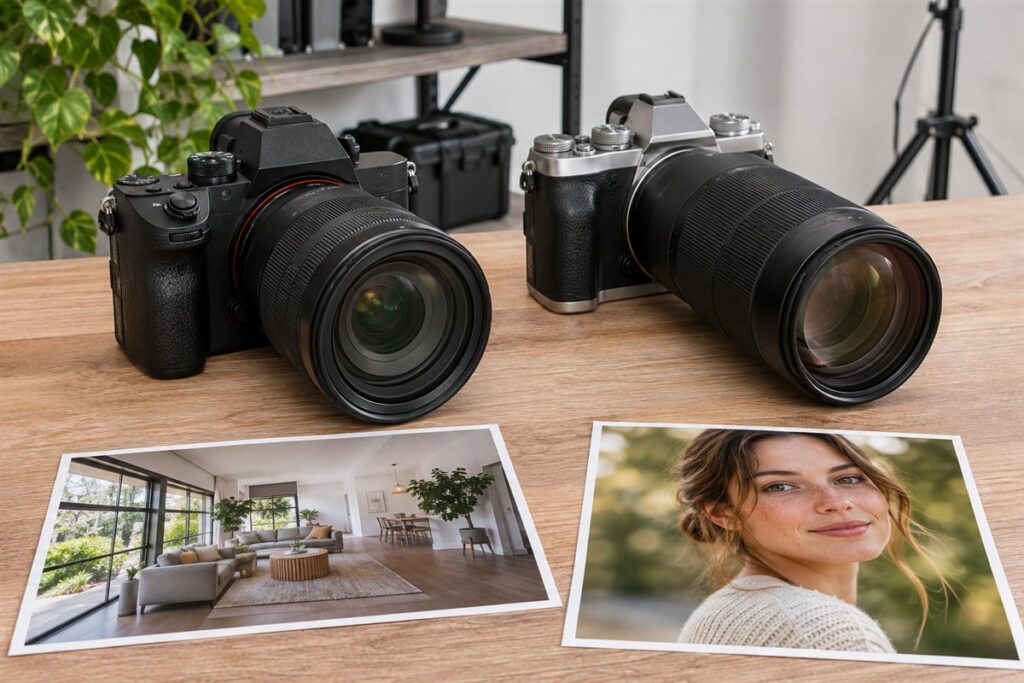
The Tamron 35-150mm and the Canon 24-105mm are both all-round full-frame zooms, but they lean in different directions. The Tamron gives up wide-angle coverage in exchange for more reach and a brighter aperture, while the Canon 24-105 keeps a wider view for travel and general work. Choose the Tamron for portraits and events, and a Canon 24-105 for walk-around shooting.
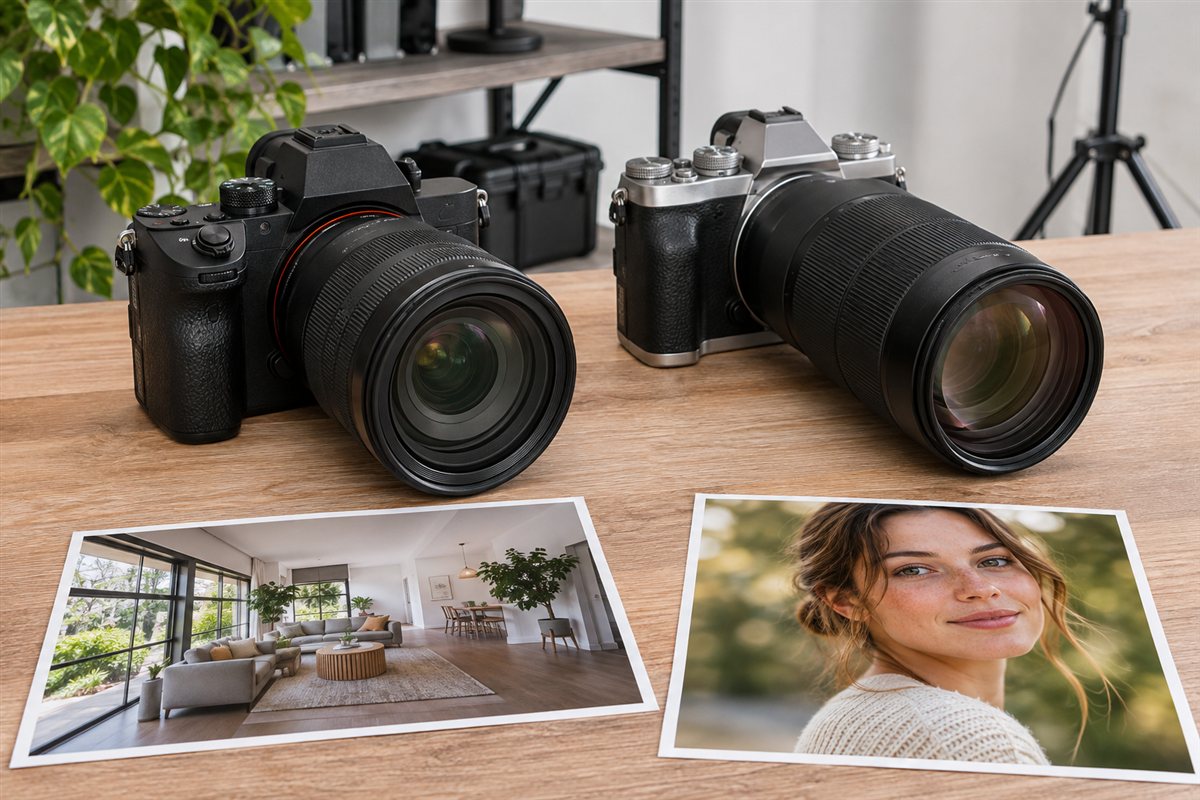
What Each Lens Is For
The Tamron 35-150mm f/2-2.8 Di III VXD is a mirrorless zoom made for Sony E and Nikon Z mounts. Its aperture is brighter than most standard zooms, and its range covers normal view through short telephoto, which suits portraits, weddings and event coverage.
Canon has made several 24-105mm lenses over the years, including f/4 L-series versions for the EF and RF mounts and a lighter variable-aperture RF version. They are built as general-purpose lenses: wide enough for interiors and landscapes, long enough for tighter portraits and details.
Key Differences
| Trait | Tamron 35-150mm | Canon 24-105mm |
|---|---|---|
| Wide end | 35mm | 24mm |
| Long end | 150mm | 105mm |
| Aperture | Bright, f/2 at the wide end to f/2.8 at the long end | f/4 on the L versions, variable on the compact version |
| Mount | Sony E, Nikon Z | Canon EF or RF, depending on version |
| Typical use | Portraits, events, weddings | Travel, landscapes, general work |
Treat the table as general guidance and confirm exact specs, size and weight on each maker’s page, since the Canon name covers more than one lens.
How to Decide
- Choose the Tamron if you shoot people and want a bright aperture for background blur and indoor light.
- Choose a Canon 24-105 if you often need a wide view, such as room interiors, street scenes or landscapes.
- Think about the mount first. Your camera system usually settles the question before the optics do.
- Check weight and size if you carry the lens all day. A bright aperture usually adds bulk.
Practical Notes
A 24mm wide end is noticeably wider than 35mm. If you often back up against a wall to fit a scene, the missing 11mm matters. On the other side, 150mm brings distant subjects closer than 105mm does, which helps at a ceremony or on a stage.
Image stabilization also differs by camera and lens version, so check whether your body provides it in-camera before you count on it.
Which Canon 24-105 Are You Comparing
The Canon name covers more than one lens, so the first job is to identify which version you mean. There are f/4 L-series lenses for the older EF mount and for the newer RF mount, and there is a lighter variable-aperture version for RF. They share a focal range but differ in size, weight, build and how they handle the aperture as you zoom. Comparing the Tamron against the wrong version leads to the wrong conclusion.
The mount is the first filter. A Tamron 35-150mm made for Sony E or Nikon Z does not attach to a Canon camera, so this comparison is mostly useful for someone choosing across systems or planning a change of system. If you shoot Canon and are not changing, your decision is among Canon’s own options and third-party lenses in your mount.
Ask the seller or read the product page for the full lens name, including words such as L, IS, USM and STM, plus the mount. Compare photos of the barrel and the hood, and check the serial number if you buy used. When in doubt, ask the maker or a service center which version matches your camera. Do not rely on the focal range alone, because it does not tell you the version.
Shooting People with Each Range
People photography highlights the main difference between these lenses. A range that begins at 35mm and ends at 150mm is built around portraits, candids and ceremonies. You can frame a half-length portrait at 85mm, get a tight head shot at 135 or 150mm, and still reach a group at the wide end if you can step back.
A 24-105mm range handles groups, rooms and environmental portraits better because it goes wider, but it stops sooner on the long end. It is the more general lens: good for a family trip, a room full of guests and a quick portrait, but less suited to isolating a face from a distance.
- For ceremonies where you cannot move close, the longer range is a help.
- For small rooms and tight spaces, the wider range is easier to use.
- For a day with a mix of both, think about which missed shot you would regret more.
The aperture also shapes portraits. A brighter aperture gives a softer background and a faster shutter speed in dim rooms. Check the maker’s pages for the aperture values at each focal length, and think about whether the effect is worth the extra size and weight for your own work.
Low Light and Shutter Speed Planning
The two lenses approach low light differently. A bright, constant-style aperture lets in more light, which allows faster shutter speeds or lower ISO. A narrower aperture asks you to rely on image stabilization and higher ISO. Stabilization helps with still subjects, but it cannot freeze a moving person, so a bright aperture helps in a different way than stabilization does.
When planning a shoot in dim light, think about three levers: aperture, shutter speed and ISO. If your subjects move, you need a shutter speed that freezes them, perhaps 1/200 or faster for walking people, and faster for dancing or sport. These are rough guides and depend on the subject. Then decide how much noise you will accept at the ISO you need.
Modern cameras handle higher ISO values well, which narrows the gap between lenses, but it does not erase it. If you often shoot indoor events, a brighter lens gives you more choice. If you mostly shoot in daylight, stabilization and a wider range might be more useful. Test your own camera at your usual indoor settings to see what quality you consider acceptable.
Video and Hybrid Shooting Notes
For video, think about framing, aperture behavior and stabilization. A zoom with a constant aperture keeps exposure steady as you change focal length. A variable-aperture lens may shift exposure during a zoom, which can be corrected but is a nuisance. Check each lens page to see how it behaves.
The wide end matters for handheld shooting. A wider view gives more tolerance for shaky movement and lets you include more of a scene when you are close to your subject. Interview setups and walk-and-talk clips often benefit from the wider end. The longer end, on the other hand, helps with compressed shots of an event from the back of a room.
- Check focus breathing and autofocus smoothness on your own camera.
- Check whether lens stabilization and in-body stabilization work together on your body.
- Consider weight if you use a gimbal, since heavier lenses may need a more capable one.
- Test the lens in the lighting you will use for the final video.
Record a few test clips before an important project and review them on a larger screen. That is the surest way to see what the specification sheet cannot tell you.
A Practical Kit Around Either Lens
Whichever you choose, think about what else belongs in the bag. A lens that starts at 35mm leaves a gap for wide scenes, so a separate wide-angle lens, or a willingness to step back, becomes part of the plan. A lens that ends at 105mm leaves a gap for distant subjects, so a telephoto zoom may follow.
Consider weight and carrying style. A heavy bright zoom may be fine on a tripod or monopod for events but tiring on a long walk. A lighter lens is easier for travel. Think about which situation you face more often and choose for that.
Finally, think about the long term. Lenses from third parties may need firmware updates, and a change of camera body may bring different features. Check each maker’s support pages and your camera manual. Buy from a seller with a clear return policy, test the lens soon after buying, and keep the packaging until you are sure about the purchase.
FAQ
Can I use the Tamron 35-150mm on a Canon camera?
Tamron makes this lens for Sony E and Nikon Z mounts, so it is not a direct option for Canon bodies. Confirm available mounts on Tamron’s page before buying.
Which one is better for video?
It depends on the framing you need. The Tamron’s bright aperture helps in dim rooms, while the Canon’s wider end suits tight spaces and handheld gimbal work.
Which lens is better for weddings?
A longer, brighter range suits ceremonies and receptions where you cannot get close. A wider range is useful for group shots and venue details. Many wedding photographers carry more than one lens.
Does a wider aperture always mean better portraits?
It gives a softer background and more light, but good portraits also depend on distance to the background, lighting and posing. Aperture is one tool, not the whole picture.
Can I adapt lenses between systems?
Sometimes, with adapters that depend on the mounts involved. Autofocus and stabilization may be limited, so check the adapter and lens makers' notes before you buy.
What if my camera is full frame or crop?
Both lenses are designed with full-frame cameras in mind. On a crop-sensor body the view will be narrower, so check what your camera needs.
Is the longer range worth extra weight?
If you photograph distant people or stage events, yes. For general walking around, a lighter lens with a broader view may be more comfortable to carry.
How can I test a lens before buying?
Rent or borrow it if possible, or visit a shop with your camera. Shoot the kind of scenes you usually photograph, then review them at full size on a larger screen.
Should I buy a lens hood?
Yes, if it is not included. A hood reduces flare and protects the front glass from bumps.
The Short Version
The Tamron 35-150mm is a bright, longer-reaching zoom for people photography, and the Canon 24-105mm is a wider, more general-purpose range. Your camera mount and the focal lengths you use most should make the decision for you.