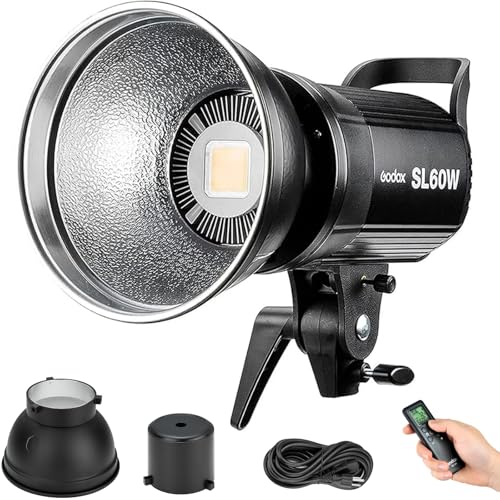
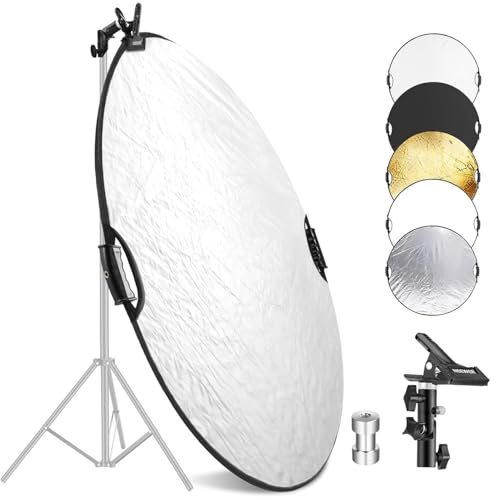
A softbox gives you more control over where the light falls, while an umbrella is lighter, faster to set up and spreads light more broadly. For controlled studio portraits, choose a softbox; for quick, portable setups where a wide, soft wash of light is fine, choose an umbrella.

How each modifier shapes light
A softbox is a fabric enclosure with a reflective interior and one or more diffusion panels on the front. The light is contained and exits only through the front, so it stays on your subject and off the walls and background.
An umbrella is a collapsible canopy. In a shoot-through style, light passes through a translucent fabric; in a reflective style, the flash points into the umbrella and bounces back. Light spreads in many directions, which fills a room with soft illumination.
In this guide
Main differences
| Trait | Softbox | Umbrella |
|---|---|---|
| Light control | High, directional | Lower, spills widely |
| Setup speed | Moderate | Fast |
| Portability | Bulkier | Very compact |
| Catchlights | Rectangular or square | Round |
| Typical use | Studio and controlled looks | Location work and quick shoots |
When to choose a softbox
- You want to keep light off the background to preserve contrast.
- You plan to use a grid to narrow the beam.
- You want clean rectangular catchlights in the eyes.
- You work in a small room and cannot let light bounce everywhere.
When to choose an umbrella
- You travel to locations and need compact, light gear.
- You want broad, even lighting for groups.
- You need to change setups often and quickly.
- You prefer a bright, airy look, with light that bounces off walls.
Setup tips as a baseline
- Place the light at roughly 45 degrees to the side and slightly above eye level for a classic portrait look.
- Move the modifier close to the subject; a closer light is relatively larger and therefore softer.
- Adjust power until the exposure matches your aperture, often in the range of f/4 to f/8 for studio portraits.
- Add a reflector opposite the light to open the shadows.
- Check the catchlights and adjust the height until they sit near the top of the eyes.
Practical add-ons
A softbox can take a removable grid that narrows the spread of light, while an umbrella can be paired with a diffuser to soften it further. For tight spaces, a smaller softbox on a boom arm lets you place the light close without cluttering the floor. For travel, an umbrella that folds into a short bag is hard to beat. Whichever you choose, a sturdy stand and a sandbag are worth packing.
Size, Shape and the Quality of Shadows
Both modifiers exist to turn a small, hard light source into a larger, softer one, so their size is the first thing to think about. Light feels soft when the source is large relative to the subject, because shadows then fade gradually from dark to light. A small source close to the subject can be softer than a huge one far away, which is why moving the light in is such a reliable tip.
Shape matters too. Rectangular and square softboxes give a defined edge to the light, which helps shape faces and keeps the background dark. Strip-shaped softboxes make narrow, elegant highlights along the side of a face or body. Octagonal softboxes and large round umbrellas create a wraparound look and round catchlights that some people find more natural in eyes. Choose the shape that matches your subjects: full-length figures suit tall, narrow sources, while head-and-shoulders work suits a medium square or round source.
- A small modifier produces more contrast and defined shadows
- A large modifier fills in the face and softens skin texture
- A deep umbrella or deep softbox focuses the light more than a shallow one
- Check the stated dimensions in the product listing, and measure your room to be sure it fits
As a rule, buy for the biggest modifier your space and stands can manage comfortably, then use distance and power to adjust.
Mounting, Compatibility and Which Lights They Fit
The most common purchase mistake is buying a modifier that does not fit the light. Studio flash heads and continuous lights use different mounting systems, and softboxes often attach through a ring or adapter that matches one of them. Before buying, find the mount type of your light in its manual, and confirm in the product listing that the softbox or its speed ring supports it. Adapters exist for many combinations, but check that the adapter is rated for the weight and heat of your light.
Small flash units that sit on a stand are another case. Umbrellas usually mount with a shaft through a hole in the stand bracket, which is simple and works with almost any bracket. Softboxes for small flashes need a bracket designed for them, and some are less stable. If you use a small flash, an umbrella is the easier choice, and a compact folding softbox made for such units is the alternative.
Heat matters with continuous lights. Check that the modifier is rated for the bulb or panel type you use, and follow the maker’s guidance on distance and ventilation. Also consider the stand: a large modifier on a light stand needs a sturdy base, a boom or a counterweight. Look at the maximum load of the stand before you buy.
Room Size, Ceiling Height and Light Spill
Where you shoot decides more than most buyers expect. In a small room with white walls and a low ceiling, an umbrella throws light everywhere, and it bounces back onto the subject and background. That can produce a flat, low-contrast result, which is difficult to control. If you want shadow and mood in a cramped space, a softbox, possibly with a grid, keeps light where you aim it.
In a larger room, or one with dark walls, an umbrella behaves well, and the spill adds gentle fill light. Outdoors, there is nothing for the light to bounce from, so an umbrella spreads light evenly but loses power quickly with distance. Wind is a big concern outside, as the earlier advice says, because an umbrella acts like a sail.
Think about the background too. If you use a colored paper or fabric backdrop, light spilling onto it changes its tone. You can use a flag, a black card or a grid to prevent that. Measure your available space before shopping, remembering to allow room for the stand, the modifier’s depth and the distance from the subject.
- Mark where the subject, camera and light will go on the floor
- Check ceiling height against the stand when fully raised
- Leave space to walk around the light safely, with cables taped down
Shoot-Through Versus Reflective Umbrellas, Diffusers and Grids
An umbrella is not one tool but several. A shoot-through model is white and translucent, and light passes through it directly toward the subject, giving a soft, wide beam with some backward spill. A reflective model has a silver, white or gold interior and bounces light back. Silver is the most efficient and slightly punchier, white is softer and more forgiving, and gold warms the light. Many umbrellas offer a removable black cover for the outside, which reduces spill.
Softboxes have their own options. Most come with an inner baffle and an outer diffusion panel, and removing one panel increases output but changes the softness. Grids, often called egg crates, narrow the beam and reduce spill, which gives more contrast and a more dramatic look. They are particularly helpful in small rooms. Check that a grid is available for the exact softbox you are considering, because sizes differ.
Extra diffusion can turn an umbrella into a softer source, but it also cuts light output, so you may need more power or a higher ISO. Reflectors and flags complete the setup: a white card on the shadow side lifts darkness, while a black card deepens it. When choosing, think about what you want to change over time. A modular system with accessories gives flexibility, while a simple umbrella kit is quicker for beginners.
Build Quality, Folding and Long-Term Care
Quality shows in the small things. For umbrellas, look at the ribs, the shaft and the fabric. Flimsy ribs bend or snap in wind, and thin fabric can wrinkle or show seams. For softboxes, look at the poles, the speed ring and the stitching. Poles that bend or fit loosely make setup slow and unsafe, and cheap diffusion panels may yellow or tear with heat.
Setup should be simple enough that you will actually use the gear. Practice assembling your softbox before a shoot, and look for models with clear markings or a quick-open design. Folding softboxes pack small but can take time to fit, so decide how often you will set up and take down. For travel, a collapsible umbrella with a short shaft is hard to beat. For a studio that stays up, a larger softbox is worthwhile.
Care extends life. Keep fabric dry, and let it dry fully before storing to prevent mildew. Wipe the interior gently with a dry cloth, and avoid creasing the reflective lining. Store in the supplied bag, and keep the poles together in one place. Check connectors and stand clamps for wear, and replace anything that slips. If a panel develops yellowing or a tear, a replacement is often better than continuing with it, because uneven diffusion shows up in portraits as patchy light.
A Quick Placement Guide for Portrait Setups
Where you put a modifier matters as much as which one you own. The table below describes general opening positions for a single light on a seated or standing subject. Adjust by eye, since faces, rooms and lights all differ.
| Goal | Light position | Effect on the face |
|---|---|---|
| Soft, flattering look | About 45 degrees to one side, slightly above eye level | Gentle shadow shapes the cheek and nose |
| Open, even light | Closer to the camera axis, just above the lens | Fewer shadows, a calm and bright feel |
| Moody, dramatic look | Further to the side, with the subject turned slightly away | Strong contrast between light and shadow |
| Softer shadows | Move the modifier closer to the subject | The light wraps further around the face |
| Harder shadows | Move the modifier further away | Shadows become more defined |
Distance changes the apparent size of the light source. A large modifier placed close to the subject gives the softest result, while the same modifier moved across the room behaves more like a small light.
Mistakes That Flatten or Harden Portraits
New photographers often assume that buying a big modifier fixes lighting problems. In practice, a handful of habits cause most of the disappointment.
- Placing the light too far away: the large surface becomes a small source from the subject’s point of view, and the benefit disappears.
- Pointing it straight at the face: head-on light fills every shadow and makes features look flat.
- Ignoring the background: light that spills onto the wall can flatten the scene or create unwanted bright patches.
- Setting the light too low: light from below looks unnatural and can be unflattering.
- Forgetting the catchlight: a visible reflection in the eyes adds life, so check that it sits in a pleasing spot.
- Using too much power: forcing a bright setting can leave little room for fine adjustment of the aperture and the shutter.
Take a few frames after each change and compare them side by side. Small moves of a hand or a stand often matter more than a whole new piece of equipment.
Light Stand Safety and Stability
A tall stand with a large modifier on top is a sail waiting for a breeze, and a studio floor is full of trip hazards. Take a few steps to keep people and equipment safe.
Open the stand legs fully and lock every clamp before you add weight. Place the heaviest part of the setup over one leg, not between two, to reduce the chance of tipping. Add a sandbag or another weight to the base, especially if you work with a boom arm or an outdoor setup. Keep cables taped down or routed away from the walking area, and never leave a stand in a doorway.
Follow the maker’s instructions for the maximum load of each stand and for the correct way to attach the modifier to the light. If your lights are mains powered, use only the supplied cables and approved accessories, and keep them away from water. When a plug, cable or light looks damaged, stop using it and arrange for a qualified person to repair or replace it. Never open the light housing yourself.
A Short Glossary for Modifier Shoppers
- Diffusion panel: a sheet of fabric that spreads and softens light as it passes through.
- Speed ring: the adapter that attaches a softbox to a specific light, which must match your light’s mount.
- Grid: a honeycomb accessory that narrows the spread of light and reduces spill.
- Shoot-through: an umbrella design where light passes through white fabric toward the subject.
- Reflective: an umbrella design where light bounces off the inner surface toward the subject.
- Catchlight: the reflection of a light source in the subject’s eyes.
Having these terms in mind makes product listings far easier to follow, and it helps you spot missing parts, such as a mounting ring that is sold separately.
A Checklist for Your First Portrait Session
Before the person arrives, set up and check everything so you can concentrate on them rather than on the gear.
- Assemble your modifier and confirm it attaches firmly to the light.
- Set the stand height and angle, then place a chair or mark on the floor where the subject will sit.
- Take a test frame using a stand-in, and adjust the power until the exposure looks right.
- Check the background for distractions, and move the subject away from it if shadows fall on the wall.
- Have a reflector or a plain white board ready to bounce light into the shadow side.
- Talk with your subject, show them a frame on the screen and make them comfortable.
A relaxed subject and a steady, familiar setup together matter more than any particular modifier. Once the technical side is settled, you can spend your energy on expression and posing.
Choosing Between Them When Your Space Is Limited
Many photographers work in a spare room or a corner of a living space. Here, the shape and size of a modifier have to fit the real conditions. Measure the room before you buy, and consider the width of the walls, the height of the ceiling and the distance from the subject to the background.
A compact umbrella folds small and sets up in seconds, which suits tight corners and quick sessions. A softbox gives you more control over spill, which can be an advantage when walls are close and light bouncing back from them would flatten the picture.
Think too about storage and travel. If the kit has to live in a cupboard or go into a car, a folding design is easier to handle. Write down the biggest limit in your space and pick the modifier that solves it first, then let your growing experience guide later upgrades.
Practice Exercises With a Single Light
The best way to understand a modifier is to move it and watch what happens. Ask a patient friend to sit for you, or use a mannequin head or a simple household object if nobody is available. Keep the camera and the subject fixed, and change only one thing at a time.
First, take a frame with the light close, then another with it far away, and compare how the shadows soften or harden. Next, raise and lower the stand in small steps and note how the shadow under the nose and chin changes. Then rotate the light slowly around the subject, from front to side, and observe where the face looks most pleasing.
Label your frames or keep them in order, and look at them together on a larger screen. Within a single hour you will build a clearer feel for light than days of reading could provide, and you will know which modifier gives you the look you want.

Ready to Buy? Start Here
If this guide helped you decide what to look for, these products are a place to start.

As an Amazon Associate we earn from qualifying purchases. Prices and availability are shown on Amazon.
Setting Up Each Modifier, Step by Step
A softbox rewards a methodical setup. Assemble it away from your subject position, check that the inner and outer diffusers are both fitted — the inner baffle is the piece beginners leave in the bag, and without it the centre of the light runs hot — and mount it so the flash head sits correctly inside rather than poking through the back. Aim the centre of the box at your subject, then feather it: rotate the box so its edge, rather than its face, does the work, which softens the transition between light and shadow and is the single technique that separates polished portraits from flat ones.
An umbrella asks for different decisions. With a shoot-through umbrella, the flash fires through the fabric toward the subject, giving a broad, forgiving spread that is hard to aim badly — which is precisely its virtue for fast sessions and groups. With a reflective umbrella, the flash bounces out of the curved surface, gaining efficiency and a touch more direction. In both cases, distance is your main control: sliding the flash along the umbrella shaft changes how much of the surface it fills, and therefore how large and soft the light behaves.
Whichever modifier you choose, build a repeatable starting position — light at roughly forty-five degrees to the subject, slightly above eye level, close enough that you can see the catchlights where you want them — and only then start experimenting. Photographers who begin from a known-good setup learn what each adjustment does; photographers who begin from random placement chase their tails for an hour.
Portrait Scenarios: Headshots, Groups and Products
For a single headshot, the softbox is usually the kinder tool. Its defined edges let you sculpt: light one side of the face, let the other fall into graduated shadow, and control exactly where the highlight on the background begins. Corporate headshot work, where the same look must repeat across dozens of sitters, particularly favours the softbox because its output barely changes when a subject shifts a few centimetres in the chair.
Groups reverse the preference. A large umbrella throws a wide, even field that covers a row of people without the edges falling off as abruptly, and its forgiving nature suits the reality that group members stand at slightly different depths. The softbox can do groups when it is large enough and far enough back, but distance is exactly what small rooms deny you, and an undersized box at close range lights the middle faces and abandons the ends.
Product and still-life work leans softbox again, for a visible reason: the modifier appears in the photograph. On anything glossy — bottles, jewellery, electronics, food packaging — the reflection of the light source is part of the image, and a softbox’s clean rectangular reflection reads as intentional and premium, while an umbrella’s spoked, scalloped reflection reads as an accident. If you shoot reflective products even occasionally, that reflection test alone may settle this comparison for you.
Feathering, Grids and Controlling Spill
Spill is the difference between a portrait studio and a lit room, and the two modifiers handle it oppositely by nature. An umbrella is an enthusiastic spiller: light leaves in nearly every direction, brightening walls, ceilings and backgrounds whether you invited it or not. In a white room that can be a free fill light; in a small room where you wanted a dark, moody background, it is a problem you cannot fully solve with flags and distance.
A softbox contains its light by design, and a fabric grid narrows it further into a directed beam with soft edges. With a grid fitted, you can light a face against a black background from a metre away and keep the background black, light one product in a group, or create a pool of light on a tabletop. The trade-off is that a gridded softbox punishes imprecise aiming: move the subject or the light slightly and the effect changes, so it suits deliberate, tripod-and-tethered styles of work.
Learn to read spill in your test frames rather than in the viewfinder. Take a shot with the subject absent and look only at the background and floor: that frame tells you exactly where your light is going besides the subject. Adjust the modifier’s angle, height and distance against that evidence, and the portraits that follow will need far less rescue work in editing.
Small Rooms, Low Ceilings and Real Homes
Most portrait photographers do not work in studios; they work in living rooms, offices and hotel rooms, and space rewrites this comparison. An umbrella needs depth: its light spreads from a point set back from the subject, and in a small room the stand ends up close, the spread hits every wall, and your carefully planned dark background turns grey. A softbox, especially a modest-sized one used close, thrives in the same room because closeness is exactly what makes its light soft, and its directional nature keeps the walls out of the equation.
Ceiling height matters too. Umbrellas bounce a meaningful amount of light off a low ceiling, which can flatter by acting as fill or frustrate by lifting shadows you wanted to keep. Softboxes pointed slightly downward keep their light in a controlled wedge. If your ceiling is low and white, treat it as a permanent extra light source in every setup you design, whichever modifier you choose.
Portability follows the same logic. Umbrellas fold to almost nothing, survive being dropped, and set up in under a minute, which is why location photographers keep one in every bag. Modern softboxes with quick-release frames have closed much of that gap, but they still travel bulkier and reward gentler handling. If your work moves daily, the umbrella’s convenience is a genuine creative feature, because the light you actually bring is the light that shapes the photograph.
Care, Durability and Getting Years from a Modifier
Modifiers are fabric and thin metal living a hard life of folding, transport and heat, and a little care doubles their working life. Let a softbox cool before packing it away after a long session, because folding warm diffusion fabric into a tight bag creases it, and creases in the front diffuser can print as uneven patches in the light. Store umbrellas in their sleeves with the shaft straight; a bent shaft makes the flash sit off-centre, which quietly ruins the even spread you bought the umbrella for.
Clean diffusion fabric with a gentle wipe rather than a wash, and keep both modifiers away from the floor of location shoots where grit works into the fabric. Check speedring fittings and umbrella shafts for looseness every few months, because the failure mode of lighting gear is rarely dramatic — it is a modifier slowly sagging mid-shoot, changing your light between the first frame and the fiftieth while you blame the flash.
Treat the carrying case as part of the tool. A modifier that travels protected arrives true; one that rattles loose in a kit bag arrives with a bent rib or a torn baffle. When a diffuser finally yellows or tears, replacement panels are usually available for better softboxes, which is one more reason to buy a modifier you can maintain rather than the cheapest sealed unit you can find.
Two-Light Setups: Pairing Your Modifier With a Second Light
Most portraitists outgrow one light within a year, and the second light changes what your first modifier should be. The classic progression pairs a controlled main light — usually the softbox — with a broad, forgiving fill, which is the umbrella’s home territory: its spill, a liability in a one-light moody setup, becomes a feature when its job is to lift a whole room gently. Set the fill two or more stops below the main light as a starting point, and adjust by looking at the shadow side of the face rather than at numbers.
Background lights are the other second-light job, and here the choice inverts by background. A bare or lightly modified light behind the subject can rim hair and shoulders beautifully, while an umbrella aimed at a backdrop spreads an even wash that a softbox’s defined edge cannot match without distance. If your portraits live against seamless paper or a studio wall, an umbrella in the kit earns its place as the background specialist even if the softbox owns the key light.
Rim and accent work rewards the softbox with a grid, which can thread a controlled strip of light past a subject without touching the background or the camera lens. Build two-light setups one light at a time — main first, photographed alone; fill added, photographed again — so you always know which light is responsible for what you see. Photographers who switch everything on at once and then adjust by instinct spend their sessions arguing with shadows they cannot assign to an owner.
Outdoor Portraits With Modifiers
Taking modifiers outside changes their personalities. The softbox becomes the precision tool for shaded portraits and overcast days, where its direction lets you sculpt against flat ambient light and its enclosure keeps the flash’s contribution tidy. The umbrella becomes the fast, friendly tool for group photographs at gatherings and events, where its spread covers people generously and its setup speed keeps the session’s energy alive. Both become sails in wind, and the outdoor modifier conversation is honestly a wind conversation: weighted stands, low centres of gravity, an assistant as a human anchor, and the humility to switch to a small bare diffuser when the weather wins.
Balance with daylight is the core outdoor skill. Set your exposure for the ambient scene first — the sky, the background, the mood — then add the modified flash to lift the subject to match, adjusting flash power rather than camera settings to keep the background where you chose it. A softbox close to the subject gives you power in reserve for bright days; an umbrella’s efficiency helps smaller flashes keep up. Test the balance before your subject arrives, because outdoor light changes while you fiddle.
Mind the setting’s own rules: parks and venues may restrict stands and equipment, sand and grass eat dropped accessories, and a modifier on a stand is a trip hazard in any crowd. The outdoor kit that works is the one packed as a system — modifier, stand, weights, flash, triggers and spares in one bag, checked the night before.
Modifier Sizes and Shapes: What Actually Changes
Beginners shop for modifiers by diameter; experienced photographers shop by the relationship between size, distance and subject. Doubling a modifier’s size while doubling its distance changes almost nothing — the light’s apparent size from the subject is the same — which is why the practical question is how close you can work. A modest softbox used just out of frame wraps light more beautifully than a giant one across the room, and an umbrella’s size mainly buys coverage for groups rather than softness for singles.
Shape leaves a signature in the eyes. Round sources — umbrellas, round softboxes — produce round catchlights that read as natural, like a window’s reflection or the sky itself. Rectangular softboxes produce window-like catchlights that read as intentional and photographic, and strip-shaped boxes produce the long highlights prized in product work and dramatic portraiture. None is better; they are different handwriting, and a portraitist’s kit often ends up with one of each shape for different assignments.
Depth matters too, in small rooms and in light quality. Deep parabolic designs focus their output and behave more directionally than shallow ones of the same diameter, while shallow umbrellas and boxes spread wider and spill more. If your space is small, a shallower modifier that can sit closer to walls may serve you better than a theoretically superior deep design that physically cannot be positioned where the light needs to be.
Modifiers for Video and Continuous Light
Hybrid shooters who light video as well as stills should judge these modifiers by their behaviour under continuous light, where new variables appear. Heat is the first: continuous sources run hot or at least warm for hours, so check that your modifier’s fabrics and fittings are rated for the light you use, keep ventilation paths clear, and never leave a fabric modifier draped over a hot lamp during a break. The softbox’s enclosure, a virtue for control, concentrates heat more than an umbrella’s open design, which is one reason video crews favour open modifiers for long interviews.
Consistency is the second variable. Video light must not change as the modifier warms, sags or is knocked between takes, so the modifier that locks its shape and position wins the working day. Umbrellas are honest here — what you set is what stays — while softboxes reward a check of their tension and mounting after the first hour. Flicker, colour shift and fan noise belong to the light rather than the modifier, but the modifier decides how much of the light’s character reaches the subject, and therefore how visible those flaws are.
For talking-head and interview work, the softbox’s controlled fall-off flatters a seated subject and keeps a small room’s background in check, while the umbrella’s breadth suits two-shots and walk-and-talk formats where evenness matters more than sculpture. Owning one of each, as many hybrid shooters end up doing, is not indecision — it is recognising that stills and video, and singles and groups, are four related but different lighting problems.
The Second-Hand and Rental Route to Better Light
Lighting modifiers are among the safest second-hand purchases in photography, because they have no electronics to fail secretly and their condition is legible at a glance: fabric clean and unfaded, ribs straight, fittings tight, diffusers complete. A used professional softbox, inspected in person, routinely out-performs a new budget one in evenness and durability, and the savings fund the stand and sandbags that actually determine whether your light stays where you put it. Umbrellas second-hand are cheaper still — inspect the shaft for straightness and the fabric for tears at the rib tips, where they always begin.
Renting answers the size question better than buying does. If a job occasionally demands a very large modifier — a group portrait, a car, a room set — hire it for the weekend rather than storing it for the year, and hire the stand and weights in the same booking. Rental also lets you live with a design for a full working day before committing, which settles the softbox-versus-umbrella question for your hands more honestly than any comparison, including this one.
Whichever route supplies your modifier, spend the saved money and attention on the unglamorous supports: a stand that does not sway, a boom that holds its angle, weights that travel with the kit. Photographers remember the session where the light fell over long after they forget which modifier made the light.
Light Quality Vocabulary: Describing What You See
Photographers improve fastest when they can name what they are looking at, and lighting has a vocabulary worth learning precisely. Hardness describes the shadow edge: the crisper the transition, the harder the light, and it is governed by the source’s apparent size. Direction describes where modelling comes from, and fall-off describes how quickly light dies with distance — the property that lets a close softbox light a face while the background drops away. Specularity describes the highlights on skin and surfaces, the difference between a healthy glow and an oily shine, and it is controlled by the modifier’s surface and distance as much as by power.
With those four words you can diagnose any portrait: shadows too hard means the source is too small or too far; modelling too flat means direction too frontal; background too bright means fall-off unmanaged; skin too shiny means the source too direct or too close to the lens axis. Each diagnosis names its own cure, which is why experienced photographers adjust lights in seconds — they are not guessing, they are translating.
Practise the vocabulary on other people’s photographs too. Before admiring a portrait, name its light: size, direction, fall-off, specularity. Within a month the naming becomes seeing, and your own modifier — softbox, umbrella or bare flash — becomes an instrument you play deliberately rather than a lamp you point and hope.
A Note on Learning to See Light Before Buying More of It
Before adding a second modifier, spend a month extracting everything your first one can teach. Photograph the same patient subject — a friend, a mannequin head, a patient houseplant in a pot with character — in the same position while you vary only the modifier’s distance, then only its angle, then only its height, reviewing each series until the effect of each variable is predictable to you in advance. This unfashionable exercise is how lighting stops being equipment and becomes vision: you begin to see, in any room you enter, where a softbox would go and what it would do, and that seeing is worth more than any second light.
When the month ends, your next purchase — whichever side of this comparison it falls on — will be chosen by a photographer who knows exactly which limitation it is meant to relieve. That is the only reliable way to buy light: from evidence, at the point of need, with a clear picture of the photograph it will make possible.
FAQ
Which makes softer light?
Softness depends mostly on the size of the modifier relative to the subject and how close it is. A large umbrella can be softer than a small softbox.
Can I use one for outdoor shoots?
Both can be used outdoors, but wind is a concern. Use sandbags and a sturdy stand, especially with an umbrella.
Which is better for a beginner?
An umbrella is usually the simplest start, because it is cheap to set up, light to carry and works with most brackets. A softbox gives more control and is worth considering once you want to shape light and keep it off the background.
Should I choose a shoot-through or a reflective umbrella?
A shoot-through umbrella gives a broad, soft beam and is easy to place close to the subject. A reflective one offers more output and control with a cover. Many photographers try both and keep the one that suits their room.
Do I need a grid on a softbox?
Only if you want to narrow the beam and keep light off the background. For simple portraits in a roomy space, you may not need one. Check that a grid is sold for your exact softbox.
What size should I buy first?
A medium size suits head-and-shoulders and half-length portraits. Larger sizes soften more and suit groups and full-length shots but need more space. Measure your room before buying.
Can I use these with a small on-camera flash?
Yes, with a stand, a bracket and a trigger. Umbrellas are the easiest because they slide onto a shaft. Check the product listing for compatible brackets and the manual for the flash's trigger options.
How do I stop the umbrella from blowing over outdoors?
Use a heavy stand, add sandbags on the legs, lower the height and consider an assistant to hold it. In strong wind, avoid using it at all.
Why do my portraits look flat even with a big modifier?
Light that comes from the front, or spills widely in a white room, fills the shadows. Move the light to the side, bring it closer, add a black card or a grid, and check how much light bounces from the walls.
Can I use a softbox or umbrella outdoors?
Yes, both work outdoors, but wind is the deciding factor: a softbox is a sail and needs a weighted stand and preferably an assistant, while an umbrella catches wind even more enthusiastically and can invert or take flight. On calm days either is fine; on breezy days, work in shelter, lower the stand, weight it properly, and accept that a bare flash with a small diffuser may be the pragmatic choice.
Do I need a more powerful flash with an umbrella than with a softbox?
Not necessarily, but understand the losses. A softbox’s double diffusion absorbs light, and a shoot-through umbrella absorbs some too, while a reflective umbrella is comparatively efficient. In practice, any modern speedlight or studio strobe drives either modifier happily at portrait distances indoors. Outdoors against bright daylight, efficiency starts to matter, and that is where you test your own flash at your working distance before an important shoot.
What size modifier should a beginner buy first?
Buy the largest you will realistically transport and set up, because size is softness when the modifier is close. For most beginners that means a medium softbox for controlled portraits or a large umbrella for versatility and groups. An enormous modifier that stays home teaches you nothing; a modest one you use weekly teaches you everything.
Can I mix a softbox and an umbrella in one setup?
Absolutely — a classic arrangement is a softbox as the main light for its control and an umbrella as a broad, low-power fill or background light for its spread. Use each where its nature helps rather than forcing symmetry. Just balance them deliberately with test shots, because the umbrella’s spill will lift shadows the softbox worked to create.
Why do my softbox portraits still look harsh?
Usually the box is too far away. A modifier’s softness depends on its apparent size from the subject’s position, so a large box across the room behaves like a small, hard source. Move it closer — just out of frame is the classic position — fit both diffusers, and feather the edge across the subject. If it still looks harsh, check that the flash is not overpowering the ambient light entirely, which flattens the modelling that makes light look soft.
Is a grid worth buying for my softbox?
If you shoot against backgrounds you want to keep dark, light single products, or work in small rooms where spill ruins your intent, yes — a grid transforms what the softbox can do. If your style is bright, airy and evenly lit, a grid will gather dust. Buy it when you can name the shot it will save, not as a speculative accessory.
The Short Version
Choose a softbox for directional, controlled portraits and an umbrella for portable, broad, quick lighting. Bring the modifier close to your subject for the softest result.