Ilford FP4 Plus is a medium-speed black and white film with fine grain and smooth tones, while HP5 Plus is a faster, more flexible film with more visible grain. Choose FP4 Plus for good light and finer detail, and HP5 Plus when light is changing or you need faster shutter speeds.

What Each Film Is For
FP4 Plus has a box speed of ISO 125 and has long been used for portraits, landscapes, and travel. HP5 Plus has a box speed of ISO 400 and has been a go-to for street, documentary, and event work. Both use traditional grain structures and both are sold in 35mm and 120, with HP5 Plus also offered in sheet film. Confirm the current list on the maker’s page.
In this guide
Key Differences
| Trait | FP4 Plus | HP5 Plus |
|---|---|---|
| Box speed | ISO 125 | ISO 400 |
| Grain | Fine | Moderate, more visible |
| Best light | Bright to moderate | Bright to dim |
| Typical use | Portraits, landscapes, travel | Street, events, documentary |
| Pushing | Possible, less common | Common and well documented |
What the Speed Difference Means
The gap between 125 and 400 is a bit under two stops. That means HP5 Plus lets you use a shutter speed roughly three times faster, or a smaller aperture for more depth of field, in the same light. If you shoot handheld in shade, indoors, or at dusk, that margin matters. In bright sun or on a tripod, the extra speed of HP5 Plus is not needed, and FP4 Plus gives you finer grain for the same scene.
Practical Differences
- Enlargements: FP4 Plus holds up well in larger prints because the grain is finer.
- Flexibility: HP5 Plus handles a wide range of conditions and can be pushed a stop or two when light falls.
- Tone: Both have a classic, smooth tonal response. HP5 Plus often looks a little grittier.
- Development: Both work with standard developers. Use the maker’s data sheet as your first reference, and adjust to your own taste.
How to Choose
- List the light you shoot in most. If it is mostly bright, try FP4 Plus.
- If you shoot indoors, in shade, or handheld at dusk, try HP5 Plus.
- If you only want one film in your bag, HP5 Plus covers more ground.
- Shoot a roll of each in the same scene and compare scans at the same size.
Pushing and Pulling Each Film
Pushing means exposing film at a higher speed than its box rating and compensating with longer development. Pulling is the reverse. HP5 Plus is widely used for pushing because its extra speed gives you a head start, and a push of one or two stops is a common routine for dim venues. FP4 Plus can be pushed too, but starting from a slower rating means you reach a given shutter speed with more strain on the negative.
What changes when you push is not just speed. Contrast rises, grain becomes more visible, and shadow detail is limited because the shadows were underexposed. Highlights can become dense. Many photographers like the gritty, high-contrast look, while others prefer a clean negative and choose a faster film instead.
- Pick one push amount and use it for the whole roll, since the development is done for the entire roll.
- Meter with the new speed on your meter or camera, and keep the setting consistent.
- Check the maker’s data sheet and trusted community sources for starting development times, then treat them as a first try.
- Label the roll clearly so the lab or your own darkroom notes show the rating you used.
- Avoid mixing different speed ratings on one roll unless you are prepared to compromise.
Pulling is less common. Exposing HP5 Plus at a lower rating and reducing development can give a softer contrast and a little more shadow detail, but it will not turn it into a fine-grain film. If finer grain is your goal, start with FP4 Plus.
Development Choices and Contrast Control
Both films are adaptable, and your developer and process choices can change their character as much as the film itself. A standard developer at the suggested dilution gives a balanced result for both. A finer-grain developer can soften the grain on HP5 Plus, though it may reduce effective speed slightly, while a more energetic developer increases contrast and edge sharpness.
Two practical ideas are worth knowing. First, agitation affects contrast: more frequent or vigorous agitation tends to raise contrast and can cause uneven density if overdone, while gentler agitation lowers it. Second, development time changes the tonal range. Longer times raise contrast, shorter times lower it. If you find your negatives too flat or too hard to print, adjust time in small steps and write down every change.
- Begin with the data sheet’s suggestion for your developer and dilution.
- Develop a test roll of a typical scene and examine the negatives against a light.
- If shadows are thin, increase exposure before you change development.
- If highlights are too dense, reduce development a little.
- Repeat with one change at a time.
Keep chemistry fresh and temperatures steady. Inconsistent results on either film often come from process drift, not the film. If you send film to a lab, ask what developer they use, so you know what you are comparing.
Everyday Lighting Situations Compared
A simple way to choose is to run through the situations you shoot most often and ask which film gives you more room.
- Bright sun. Either film works. FP4 Plus gives finer grain, and you can use wide apertures without overexposing if your camera has a fast shutter. HP5 Plus works too, but you may need a smaller aperture or a faster shutter.
- Open shade and overcast. HP5 Plus gives comfortable shutter speeds handheld. FP4 Plus is usable, particularly with a wide aperture or a steady rest.
- Indoors near windows. HP5 Plus has a clear advantage, since a window provides limited light.
- Dusk and evening street. HP5 Plus is the practical choice, and pushing opens more options.
- Night with a tripod. Both can work with long exposures. Be aware that very long exposures can change how film responds, so check the data sheet for guidance.
- Flash or studio lighting. Both are workable. The slower film suits controlled light where you can keep a low rating.
Think too about your lens. A fast prime lets FP4 Plus handle more situations, while a slow zoom benefits from the extra speed of HP5 Plus. If you carry a camera with a limited top shutter speed, bright light with a faster film can also become a problem, since you may run out of speed on a sunny day.
Match the film to the light you meet most, not the rare exceptions.
Scanning, Printing and Enlarging
How you present the result also affects the choice. If you scan your negatives, remember that scanners reveal grain at high resolution. FP4 Plus tends to look smooth even at large sizes, while HP5 Plus shows more texture, which some people use as part of the look. Neither is wrong, but a heavy sharpening setting can exaggerate grain, so go gently.
In the darkroom, both films are straightforward to print. HP5 Plus negatives may need a slightly different approach to grain focus, and a good grain magnifier helps you set the enlarger accurately. FP4 Plus is often favored for exhibition-size enlargements of 35mm because of its fine structure, though medium format reduces the need for such care.
- Use the same scanning settings when comparing the films, and avoid automatic corrections that differ between files.
- Print or view each at the same size before you judge them.
- For web use, grain differences are less visible, so tonal feel and convenience may matter more.
- Keep a contact sheet or a small test print for each roll so you can see how the film performs at a glance.
If you plan to print large often, give FP4 Plus a real trial. If you plan to share mostly online and work in changing light, HP5 Plus will probably suit you better.
Build a Simple Test Plan Before You Commit
Reading comparisons helps, but a small, controlled test gives you the best answer for your own camera and taste. Plan it so you learn something real from two or three rolls.
- Choose three scenes. For example a bright outdoor scene, an indoor window-lit scene and a dim evening scene.
- Shoot both films in each scene. Use the same lens and similar framing, and note aperture, shutter speed and meter reading.
- Add one variation. Expose some frames a stop over, or shoot HP5 Plus at a higher rating on a second roll.
- Develop both rolls together. Use the same developer, time, temperature and agitation, so process differences do not confuse the result.
- Review in a consistent way. Print or scan at the same size and compare shadows, highlights and grain.
- Write your conclusion. Note which film you reached for in each scene and why.
Keep your expectations realistic. A small test shows trends, not final truth, and your results may change as you improve at metering and development. Buy film in a quantity that lets you repeat the test later, and check the maker’s page for the formats you want. Over time, many photographers keep both: a slower film for planned shooting and a faster one for everything else.
Which Film Should You Buy: Ilford FP4 Plus or HP5 Plus?
Buy FP4 Plus if you shoot mostly in good light and want finer grain, and buy HP5 Plus if your light changes or you want one film that covers most situations. If you can only pick one roll for an unknown day, HP5 Plus is the safer choice.
Match your habits to the film using the pairings below. They rely on the speeds and character already described in this post.
- Landscape and travel in daylight: choose FP4 Plus for finer grain and smooth tones when you have enough light.
- Portraits by a window or in a studio: choose FP4 Plus if the light is controlled, or HP5 Plus if the room is dim.
- Street and documentary shooting: choose HP5 Plus for faster shutter speeds and room to push.
- Events, indoor gatherings and dusk: choose HP5 Plus, since the extra speed keeps handheld shots usable.
- Large prints and exhibition work: try FP4 Plus first, because finer grain holds up in enlargements.
- A first black and white roll: HP5 Plus is forgiving of exposure mistakes, which is helpful while you learn.
If your camera is a basic model with a limited top shutter speed, think about bright days as well. A faster film can leave you without a fast enough shutter in strong sun.
How Forgiving Is Each Black and White Film With Exposure Mistakes?
Both films tolerate error better than most color slide film, and HP5 Plus is generally regarded as the more forgiving of the two in difficult light. Black and white negative film handles overexposure better than underexposure, so when in doubt, give a little more light.
The reason is how negatives record shadows. If a shadow area gets too little exposure, the detail is simply not captured, and no development can bring it back. If you give extra exposure, the negative gains density but usually keeps detail, and you can print or scan it down.
These habits reduce mistakes with either film.
- Meter for the shadows you want to keep detail in, and let highlights fall where they fall.
- Add a little exposure in contrasty scenes instead of trusting the meter blindly.
- Check that your camera’s meter is set to the right film speed.
- Bracket important shots by one stop up and down while you learn.
Because FP4 Plus is slower, it leaves less room for error when light is limited. A shutter speed that is fine for HP5 Plus may be too slow for handheld use with FP4 Plus. That is not a flaw, only a reason to match the film to the situation.
Contrast matters too. A bright sunny scene with deep shadows can exceed what the negative holds comfortably, so consider a little extra exposure and slightly shorter development if your prints look harsh. Overcast light is gentler, and either film gives pleasant tones there.
Keep notes on your exposures for the first few rolls. A short record of aperture, shutter speed and conditions makes it much easier to see what to change.
What to Check Before You Buy Black and White Film
Before ordering, confirm the format, the number of exposures, the expiry date and how you will get the film developed. A great film is no use if it does not fit your camera or your process.
- Format: check whether you need 35mm or 120, and which the listing offers for each film.
- Exposure count: choose a roll length that matches how much you shoot before you want to develop.
- Pack size: a multi-roll pack suits repeat testing, while a single roll suits a first try.
- Expiry date: check the date shown on the box or listing and see how it was stored.
- Development plan: decide between a lab and home development, and confirm that your lab handles black and white.
- Scanning or printing: know how you will view the results, since this affects how much grain differences matter.
- Return terms: film is usually sensitive, so read the seller’s terms on returns before you order.
If you develop at home, make sure your chemistry, tank and thermometer are ready before the film arrives. Cold, dry storage in the meantime protects it from heat and humidity.
When you submit film to a lab, tell them the rating you used. If you shot it at box speed, say so, and if you pushed it, give the exact rating so they can adjust development.
Is a Slower, Finer-Grain Film Worth It, and Who Should Skip It?
A slower film like FP4 Plus is worth it when you have the light and care about fine detail, and it is not worth it if you often shoot in dim or fast-changing conditions. The extra finesse only appears in the pictures you can actually expose well.
The trade-offs are simple. FP4 Plus gives finer grain and smooth tones, but it asks for more light, which means slower shutter speeds or wider apertures indoors. HP5 Plus gives flexibility and well-documented pushing, but its grain is more visible, and some photographers see that as a style choice while others see it as a limit.
Who might skip FP4 Plus: photographers who shoot mostly indoors, at dusk or with slow lenses and no tripod. Who might skip HP5 Plus: photographers who print large and want the cleanest grain from 35mm and always have good light.
Film speed is also a matter of taste. Some photographers prefer grain, because it gives character to a scene and hides small flaws. Others see it as noise that distracts from the subject. Neither view is wrong, and a test roll of each tells you which side you are on.
Cost per frame is another practical point. Compare the price per roll and the number of exposures on the listing, then think about how much you will shoot while testing. A film you can afford to use often will teach you more than one you ration.
Format matters too. A larger negative from 120 reduces the visible grain of both films, so a medium format camera can make the grain difference less important.
Storing and Handling Film So Results Stay Consistent
Keep film cool, dry and away from direct sun, and handle exposed rolls promptly. Good storage protects speed and contrast, and it removes one source of confusion when you compare the two films.
Heat and humidity are the main risks for unexposed film. A closet shelf or a bag left in a hot car can shorten its useful life. Many photographers keep film in a cool place and let it reach room temperature before loading. Check the maker’s guidance on storage.
For exposed film, develop it within a reasonable time, and keep the cartridge or spool in its container until then. Label each roll with the film name, the rating you used and the date, so you do not mix up pushed and normal rolls.
- Avoid airport scanners for high-speed or repeatedly scanned film if you can, and ask about a hand check where permitted.
- Load and unload film in subdued light, not direct sun.
- Store developed negatives in archival sleeves, flat and dust-free.
- Make a quick digital backup of your scans.
Consistent handling helps you judge the films fairly. Compare FP4 Plus and HP5 Plus using the test plan above, check the formats on the maker’s page, then choose the film that matches the light you shoot in most and order your first rolls.


Ready to Buy? Start Here
If this guide helped you decide what to look for, these products are a place to start.

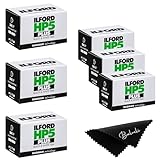
As an Amazon Associate we earn from qualifying purchases. Prices and availability are shown on Amazon.
Reading Grain, Contrast and Tone More Closely
Specifications start the conversation, but they rarely finish it. Two options can look close on paper and feel completely different after a month of regular use, and the gap between Ilford FP4 Plus and Ilford HP5 Plus is exactly that kind of gap. The honest way to judge either side is to follow the work you actually do: how often you shoot or work in poor light, how much you move while working, how long a typical session lasts, and how much time you are willing to spend on files afterwards. When those habits are clear, the better choice usually becomes obvious, because each option rewards a different set of habits.
It also helps to separate what can be fixed later from what cannot. Settings, accessories and technique can all improve with practice, and software can rescue a surprising amount in post. What cannot be changed after the fact is the character of the original capture or the original working file: missed focus, clipped highlights, motion blur, the wrong rendering of a skin tone, or a workflow that fights you every single session. Weigh the parts of these two classic Ilford films that are permanent more heavily than the parts that are adjustable, and be suspicious of any advantage that only appears in a best-case demonstration rather than in ordinary, tired, end-of-day use.
Speed is the first and honest difference
FP4 Plus is the slower, finer-grained film for good light and deliberate work; HP5 Plus is the faster, more flexible film for everything else. That single fact organises most of the comparison. Photographers who try to make FP4 cover dim interiors end up pushing it away from its virtues, and those who shoot HP5 on bright tripod landscapes accept grain they did not need. Let light and tempo assign the film and both will delight you.
Tonal character in the mid-tones
Where these films differ most subtly is the mid-tones where faces, fabrics and weathered wood live. FP4 renders them with a smooth, orderly gradation that suits formal and landscape work. HP5 gives a slightly grittier, more urgent rendering that suits reportage and the life of streets. Neither rendering is more accurate; they are different temperaments, and photographers often discover their own temperament by seeing which prints they keep returning to.
Exposure forgiveness and the working day
HP5’s latitude is legendary because it matches how photography actually happens: meters misread, light changes mid-roll, subjects refuse to wait. FP4 asks more of the photographer and repays it in refinement when conditions cooperate. Be honest about your metering discipline and your subjects’ patience. A film that forgives your real habits produces better negatives than a finer film that documents your mistakes in high resolution.
A Fair Test: Shooting and Processing Both Films Properly
Consistency is what makes a film comparison mean anything. Shoot both films in the same camera, with the same lens, on the same day where you can, and note the light for each frame in a small notebook or a phone note. Bracket the important frames a little either side of the meter reading, because a film judged only from slightly missed exposures is being judged on your metering, not on its character. When the scans or prints come back, look at matching frames side by side before looking at either roll as a whole.
Decide your processing route before you decide the film. A film that sings with careful home development may disappoint through a rushed commercial scan, and the reverse is also true. If you use a lab, tell them what you are testing and ask for scans without heavy automatic correction, so the differences you see belong to the film. If you develop at home, keep times, temperatures and agitation identical between the two rolls, and change only one variable at a time across future tests.
Judge the results in the form you actually deliver. Grain that looks coarse on a monitor at full magnification may vanish in a modest print, and contrast that feels flat on screen may print beautifully. Make at least one real print or one full-size finished file from each film before you settle the question, and live with both for a few days. First impressions in film, as in most crafts, tend to reward whatever is newest rather than whatever suits your pictures.
Subjects and Light, Case by Case
Landscape and architecture trips
For tripod work in decent light, FP4 is the natural first roll: fine grain, controlled contrast, and detail that rewards careful composition. HP5 earns its place in the same bag when the itinerary includes interiors, markets and evenings. Many travel photographers carry FP4 for the planned work and HP5 for the unplanned life that turns out to be the trip’s real subject.
Street and everyday documentary
HP5 is the street photographer’s default for good reason: speed for shade and interiors, latitude for split-second exposures, and a grain that suits the genre’s energy. FP4 serves the slower, more formal street tradition: portraits of place and considered frames in good light. Your street tempo, not a specification table, should pick the roll.
Portraits, formal and candid
Formal portraits in controlled light flatter FP4’s smoothness, especially when prints will be large. Candid portraits at family gatherings and events belong to HP5, which keeps working as the light fails and forgives the exposures that laughter and movement produce. A portraitist who does both kinds of work has a legitimate reason to standardise on both films.
Storage, Handling and Archiving That Keep Negatives Honest
Film rewards calm storage. Keep unexposed rolls cool and dry, let a cold roll return to room temperature before opening its wrapper so condensation stays outside the emulsion, and shoot refrigerated stock with the same patience you would give any valued material. Exposed rolls waiting for processing should be kept away from heat, and a simple log of which roll is in which camera prevents the classic accident of opening a back mid-roll.
In the darkroom or at the scanning desk, cleanliness decides more than technique. Dust settled before scanning becomes hours of spotting afterwards, so handle negatives by the edges, store them in sleeves as soon as they are dry, and keep the scanner glass scrupulously clean. Archiving matters too: label each roll with the film, the camera and the date, because in two years the difference between two similar black and white stocks will be impossible to reconstruct from memory alone.
Comparison Mistakes That Mislead Film Shooters
The classic mistake is comparing two films through two different chains: different cameras, different labs, different scanners, different days. Every link in that chain moves contrast and grain, so the comparison ends up measuring the chain rather than the film. Keep everything else fixed and let the film be the only variable, even if that means the test takes an extra week.
Another mistake is choosing a film for how it behaves in conditions you rarely meet. Most frames are made in ordinary light at ordinary contrast, and a film that handles your ordinary Tuesdays gracefully will serve you better than one that only shines in extremes. Shoot the test in your real subjects, your real light and your real venues, and let extreme-condition performance break a tie rather than make the decision.
Development can pull these films toward each other or push them apart. Gentler development calms HP5’s contrast for portrait work, while a sharper-working developer shows off FP4’s fine structure. Before concluding either film is too contrasty or too grainy for you, check whether your process, rather than the emulsion, is producing the trait you dislike. One adjusted process often saves a film you were about to abandon.
Keep a simple rule for choosing in the morning: bright and deliberate means FP4, dim and spontaneous means HP5, and a mixed day means HP5, because the fast film covers the slow film’s territory more gracefully than the reverse. Rules like this remove dithering at the camera-bag stage, which is where film choice is actually made.
Building the Habit: Practice That Pays Off
Keep a shooting log, however brief: film, camera, lens, light and a word about the subject for each roll. Memory rewrites history within a month, and the log is what turns a drawer of negatives into knowledge. When a roll delights you, the log tells you how to repeat it; when one disappoints, the log usually names the variable responsible before you blame the film.
Standardise your scanning or printing settings for comparison work. Automatic corrections are helpful servants and terrible witnesses: they quietly normalise away the very differences you are trying to judge. For test rolls, scan with corrections off or fixed, note the settings on the sleeve, and only enable the helpful automation when you return to ordinary production work.
Buy film in the pattern you actually shoot it: fresh stock for important work, and enough of it that you are never rationing frames on a good day. Rationed film produces timid photographs. The economics of film reward commitment: a photographer who shoots freely within a chosen stock learns it deeply, while one who hoards three stocks learns none of them past the surface.
Finish rolls in a reasonable time and process them promptly. Film left half-shot in a camera for months collects forgotten frames, mixed lighting and fading latent images, and it delays the feedback that makes the next roll better. The learning loop in film photography is the interval between shooting and seeing; shorten it and every film you use becomes a better teacher.
Store processed negatives like the originals they are: sleeved, labelled, dry and dark, with a digital index if the collection grows. A negative archive is a life’s work in a box, and its enemies are mundane: damp, dust, heat and disorder. An hour of organising per season protects decades of pictures more surely than any equipment purchase protects next week’s.
Share film results with other film photographers when you can, in person if possible. Prints passed around a table teach more than files on a screen, and other shooters’ questions about your frames will reveal habits you did not know you had. The film community’s accumulated darkroom and scanning wisdom is a genuine resource; use it, and contribute your own findings as they accumulate.
Field Notes: What Experience Adds
Shoot a whole roll on one subject in one light when learning a film. Twenty variations of the same doorway or the same sitter strip away every excuse and show you exactly what the emulsion does with exposure choices. It feels extravagant and teaches faster than five rolls of miscellaneous subjects, because the only variable left standing is the film itself and your metering of it.
Learn to read a negative against the light before you scan or print anything. Density, contrast and shadow detail are all visible to a practised eye on a lightbox or against a window, and reading them directly builds the intuition that connects exposure decisions to outcomes. Photographers who can read negatives diagnose their own mistakes in seconds instead of guessing through another roll.
Keep your chemistry and process boringly consistent while you are learning. Fresh chemicals, measured temperatures, timed agitation, the same routine every time: this dull discipline is what makes film results repeatable. Experiment with process later, one variable at a time, from a baseline you trust. Most mysterious film problems are process drift wearing the disguise of an emulsion fault.
Label everything as if a stranger will process your archive, because eventually someone may. Film type, date, camera and any pushed or pulled rating belong on the sleeve and in the log. Unlabelled negatives become riddles within a year, and the frames most worth printing are always the ones whose story has been lost. Two minutes of labelling protects the whole enterprise.
Accept that some frames on every roll are tuition. Film photography teaches through its failures: the misjudged exposure, the missed focus, the composition that collapsed. The photographers who improve fastest are those who examine their failures as carefully as their successes and write down the lesson. A roll with no failures usually means the photographer attempted nothing new.
Choose subjects for new films that stress the quality you are testing. Fine grain is judged on detailed, bright subjects; latitude is judged in mixed, difficult light; speed is judged where light is genuinely scarce. Testing a film only on easy subjects produces a verdict that collapses on first contact with hard ones, which is precisely when you needed to know the truth.
Budget your film shooting as a rhythm rather than a binge. A roll a week, processed promptly, builds skill and a coherent body of work far better than ten rolls on one holiday and none for months. Rhythm keeps the learning loop turning, keeps chemistry fresh and keeps the camera familiar in the hands. Consistency of practice beats intensity of practice at almost every craft.
Print something from every film you test, even a small print, even an imperfect one. Film was designed to become prints, and some of its character only exists on paper: the way grain sits in a sky, the way tones separate in a face. A photographer who judges film only on screens is grading a book by its summary. The print is the argument the film was making all along.
Putting the Decision Into Practice
A useful habit is to keep one camera loaded with your current film of choice and treat it as the reference standard. Every challenger then has to beat a known quantity on your own subjects, rather than winning a beauty contest between two unfamiliar rolls shot weeks apart. Over a season this produces a small archive of directly comparable frames, and decisions made from your own archive age far better than decisions made from other people’s test charts and online galleries.
More Questions Worth Asking
If I could only keep one, which should it be?
For most photographers, HP5 Plus, because its speed and latitude cover the widest range of real situations, including everything FP4 does in good light at slightly higher grain. The exception is the dedicated landscape or studio photographer whose work lives in controlled light; for them FP4’s refinement is the point of shooting film at all, and it should be the keeper.
Can FP4 be pushed for evening use?
It can be pushed modestly and many photographers do, accepting thinner shadows and firmer grain. But pushing FP4 into HP5’s territory spends its virtues to imitate a film that costs the same and does the job natively. Keep a roll of HP5 for the evening rather than asking FP4 to be something it is not.
Which is better for scanning at home?
Both scan well, with FP4’s finer grain producing slightly cleaner files and HP5’s grain giving scans a character many people love. Flatness, cleanliness and careful sharpening discipline matter more than the choice between them. Judge scans at your delivery size; grain that alarms at full magnification often disappears at print and screen sizes.
How do they compare for beginners with one camera and no meter?
HP5 is the safer teacher for unmetered or approximately metered shooting, because its latitude absorbs estimation errors while a beginner learns the light. FP4 rewards the beginner who uses a meter carefully and shoots in good light. Either teaches well; HP5 forgives more of the curriculum’s early mistakes.
Do professionals really still use both?
Yes, routinely, often in the same week: FP4 for the commissioned landscape or formal work, HP5 for the documentary and event work. Professional film use is a palette, not a pledge. The comparison matters because it teaches you which tool to reach for, not because one film must be banished from your bag.
How should I store film I am not using yet?
Cool, dry and stable is the rule: a fridge serves most photographers well, with rolls sealed against moisture and allowed to return to room temperature before use. Freezing suits very long storage. Keep film away from heat sources and car interiors, where a single hot afternoon can age a roll more than months of proper storage.
Why do my negatives look thinner or denser than expected?
Exposure and development share the blame, and the logbook separates them. Consistently thin negatives across varied light suggest under-exposure or under-development; consistently dense ones suggest the opposite. Change one variable, shoot a test roll, and compare. Film rewards this methodical loop quickly, because its feedback, though delayed, is unambiguous.
Is it worth developing film at home?
For photographers who shoot regularly, home development offers control, speed of feedback and a deeper understanding of how exposure and process shape the negative. It asks for a modest setup, careful chemical handling and consistent technique. Those who shoot occasionally may find a good lab more practical. Either route is respectable; consistency matters more than the address where development happens.
How many rolls should I shoot before judging a new film?
At least two or three, across your typical subjects and light, processed your standard way. A single roll is hostage to one day’s light and one day’s metering. By the third roll, patterns emerge that a single roll cannot show, and your judgement rests on a small body of evidence rather than an anecdote with grain.
FAQ
Can I shoot HP5 Plus at a slower speed for finer grain?
You can expose it at a lower index, and it will give a bit more shadow detail, but its grain will not match a slower film. Test it and adjust development as needed.
Which film suits street photography?
Many street photographers choose HP5 Plus for its speed and latitude. FP4 Plus works too on bright days when you can use a faster shutter speed anyway.
Can I mix both films in one camera bag?
Yes. Many photographers carry one roll of each and swap with a film back or a second body. Label rolls clearly so you do not confuse them during development.
Does HP5 Plus always look grainy?
It shows more grain than FP4 Plus, but the amount depends on exposure, development and enlargement. A well-exposed negative at moderate size can look clean and pleasant.
Which is better for black and white portraits?
Both work. FP4 Plus gives finer grain for studio or window light, and HP5 Plus works better when the light is dim or you want a grittier look.
Will a lab develop these at box speed by default?
Usually, unless you request otherwise. If you pushed the film, tell the lab the rating when you submit it.
Is it worth buying 120 rather than 35mm?
The larger negative reduces grain and gives more detail, which helps with FP4 Plus and HP5 Plus alike. Consider your camera, cost per frame and how you plan to present the work.
How long can I keep unexposed film?
Store it cool and dry, and check the expiration date on the box. Older film may lose speed or show fog, so run a test roll before an important shoot.
Do I need a yellow filter?
It is optional. A yellow filter darkens skies and adds contrast to clouds in black and white, and both films respond to it. Remember to adjust exposure.
Is HP5 Plus better than FP4 Plus for beginners?
HP5 Plus is often easier for beginners because its higher speed and forgiving response give you more room in changing light. FP4 Plus rewards careful exposure in good light. Pick based on the light you usually shoot in.
Can I develop FP4 Plus and HP5 Plus in the same tank?
Not on the same reel, but you can develop them in the same session if the times and temperature suit both. Check the data sheet for your developer. Many people develop separate tanks one after another.
Which film is better for landscapes?
FP4 Plus is a popular choice for landscapes because of its finer grain and smooth tones, especially on a tripod. HP5 Plus also works if the light is poor. Choose by how much detail and light you have.
How many stops can I push HP5 Plus?
A push of one or two stops is a common routine for HP5 Plus, with rising contrast and grain. Check the maker's data and trusted community notes for starting times. Run a test roll before an important shoot.
Does FP4 Plus work well at a faster rating?
It can be rated faster and pushed, but starting from a slower speed puts more strain on the negative. Expect higher contrast and less shadow detail. If you often need more speed, HP5 Plus is the more natural choice.
Can I scan these films at home?
Yes, with a film scanner or a camera and light panel setup. Grain looks different depending on the scanner and sharpening, so compare files at the same settings. Go gently with sharpening to avoid exaggerating grain.
Is it okay to shoot a roll at two different speeds?
It is possible, but development is done for the whole roll, so one frame set will be compromised. Pick one rating per roll. If you need two ratings, load two rolls.
Should I buy a large pack of one film?
A larger pack suits you once you know the film works for your style. For a first try, buy a single roll of each and compare. Check expiry dates on the listing.
The Short Version
Choose FP4 Plus for finer grain in good light, and HP5 Plus for flexibility in changing light. Confirm current formats and data on the maker’s page.
