Selling prints online involves four connected decisions: how the prints are produced, where customers buy, how orders are packed and how they are shipped. Each choice affects your workload and your margins, so plan them together. This is general information, not financial or tax advice, and rules for online sales vary by country, so check local requirements and consult a qualified adviser.
Choose a Production Route
Photographers usually pick between printing and shipping themselves, using a lab that ships for them, or using a print-on-demand service. Each has trade-offs.
- Self-fulfilment: more control over quality and packaging, but more time spent on orders.
- Lab fulfilment: a professional result with less handling, though you depend on the lab’s schedule.
- Print-on-demand: low setup effort, with less control over the finished look.
Order sample prints from any provider so you can judge paper, colour and packaging yourself.
In this guide
Prepare Files and Listings
- Choose a small, strong set of images rather than your entire archive.
- Calibrate your monitor and soft proof where your software allows.
- Export files at the sizes and colour profiles your printer recommends.
- Decide on paper types, sizes and framing options, and describe them clearly.
- Write product pages with honest descriptions, close-up images and room mock-ups.
- State your licence: a print purchase usually does not transfer copyright.
Packaging and Shipping
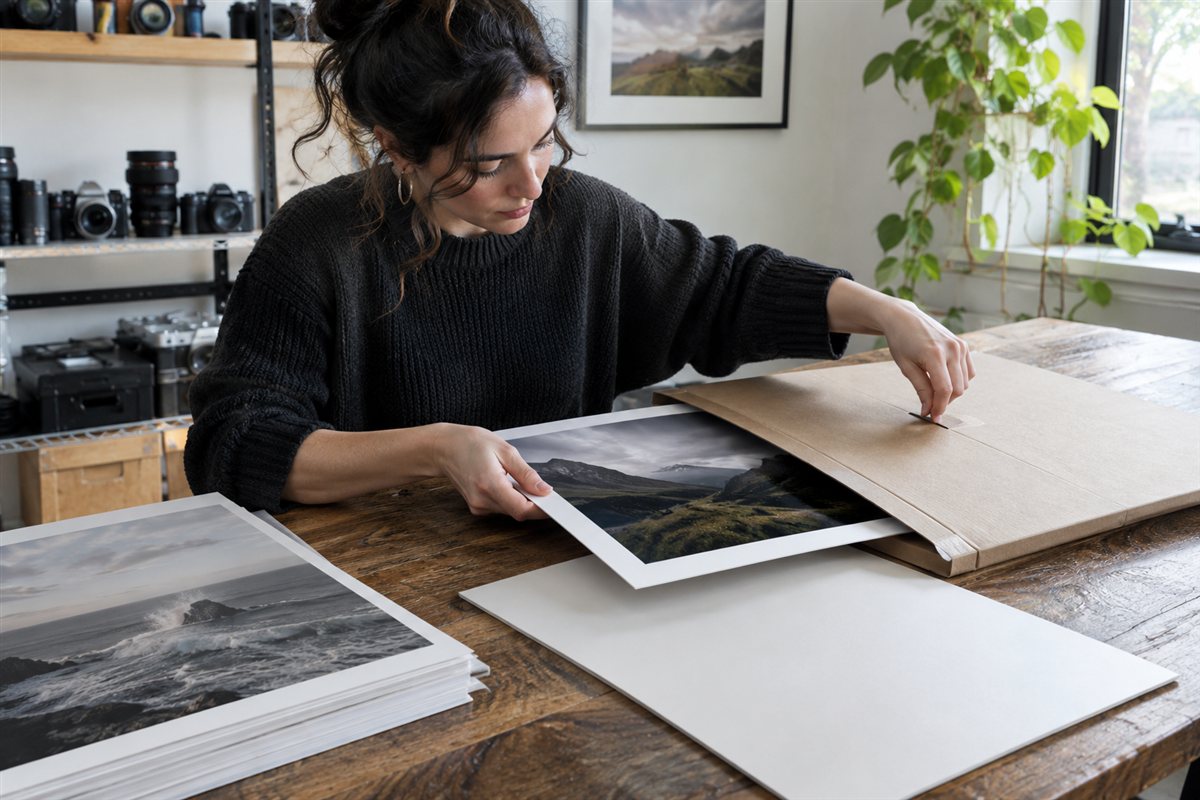
Damage in transit is the most common frustration. Use flat mailers with rigid backing or sturdy tubes, protect corners and keep prints in sleeves. Compare carriers for tracking, insurance options and delivery times, and decide whether to offer international shipping, which brings customs and tax questions. Add a thank-you note and care instructions to make the unboxing memorable.
Plan Your Costs Before Launch
- Production, packaging materials and shipping labels
- Platform and payment processing charges
- Returns, replacements and customer support time
- Local sales tax or similar obligations
- Your own time for editing, packing and marketing
Working through these in a spreadsheet helps you set sensible terms. A qualified accountant can advise on the tax side.
Customer Experience Matters
Clear communication builds trust. Send an order confirmation, share an expected delivery window and follow up once the parcel is on its way. Include a small card with care tips, such as keeping prints out of direct sunlight and handling them by the edges. Satisfied customers often return and recommend your work.
Choosing Paper, Sizes and Finishes to Offer
A focused product range is easier to produce, photograph and ship than a long menu of options. Start with a small set of paper types and sizes, and add more only when customers ask. Paper choice shapes the look of a print. Glossy and luster surfaces give strong color and contrast, and suit vivid images. Matte and fine art papers have a softer, textured look, and suit black and white work, portraits and quiet scenes. Metallic and specialty surfaces can look striking but are not for every image.
Sizes should match common frames, so buyers can find a frame without searching. Offer a few standard sizes in your market, and note the aspect ratio of each image, because cropping to fit a size can remove parts of your picture. Describe borders, margins and whether the print is signed. If you offer framing, mounting or mats, explain what is included and how the item is packed, since frames add weight and breakage risk.
- Offer two or three papers at most when you begin.
- Pick sizes that fit commonly sold frames.
- Show how an image crops at each size.
- Describe paper feel and finish honestly in the listing.
Ordering sample prints on each paper helps you judge them and write accurate descriptions.
Pricing Structure and Margin Thinking
Pricing is a business decision, not a guess. Start by listing every cost attached to a sale, as in the cost list above, and work out what it costs you to make and deliver one print. Then decide how much you want to earn for your time and creative work. Compare how other photographers price comparable work in your market, without copying them, and consider how your audience perceives value. Underpricing can attract buyers but leave no room for returns, while overpricing without a reputation can slow sales.
Think about structure too. Smaller prints can serve as an affordable entry point, while larger or limited prints carry higher margins. Shipping can be charged separately, built into the price or offered free over a certain order value; each approach affects how customers see the total. Decide how you will handle sales promotions, discounts for multiple prints and bundles, and be clear about what is included. Keep your pricing consistent so customers trust it.
- List all costs per print, including packaging and fees.
- Decide what you want to earn per sale.
- Check comparable offers in your market.
- Choose how shipping is presented.
- Review prices after a few months of real orders.
For tax and legal questions, speak with a qualified adviser, since rules differ widely.
Marketing and Finding Buyers
Good prints need an audience. Think about who would buy your work: people who love a place you photograph, enthusiasts of a subject such as wildlife or architecture, or those decorating a room. Tell a story with your images. A short note about where and why a photo was taken gives buyers a connection. Build a simple portfolio site or shop page with a clear gallery, a short bio, product details and an easy way to contact you.
Use channels that suit you. Social media can show your process and finished prints, but algorithms change, so also build an email list where people choose to hear from you. Local markets, craft fairs, cafes and small galleries offer face-to-face sales and let customers see paper quality. Collaborations with interior designers, local businesses or community groups can lead to larger orders. Respect each platform’s rules about promotion and advertising, and be truthful in your claims.
- Show prints in real rooms to help buyers visualize them.
- Share behind-the-scenes content about how you work.
- Collect email addresses with permission.
- Follow privacy rules when handling customer data.
Consistency matters more than volume, so choose a pace you can sustain.
Rights, Licensing and Protecting Your Work
Selling a print is different from selling the rights to an image, and your listings should say so. A typical print sale gives the buyer a physical copy for personal display, while you keep the copyright. If buyers might want to reproduce or publish an image, a separate license is needed, with its own terms. Put a short statement on your product pages and packaging explaining what the purchase includes.
Be careful about content. Photographs of identifiable people, private property, artworks or branded products can raise rights questions, depending on where you are and how the image is used. Model or property releases may be needed for commercial uses. Rules differ by country, so research local requirements or consult a qualified professional. Only sell images you have the right to sell.
Protecting your files also matters. Display web images at modest resolution, consider a discreet watermark where it suits your style, and keep high-resolution originals private. Register your work with the relevant authority if your country offers it and you want added protection. Keep records of when and where you published each image, along with sales and licenses, to help resolve disputes.
- State clearly that buyers receive a print, not copyright.
- Get releases where they are needed.
- Store originals safely and back them up.
- Keep order and license records.
Handling Orders, Returns and Customer Service
A reliable routine turns first-time buyers into repeat customers. Set up a process for each order: confirm payment, check the image file, print or send it to the lab, inspect the finished print, pack it and ship it with tracking. Inspect every print before it leaves, since a small defect, such as a scratch or color shift, is much easier to fix before delivery. Keep spare stock of packaging materials, so a busy week does not slow you down.
Write a clear returns and replacements policy before your first sale. Spell out how long customers have to report a problem, what evidence you need, such as photos of damage, and whether you will repair, replace or refund. Distinguish between damage in transit and a change of mind, because the costs and expectations differ. Check consumer protection rules in your region, which may set minimum requirements for refunds and information. Respond to messages promptly and politely, even when the news is bad.
- Confirm the order details and shipping address.
- Inspect the print and match it to the order.
- Pack securely and send with tracking.
- Share tracking information with the customer.
- Follow up after delivery and invite feedback.
Handling mistakes gracefully often earns more loyalty than perfect orders. Keep a log of issues you encounter, and use it to improve packaging, listings and processes over time.
Choosing What to Sell and Who It Is For
Before you open a shop, decide which pictures you will offer and who is likely to buy them. A collection of coastal landscapes appeals to people who love the sea, travelers who want a memory and home decorators who need calm wall art. Street photographs attract a different audience, and so do portraits of animals or abstract detail shots. Instead of listing everything you have ever shot, curate a small, coherent set of ten to twenty images that share a mood or a subject. A focused collection looks professional, helps visitors understand your style quickly and makes marketing easier because you can describe it in one sentence.
Talk to potential buyers if you can. Show a few prints to friends or visitors at a local market and listen to which ones people stop at and which ones they ask about. Their reactions are valuable early research and cost nothing.
Print on Demand Versus Printing Yourself
There are two broad ways to produce prints. With on-demand services, a lab prints and ships each order for you, so you carry no stock and need no printer. With home or local printing, you control quality and presentation but must handle inventory, packaging and shipping. Many sellers begin with on-demand to test the market and add their own prints later for premium editions. Order samples from any lab you consider, check color, paper feel and packaging, and compare them with your screen before you commit.
| Route | Advantages | Considerations |
|---|---|---|
| On demand lab | No stock, no packing | Less control over finishing |
| Local print shop | Quality control, quick turnaround | You handle shipping |
| Home printing | Total control of look | Equipment, ink and time |
Preparing Files for Reliable Printing
Print quality begins with the file. Export at the size and resolution the lab recommends, use the color space they request and avoid heavy sharpening that looks harsh on paper. Check edges for dust spots and halos. Soft proof if the lab provides a profile. For large prints, make sure you have enough pixels for the size, and keep the aspect ratio in mind so that standard frame sizes fit without awkward cropping. Keep a master version of every file and save an export copy for each size you sell.
Presenting Your Work in Listings
Online shoppers cannot touch the paper, so your listing must do the work. Use clear photographs of the print in a room setting, a close view of the paper texture and a size comparison with common objects. Write honest descriptions of paper type, finish, border, size and what is included. Tell the story behind the image in a few sentences, because buyers like to connect with a place or a moment. Include shipping information and delivery estimates so there are no surprises.
- Show the print in a lifestyle photograph.
- List dimensions in both inches and centimeters.
- Explain whether frames or mounts are included.
- Describe how the print is packed.
Working Out Your Costs and Margins
List every cost per print: production, packaging, shipping materials, platform fees, payment processing and your time. Then decide what you need to earn per sale. Many beginners forget to count packaging, and small amounts add up quickly across many orders. Use a simple spreadsheet and update it when your costs change. Offer a few sizes at clear steps so that customers can choose, and consider a higher margin for limited editions or signed prints.
Packaging That Protects and Delights
A print that arrives bent or scuffed leads to refunds and bad feedback. Place the print in a clear sleeve with a stiff backing board, then in a sturdy mailer or tube, depending on size. Mark the outside as fragile and do not fold. Add a small card with a thank-you note and care tips. Neat packaging also improves the unboxing experience, which often prompts customers to share photographs or recommend you to friends. Test your packaging by dropping a sample parcel from table height and checking the contents.
Shipping Choices and Customs
Compare carriers on speed, tracking and protection. Offer tracked shipping for more valuable items. For international orders, check customs rules, forms and any taxes for the destination, and state clearly who pays them. Weigh a packed sample to calculate shipping costs accurately and keep a table of rates for common sizes. Official guidance from postal services and tax authorities should be your reference, since rules change.
- Weigh and measure one packed print of each size.
- Check carrier rates and delivery times.
- Decide whether to include or add shipping to the item cost.
- Note customs requirements for countries you serve.
Finding Buyers Without Spending a Fortune
Begin with people who already follow your work. Share your collection on social media, send a note to your email list and tell friends. Attend local markets or art walks and hand out cards. Partner with cafes, offices or small businesses that like displaying local art. Write about the stories behind your pictures and share your process. Over time, steady visibility and satisfied customers will bring word-of-mouth sales.
Handling Questions, Returns and Feedback
Write a clear policy for damaged items, misprints and changes of mind, and display it. Respond politely and quickly to questions. If something goes wrong, replace or refund generously, because a satisfied customer is worth more than a single sale. Ask happy customers to share a photograph of the print on their wall. Treat feedback as information that helps you improve your product and your service.
Limited Editions, Signing and Certificates
Some photographers offer limited editions, where only a set number of prints of an image are made in a particular size. Scarcity can add value for collectors, but only if you keep your promise and never print beyond the stated number. Number each print, sign it on the border or back, and include a simple certificate with the title, date, edition size and your contact details. Keep a record of every sale so that you can answer questions years later. If you prefer open editions, say so clearly. Honest labeling protects your reputation and respects the people who buy your work.
Seasonal Planning for Print Sales
Sales often follow the calendar. Interest rises before major holidays, during wedding seasons and when people move house and decorate. Plan collections and promotions a few weeks ahead, and make sure you can ship before deadlines. Quiet months are good times to prepare new files, update listings and photograph your prints in rooms. Track which images sell at which times of year, and use those patterns to guide your next shoots.
| Time of year | Planning idea |
|---|---|
| Before holidays | Announce last order dates for shipping |
| Spring and summer | Feature outdoor and travel images |
| Quiet months | Update listings and create new collections |
Building Trust With Your Own Story
Buyers often choose a print because they feel connected to the person behind it. Share a short biography, a photograph of yourself at work and a few lines about where and why you took each picture. Post behind-the-scenes images and explain how you edit and print. Respond kindly to every comment. Transparency builds loyalty, and loyal customers return for more prints and spread the word to others.
Legal and Tax Basics to Check
Selling prints is a business activity in many places, so look up local rules about registration, sales tax or value added tax, and income reporting. Keep receipts, record income and expenses, and ask an accountant or consult official guidance if you are unsure. Make sure you have the right to sell every image, including releases for recognizable people and permission for private property where required. Clear paperwork saves trouble later.
- Keep a simple record of every sale and cost.
- Check local rules for taxes on sales.
- Store releases and permissions with the image files.
Growing Beyond Single Prints
Once your first sales are steady, consider related products such as sets of cards, small prints in matching frames or photo books. Offer bundles that make gifts easy. Be careful not to dilute your brand with too many unrelated items. Each new product should reflect the same style and quality as the prints that built your reputation.
Ready to Buy? Start Here
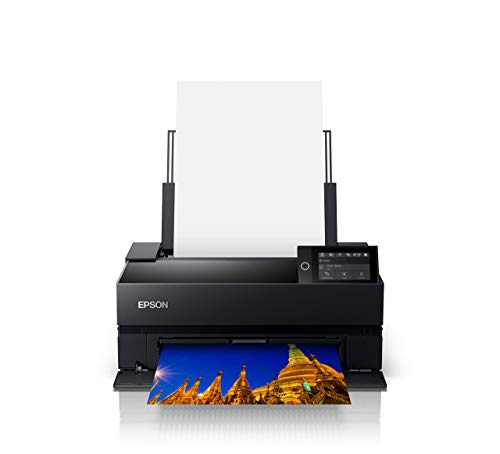
If this guide helped you decide what to look for, these products are a place to start.
As an Amazon Associate we earn from qualifying purchases. Prices and availability are shown on Amazon.
FAQ
Should I limit editions of my prints?
Some photographers do, others do not. If you promise limited editions, keep clear records and honour the promise.
What if a print arrives damaged?
Set a simple returns policy in advance, ask for photos of the damage and decide how you will replace or refund.
Which platform should I use to sell prints?
Options include your own website, marketplaces and print-on-demand services. Compare fees, control over branding and customer data, and the effort each one needs.
Do I need a business license to sell prints?
Requirements vary by country and region, and by how much you sell. Check local rules or ask a qualified adviser.
How do I make colors on prints match my screen?
Calibrate your monitor, use the printer's recommended color profile and soft proof where possible. Order a test print and compare it to your screen in good light.
What resolution do my files need for large prints?
It depends on the print size and the lab's guidelines. Check the printer's file requirements and avoid upscaling small images beyond what they can handle.
Should I sign my prints?
Many photographers do, which adds a personal touch. Decide on a consistent place and method, and tell customers how it is signed.
How do I price shipping fairly?
Work out typical packaging and carrier costs for each size, and decide whether to charge separately or include it in the price. Be transparent at checkout.
Is international shipping worth offering?
It can widen your market but adds customs, tax and delivery questions. Start with your home region and expand once your process is solid.
Test Prints and Proofing: The Step That Saves Your Reputation
Every print seller learns, usually the expensive way, that a file which looks perfect on screen can print dull, dark or oddly colored. A proofing routine prevents the lesson from repeating. Before any image joins your shop, order or make one test print at a modest size on the exact paper you will sell. View it in ordinary room light, not under your editing lamp, because customers will hang it in ordinary rooms. Check the shadows first: prints render darker than screens, and shadow detail that glows on a monitor can vanish into black on paper. Then check skin tones and any color the image is known for, since a print that shifts those will disappoint even a buyer who cannot name what is wrong.
Keep the approved test print. It becomes your reference for that image and paper, the standard later prints are compared against, and the evidence if a lab’s output drifts. When you change labs, papers or file preparation, proof again; the routine is per combination, not per career. Sellers who proof methodically almost never face the worst print-selling experience, which is a customer discovering a problem you could have caught for the cost of one small print.
Proofing also settles your size limits honestly. An image that sings at a small size may soften or show noise at your largest offering, and the test print at full size — ordered once, before the listing goes live — tells you the truth while it is still cheap. Listing only the sizes each image genuinely supports is a form of honesty customers reward with confidence and repeat orders.
Writing Listings That Answer the Buyer’s Real Questions
A print listing succeeds when it answers, before they are asked, the questions a buyer is silently holding. What exactly arrives — print only, mounted, framed? What paper, with what finish and feel? What size, measured how, and will it fit a standard frame the buyer already owns? How will it be packaged, how long will it take, and what happens if it arrives damaged? Listings that answer these plainly convert better than listings full of atmosphere, because buying a physical object from a stranger is an act of trust, and specifics are how trust is built at a distance.
Describe the image itself briefly and honestly: where it was made, what the buyer is looking at, and the mood it brings to a room. Suggest scale with a simple reference — above a sofa, beside a desk — rather than with exaggerated claims. If the print is part of an edition, say what that means in plain words: how many will exist, whether this one is signed, and what the buyer receives to prove it. Ambiguity about editions corrodes value; clarity protects it.
Photograph the product, not just the image. A picture of the actual print held in hands, resting against a wall, or shown in a frame corner teaches the buyer the paper’s texture and the print’s physical reality in a way a bare image file never can. Sellers consistently find these context photographs reduce questions, returns and hesitation, because the buyer is no longer imagining the object — they have seen it.
Fulfilment Day: A Routine for Packing and Posting
Treat fulfilment as a small production line with a fixed order of operations, and your error rate will fall while your speed rises. Print or retrieve the order, inspect the print under good light with clean, dry hands, checking corners and surface as you would want your own purchase checked. Sign or number it if that is your practice, add any certificate or note, then pack in the sequence your packaging was designed for: protective sleeve or tissue, stiffening, outer container, seal, label. Work through one order completely before starting the next; half-packed orders are where prints get swapped and addresses get crossed.
Keep a packing station stocked so no order waits on supplies: tubes or flat mailers in your sizes, backing boards, sleeves, tape, labels and a small stock of the note cards or certificates you include. Running out of a single component mid-week is the most common cause of late dispatch, and late dispatch is the most common cause of the anxious messages every seller dreads. A simple stock check when you pack the week’s last order keeps the station ready.
Record dispatch properly: the date, the service used, and the tracking reference stored against the order, not in a separate notebook you will lose. Send the buyer a brief dispatch note with the tracking and a realistic delivery window. That single message prevents most where-is-it enquiries and signals the professionalism that turns a first buyer into a collector of your work.
Handling Problems: Damage, Delays and Disappointed Buyers
Problems are not a sign of failure; how they are handled is the sign of the business. For damage in transit, ask for a photograph of the packaging and the print, apologize without arguing, and replace or refund promptly according to your stated policy. The photograph helps you improve packaging and supports any claim with the carrier, and the speed of your response is what the buyer will remember and repeat to others. Arguing about fault costs more in reputation than a replacement costs in materials, nearly every time.
Delays need communication before they need solutions. If a lab is slow, a paper is out of stock, or life intervenes, tell the buyer early, with a new honest estimate and the option to cancel. Buyers forgive delays they are told about and resent silences they have to break themselves. Build slack into your stated dispatch times so that most orders ship early; the pleasant surprise is marketing you do not have to pay for.
Occasionally a buyer simply does not like the print in person. Your policy, stated in the listing, governs the return, and following it graciously protects you twice: the buyer leaves without a grievance, and your policy’s clarity deters the casual return more effectively than strictness does. Note what the buyer says, though; if several buyers mention the same thing — darker than expected, smaller than imagined — that is product feedback worth acting on in your proofing or your listing descriptions.
Growing From First Sales to a Sustainable Print Practice
Sustainable print selling is a rhythm, not a launch. Keep a small, coherent catalogue rather than listing everything you have ever shot; buyers navigate a curated set with confidence and return to see what is new. Add work in small releases, retire pieces that no longer represent you, and let your best sellers fund the experiments. Track, even in a simple spreadsheet, which images sell, at what sizes, through which channels, because after a year those patterns tell you what your audience actually values, which is frequently a surprise to the photographer.
Care for past buyers as deliberately as you chase new ones. A short note when a related new piece is released, honest framing advice when asked, and consistent quality across years turn single purchases into collections. Many print sellers find that a modest list of repeat buyers becomes the stable core of the business, smoothing the feast-and-famine of relying on new traffic alone.
Finally, keep the business legal and calm as it grows: registrations, tax records and rights paperwork reviewed once a year, insurance considered when the value of stock and equipment justifies it, and your terms revisited whenever your offer changes. The creative work gets the attention, but it is this quiet structure that lets a print practice survive its own success.
How many prints should I list when I start?
A small, strong set is better than a large, uneven one. Enough to show range — often somewhere between a handful and a couple of dozen images — lets buyers understand your style without facing a catalogue they cannot take in. Add gradually as new work earns its place, and retire pieces that dilute the set. A tight catalogue also keeps your proofing and stock commitments manageable while the business is young.
Should I sign prints, and where?
Signing is a personal and market choice. Where sellers sign, common practice is the lower margin or border, in pencil on matte papers where ink can look harsh, or on the reverse for borderless prints. Consistency matters more than placement: sign the same way, in the same place, across an edition, and note the practice in your listing so buyers know what to expect. If you sell through print-on-demand services, check whether a signature option exists before promising one.
What is the best way to price shipping?
Price it honestly and simply. Work out your real cost — packaging, postage at your typical sizes, and a margin for the occasional replacement — then choose between charging it visibly, building it into the print price, or a threshold above which shipping is included. Complicated shipping tables discourage buyers; a clear, predictable charge stated in the listing converts better and produces fewer disputes than a surprise at checkout.
How do I protect prints stored before they sell?
Store prints flat or rolled as appropriate for the paper, sleeved, in a cool, dry, dark place away from household chemicals and damp. Keep handling to a minimum and always with clean, dry hands or gloves for delicate surfaces. Inventory stored carelessly degrades silently, and the time to discover a damaged corner is when you stock-check, not when a buyer is waiting for dispatch.
Building an Audience Before You Need One: Content That Sells Prints Softly
Print sellers who thrive rarely rely on a shop sitting quietly waiting for traffic; they build an audience that already trusts their eye before a print is ever offered. The building material is generous, useful sharing: the story behind a photograph and where it was made, a short explanation of a technique your followers can try, the before-and-after of an edit, the honest account of a shoot that failed. Each piece teaches your audience to see what you see, and a person who has learned to see a photograph through your explanations is a person who understands why the print on their wall would be worth owning.
Consistency matters more than volume. A modest rhythm you can sustain for years — a few considered posts a week, a monthly letter to subscribers — outperforms a burst of daily content followed by silence, because audiences form habits around reliable voices and forget intermittent ones. Choose the platforms your buyers actually inhabit rather than every platform available, and let each piece of content point gently toward the work for sale without turning into an advertisement; the ratio that sustains trust is heavily weighted toward giving, with selling woven in as a natural consequence.
Measure what resonates and let it steer your catalogue. The images your audience saves, shares and asks about are market research you did not have to buy, and they frequently identify your future best sellers more accurately than your own favorites do. This is not a command to make only what trends — audiences also reward the distinctive work only you would make — but a seller who ignores the signal entirely is choosing pride over information.
Editions, Open Prints and the Middle Paths
The choice between limited editions and open prints shapes your pricing, your marketing and your workload, so it deserves more than imitation of other sellers. Limited editions create scarcity and support higher prices, at the cost of administration — numbering, records, the discipline of never exceeding the declared edition — and the strategic question of what to do when an edition sells out and demand remains. Open editions sell without ceiling and with minimal administration, typically at gentler prices, and suit work whose audience is broad and whose appeal is decorative as much as collectible.
Middle paths exist and many sellers build sensible businesses on them: editions limited by time rather than number, where a print is available for a season and then retired; editions limited by size, where small sizes are open and the largest is limited; and signed open editions, where the signature provides the personal element without a numerical cap. Each structure makes a promise to buyers, and the only unforgivable sin in any of them is breaking the promise — reissuing a closed edition destroys the trust every other edition you sell depends on.
Whichever you choose, record it properly from the first sale: the image, the edition terms, each print’s number or sale date, and the buyer’s details. These records are simultaneously your edition discipline, your customer list and your proof of provenance when a buyer resells or insures the work. A spreadsheet kept faithfully from day one is worth more than any platform’s dashboard, because it survives platform changes and belongs to you.
Wholesale, Galleries and Other People’s Walls
At some point a growing print practice meets the question of other people’s channels: galleries, interior designers, cafes and shops, corporate buyers. Each channel trades margin for reach and labor. A gallery that takes a share of the price also lends credibility, handles buyers you would never meet, and expects exclusivity or first refusal in return — terms to read as carefully as any contract in this guide. Interior designers buy for projects rather than for love, value reliability and trade terms, and can become repeat buyers of exactly the dependable work that retail buyers overlook.
Start these relationships as you would want them started with you: a small, professional approach with a concise portfolio, clear wholesale terms, and samples or a test order that proves your quality and packing. Deliver the first order flawlessly and early; in trade relationships, reliability is the product, and the photographs are its packaging. Keep your direct prices and your trade prices in a coherent relationship, so no channel’s buyer feels punished for choosing it, and never let a trade partner discover your terms by accident.
Not every channel suits every photographer, and the discipline is the same as everywhere in this business: know your costs, know what the channel actually delivers, review after a season, and keep the channels that earn their margin. A single good gallery or designer relationship, tended for years, can quietly become a third of a sustainable print income.
Your Shop as a Portfolio: Presentation Standards That Compound
Step back and look at your shop, your listings and your packaging as one object: your presentation. Buyers experience them as a single impression of professionalism, and the impression compounds — immaculate listings forgive a plain website, beautiful packaging redeems a courier’s delay in the buyer’s memory, a thoughtful thank-you note converts a transaction into a relationship. The sellers who endure invest in presentation with the same seriousness as in the photographs, because they understand that the buyer is purchasing the whole experience of acquiring the work, not only the ink on the paper.
Audit the presentation twice a year from a stranger’s position. Find your shop as a searcher would, read your best listing as a skeptic would, and unbox your own product as a buyer would — order one, to a friend’s address if necessary, and watch it arrive. Note every friction, every ambiguity, every moment the experience falls below the quality of the photographs, and fix the worst item before the next audit. Presentation improves by this ratchet, not by redesigns, and after a few cycles the gap between your work’s quality and your shop’s quality — the gap where sales leak away — closes to nothing.
Should I offer framing, or sell prints unframed?
Unframed prints are simpler to ship, cheaper to buy and let the buyer match their own decor and framer, which is why most online sellers start there. Framed offerings raise the average order and serve buyers who want a finished object, at the cost of harder shipping, higher damage risk and more complex pricing. A common path is to sell unframed by default and offer framing as a clearly priced option for buyers in your reliable shipping area, once your packing and courier arrangements have proven themselves on the simpler product.
How do I handle a request for a custom size or a commission?
Welcome it within limits you set in advance. Custom sizes are usually straightforward if the file supports them — check the quality at the requested size honestly before agreeing, price the extra handling and any special packing into the quote, and confirm the details in writing before printing. Commissions, where you create work to a brief, deserve a deposit and a clear agreement about what happens if the result disappoints, agreed while everyone is still friendly. Both are signs of a maturing practice when handled with the same clarity as your standard listings.
What should I do when sales are slow?
Diagnose before discounting. Slow sales usually trace to traffic, to conversion, or to the catalogue itself, and each has a different remedy: more or better audience-building for traffic, clearer listings and product photographs for conversion, a tighter or fresher catalogue for appeal. Discounting treats none of these and trains buyers to wait for sales. Use the quiet period to proof new work, improve presentation and build the audience, so the practice emerges from the slow season stronger rather than merely cheaper.
Seasonal Rhythms and Planning Your Print Year
Print selling has a pulse, and a seller who learns it plans production, marketing and rest around it rather than being surprised by it four times a year. Demand for wall art tends to rise when people move house, redecorate and buy gifts, and to soften in the year’s quieter stretches; your own sales records, kept as this guide recommends, will draw your market’s particular curve within a couple of years. The strategic responses are simple: prepare giftable work, clear descriptions and reliable dispatch before the generous seasons, and use the quiet ones for the work that selling seasons leave no time for — proofing new images, rebuilding listings, photographing products, and making the personal work that next year’s catalogue will sell.
New releases land better on a rhythm than at random. A small collection released with a story — a season’s work, a place, a theme — gives your audience an event to attend to and your shop a reason to be revisited, and it concentrates your marketing effort into a few strong moments rather than a constant whisper. Announce releases to your list first; the small privilege costs nothing and teaches your best buyers to stay subscribed.
Plan your own stamina into the year as deliberately as the stock. The generous seasons will ask for evenings of packing and prompt communication precisely when the rest of life also accelerates. A seller who has proofed, photographed and written everything in the quiet months meets the rush with a production line instead of a panic — and the calm shows in the parcels, which is where buyers decide whether to return.
The Short Version
Choose a fulfilment method, prepare files carefully, pack well and plan your costs. Check local rules and consult a qualified adviser for business and tax questions.
