A telephoto zoom brings distant subjects closer while letting you adjust framing without moving. To choose one, decide how much reach you truly need, then weigh aperture, stabilization and weight. The right lens is the one you will actually carry to where the action is. The sections below cover reach, aperture, a worked shooting sequence, and the habits that make long lenses sharper.
How Much Reach Do You Need
Reach is set by focal length. Shorter telephoto zooms suit portraits, weddings and travel. Longer ones suit sports, wildlife and aircraft. Think about the farthest subject you shoot regularly and how large you want it in the frame.
Keep in mind that a smaller sensor effectively narrows the view, so the same lens looks longer on it than on a full frame body. Check the crop factor in your camera’s guide, and multiply the focal length by it to see the equivalent view.
In this guide
Aperture Versus Weight
A constant wide aperture across the zoom range helps in dim light and gives better background blur, but it makes the lens large and heavy. A variable aperture lens is lighter and more compact, though it lets in less light at the long end.
- Constant aperture: steady exposure while zooming, bigger and heavier.
- Variable aperture: easier to carry, slower at full zoom.
Stabilization and Technique
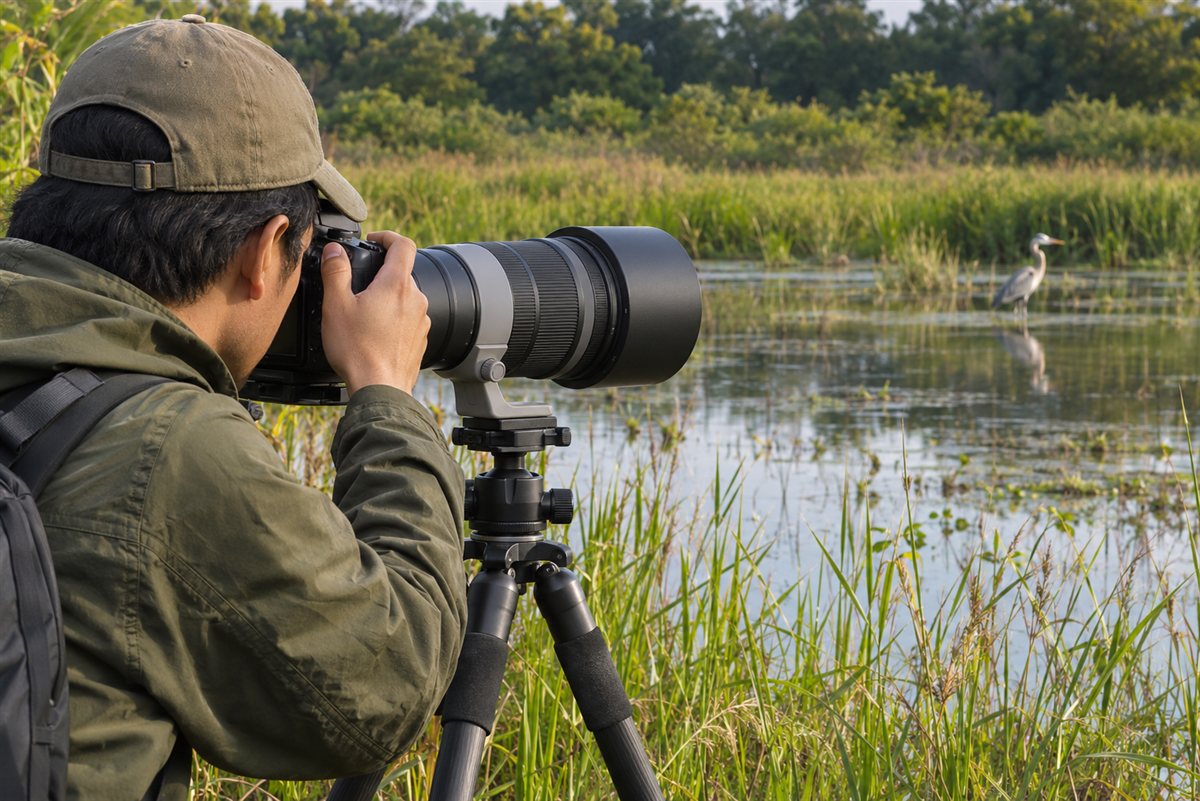
Long lenses magnify every small shake. Optical stabilization, in the lens or in the camera body, helps you use slower shutter speeds. It does not freeze a moving subject, so you still need a fast shutter speed for action. For steadier results, brace your elbows, use a monopod, or rest the lens on a solid surface.
A common rule of thumb is to keep the shutter speed at least as fast as one over the focal length for handheld shots, so a 200mm lens would want about one two-hundredth of a second. Stabilization may allow a few steps slower, but treat that as a bonus, not a promise.
Step by Step Choosing
- List your usual subjects and distances.
- Choose a focal range that covers them with a little to spare.
- Decide whether low light matters enough to justify a heavy lens.
- Check the weight on the maker’s page and compare it with your bag.
- Confirm the mount and whether your body offers built in stabilization.
Decision Table
| Factor | Why it matters | What to check |
|---|---|---|
| Focal range | Sets framing and reach | Short and long ends |
| Aperture | Light and background blur | Constant or variable |
| Weight | Comfort over a long day | Maker’s listed weight |
| Stabilization | Sharper handheld shots | Lens, body, or both |
| Focus speed | Tracking moving subjects | Motor type and focus limiter |
A Worked Walkthrough: A Sharp Handheld Telephoto Shot
These steps help you get a crisp frame of a distant subject without a tripod. Settings are general ranges, so adapt them to the light.
- Zoom to the framing you want, then set the shutter speed at or above one over the focal length. For moving subjects, go faster still.
- Set the aperture a stop or so from wide open if the light allows, since lenses are often sharper slightly stopped down.
- Let auto ISO make up the difference, with a ceiling you are comfortable with, and switch stabilization on.
- Stand with your feet apart, tuck your elbows into your body, and support the lens from underneath with your left hand.
- Half-press the shutter button, let focus settle, then breathe out gently and squeeze the button smoothly.
- Check the first frame by zooming in on the screen, and raise the shutter speed if you see blur from shake.
- Take a few frames in a row, since the sharpest one is often not the first.
Common Scenarios
Travel and street details
A short telephoto zoom lets you isolate architecture and faces from a distance. A lighter variable aperture model is usually enough in daylight, and it is easier to keep in a bag.
Wildlife and birds
Reach is the main need, and a long end of several hundred millimetres is common. Keep a respectful distance from animals, stay on marked paths, and never disturb nests or young.
Portraits and events
A constant wide aperture gives pleasing background blur and works in dim halls. The extra weight is a trade-off, so consider a monopod for long events.
Sports and action
Fast focus and a wide aperture matter, and a focus limiter helps tracking. Check venue rules on lens length and position before you go.
Focus behaviour deserves attention as well. Many telephoto zooms have a focus limiter switch that restricts the search range, which speeds up autofocus when you know your subject is far away. Some also have a mode for panning and a switch for the stabilizer, so learn what each does before you head out. A zoom lock stops the barrel from creeping out under its own weight when you carry the lens pointing down, which is useful on a strap. Finally, think about the minimum focus distance: a lens that focuses closer can double as a tool for details and flowers, which makes it more versatile on a trip.
Think about how the lens balances on your camera, too. A heavy lens on a small body pulls the camera forward in your hand, so hold the lens, not the body, and consider a grip or strap that keeps the weight comfortable during a long session.
Mistakes to Avoid
- Buying maximum reach for occasional use. A very long lens is heavy and may stay at home, so choose the range you will carry.
- Ignoring the aperture at the long end. A variable lens can become dim when zoomed, which forces higher ISO.
- Relying only on stabilization. It does not stop subject movement, so keep shutter speeds high for action.
- Holding the lens by the camera body only. Support the barrel, since the front is where the weight sits.
- Forgetting the tripod collar. Mounting by the camera base strains the mount with heavy lenses.
Care and Upkeep Over Time
Long lenses extend and retract as you zoom, which can draw dust into the barrel. Keep caps on in transit, avoid changing lenses in windy places, and wipe the outside with a dry cloth. Use a hood to protect the front glass and reduce flare. If the zoom ring feels gritty or the lens creeps when pointed down, have it checked. Store the lens upright or flat in a padded section, away from damp and heat.
Begin With Your Subjects, Not the Spec Sheet
Telephoto zoom lenses cover a wide family, from compact lenses that reach moderate distances to long, heavy lenses built for wildlife and sport. The right choice depends on the subjects you photograph and how far away they are. Before reading specifications, list what you want to capture over the next year: children at a school match, birds in a garden, performers on a stage, distant landscape details, candid street scenes. Beside each, write the typical distance and whether the subject moves quickly. This simple list shapes everything that follows.
A lens that is perfect for a sports field may be wrong for a travel bag. A lens that suits garden birds may be too short for a safari. Be honest about what you will carry and how often. A lens that stays at home takes no pictures, however impressive its figures.
Questions to Answer First
- How far away are my usual subjects?
- Do they move fast?
- Will I carry the lens all day?
- Do I shoot indoors or in dim light?
Understanding Variable and Constant Apertures
Zooms often list two aperture values, such as a wider one at the short end and a narrower one at the long end. This is a variable aperture, and it means the lens lets in less light as you zoom. A constant aperture lens keeps the same maximum opening across the range, which gives steady exposure and better low light performance, but these lenses are generally bigger, heavier and more expensive. For bright outdoor use, a variable aperture is often fine. For indoor sports, theatres and dusk wildlife, a constant wide aperture is more useful because you can keep faster shutter speeds without pushing sensitivity too high.
Decide where you need light. If you shoot in good daylight, you can accept a lighter, more compact lens with a variable aperture. If you work in dim places, budget for a wider aperture and the weight that comes with it.
| Aperture type | Pros | Cons |
|---|---|---|
| Variable | Lighter and more compact | Less light at the long end |
| Constant wide | Steady exposure, better in dim light | Heavy and larger |
Image Stabilisation and the Limits of Hand Holding
Stabilisation systems counter small movements of your hands, letting you use slower shutter speeds. They help with telephoto lenses because shake is magnified at long focal lengths. Makers quote the number of stops of benefit, but these figures come from controlled tests and real results vary with your technique. Stabilisation does not freeze subject movement. A bird in flight or a running child still needs a fast shutter speed. It also works best when you hold the camera properly, with elbows in and a steady stance.
Some lenses offer different stabilisation modes for panning or tripods. Read the manual to learn which mode suits which situation. When using a tripod, check whether stabilisation should be switched off or set to a particular mode. A monopod gives extra steadiness for heavy lenses without the bulk of a tripod.
- Hold the camera with both hands and tuck your elbows.
- Keep the shutter speed fast enough for the subject.
- Use stabilisation as a bonus, not a replacement for technique.
- Use a monopod for heavy lenses.
Autofocus Performance and Handling
For moving subjects, autofocus speed and accuracy matter. Look at the type of focus motor, the minimum focus distance and any switches for focus limiting. A focus limiter restricts the range the lens searches, which speeds up focusing when you know your subject is far away. A custom button on the barrel can be assigned to functions such as holding focus. Zoom ring tension and the way the lens extends also affect handling. Some zooms extend as you zoom, changing balance, and some have an internal zoom mechanism that keeps the length constant.
If possible, handle the lens before buying. Mount it on your camera and see how it feels. Check the weight with the camera attached, the position of the controls and the smoothness of the rings. A comfortable lens encourages you to shoot more.
Optical Quality at the Long End
Telephoto zooms often perform best in the middle of their range and show softness at the long end, especially at wide apertures. Check tests and samples at the focal lengths you use most, not only at the middle. Contrast and sharpness at the long end can improve when you stop down a little. Look for notes about colour fringing, which appears as coloured edges around high contrast subjects, and about flare resistance when shooting toward bright light. Do not overlook minimum focus distance and magnification, which affect close work.
Atmospheric haze can reduce sharpness more than the lens does. At long distances, heat shimmer and moisture blur fine detail. Shoot in clear, cool conditions when possible and keep expectations realistic.
Budgeting for the Whole System
A telephoto zoom is not just the lens. Plan for supporting items: a monopod or tripod, a sturdy strap or harness, a lens hood, a protective bag and extra memory cards, since long lenses encourage burst shooting. Heavy lenses need a camera body that can handle them comfortably; small bodies may feel unbalanced. Consider whether you will want a teleconverter later and check compatibility. Include insurance or care plans if you are investing heavily. Used lenses can offer value, but inspect them carefully and buy from sellers with clear return policies.
Set your total budget first, then allocate. If the lens takes the whole budget, leaving nothing for a support, you may struggle to use it well. A slightly less expensive lens plus a good monopod can produce sharper results than an expensive lens used hand held in poor conditions.
Cost Checklist
- Lens body and hood.
- Support: monopod or tripod and head.
- Bag or case with enough padding.
- Spare batteries and fast memory cards.
- Optional teleconverter or filters.
Weight, Carrying and Real Life Use
Weight is the factor most owners underestimate. A lens that feels fine in a shop becomes tiring after an hour. Think about how you will carry it: on a shoulder strap, a harness, in a backpack or on a monopod. Practise with a similar weight, such as a bag of rice or a water bottle, to judge how long you can hold it comfortably. If you travel by air, check cabin bag limits and the size of the lens in its case.
Lenses with a fixed length when zooming are easier to carry in tight bags than those that extend. A lens with a tripod collar can be balanced more easily on a support. Consider the lens in the bag with your camera attached, since many people store them separately.
- Estimate the total weight of body, lens and support.
- Try carrying that weight on a walk.
- Check bag dimensions and airline rules.
- Choose a strap or harness that spreads load.
Decision Table by Shooting Style
| Shooting style | What to prioritise | Lens tendency |
|---|---|---|
| Travel and street details | Light weight, moderate reach | Compact zoom, variable aperture |
| Wildlife and birds | Reach and sharp long end | Longer zoom, solid support |
| Events and indoor sport | Wide aperture, fast focus | Constant aperture zoom |
| Portraits at distance | Pleasing blur, moderate reach | Mid telephoto zoom |
| Outdoor sport in daylight | Fast focus, reach | Long zoom with good tracking |
Testing a Lens Before You Commit
Whenever possible, test before buying. Borrow, rent or try the lens in a shop with your own camera. Photograph a detailed target at several focal lengths and apertures, check sharpness at the centre and edges, try autofocus on moving subjects, and note how the lens feels. Take some pictures indoors and outdoors. Zoom through the range with the camera at your eye and see whether the controls fall naturally under your fingers. If renting, shoot your usual subjects and compare the results with what your current lens gives.
Keep notes. A comparison written down shortly after testing is more reliable than memory. Return to your original list of subjects and ask how well the lens served each one. If it fits most of them, you have found a good match.
Common Mistakes
- Buying the longest reach by default. Longer is not always better.
- Ignoring weight. A heavy lens may stay at home.
- Forgetting support. A monopod can transform results.
- Believing stabilisation fixes everything. Fast subjects need fast shutter speeds.
- Skipping a trial. Rent or borrow first.
Choose with your subjects in mind, balance reach, aperture and weight and plan for the support you will need. A thoughtful choice leads to many seasons of sharp, satisfying pictures.
Habits That Get the Best From a Telephoto Zoom
Once you own the lens, a few habits unlock its potential. Use a lens hood to improve contrast and protect the front. Keep the front glass clean, because dust and smudges are magnified in the final picture. Set a shutter speed that suits the subject, and use burst mode for action. Choose a focus area that suits your subject, and consider back button focus to separate focusing from the shutter. Learn the minimum focus distance and the point at which the lens is sharpest. Keep the zoom ring in a position you know works, rather than extending to the extreme end for every shot.
Spend time with the lens in a familiar place, like a park, and photograph the same scene at different focal lengths and apertures. Compare the results to learn how the lens renders backgrounds and how compression changes the scene. Practise panning with moving subjects and note the shutter speeds that work. After a few weeks, you will have a feel for what the lens can do.
- Use the hood and keep glass clean.
- Choose shutter speeds for the subject, not for comfort.
- Experiment with focal lengths in a familiar setting.
When a Prime Telephoto or a Different Tool Makes More Sense
Zoom lenses are versatile, but they are not the only route to reach. A fixed focal length telephoto lens is often sharper and lighter for its aperture, and may suit photographers who know exactly what focal length they need. If you mostly shoot a particular subject, such as portraits at a fixed distance, a prime lens could serve you better. If you want extreme reach occasionally, a teleconverter or a rented super telephoto might be more sensible than buying a heavy lens that rarely leaves the shelf. Cropping a high resolution image is another way to gain apparent reach, at the expense of some detail.
Think about what problem you are solving. If it is a lack of reach on holiday, a compact zoom may be perfect. If it is the need for a wide aperture in dim halls, consider a prime or a constant aperture zoom. Tailor the tool to the task, and avoid buying more lens than you will use.

Ready to Buy? Start Here
If this guide helped you decide what to look for, these products are a place to start.

As an Amazon Associate we earn from qualifying purchases. Prices and availability are shown on Amazon.
Living with a Telephoto Zoom Day to Day
Choosing a telephoto zoom on paper is about focal lengths and apertures; living with one is about weight, balance and the pictures it quietly encourages you to take. A long zoom changes your posture as a photographer. You stand further back, compress scenes, pick details out of landscapes and wait for subjects to come to the light rather than chasing them. Photographers new to the range often discover that their favourite frames come not at maximum reach but in the middle of the zoom, where the lens is sharpest, the framing is considered, and the subject sits in its surroundings with just enough separation.
Carrying the lens shapes the day as much as using it. A heavy telephoto on a camera strap pulls at the neck within the hour; a strap attached to the lens’s own tripod foot, or a harness, spreads the load and keeps the mount from carrying the whole weight. In a bag, the telephoto claims the central space and decides what else travels. These are not complaints but facts to plan around, and they explain why two photographers can read the same specifications and reach opposite conclusions: one shoots from a car or a hide, the other walks hills all day.
Stabilisation, shutter speed and honest expectations
Image stabilisation helps telephoto work enormously, and it also tempts people into believing it freezes the subject. It does not. It steadies your movement, not the animal’s, the athlete’s or the bird’s. At long focal lengths the working rule remains that shutter speed must suit the subject’s motion first and your handshake second, with stabilisation bridging the gap between the two. Practise your long-lens technique as a skill in itself: brace against a tree, a car door or a beanbag on a fence, breathe out slowly, and roll the shutter rather than jabbing it. A monopod transforms long sessions with heavy glass, taking the weight while leaving you free to pan.
Also learn your lens’s honest behaviour at each end. Many zooms are at their best stopped down slightly at maximum reach, and some focus more slowly at the long end in poor light. None of this appears in a headline specification, but all of it appears in your photographs. An afternoon of methodical test shots, a fence post at measured distances, a printed chart, your usual subjects, tells you where your copy is happiest and lets you shoot to its strengths instead of discovering its limits during the one moment that mattered.
Telephoto Zooms for Particular Subjects
Wildlife makes the hardest demands: reach, speed of focus and performance in the dim light of dawn and dusk, when animals are active. Here the long end of the zoom is the whole point, and a lens that is merely adequate at full reach will frustrate. Sports splits two ways. Field sports in daylight forgive a slower aperture and reward zoom flexibility as the action moves toward and away from you; indoor and evening sports demand fast apertures and focusing that keeps up, which pushes many shooters toward shorter, faster glass or primes for part of the work.
Landscape photographers use telephotos differently, as tools for compression and selection: layering ridges, isolating a tree in mist, picking the lit portion of a valley. For them, reach matters less than even sharpness across the frame and behaviour on a tripod, and a lighter zoom that they will carry up the hill beats a heavier one left at home. Travel photographers value the lens that covers portraits at its short end and details at its long end without a lens change in a dusty street. Portrait shooters borrow the short end of the telephoto range for its flattering perspective and subject separation, often preferring it to a dedicated portrait lens when space is tight and backgrounds are busy.
Extenders, cropping and other ways to reach further
When the subject is still too small, you have three honest options. A teleconverter adds real reach at the cost of light and some sharpness, and works best on faster lenses in good light. Cropping in post costs nothing and loses nothing but resolution, which modern sensors often have to spare. Moving closer costs patience and fieldcraft and remains the option that improves photographs most. Knowing which to choose is part of telephoto craft: converters for the bright day at the airshow, cropping for the one-off record shot, and fieldcraft, better position, better waiting, for the wildlife work you care about most.
Care and Handling of Long Glass
Telephoto zooms concentrate value and vulnerability. Their large front elements attract knocks and fingerprints, their extending barrels invite dust, and their weight makes every drop a serious one. Keep the hood on, since it is the cheapest impact protection a lens can wear, and clean the front element with a blower first so grit is lifted rather than ground in. Extending zooms left pointing upward in dusty places slowly collect debris inside the barrel; store them retracted and capped. Support a heavy lens by its own foot on tripods and monopods so the camera mount is not the structure holding everything together, and check that foot’s screws and the mount’s tightness a few times a year, because long glass works its fittings loose in a way short lenses never do.
How Telephoto Zooms Behave in Difficult Light
Long lenses magnify everything, including the atmosphere. On bright, hazy days the air itself becomes the limiting factor: contrast drops, distant subjects swim in heat shimmer, and no lens at any price cuts through it. Experienced telephoto users plan around the air, shooting early when the ground is cool, choosing shorter distances, and positioning so the line of sight crosses as little hot ground, water vapour or exhaust as possible. When a photograph of a distant subject looks soft on a shimmering day, the honest conclusion is usually that the day failed, not the lens, and the test is to photograph something near and detailed with the same settings and watch the sharpness return.
Low light tests a different chain. At long focal lengths the viewfinder darkens with slower apertures, autofocus slows and hunts, and the depth of field shrinks until focus placement becomes critical. An eye out of focus by a centimetre is a failed portrait of a bird or an athlete alike. Use the focusing aids your camera offers, single-point or small-area focus placed deliberately, focus limiters that stop the lens hunting through its whole range, and back-button focus if it suits you, so the lens is never refocusing when the moment comes. These settings live in menus and custom functions, and an hour spent setting them up for your subjects pays out on every shoot afterwards.
Colour, contrast and flare at long range
Telephoto zooms often shoot toward the light: across water at sunset, into a stadium’s floodlights, along a backlit touchline. Flare and veiling glare rob contrast in exactly these frames, and the hood is your first defence, followed by small changes of position that move the brightest source just outside the frame or behind an obstruction. A clean front element matters more than photographers expect; a faint film of dust or a fingerprint blooms in backlight and can masquerade as a lens fault. Filters deserve scepticism on long glass: a poor protective filter costs contrast you will notice at full magnification, and many telephoto users shoot without one, trusting the deep hood and a cap.
Choosing Between One Long Zoom and a System
There is a real decision between one versatile telephoto zoom and a small system of lenses that together cover the same range. The single zoom is simpler to carry, quicker to work with, and never leaves you with the wrong lens mounted as the subject moves. A system, a shorter zoom plus a longer prime, for example, can be faster, sharper at its extremes and kinder in low light, at the price of changes, weight distributed across more items, and moments lost mid-swap. Neither answer is universally right. The photographer who walks all day with one bag usually chooses the zoom; the photographer who works from a base, a hide, a car, a sideline position, can feed a system and enjoy its advantages.
Budget shapes the same decision. One good zoom concentrates your money into a single instrument that serves every subject in its range. Splitting the same money across two lesser lenses serves each subject slightly worse. Many photographers therefore buy the best single telephoto they can, learn it thoroughly, and only add specialised glass when a particular subject, birds in flight, indoor sport, begins to dominate their work and justify it. That order, general excellence first, specialisation later, produces kits that get used rather than admired.
Testing a telephoto zoom before you commit
If you can, test with your own subjects rather than charts alone. Photograph the things you actually shoot, at the distances you actually shoot them, and examine the corners and the focus consistency across the zoom range. Check that the zoom ring turns smoothly without creeping when the lens points down, that the focus holds as you zoom if you rely on that behaviour, and that the lens and your camera agree about focus at the long end, where errors hide least. A lens that passes your own test, on your own camera, is a safer purchase than one with a finer reputation tested on someone else’s.
Fieldcraft: the Telephoto Skill Nobody Can Sell You
Ask wildlife and sports photographers what improved their telephoto work most and few name a lens. They name patience, position and knowledge of the subject. A telephoto zoom rewards the photographer who arrives early, chooses a background before the subject arrives, and lets distance close itself. Chasing subjects with long glass produces the classic failures: alarmed animals at maximum reach, athletes small in cluttered frames, everything shot from standing eye level because there was no time to kneel. The lens’s job is to be ready, sharp and understood; the photograph is made by where you stand and how long you are willing to wait there.
Backgrounds deserve special mention because telephoto compression stacks them into the frame. A distant hedge, a stand of spectators, a line of bright signage all arrive in the photograph with a prominence that surprises beginners, because the narrow field of view excludes the surroundings that would explain them. The craft is to move a few steps sideways, or a metre up or down, until the subject sits against the cleanest backdrop the location offers, and to check the corners of the frame, where compression hides its clutter. This is slow work, and it is the difference between record shots and photographs.
Working from cars, hides and public places
Each working position has its own telephoto etiquette and technique. A car makes a fine mobile hide where wildlife is used to vehicles; a beanbag on the window frame steadies the lens, the engine goes off to kill vibration, and the photographer who stays inside disturbs nothing. Purpose-built hides reward silence and pre-set focus points on perches or runs. In public places, long lenses attract attention, and a calm, open manner, photographing obviously and answering questions pleasantly, prevents most misunderstandings. Know the rules of the venue or the land you are on, because a telephoto pointed across private spaces is judged differently from one pointed at the match, and the photographer is responsible for that difference.
Renting, Borrowing and the Second-Hand Market
Telephoto zooms are expensive enough that renting before buying is rational rather than cautious. A weekend with a candidate lens on your own subjects tells you about weight, focus speed and reach in a way no review can, and rental houses exist in most cities and by post. Second-hand, these lenses are usually sound buys because their owners tend to be careful, but test methodically: zoom and focus through their full travel listening for grit, examine the front and rear glass under a bright light, check the mount for looseness, and shoot a detailed subject at every focal length to catch a decentered element, which shows as one soft corner that never sharpens. Buy from sellers who accept returns, and factor a professional service into the price of any lens with an unknown history; long glass that has been cleaned and calibrated comes back feeling new.
The Long Game: Growing Into a Telephoto Zoom
A telephoto zoom is a lens photographers grow into over seasons rather than weekends. In the first months the temptation is maximum reach for everything, and the photographs show it: subjects isolated in empty frames, backgrounds boiled into colour, no sense of place. With time the zoom ring starts to move the other way. You include the marsh around the heron, the crowd around the player, the valley around the ridge, and the lens becomes a tool for choosing relationships rather than merely closing distance. Reviewing your own work across a year with the same lens is a genuine education, because the lens is constant and every change in the pictures is yours.
Set yourself small projects to force that growth. A month of photographing one local species or one team’s home matches. A series of compressed landscapes from one viewpoint across different weather. Portraits at the short end only, until you know exactly what the lens does to a face at each distance. Projects give the lens a curriculum, and they produce bodies of work instead of scattered tests. They also reveal, honestly, whether your subjects are outgrowing the lens or whether the limiting factor was never the equipment at all.
Keeping long glass working for years
A telephoto zoom that is used hard and maintained lightly will serve for a decade. The maintenance is mostly attention: caps on, hood on, a blower’s puff before any cloth touches glass, a dry home after wet work, and a professional check when focus or zoom action starts to feel different rather than when it fails. Store the lens standing on its mount or lying in its case, not balanced on its hood. Treat the zoom ring’s smoothness as a health indicator; grit in the mechanism announces itself there first, and early cleaning is cheap compared with a worn barrel. Looked after this way, the lens you choose today is likely to outlast the camera bodies it will serve on, which reframes the purchase entirely: buy the lens your future subjects deserve.
A Note on Ethics at Long Range
Reach brings responsibility. A telephoto lens lets you photograph wildlife without approaching it, and the rule is that the animal’s behaviour should not change because you are there: no flushing birds for flight shots, no pressing a nesting animal for a closer frame, no baiting where it harms or habituates. The best long-lens wildlife photographs come from animals that never knew, or never minded, and the photographers who make them guard locations of sensitive species rather than broadcasting them. With people, the same lens that captures a candid street moment can intrude; photograph in public with the openness you would accept from another photographer, and let dignity set the limit that the law may not.
These habits cost nothing and protect everything: the subjects, the places, and the welcome photographers receive when they return. A lens this powerful should make its owner more careful, not less, and the photographers whose work endures are usually the ones who understood that from the beginning.
It is worth saying plainly that no telephoto zoom makes distant subjects close in any sense that matters to the picture. It makes them larger. Closeness, the feeling of being present with a subject, still comes from access, timing and understanding, and the finest long-lens photographs are usually made from surprisingly moderate distances by photographers who did the slow work of getting there. Keep that in mind when the urge to buy more reach arrives: often the honest purchase is not a longer lens but more time in the field with the one you have, learning the places and the habits of your subjects until the distance closes itself.
Carry the lens ready, too. Hood fitted, cap off where conditions allow, focus limiter set for the distances you expect, and the camera switched to the settings your subjects usually demand. Telephoto moments rarely announce themselves; the heron lifts, the winger breaks, the light opens on the ridge for ten seconds. The photographer whose lens was already prepared takes the photograph, while the photographer who was still configuring takes a memory. Preparation is the unglamorous half of reach, and it is entirely within your control.
Share the craft generously when you can. Long-lens technique improves fastest in company: a morning at a reserve with a more experienced photographer, watching where they stand and when they do not press the shutter at all, teaches restraint that no manual covers. The questions you bring home from such days, about position, patience and backgrounds, are the ones that move your work forward.
Finally, give the lens a rest day in your rotation of practice: shoot a whole outing at its shortest focal length only. You will come home with wider, more contextual photographs than usual, and a clearer sense of when reach genuinely serves the picture and when it merely flatters the wish to stay comfortable and far away. Most photographers who try this once build it into their routine, because the discipline of the short end sharpens every decision they later make at the long one.
FAQ
Do I need a tripod collar?
Heavier telephoto lenses often have one. It lets the lens, not the camera mount, carry the load on a tripod or monopod. Check the maker’s guide for your model.
Is a longer zoom always better?
No. Extra reach adds size, weight and often softer results at the extreme end. Choose the range you will use, not the biggest number available.
Can I use a teleconverter?
It multiplies focal length but reduces light and may slow focus, so check the maker’s list of compatible lenses. It is best on lenses with a wide aperture.
Should I stabilize on a tripod?
Some makers advise turning stabilization off on a tripod, while newer systems detect it automatically. Check the guide for your lens, and test both settings.
How do I carry a heavy zoom comfortably?
Use a strap that spreads weight, or a harness for long days. A monopod also helps by taking the load while you wait for action.
Why are my telephoto shots soft even with a fast shutter speed?
Heat shimmer over long distances, slight misfocus, and air quality all soften long shots in ways that look like lens faults. Test the same lens on a near subject; if it is sharp there, the lens is fine and the distance is the problem. Early morning, shorter distances and stable air help.
Should I turn stabilisation off on a tripod?
Follow your lens maker’s guidance. Many modern systems detect a tripod and behave correctly left on; older ones can drift and soften long exposures when stabilised on a fixed support. A quick pair of test frames, one each way, settles it for your lens.
Is the long end of a zoom always the weakest?
Often, but not always. Many telephoto zooms give their best performance slightly short of maximum reach and stopped down a little. Test your own lens at its long end across a few apertures so you know what to expect before an important shoot.
Can a telephoto zoom replace several prime lenses?
For many photographers, yes, in exchange for some speed and a little peak sharpness. The zoom wins on flexibility and on never missing a shot during a lens change. Primes still win in very low light and where the smallest kit matters.
How do I carry a heavy telephoto comfortably?
Attach the strap to the lens foot rather than the camera, use a harness or a wide strap that spreads the load, and rest the lens on a monopod or beanbag during long waits. In the bag, position it centrally so the weight rides close to your back.
The Short Version
Match the focal range to your farthest subjects, then balance aperture against weight. Stabilization helps handheld work, but a fast shutter speed still matters for movement. Choose a lens size you are willing to carry, and support it properly.