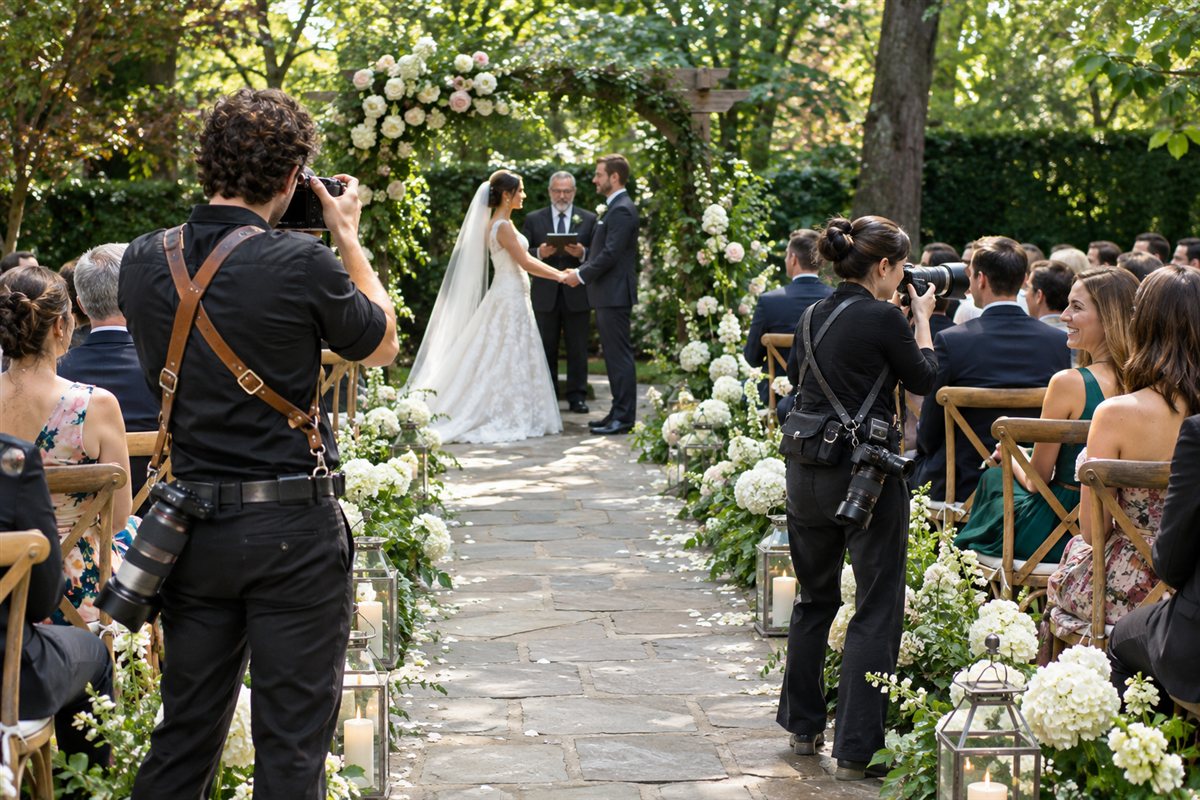
A second shooter works alongside a lead wedding photographer, capturing extra angles and moments while learning how a full wedding day runs. The route in is simple: build a small portfolio, approach lead photographers politely, agree expectations in writing and be reliable on the day. Arrangements differ between studios, and this is general information, so confirm terms with each photographer and seek professional advice on contracts if needed.
What a Second Shooter Does
The role supports the lead rather than replaces them. Typical tasks include photographing guests, alternate angles of the ceremony, details, and candid moments while the lead handles the main set pieces. Some leads also ask for help carrying gear or managing lighting.
- Follow the lead’s shot list and communication style.
- Stay out of the lead’s frame and sightlines.
- Keep your own gear ready, with spare batteries and cards.
In this guide
Building a Portfolio Without Weddings
You do not need a full wedding gallery to begin. Lead photographers look for evidence that you can handle low light, fast moments and people. Consider these sources:
- Family events, parties and community celebrations
- Styled shoots or portrait sessions with friends
- Shadowing opportunities, where a photographer allows you to observe
- Concerts or school events that include quick, unpredictable action
Keep the set short and consistent, with your strongest frames first.
Approaching Lead Photographers
- Make a list of local photographers whose style you admire.
- Read their sites to see whether they mention second shooters.
- Send a short, personal message with a link to your portfolio.
- Offer to assist at a smaller event first, to build trust.
- Follow up once, politely, and accept a no gracefully.
Agreeing Expectations
Clarity protects both sides. Ask or discuss the following before the day, ideally in writing:
- Whether the arrangement is paid, trade-based or learning-focused, and when payment happens
- Who owns the images and whether you may show them in your portfolio
- Dress code, arrival time and what gear to bring
- Whether you may market yourself using the lead’s clients
Terms differ between photographers and regions. A qualified professional can help if you sign a formal agreement.
Making the Most of the Day
Arrive early, stay flexible and watch how the lead works with families, timelines and light. Take notes afterwards on what you learned and ask for polite feedback. Deliver files on time in the format requested, and thank the lead. Reliable second shooters are often recommended for future jobs.
Gear Checklist for a Wedding Day
Reliability matters more than having the most impressive equipment. A lead photographer wants a second shooter who arrives with gear that works, is familiar and has backups. Ask what the lead expects, then build a kit around those expectations rather than buying everything at once.
- Two camera bodies: A second body means you can switch focal lengths without changing lenses in a crowded room, and it protects you if one fails. If you own only one, ask whether renting a second for the day is acceptable.
- A versatile standard zoom or a pair of primes: A zoom covers ceremony, groups and candid moments flexibly. Fast primes help in dim rooms and give separation from busy backgrounds.
- A longer lens: For ceremonies where you must stay at a distance, a longer lens helps you capture expressions without intruding.
- Flash: A compact flash with bounce capability helps in dark receptions. Ask the lead whether they want you to use flash at all, as some prefer natural light.
- Cards and batteries: Carry more than you expect to need, and organize used and fresh cards clearly in separate pouches.
- Comfort items: Wear quiet shoes, bring water, snacks and a small cleaning cloth. Long days are physically demanding.
- Backup essentials: A spare strap, lens cloth, gaffer tape and a small first-aid kit can solve small problems quickly.
Test everything a few days before the event. Clean sensors and lenses, format cards in the camera, update firmware only if you have time to test it and check that settings are correct. Pack the night before and leave a margin for travel.
Exposure and Settings for Consistency
Your pictures will be delivered alongside the lead’s, so consistency is part of the job. Ask how they want you to shoot, and match their approach where you can, while making your frames technically reliable.
Weddings move through bright outdoor light, dim churches, mixed indoor lighting and dark dance floors, often within an hour. Practice switching quickly. Many photographers use aperture priority or manual mode, with auto ISO and sensible limits, so they can adapt fast. Whatever your method, know it well enough to change settings without looking away from the action.
- Shoot raw unless the lead requests otherwise, so that exposure and white balance can be adjusted later.
- Keep a shutter speed fast enough for the focal length and for movement, especially during dancing and candid moments.
- Check white balance when moving between rooms. Consistent color makes the final gallery look unified.
- Review highlights on bright dresses and sunlit scenes so that detail is not lost.
- Use continuous autofocus with a small area or tracking for processions and quick moments, and test it ahead of time.
- Turn off any loud beeps and shutter sounds during ceremonies if your camera allows it, and use a quiet mode when needed.
Visit the venue or look at photos of it beforehand if possible. Knowing where windows, ceilings and dark corners are helps you plan lenses and flash. Ask the lead which moments they want you to cover and where you should stand, then stick to that plan.
Protecting Your Files and Delivering on Time
The job does not end when the reception does. Files from a wedding cannot be recreated, so careful handling is a core responsibility, and prompt delivery builds the lead’s confidence in you.
- Keep cards safe during the day. Place full cards in a labeled pouch and never mix them with blank ones.
- Copy files to at least two places soon after the event, such as a computer and an external drive, before formatting any card.
- Do not reformat cards until the lead confirms they have received and checked your files, or until you have agreed a time frame.
- Follow the lead’s instructions for naming, folders and file types. Keep camera settings, such as the clock, accurate so that images sort correctly alongside theirs.
- If you are asked to cull, remove only obvious rejects, like closed eyes and blurry frames, and keep alternates for important moments.
- Deliver by the agreed deadline using the agreed method, and confirm that the files arrived.
Ask whether you are expected to edit your pictures or only deliver the files. Some leads want unedited raw files, while others ask for light adjustments to match their style. Do not share images publicly or with guests before the lead allows it. If a problem occurs, such as a corrupted card, tell the lead immediately and honestly. Early notice gives them a chance to react and shows professionalism.
Working With Guests, Vendors and the Lead
A wedding is a collaboration among many people, and your behavior reflects on the lead photographer. Being pleasant, quiet and flexible matters nearly as much as taking good pictures.
- Introduce yourself: Meet the planner, the videographer and the venue contact early when appropriate, and learn their names.
- Stay out of the way: Avoid blocking the videographer, guests and officiants. Ask the lead where you may stand during the ceremony and respect any restrictions set by the venue.
- Follow the lead’s signals: Agree on simple cues for changing positions or taking over a moment. Keep your voice low.
- Be courteous to guests: Answer questions politely, and pass any requests for pictures or contact details to the lead.
- Do not promote yourself on the day: Handing out your own cards or discussing your pricing is usually inappropriate unless the lead says it is fine.
- Watch your phone: Keep it silent and avoid using it during the ceremony and speeches.
- Look after yourself: Eat when there is a break, stay hydrated and ask for a rest if you need one.
When something goes wrong, remain calm, solve what you can and tell the lead quietly. Avoid criticizing other vendors or the lead’s decisions in front of others. Treat each wedding as a lesson in dealing with people under pressure.
Growing From Second Shooter to Lead
Second shooting is a stage, not necessarily a destination. If your goal is to lead your own weddings, use the experience to prepare deliberately for that next step.
Watch how the lead structures the day: the timeline, the family formal list, the communication with couples and the way they handle surprises. Take notes on what you learn, and ask for feedback after a few events. Look for areas to improve, such as handling low light or posing groups, and practice them between jobs.
- Build your own portfolio with agreed images, styled sessions, engagement shoots and small events.
- Learn the business side: contracts, deposits, delivery timelines, insurance and local requirements. A qualified advisor can help with legal and financial questions.
- Develop your own style and a clear way to describe it to couples.
- Consider more advanced gear only when it solves a real problem you have faced.
- Start with smaller or lower-pressure events, and ask a trusted lead whether they would mentor you or refer overflow work.
- Keep relationships healthy. Do not approach a lead’s clients or copy their packages, and stay honest about your experience.
Be patient. Many photographers second shoot for a good while before leading, and each event adds skill. When you decide to lead, start with a manageable number of bookings and a clear process, and continue learning.
Which Route Into Second Shooting Fits You Best?
If you are brand new to weddings, start by shadowing or assisting at a smaller event; if you already have steady event experience, pitch yourself directly as a paid second shooter. The right entry route depends on your current skills, your gear and how much risk the lead photographer is willing to take on you.
- If you have no wedding experience, ask to shadow or carry gear for a day. You learn the timeline and etiquette without the pressure of delivering files.
- If you have photographed family events, parties or concerts, offer to assist at a small ceremony or an engagement session, where mistakes cost less.
- If you have a reliable low-light kit and a tidy portfolio, approach leads whose style you like and offer to second shoot, being clear about what you can handle.
- If you want to learn the business side, look for a lead who is happy to explain their process, contracts and client communication, even if the arrangement is trade-based.
- If you need income soon, focus on leads who say plainly that they pay assistants, and confirm the terms in writing.
Be realistic about the trade-off between learning and earning. Some arrangements are paid, some are trade-based and some are mainly about learning. The phrase “get paid to learn” describes the best case, but it is not guaranteed, so discuss payment openly before you commit. Terms differ between photographers and regions.
A combination often works. You might shadow once, assist a few times for a modest arrangement and then move toward regular paid second shooting as you build trust. Each step builds a record of reliability, which is the thing leads value most.
Whichever route you choose, remember that you are asking someone to put their client’s day in your hands. Show that you understand this by being prepared, polite and honest about your experience.
How Do You Write a Message to a Lead Wedding Photographer?
Keep it short, personal and specific: say who you are, why you like their work, what experience you have and what you are asking for. A focused message is easier to answer than a long one.
Begin with something genuine about their photography, such as a type of moment they capture well, so they know you did not send a copy-and-paste note. Then describe your experience honestly. If you have photographed family events or parties, say so, and include a link to a small set of your best images.
- State your ask clearly: shadowing, assisting or second shooting at a smaller event.
- Mention your gear briefly: for example that you have reliable bodies, lenses and spare batteries, without exaggerating.
- Offer flexibility: say you are happy to start small and to follow their shot list.
- Be clear on availability: name the dates or the general times you can work.
- Keep your tone friendly and low pressure: thank them for reading and accept that they may be busy.
Avoid claims you cannot support, such as saying you are an expert if you have not photographed a wedding. Honest messages build trust and avoid awkward surprises on the day. Do not ask for a high rate in the first message, and do not criticize other photographers.
Send your note to a short list rather than one person, and follow up once after a reasonable wait. If someone says no or does not reply, move on politely. Their schedule or style needs may simply not fit.
When someone does reply, answer promptly and ask a few practical questions about timing, location and expectations. A quick, clear reply shows that you will be easy to work with on the day.
What Should You Check Before You Accept a Second Shooting Job?
Before you say yes, confirm the date, your role, the pay or trade arrangement, how files and credit are handled and what gear and clothing are expected. Clear answers in writing prevent most misunderstandings.
- Role and duties: Ask what you are expected to cover, which moments you should photograph and which belong to the lead.
- Payment or trade terms: Confirm whether you will be paid, when payment arrives and how. If it is a trade or a learning day, confirm what you receive in return.
- Image ownership and use: Ask who owns the pictures, whether you may use them in your portfolio and whether credit is required.
- Delivery: Find out the file format, naming, deadline and method of delivery, and whether you are expected to edit.
- Schedule: Get the timeline, arrival time, meal breaks and expected finish time, plus any travel arrangements.
- Gear: Confirm which lenses, flash rules and backup equipment the lead wants you to bring.
- Insurance and liability: Ask whether the lead’s coverage includes assistants, and whether you are expected to have your own. A qualified advisor can help you understand your situation.
- Cancellation and weather plans: Understand what happens if the date changes or if you cannot attend.
- Marketing rules: Confirm what you may and may not post online, and when.
Put the answers in an email or a short written agreement, and keep a copy. Contracts differ between photographers and regions, so seek professional advice if you are asked to sign a formal document you do not fully understand.
If something in the arrangement feels unclear or unfair, ask politely for clarification before the day. It is much easier to settle questions in advance than during a busy wedding.
What Mistakes Do New Second Shooters Make?
The most common mistakes are arriving unprepared, getting in the lead’s way and mishandling files. Each is easy to avoid with a little planning.
- Standing in the lead’s frame. Learn their position and keep clear of their sightlines, especially during the ceremony and formal portraits.
- Copying the lead’s shots exactly. The value of a second shooter is a different angle or a different moment. Ask what coverage they want.
- Over-shooting without selecting. Hundreds of near-identical frames create extra work. Be deliberate and look for expressions and gestures.
- Ignoring backup plans. A single card, a nearly empty battery or an untested flash can ruin an important moment.
- Using flash against the lead’s wishes. Confirm the rules for each part of the day.
- Talking to guests about your own business. Pass inquiries to the lead and stay focused on the job.
- Posting images early. Wait for permission before sharing anything publicly.
- Being late with files. Late delivery undermines trust more than almost any other mistake.
- Staying silent about a problem. If a card fails or you miss a moment, tell the lead quickly so they can adapt.
Review each wedding afterward. Note two things that went well and two that you would change, and ask the lead for brief feedback if they are willing. Small, repeated improvements add up quickly across your first few events.
Many mistakes come from nerves. Preparing your gear the night before, studying the timeline and arriving early give you a calmer start and leave room to handle surprises.
Is Second Shooting Worth It, and Who Should Skip It?
Second shooting is worth it if you want to learn weddings in real conditions with guidance and without carrying a client’s whole day alone. It is not the right fit for everyone, and the downsides deserve a fair look.
- The days are long and physical. Standing, crouching and carrying gear for many hours is tiring.
- Pay and terms vary. Some arrangements pay little or nothing beyond experience, so weigh your time and costs carefully.
- Your creative control is limited. You follow the lead’s style and may not be able to use or share all your images.
- Pressure is real. A wedding cannot be repeated, so reliability matters from the first event.
- It does not guarantee bookings. It builds skill and contacts, but leading your own weddings requires its own portfolio and business groundwork.
Who might skip it? Someone who dislikes crowds, long days or working to another person’s direction may prefer portraits, products or other kinds of photography. Someone who needs reliable income immediately may want steadier work while building skills on the side.
The benefits are practical: you see how experienced photographers handle timelines, families and difficult light, and you build relationships that can lead to referrals. Most of those lessons are hard to learn in any other way.
Make a short list of local photographers, prepare a small portfolio, send each a brief honest message and confirm the terms in writing before your first day. Then choose the arrangement that matches your experience and goals.


Ready to Buy? Start Here
If this guide helped you decide what to look for, these products are a place to start.


As an Amazon Associate we earn from qualifying purchases. Prices and availability are shown on Amazon.
Reading a Wedding Day Timeline Like a Second Shooter
The lead works from the timeline; the second shooter works from the gaps in it. When you receive the day’s schedule, mark the moments the lead cannot be in two places at once: the groom’s preparations while the lead is with the bride, the cocktail hour while the lead shoots family formals, the room reveal before guests enter, the guests’ reactions during speeches the lead is covering from the front. Those gaps are your assignment whether or not anyone spells them out, and planning your position for each one — where you will stand, what lens you will need, how long it takes to get there — is the difference between a second shooter who adds coverage and one who duplicates it. Arrive at each gap early; the candid moments that justify your presence usually happen in the minutes before the scheduled event, not during it.
Build buffer into your own movements. Weddings run late in predictable places — hair and makeup, family formals, the receiving line — and a second shooter who plans to slip away “during the speeches” may find the speeches starting twenty minutes late and the detail shots window gone. Front-load the static coverage: venue details, table settings, the cake, the stationery. Those frames can be made whenever the room is empty, they never need to be remade, and having them banked early frees you to follow the people for the rest of the day.
Working With the Lead’s Settings and Style
Consistency is a deliverable. The couple receives one gallery, and your frames should sit inside it invisibly. Before the day, ask the lead how they want your files shot: raw or JPEG, which white balance approach, whether they prefer a consistent aperture range, and how they handle mixed lighting. On the day, match your exposure decisions to the lead’s visible style — if their work is bright and airy, your dark, moody frames of the same moment will be culled no matter how good they are. This is not a loss of creativity; it is the job. Your own style gets its exercise at your own weddings, and the discipline of shooting to someone else’s brief is one of the fastest educations available in the craft.
Sync your camera clocks before anything else happens. A two-minute task at the start of the day saves the lead hours in post, because merged galleries sort by time and unsynced clocks scatter the story. Do it during setup, along with formatting cards in camera and confirming that both bodies are set to the agreed file format and color space. These unglamorous details are what leads remember when they are deciding whom to book again.
What to Do During the Quiet Hours
Every wedding has dead time — travel between venues, the lull while the room is flipped, the wait for a late ceremony. Use it deliberately. Back up your cards or at least verify they are reading correctly. Photograph the details nobody scheduled: the weather that day, the venue’s exterior in the changing light, guests arriving, the couple’s parents watching. Check on the lead: water, a battery, a held lens during a change — small acts of anticipation are noticed. And review a few of your frames critically. If your ceremony angles are duplicating the lead’s, the reception is your chance to fix the pattern: move wider, move closer, shoot the reactions instead of the action.
The Business Side: Agreements, Pay and Reliability
Second shooting becomes sustainable income when it is treated as a business rather than a favor. Agree the essentials in writing before every booking, even with leads you know well: the date, hours and location; the rate and when it is paid; who owns the files and what you may use in your portfolio; how and when you deliver the cards or files; and what happens if the day runs over. A short message thread covering those points is enough — the purpose is not legal armor but the prevention of the misunderstandings that end working relationships. Photographers lose more future bookings to one awkward pay conversation than to any weakness in their portfolio.
Reliability is the product. Leads rebook the second shooter who arrives early, whose cards are formatted and clocks synced, who never needs managing during the day. They quietly stop calling the brilliant-but-chaotic shooter, because a wedding day has no slack for managing the help. If you want a full calendar of second work, invest in the boring virtues: answer messages quickly, confirm the week before, bring backups of everything, and deliver files when you said you would. In a referral-driven niche, your reputation among leads is worth more than your Instagram presence.
Positioning During the Ceremony and Reception
During the ceremony, agree positions before the processional starts and then stay disciplined: the lead typically owns the center aisle and the couple’s faces; your ground is the side angles, the parents’ reactions, the wide establishing frame and the details — hands, the ring exchange from the side, guests wiping eyes. Never cross behind the couple in the lead’s frame during the vows, and move during applause or music rather than during silence. At the reception, divide the room: one of you owns the dance floor and speeches from the front, the other works the edges — table reactions, the older guests, children, the quiet moments away from the noise. Two photographers covering different emotional registers of the same hour is what makes a gallery feel complete.
After the Wedding: Delivery, Debrief and Getting Rebooked
The day after the wedding decides whether there is a next one. Deliver the files in the format and timeframe you agreed, with a short note flagging anything the lead should know — a card that misbehaved, a moment you covered from an unusual angle, a guest situation you handled. Then ask for the debrief conversation professionals offer each other: what worked, what they would want done differently, which of your frames they expect to use. Accept criticism of your coverage without defending individual frames; the lead is describing the gallery they have to build, and hearing how your work looks from the editor’s chair is the education you came for. Keep your own copies organized by date and lead, because your second-shooting portfolio — the thing that gets you lead work of your own later — is built from these days, within whatever usage terms you agreed.
Finally, close the loop commercially: invoice promptly if that is the arrangement, thank the lead in a message that mentions one specific thing you learned, and note the date in your own records. Leads book people they remember at the moment a date lands in their inbox, and a professional follow-up keeps you at the front of that memory far longer than the wedding day itself does.
Building Your Own Wedding Skills on Second-Shooter Days
Every second-shooting day contains a private curriculum if you plan for it. Choose one skill per wedding — off-camera flash balance, reception lighting, fast lens discipline during the processional, reading a room for candids — and tell the lead you are working on it, so your positioning choices make sense to them. Shoot the day’s assignment first and your practice second; the lead’s gallery is the priority and your education is the dividend. Afterward, review your frames against a single question: did the practiced skill produce frames the lead could use? Keep a short list of what each wedding taught you. Within a season, that list becomes the honest syllabus of your development — and when you begin booking your own weddings, you will already know which parts of the day you have genuinely rehearsed and which still need a second shooter’s safety net while you learn them.
Choosing Which Leads to Work For
Not every lead is a good teacher or a good payer, and second shooters who last learn to choose. Watch how a lead treats everyone at a wedding — the planner, the venue staff, the couple’s families — because that is how they will treat you when a day goes wrong. Read their contract terms for seconds before the first booking together, and treat vagueness about pay as information, not optimism. The best leads brief you properly, pay when they said they would, credit you where their terms allow, and debrief honestly. Build your season around a small roster of those leads rather than a long list of strangers: repeat work with the same leads deepens the working shorthand between you, raises the quality of what you can deliver together, and turns a string of one-off days into something resembling a stable income with a genuine apprenticeship inside it.
Your First Lead Wedding: Knowing When the Apprenticeship Has Worked
The transition shows itself in small ways before it shows in bookings. You start anticipating the lead’s needs before they are voiced. Your culled rate falls because your frames fit the gallery. Other vendors begin treating you as a photographer in your own right rather than as an assistant. When those signs accumulate, book your first lead wedding at a scale you can serve superbly — a shorter day, a smaller guest count, a venue you know from second shooting — and consider hiring a second shooter yourself, both for the coverage and because directing one teaches the final lessons about what you valued in the leads you worked for. The apprenticeship does not end on that day; it changes sides, and the photographers who remember what good leads did for them tend to become the leads their own seconds learn the most from.
A Note on Stamina and Self-Care at Weddings
Weddings are long, physical days, and second shooters who treat stamina as part of the craft last longer in the business. Eat when the couple eats — which usually means when the lead arranges it, quickly and without apology — and carry water rather than relying on finding it. Wear shoes you have already worked a full day in. These details sound beneath a photography guide, but a second shooter fading at hour nine delivers fading work, and the final hours of a reception are often where the day’s most joyful frames live. Looking after the instrument that carries the camera is professional behavior, not indulgence.
FAQ
Do I need my own professional camera?
Most leads expect reliable gear that handles low light, and often two bodies. Ask what they expect before you commit to buying anything.
Can I use the photos in my portfolio?
Only if the lead agrees. Some allow it with credit, others do not, so confirm in writing beforehand.
How do I tell a lead photographer I am ready for more responsibility?
Ask for specific feedback first, then express interest in taking on tasks such as certain portraits or parts of the timeline. Show reliability and wait for their view on when you are ready.
Should I bring my own insurance?
Ask the lead whether they expect it, and check whether their coverage includes assistants. A qualified advisor can explain what protection suits your situation.
What should I wear?
Dress neatly in dark, comfortable clothes that suit the venue and allow you to move and crouch. Ask the lead if there is a dress code.
What if I make a mistake during the day?
Tell the lead calmly and quickly, and focus on a fix. Honest communication is valued more than hiding the problem.
Can I take personal photos for myself during the wedding?
Only if the lead agrees. Your attention should stay on the lead's requirements, and some leads have rules about personal use and social media.
How can I practice without a real wedding?
Shadow events, photograph family gatherings, and practice low-light shooting, flash bounce and fast-moving scenes. Reviewing your shots critically builds skill.
How much experience do I need before I can second shoot a wedding?
There is no fixed requirement, because each lead sets their own standard. Many want evidence that you can handle low light, quick moments and people, so a short portfolio and honest conversation matter more than a long resume.
Do second shooters get paid?
Sometimes, but it varies by photographer, region and your experience. Some arrangements are paid, others are trade-based or learning-focused, so ask about payment and its timing before you agree.
What camera gear does a second shooter need?
Most leads expect reliable bodies that perform well in low light, a flexible lens setup, spare batteries and memory cards. Ask what your lead prefers before buying anything new.
How do I find wedding photographers who need a second shooter?
Look at local photographers' websites and social pages for mentions of assistants or second shooters, and attend community photography events. A short, personal message with your portfolio link is a good first step.
Can I shadow a wedding photographer without taking photos?
Yes, some leads allow observers or assistants who carry gear and learn the flow of the day. Ask politely, and ask also whether they have rules about where you may stand.
What should I do if the lead asks me to shoot something I have never done?
Be honest, ask for a quick explanation and give your best effort. Admitting what you are unsure about early is better than failing quietly on an important moment.
Is it okay to leave early if my shift is over?
Only if you agreed on the end time beforehand. Confirm the expected hours in advance and tell the lead if something comes up.
How long does it take to move from second shooter to lead photographer?
It differs from person to person and depends on your portfolio, business setup and confidence. Many photographers second shoot for a while and build their own work alongside, so there is no set timeline.
How should I handle it if guests ask me to take their photo?
Gladly and quickly — a guest photo takes seconds and buys goodwill for the whole photography team. Take the frame, show them the back of the camera if they ask, and move on. If the lead has a policy about guest requests during key moments, follow it; otherwise treat these small interactions as part of the couple’s experience of the day, because the guests’ impression of the photographers becomes part of how the couple remembers the service.
What if my gear fails mid-wedding?
Switch to your backup body or lens without drama and tell the lead at the next natural pause, not during a key moment. This is exactly why second shooters are expected to carry backup gear: a wedding cannot be restaged. If you have no backup for a failed item, adapt your role — cover the angles your remaining gear handles well — and be honest with the lead afterward about what coverage was lost.
Should I edit my own photos before delivering them?
Follow the agreement you made beforehand. Most leads want unedited raw files so the gallery stays consistent, and delivering your own edit can create extra work rather than less. If a lead does ask for edited files, match the style of their published work as closely as you can and say clearly what you have done to the files.
How do I ask a lead for more responsibility?
Ask after a successful day, not during one, and ask in terms of their needs: offer to take the groom’s preparations solo, or to run the detail coverage, and point to the work you have already delivered in that area. Leads promote seconds whose judgment they have seen; a specific, evidence-backed request lands far better than a general wish to do more.
What should I do if I disagree with the lead’s direction on the day?
Follow the lead’s direction — it is their client, their contract and their gallery. If you see a genuine problem, such as a memory card issue or a moment about to be missed, raise it quietly and once. Creative disagreements belong in the debrief after the wedding, if anywhere; raising them in front of the couple or guests undermines the team’s authority and will not be forgotten.
Is it acceptable to hand out my own business cards at a wedding?
No. You are there as part of the lead’s team, and marketing your own business to their client and guests crosses a bright professional line. If a guest asks for your details, the graceful answer is to give the lead’s information or say you work with the lead’s studio. Leads talk to each other about exactly this behavior.
Can second shooting lead to full-time work?
Yes — it is one of the most common routes into a sustainable photography business, because it pays while it teaches and it builds a network of leads who refer overflow work to seconds they trust. The photographers who make the transition treat every second-shooting day as an audition and a lesson at once, and they start building their own client base in parallel rather than waiting to be promoted.
How many weddings should I second shoot before leading my own?
There is no universal number, because weddings differ and so do photographers. A more useful test is coverage: have you second-shot every part of a wedding day — preparations, ceremony, formals, reception, low light, bad weather, a day that ran badly late — and handled each without the lead rescuing you? When the honest answer is yes across the whole map of the day, you are ready to lead a small wedding of your own.
What should be in my second-shooter agreement about image use?
Three things: whether you may use the images in your portfolio and social channels, when you may post them — most leads require waiting until the couple has received their gallery — and how the work should be credited when you share it. Get these points agreed before the wedding, in writing, because asking afterward, when the images are already posted, is how good working relationships end over a misunderstanding neither side intended.
How do I stay calm during a chaotic wedding day?
Anchor to the timeline and your next assignment rather than to the whole day. Chaos at a wedding is almost always local and temporary — a late start, a missing bouquet, a weather change — and your job is only ever the next thirty minutes: where you should be, what you should be covering, what the lead needs. Photographers who think in those small units look unshakeable from the outside, even when the day is not.
Should I bring lighting gear as a second shooter?
Bring what the lead’s brief asks for and what fits the venues you will work in — typically a flash you know thoroughly rather than a bag of modifiers you are still learning. Ask before the day whether the lead wants a second light for the reception setup; arriving with a modest, reliable kit and the knowledge to run it is more valuable than arriving with an impressive one you fumble.
Should I follow up if a lead goes quiet after my first inquiry?
Once, politely, after a reasonable interval — leads are busy, and a single short follow-up is professional rather than pushy. If there is still no reply, let it go and keep building your portfolio; the photographers who get booked are the ones leads remember fondly, and persistence past one follow-up works against that memory.
The Short Version
Second shooting is a practical way to learn weddings while supporting an experienced photographer. Build a focused portfolio, reach out respectfully, agree terms in writing and be dependable. Details vary, so confirm each arrangement directly.
