Disclosure: As an Amazon Associate, reviewstook.com earns from qualifying purchases. Links to Amazon on this page are affiliate links; they cost you nothing extra.
Gaming chairs and office chairs both claim to be comfortable for long sessions, but they are designed differently. Gaming chairs are styled like racing seats and often have bolsters and headrests. Office chairs are built around ergonomic adjustment. Here is how they compare.
This comparison draws on product information and general ergonomics knowledge, not our own testing. It is not medical advice.
By the Reviewstook Editorial Team. Last updated: October 31, 2026.

Design Philosophy
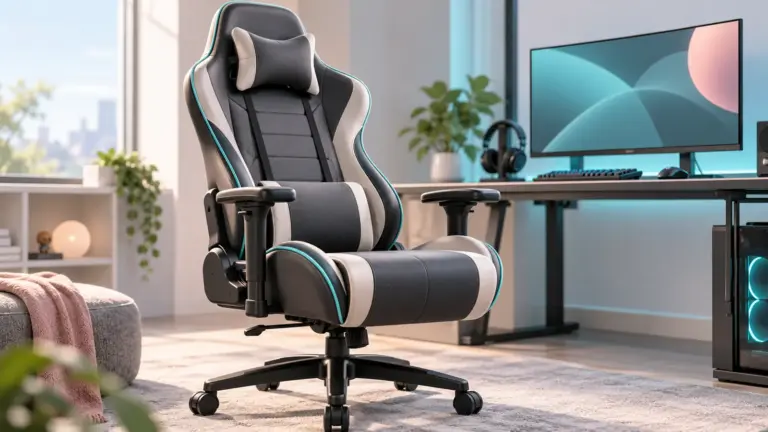
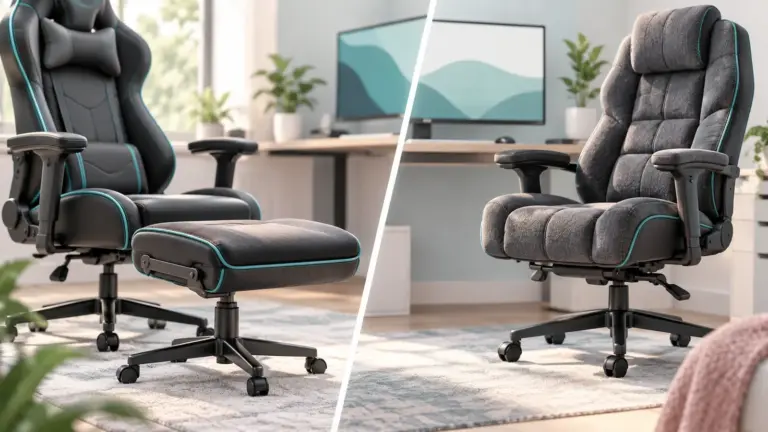
Gaming chairs use high backs, side bolsters and removable pillows. Office chairs focus on adjustable lumbar support, seat depth and armrests. Some chairs blur the line.
In this guide
Adjustability
Quality office chairs often offer more adjustment, such as seat depth, lumbar height and synchro-tilt. Gaming chairs tend to have recline and height. Check what each chair lets you adjust.
Comfort and Breathability
Mesh office chairs breathe well. Gaming chairs in PU leather can feel warm. See mesh chairs for gaming.
Support
Look for lumbar and neck support. Gaming chair pillows can help, but a chair that fits you is better. See ergonomic gaming chairs.
Price and Durability
Prices overlap. Check materials and warranty rather than the label.
Which to Choose
- Long work or study sessions: an ergonomic office chair.
- Gaming with a racing look: a gaming chair.
- Either: choose one that fits your body and has good adjustments.
See our gaming chair buying guide.
A Checklist for Judging Either Kind of Chair
The labels “gaming” and “office” matter less than the features. Use this checklist to judge any chair, whatever it is called.
- Seat height range: your feet should rest flat with thighs roughly level. Compare the range with your desk height.
- Seat depth: about two to three fingers of space should remain between the front of the seat and the back of your knees. Adjustable seat depth helps people of different heights.
- Lumbar support: built-in and adjustable is better than a loose pillow, though a pillow can help a chair that fits otherwise.
- Backrest recline and tilt tension: a lockable recline and adjustable tension let you work upright or lean back.
- Armrests: height adjustment is the minimum. Width and angle adjustment help.
- Headrest: useful for leaning back and watching, less relevant when working upright.
- Base and casters: a sturdy base and smooth casters matter. Hard floors may need soft-wheel casters.
- Weight rating and warranty: check both.
Where Each Kind Tends to Win
Office chairs often have more adjustment points (seat depth, synchronized tilt, lumbar height) and use breathable mesh, which helps with long workdays. Gaming chairs often have taller backs, firm bolsters and a headrest and neck pillow, which some people find comfortable for leaning back and playing on a console. A good chair of either kind should let you change position through the day, because the best posture is the next one.
Sizing: The Part Most People Skip
A chair that does not fit your body will never feel good, whatever the label. Taller and shorter people often need different seat heights, depths and backrest heights. Larger users should check the weight rating and seat width. Compare your measurements with the listing, and see big and tall gaming chairs if standard sizes are tight.
Cost and Warranty
Prices overlap, so compare features and warranty. A longer warranty on the gas lift and frame is a good sign. Remember that the cheapest chairs often use thinner foam that flattens within a year or two. Check whether replacement parts such as casters and armrest pads are available.
A Simple Way to Choose
- If you work or study at a desk for many hours, prioritize adjustable lumbar, seat depth and breathable mesh.
- If you mostly play and lean back, prioritize recline, a headrest and comfortable padding.
- If you share the chair, prioritize wide adjustment ranges.
- If you are unsure, buy from a seller with a generous return window and test for a week.
Browse ergonomic gaming chairs and mesh office chairs for gaming. This is general guidance, not medical advice.
Upholstery Materials Compared
The cover on a chair affects comfort, cleaning and how long the seat looks good. Both gaming and office chairs come in several materials, so it pays to look at the listing’s wording instead of assuming the category tells you what the surface is.
- Mesh. Common on office chairs and some gaming models. Mesh lets air through, which helps in warm rooms. Tension and weave differ, so a firm, supportive mesh feels different from a loose one. Check whether the seat as well as the back is mesh.
- PU or faux leather. Popular on gaming chairs. It wipes clean and gives a sleek look, but it can feel warm in summer. Over years, coatings on synthetic leather may crack or peel, depending on the product and use, so look at the warranty wording for upholstery.
- Fabric. Softer and often more breathable than faux leather, though it can hold dust, crumbs and spills. Some listings mention stain resistance, which is a maker claim worth reading carefully.
- Genuine leather. Less common at lower budget tiers. It needs conditioning and can still get warm.
Think about your climate, your habits and your household. If you eat at your desk or have pets, an easily wiped surface may be worth more than a breathable one. If you sit for hours in a warm room, breathability may matter most.
Foam is part of the story too. Firmer, denser foam tends to hold its shape longer, while very soft foam can feel plush at first and flatten sooner. The listing may describe the foam type or density, but those descriptions are not standardized, so treat them as a clue rather than proof.
Finally, pay attention to the stitching and seams where the cover wraps around the seat edge. These are the spots that wear first on any chair. If reviewers or the product page mention wear in those areas, take note, and keep your receipt in case you need to use a warranty.
Armrests and Desk Fit
Armrests are often judged as an afterthought, yet they decide whether a chair works with your desk. A chair with generous, fixed armrests may not slide under the desk, which forces you to sit farther away and reach for your keyboard and mouse.
Measure these before you buy:
- Desk height against the armrest height at its lowest setting. If the armrests cannot go below the underside of the desk, they will bump into it.
- Distance between armrests against the space you need for your hips and your elbows. Armrests that sit too wide leave your arms floating, while narrow ones can squeeze larger frames.
- Armrest adjustment. Height adjustment is a minimum. Armrests that also move inward, outward or pivot can match different tasks, such as using a keyboard versus using a controller.
- Pad material. Soft pads feel nice but may wear faster than firm ones.
Your goal is to let your shoulders relax while your forearms rest lightly, with elbows near a comfortable bend. If armrests force your shoulders up, lower them or remove them if the chair allows it.
Gamers with a wide mouse sweep often prefer lower or removable armrests so the arm can move freely. Controller players may like higher, padded armrests that support the forearm. A chair with flip-up or pivoting armrests gives you both options.
Also check the chair’s seat height range against your desk. If the chair is too tall at its lowest setting, your feet may lift off the floor, and if it is too low at its highest, you may end up looking down at the desk. A footrest can help in the first case, but a chair that fits is easier. The listing’s height range and your measurements will help.
Setting Up and Caring for Your Chair
A good chair can feel wrong if it is set up poorly. Take time at the start to adjust each control, and revisit the settings after a week once you know how it feels.
- Assembly. Follow the manual in order and tighten bolts firmly but do not overtighten. Check that the gas lift and casters are fully seated. Keep the small parts bag until you are sure the chair is working properly.
- Seat height first. Sit with your feet flat and thighs roughly level, then adjust the rest around that.
- Back and lumbar. Set the backrest so the curve of the chair meets the curve of your lower back, and adjust tilt tension so the back follows you without feeling loose.
- Armrests and headrest. Set these last. They are for support, not for propping up your posture.
Care is simple. Wipe faux leather with a damp cloth and mild soap, vacuum fabric and mesh, and check the maker’s cleaning notes before using any solvent. Look over the bolts every few months, since vibration loosens them over time. Wheels collect hair and dust that can jam them, so clean them occasionally. A chair mat protects floors and lets casters roll more easily.
For safety, never stand on a swivel chair, avoid leaning far back on chairs not designed for it, and stay under the stated weight rating. If something creaks, wobbles or tilts oddly, stop using it and check the parts.
Finally, build movement into your routine. Even a well-fitted chair cannot replace standing, stretching and changing position. This is general comfort advice, not medical advice, so see a health professional about persistent pain.
Signs It Is Time to Replace Your Chair
Chairs wear out gradually, and many people keep using one past its best. A few clear signs suggest it is time to repair or replace.
- The seat sinks. If the gas lift will not hold your chosen height, the chair is no longer adjusting properly. Some parts can be replaced, so check the maker’s guidance and the warranty.
- Foam has flattened. If the seat feels hard or lopsided, pressure builds in areas it was designed to spread.
- The cover is cracking or peeling. This is common on aging faux leather. Small flakes can become larger tears.
- The tilt or recline mechanism is loose. If the back will not lock or tension no longer works, the chair is not supporting you consistently.
- Cracks in the base or frame. Stop using the chair right away, since these are safety issues.
- It no longer fits you. Changes in desk setup, height or how you use the computer can make a once-good chair a poor match.
When you shop for a replacement, use what you learned from the old one. Which adjustments did you actually use, and which were missing? Was the surface too warm? Did the armrests clash with your desk? Those answers matter more than whether the label says gaming or office.
Check the return policy, since a chair is hard to judge in a few minutes. Sit in it for several days if you can, and keep the packaging until you are sure. Read warranty terms for what is covered, such as the frame, mechanism and upholstery, and for how long, because these differ widely between products.
Think About How Long You Sit and What You Do
The better chair depends less on the label and more on your routine. A person who plays for a few hours in the evening has different needs from someone who works eight hours a day at a desk and then games afterward. Think about the hours you sit, the tasks you perform and your body size, then compare chairs against those needs rather than looking only at style.
Gaming chairs often emphasize a racing-seat look, high backs and bold colors, while office chairs usually stress adjustability, breathable materials and a neutral profile. Neither type is automatically better. Many comfortable options blend features from both, so judge each chair on its own details.
A Feature-by-Feature Comparison
| Feature | Typical gaming chair | Typical office chair |
|---|---|---|
| Backrest shape | Tall, with side bolsters | Contoured to the spine, often with mesh |
| Headrest and pillows | Often included | Sometimes optional |
| Armrests | Adjustable in several directions on many models | Varies from fixed to fully adjustable |
| Seat material | Faux leather or fabric | Mesh, fabric or leather |
| Recline range | Often deep recline | Moderate, with tension control |
| Look | Bold and sporty | Understated |
Check the listing for adjustment ranges, and compare them with your height and weight. A chair that fits one person perfectly may be awkward for another.
What to Adjust When the Chair Arrives
A good chair only helps if it is set up properly. Begin with seat height so your feet rest flat on the floor and your knees sit near a right angle. Adjust the backrest so it supports your lower back, then set armrests so your shoulders stay relaxed. Position your monitor so you can look at it without craning your neck.
- Take short breaks to stand and move around.
- Re-check adjustments after a few days.
- Keep wheels and casters clear of debris.
- Use a chair mat on carpet or delicate floors.
Materials and Breathability
Faux leather feels sleek and wipes clean, but it can feel warm in hot rooms. Mesh allows air to flow and keeps cooler, though some people find it firm. Fabric is soft and breathable, yet may hold dust and spills. Think about the climate in your room and how much you value easy cleaning.
Weight Limits, Warranty and Assembly
Check the stated weight limit and the height range that the maker recommends. Read the warranty terms, noting which parts are covered and for how long. Assembly takes some patience, and a second pair of hands helps with heavy parts. Keep the packaging for a while in case you need to arrange a return.
A Simple Way to Decide
If comfort and adjustability for long workdays are the priority, an office chair or a well-built hybrid is a strong choice. If you enjoy the bold look and the deep recline for relaxed sessions, a gaming chair can be fun. For health questions about posture or pain, consult a qualified professional. Try before buying when you can.
Fit for Different Body Sizes
Chairs are built around an average body, and many people fall outside it. Taller users should check the seat depth, the backrest height and the maximum height of the gas lift, so their thighs are supported and the headrest does not sit at the shoulders. Shorter users should look at the lowest seat height and whether a footrest or a small stool is needed, so their feet are not dangling.
Broader or heavier users should read the weight rating and the width of the seat with care, and consider models described as wide or heavy-duty. Smaller frames may find big bolsters pushing on the arms or hips, and a slimmer profile may suit them better. Whatever your size, a return policy offers valuable peace of mind, since a few days of real use tell you much more than a photograph or a list of features.


Ready to Buy? Start Here
If this guide helped you decide what to look for, these products are a place to start.
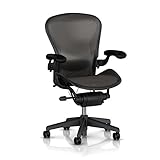


As an Amazon Associate we earn from qualifying purchases. Prices and availability are shown on Amazon.
How to Judge Fit in Your Own Room, Not on a Product Page
Listings for choosing between a gaming chair and an office chair are written to sound generous, but comfort is decided by the few centimetres between your body, the seat and your desk. Start by sitting in your current chair the way you actually play, not the way posture posters suggest. Notice where your feet rest, whether your knees sit higher or lower than your hips, and how much of the seat your thighs really use. Those three observations tell you more about one seat that must suit both focused work and play than any headline feature, because a chair that fights your natural sitting position will feel wrong within the first hour no matter how impressive the feature list looks.
Next, measure the space the chair has to live in. Check the gap under your desk, the distance from the desk edge to the wall behind you, and whether the chair can recline or roll back without striking shelves, radiators or a bed frame. Chairs for choosing between a gaming chair and an office chair are often photographed in empty studios; real rooms have skirting boards, cables and other furniture. A slightly narrower chair that moves freely will serve you better than a wider model that traps you against the desk every time you stand up.
Finally, think about time rather than first impressions. A seat that feels plush for ten minutes can feel flat after a long session, while a firmer seat that felt plain in a showroom can stay supportive all evening. When you read the reviews in this guide, weigh the comments about ergonomics, looks and how each style behaves over a full day against your own longest typical session. If you regularly play after work or study, judge every pick by how it behaves at the end of that session, not by how it feels in the first photograph.
A First-Week Adjustment Routine That Actually Works
Most owners set the seat height once, tighten nothing else, and then blame the chair when discomfort creeps in. A better approach is to treat the first week as a fitting period. On the first day, set the seat so your feet rest flat and your elbows sit roughly level with the desk, then leave every other control alone. Play a normal session and note only one thing: the first place that starts to ache or feel numb. That single clue tells you which adjustment to try next.
On the following days, change one thing at a time. Raise or lower the lumbar support so it meets the curve of your lower back rather than pushing into your waist. Move the headrest so it touches only when you lean back, not while you sit upright. Adjust armrest height so your shoulders stay relaxed instead of shrugged. Changing a single setting per session sounds slow, but it is the only way to learn which control actually helps you; changing everything at once leaves you guessing and usually ends with the chair back where it started.
By the end of the week, write down the settings that worked, especially the seat height and lumbar position. Chairs get moved for cleaning, shared with family members, or knocked during a room tidy, and a short note on your phone saves you from repeating the whole fitting process. This routine matters even more for choosing between a gaming chair and an office chair, because the difference between a good and a disappointing example is often adjustment, not construction.
Matching the Picks in This Guide to Real Players
Start with the picks already reviewed above and compare them by role rather than by order. Is a gaming chair better than an office chair?, Are gaming chairs good for work?, Which is more durable? each solve the same problem in a slightly different way, and the right choice depends on which compromise you mind least. One may give you a softer seat, another a taller backrest, another simpler controls. None of those is automatically better; the question is which one matches your body, your room and the way you sit when nobody is watching.
A useful exercise is to name your deal-breaker before you compare anything else. If your lower back complains first, support and seat depth outrank styling. If your room runs warm, breathable materials outrank a thick cushion. If the chair is shared between two people of different sizes, easy height adjustment outranks almost everything. Deal-breakers shrink a long shortlist quickly, and they stop you from being persuaded by a feature you will use twice and then ignore.
Also consider who else will sit in the chair. Partners, siblings and visiting friends all change the settings, sit differently and sometimes treat a footrest or recline lever far less gently. A chair that will be shared needs controls that are easy to reset and materials that forgive snacks, pet hair and the occasional spilled drink. A chair that is yours alone can be chosen much more personally, fitted once and left alone.
Troubleshooting the Complaints Owners Mention Most
A slow sinking feeling almost always points to the gas lift rather than the seat. Test it by setting the chair at full height last thing at night and checking it in the morning. If it has dropped, the cylinder is wearing out; on many chairs it can be replaced without replacing the whole chair, which is worth doing when the rest of the frame is still sound. Sinking that only happens while you sit is more often a loose connection under the seat, so check the mechanism bolts before ordering parts.
Squeaks and creaks usually come from dry joints or slightly loose fixings rather than serious damage. Tighten the bolts under the seat and at the armrests a quarter turn at a time, then sit and shift your weight to find where the sound lives. A tiny amount of suitable lubricant on a moving joint can quiet it, but keep lubricant away from upholstery and never spray blindly into a mechanism. Wobble is different: a chair that rocks sideways on a level floor may have a bent base or worn casters, and that is a safety issue worth fixing promptly.
Heat and discomfort on long sessions are rarely solved by buying accessories at random. Stand up between matches, loosen the recline slightly so your posture changes, and check whether a cushion or pillow is pushing you forward and shortening the seat. Small position changes through a session do more for comfort than any single accessory, and they cost nothing.
Care Habits That Add Years to a Chair
Dust and grit are the quiet enemies of moving parts and upholstery alike. Vacuum the seat and the creases around the backrest regularly, because crumbs and grit work into seams and act like sandpaper every time you shift position. Wipe smooth materials with a soft, slightly damp cloth and mild soap, then dry them fully; soaking any covering invites smells and can damage the foam beneath. Breathable fabrics and mesh prefer a gentle brush and fresh air over strong cleaning sprays.
Every few months, turn the chair over safely and check the bolts, the caster wheels and the base for hair and carpet fibres wrapped around the axles. Casters that stop rolling drag instead, scratching floors and making the chair feel heavier than it is. Keep the chair out of constant direct sunlight where you can, because strong sun fades colours and makes some coverings brittle over time. If your floor is hard, a simple chair mat protects both the floor and the wheels.
Treat the recline and tilt tension kindly. Forcing a lever, dropping into the seat from standing, or letting children swing on the backrest all shorten the life of the mechanism far more than normal sitting ever will. A chair used with a little mechanical sympathy will stay tight, quiet and supportive long after a neglected one has started to creak and sag.
Mistakes That Make a Good Chair Feel Like a Bad One
The most common mistake is buying for the photograph instead of the person. Racing styling, bold colours and dramatic wings look exciting online, but wings that press your shoulders forward or a narrow seat that pinches your thighs will annoy you every single day. The second mistake is ignoring the desk: a chair with tall, fixed armrests that cannot slide under the desk forces you to sit too far away, reaching forward for keyboard and mouse with your shoulders doing all the work.
Another frequent error is expecting one feature to fix a habit. A lumbar pillow cannot rescue a seat set far too high, and a recliner cannot help if your screen sits so low that your neck bends all evening. Look at the whole workstation together: screen height, desk depth, foot position and chair settings all lean on each other. Fixing the cheapest, simplest mismatch first often removes the ache that seemed to demand a brand-new chair.
Finally, do not judge a chair in the first twenty minutes. Foam settles, your body adapts, and early impressions mislead in both directions. Give a new chair the full adjustment routine described above, across several normal sessions, before deciding it is wrong for you. Many returned chairs were never actually fitted to their owners.
Questions Worth Asking Before You Commit
Ask whether the chair suits your longest session, not your shortest. Ask whether spare parts such as casters, armrest pads and gas lifts are easy to find for the style you are buying, because a chair with replaceable wear parts is a chair you can keep. Ask how the covering will cope with your room: pets, sunlight, snacks and warm weather all leave their mark, and an honest answer now prevents disappointment later.
Ask, too, what you would give up. Every design trades something away: softness against support, width against room to move, features against simplicity. The picks in this guide make those trades in different places, which is exactly why more than one of them can be the right answer for different readers. Choosing the trade you mind least is the real secret to being happy with choosing between a gaming chair and an office chair six months from now, when the novelty has worn off and only the comfort remains.
More Questions About This Choice
How long should I expect this choice to stay comfortable or useful?
Longevity depends far more on daily habits than on any single feature. Something chosen for genuine fit, used as intended and looked after with the simple care described above will stay satisfying for years. Something chosen for a headline feature, then adjusted badly or never maintained, disappoints quickly even when it is well made. Judge durability by build, replaceable wear parts and your own willingness to do small upkeep.
What should I check in the first few days?
Check the things that are easy to fix early: settings, position, connections and anything that rattles, rubs or feels uneven. Small annoyances noticed in the first week are usually adjustment issues with simple answers. The same annoyance ignored for months becomes the reason an otherwise good purchase gathers dust, so act on early clues while changing things is still effortless.
When is it worth upgrading instead of adjusting?
Upgrade when the basic fit is wrong and no adjustment changes that, when a safety-related part is worn, or when your needs have genuinely changed, such as a new desk, a new room or a very different daily routine. Adjust first when the problem is specific and recent. That order saves money and teaches you exactly what the replacement must do better.
One Purchase, Several Different Days
It helps to picture your main chair across several different days rather than one perfect session. On a workday, you may sit upright for calls and typing, leaning forward slightly, with your feet flat and your attention on the screen. In the evening the same chair becomes leisure furniture: you lean back, shift sideways, perhaps raise a footrest or cross your legs during a cutscene. A chair that only suits one of those postures will quietly frustrate you in the other, which is why adjustability that is easy to reach matters more than a long list of locked positions.
Weekends bring a third pattern: longer, looser sessions with breaks for food, family and fresh air. This is where small comforts compound. A seat that lets you change position without fighting the chair, armrests that move out of the way, and a backrest that supports both upright focus and a relaxed slump will feel generous all day. When you compare the picks in this guide, ask which one handles all three days gracefully, not which one wins a single posed photograph.
There is also the bad day to consider: the day your back is stiff, the room is too warm, or you are tired before you sit down. On those days you notice every hard edge, every squeak and every support that sits in the wrong place. Buying for the bad day, not the best day, is a reliable rule. It pushes you toward honest support, forgiving materials and controls you can operate without thinking.
A Calm, Step-by-Step Way to Decide
Begin with the facts you can verify without spending anything: your height, your weight, the height of your desk, and the space behind it. Write them down, because memory rounds numbers in your favour and chairs do not forgive optimistic measuring. Compare those facts against the sizing guidance for each pick first, before reading a single opinion about comfort or style. A chair that fails the measurement stage should leave your shortlist immediately, however attractive its other qualities may be.
Next, rank the remaining picks by the problem you most want solved. If you finish sessions with an aching lower back, support leads. If you finish them hot and restless, materials lead. If you share the chair, easy adjustment leads. This ranking protects you from review scores and marketing order, both of which reflect other people’s priorities. Your shortlist should end with two or three chairs that all fit, differing only in trade-offs you genuinely understand.
Finally, decide what would make you return or replace the chair, and decide it before it arrives. A clear personal test, such as three normal sessions with the adjustment routine completed, stops both hasty disappointment and endless dithering. Most good purchases feel unremarkable after a fortnight, and that is the point: the chair disappears, and only the game, the work and the conversation remain.
Arranging the Rest of the Setup Around the Chair
Even the best choice among your main chair cannot compensate for a screen that sits too low or a desk that forces you to perch at its edge. Raise the screen so its upper area sits near eye level when you sit back, using books or a simple stand if needed. Bring keyboard and mouse close enough that your upper arms hang relaxed, and give your feet a flat, unobstructed place to rest. These free adjustments often deliver as much comfort as the chair itself.
Lighting and room layout matter more than players expect. A screen facing a bright window forces you to lean and squint; a chair trapped between desk and wall discourages the small position changes that keep you comfortable. If you can, leave a little space to roll back, stand up easily and stretch between sessions. Movement is part of ergonomics, and a room that allows movement makes any chair perform better.
Cables deserve a thought as well. A chair that rolls over its own charging leads, headphone cables or a trailing extension cord will eventually damage them or itself. Route cables along the desk edge, leave slack where the chair moves, and keep casters’ paths clear. It is unglamorous advice, but a tidy floor is both safer and quieter, and it makes cleaning under the chair a two-minute job instead of a negotiation.
Knowing When to Adjust, Repair or Replace
Adjust first when the chair is sound but feels wrong in one specific way: a support sitting too high, an armrest lifting your shoulders, a seat height that changed when someone borrowed the chair. These are settings, not defects, and they are free to fix. Keep a note of your best settings so a borrowed chair or a house move does not erase them.
Repair when the frame and upholstery remain good but a wear part has aged. Casters, armrest pads and gas lifts are the usual candidates, and replacing them can return a chair to service for a fraction of replacement cost. Check that parts match before ordering, fit them carefully, and test the chair on a level floor afterwards. A successful repair is deeply satisfying and keeps a comfortable, familiar chair in service.
Replace when the structure itself is tired: a cracked base, a backrest that will not stay where you set it, foam that has collapsed into a hard board, or a mechanism that behaves unpredictably. Comfort problems caused by collapse cannot be adjusted away, and a chair that feels unsafe should stop being used. When that day comes, your notes about what fitted and what failed become the best buying guide for its successor.
Ownership Notes: The Small Things That Decide Satisfaction
Six months after purchase, nobody talks about the feature that sold the chair. They talk about whether the armrest pads have split, whether the seat still feels even, and whether the chair stays where they set it or slowly drifts out of adjustment. You can predict much of that future on day one. Controls that feel positive and hold their setting, seams that sit flat, and casters that roll straight are quiet signs of a chair that will age gracefully. Controls that already feel vague when new rarely improve with use.
Keep the receipt, the assembly instructions and any spare bolts together in one place. It sounds fussy, but the day a caster cracks or a bolt works loose, having the paperwork turns a small problem into a short errand. Photographing the label under the seat is a thirty-second habit that answers most questions a seller or parts supplier will ever ask you. Owners who do this fix things; owners who do not tend to live with faults until they replace the whole chair.
Finally, be honest about how the chair is actually used in your home. A chair that doubles as a clothes stand, a step to reach a shelf and a racetrack for small children lives a harder life than the same chair used only for gaming. None of that is wrong, but it should steer you toward simpler, sturdier designs and away from delicate finishes and fussy mechanisms. Matching the chair to your real household, rather than your ideal one, is the last and most practical step in choosing well.
Frequently Asked Questions
Is a gaming chair better than an office chair?
Not necessarily. Fit and adjustability matter most.
Are gaming chairs good for work?
Yes, if they fit and adjust well.
Which is more durable?
It depends on the build and warranty.
Is mesh always better than faux leather?
Not always. Mesh breathes well, which helps in warm rooms, but a wipe-clean surface can suit messier households. Choose by your climate, habits and how long you sit.
Can I use a gaming chair at a standing desk setup?
Many people use any chair with a height-adjustable desk, but check that the chair's lowest and highest seat heights match your desk's range. A chair with a very bulky base or high armrests may not fit under a lower desk.
Do I need a headrest?
A headrest is optional. It helps if you lean back to watch or relax, but it adds little when you sit upright to work or play. Some chairs let you remove it.
How do I know a chair is the right size for me?
Compare the listed seat width, depth, height range and backrest height with your own measurements. Your feet should rest flat and a couple of fingers should fit between the seat edge and your knees. Check the weight rating too.
Are lumbar pillows a good fix for a poor chair?
A pillow can improve comfort on a chair that fits you otherwise, but it cannot correct a chair that is the wrong size or lacks adjustment. Built-in adjustable lumbar support is usually preferred.
How often should I tighten the bolts?
Check them every few months, and again after moving the chair. Tighten firmly without overtightening, and follow the maker's manual.
What should I look for in a chair warranty?
Check how long it lasts and which parts are covered, such as the frame, gas lift, mechanism and upholstery. Also note whether the seller or the maker handles claims and what the process involves.
Bottom Line
Pick the chair that fits you and offers the adjustments you need, whatever the label says. See our best gaming chairs.
Related Reading
- 5 Best Gaming Bean Bag Chairs: Adults and Kids
- 6 Best Gaming Chairs for Kids and Teens
- 6 Best Lumbar Support Pillows for Gaming Chairs
- 5 Best Pink Gaming Chairs: Plush, Cat and Ergonomic
- 6 Best White Gaming Chairs: Clean Setups
More Gaming Chair Guides
- Best Gaming Chairs
- Best Gaming Chairs Under $100
- Best Gaming Chairs Under $200
- Best Big and Tall Gaming Chairs
- Best Ergonomic Gaming Chairs
- Best Gaming Chairs with Footrest
- Best Massage Gaming Chairs
- Best Gaming Chairs with Speakers
- Best Floor Gaming Chairs
- Best Mesh Office Chairs for Gaming
- All gaming chair guides