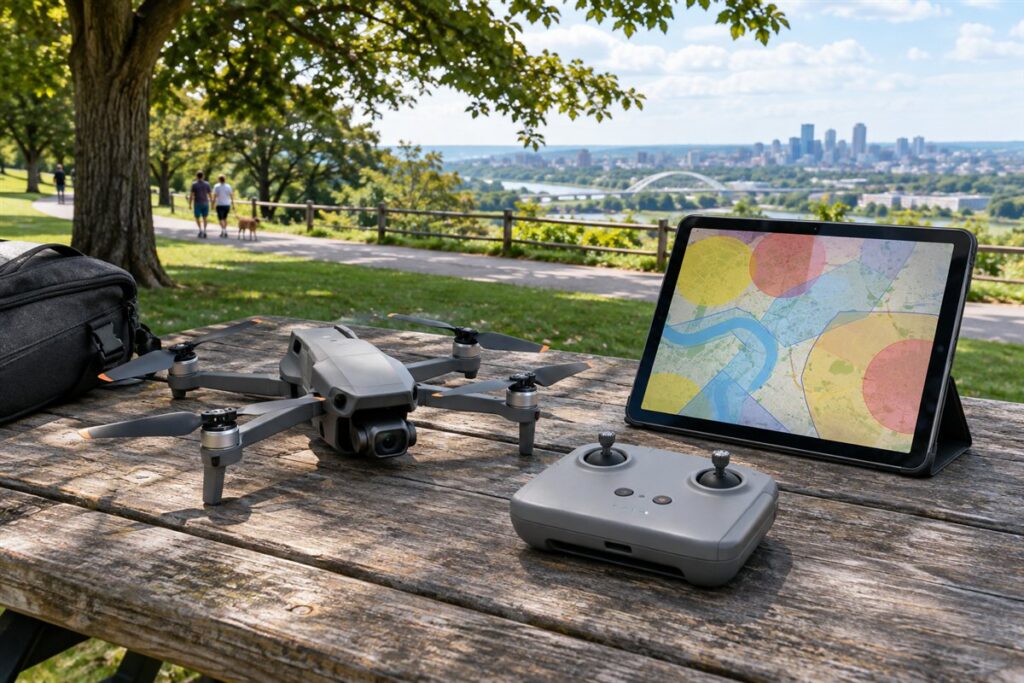
Drone photography rules usually cover three areas: the aircraft and pilot, the airspace you fly in, and the people and property below you. Each country and region handles these differently, so this guide gives general background only. It is not legal advice. Check your official aviation agency and consult a qualified professional for your situation.
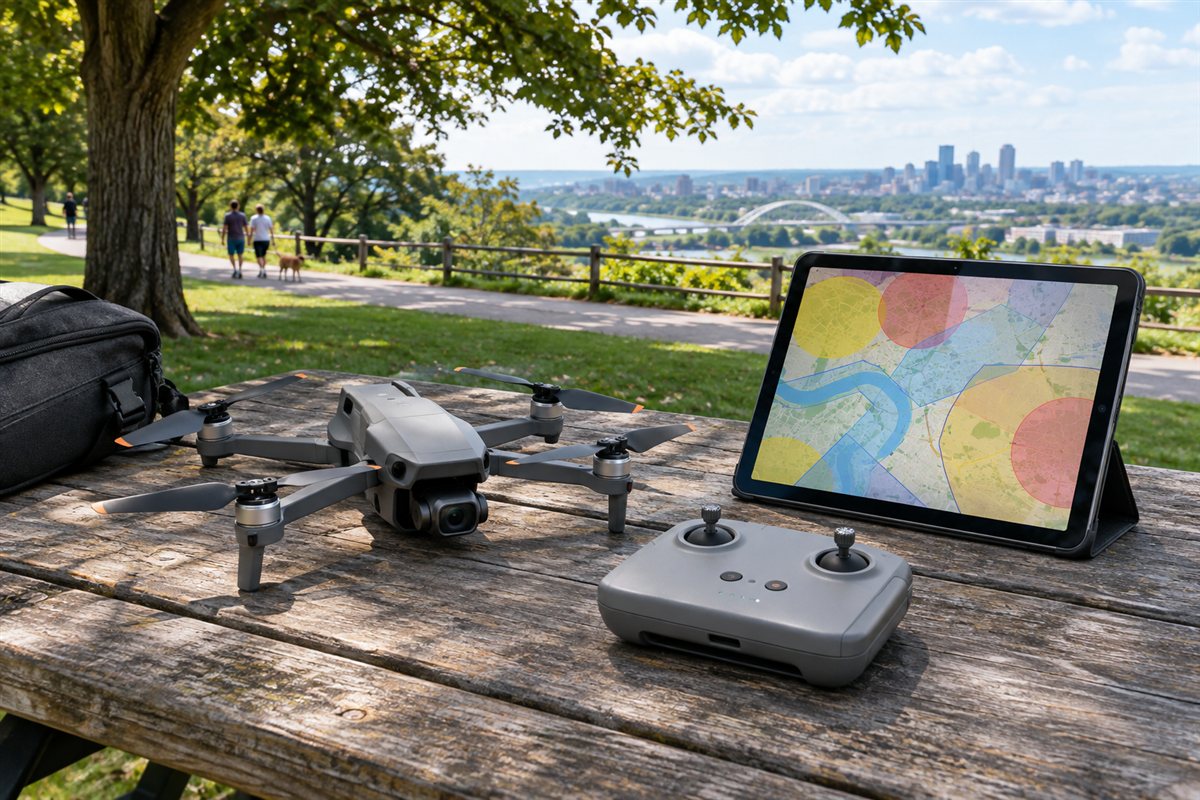
The Main Areas of Drone Rules
Most frameworks touch on a similar set of topics, even though the details differ widely. Knowing the categories helps you ask better questions.
- Aircraft and pilot: registration, labelling, training or certification.
- Airspace: zones near airports, controlled areas, temporary restrictions.
- Flight conduct: line of sight, height limits, flying near crowds or buildings.
- Privacy and property: filming people, landowner expectations, local bylaws.
- Special places: parks, heritage sites, events and sensitive facilities.
In this guide
Where to Find Reliable Information
Begin with the official website of your national aviation authority, then look for regional or city notices. Forum posts and videos can be out of date or describe another country. Look for a page that shows when it was last updated, and use maps or apps provided by official bodies when they exist.
If you travel with your drone, repeat the process for each destination. Some countries have extra conditions for visitors, and some restrict drone import or use altogether.
A Pre-Flight Planning Checklist
- Confirm the current rules for your location and for your type of flying, hobby or paid.
- Check airspace maps and any temporary notices for the day.
- Look at the site in advance: people, roads, private land, wildlife areas.
- Ask for permission where the land owner or manager controls access.
- Read the weather and battery planning in the manufacturer manual.
- Carry required documents and keep a simple flight log.
- Decide a clear plan for what you will do if the situation changes.
Photographers who sell or publish their work should also think about model and property releases, which are separate from aviation rules.
Keeping Records and Staying Current
Keep a simple folder with the guidance pages you relied on, noting the date you read them. Rules can change, and a record of what applied on the day of a flight is useful if questions come up later. Subscribe to official updates if the agency offers them, and recheck before every trip to a new place.
Hobby Versus Paid Work
One of the most important distinctions in many drone frameworks is whether you fly for recreation or for payment. Photographers often cross that line without noticing. Selling a print, delivering photos to a client, posting a video that earns money or flying on behalf of a business may all count as commercial use in some places, even if the flight itself looks the same as a hobby flight.
This general background cannot tell you which category applies in your country, so ask your aviation authority directly. The kinds of questions to ask include:
- Does my planned use count as commercial, and what changes if it does?
- Do I need a different kind of registration, a certificate or a test for paid work?
- Are there extra limits on where I can fly, such as distance from people, or on the weight of the aircraft?
- Do I need permission or an operating authorization for certain flights, such as near buildings or over people?
- Is insurance required, or would it be sensible even where it is not required?
If you are just starting to take paid jobs, write down the answers and keep them with your business papers. Clients may ask whether you are authorized to fly, and being able to show your documents builds trust. Treat the first paid assignment as a moment to double-check everything, not as a small step beyond a weekend flight.
People, Privacy and Releases
Aviation rules are only one layer. Photographing people and private property raises separate legal and ethical questions that vary widely. A drone can see over fences and into gardens, and many people feel uneasy about being filmed from above, which is why privacy is often treated seriously.
Think about the following before you fly:
- Where will the camera point? Avoid aiming at windows, private yards or people in places where they would expect privacy.
- Will people be recognizable? If you plan to publish or sell images with identifiable people, ask whether you need their permission, and check how the rules in your region treat public and private places.
- Is there a property owner or manager? Permission to take off from or fly over land can come from them, and some sites forbid filming altogether.
- Will the work be used commercially? Model and property releases are often used for commercial images, and a qualified adviser can explain what applies.
- How will you handle complaints? Be polite, explain what you are doing, and stop if someone objects and the situation suggests you should.
Rules about publishing images can be different from rules about taking them, and rules about data protection may also apply to footage of people. Because these topics overlap, a short consultation with a local professional can be worth the cost before you take on a big project.
Special Places, Events and Sensitive Sites
Many of the most photogenic locations have extra restrictions. National parks, protected landscapes, heritage sites, wildlife reserves and urban centers often have their own rules, and these can be stricter than general aviation rules.
- Parks and reserves: some forbid takeoff or landing inside their boundaries or require a permit. Wildlife can be disturbed by drones, so there may be seasonal limits near nesting or breeding areas.
- Heritage and religious sites: owners or authorities may restrict drones to protect visitors and structures. Check the site’s own notices.
- Events and crowds: stadiums, festivals and gatherings usually have temporary restrictions, and flying over crowds is commonly limited.
- Government and sensitive facilities: prisons, military areas, power plants and similar sites are often off limits, and breaking the rules can lead to serious consequences.
- Emergency scenes: stay well away from fires, accidents and rescue operations, since drones can interfere with emergency aircraft.
- Airports and heliports: controlled airspace needs special care, and approvals may be required.
The site’s management, the local council or the relevant authority is the right place to ask. Put requests in writing when you can, and keep the replies. If a place is not clearly allowed, treat it as not allowed until you have confirmation.
Taking Your Drone Abroad
Travel adds layers of rules on top of local ones. Some countries welcome visiting pilots with simple conditions, some require registration or permits in advance, and some ban drones altogether or restrict imports. Do your research well before you pack.
Start with the aviation authority and customs information for your destination, and look for a notice of when the page was last updated. Check whether your home registration or certificate is recognized, or whether you need a local one. Find out about restrictions on specific regions, cities and tourist sites. Ask your accommodation, tour operator or local contacts whether they know of any problems for visitors.
Packing also has rules. Batteries are subject to airline policies, so check the airline’s rules about lithium batteries and carry them according to those instructions. Keep documents together: registration, proof of ownership, insurance papers and printed copies of permission you have received. Border officials may ask about the drone, and an answer backed by paperwork helps.
If you cannot confirm the rules, consider leaving the drone at home, or flying only where you have clear permission. A trip is rarely improved by a confiscated aircraft or a fine.
What to Do After a Mistake or Incident
Even careful pilots can face a flyaway, a crash, a near miss or a complaint. Knowing in advance what to do makes the situation calmer and may reduce harm.
- Prioritize safety. If someone is hurt or property is damaged, help first and call emergency services if needed.
- Secure the area. Switch off the drone safely if you can, and remove the battery. Damaged batteries can be a fire risk, so handle them with care and keep them away from flammable items.
- Do not argue. Exchange contact details if appropriate, and stay polite. Avoid admitting fault in writing before you understand your obligations.
- Record facts: time, place, weather, settings, the flight log and photos of any damage. Save the drone’s data before it is overwritten.
- Find out whether you must report the event to the aviation authority or another body. Some jurisdictions require reports for certain kinds of accidents.
- Contact your insurer if you have a policy, and read what it requires you to do and by when.
- Seek advice from a qualified professional if there is a serious injury, damage to property or a threat of legal action.
After the event, review what happened and write a short note on what you would change. Learning from small mistakes keeps your flying safer and your record clean.
A Plain-Language Glossary of Terms You Will Meet
Official drone guidance is full of specialized words. Learning a few of them makes government pages and map tools far easier to read. Definitions differ slightly between countries, so treat the list below as general orientation and rely on your own aviation agency for exact meanings.
- Airspace class: a label for how a region of sky is managed. Some areas are open, while others require permission or are closed to small aircraft.
- Visual line of sight: keeping the aircraft in view with your own eyes, without relying only on a screen.
- Registration: a record that links an aircraft or operator to a person or business, required in many places for aircraft above certain weights.
- Remote pilot certificate or competency: proof of knowledge that some countries require, especially for paid work.
- Restricted or temporary zone: an area closed for events, emergencies, security or similar reasons, sometimes only for a limited time.
- Waiver or authorization: a formal permission to do something otherwise not allowed, usually requested in advance.
- Operator: the person or organization responsible for the flight.
When a term in an official page is unclear, look for a glossary on the agency’s site rather than guessing.
Questions to Ask and Where to Find Answers
The table below turns a vague worry into a specific question and shows the kind of source that can answer it. Always prefer official sources, and consult a qualified professional for anything that could carry serious consequences.
| Question | Where to look |
|---|---|
| Am I allowed to fly this aircraft at all? | Your national aviation agency’s rules for small unmanned aircraft |
| Is this location restricted? | Official airspace maps or approved apps recommended by the agency |
| Does the land owner or manager allow takeoff here? | The owner, the park authority or the local council |
| Do I need certification for paid work? | The agency’s commercial operation pages or a qualified adviser |
| Can I photograph people from the air? | Privacy guidance in your region and, if needed, a legal professional |
| What insurance do I need? | An insurance broker who understands aerial work |
Keep links to the pages you rely on in a bookmark folder, and revisit them before each trip, since rules and maps change.
Scenario Walkthroughs: Thinking Through Real Situations
Scenario one: a coastal cliff at sunset
You want sunset pictures above a cliff path. Check the airspace map for nearby airfields, helicopter routes or restricted zones. Find out whether the land belongs to a park, a private estate or a local authority and whether they allow takeoff and landing. Consider other visitors on the path; a calm, uncrowded moment protects both privacy and safety. If anything is unclear, choose another location instead of taking a chance.
Scenario two: a friend’s wedding
You are asked to capture aerial pictures at a wedding. Even if you are not paid, the presence of many people changes the risk. Ask the venue for permission, confirm the rules for flying near people in your region, and talk with the couple about what is comfortable. Consider whether a licensed professional is a better choice for the day.
Scenario three: a travel trip to a new country
Before packing, look up the destination’s rules for bringing and flying drones. Some countries require advance registration or forbid flying altogether. Allow plenty of time for paperwork, and carry printed copies of any approvals.
Working With Clients: Contracts, Expectations and Records
If you take payment for aerial photography, treat the job as a professional engagement. Put the details in writing: the locations, the deliverables, the date options in case weather prevents flight, and the extent of your responsibility for permissions. Make clear that flights depend on weather, airspace conditions and local rules, and that you may decline to fly if conditions are unsuitable.
Keep a simple record for each job: the date, location, the permissions you obtained, the checks you made and any notable events. If a question arises later, a tidy file shows you acted carefully. A written release for people who appear prominently in commissioned work is good practice, and a legal professional can help you prepare a suitable form for your region.
- Agree how images may be used, shared and credited.
- State who owns the files and how long you will keep them.
- Explain what happens if weather forces a rescheduled date.
Insurance and Equipment Responsibility
Insurance for aerial work is a specialized area. Standard household policies often exclude or limit coverage for aircraft, and business policies may differ again. A broker who understands the field can explain the options and the exclusions. Ask about liability coverage for damage to people or property, coverage for your equipment, and whether coverage extends to flights abroad.
Take care of the aircraft itself. Follow the maker’s instructions for batteries, updates and inspections, and keep a short log of maintenance. Before each flight, inspect the propellers, check that firmware is current, and verify that you have a safe place to launch and return. A well-maintained aircraft is not only safer, it also helps you demonstrate responsible behavior if anything goes wrong.
Protecting the Footage and Respecting Neighbors
The story does not end when you land. Aerial pictures can show homes, gardens and people in ways they might not expect. Think about how you store, share and publish your files. Avoid posting images that reveal private spaces or identify individuals who did not agree to be shown. If a neighbor expresses concern, listen calmly and explain what you are doing, and be willing to delete footage that causes real worry.
Courtesy goes a long way. Fly at sensible times, avoid hovering over private yards, and keep your sessions short in residential areas. A friendly manner and visible respect for others does more to protect the reputation of aerial photographers than any technical skill.
Pre-Trip Quick Check
- Confirm the aircraft is registered or covered by any required record in your region.
- Read the current official rules for your location and flight type.
- Check the airspace map and any temporary restrictions for the date.
- Obtain permission from the land owner or manager.
- Inspect the aircraft, battery and memory cards.
- Carry proof of registration, certification and any approvals.
- Plan a backup location if the first is unsuitable.
This guide gives general background only and is not legal advice. When rules are unclear, ask your aviation agency or a qualified professional before you fly.
Weather, Light and Site Judgement as Part of Responsible Flying
Rules tell you what is permitted, but good judgement decides whether a flight is sensible on the day. Wind, rain, cold and poor visibility all affect how an aircraft behaves, and the maker lists usage limits in the manual. Check the forecast the night before and again at the site, and be ready to cancel without regret. A picture is never worth losing an aircraft or endangering a bystander.
Walk the site on foot before you launch. Look for power lines, trees, masts, fences and crowds, and decide on a clear take-off and landing spot. Note where the sun will be, since low light can make it hard to see the aircraft and to judge distance. Agree on simple signals with a helper, if you have one, so they can watch for people approaching or other aircraft while you focus on the controls.
Habits of careful pilots
- Set the return-to-home height and test the behavior in an open area, following the maker’s instructions.
- Keep batteries warm in cold weather and never push them to the limit.
- Stop flying the moment you feel rushed, tired or distracted.
- Land early if conditions change.
Combining careful planning with respect for the rules makes aerial photography a lasting pleasure instead of a source of trouble.
Planning a Flight the Way a Careful Pilot Actually Does It
Rules become manageable when they are turned into a sequence you repeat. Start with the map: locate the exact spot, then look outward in rings — the site itself, its immediate surroundings, and the wider area you might drift into if wind or a return-to-home path takes the aircraft beyond your planned lines. Note what sits in each ring: homes, a school, a road, a footpath, a railway, water. Most legal trouble in drone photography comes not from the point you planned to photograph but from the space around it that nobody thought about, so the rings habit is the core skill this whole subject reduces to.
Next, check the airspace above those rings through official channels, and write down what you found with the date. Airspace status changes — temporary restrictions appear for events, emergencies and visits by officials — so a check from last month is background, not clearance. Then consider people: who will be beneath or near the flight, are they involved in your shoot or strangers, and can you choose a time when the place is quieter? Early mornings transform many locations, emptying pavements and beaches while also giving you the best light of the day; legality and beauty frequently reward the same alarm clock.
Finally, plan the exit before the entrance: where you will land if the battery fades early, what you will do if a crowd gathers or an official approaches, and at what point you will simply pack up. A pilot who has decided their limits on the ground rarely has to improvise them in the air, and improvisation under time pressure is where both accidents and offences are born. Write the plan down, even briefly — the act of writing surfaces the flaw in it while fixing the flaw is still free.
Reading a location like a risk assessor
Walk the site before you fly it whenever you can. From the ground you notice what maps hide: the children’s play area behind the trees, the horse paddock beyond the hedge, the footpath that cuts across your planned orbit, the building site crane that was not there in satellite images. Photographers already know how to read a location for light; add the second reading, for people, property and escape routes, and the two together take only minutes. If you cannot visit first, arrive early enough to do the reading on the day, and be genuinely willing to move the flight or cancel it if the reading fails.
People, Privacy and the Law’s Blind Spots
Much confusion comes from expecting one law to answer every question. Airspace rules govern whether and how you may fly. Privacy and data rules govern what you may record and keep. Trespass and nuisance principles govern your effect on other people’s enjoyment of their property. Publication and commercial rules govern what you may sell or print. A flight can satisfy one layer and fail another — perfectly lawful flying that produces an image you should not publish, or a welcome portrait session that required an airspace authorisation nobody obtained. When a situation feels grey, ask which layer is actually grey; the answer usually clarifies which rulebook, and which official guidance, applies.
Practical courtesy covers most of the gaps the law leaves open. Do not loiter over gardens, windows or gatherings that are not your subject. Keep the aircraft moving with purpose rather than hovering where people feel watched. If someone below is visibly uncomfortable, move away first and discuss later — the sky is large, and no composition survives being the person who ruined a stranger’s afternoon. Photographers who behave this way rarely meet the sharp end of any law, because complaints, not patrols, are how most enforcement begins.
Photographing events you were hired for
An organiser’s invitation is not the same as a crowd’s consent, and it is certainly not an airspace authorisation. When you are hired for an event, establish in writing who is responsible for permissions, how the audience will be informed, and what areas are agreed for flying — ideally positions that keep the aircraft away from directly overhead of spectators. Build the answer into your contract before the day, because on the day itself the pressure to just get the shot will be at its maximum and your preparation will be at its most valuable.
When Something Goes Wrong: The First Hour Matters
If the aircraft comes down somewhere it should not, your priorities are people, then honesty, then paperwork. Make the scene safe, check for injury or damage, and exchange details with anyone affected as you would after any accident. Do not tidy away evidence or minimise what happened; a straightforward account given early is remembered kindly by insurers, authorities and neighbours alike. Photograph the scene and the aircraft’s condition, preserve the flight logs exactly as they are, and write your own account the same day while times and sequences are still accurate in your memory.
Afterwards, check what your rules require about reporting — many systems ask for certain incidents to be reported to the aviation authority or an accident body, and insurers always require prompt notice. Then do the unglamorous learning: identify the chain that led to the incident, change the checklist so the chain breaks earlier, and record the change. Pilots who treat an incident as tuition tend to have exactly one. Pilots who treat it as bad luck collect the set.
Near misses count too
The flight that nearly went wrong — the sudden wind, the bird strike avoided by luck, the battery that landed on fumes — deserves the same written honesty, minus the reporting. Near misses are free lessons, and a logbook that records them becomes, over a season, a map of your personal weak points: the locations, conditions and habits that deserve extra margin. Read it before planning similar flights. Experience is only the name we give to lessons we actually wrote down.
Travelling With a Drone Without Ruining the Trip
Research each destination before you pack, not after you land: whether recreational flying is welcomed, registered, restricted or effectively banned, what the local separation rules look like, and which places — national parks, heritage sites, city centres — carry their own prohibitions. Keep a copy of what you found for each stop. Rules differ enough between neighbouring countries that yesterday’s lawful flight proves nothing about today’s, and confiscation at a border or a park gate is a miserable way to learn a regulation that a ten-minute search would have revealed.
Batteries travel under airline rules that are stricter than drone rules: carry them in the cabin, protect their terminals, and check your airline’s limits before the airport, not at the check-in desk. Pack the aircraft so it can be inspected without a suitcase explosion of parts, and keep your registration and insurance documents with you rather than in checked luggage. A little administrative neatness at the airport is the difference between a tool you use all trip and a story you tell about the airport.
Flying respectfully in someone else’s home place
Abroad, add cultural reading to legal reading. A flight that is lawful may still be unwelcome over a religious site, a ceremony, a small village’s private life. Ask locally where you can — a guide, a host, a landowner — and accept a refusal with good grace and no argument about what the rules technically allow. Photographers are guests with cameras in most of the interesting places on earth, and the guest who asks first is invited back.
The Rules Behind the Rules: Why They Are Shaped This Way
Understanding the purpose of a rule makes it easier to follow in the cases the rulebook did not imagine. Separation distances exist because a small aircraft that fails becomes falling mass, and because pilots cannot judge another person’s comfort from the ground. Airspace restrictions exist because the sky is shared with aircraft whose occupants cannot see you coming. Registration exists so that an aircraft found somewhere it should not be can be traced to a person who can explain it. When a situation is genuinely ambiguous, deciding by the purpose — would this keep people safe, unsurprised and able to go about their day — lands you on the right side of the written rule far more often than chance.
That purpose-first habit also keeps you calm when rules differ between places. The details vary because countries weigh the same concerns differently; the concerns themselves — safety, privacy, accountability — are universal. A photographer who internalises the concerns can arrive anywhere, read the local expression of them, and fly appropriately within the hour. One who memorised only their home numbers is lost the moment the numbers change.
There is a confidence that comes from this rhythm that clients, landowners and officials all recognise within a minute of conversation. It cannot be faked with vocabulary, because it shows in the small things: the dated note of a check, the launch point chosen without hesitation, the willingness to wait for a path to clear. If you want to be treated as a professional in a field where anyone can buy the equipment, that visible preparedness is the whole of the difference.
And on the days when the checks say no — the restriction, the crowd, the weather closing in — treat the cancelled flight as the system working rather than failing. The photograph you did not take costs you an afternoon. The incident you did not have may have saved your aircraft, your insurance, your reputation and somebody else’s sense of safety in their own garden, all in a single decision nobody will ever applaud. Applaud it yourself, log it, and go back on a better morning.
A Seasonal Rhythm for Staying Sharp
Give the legal side of your flying a rhythm like the one you give your equipment. At the start of the season: re-read the official guidance, confirm registrations and insurance, refresh your checklists, and fly a practice session somewhere easy to rebuild timing and judgement. During the season: log every flight, including the dull ones, because the log is what turns scattered outings into reviewable experience. At the season’s end: read the log, note the near misses and the places that surprised you, and fold those lessons into next year’s personal rules. An hour across a whole year, and it compounds like interest.
Photographers accept this rhythm for batteries and sensors without complaint. Extending it to the rules is simply recognising that the legal environment is also equipment — the kind that keeps every other kind usable.
Teaching a Beginner Without Teaching Them Your Shortcuts
If you fly with newcomers — a friend, a student, a junior colleague — narrate your checks out loud. Say why you are looking at the map, why this launch point and not that one, why the flight waits ten minutes for a walking group to pass. Beginners copy what they see, and if all they see is an aircraft rising, they learn that flying is the rising. If they hear the reasoning, they learn the actual craft, which is mostly judgement exercised on the ground. You also audit yourself in the process; explaining a decision you cannot justify is a reliable way to notice it needs changing.
Resist lending your aircraft for a quick try in a place you would not fly yourself, and resist the phrase it will probably be fine in all its forms. Probably is where incidents live. The community’s reputation — and therefore the rules’ future strictness — is built one flight at a time by pilots nobody ever writes about, and every careful flight is a small argument for keeping the skies open to photographers.
Keeping a personal rulebook
Beyond the official rules, experienced pilots accumulate personal ones: conditions they will not fly in, places they will not fly at all, margins they keep even when the law allows less. Write yours down with your checklists. Personal rules convert hard-won experience into future behaviour, and they protect you on the tired, rushed, eager days when judgement is thinnest — which is to say, on exactly the days the official rules alone were never going to be enough.
None of this needs to make flying feel bureaucratic. The careful pilots are recognisable by how relaxed they are at the launch point: the checks are done, the plan is written, the limits are decided, and what remains is the photography — which was the point of carrying the thing up the hill in the first place.
FAQ
Are drone rules the same everywhere?
No. Frameworks differ between countries and often between regions or cities. Never assume a rule you read about elsewhere applies to your location.
Can I fly over private property to take photos?
That question mixes aviation rules, privacy expectations and property law, and answers vary by place. Ask the official agency and a qualified local professional rather than relying on general articles.
Does selling one photo make me a commercial pilot?
It might, depending on where you live. Many frameworks treat paid or business-related flights differently, so ask your aviation authority how it classifies your use.
Do I need a release to publish drone photos of people?
It depends on your location and how the image is used. Commercial use often calls for releases, so check with a qualified local adviser.
Can I fly in a national park?
Many parks restrict or prohibit drones. Check the park's own rules and ask the managing authority before you go.
What should I carry when I fly?
Bring any registration or certificate required in your area, the manual, a flight log and any permissions you have received.
Can I take my drone abroad without checking?
It is risky. Rules vary widely, and some countries restrict or ban drones. Research in advance and carry your paperwork.
What if a neighbor complains about my flight?
Stay calm and polite, explain what you were doing and stop if the situation warrants it. If the issue continues, learn about local privacy rules.
Is insurance necessary for photographers?
Requirements differ. Even where it is not mandatory, many photographers consider cover for liability, so ask your authority and an insurer.
Can I fly from a public place over private land to photograph it?
Taking off from somewhere you may lawfully be is only the first question; the flight over the land and the photographing of it raise the others — airspace and separation rules above, privacy and courtesy below. A single pass at a lawful height photographing a landscape that includes property is a different matter from hovering over one garden to study it. If the property itself is your subject and it is not yours, the professional answer is to seek the owner’s agreement first, which converts a potential dispute into a commission surprisingly often.
Do I need permission to fly in a city park?
Very often the landowner — usually the local authority — sets its own conditions for parks, separate from national airspace rules, and those conditions range from welcome to a complete ban. Check the authority’s published policy and any signs at the site, and keep a note of what you found with your flight plan. Being right about the aviation rules while ignoring the landowner’s is a common and avoidable way to have a flight ended by a ranger.
What should I carry to show I am flying lawfully?
Carry whatever your system issues or requires — registration or operator identification, any certificate relevant to the flight, and insurance details if you hold cover — plus a short note of your checks for the day. On a phone is fine for most of it if that is how your authority provides it. The point is not to win arguments; it is to make any conversation with an official or a landowner short, calm and factual, which is how nearly all of them end when the pilot is prepared.
How close can I fly to buildings and infrastructure?
Follow your rules’ stated separations for buildings, and treat sensitive infrastructure — power lines, substations, railways, dams, emergency facilities — with an extra margin of your own. Apart from the legal position, these are unforgiving environments for a small aircraft: interference, turbulence around structures and catastrophic consequences for a falling drone all argue for distance. If a shot genuinely needs to be closer, that is a sign the job needs formal permissions and a proper plan, not a braver pilot.
Can I fly at a beach or over water?
Coasts are popular for good reason, and they concentrate every consideration at once: crowds that shift with the weather, wildlife that the law protects and that drones genuinely disturb, lifeboat and coastguard activity, and wind that changes around headlands. Choose quiet times, keep well away from birds and seals and any marked protected areas, and remember that over water your aircraft has no safe forced landing — plan battery margins accordingly. The legal and the practical are the same advice here: give everything more room than feels necessary.
What changes when I fly for a charity or a friend, free of charge?
The airspace, separation and landowner rules are identical; only the commercial-licensing layer may treat unpaid work differently, and even there the purpose of the flight matters more than the presence of a fee. A free flight for a friend’s business is business flying in substance. Do not let the absence of money talk you out of the planning, insurance thinking and records you would apply to a paid job — the physics and the privacy concerns are entirely unimpressed by your generosity.
Is it ever acceptable to fly first and check the rules afterwards?
No, and the reason is practical rather than moral: the things the rules protect against — an incident, a complaint, a prohibited area entered unknowingly — cannot be undone by a search performed later. Checking beforehand is quick, free and increasingly built into official apps and maps. Make it the first step of planning rather than a stage at all, the way checking the weather is, and the question stops arising.
How do I keep up when the rules change?
Follow your aviation authority’s official channels and re-read the core guidance at the start of each flying season, dating a note in your log when you have done so. Rules for small drones are still young and are revised as experience accumulates, so last year’s knowledge has a shelf life. Treat any article — including this one — as a map of what to check rather than as the check itself, and let official sources have the last word before every flight.
That is the entire method, honestly stated.
Small habits, repeated on unremarkable days, are what lawful flying actually consists of in practice.
Carry the rules the way you carry spare batteries: checked before you leave, appropriate to the day’s flying, and never left behind because the bag felt heavy enough already without them.
What if two sources give me conflicting information about a rule?
Trust the hierarchy: the aviation authority’s current published guidance outranks everything else, landowner conditions add their layer on top, and articles, videos and forum posts sit at the bottom as orientation only. Where official material itself seems unclear, many authorities run enquiry channels — use them, and keep the reply with your records. Acting on the most authoritative answer you could obtain, and being able to show it, is the strongest position a pilot can occupy.
Can I use older drone photographs commercially if the rules have changed since?
What matters for an old photograph is chiefly the position when it was taken — a flight lawful at the time does not become unlawful because rules later tightened — together with the ordinary rules about privacy, property and how the image is used now. Keep your logs and records for old work rather than discarding them, since they are your evidence of the circumstances. If a specific use worries you, that is a question for professional advice about your jurisdiction, not for a photographer’s guess.
Should I watermark or label aerial images with flight details?
You do not need to publish your homework, but keeping the flight details with the file — in its metadata or your job records — is wise. If an image is ever questioned, being able to show when, where and under what checks it was made settles most matters immediately. Think of the record as part of the photograph, the way a negative’s sleeve once carried the date and place; future-you will be as grateful as any archivist.
What is the most common legal mistake photographers make with drones?
Assuming that a beautiful, empty-looking place is an uncomplicated place. Emptiness in a photograph hides the footpath behind the ridge, the protected nesting site in the cliff, the landowner whose permission was needed, the temporary restriction posted that morning. The photographers who stay out of trouble are not the ones who know the most rules; they are the ones who check this specific place, on this specific day, before this specific flight.
The Short Version
Drone rules cover the pilot, the airspace, the conduct of the flight and the surroundings. Learn the categories, use official sources, and plan each flight with a checklist. Because rules vary and change, confirm details with the proper agency or a qualified adviser.
