Disclosure: As an Amazon Associate, reviewstook.com earns from qualifying purchases. If you buy through a link on this page, we may earn a commission at no extra cost to you.
Where to Buy
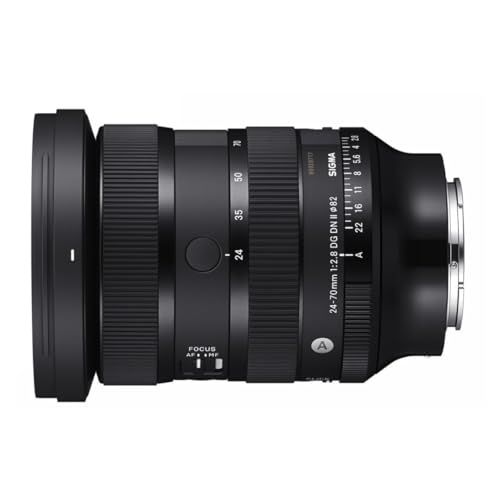
Three picks lead our cyber monday camera lens deals shortlist — with one framing rule stated before anything else: Cyber Monday, November 30, 2026, has not happened yet, so every price in this guide is a Black Friday Week sighting from November 20, 2026, presented as a benchmark to judge Monday against, not as a Cyber Monday price. Start with the Sigma 24-70mm f/2.8 DG DN II Art if you shoot Sony full frame and want the professional standard zoom, benchmarked at $1,119 against a $1,319 reference; the Tamron 28-75mm f/2.8 Di III VXD G2 if the same constant f/2.8 job needs doing for hundreds less, seen at $695; or the Canon RF 50mm f/1.8 STM if you are on Canon RF and want the cheapest genuinely transformative lens in this guide, seen at $199 against a $239 reference. Carry these dated figures into Monday, and let the live listing — never the banner — make the final argument.
Cyber Monday Camera Lens Deals: Benchmarks First, Because Monday Has Not Happened Yet
If you are hunting cyber monday camera lens deals, bring reference prices with you — because on Monday, November 30, 2026, every listing will claim to be a deal, and only some of them will be telling the truth. Cyber Monday 2026 has not happened yet, and this guide is honest about what that means: every price in it is a Black Friday Week sighting verified on November 20, 2026, presented as a benchmark for judging Monday’s live prices. These are not Cyber Monday prices, and nothing here claims they are. A lens seen at $695 on November 20 that appears on Monday at $729 is a weaker offer wearing event clothing; the same lens at $649 is a genuinely stronger deal. That comparison — live price against dated benchmark, model by model and mount by mount — is the entire method of this guide,
The calendar, plainly: Amazon Black Friday Week runs November 19–30, 2026, Black Friday itself falls on Friday, November 27, and Cyber Monday closes the event on Monday, November 30. Camera bodies are discounted aggressively because manufacturers want you inside a system; lenses are discounted reluctantly, in smaller percentages, and often on third-party glass rather than first-party flagships. A verified 15% sighting on a professional zoom that normally never moves is a better deal than a noisy 40% badge on a kit lens nobody should buy twice — but you can only know that if you walk into Monday already holding the November 20 figures.
The six picks span the decisions lens buyers actually face: a flagship-class standard zoom for Sony E-mount, the value standard zoom that undercuts it by hundreds, a fast telephoto zoom that escapes the $2,000-plus first-party class, a classic portrait prime, and two inexpensive 50mm primes — one for Canon RF, one for Sony E — that are the correct first upgrade for anyone still shooting a kit zoom. The Sony-heavy balance reflects where the verified sightings were strongest; other-mount shooters should apply the framework sections to their own mount’s equivalents of the same lens classes, because the method travels even where the specific benchmarks do not.
A note on sources, because it matters to how much you should trust these figures: all six picks are reused from this site’s own camera lens Black Friday coverage, where each was verified on November 20, 2026 against Amazon’s catalog data for this site, with price, reference price where one was returned, and official image recorded from that verification. Re-verifying identical lenses on the same day would burn shared catalog quota to learn nothing new, so this guide carries the verified figures forward as Black Friday Week benchmarks. Where no reference price was returned — two of the six — no percentage is printed, and the absolute sighting speaks for itself, which for lenses is usually the more honest number anyway.
In this guide
Quick Picks
Short on time? These are the six lenses, the buyer each one suits, and the Black Friday Week benchmark sighted on November 20, 2026. The price column is deliberately titled around benchmarks: Cyber Monday prices will be set live on November 30, 2026, and this table gives you verified figures to judge them against. At or below the benchmark on Monday, a deal is proven; above it, you are paying more than Black Friday Week offered. Check the live price, the mount and the exact listing before you buy.
| Pick | Best for | Benchmarks Spotted in Black Friday Week | Deal |
|---|---|---|---|
| Sigma 24-70mm f/2.8 DG DN II Art (Sony E) | Best overall | Seen at $1,119 on November 20, 2026 (reference $1,319, about 15% off) | Check on Amazon |
| Tamron 28-75mm f/2.8 Di III VXD G2 (Sony E) | Best value standard zoom | Seen at $695 on November 20, 2026 (no reference price returned — no percentage claimed) | Check on Amazon |
| Tamron 70-180mm f/2.8 Di III VC VXD G2 (Sony E) | Best telephoto value | Seen at $999 on November 20, 2026 (reference $1,099, about 9% off) | Check on Amazon |
| Sony FE 85mm f/1.8 | Best portrait prime | Seen at $648 on November 20, 2026 (reference $699.99, about 7% off) | Check on Amazon |
| Canon RF 50mm f/1.8 STM | Best first lens for Canon RF | Seen at $199 on November 20, 2026 (reference $239, about 17% off) | Check on Amazon |
| Sony FE 50mm f/1.8 | Best budget prime for Sony | Seen at $198 on November 20, 2026 (no reference price returned — no percentage claimed) | Check on Amazon |
How These Deals Were Chosen
All six picks were verified through this site’s own Amazon catalog data on November 20, 2026, during Black Friday Week, and are reused here from that same-day verified lens coverage under a strict cache rule: re-verifying identical products on the same day would burn shared data quota to learn nothing new, so each pick carries the full verification trail of its source guide — exact brand, model and mount matched against the maker’s listing title, current price, reference price where one was returned, and official image, all dated November 20, 2026.
The source verification was strict about listing hygiene, and that strictness carries into these benchmarks. Lens listings are a minefield of near-duplicates: the same lens appears bare, in retailer bundles padded with filter kits of unknown optical quality, and in renewed condition, all at different prices. Where a bare lens listing existed, that is the one verified and benchmarked; bundle listings at the same headline price are not the same offer.
The role-first method of the source guide carries over unchanged: the six roles were assigned before products were, so the benchmarks cover six different buying decisions rather than six variations of one lens. Price honesty was the second filter: two of the six benchmarks carry no percentage because the verification returned no reference price, and this guide prints none for them. Judge those two — the Tamron 28-75mm G2 at $695 and the Sony FE 50mm at $198 — the way experienced lens buyers judge everything: absolute price against what the lens does and what it has historically cost.
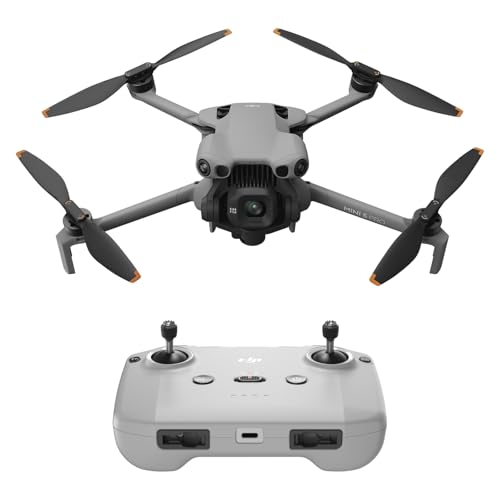
Finally, a note on what was left out, in the source guide and therefore here. First-party flagship zooms were passed over as benchmarks: their sightings were weaker, and a benchmark nobody should act on helps nobody. And every listing whose title could not be matched with confidence to a single specific model, mount and generation was excluded outright: in a category where one generation’s name differs from the next by a single suffix, a vague listing is a risk no discount justifies. Readers weighing the flying camera against a new lens for the same budget will find Monday’s other big camera decision in our Cyber Monday Drone Deals 2026 guide, built on the same benchmark method.

Top pick
1. Sigma 24-70mm f/2.8 DG DN II Art (Sony E) — Best Overall
Badge: Best Overall. The 24-70mm f/2.8 is the lens working photographers build a kit around, and Sigma’s second-generation DG DN II Art is the version that finally matches the first-party flagship it undercuts. Its benchmark carries this guide’s strongest professional percentage: seen at $1,119 on November 20, 2026 against a $1,319 reference price — about 15% off. The verified listing describes a full-frame Sony E-mount zoom with a constant f/2.8 aperture and an optical design including six FLD glass elements.
What the second generation fixed matters more than what it kept. The lens is smaller and lighter than the original Art zoom, its autofocus motors are faster and quieter for video, and it adds an aperture ring with a click switch — tactile control stills shooters love and a de-clicked option video shooters need. In practice this lens handles a wedding, a product shoot, a travel day and a talking-head video without coming off the camera — exactly the job description of a 24-70.
For Cyber Monday, treat $1,119 as the line to beat or match: at or below it on Monday, the offer is proven against Black Friday Week; above it, you are paying more than this lens was seen at on November 20 — possibly worth it for a working shooter who needs it now, but a conscious decision, not an assumption created by a countdown timer. Run the comparison on the exact listing: this benchmark belongs to the bare Sony E-mount lens, and bundle listings with filter kits and third-party sellers are different products. Budget for a protection filter in its thread size in the same cart; Monday is the cheapest day left to add one.
Mini specs (verified from the listing):
- Mount: Sony E, full-frame
- Range/aperture: 24-70mm, constant f/2.8
- Optics: includes 6 FLD glass elements (per listing)
- Controls: aperture ring with click switch
- Generation: DG DN II Art (second generation)
Strengths
- Flagship-class range and aperture at about 15% below its reference at benchmark.
- Faster, quieter autofocus and an aperture ring make it a genuine hybrid stills/video lens.
- Smaller and lighter than the first-generation Art zoom it replaces.
Trade-offs
- Verified listing is Sony E-mount only — no use to Canon RF or Nikon Z owners.
- Still a large, front-heavy lens on compact bodies like the a7C line.
- Professional money even at benchmark; casual shooters get their joy cheaper below.
Verdict: Best for: Sony full-frame shooters who want one professional zoom for paid or serious personal work. Not suited for: other mounts, ultralight travel kits, or anyone whose kit zoom already covers this range at apertures they never open past f/5.6.
Benchmark details: Seen at $1,119 on November 20, 2026, against a $1,319 reference price — about 15% off, verified in this site’s camera lens Black Friday coverage. The bare lens listing is the one benchmarked. On Cyber Monday, compare the live price for this exact model and mount against $1,119.
Check on Amazon · See the listing · View the live price and full details

2. Tamron 28-75mm f/2.8 Di III VXD G2 (Sony E) — Best Value Standard Zoom
Badge: Best Value Standard Zoom. If the Sigma is the professional’s choice, the Tamron 28-75mm G2 is the smart money’s — and it carries the benchmark that most needs explaining, because it has no percentage attached. Seen at $695 on November 20, 2026, with no reference price returned, so no discount is claimed for it anywhere in this guide. What $695 buys is the same constant f/2.8 aperture across a nearly identical range for $424 less than the Sigma’s sighting, in a smaller, lighter body that is famously close-focusing at the wide end.
The G2’s party trick is close focus: at 28mm it focuses down to distances that let it double as a detail and product lens, which is why so many creators use it as a one-lens video and e-commerce setup. The VXD autofocus motor is quick and quiet, the lens is weather-sealed well enough for outdoor work, and Tamron’s six-year USA warranty is longer than most rivals offer It also takes 67mm filters, shared with the Tamron telephoto below, so a polarizer bought for this lens serves the next one too.
For Cyber Monday, treat $695 as the line to beat or match, and police the listing type as carefully as the price: several bundle listings sat at $699 during Black Friday Week with filter kits attached, and the bare lens at $695 was the cleaner buy. What do you give up against the Sigma? The range starts at 28mm instead of 24mm — meaningfully wider on the Sigma for interiors, real estate and vlogging at arm’s length — the build feels less dense, and there is no aperture ring. For shooters who live at the wide end, the Sigma earns its premium; for everyone else, a Monday price at or below $695 for this exact bare listing is the standard zoom deal of the event. Creators furnishing a desk setup in the same cart will find the audio and capture side of the sale in our Best Black Friday Streaming Gear Deals coverage.
Mini specs (verified from the listing):
- Mount: Sony E, full-frame (also usable on APS-C bodies)
- Range/aperture: 28-75mm, constant f/2.8
- Autofocus: VXD linear motor
- Close focus: fast close-focusing at the wide end
- Warranty: Tamron 6-year limited USA warranty
Strengths
- Constant f/2.8 standard zoom at a $695 benchmark — the lowest sighting in its class here.
- Close-focus ability at 28mm doubles it as a product and detail lens.
- Compact, light, 67mm filters, and backed by a six-year warranty.
Trade-offs
- Starts at 28mm, not 24mm — wide-angle shooters will feel the difference indoors.
- No aperture ring, and build feel trails the Sigma Art.
- No reference price was returned: the benchmark is a figure to match, not a proven discount.
Verdict: Best for: Sony shooters upgrading from a kit zoom for events, travel, portraits and creator work on a sane budget. Not suited for: interior and architecture shooters who need a true 24mm wide end, or aperture-ring traditionalists.
Benchmark details: Seen at $695 on November 20, 2026, verified in this site’s camera lens Black Friday coverage. No reference price was returned, so no percentage is claimed. On Cyber Monday, compare the live price for the bare lens listing against $695.
Check on Amazon · See the listing · View the live price and full details

3. Tamron 70-180mm f/2.8 Di III VC VXD G2 (Sony E) — Best Telephoto Value
Badge: Best Telephoto Value. A fast telephoto zoom is the second lens most kits need, and it is usually where the money runs out: first-party 70-200mm f/2.8 lenses live well above $2,000. The Tamron 70-180mm G2 is the escape route, and its benchmark proves the escape was open on November 20: seen at $999 against a $1,099 reference price — about 9% off. The verified listing describes a full-frame Sony E-mount telephoto zoom with a constant f/2.8 aperture, VC image stabilization added in this second generation, and a VXD autofocus motor, in a body notably shorter and lighter than a traditional 70-200.
The G2 generation fixed the original’s two weaknesses: it added VC stabilization — important on Sony bodies whose in-body stabilization benefits from a stabilized lens at telephoto lengths — and it improved close focusing, so the lens handles detail shots and tight portraits at 70mm without a fight. The VXD autofocus tracks moving subjects credibly for school sports, pets and local wildlife, and the 67mm filter thread matches the 28-75mm G2 above, so the two Tamrons share filters like a designed pair. Together at their benchmarks they total $1,694 for a two-zoom f/2.8 kit — less than one first-party 70-200.
For Cyber Monday, treat $999 as the line to beat or match, and be clear-eyed about the compromise in the name: it ends at 180mm, not 200mm. On a high-resolution body you can crop the difference; at a distant subject, you will occasionally wish for the extra reach or a teleconverter, which this lens does not take. The 9% saving is the shallowest percentage among the referenced picks, so buy it because $999 for a stabilized f/2.8 telephoto zoom is a strong absolute price, not because 9% sounds dramatic.
Mini specs (verified from the listing):
- Mount: Sony E, full-frame
- Range/aperture: 70-180mm, constant f/2.8
- Stabilization: VC (Vibration Compensation)
- Autofocus: VXD linear motor
- Filter thread: 67mm (shared with the Tamron 28-75mm G2)
Strengths
- A stabilized f/2.8 telephoto zoom under $1,000 at benchmark — a class of one.
- Shorter and lighter than traditional 70-200mm designs, so it actually gets carried.
- Shares 67mm filters with the Tamron standard zoom for a tidy two-lens kit.
Trade-offs
- Ends at 180mm and takes no teleconverter — reach is capped.
- The 9% saving against reference is modest; the value is in the absolute price.
- Sony E-mount only in the verified listing.
Verdict: Best for: Sony shooters adding portraits, school sports, pets and travel telephoto work without a $2,000-plus bill. Not suited for: birders and field-sports shooters who need 200mm and beyond, or teleconverter users.
Benchmark details: Seen at $999 on November 20, 2026, against a $1,099 reference price — about 9% off, verified in this site’s camera lens Black Friday coverage. On Cyber Monday, compare the live price for this exact model against $999.
Check on Amazon · See the listing · View the live price and full details

4. Sony FE 85mm f/1.8 — Best Portrait Prime
Badge: Best Portrait Prime. Every mount has one lens that owners recommend without hesitation, and for Sony E it is the FE 85mm f/1.8. Its benchmark carries the smallest percentage in this guide, and it is included anyway, because the lens itself is the deal: seen at $648 on November 20, 2026 against a $699.99 reference price — about 7% off. The verified listing describes a full-frame Sony E medium-telephoto fixed prime with an f/1.8 to f/22 aperture range.
The 85mm focal length flatters faces by geometry: it lets you frame a head-and-shoulders portrait from a distance that does not distort features or crowd your subject, and f/1.8 melts a background into the smooth separation clients think of as professional. The lens carries a nine-blade rounded aperture for that smoothness, is small enough to live in a jacket pocket, focuses fast and quietly enough for event work and candid kids, and has a customizable focus-hold button. Against the zooms above, it is the specialist — and specialists are what turn a kit into a style. Shooters building out the moving-image side of the same kit will find its natural companions in our Apple Black Friday Deals 2026 coverage.
For Cyber Monday, treat $648 as the fairness line: at or below it, the price is proven against Black Friday Week; above it, you are paying a premium for a lens seen cheaper ten days earlier. The caveats are the ones primes always carry: your feet are the zoom, so it is the wrong tool for tight rooms and fast-changing scenes, and 85mm on an APS-C body becomes a long 127mm-equivalent that suits portraits and little else. The mild 7% benchmark also means patience is cheap here — this lens is discounted mildly and often. If portraits are a someday interest, Monday can pass it by; if they are this winter’s work, $648 is a fair, verified price for the mount’s default recommendation.
Mini specs (verified from the listing):
- Mount: Sony E, full-frame
- Focal length/aperture: 85mm, f/1.8 (to f/22, per listing)
- Aperture blades: 9, rounded, for smooth background blur
- Build: compact medium-telephoto prime with focus-hold button
- Use case: portraits, events, interviews
Strengths
- The classic portrait focal length with f/1.8 subject separation zooms cannot match.
- Small, light and fast-focusing enough to double as an event and candid lens.
- A long-term keeper lens whose relevance outlasts camera bodies.
Trade-offs
- Fixed focal length: framing is done by walking, not zooming.
- The 7% benchmark saving is mild — this is a fairness line, not a clearance event.
- Long effective reach on APS-C bodies limits it to portrait duty there.
Verdict: Best for: Sony portrait, family and event shooters ready for their first true prime. Not suited for: tight interiors, run-and-gun coverage, or buyers waiting for a dramatic percentage cut.
Benchmark details: Seen at $648 on November 20, 2026, against a $699.99 reference price — about 7% off, verified in this site’s camera lens Black Friday coverage. The benchmark belongs to the standard listing, not bundle listings. On Cyber Monday, compare the live price against $648.
Check on Amazon · See the listing · View the live price and full details

5. Canon RF 50mm f/1.8 STM — Best First Lens for Canon RF
Badge: Best First Lens for Canon RF. Canon shooters have waited patiently through a Sony-heavy guide; this is their pick, and it carries the deepest verified percentage in it. The RF 50mm f/1.8 STM — the nifty fifty of the RF system — was seen at $199 on November 20, 2026 against a $239 reference price, about 17% off. The verified listing describes a mirrorless fixed focal length lens with a compact, lightweight design. For the price of a nice dinner out, it transforms an EOS R camera: the f/1.8 aperture gathers roughly four times the light of a kit zoom at 50mm, blurs backgrounds kit zooms cannot blur, and weighs so little the camera feels like a different, friendlier machine.
Why a fixed 50mm changes beginners faster than any zoom: it removes a variable. You frame by moving, you learn what depth of field actually does because f/1.8 makes it visible in every shot, and low-light photos stop being a smear of high sensitivity settings. The STM motor focuses smoothly and quietly enough for video, and on APS-C RF bodies it becomes a short portrait lens of about 80mm equivalent — two lenses’ worth of education from one $199 purchase. Gift buyers working through a wider list in the same sitting will find the reading end of it in our Kindle Black Friday Deals 2026 guide.
For Cyber Monday, treat $199 as the line to beat or match, and run the one check this lens uniquely demands: confirm the mount in the listing says RF, not EF. Canon’s older EF 50mm f/1.8 is a different lens for a different system, appears in the same searches at similar prices, and is the classic wrong-lens purchase of every sale event. The limits are otherwise honest: 50mm on full frame is a touch tight indoors, the build is plastic in the way of all nifty fifties, and there is no in-lens stabilization, so lean on the body’s stabilization or your shutter speed.
Mini specs (verified from the listing):
- Mount: Canon RF, full-frame (about 80mm equivalent on APS-C RF bodies)
- Focal length/aperture: 50mm, f/1.8
- Autofocus: STM stepping motor, smooth and quiet for video
- Build: compact, lightweight fixed focal length design (per listing)
- Use case: portraits, low light, learning depth of field
Strengths
- About 17% below its reference at benchmark — the deepest verified cut in this guide.
- Tiny and light: the lens that makes the camera come along.
- Doubles as a portrait lens on APS-C RF bodies.
Trade-offs
- Fixed 50mm framing is tight in small rooms.
- No in-lens stabilization; plastic build at this price is expected, not premium.
- The EF-mount namesake is a different lens — check the mount twice.
Verdict: Best for: Canon RF owners still on a kit zoom, photography students, and gift buyers who want a sure thing. Not suited for: interior and travel shooters who need width, or anyone expecting weather-sealed build at this price.
Benchmark details: Seen at $199 on November 20, 2026, against a $239 reference price returned by the same verification — about 17% off, verified in this site’s camera lens Black Friday coverage. On Cyber Monday, compare the live price for the RF-mount listing — not the EF one — against $199.
Check on Amazon · See the listing · View the live price and full details

6. Sony FE 50mm f/1.8 — Best Budget Prime for Sony
Badge: Best Budget Prime for Sony. Sony’s answer to the nifty fifty closes the guide at the lowest benchmark in it: seen at $198 on November 20, 2026, with no reference price returned by the verification, so no percentage is claimed — at $198, the number speaks plainly enough. The verified listing describes Sony’s FE 50mm F1.8 standard lens (SEL50F18F) in black: a full-frame standard prime that is the lens Sony kit-zoom owners buy to find out what their sensor has been capable of all along — an f/1.8 aperture for low light and background blur, a natural 50mm field of view, and a size that turns a full-frame body into something close to a carry-everywhere camera.
The FE 50mm f/1.8 is the value end of Sony’s prime line, and its character is well known: sharp in the center where portraits live, pleasantly simple in rendering, and small enough that it is the lens most likely to be on the camera when an unplanned photo happens. On APS-C bodies it works as a 75mm-equivalent short telephoto for portraits. For video-first shooters, honestly: its autofocus is audible next to the linear-motor lenses above it, so on-camera microphone work is not its stage. For stills — family, street, travel, first portraits — it remains the default first prime for the mount.
For Cyber Monday, treat $198 as the line to beat or match. Choosing between this and the Canon pick is not a choice at all: your mount decides. Choosing between this and the 85mm f/1.8 above is the real Sony question, and the answer is sequence, not rivalry: the 50mm is the generalist teacher at $198; the 85mm is the portrait specialist at $648. Many Sony shooters own both within a few years, in that order. If Monday’s money is tight, start here without a flicker of doubt.
Mini specs (verified from the listing):
- Mount: Sony E, full-frame (75mm equivalent on APS-C)
- Focal length/aperture: 50mm, f/1.8
- Model: SEL50F18F standard prime (per listing)
- Build: compact standard lens
- Use case: everyday, street, first portraits, low light
Strengths
- Full-frame f/1.8 prime at a $198 benchmark — the lowest sighting in this guide.
- Natural field of view and small size make it the carry-everywhere lens.
- Doubles as a 75mm-equivalent portrait lens on APS-C Sony bodies.
Trade-offs
- Autofocus is audible next to modern linear-motor lenses — not a video-first pick.
- No reference price returned: the benchmark is a figure to match, not a proven discount.
- Rendering and edges are good, not flagship — priced accordingly.
Verdict: Best for: Sony owners buying their first prime, and anyone who wants low-light ability on a strict budget. Not suited for: video shooters recording audio near the camera, or buyers who can stretch to the 85mm for dedicated portrait work.
Benchmark details: Seen at $198 on November 20, 2026, during Black Friday Week, verified in this site’s camera lens Black Friday coverage. No reference price was returned, so no percentage is claimed. On Cyber Monday, compare the live price for this exact listing against $198.
Check on Amazon · See the listing · View the live price and full details
Comparison Table
| Pick | Type | Key detail | Benchmarks Spotted in Black Friday Week | Watch out for |
|---|---|---|---|---|
| Sigma 24-70mm f/2.8 DG DN II Art | Professional standard zoom | Sony E, 24-70mm f/2.8, aperture ring, 6 FLD elements | $1,119 on Nov 20, 2026 (reference $1,319) | Bundle listings are different products; E-mount only |
| Tamron 28-75mm f/2.8 G2 | Value standard zoom | Sony E, 28-75mm f/2.8, close focus, 67mm filters | $695 on Nov 20, 2026 (no reference price) | Starts at 28mm, not 24mm; bare lens vs $699 bundles |
| Tamron 70-180mm f/2.8 G2 | Fast telephoto zoom | Sony E, 70-180mm f/2.8, VC stabilization, 67mm filters | $999 on Nov 20, 2026 (reference $1,099) | Ends at 180mm; no teleconverter; stock thins late |
| Sony FE 85mm f/1.8 | Portrait prime | Sony E, 85mm f/1.8, 9-blade aperture | $648 on Nov 20, 2026 (reference $699.99) | Mild discount class; fixed focal length |
| Canon RF 50mm f/1.8 STM | First prime, Canon RF | Canon RF, 50mm f/1.8, STM motor | $199 on Nov 20, 2026 (reference $239) | EF namesake is a different lens; check mount twice |
| Sony FE 50mm f/1.8 | Budget prime, Sony E | Sony E, 50mm f/1.8, SEL50F18F | $198 on Nov 20, 2026 (no reference price) | Audible autofocus for video; no % to beat, only the figure |
Understanding Mounts, Apertures and Generations Before Cyber Monday
Mount is the vocabulary that decides whether a lens deal delights or becomes a return, so it gets one plain-English pass before Monday’s timers start. A Sony E-mount lens does not fit a Canon RF camera, and neither fits a Nikon Z body without giving up the autofocus and communication that make modern lenses worth owning. Five of these six benchmarks are Sony E glass and one is Canon RF. Every review above names its mount in the heading and the spec box; on Cyber Monday, the mount in the listing title is the first line to read, twice, because the sale’s most expensive lens mistake is a bargain in the wrong system — and adapters are a compromise, not a rescue.
Aperture is the second word worth understanding cold, because it explains the shape of this whole guide. The f/2.8 zooms gather four times the light of a typical kit zoom at its long end and hold that aperture across their entire range, which is why they cost what they cost and why a 9–15% benchmark on them is real money. The f/1.8 primes gather roughly twice as much light again, which is why a $198 prime transforms low-light photos that a $1,119 zoom merely improves. Neither is better in the abstract: zooms buy framing freedom, primes buy light and separation. Decide which of those two currencies your photography is short of, and spend accordingly.
Generations are the third trap, and lens names are built to spring it. The Sigma here is the DG DN II — second generation, smaller and faster-focusing than the original Art zoom, which still circulates at lower prices and is a different purchase. Both Tamrons are G2 models; the telephoto’s G2 is the one with stabilization, and a first-generation listing at a tempting Monday price is not a beaten benchmark, it is an older lens. The benchmark belongs to the exact model named in the review; a cheaper near-name is a different product arguing its own case.
Filter threads deserve the last word, because they are the hidden second price of every lens. The two Tamrons share 67mm threads, so one polarizer serves both; the Sigma’s larger front element starts a pricier filter collection; the little primes take small, cheap filters. None of this should decide a purchase, but all of it should be priced into the Monday cart, because a lens whose filters you cannot afford is a lens you will shoot unprotected.
How to Choose the Right Lens Deal for Your Photography
Start with the complaint, not the discount. Write down what your current photos get wrong. Blurry indoors, grainy at dusk, backgrounds too busy to blur: that is an aperture problem, and an f/1.8 prime here fixes it for $198–$199. Constantly swapping between wide and normal views: that is a range-and-aperture problem, and a constant f/2.8 standard zoom is the fix. Subjects too small at school sports distances: that is reach, and the telephoto benchmark is yours. Every lens here is the best answer to one complaint and an expensive ornament for the others; no percentage changes which complaint is yours.
Decide whether you are a zoom shooter or a prime shooter. Be honest about temperament. Zooms reward opportunists: travel, events, family chaos, anything where the scene will not wait for a lens change. Primes reward deliberate shooters: portraits, street, still life, any work where you control the scene. Buying against your temperament produces the classic outcome — a beautiful lens that lives in a drawer. The mixed answer most photographers land on is one good zoom plus one fast prime, which is precisely the shape of this guide’s Sony picks, as the source coverage in our Camera Lens Black Friday Deals guide shows against the Black Friday Week listings themselves.
Price the whole first year, not the lens. Add the protection filter in the right thread size, the case or bigger bag a large zoom demands, and the second lens this one implies — because a standard zoom this year, a telephoto next year and a portrait prime the year after is a rational kit build, and the sale event is the annual moment each step is cheapest. Lenses outlive bodies two or three times over; when two picks compete for the same budget line, ask which one you would still own in 2036, and buy that one.
Three example shopping lists. For a Sony beginner: the FE 50mm f/1.8 at its $198 benchmark and nothing else until your style emerges. For a Sony all-rounder: the Tamron 28-75mm G2 at $695 plus the FE 50mm at $198, a zoom-and-prime pair under $900 at benchmarks covering events, travel and first portraits. For a Sony kit build: the two Tamrons at $695 and $999 — $1,694 for a two-zoom f/2.8 system — with the 85mm at $648 as the following year’s portrait step, or the Sigma at $1,119 replacing the standard Tamron if the 24mm wide end and aperture ring are worth $424 to your work. Canon RF owners have the simplest list of all: the RF 50mm at $199, and start shooting.
How to Verify a Lens Deal on Cyber Monday — and Test the Lens Properly
Run the three checks, in order, on every listing. First, the model name letter by letter, including the generation suffix: G2, II and STM are load-bearing words. Second, the mount and listing type: mount named in the title, new rather than renewed, and the bare lens rather than a bundle unless its contents are items you can name and want. Third, the live price against the matching benchmark in the Quick Picks table. At or below it, the deal is proven; above it, you are paying more than Black Friday Week offered — sometimes worth it for stock or urgency, never worth paying unknowingly.
Check the price at checkout, not just on the page. Prices move on Cyber Monday; the cart price is what you pay. If a figure jumps between page and checkout, back out and re-check — either the deal ended, or a different seller’s offer replaced it. Confirm mount, condition and delivery date there too: a benchmark-beating price from a third-party seller with January delivery is a different offer from the one this guide verified, and for a lens you intend to keep for a decade, the authorized listing with the manufacturer’s warranty is the reference deal.
Use price history as a second opinion. Free price-history trackers keep long Amazon histories; thirty seconds tells you whether Monday’s price is a genuine event low or a figure worn since spring. These benchmarks give the Black Friday Week anchor; history gives the longer context. Between the two, a price has nowhere to hide.
Test the lens in the return window, properly. When it arrives, shoot a flat, detailed subject — a brick wall or a bookshelf — wide open and stopped down, at both ends of a zoom’s range, and check the corners at full magnification. Look for decentering: one side noticeably softer than the other. Focus-test on a real subject at your typical distance, and for video lenses, record a quiet room to hear the autofocus. Fit a protective filter on day one, photograph the serial number, register the warranty — Tamron’s six-year term is only valuable if you claim it — and keep the box. Ten minutes of testing is the difference between a warranty conversation and a decade of good service.
Common Mistakes
Treating a Black Friday Week benchmark as a Cyber Monday promise. These prices were seen on November 20, 2026 and are benchmarks for judging Monday’s live prices — not guarantees. The live listing is the only price that is real on November 30; check it every time.
Buying the wrong mount at a great price. It happens every sale event: a lens is cheap, the mount is wrong, and the deal becomes a return or a paperweight. Five of these benchmarks are Sony E and one is Canon RF. Read the mount in the listing title twice; no adapter makes a wrong-mount lens a good purchase for most shooters.
Comparing across generations and listing types. A first-generation Tamron, an original Sigma Art zoom, a renewed lens and a bundle with a filter kit are four different products wearing near-identical names. Every benchmark here names its generation and its bare listing; ignoring either makes a Monday comparison fiction.
Chasing the biggest percentage. The deepest percentage here sits on the Canon 50mm, which may be the wrong mount for you, and no percentage at all sits on the Tamron 28-75mm, which may be the best buy in the guide. Rank deals by absolute price against the lens’s class and history, not by the red number’s size.
Skipping the decenter test and the warranty registration. Sample variation is real in every brand. The return window is your quality-control department, and an unregistered six-year warranty is a shorter warranty than the one you paid for. Test the lens the week it arrives; register it the day it passes.
Final Recommendation
Carry six numbers into Cyber Monday: $1,119 for the Sigma 24-70mm II Art, $695 for the Tamron 28-75mm G2, $999 for the Tamron 70-180mm G2, $648 for the Sony FE 85mm f/1.8, $199 for the Canon RF 50mm f/1.8 STM and $198 for the Sony FE 50mm f/1.8 — all sighted on November 20, 2026, all benchmarks rather than promises. Sony shooters should check the Tamron 28-75mm first for value, the Sigma for professional work, and the 50mm prime for the cheapest transformation in photography; Canon RF owners should simply check the RF 50mm against $199. On each, run the same three checks — model and generation, mount and listing type, live price against the benchmark — and Cyber Monday becomes a day for executing a plan, not improvising one.
FAQ
Are these Cyber Monday prices?
No — this guide says so wherever prices appear. Cyber Monday 2026 falls on Monday, November 30, 2026 and has not happened yet. Every price here was seen on November 20, 2026, during Black Friday Week, and is a benchmark for judging Cyber Monday: at or below it Monday, a deal is proven; above it, you pay more than Black Friday Week offered. Check each live listing before you buy.
What are the best cyber monday camera lens deals to check first?
Check these six first, against their Black Friday Week benchmarks: the Sigma 24-70mm f/2.8 DG DN II Art (benchmark $1,119), the Tamron 28-75mm f/2.8 G2 ($695), the Tamron 70-180mm f/2.8 G2 ($999), the Sony FE 85mm f/1.8 ($648), the Canon RF 50mm f/1.8 STM ($199) and the Sony FE 50mm f/1.8 ($198). All six were sighted on November 20, 2026 in this site’s verified Black Friday coverage.
When is Cyber Monday 2026, and how long do the deals last?
Cyber Monday is Monday, November 30, 2026, and it closes Amazon’s Black Friday Week, which runs November 19–30. Lens offers rotate through the day rather than lasting all of it, and popular mounts and focal lengths can sell through — which is why this guide publishes ahead, benchmarks ready.
Will a Sony E-mount lens work on my Canon or Nikon camera?
No. Mirrorless mounts are physically and electronically different systems. The Sigma and Tamron zooms and the two Sony primes in this guide fit Sony E-mount bodies only; the Canon RF 50mm fits Canon RF bodies only. Always match the mount named in the listing title to your camera, and check it twice on the live listing before ordering.
Should I buy a prime or a zoom first?
If you own only a kit zoom, a fast prime is the more transformative first purchase: it changes your low-light results and your backgrounds immediately, for the least money. If you shoot events or travel where scenes will not wait, a constant-aperture standard zoom is the better first upgrade. Most photographers eventually own one of each — the shopping lists above are built on exactly that sequence.
Why do some picks show no percentage discount?
Because the verification returned no reference price for those listings on November 20, 2026 — the Tamron 28-75mm G2 and the Sony FE 50mm f/1.8. We print percentages only when a reference price exists in the data; otherwise we present the absolute sighting price and judge it against the lens’s class and history, which is the honest comparison.
How do I know a Cyber Monday lens price is genuinely good?
Compare it with the matching benchmark in this guide for the exact model, generation, mount and listing type. At or below the November 20 sighting, the deal is proven against Black Friday Week. Above it, check the lens’s longer price history before paying — and remember that for the most popular mounts, stock, not price, is usually the real Cyber Monday risk: if the right lens sits at benchmark early, waiting for a further drop risks a sold-out listing.