A travel tripod is a camera support that folds small and weighs little, so it can ride in a backpack or strap to a suitcase. Legs often fold back on themselves, the center column may be short, and the head is usually a compact ball head, all to keep the package slim without giving up a steady base.
We have not used these products ourselves, so this guide makes no claims about results. It sets out how to choose by balancing three things: how much your camera and lens weigh, how tall the tripod needs to be and how small it has to fold. Begin with your heaviest setup and work outward from there. Read the maker’s own details with care, and weigh each claim against the way you actually travel, since a tripod that suits a hiker may not suit someone who mostly shoots from city rooftops.
As an Amazon Associate we earn from qualifying purchases. Links on this site are affiliate links, and they do not change the information we give.

In this guide
Quick Picks
| Pick | Product | Best For |
|---|---|---|
| Best Overall | Peak Design Travel Tripod, Carbon Fiber | Travelers who want the smallest fold without giving up height |
| Best for Landscapes | Manfrotto Befree GT XPRO Carbon | Shooters who want extra height and a 90-degree center column |
| Best Ultralight | Ulanzi & Coman Zero Y | Hikers counting every gram in the pack |
| Best Value | Peak Design Travel Tripod, Aluminum | The same compact design at a lower tier than carbon |
| Best Flip Locks | Manfrotto Befree Advanced Aluminum, Lever Lock | Fast setup with gloves on |
Our Picks
1. Peak Design Travel Tripod, Carbon Fiber — Best Overall
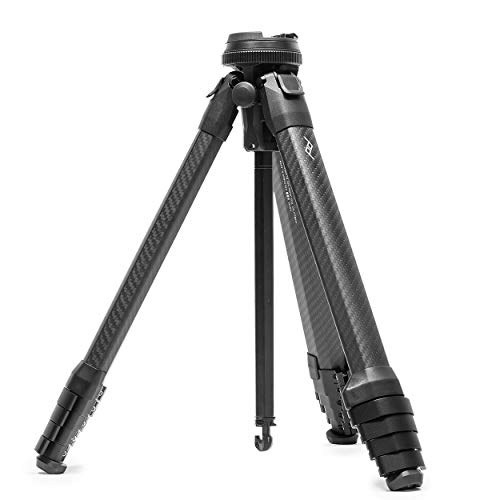
Peak Design built this tripod around one idea: remove the wasted space between the legs so the whole thing folds down to about 39 cm long and roughly the diameter of a water bottle. The carbon fiber version weighs about 1.27 kg, yet the maker rates it for a 9.1 kg load, which covers a full-frame body with a telephoto zoom for most travelers. Extended, it reaches about 152 cm with the center column raised, and the low mode drops close to ground level for macro and low-angle work. The ball head uses a single adjustment ring and accepts Arca-type plates, and a phone mount hides inside the center column. The five-section legs open with cam levers rather than twist locks. This is the pick for travelers who pack carry-on only and still want a full-height support.


2. Manfrotto Befree GT XPRO Carbon — Best for Landscapes
The Befree GT XPRO Carbon is the largest model in Manfrotto’s travel line, aimed at photographers whose landscape work needs more height and a calmer base. It stands about 162 cm tall, folds to roughly 43 cm, and weighs about 1.54 kg in carbon fiber, with a maker-rated load of 10 kg. Its signature feature is the 90-degree center column: it swings horizontal without removing the head, which suits overhead flat-lays and very low macro angles. The M-Lock twist leg locks open with a quarter turn, the XPRO ball head runs on a 200PL-PRO plate that also fits Arca-type clamps, and an Easy Link socket accepts arms for lights or monitors. Choose this one if you shoot longer lenses on trips and want the steadiest base in this group.

3. Ulanzi & Coman Zero Y — Best Ultralight
The Zero Y, made by Ulanzi with Coman, is built for hikers who measure pack weight in grams. The carbon fiber legs bring it to about 1.1 kg, and it folds to roughly 42 cm while still extending to around 156 cm, tall enough for eye-level shooting for most people. The maker rates the center column for loads up to 18 kg, an optimistic figure worth treating with the usual margin, but mirrorless and compact DSLR setups sit well within its comfort zone. The ball head is Arca-Swiss compatible with a panoramic base, the legs use lever locks that are quick to work with cold hands, and a section of the center column removes for low-angle setups. If your trips involve long trail days and a mirrorless kit, this is the easiest tripod here to justify carrying.
View Ulanzi & Coman Zero Y on Amazon
4. Peak Design Travel Tripod, Aluminum — Best Value
This is the same design as our top pick — the same space-saving leg layout, the same ball head with its single locking ring, the same hidden phone mount — built with aluminum legs instead of carbon fiber. That change adds roughly 300 g, bringing the weight to about 1.56 kg, and lowers the tier it sells in, while the folded length stays about 39 cm and the maker-rated load stays at 9.1 kg. Extended height is the same at about 152 cm. Aluminum also shrugs off knocks and baggage handling without worry about cracked tubes, though it feels colder in winter and passes a little more vibration than carbon. Pick the aluminum version if you like the Peak Design layout but your budget or your travel style does not justify the carbon upgrade.
View Peak Design Travel Tripod, Aluminum on Amazon
5. Manfrotto Befree Advanced Aluminum, Lever Lock — Best Flip Locks
The Befree Advanced in its lever-lock version (model MKBFRLA4BK-BH) suits travelers who dislike twist locks, especially anyone setting up with gloves on. Its QPL flip levers snap each of the four leg sections open or shut with a positive click, and the aluminum kit weighs about 1.5 kg, folds to about 40 cm and reaches roughly 151 cm. Manfrotto rates the safety payload at 8 kg, enough for a DSLR or mirrorless body with a mid-range zoom. The 494 ball head takes the 200PL-PRO plate shared with other Manfrotto heads, the leg angle selector offers three positions including a near-flat spread for low work, and the whole kit comes with a padded carry bag. It is a straightforward, proven travel tripod for stills shooters who value speed of setup over the last word in compactness.
View Manfrotto Befree Advanced Aluminum, Lever Lock on Amazon
What to Look For
| Factor | Why it matters | What to check |
|---|---|---|
| Folded length | Decides whether it fits your bag | Compare packed length with the inside of your luggage or backpack |
| Leg material | Changes weight, vibration and feel in cold weather | Compare carbon fiber and aluminum construction as described by the maker |
| Load capacity | A weak tripod can sag under a heavy lens | Keep your gear well below the maker’s stated load |
| Maximum height | Affects comfort and framing | Check height with and without the center column raised |
| Head type | Controls how easily you can frame a shot | Look for a smooth ball head, a clear locking knob and a quick release plate |
| Leg locks | Determines setup speed | Compare twist locks and flip locks for ease with gloves on |
Setup and Care Tips
- Extend the thickest leg sections first, since they give the most stability.
- Keep the center column low when you can, because a tall column adds wobble.
- Hang a bag from the hook only if the tripod has one and the wind is calm.
- Rinse and dry the legs after use near salt water or sand.
- Check the plate screw and leg locks before each trip.
Mistakes to Avoid
- Choosing the lightest tripod without checking the load against your lens.
- Buying a head that does not suit the way you shoot.
- Ignoring the maximum height and ending up bent over the viewfinder.
- Setting up on soft ground without spreading the legs wide.
- Leaving a camera on the tripod while walking over uneven ground.
How do you choose the right travel tripod?
Choose a travel tripod by matching its load rating, working height and folded length to your heaviest camera setup and your usual bag. Start with the gear, then the trip.
Load rating comes first. Add up your camera body, lens and any accessory such as a flash, then compare that with the maker’s stated capacity. Leave a generous margin, because a tripod at its limit feels shaky, especially with a long lens or in wind.
Height comes second. A tripod that only reaches your chest forces you to stoop, which gets tiring on a long shoot. Check the height with the center column down, since a raised column adds wobble.
Folded length comes third. Measure the inside of your carry-on or daypack and compare it with the listed packed length. A tripod that does not fit will stay at home, which defeats the purpose.
- Heavy lenses: favor a sturdier build and a bigger head.
- Mirrorless and compact kits: lighter models are usually enough.
- Phone and small camera users: a very light tripod or a mini model may be all you need.
When two models seem close, pick the one you will carry more often. A slightly less capable tripod in your bag beats a better one in the closet.
Which travel tripod should you buy?
The best travel tripod for you depends on whether you value the smallest fold, the most height, the lowest weight or the quickest setup. The picks above each lead in one of those areas.
- If you want the smallest fold without losing height, go for the Peak Design Travel Tripod, Carbon Fiber. It suits carry-on-only travelers.
- If you like the same layout but want a lower tier, choose the Peak Design Travel Tripod, Aluminum. It trades some weight for a less costly build.
- If you shoot landscapes and want extra height and a swinging center column, pick the Manfrotto Befree GT XPRO Carbon.
- If you hike and count every gram, consider the Ulanzi & Coman Zero Y, especially with a mirrorless kit.
- If you dislike twist locks or often wear gloves, look at the Manfrotto Befree Advanced Aluminum, Lever Lock.
Think about the material trade-off too. Carbon fiber is usually lighter and damps vibration well, while aluminum is generally tougher against knocks and can be easier on the budget. Neither is automatically better, so match it to how you travel.
If your decision is still open, ask where the tripod spends most of its time. On your back for hours, weight wins. In a suitcase between city stops, folded size wins.
What to check before you buy a travel tripod
Before you buy, check the load rating, folded length, head type and plate system against your camera and bag. Most returns come from a mismatch that a quick check would have caught.
- Load against your kit: compare the stated capacity with your heaviest body and lens.
- Folded length: hold it up against your bag measurements.
- Working height: check it with and without the center column raised.
- Quick release plate: confirm it fits your camera or an L-bracket and works with the clamp style you prefer.
- Leg locks: decide between twist locks and levers, based on gloves, cold weather and speed.
- Low angle options: check if the legs spread wide or the column can be removed or tilted.
- What is included: look for a carry bag, a tool, spare feet or a phone mount on the listing.
- Warranty and returns: read the terms so you know what is covered.
- Airline rules: check the current carry-on limits for the airlines you use.
It also helps to know your own habits. If you shoot video, check how smoothly the head moves. If you shoot long exposures, look for a solid center hook or a design that stays still when you release the shutter.
Common travel tripod problems and simple fixes
Most travel tripod problems come from loose locks, soft ground or too much load, and each has a simple fix. Check these before blaming the tripod.
- Legs slip down: tighten the locks, clean grit from the tubes and check the manual for adjustment steps.
- Head droops with a heavy lens: tighten the head tension, balance the lens on the plate or reduce the load.
- Shaky shots in wind: lower the center column, spread the legs wider and hang a bag from the hook if one is provided.
- Stiff or gritty legs after a beach trip: rinse with fresh water, dry fully and follow the maker’s cleaning advice.
- Loose plate screw: check it before every shoot and re-tighten.
- Vibration after pressing the shutter: use a timer or remote release.
Soft ground is a quiet cause of blurry pictures. On sand or mud, press the feet down firmly, and avoid shooting while someone walks nearby.
Signs it is time to replace a tripod include legs that no longer hold their position, cracked sections, a head that cannot lock and plates that no longer seat firmly. A tripod that has to be babied is not doing its job, and a worn lock can let an expensive camera fall.
Carbon fiber vs aluminum: which travel tripod material is better?
Carbon fiber is usually lighter and damps vibration well, while aluminum is generally tougher against knocks and often more affordable. The better material is the one that matches how you travel.
Carbon fiber suits people who walk long distances with the tripod on their back. The saved weight adds up over a day. It also feels less cold in winter, which is pleasant when handling the legs with bare hands.
Aluminum suits travelers who pack in suitcases and shoot near vehicles or cities. It tolerates knocks and baggage handling without worry, and it usually sits at a lower tier. The trade-off is extra weight and a bit more vibration.
- Choose carbon fiber if weight and comfort on long walks matter most.
- Choose aluminum if you want a robust, practical support and a gentler cost.
- Think about the same model in both if the maker offers it, as with the two Peak Design versions in this guide.
Do not assume the heavier option is more stable. Design, leg thickness, head and how you set the tripod up all affect steadiness. Compare the maker’s stated weight, load and height instead of relying on the material name alone.
If you are unsure, think of the trade as weight against budget. Decide which one you feel more often, and let that guide the choice.
Is a travel tripod worth it? Trade-offs and who should skip it
A travel tripod is worth it if you shoot long exposures, low light, landscapes or video on the move. If you rarely use one, it may not earn its place in your bag.
The downsides are real. Compact legs flex more than those of a full-size model, and the lightest options may feel less planted under a long lens. You carry extra weight and volume, and a quick setup is still slower than handheld shooting.
Is it worth paying more? A higher tier often brings lighter materials, a smaller fold or a more refined head. If you travel often or hike long distances, that can pay off. For occasional trips and lighter cameras, a simpler model can do the job well.
Who should skip it?
- Phone shooters who only need a small clamp or mini tripod.
- Photographers who rarely shoot in conditions that need a tripod.
- Anyone who mostly works with very long telephoto lenses or large video rigs, who may want a sturdier support.
If a travel tripod fits how you shoot, compare the picks above, check the current listing for load, folded length and what is included, then choose the one that suits your bag and your camera.
Stability, Height and Load: Reading Travel Tripod Specs Honestly
A travel tripod’s load rating is the least honest number in photography, because there is no single standard behind it: one maker’s figure means the legs will not collapse, another’s means the head will hold without creeping, and neither tells you whether the combination stays steady in wind with a long lens. Treat ratings as a rough filter, then judge by construction: leg diameter at the top section, the number of leg sections, and the quality of the head matter more than a headline figure. Fewer, thicker sections flex less than many thin ones, which is why the lightest tripods, with their extra sections, ask for calmer conditions and lighter cameras.
Height needs the same honesty. A tripod’s maximum height is usually quoted with its centre column fully raised, which is precisely the configuration you should use least, because a raised centre column turns a tripod into a monopod balanced on three feet. Compare heights with the column down, and check whether the tripod reaches your eye level in that honest configuration with your camera mounted. If you are tall, that single check eliminates more travel tripods than any other, and it is better learned from a specification table than on a mountainside.
Packed length and weight decide whether the tripod travels at all. A tripod that fits inside your bag rather than strapped outside it survives airline handling, crowded trains, and your own reluctance far better. Reverse-folding legs, where the legs fold back over the head, exist for exactly this reason. Weigh the whole system, tripod, head, and any plate, against the bag and the kit it must share, because the tripod you leave behind for its weight has a stability rating of zero.
- Leg locks: twist locks pack slimmer and resist snagging; lever locks are faster with gloves and easier to verify visually; both fail mainly through grit, so clean them after beaches and deserts.
- Centre column behaviour: some columns convert for low-angle or macro work, sliding sideways or removing entirely; useful if you shoot close to the ground, irrelevant if you never do.
- Feet: rubber feet grip rock and floors; spikes bite soil and ice; a travel tripod that swaps between them covers more of the world than one fixed design.
- The included head: most travel tripods arrive with a ball head whose quality varies more than the legs; budget mentally for the possibility that the head, not the legs, is your first upgrade.
Choosing Between the Picks in This Guide
The two Peak Design models frame the central choice in this category. The carbon version buys lower weight and a uniquely compact folded shape at a premium, and its integrated design, where the head packs into the legs’ profile, makes it the tripod most likely to live inside a camera bag permanently. The aluminium version keeps the same design intelligence and gives up mainly the weight saving, which makes it the value expression of the same idea: if your travel is by car or short walks rather than long hikes, the aluminium’s extra heft is a small price for the same handling.
The Manfrotto Befree GT XPRO Carbon serves landscape photographers who work low and wide, with a column that swings horizontal for ground-level and overhead compositions, mounted on a more conventional and very sturdy leg set. The Ulanzi and Coman Zero Y is the ultralight argument pushed furthest, for hikers counting every gram and using mirrorless or smaller cameras, accepting thinner legs and calmer-condition shooting as the trade. The Manfrotto Befree Advanced Aluminum with lever locks is the traditionalist’s pick: familiar locks, proven mechanics, and a price that leaves room in the budget for the head upgrade path.
Choose by the weight of your whole walking kit and the height of your eye, not by the tripod alone. A heavy camera and lens on the ultralight pick will disappoint in any breeze; a small mirrorless kit on the sturdiest pick wastes carrying capacity you could have spent on water, layers, or a second lens.
Using a Travel Tripod Well in the Field
- Extend the thickest leg sections first and the thinnest last, and avoid extending any section fully if a shorter stance serves the composition, because a half-extended leg is a stiffer leg.
- Keep the centre column down whenever the composition allows it, and treat raising it as the last resort after leg height, your own position, and a different viewpoint have all been considered.
- On slopes, extend the downhill leg and keep two legs downhill of the third where you can, and on soft ground press the feet in and let the tripod settle before mounting the camera.
- Hang weight from the centre hook only in genuinely calm-to-moderate conditions and only if the weight hangs still; a swinging bag in gusts makes stability worse, not better.
- Shield the tripod from wind with your body for long exposures, and use a remote release or timer so your hands are off the camera when the exposure begins.
- For long lenses, mount the lens’s own tripod foot rather than the camera body, and rest a hand lightly on the lens rather than gripping the camera, which damps vibration instead of adding it.
Low-angle work is where travel tripods quietly shine. Legs that splay wide and a column that removes or inverts let you put a camera at flower height, at the edge of a tide pool, or under a forest canopy, viewpoints that transform familiar subjects. Practise the low configuration at home, because it is always the least intuitive setup to perform kneeling on wet ground in fading light.
Travel Tripods in Four Real Situations
The hiking landscape photographer
Weight and packed size lead, stability in mountain wind follows close behind. Carry the tripod inside or tight against the pack’s frame, choose viewpoints that shelter it where the composition allows, and accept that the longest exposures belong to the calmest moments of the day. Carbon earns its premium here in proportion to the miles walked, which is the honest way to price it.
The city and architecture traveller
Blue-hour skylines, interiors where tripods are tolerated, and long exposures that erase crowds: the city rewards a tripod that sets up fast and stands at full eye level without its column. Lever locks and a head you can adjust with one hand matter more than ultimate lightness, and a tripod that looks small and unobtrusive draws less attention from security staff and officials.
The vlogger and solo creator
The tripod is also a stand, a boom, and a second pair of hands. Quick conversion, a head that tilts smoothly for pieces to camera, and legs that double as a tabletop support on café tables matter more than wilderness stability. Solo creators should practise framing with the camera’s screen or a phone monitor, because the tripod cannot tell you that you are standing half out of frame.
The family and group photographer
Somebody has to be in the photograph, and the tripod is how the photographer joins it. Here reliability and simplicity rule: a tripod everyone in the family can set up, a remote or timer routine rehearsed before the trip, and a stance stable enough for a windy viewpoint with a group leaning in. The best travel tripod for this traveller is the one that comes out of the bag at the viewpoint without a negotiation.
Testing and Living With a Travel Tripod
Test a new tripod at home with your heaviest camera and lens combination, at full height, column down, and tap the leg while watching a magnified live view: the image should settle quickly, and a tripod that shimmers for seconds after a tap will shimmer in the field. Test the head for creep by mounting the camera, framing a composition, locking the head, and watching whether the frame drifts over a minute, especially with the camera in portrait orientation, which is where modest ball heads confess.
Maintenance is a twice-a-year ritual: rinse or blow grit from leg locks after trips, check that every lock still grips along its full travel, and tighten the small fasteners that work loose with vibration in transit. Carbon legs forgive impacts less than aluminium, so inspect them for cracks after any hard knock or airline trip. A tripod maintained this way has no real wear-out date, and the picks in this guide are built to be that kind of long-term companion rather than a per-trip consumable.
Travel Tripod Terms, Explained Plainly
- Leg sections: the telescoping segments of each leg; more sections pack shorter and flex more, fewer pack longer and stand stiffer.
- Centre column: the vertical post the head mounts on; raising it adds height and vibration in roughly equal measure.
- Arca-Swiss plate: the common quick-release standard that lets cameras and lenses swap between heads from many makers.
- Reverse folding: legs that fold back over the head to shorten the packed length, the defining trick of the travel category.
- Monopod conversion: some legs detach to serve as a monopod, useful for sport and wildlife stops on a trip built around landscapes.
A Final Travel Tripod Decision Walkthrough
Start with your eye height and your heaviest lens, then weigh your bag honestly. The hiker takes the ultralight or the compact carbon and accepts their conditions. The landscape specialist takes the low-angle flexibility of the XPRO design. The value-minded traveller takes the aluminium expression of the compact design or the proven lever-lock model and spends the saving on the trips themselves. In every case, the right tripod is the one whose packed size fits the bag you already own, because a tripod that needs a new bag is two purchases pretending to be one.
Heads, Plates and the Parts Around the Legs
Travel tripod legs get the attention, but the head is what you touch for every photograph, and its behaviour decides whether the tripod feels like a tool or an obstacle. A good ball head locks without the frame sagging a fraction as you release it, adjusts with a friction control that lets you compose without fully unlocking, and pans on a separate, smooth base for panoramas and video pans. Test those three behaviours in your first week, because they are the difference between the head you keep for a decade and the head you replace within the year, and many travel tripods are priced assuming you may do exactly that.
Plates and compatibility are the quiet system decision. A tripod and head using the common Arca-Swiss standard lets your camera plates, lens feet, and any future head all interchange, which is why photographers standardise on it and grumble when a proprietary plate locks them in. If a pick uses its own plate system, confirm spare plates are available and buy one at the same time as the tripod, because the day a plate is left on another camera is the day the tripod stays home.
The small accessories repay their tiny weight: a short centre column or a low-angle adapter if your model offers one, a set of spiked feet for the terrain you actually walk, and a simple rain cover or plastic bag that keeps grit and water out of the locks on the days the weather turns. None of these will ever headline a review, and together they are most of what separates a tripod that travels happily for years from one that slowly annoys its owner into leaving it behind.
Common Travel Tripod Mistakes, Expanded
- Buying by load rating alone: the number is unstandardised and says little about stiffness; judge by leg construction, section count, and a real test with your heaviest lens.
- Raising the centre column by default: it converts a stable platform into a wobbling one; exhaust leg height and your own position first, every time.
- Extending the thinnest sections first: the weakest part of the leg should be the last extended and the least loaded; work from the top sections down.
- Leaving the tripod in the car or the hotel: usually a packed-size problem disguised as laziness; if it does not fit the bag you carry, it is the wrong tripod for you regardless of its merits.
- Ignoring the head’s creep until a paid shoot: test portrait-orientation lock with your heaviest setup at home, where the discovery is free.
- Skipping lock maintenance after beaches: sand in a twist lock is tomorrow’s seized leg; rinse, dry, and work the locks after every coastal or desert trip.
More Questions Worth Asking About Travel Tripods
Should the tripod or the camera bag come first?
The bag, if you already love it, because the tripod must fit the carrying system you actually use, and photographers replace bags less willingly than tripods. Measure the bag’s tripod compartment or the space a tripod can occupy inside it, and let that packed length filter this guide before any other specification does. If you are building a kit from nothing, choose them together, and be suspicious of any combination that only works with the tripod strapped outside, dangling, on the trips where you will be jostled most.
Is one travel tripod enough for everything?
For most travellers, yes, and the discipline of one tripod teaches its handling deeply. The honest exceptions are the photographer who also shoots heavy telephoto work, where a travel tripod is the wrong tool no matter its quality, and the creator who needs a dedicated video support with a levelling base and a fluid head. Those are second-tripod cases defined by the work, not by gear enthusiasm, and recognising them keeps both purchases honest.
How do I know when a tripod needs replacing rather than maintaining?
Legs and locks respond to cleaning and adjustment for years, so replace when the structure itself is compromised: a cracked carbon leg, a bent section that no longer slides truly, or a head whose locking surfaces are worn enough to slip under loads it once held. Everything short of that is maintenance, and a tripod that has been maintained is usually a better instrument than a new one whose behaviour you have not yet learned.
Buying a Travel Tripod Second-Hand or on Sale: What to Check
Tripods survive their owners’ interest in photography remarkably often, so the used market is full of sound legs wearing out only cosmetically. Check what listings cannot hide: every leg lock gripping along its travel, every section sliding without grinding, the head locking without creep under a firm load, and, on carbon models, the legs themselves for cracks or soft spots from impacts, which are the one fault that ends a carbon leg’s life. Ask about beach and travel history, not from suspicion but because it tells you how urgently the locks want cleaning before your first trip.
Confirm the quick-release plate is included and matches the head, and price a spare plate into the deal if it is missing, because a tripod without its plate is a monopod with ambitions. On sale pricing, tripod models change slowly and mostly cosmetically, so a previous version of a pick in this guide, discounted as its successor arrives, usually gives up nothing that matters in the field. The one exception is head design, which does improve meaningfully between generations, so compare the head, not the legs, when deciding whether the older model is the bargain it appears to be.
Carrying and Transporting a Travel Tripod Without Damage
More travel tripods are damaged in transit than in use, and the pattern is consistent: legs strapped loosely to a pack get bent at the locks, carbon legs take point impacts from door frames and rocks, and heads lose knobs and levers to baggage handling. Carry the tripod tight against the pack’s frame or inside the bag where its own design intends, with the head protected by clothing or a padded wrap if it rides outside, and treat the folded tripod as the fragile, lever-like object it is rather than as a walking pole or a luggage handle.
For flights, the tripod’s best protection is your main bag’s structure: inside a checked case, surrounded by clothing, with leg locks closed and the centre column down, it travels as safely as anything you own. In hand luggage, confirm the carrier’s rules before the airport, because tripods sit in a grey area of cabin policy that varies by airline and by the mood of a security lane, and discovering a refusal at the checkpoint costs you the tripod or the flight. Photographers who travel constantly settle this once, per airline they actually use, and pack accordingly forever, which is the general shape of travel wisdom in this whole category: decide once, at home, in writing, and let the trip itself be about the photographs.
When the Travel Tripod Stays Home: Shooting Well Without One
Even the right tripod will miss some days: the museum that forbids it, the hike where every gram was argued away, the city break packed into a single small bag. Knowing the substitutes keeps those days photographic. A wall, a railing, a beanbag, or a folded jacket under the camera, combined with a self-timer so your hands are off it, recovers much of a tripod’s steadiness for static subjects. Braced elbows, a strap pulled taut, and leaning your body against a solid structure do the same for handheld work at modest shutter speeds.
What cannot be substituted is the long, deliberate exposure and the precisely repeated framing, and recognising that honestly is part of owning a travel tripod well: it tells you which trips justify its weight in advance. Photographers who plan that way stop experiencing the tripod as a burden they either always or never carry, and start treating it as what it is, a tool with named jobs, packed when the jobs are on the itinerary and rested, without guilt, when they are not.
FAQ
Is carbon fiber worth it for a travel tripod?
Carbon fiber is often lighter and absorbs vibration well, which many travelers like. Aluminum is usually heavier but can be a sturdy and practical choice. Compare the maker’s stated weights and loads.
Can I take a tripod on a plane?
Rules differ by airline and country. Many travelers pack a tripod in checked luggage or follow the cabin size limits of their airline, so check the current rules before you go.
How tall should a travel tripod be?
It should reach close to your eye level without raising the center column fully. Check the listed height with the column down, since a raised column adds wobble. Taller people should pay particular attention to this figure.
What is the difference between a ball head and a pan-tilt head?
A ball head moves freely in most directions and locks with one knob, which makes it quick for stills. A pan-tilt head moves along separate axes and suits careful framing and video. Travel tripods usually come with ball heads.
Can a travel tripod hold a full-frame camera?
Many can, provided the load rating comfortably exceeds your camera and lens weight. Check the maker's stated capacity and leave a margin, especially with heavier telephoto lenses.
Do I need a tripod for a mirrorless camera on vacation?
Not always, but it helps for night scenes, long exposures, group photos and video. If you mostly shoot in daylight, you may manage without one. Think about the shots you want to take.
What does Arca-type compatibility mean?
It refers to a common quick release plate and clamp shape used by many heads and brackets. If your camera plate or L-bracket uses it, you can swap between compatible gear easily. Confirm the details on the listing.
How do I keep a tripod steady in wind?
Lower the center column, spread the legs wider and add weight by hanging a bag from the hook, if there is one. Use a timer or remote release to avoid shake. Avoid extending thin lower sections when you can.
How should I clean a tripod after the beach?
Rinse it with fresh water, extend the legs and let them dry fully before folding. Follow the maker's advice for locks and any lubricant. Sand left inside the sections can cause wear.
Questions to Ask Before You Buy
- What is the heaviest camera and lens combination you plan to place on it?
- Does the folded length fit inside the bag or suitcase you usually travel with?
- How tall do you need it to reach without raising the center column?
- Can you work the leg locks quickly with cold or damp hands?
- Does it offer a low angle option for ground level shots?
- Will you carry it all day, or mostly leave it in a hotel room or vehicle?
Matching It to Your Use
City Breaks and Flights
Compact folding is the main concern. A model that tucks into a carry-on or a small daypack makes you far more likely to bring it along, and a tripod left at home never helps anyone.
Hiking and Landscape Trips
Weight matters more than anything on long walks. Look for a design with a strap or a loop for hanging a bag, which can add steadiness when wind rises. Feet that grip uneven ground are also worth checking.
Video and Vlogging
If you pan or tilt, the head needs to move smoothly. Some travel models come with ball heads that are better for still work, so confirm that the head suits the way you shoot.
Feature Trade-offs
| Feature | Advantage | Trade-off |
|---|---|---|
| Folds in reverse | Shorter packed length | Head sits beside the legs and adds bulk |
| Extra leg sections | Smaller when folded | More locks to open and close |
| Lightweight frame | Easy to carry | Less stable with heavy lenses |
| Removable center column | Reaches ground level | One more part to keep track of |
Who Should Skip It
If you mostly shoot in a studio or at home, a travel model may feel flimsy next to a full size support. Compactness comes with compromises, and a heavier tripod is often the calmer choice when weight is not an issue.
It is also not ideal for very long telephoto lenses or large video rigs. Small leg sections flex more under load, and the center of gravity shifts forward. Check the load figures from the maker and leave a generous margin rather than running right at the limit.
Finally, anyone who rarely uses a tripod should consider whether a small clamp or a bean bag would meet the need with less to carry.
The Short Version
Choose by folded length, leg material, load capacity, height and head. The right travel tripod is the one that packs small, holds your heaviest setup steadily and goes with you on every trip.
Related Guides
- 7 Best Tripods for Mirrorless Cameras: Travel to Video (2026)
- How to Choose the Best Manfrotto Tripods: Buyer's Guide (2026)
- How to Choose the Best Mini Tripods: Buyer's Guide (2026)
- How to Choose the Best Professional Tripods: A Buyer's Guide
- How to Choose the Best Video Camera Tripods: A Buyer's Guide