Disclosure: As an Amazon Associate, reviewstook.com earns from qualifying purchases. Links to Amazon on this page are affiliate links; they cost you nothing extra. Listing details such as price and availability change often, so check the current Amazon listing before you buy.
The best corner cleaning robot vacuums share a few traits: a body shape or side-brush design that reaches into right angles, a sensor system that follows walls without bumping hard, and enough brush reach to pull dust out of the gap along a baseboard. Round robots are the most common design, and their weakness is plain geometry, since a circle cannot touch a square corner. That leaves a thin triangle of dust in every corner of every room.
This guide is for people who have noticed that triangle and want a robot that does better. We compare six real models from Ecovacs, Dreame, Roborock, Narwal, eufy and iRobot, say who each one suits, state one honest limit for each, and add a buying checklist, a section on common mistakes and a final recommendation by buyer type. No robot removes every grain from every corner, so we are careful about what each design can and cannot do.
In this guide
Quick Picks
| Pick | Product | Why choose it | Link |
|---|---|---|---|
| Best overall for square corners | Ecovacs Deebot X2 Omni | Squared-off front built to reach into corners | Check on Amazon |
| Best for mop reach at edges | Dreame X40 Ultra | Extending mop and side brush aimed at edges | Check on Amazon |
| Best for mixed floors | Roborock S8 MaxV Ultra | Dual brushes and obstacle sensing near walls | Check on Amazon |
| Best premium mop dock | Narwal Freo X Ultra | Edge-aware mopping and a dock that cleans its own pads | Check on Amazon |
| Best for hard floors with rugs | eufy Clean X10 Pro Omni T2351 | Roller mop and a station that empties the bin | Check on Amazon |
| Best simple edge brush | iRobot Roomba 694 | Plain robot with a side brush for baseboards | Check on Amazon |
How We Chose These Robots
We have not used these robots in a home ourselves. The list is built from manufacturer descriptions and published specifications, and we looked for features that relate to edges and corners: a squared or flat front, an extending side brush or mop, wall-following sensors and a rubber or tangle-resistant brush.
We also included one simple, widely available robot to show what a plain side brush can do on its own. Specific numbers, such as brush reach, differ between versions, so we direct you to the current listing for those.
Why Corners Are Hard for Robot Vacuums
A round robot with a center brush has a body radius of several inches. When it drives into a corner, the circle touches both walls at a single point, and the corner itself sits beyond reach. The side brush is the usual fix. It swings out past the body and flicks dust toward the suction opening, which works along a straight wall and works less well at the very tip of a corner.
Designers have tried several answers. Some give the robot a flat or squared-off front, so the body gets closer. Others add a side brush that extends or a mop that swings out as the robot reaches a wall. A few use sensors that let the robot hug the wall closely without bumping it. Each approach has trade-offs in noise, cost and the number of moving parts.
Design Features That Help With Corners and Edges
- A squared or D-shaped front, which lets the body reach farther into a right angle.
- A side brush that is long, angled or extendable, which sweeps dust out of the corner.
- An extending mop pad, which carries a wet cleaning surface to the edge on hard floors.
- Wall-following sensors, which keep the robot parallel to the baseboard rather than ricocheting off it.
- Room mapping, which lets the robot plan an edge pass before it cleans the middle of the room.
- A rubber roller or tangle-resistant brush, so hair and threads do not slow the brush near walls.
The Best Robot Vacuums for Corners and Edges
Ecovacs Deebot X2 Omni Robot Vacuum and Mop
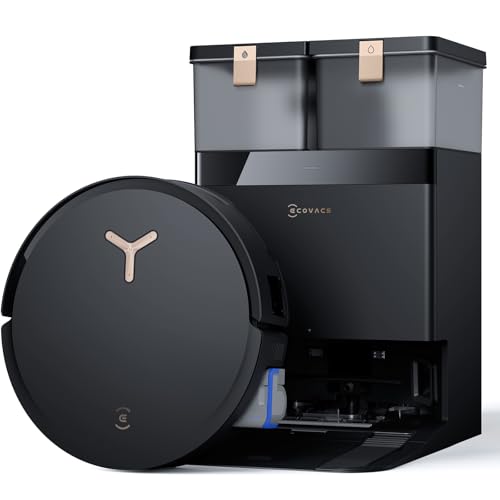
The Deebot X2 Omni is known for its unusual shape. Ecovacs designed the body with a squared-off front instead of a full circle, so that it gets closer to corners and wall junctions than a round robot would. That is the main reason it tops a list about corners.
Three strengths stand out. The squared design is the most direct answer to the geometry problem. It cleans and mops, with a station that handles the dust and the pads, so edges get both passes. And its app lets you map rooms and pick cleaning modes, so you can ask for extra attention along walls.
The limitation is size. The body and the station are bulky, and a shape that fits a corner may not fit under every low sofa. Check the height and the clearance of your furniture against the listing.
Choose it if corners are your main complaint and your floors are mostly hard. Skip it if you want a compact robot for a tiny space.
Dreame X40 Ultra Robot Vacuum and Mop
Dreame’s X40 Ultra is a flagship robot and mop that the maker presents with extending parts for edge work. The mop and the side brush are described as reaching beyond the body, which targets the area along walls and in corners that a round robot normally misses.
Its strengths for this topic are the extending mop pad, which carries wet cleaning to the edge, the side brush designed to sweep toward the corner and a dock that empties and washes. The app offers room maps and edge options for people who like to tune the cleaning.
The limitation is complexity. Moving parts such as extending arms add components that can wear or catch on rug fringes. The listing details what extends and when, so read it closely.
Choose it if you want a feature-rich robot and mop to handle edges on hard floors. Skip it if you prefer a simple machine with fewer moving parts.
Roborock S8 MaxV Ultra Robot Vacuum and Mop
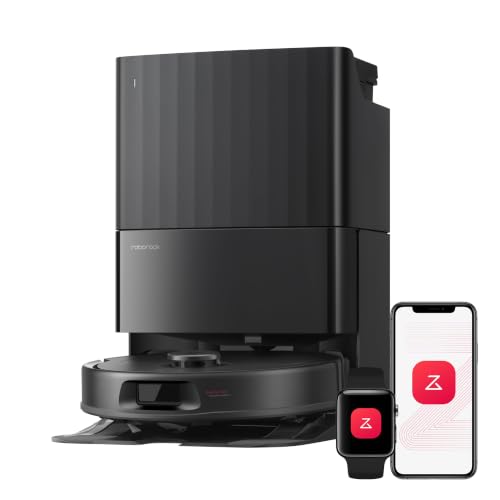
The Roborock S8 MaxV Ultra brings a camera-based obstacle system, dual rubber brushes and a dock that handles emptying and washing. Its corner performance relies on the combination of a good side brush, wall sensing and mapping rather than a special body shape.
The strengths are the dual rubber roller design, which pulls debris in and resists tangles, strong mapping that makes edge passes predictable and the ability to switch between vacuuming and mopping across mixed floors. The mop lifts when the robot moves to carpet.
The limitation is that it is a round robot, so the geometry problem remains in the sharpest corners. A side brush helps, but a thin line of dust can remain. Plan an occasional hand pass with a crevice tool.
Choose it if you want an all-round robot for mixed floors with a strong app and dock. Skip it if corners are the only thing you care about.
Narwal Freo X Ultra Robot Vacuum and Mop
Narwal built its name on mopping, and the Freo X Ultra continues that focus. The maker describes edge-aware mop movement and a dock that washes and dries the pads, which suits households that want clean hard floors up to the baseboard.
Its strengths are the mop-first design, the self-cleaning base and a tangle-resistant brush system. For homes with tile, vinyl or hardwood throughout, the edge mop approach covers the spots where wet dust tends to gather.
The limitation is that its strength is on hard floors. If your house has deep carpet in most rooms, a mop-led design spends much of its time idle, and a vacuum-first model would be a better use of your money.
Choose it if wet cleaning at the edges is what you need. Skip it if you have mostly carpet.
eufy Clean X10 Pro Omni Robot Vacuum and Mop T2351
The X10 Pro Omni pairs a robot with a roller mop and a station that empties the bin and washes the mop. For corners, its approach is the roller mop and a side brush working together along walls on hard floors.
The strengths are a station that reduces daily chores, a mop that lifts on carpet and an app with maps and zones. Because it handles both dust and wet dirt, edges get two kinds of attention in one cycle.
The limitation is again the round body. As with the Roborock, the tip of a corner may keep a trace of dust, and thick rug fringes along walls can tangle the brush. The listing describes the lift distance for carpets.
Choose it if you have hard floors with some rugs and want a station that does the upkeep. Skip it if you want a body shape designed specifically for corners.
iRobot Roomba 694 Robot Vacuum
The Roomba 694 is the plain member of the group. It has an edge-sweeping side brush that reaches along baseboards, a cleaning pattern that moves along walls and an app for scheduling. It has no dock and no mapping.
The strengths are simplicity, a small and easy-to-handle body and parts that are easy to find. For a small flat with square rooms and a few corners that are mostly bare, it keeps edges tidier than a robot with no side brush.
The limitation is that it is basic. It bumps into walls, it needs emptying often and it cannot plan an edge pass. The sharp tip of a corner is still beyond a round body.
Choose it if you want a simple, familiar robot for a small space. Skip it if you want smart mapping or a station.
Comparison of All Six Robots
| Product | Body shape and edge feature | Cleaning type | Best use | Link |
|---|---|---|---|---|
| Ecovacs Deebot X2 Omni | Squared front | Vacuum and mop, station | Square corners on hard floors | Check on Amazon |
| Dreame X40 Ultra | Extending mop and side brush | Vacuum and mop, dock | Edges on hard floors | Check on Amazon |
| Roborock S8 MaxV Ultra | Round, dual rubber brushes | Vacuum and mop, dock | Mixed floors | Check on Amazon |
| Narwal Freo X Ultra | Edge-aware mop movement | Mop-led, dock | Hard-floor homes | Check on Amazon |
| eufy Clean X10 Pro Omni T2351 | Round, roller mop | Vacuum and mop, station | Hard floors with rugs | Check on Amazon |
| iRobot Roomba 694 | Round, edge side brush | Vacuum only | Small, simple spaces | Check on Amazon |
How to Choose a Robot Vacuum for Corners
Work through this checklist before you commit.
- Look at the body shape. A squared or D-shaped front gets closer than a circle.
- Check the side brush. Longer or extendable brushes reach farther toward the corner.
- Think about your floors. Extending mops matter on hard floors, and carpet needs a strong brush.
- Check clearance. A bulkier body may not fit under your sofa or bed.
- Look for wall-following behavior and room mapping.
- Decide whether you want a station. Docks cut daily work but need space.
- Consider noise, since edge passes can add runtime.
- Check how the brush handles hair and threads, as tangles hurt performance near walls.
Common Buying Mistakes
- Expecting any robot to clear the exact tip of every corner.
- Paying for mopping features when your home is mostly carpet.
- Ignoring furniture height, which can trap a robot with a larger body.
- Skipping the side brush, which is the part that does most of the corner work.
- Leaving cords, rug corners and socks near the walls, where the robot spends its edge pass.
Corners in Different Rooms
Where the corner sits changes what the robot faces, so think room by room.
In a kitchen, corners collect crumbs, flour and grease dust, and cabinet toe-kicks create narrow gaps that no robot can enter. A mop-capable model helps with sticky spots along the cabinets, but the toe-kick slot itself needs a hand tool.
In a bedroom, the corners behind the bed and nightstand gather lint and hair. Robots with a low profile reach under the bed frame, but a deep corner behind a headboard stays out of reach unless you move the furniture now and then.
In a living room, rug edges, cables and floor lamps create obstacles along the walls. Mapping helps here because you can mark no-go zones around cables and keep the robot from tangling.
In a hallway, the narrow width means the robot spends most of its time near a wall anyway. A good wall-following pass is more useful in a hallway than in any other room, and a squared body may fit better in a tight space than you expect.
In a bathroom, humidity, hair and tile edges make a mop-capable robot a mixed blessing. Many owners leave the bathroom to a hand mop and let the robot cover the rest of the home.
Getting Better Corner Results From Any Robot
Even a good design benefits from a little help. Clear the floor along the walls before each run, and move chair legs and baskets so the robot can travel along the edge. Check the side brush every week and trim any wrapped hair, since a tangled brush stops sweeping toward the corner.
Use the app’s cleaning modes if they exist: many robots offer an edge or perimeter option, and a second pass in problem rooms makes a difference. Once a month, run a handheld vacuum or a crevice tool along the corners. That small step means you do not rely on a robot to do a job its geometry will never fully manage.
It also helps to be realistic about expectations. A robot that cleans edges well will leave a visibly tidier baseboard line after a week of regular runs, but it will not match a person with a crevice tool. The right goal is to keep dust from building into gray lines along the walls, and to cut the manual corner pass to once a month instead of once a week. If a robot achieves that, it is doing its job.
When you compare listings, give extra weight to written descriptions of edge behavior and less to general suction numbers. Suction tells you little about a corner, while body shape, side brush design and wall-following tell you a lot.
Final Recommendation
Here is how we would match each buyer.
- People who care most about square corners: Ecovacs Deebot X2 Omni.
- Owners who want extending parts for edges on hard floors: Dreame X40 Ultra.
- Homes with a mix of hard floors and carpet: Roborock S8 MaxV Ultra or eufy Clean X10 Pro Omni T2351.
- Hard-floor households that care about wet edges: Narwal Freo X Ultra.
- Small spaces and simple needs: iRobot Roomba 694.
If corners are your priority, read the current listings for the Deebot X2 Omni and the Dreame X40 Ultra side by side.
A Closer Look at Each Robot in Everyday Use
Specifications describe what a robot can do on a clean test floor. Homes are not test floors. This section slows each pick down and asks how it behaves across a normal week: the school-run crumbs, the hair that gathers along a hallway, the chair legs that migrate, and the corners that quietly collect everything the middle of the room gives up.
The Deebot X2 Omni and the Geometry Argument
The Ecovacs Deebot X2 Omni makes the most literal argument in this guide: if corners are square and robots are round, change the robot. Its squared-off front is a design decision you can see, and it changes how the machine approaches a wall junction, bringing its cleaning path closer to the point where two baseboards meet. For a buyer whose frustration is specifically that triangle of dust in the corner of a hard-floored room, that directness is the whole appeal.
Daily life adds caveats rather than contradictions. A larger, more deliberate machine asks more of your floor plan: it needs clearance under furniture, room for its station, and a household willing to keep its working area reasonably clear. Owners who give it that environment tend to judge it on results. Owners who squeeze it into a cluttered flat will spend their time rescuing it from cables and chair legs, and the corner performance will be the least of their complaints. Match the machine to the home first, and the shape can do its work.
The Dreame X40 Ultra and Moving Parts With a Purpose
The Dreame X40 Ultra answers the corner problem by reaching rather than reshaping: parts that extend toward the edge carry cleaning beyond the circle of the body. In practice that means the robot’s behaviour along a wall looks more deliberate, with the mop and brush arriving where a fixed design would leave a margin. On hard floors that margin is exactly where dust darkens into a visible line, so the benefit shows up quickly in kitchens and hallways.
The trade is complexity, and it deserves an honest sentence rather than a dismissive one. Extending mechanisms are moving parts, and moving parts live in the dirtiest environment in the house. They reward owners who check them when they empty the bin, clear wrapped hair before it becomes a felt ring, and keep rug fringes out of the robot’s path. If your instinct is to ignore a machine until it complains, a simpler design will age more gracefully in your home than this flagship will.
The Roborock S8 MaxV Ultra as the All-Rounder
The Roborock S8 MaxV Ultra does not win this topic with a trick shape. It wins ground by being consistently capable: dual rubber brushes that resist tangling, mapping that makes its edge passes predictable, and a dock that takes the emptying and washing out of your week. In a mixed-floor home, predictability matters more than any single corner feature, because the robot that runs calmly every day removes more corner dust over a month than a specialist that runs rarely.
Its limitation is the honest one already stated: it is round, and the sharpest corner tips will keep a trace of dust no matter how good the side brush is. The mature way to own this robot is to accept a quick hand pass with a crevice tool now and then as part of the arrangement, rather than scoring every run against perfection. Judged that way, it is the pick for households that want one machine, one app and one dock to handle the whole home without negotiation.
The Narwal Freo X Ultra and the Mop-First Home
The Narwal Freo X Ultra is for the home where the floor problem is not mainly dust but film: the faint stickiness near a stove, the paw prints from a door, the grey tide mark along a baseboard where wet dirt dries. Its edge-aware mopping treats the wall line as a place to clean deliberately rather than a boundary to avoid, and a dock that washes its own pads removes the chore that makes many owners quietly stop using a robot’s mop at all.
Choose it with your floors in front of you. A home that is mostly hard flooring gives this machine a full-time job. A home with deep carpet in the rooms that matter gives it a part-time one, and the money would work harder in a vacuum-first model. There is no contradiction in Narwal’s design; there is only the question of whether your floors are the ones it was designed around.
The eufy X10 Pro Omni and the Station Habit
The eufy Clean X10 Pro Omni builds its case on upkeep: a station that empties the bin and washes the mop turns robot ownership from a small daily chore into an occasional one. That matters for corners more than it first appears, because a robot whose bin is full and whose mop is sour does its worst work exactly at the edges, where loads are heaviest. A machine that returns to a station and resets itself keeps its edge performance steadier across the week.
It remains a round robot, with the round robot’s corner limit, and thick fringes along a rug edge will test its brush. Households with hard floors and a few well-behaved rugs are its natural territory. If your rooms are a patchwork of deep pile, thresholds and tassels, read the listing’s carpet details carefully and expect to spend your first week tuning zones and no-go areas before the machine settles into a routine.
The Roomba 694 and the Virtue of Simple
The iRobot Roomba 694 is the control experiment in this guide: a plain robot with an edge-sweeping side brush, no dock and no mapping. What it proves is how much of everyday corner tidiness comes from the humble side brush doing regular passes, and how much of the flagship premium buys mapping, mopping and self-emptying rather than corner magic. In a small, simple flat, that may be all the corner cleaning you actually need.
Its limits are equally plain. It bumps, it wanders, it needs emptying by hand, and it will not plan an elegant edge pass around your furniture. Buy it knowing that, for a small space and a modest expectation, and it is a rational purchase. Buy it expecting flagship behaviour at a plain-model level and it will disappoint you daily, which is a failure of matching rather than of the machine.
Choosing Between the Picks, Head to Head
The cleanest comparison in this guide is shape against reach. The Deebot’s squared front changes where the body can go; the Dreame’s extending parts change how far the cleaning tools reach from the body. Both attack the same margin of floor from opposite directions. If your corners are open and your floors are hard, either approach serves you. If your furniture is low and your rooms are tight, the deciding factor is more likely to be body size and clearance than the corner feature itself, so measure before you fall for either mechanism.
Dock against no dock is the second comparison, and it is really about your habits. The flagship models from Ecovacs, Dreame, Roborock, Narwal and eufy all lean on a station to empty, wash or dry. That convenience costs floor space, a power point and a place in a room you look at every day. The Roomba’s absence of a dock is a limitation and a freedom at once: nothing to site, nothing to plumb your routine around, and a bin you empty yourself. Households that run a robot daily usually end up valuing the station. Households that run one twice a week in a small flat often do not miss it.
Mop-led against vacuum-led is the third. Narwal’s design begins with wet cleaning and builds around it; Roborock’s begins with vacuuming across mixed floors and adds a capable mop; eufy sits between, with a roller mop and a station doing the housekeeping. Walk your own floors barefoot before choosing. If what bothers you is grit, buy suction and brushes. If what bothers you is dullness and film, buy mopping. Corners collect both, but rarely in equal measure.
Deeper Buying Criteria for Corner Cleaning
Filtration deserves a calm word, at concept level. A robot collects fine dust as well as visible crumbs, and the path that dust takes through the machine — bin, filter, exhaust — decides whether the smallest particles stay captured or drift back into the room. You do not need to become an engineer about it. You do need to treat the filter as a consumable: check what the maker says about cleaning and replacing it, keep a spare if the listing offers one, and never judge a robot’s pickup in its first week and assume that performance is permanent. A clogged filter quietly taxes everything, edges first.
Battery behaviour also belongs in a corner guide, again at concept level. Edge passes and wall following are slow, deliberate work, and a robot that is short on charge will hurry home with the last wall unfinished. Larger homes should think about whether the machine can pause, recharge and resume where it stopped, and every owner should follow the maker’s ordinary guidance: use the charger supplied, keep the dock area clear and dry, and treat a swollen or damaged battery as a reason to stop using the machine and contact the maker, never as something to work around. Sensible battery care is part of owning any of these robots, flagships included.
Navigation style shapes corner results in ways brochures underplay. A robot that maps will approach a corner as part of a plan, finishing a room’s perimeter deliberately. A robot that navigates by contact will still find corners, but in its own order and sometimes repeatedly. Neither is automatically better in a small home. What matters is the match between the system and your rooms: many small, cluttered rooms reward a tolerant machine; large open floors reward a methodical one.
Finally, price the consumables into the comparison, in spirit if not in figures. Side brushes flatten, filters load up, mop pads wear, and main brushes collect damage from the very edges you bought the robot to clean. A model whose parts are easy to find and easy to swap will hold its corner performance for years. A model whose parts are obscure will slowly become a robot that cleans the middle of rooms and nothing else.
Living With a Corner Robot: Setup, Care and Troubleshooting
The first week decides how well any of these robots will ever clean your corners. Walk the route at floor level before the first run: lift cables off the skirting, move the shoes that live against the wall, and decide which corners the robot physically cannot reach so you stop blaming it for them. Run the mapping pass in daylight, when you can watch where the machine hesitates, and correct the map while the lessons are fresh. Most owners who are disappointed at month three skipped this week and let the robot learn a messy home perfectly.
Weekly care is short and specific. Empty the bin before it is full, because a packed bin strangles pickup at the edges first. Pull the side brush and clear the hair wound beneath it; that brush is your corner tool, and a brush spinning a collar of hair sweeps nothing. Wipe the wall-following sensors with a dry cloth, since a dust-filmed sensor makes a robot shy of the very walls it should hug. None of this takes long, and all of it protects exactly the performance this guide is about.
When corners still look dusty, troubleshoot in order. First, watch one edge pass and note whether the robot actually travels the wall in question or skips it for an obstacle you can move. Second, check the side brush for wear; a brush that has lost its splay looks fine and does little. Third, check the filter and bin. Fourth, check the map for accidental no-go zones drawn too generously along a wall. Only after those should you suspect the machine itself, because in most homes the corner problem is a setup problem wearing a disguise.
Corner Cleaning, Room by Room, in More Depth
Kitchens reward mopping robots and punish everyone equally with toe-kick gaps, so set the robot to work the cabinet line and keep a hand tool for the recess beneath. Entryways collect grit that acts like sandpaper under a brush, so an entryway corner deserves more frequent passes and a mat outside the door doing the first defence. Home offices hide the worst tangle: cables descend exactly where walls meet, and a robot sent in unprepared will spend its edge pass negotiating wires instead of sweeping. Ten minutes with cable tidies converts an office from the robot’s worst room into an ordinary one.
Children’s rooms change daily, which makes them a test of routine rather than of machinery. A robot that runs on a schedule while the room is at school will keep corners ahead of the toy migration; a robot sent in after the fact will spend its time pushing small plastic pieces along the baseboard. The lesson generalises: corner cleaning is mostly timing and preparation, and the best robot in this guide is the one whose routine fits the rhythm of your rooms.
Questions to Ask Before You Order
Begin with the corners themselves. Crouch down and look at the worst three corners in your home. What is actually in them: dry dust and hair, sticky kitchen film, grit tracked from a door, or objects that no robot should be asked to negotiate? Each answer points at a different pick in this guide, and a buyer who skips this inspection often purchases an excellent mopping robot for a dust problem, or an excellent vacuum for a film problem, and then blames the category.
Next, measure the furniture the robot must pass under and the space a dock would occupy. A station needs a permanent home with clearance around it, and a robot that cannot get under the sofa will leave the most interesting dust in the house untouched. Then be honest about your tolerance for upkeep. Every model here asks something of you — bins, brushes, pads, filters — and the flagship models ask for less often but in larger sessions. The right robot is the one whose maintenance rhythm matches yours, because a neglected robot’s corner performance fades first and fastest.
Finally, decide what good enough means before the machine arrives. If your standard is that no trace of dust may ever remain in any corner, no product in this guide will satisfy you, and the money would be better spent on a simpler robot plus the occasional hand clean you were always going to need. If your standard is that corners stop embarrassing you and the weekly deep clean gets shorter, several of these picks will clear it comfortably. Expectations are a specification too, and they are the one you set yourself.
What the First Month Tells You
Judge a corner robot across a month, not a demonstration. In the first days it will find dust you did not know you owned, because corners surrender their reserves slowly, pass by pass. By the second week the question changes from how much it collects to how reliably it repeats: does it reach the same walls, keep the same schedule, and return to its dock without drama? Reliability, not spectacle, is what keeps corners clean in month six.
Keep a small note of the corners it misses and why. A corner missed because a plant pot lives there is a furniture decision. A corner missed because the brush has worn is a maintenance decision. A corner missed because the map drew a boundary through it is a settings decision. Almost every disappointment in this category resolves into one of those three, and each has a cheap fix. The owners who love their robots are rarely the ones who bought the most capable machine; they are the ones who made those three small decisions early and then let the routine run.
If, after that month, the triangle of dust that started your search has shrunk to an occasional trace that a hand tool clears in seconds, the robot has done the job this guide promised. No machine here erases corners from your cleaning life entirely. The good ones demote corners from a standing complaint to a minor footnote, and that demotion, repeated quietly every week, is the real product you are buying.
How Corner Performance Ages
A robot’s corner work is at its best on the day it arrives, and everything after that is a negotiation with wear. Side brushes splay and soften, and a brush that once flicked grit out of a right angle begins to sweep it along the wall instead. Main brushes collect nicks from thresholds and grit. Wheels pick up hair around their axles, which subtly changes how closely the body tracks a wall. None of this is failure; it is the ordinary ageing of a machine that works in dirt. The owners who keep flagship-level results are simply the ones who treat those parts as consumables with a service life, and replace a tired brush without feeling that the robot has let them down.
Software ages too, in the opposite direction. Makers refine navigation and edge behaviour through updates, and a robot that seemed tentative along walls when new may handle them more confidently a season later. Keep the machine connected, let it update, and re-run a full mapping pass after you rearrange a room in any serious way. A map is a picture of a home that no longer exists once the furniture moves, and corners are where stale maps show first, because the robot plans its perimeter work from what it believes the room to be.
There is also a seasonal rhythm to corner dirt that a new owner notices across the first year. Winter brings grit and moisture toward every entrance. Shedding seasons load the baseboards with hair that migrates to corners and stays there. Open-window months add fine dust that settles along walls where air slows. A robot on a steady schedule absorbs all of this without comment, which is precisely the point: corner cleaning was never a single event to be won, but a slow accumulation to be prevented. Judge your pick by whether, a year in, you have simply stopped thinking about corners. That absence of thought is the product working.
A Short Word on Homes With Pets
Pet hair deserves its own paragraph in a corner guide because hair does not distribute itself evenly. It drifts, gathers along baseboards and mats into corners, exactly where this guide’s machines are tested hardest. A tangle-resistant main brush and a side brush you clear often matter more in a pet home than any headline feature, and a dock that empties the bin earns its place quickly when the bin fills with hair rather than dust. Expect to shorten every maintenance interval the maker suggests, not because the robot is struggling, but because your floors present a heavier version of the same job. Owners who accept that rhythm find even the simple Roomba surprisingly capable in a small pet home; owners who expect the machine to absorb pet life unattended will be disappointed by any model at any level.
A Final Check Before You Commit
Before ordering, stand in the room where the dock or station would live and look at it for a full minute. That appliance will be part of your furniture, humming, glowing and occasionally asking for attention, for years. If the spot works — power nearby, clearance around it, a route the robot can travel without threading a maze — the rest of the decision is already made by the comparisons above. If the spot does not work, solve that first, because a brilliant robot exiled to a bad corner of the house will clean your actual corners no better than a simple one placed well.
Frequently Asked Questions
Can a round robot vacuum clean a square corner?
It can get close, and a side brush helps sweep dust out. The very tip of the corner may still hold some dust, so an occasional hand pass is realistic.
Is a D-shaped robot better for corners?
The flat front lets the body reach farther into a corner, which is the idea behind the design. Check the listing for the specific shape and the maker’s claims.
Will a robot with an extending mop damage my rugs?
Makers design these to lift or retract on carpet, but behavior varies. Read the listing, and consider keeping rugs with long fringes out of the path.
Do I need a robot that mops to clean edges well?
No. Mopping matters for wet dirt on hard floors. Dry corners rely on the brush and the body shape.
Will a bigger robot fit under my furniture?
That depends on height. Compare the robot’s listed height with the clearance under your sofa, bed and cabinets before you buy.
How often should I clean the side brush?
Check it weekly. Hair and threads wrap around it quickly, and a wrapped brush stops sweeping into corners.
Can I return a robot if it does not fit my home?
Return terms depend on the seller. Check the policy on the listing and keep the box until you have run the robot in your own rooms.
Is a docking station worth it for corner cleaning?
A station does not change how well a robot reaches a corner. It reduces daily chores, which makes it easier to run extra passes.
Do robots with lidar clean edges better than those with cameras?
Not by themselves. Lidar and camera systems help a robot map the room and follow walls. The reach into the corner still depends on the body shape and the side brush.
Why does my robot leave a line of dust along the baseboard?
The side brush may be worn or tangled, or the robot may be keeping a small gap from the wall to avoid bumping it. Clean the brush first, then see whether the app has an edge or perimeter mode.
Can I add a second side brush for better edge work?
That depends on the model. Some robots accept an extra brush or a replacement, and others do not. Use only parts the maker lists for your robot.
Bottom Line
Corners are where robot vacuums show their limits, and the models above handle them in different ways. The Ecovacs Deebot X2 Omni leads on shape, the Dreame X40 Ultra on extending parts, the Roborock and eufy models on all-round ability, the Narwal on wet edges and the Roomba 694 on simplicity. Match the design to your floors, clear the walls before each run and keep a crevice tool handy for the last inch.