A lightweight camera is the one you actually bring along. Compact fixed-lens models, small mirrorless bodies and travel zooms all aim to cut weight, yet each one trades something away, such as sensor size, grip comfort or battery capacity.
We have not used these products ourselves, so this guide does not promise results. It covers the features that matter when weight is a priority, so you can compare listings sensibly and choose a camera that fits a pocket, a small bag or a long day of walking. Weigh each tradeoff against the places you actually travel and the pictures you like to take.
As an Amazon Associate we earn from qualifying purchases. Links on this site are affiliate links, and they do not change the information we give.

Quick Picks
| Pick | Product | Best For |
|---|---|---|
| 1 | Ricoh GR IIIx | Street photography in a truly pocketable body |
| 2 | Sony ZV-1 II | Vlogging and video-first carry |
| 3 | Canon PowerShot G7 X Mark III | An all-round pocket zoom for travel |
| 4 | Sony a6400 with 16-50mm Lens | Lightweight interchangeable-lens shooting |
| 5 | Fujifilm X100VI | A premium fixed-lens everyday camera |
Our Picks
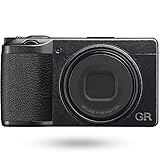
1. Ricoh GR IIIx — Best for street photography
The GR IIIx is the rare camera that pairs a large APS-C sensor with a body that genuinely slips into a jacket pocket. It weighs about 262 g with battery and card fitted, yet carries a 24.2MP sensor and a fixed 26.1mm f/2.8 lens, equivalent to 40mm, a natural field of view for street and travel scenes. Ricoh’s three-axis Shake Reduction steadies handheld shots, and Snap Focus lets you pre-set a focus distance so the camera fires the instant you press the shutter, with no autofocus wait. The 3-inch touchscreen keeps settings changes quick, a built-in ND filter helps in bright sun, and the battery charges over USB. There is no zoom and no viewfinder, so it suits deliberate, one-lens shooting rather than fast-changing action, but for walk-around photography nothing else packs this much sensor into so little weight.
2. Sony ZV-1 II — Best for vlogging and video
Sony built the ZV-1 II around one idea: a pocket camera that makes filming yourself simple. At about 292 g it carries a 1-inch 20.1MP stacked sensor behind a wide 18-50mm equivalent f/1.8-4.0 zoom, so you can hold it at arm’s length and still fit yourself and the scene in frame. The vari-angle touchscreen flips out for self-recording, real-time Eye AF keeps your face sharp, and the Product Showcase mode shifts focus to an object you hold up to the lens. A directional three-capsule microphone with a supplied wind screen improves voice pickup outdoors, and the camera records 4K video as well as stills. You give up a viewfinder and the zoom range is short for distant subjects, but as a light, always-along camera for walking-and-talking video and everyday photos, it is hard to beat.

3. Canon PowerShot G7 X Mark III — Best all-round pocket zoom
The G7 X Mark III is the classic travel pocket camera formula done well: a 1-inch 20.1MP stacked sensor, a bright 24-100mm equivalent f/1.8-2.8 zoom, and a body that weighs about 304 g with battery and card. The wide maximum aperture helps indoors and after sunset, where smaller-sensor compacts struggle, and the 4.2x zoom covers wide scenes through to portraits without changing lenses. It shoots 4K video, has a touchscreen that tilts up 180 degrees for selfies and vlogging, includes a microphone input, and supports Wi-Fi and Bluetooth transfer to a phone plus USB charging. Controls are mostly touch and menu driven, and there is no viewfinder, but if you want one small camera that handles family events, city breaks and casual video without any extra kit, this remains a safe, light choice.

4. Sony a6400 with 16-50mm Lens — Best lightweight interchangeable-lens kit
If a fixed lens feels limiting but a full-frame kit feels heavy, the a6400 splits the difference. The APS-C body weighs about 403 g with battery and card, and the retracting E PZ 16-50mm f/3.5-5.6 OSS power zoom collapses flat enough to keep the whole kit slim in a small bag. Inside is a 24.2MP sensor with 425 phase-detection autofocus points, real-time Eye AF and subject tracking that stay dependable for kids, pets and moving scenes, plus 4K video and a touchscreen that tilts up 180 degrees for self-recording. Unlike the compacts here, you also get an electronic viewfinder for bright days, and the E mount leaves room to add small prime lenses later without much extra weight. Battery life is modest, so plan on a spare, but as a light system camera that can grow with you, it earns its place.

5. Fujifilm X100VI — Best premium fixed-lens camera
The X100VI is the heaviest camera here at about 521 g, but it is still a one-piece camera you carry on a strap all day, and it packs in far more than the compacts. A 40.2MP APS-C X-Trans sensor sits behind a fixed 23mm f/2 lens, equivalent to 35mm, and in-body stabilization rated up to 6 stops keeps low-light shots steady. The hybrid viewfinder switches between an optical window and an electronic display, dedicated dials control shutter speed, aperture and exposure compensation by feel, and Fujifilm’s Film Simulation modes, including REALA ACE, give JPEGs a finished look straight from the camera. It also records up to 6.2K video. The fixed lens rules out zooming and the price sits well above the others, but for photographers who want classic handling and top image quality without carrying a lens kit, it justifies the extra grams.

What to Look For
| Factor | Why it matters | What to check |
|---|---|---|
| Weight and size | The core reason to buy | Check body weight with battery and card, and note thickness |
| Sensor size | Larger sensors help in dim light but add bulk | Compare sensor format against the lens that comes with it |
| Lens type | Fixed lenses save weight, interchangeable ones add flexibility | Look at zoom range, widest aperture and collapsed length |
| Stabilization | Helps with handheld shots in low light | Check for sensor-shift or lens-based systems |
| Battery life | Small bodies often carry small batteries | Read the maker’s shot count and USB charging support |
| Controls and screen | Tiny bodies can feel cramped | Look at dials, a tilting screen and an eye-level finder |
| Connectivity | Quick sharing saves time | Check wireless transfer, app support and a USB port |
Setup and Care Tips
- Carry a spare battery; lightweight bodies tend to drain faster than larger ones.
- Use a wrist strap or a slim sling so the camera is always ready without adding weight.
- Clean the lens with a soft brush and cloth, and keep a small pouch around the body in a bag.
- Set a few custom modes for travel, street and low light so you can switch quickly.
- Update the firmware from the maker’s site occasionally, and back up your cards after each outing.
Mistakes to Avoid
- Chasing the smallest body and ending up with controls too tiny to use comfortably.
- Ignoring the lens aperture, then finding dim indoor pictures noisy.
- Forgetting the weight of extra batteries, cases and a tripod.
- Assuming a long zoom will be sharp at its full extension in poor light.
- Skipping a look at the grip, which matters more on lighter bodies.
How light should a lightweight camera be?
A lightweight camera is light enough when you stop leaving it at home. There is no fixed number, so judge weight against the bag you carry and the length of your day.
Weight on a spec sheet can mislead. Check whether the figure includes the battery and memory card, and remember that a lens, a spare battery and a case add to the total. For interchangeable-lens bodies, the lens often weighs as much as the body itself.
A useful test is to think in three carry styles:
- Pocket carry: the camera slides into a jacket or trouser pocket. Fixed-lens compacts such as the Ricoh GR IIIx belong here.
- Small bag carry: the camera lives in a sling or a small shoulder bag. The Sony ZV-1 II and the Canon PowerShot G7 X Mark III fit comfortably.
- Strap carry: the camera hangs from your neck or shoulder all day. The Sony a6400 kit and the Fujifilm X100VI work well this way.
Be honest about which style you will actually use. A camera that is slightly heavier but comfortable on a strap may get used more than a tiny one that is awkward to hold. Thickness and grip shape matter as much as the number of grams.
Fixed-lens or interchangeable-lens: which is better for a light camera?
A fixed-lens camera is usually the lighter and simpler choice, while an interchangeable-lens camera gives you room to grow. Neither is better for everyone, so decide what you value more.
With a fixed lens, there is one item to carry and no dust getting onto the sensor when you change lenses. The trade-off is that you work with the view the lens gives you. A zoom compact such as the Canon PowerShot G7 X Mark III offers a range of views, while a single-focal-length camera such as the Ricoh GR IIIx or the Fujifilm X100VI asks you to move your feet.
With an interchangeable-lens body such as the Sony a6400 with 16-50mm Lens, you can add lenses later. That flexibility has a cost: every extra lens adds weight and decisions. If you plan to carry just the kit lens, you may be paying in bulk for options you never use.
- Choose fixed if you want the simplest kit and the smallest bag.
- Choose interchangeable if you expect your interests to change, for example into portraits or distant subjects.
- Choose a prime fixed lens if you enjoy a deliberate, one-view style.
Do lightweight cameras struggle in low light?
Smaller cameras can struggle in dim places, but the lens aperture and sensor size both help. A bright lens on a larger sensor gathers more light than a dim lens on a small one.
Three things combine to decide how a light camera performs indoors or after sunset:
- Sensor size: larger sensors generally handle dim scenes better, but they add bulk.
- Maximum aperture: a wider opening lets in more light, and zooms often narrow the opening at the long end.
- Stabilization: steadier handheld shots allow slower shutter speeds, which helps for still subjects.
Stabilization does not freeze a moving subject, so a child running indoors still needs a faster shutter speed. Autofocus quality also matters in low light, so look at how the maker describes its focus system and subject tracking.
If you often shoot evenings, restaurants or events, favor a bright lens and a larger sensor over the smallest possible body. If you mostly shoot outdoors in daylight, you can prioritize size and weight instead.
Which lightweight camera should you buy?
The best lightweight camera is the one that suits your main subject, so match your needs to the five picks above.
- If you want the most sensor in the most pocketable body for street photography, go for the Ricoh GR IIIx.
- If you film yourself, talk to camera or vlog while walking, choose the Sony ZV-1 II.
- If you want one pocket zoom for family events, city breaks and casual video, the Canon PowerShot G7 X Mark III is the all-round pick.
- If you want a light system you can expand with more lenses and an eye-level finder, pick the Sony a6400 with 16-50mm Lens.
- If you want classic dials, a hybrid viewfinder and strong image quality without lens changes, choose the Fujifilm X100VI.
If you are torn between the Ricoh GR IIIx and the Fujifilm X100VI, the question is pocket size versus handling. The Ricoh is the smaller of the two, while the Fujifilm adds a viewfinder and more physical controls at the cost of extra weight.
If you want the easiest first step, the Canon PowerShot G7 X Mark III covers the widest range of everyday uses with the least extra kit.
What to check before you buy a lightweight camera
Before you buy, confirm the listing details that decide whether the camera is genuinely easy to carry and use.
- Weight with battery and card: compare it with the weight of the camera you carry now.
- Dimensions: check the thickness, since a flat body slips into a pocket more easily.
- What is in the box: look for a battery, charger or cable, strap and any lens included with the body.
- Charging method: USB charging lets one power bank cover your phone and camera.
- Memory card type: confirm the card format so you do not buy the wrong one.
- Viewfinder: decide whether you can live with only a rear screen on bright days.
- Warranty and returns: read the terms on the listing and keep the packaging until you are happy.
- Spare battery availability: check that a replacement is easy to find for your model.
If you wear a hat or glasses, or have large hands, handle a similar camera in a shop first. A body that looks small can still feel awkward if the grip is shallow.
How do you carry and protect a lightweight camera on the road?
The best way to carry a light camera is in a way that keeps it ready without strain. A wrist strap, a slim sling or a padded pouch inside a bag each suit a different day.
Small bodies are easy to knock, so a few habits help:
- Keep the lens cap on or the lens retracted while the camera is in a pocket, and keep coins and keys out of that pocket.
- Use a soft pouch inside a larger bag so the screen and lens do not rub against other items.
- Wipe sand, salt spray and dust off gently with a soft cloth, and avoid blowing on the lens.
- Let the camera adjust to temperature changes before you power it on, to reduce the chance of fogging.
- Check the maker’s manual for any water or dust protection, and do not assume a small body is weather sealed.
Think about how you will charge and back up on a trip. A single USB cable and a power bank can cover both your phone and a camera that charges over USB. Copy your cards to a second place each evening, and keep a spare card in a separate pocket in case one fails.
Finally, set the camera up before you leave. Format the card, check the date, and choose your custom modes at home so you are not digging through menus on the street.
Is a lightweight camera worth it over a phone, and who should skip one?
A lightweight camera is worth it if you want a bigger sensor, real zoom or physical controls beyond what your phone gives you. If you only share casual snapshots online, a phone may be enough.
Here are the honest trade-offs:
- Another thing to carry: even a light camera is one more item, plus a battery and a card.
- No built-in sharing magic: wireless transfer works, but it is rarely as quick as posting from a phone.
- Battery limits: small bodies often carry small batteries, so plan for a spare.
- Compromises in reach: compacts cannot match long lenses for distant action or wildlife.
Is it worth paying more for a premium option like the Fujifilm X100VI? Only if you will value the viewfinder, the dials and the image quality every time you shoot. If you want a simple travel camera, a cheaper tier may do the job just as well.
You should probably skip a very small camera if you shoot sports, stage events or wildlife, or if you dislike cramped controls. When you are ready, compare the picks above, check the current listing for weight, what is included and the return terms, then choose the camera you will happily carry every day.
FAQ
Is a smartphone enough instead of a small camera?
For many everyday pictures it can be. A dedicated camera offers a larger sensor, real zoom and physical controls, which matter if you want more control or shoot in changing light.
What matters more, sensor size or weight?
It depends on your goals. If you will leave a heavier camera at home, a lighter body wins. If you print large or shoot in dim places, a bigger sensor may be worth the extra weight.
What is the lightest camera with a large sensor?
In this guide, the Ricoh GR IIIx is the pick that combines an APS-C sensor with a very small body. Weight claims vary between listings, so check the product page for the current figure. It is a fixed-lens camera without a viewfinder.
Is a mirrorless camera lighter than a DSLR?
Mirrorless bodies are generally smaller and lighter than DSLRs because they have no mirror box. The lens still adds weight, so the total depends on what you attach. Compare the full kit weight rather than the body alone.
Which lightweight camera is best for vlogging?
The Sony ZV-1 II is the vlogging pick in this guide. It has a flip-out screen for self-recording and a directional microphone with a wind screen. The Canon PowerShot G7 X Mark III also has a screen that tilts up for selfies.
Can a lightweight camera replace my main camera?
For travel and everyday use, often yes. For sports, wildlife or work needing long lenses, a small camera may feel limiting. Think about the subjects you shoot most before deciding.
Do I need a viewfinder on a travel camera?
A viewfinder is not essential, but it helps on bright days when a rear screen is hard to see. The Sony a6400 and the Fujifilm X100VI have one. The Ricoh GR IIIx, Sony ZV-1 II and Canon G7 X Mark III do not.
How many batteries should I carry with a compact camera?
Carrying one spare is a sensible starting point for a day out. Small bodies often use small batteries, and video or screen use drains them faster. USB charging can also top up a battery from a power bank.
What accessories do I need for a lightweight camera?
Most people need a memory card, a spare battery, a wrist strap or sling and a small cleaning cloth. A slim case protects the camera in a bag. Add more only if you find a real need for it.
Questions to Ask Before You Buy
Carrying less is the whole point, so weigh what you give up. Ask these before you commit.
- What do you shoot most: family, travel, street or hiking scenes?
- Do you want a fixed lens body, or one that accepts other lenses?
- How much does the body weigh once a lens and battery are fitted?
- Do the controls feel comfortable for your hands, or do they feel cramped?
- Can you charge it over USB, so one power bank covers your devices?
- Does the camera have a viewfinder, or only a rear screen?
Matching It to Your Use
Day trips and hiking
Pocketable bodies with a flexible zoom keep your pack light. A wrist strap is often easier than a neck strap on trails.
Street and everyday carry
A small fixed lens body draws little attention and is ready quickly. A quick wake up and quiet shutter noise help here.
Family events
Easy autofocus and clear menus help when moments pass quickly. Think about who else may pick it up.
Feature Trade-offs
| Feature | Helps with | Worth weighing |
|---|---|---|
| Smaller sensor | Compact body and lens | Less room for low light work |
| Fixed zoom lens | One item to carry | No lens swapping |
| Interchangeable mount | Growing options | Lenses add weight |
| Tilting screen | Low and high angles | Another moving part |
Check the maker’s manual and instructions for card types and battery notes, and carry a spare battery on longer outings.
Who Should Skip It
If you often shoot sports, wildlife or stage events with long lenses, a very small body may feel limiting. Compact cameras also offer fewer grip options, so people with large hands should hold one before buying.
Accessories to Plan For
A slim case, a wrist strap, a spare card and a battery are enough for most days. A small cleaning cloth keeps the lens clear in a pocket or bag.
Packing Light
Decide what leaves the house with the camera: one lens, one spare battery, one card. A small kit gets used more often than a full bag. Check the maker’s manual and instructions for charging options, since a USB cable can replace a bulky charger on trips.
The Short Version
Balance weight against sensor size, lens flexibility and battery life, then handle the controls if you can. The best lightweight camera is the one you happily carry every day.
Related Guides
- How to Choose the Best Lightweight Drones: Buyer's Guide (2026)
- How to Choose the Best Blackmagic Cameras: Buyer's Guide (2026)
- How to Choose the Best Canon Cameras: Buyer's Guide (2026)
- How to Choose the Best Cinema Cameras: Buyer's Guide (2026)
- How to Choose the Best Compact Cameras: Buyer's Guide (2026)