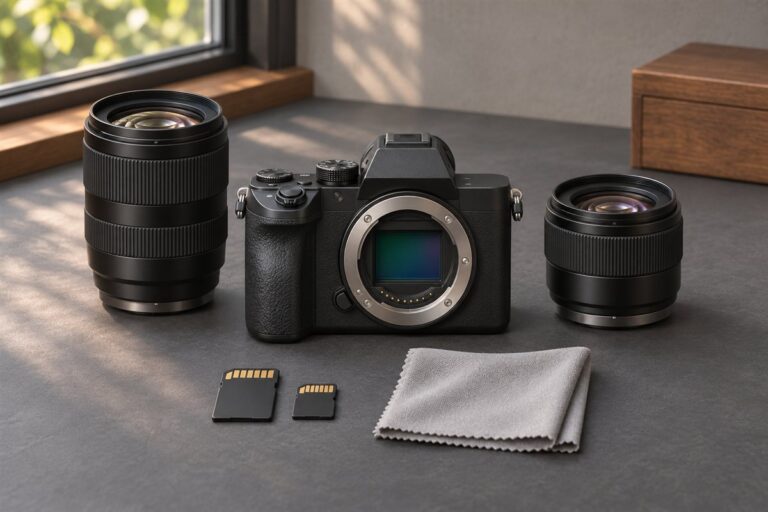
The Fujifilm X-T30 II uses the X mount, so it takes Fujifilm XF lenses and several third-party X-mount lenses. A small prime keeps the body compact, while a standard zoom or a telephoto adds flexibility for travel and distant subjects.
The six lenses below range from a 90 gram 23mm prime to a 70-300mm telephoto zoom. Specs come from each product’s listing page and are the makers’ own. We have not used these lenses ourselves, and several listings contain conflicting details, which we flag.
As an Amazon Associate we earn from qualifying purchases. Links below are affiliate links, and they do not change the product information we give.
What to Look For
| Feature | Why it matters |
|---|---|
| Focal length | 23mm and 27mm suit street scenes; 35mm suits everyday and portraits; 70-300mm reaches far |
| Aperture | Lower f-numbers let in more light and blur backgrounds more |
| Weight and size | Small primes balance well on the compact X-T30 II body |
| Aperture ring | Most XF primes have one for direct control |
In this guide
Specs at a Glance
| Lens | Focal length and aperture | Weight | Notes |
|---|---|---|---|
| XF16-50mm F2.8-4.8 R LM WR | 16-50mm (24-76mm equivalent); f/2.8-4.8 | 8.48 oz (240 g) | 2.8 in long; 0.24 m close focus |
| XF23mm F2.8 R WR | 23mm; f/2.8 | 90 g | 8 elements in 6 groups; 11-blade aperture; 20 cm close focus |
| XF27mm F2.8 R WR | 27mm; f/2.8 | 84 g | Aperture ring with lock button; 39mm filter size |
| XF35mm F2 R WR | 35mm (53mm equivalent); f/2 | Listing figure unclear | 9-blade aperture; 43mm filter size; about 13 in working distance |
| VILTROX 35mm f/1.7 XF | 35mm (53mm equivalent); f/1.7 | Not clear on page | STM autofocus; large aperture APS-C prime |
| XF70-300mm F4-5.6 LM OIS WR | 70-300mm (107-457mm equivalent) | 795 g | 17 elements in 12 groups; 67mm filter size; 0.83 m close focus |
The 6 Best Lenses for Fujifilm X-T30 II
Top pickBest for a one-lens walkaround setup
1. Fujifilm Fujinon XF16-50mm F2.8-4.8 R LM WR
A standard zoom with a 24-76mm equivalent range, an internal zoom that keeps the length constant, a 0.24 m close focus, a 2.8 inch length and a weight of 240 g (0.53 lb), described by Fujifilm as supporting 40 megapixel sensors.
Suits: a one-lens walkaround setup. Strengths: small size and flexible range. Weaknesses: the aperture narrows to f/4.8. Skip it if you prefer a fast prime. The listing mentions optical stabilization, which we could not confirm.
View Fujifilm Fujinon XF16-50mm F2.8-4.8 R LM WR Lens on Amazon
Best for street and travel use on a small body
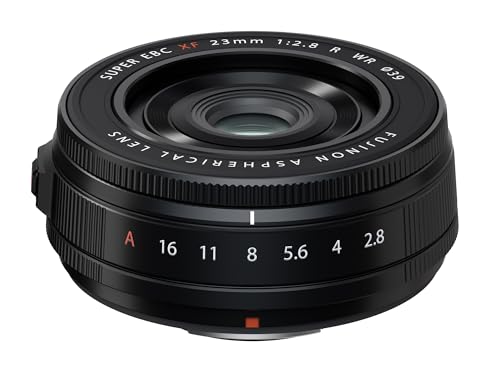
2. Fujifilm Fujinon XF23mm F2.8 R WR
A pancake-style wide prime weighing 90 g and measuring 23mm long, with eight elements in six groups, two aspherical elements, an 11-blade aperture and a 20 cm close focusing distance.
Suits: street and travel use on a small body. Strengths: very small and light with close focus. Weaknesses: f/2.8 is not the fastest aperture. Skip it if you want strong background blur.

Best for a minimal everyday lens
3. Fujifilm Fujinon XF27mm F2.8 R WR
An 84 g pancake prime with a 39mm filter size and an aperture ring that can be set externally, plus a new lock button that holds the ring in the A position. Fujifilm positions it for street, portraits and travel.
Suits: a minimal everyday lens. Strengths: the lightest lens here and a lockable ring. Weaknesses: the listing’s focus type field reads manual, which conflicts with the text. Skip it if you want a wider aperture.
View Fujifilm Fujinon XF27mm F2.8 R WR Lens on Amazon
Best for portraits and everyday use
4. Fujifilm Fujinon XF35mm F2 R WR
A 35mm prime (53mm equivalent) with a 9-blade aperture, an inner focus system with a stated 0.08 second autofocus, Nano-GI coating to reduce flare, a 43mm filter size and a minimum working distance of about 13 inches.
Suits: portraits and everyday use. Strengths: f/2 and quick, quiet focus. Weaknesses: the listing’s stabilization and weight fields look wrong. Skip it if you want a smaller lens.
View Fujifilm Fujinon XF35mm F2 R WR Lens Black on Amazon
Best for low-light work with a fast aperture
5. VILTROX 35mm f/1.7 XF
A third-party autofocus prime with an f/1.7 maximum aperture, an STM stepping motor, a 53mm equivalent field of view and a compatibility list that names the X-T30, X-T4, X-T5, X-S10, X-H2 and others.
Suits: low-light work with a fast aperture. Strengths: f/1.7 and a stepping motor. Weaknesses: the page lists the X-T30 but not the X-T30 II by name, and its details table says f/1.2. Skip it if you need confirmed compatibility.
View VILTROX 35mm f/1.7 XF Auto Focus APS-C Prime Lens for Fujifilm X-Mount on Amazon
Best for wildlife and distant scenes
6. Fujifilm Fujinon XF70-300mm F4-5.6 LM OIS WR
A telephoto zoom with 17 elements in 12 groups, two ED elements, optical image stabilization, a 107-457mm equivalent range, a 67mm filter size, a weight of 795 g and a 0.83 m close focus.
Suits: wildlife and distant scenes. Strengths: reach and stabilization. Weaknesses: the biggest lens here. Skip it if you want a light setup. The page shows F4-5.6 in the title and F4.5-5.6 in the text.
View Fujifilm Fujinon XF70-300mm F4-5.6 LM OIS WR Lens on Amazon
Care and Setup
- Check the lens is X mount before buying.
- Update the camera and lens firmware.
- Carry small primes in a pocket pouch to protect the front glass.
- Use a hood to reduce flare.
Mistakes to Avoid
- Buying a third-party lens without confirming body support.
- Trusting spec fields that conflict with the lens name.
- Choosing a long telephoto for a compact travel kit.
- Forgetting the crop factor when comparing focal lengths.
Understanding Crop Factor and Field of View on APS-C
The X-T30 II has an APS-C sized sensor, which is smaller than a full-frame sensor. A lens therefore captures a narrower slice of the scene than the same focal length would on full frame. Fujifilm lens listings often give a 35mm equivalent figure to help compare. The conversion for this system is roughly one and a half times the focal length, which is why a 35mm lens behaves like a 53mm field of view, and a 23mm lens behaves like something near 35mm.
This matters when you choose a focal length for a purpose. A 23mm lens gives a classic wide-normal view for street scenes, environmental portraits and travel. A 27mm lens is a little tighter and feels close to a natural view. A 35mm lens suits portraits, details and everyday use, and a 70-300mm telephoto reaches distant subjects such as wildlife and sports.
Equivalence applies to field of view, not to depth of field in a simple way. Strictly, an APS-C lens at a given aperture produces somewhat more depth of field than the equivalent full-frame setup, so background blur is a bit less than the equivalent number suggests. This is why fast apertures remain attractive on this system. It does not mean a lens is worse, only that you should set expectations.
Before buying, check your existing photos. Many cameras record the focal length in the metadata, and looking at the range you use most often tells you which lens range is a good match.
Choosing Between Primes and Zooms for This Body
Primes have one focal length, and zooms cover a range. For the compact X-T30 II body, the appeal of primes is clear: they are small and light, they usually have wider maximum apertures, and they push you to move your feet and compose deliberately. A prime is a good choice for low light, shallow depth of field and a pocketable setup.
Zooms offer flexibility, which matters when you cannot change lenses or when the subject moves unpredictably. A standard zoom covers wide to short telephoto, which suits travel, family events and general photography. The trade-off is usually a narrower maximum aperture, especially at the long end, and a larger size than a pancake prime.
A telephoto zoom extends your reach for wildlife, sports and details. It is heavy compared with the body, so you may find that the combination feels front-heavy, and a lens with stabilization is a plus for handheld shooting. If you only shoot distant subjects occasionally, think about whether the added weight and cost fit your habits.
Consider a two-lens kit as a starting point. One versatile lens for daily use plus a second that fills a gap, such as a fast prime for low light or a telephoto for distance, covers most needs without turning your bag into a burden. Avoid buying several lenses with overlapping focal lengths. Think about what you cannot do now, and choose a lens to solve that problem.
Aperture, Low Light and Stabilization
Aperture determines how much light reaches the sensor and how much of the scene is in focus. A lower f-number, such as f/1.7 or f/2, allows faster shutter speeds in dim conditions and produces softer backgrounds. A lens at f/2.8 is still useful in many situations, especially when paired with the camera’s sensitivity range, and it can be smaller and lighter than a faster lens.
The X-T30 II does not have in-body image stabilization, so stabilization in the lens is important for slow shutter speeds. Telephoto zooms with optical stabilization help keep shots sharp handheld. Wide and normal primes tend to lack stabilization, but their wide fields of view and fast apertures make them easier to hold steady. As a rule of thumb, use a shutter speed at least as fast as the reciprocal of the focal length, then adjust for your own steadiness.
Variable-aperture zooms change the maximum aperture as you zoom in. A lens listed as f/2.8-4.8 or f/4-5.6 will let in less light at the long end. If you shoot indoors or at dusk, check how the aperture behaves at the focal length you use most.
For video, consider autofocus smoothness and noise, since a loud focus motor may be picked up by the camera microphone. Check the maker’s description and user feedback, and use an external microphone if needed. Remember to update the camera and lens firmware where available, as updates can improve focus performance.
Third-Party Lenses and Compatibility Checks
Several third-party makers produce X-mount lenses, and they can be attractive for their wide apertures and different price tiers. The key is verifying compatibility. Look at the listing for the camera models it names, and check the maker’s own support page for the X-T30 II. A listing that mentions an older sibling body may still work, but you should not assume it. When details are ambiguous, contact the seller or check the maker’s compatibility list before purchase.
Compare spec fields carefully. As some listings show conflicting information, such as different maximum apertures in the title and the details table, treat the title and manufacturer’s page as the first reference and ask for clarification. Look at filter size, weight and close focus distance, because these affect your accessories and shooting style.
Firmware matters for third-party lenses. Makers sometimes release updates that fix focus behavior or improve compatibility with new camera firmware. Check how updates are installed, as some require a dock or adapter and others use the camera. Also check the warranty terms and the return policy, so you can test focus accuracy and sharpness on your own body.
Do not expect every camera feature to carry over. Features such as certain focus modes, in-camera lens corrections or aperture ring behavior may differ between brands. Read the listing for details, and look at user reports for the camera model you own.
Weather Resistance, Filters and Lens Care
Several lenses here carry a WR label, which indicates weather resistance. This usually means the lens is designed with seals to resist dust and splashes. It does not mean it is waterproof, and the camera body also needs to be weather resistant for the whole setup to benefit. Check whether your body is rated, and take sensible precautions in rain, such as wiping the lens and avoiding changing lenses in wet conditions.
Filters protect the front element and can add effects. Check the filter thread size on the listing, since different lenses use different sizes. A clear protective filter is a matter of preference: some photographers use one for protection, while others skip it to avoid potential flare. A circular polarizer reduces reflections and deepens skies, and a variable neutral density filter helps with long exposures or video in bright light. Buy filters sized for your lens, or use step-up rings to share a filter across lenses.
Lens hoods reduce flare and offer some protection. Use them when shooting toward bright light. Many pancake primes have small hoods, which add size, so decide whether you want them in your pocket kit.
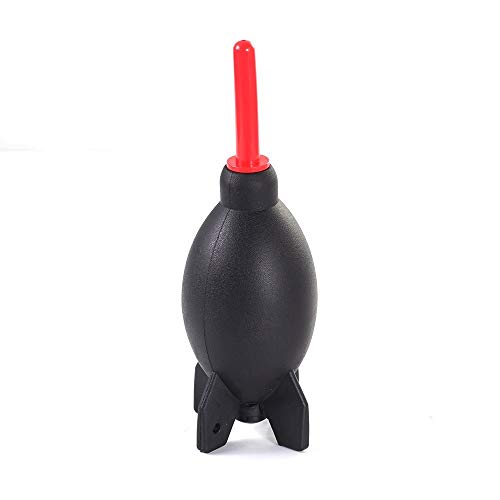
For cleaning, use a blower first, then a soft brush, then a microfiber cloth with lens cleaner if needed. Keep caps on when not shooting, and store lenses in a dry place with some airflow. Avoid changing lenses in dusty or windy conditions, and point the camera down while swapping to limit dust on the sensor.
Primes or Zooms: Choosing by Shooting Situation
The camera body is small and light, so the lens you pair with it shapes how the whole kit feels. A prime lens has a fixed focal length, usually with a wider maximum aperture, a compact body and a simple design. A zoom covers a range, which saves lens changes but may be larger and have a narrower aperture.
| Situation | Often suits |
|---|---|
| Street and travel walks | A compact prime or a small standard zoom |
| Portraits | A short telephoto prime with a wide aperture |
| Landscapes | A wide prime or wide zoom |
| Family events | A versatile zoom to avoid swapping |
| Low light indoors | A fast prime |
If you can only afford one lens at first, a standard zoom or a normal field of view prime tends to cover the most ground.
How to Read a Lens Listing
Lens names pack in a lot of code. Learn the basic pieces and a listing becomes much easier to scan.
- Focal length: the number in millimeters. On this camera, the equivalent field of view is roughly one and a half times the number.
- Maximum aperture: written like f/2 or f/1.4. A smaller f number lets in more light.
- Mount: confirm that the lens is made for the camera mount.
- Weather resistance: some lenses list sealing, and the body needs matching protection for it to matter.
- Image stabilization: the body lacks in-body stabilization in this model, so lens based stabilization can help in dim conditions.
Care and Fit Notes for Your Kit
Check the filter thread size on the listing, so you can plan for protective filters or hoods. Keep caps on when the lens is in the bag, and use a blower and a soft cloth to clean the front glass instead of rubbing dust around.
Think about balance as well. Large lenses can feel front heavy on a small body, so a grip or a strap helps. Before relying on a lens for an important trip, take it out for a practice session and learn how it focuses. Consult the maker guides if the camera needs a firmware update to work with a new lens.
Mistakes to Avoid When Adding a Lens
Lens shopping is tempting, and the usual traps are easy to fall into. Spend a few minutes on these points before you commit to a purchase.
- Buying a lens for a different mount that will not attach to your body.
- Choosing the fastest aperture without thinking about size and weight.
- Collecting lenses with overlapping focal lengths instead of covering gaps.
- Ignoring the minimum focusing distance, which matters for close work.
- Skipping the check for lens hood and cap details on the listing.
Building a Small Kit Step by Step
Most photographers do best by adding lenses slowly. Begin with one lens that suits your most common subject, shoot with it for a few weeks, and see what you wish you had. If you often feel too close, a wider lens may help. If you often wish you were nearer, a longer one fits better.
A tidy three lens kit might include a wide to standard zoom, a fast normal prime for dim rooms and a short telephoto for portraits. You do not need all three on day one. Consider how much you want to carry, since each lens adds weight to the bag.
Pay attention to filter sizes. Lenses that share the same thread size let you use one set of filters across several lenses, which saves effort. Read the maker pages for compatibility notes and firmware advice, and keep the lens clean and dry in the bag with caps on both ends.
Choosing Lenses for the Fujifilm X-T30 II in More Depth
The X-T30 II is a small, joyful camera, and its lens kit should protect that character: glass that keeps the combination light, balanced and quick to use will be carried daily, while heavy glass quietly converts a pocketable camera into a shelf system. When comparing the picks in this guide, weigh each lens as part of the whole handful, body plus lens, and imagine it in your coat pocket, your small sling and your hand at hour three of a walk. The right lens for this camera is the one that preserves the reason you bought a compact body in the first place.
Decide your prime-versus-zoom temperament honestly. Primes reward commitment: one focal length, deeply learned, with speed and simplicity as the dividends. Zooms reward opportunism: the scene dictates the framing and the lens complies. Most X-T30 II owners end up with a small mixed kit, a standard zoom for life as it happens and one beloved prime for deliberate shooting, and the picks here are chosen to build exactly that kind of kit without duplication.
Reading the Focal Lengths on a Crop Sensor
Because the X-T30 II uses an APS-C sensor, every lens frames more tightly than the same number would on a full-frame camera, and thinking in fields of view rather than numbers prevents expensive misunderstandings. The wide end of the zoom in this guide serves interiors and landscapes; the short primes sit in the classic reportage and everyday range; the longer prime and telephoto reach into portrait and distant detail. Translate each option into the photographs you actually take, rooms, streets, faces, distances, and the shortlist usually writes itself.
Aperture numbers need the same translation into practice. A faster prime gathers more light and separates subjects more strongly, which matters for evening streets and portraits; a slower but versatile zoom trades that for range and stabilization partnership. Neither is a compromise to apologise for. Match the trade to your light: if your photography lives at dusk and indoors, speed is your currency; if it lives outdoors in daylight, range and lightness are worth more.
Handling Details That Matter on a Small Body
Aperture rings, focus feel and the balance of the combination are daily pleasures or daily frictions on a camera this size. A lens with a satisfying aperture ring suits the X-T30 II’s dial-driven philosophy and keeps your eye at the scene. Weather resistance, where offered, matters in proportion to your climate and courage, remembering that the body itself sets the system’s limits. Small lenses also change how people react to you: a compact combination is a guest at the table, where a large one is an announcement, and street and family photographers feel that difference in their results.
Autofocus behaviour partners with the body, so favour lenses whose focus speed and quietness suit your subjects: children and animals forgive nothing, while landscapes forgive everything. If video matters to you, listen to the lens as much as you look through it; focus breathing and motor noise are part of the footage. The per-pick notes in this guide speak to these behaviours; read them with your subjects in mind rather than as abstract rankings.
Lenses for the X-T30 II in Real Life
For everyday and family photography, the winning combination is the one already on the camera when life happens. Many owners settle on the standard zoom or a compact prime as the default resident and treat everything else as a deliberate substitution. Keep the default lens’s cap habits, strap and bag position constant, and the camera becomes a thirty-second decision to bring along, which is precisely how family archives get made: not by the best lens, but by the present one.
For travel, this camera’s virtue is the whole kit fitting where other systems fit a body. A two-lens travel set, the standard zoom plus the fast prime for evenings, covers the overwhelming majority of journeys and still leaves room in the bag for the trip itself. Resist the third lens unless a specific subject demands it; every addition is paid for in weight on every staircase of the journey, while its photographs exist only in imagination until proven otherwise.
For portraits and creative projects, the longer and faster options in this guide come into their own: subject separation, gentle compression and the confidence to shoot in kind, low light. Work on position and background as much as settings; a step sideways that removes a distraction is worth more than any aperture. The X-T30 II rewards photographers who move their feet, because its small size makes repositioning effortless compared with hauling a large system around a subject.
Care, Handling and Troubleshooting
Small lenses invite casual handling, so build the rituals anyway: caps on in the bag, a cloth in the same pocket every time, and a quick check of the front element before important frames. Dust on the sensor announces itself in skies and plain backgrounds; minimise lens changes in wind and dust, point the body downward when you must change, and keep a blower at home for the gentle first remedy. Prevention is a thirty-second habit; cleaning is an evening.
When autofocus disappoints, confirm the obvious before suspecting the lens: the focus mode suits the subject, the focus point is where you think it is, and the lens contacts are clean. On a compact body it is easy to nudge a dial or a touchscreen point without noticing. A small reset ritual, check mode, check point, check the front element for a smudge, resolves most field mysteries and returns you to shooting within a minute.
Store the kit dry and together, with batteries rotated and firmware for body and lenses checked occasionally at home. A camera this portable lives in bags and pockets rather than cabinets, so give it a padded home within whatever you carry, rather than letting it rattle among keys and bottles. Portability is the system’s genius; protecting it is mostly a matter of one soft pouch and a consistent habit.
How the Picks Differ in Practice
The Fujifilm options here form the native spine of a kit: a versatile standard zoom, a family of compact primes at the classic focal lengths, and a telephoto for reach, all speaking the body’s design language. The VILTROX prime offers the third-party route to a fast aperture with a friendlier cost, a pattern many X-system owners use to explore a focal length before committing to native glass. There is no wrong architecture here, only the order in which you build.
A sensible path for many owners: live with the zoom until your library tells you which focal length you love, then buy the prime that matches the evidence. That sequence turns lens buying from speculation into recognition, and it is the cheapest education in photography there is, because the zoom you already own writes the report.
A Deliberate Practice Plan for Your X-T30 II Kit
Photography improves fastest under gentle constraint, so give each lens in your kit a fortnight of exclusivity across the next few months. The zoom’s fortnight teaches framing choice, because every focal length is available and must be chosen rather than inherited. The prime’s fortnight teaches position, because your feet become the zoom and your eye learns to see its one field of view everywhere. By the end of each fortnight, write three lines: what this lens made easy, what it made hard, what it made you notice.
Between fortnights, shoot one subject with every lens you own: the same street corner, the same family member, the same still life on the kitchen table. The comparison set is a personal lens review more honest than any published one, because it is conducted on your subjects, with your hands, in your light. Keep the set; repeat it yearly, and it becomes a record of your growth that happens to be illustrated by your equipment.
Practise the mechanics until they vanish: changing lenses calmly without looking down for long, working the aperture ring and dials by feel, finding your saved settings in the dark of a theatre foyer. A compact camera rewards this fluency disproportionately, because its whole promise is immediacy, the photograph taken in the moment rather than after it. Ten minutes of deliberate drill a week is the entire cost of that immediacy.
Curate as you practise. End each fortnight by choosing its single best photograph and printing it, however modestly. The growing row of prints is the kit’s report card and your motivation in physical form, and it quietly answers the only gear question that matters, whether the next purchase should be a lens at all, or a journey, a workshop or a frame for the wall.
The plan’s destination is a kit you no longer think about: two or three lenses, each with a known job, carried without debate and used without hesitation. The X-T30 II was designed for photographers who want the camera to disappear into the day. A deliberate practice plan is how the lenses learn to disappear with it.
Film Simulations, Settings and a Consistent Look
Part of this camera’s charm is the look it gives straight from the body, and a lens kit serves that look best when your settings philosophy is settled. Choose a small set of film simulations you genuinely love, learn how each treats skin, sky and foliage with your lenses, and resist collecting settings like souvenirs. A consistent look across a year of photographs is worth more than a novelty look per outing, because consistency is what turns photographs into a body of work.
Set the camera’s custom banks, where you use them, around your lenses and subjects rather than around internet recipes: one for the zoom’s daylight wandering, one for the fast prime’s evening work, one for deliberate projects. Label them in your notebook with the lens they assume. Settings that know which lens is mounted save the small daily frictions that otherwise accumulate into a camera that feels complicated.
Review your settings quarterly against your photographs, not against forums. If a simulation is flattering your subjects, keep it; if your highlights keep disappointing, adjust the one control responsible and live with the change for a month before judging. Photographers who tune slowly own their look; photographers who tune weekly rent a new one each time and master none of them.
A Note on Patience: The Kit You Grow Into
Resist judging any lens in this guide, or any kit built from them, inside its first month. Hands learn slowly and then all at once, and the lens that felt awkward in week one is often the beloved resident of month three, while the lens that dazzled immediately sometimes fades into a specialist you rarely reach for. Give each addition a season of honest use before the verdict, and let your photographs, gathered across that season, deliver it. Equipment decisions made on seasons are almost never regretted; decisions made on first impressions are regretted on a schedule.
More Notes for X-T30 II Shooters
Run a focal-length audit on your own library every few months: note where your zoom actually lived, or which prime never left the camera. The audit is occasionally humbling and always useful, and it converts your next lens decision from a debate into a reading of evidence you generated yourself.
Give each new lens a two-week exclusivity period: it stays on the camera for everything. Constraint teaches a focal length’s true character faster than rotation does, and at the end of the fortnight you will know whether the lens is a resident, a specialist or a guest, which is exactly the knowledge a small kit runs on.
Keep a small field notebook or a notes app entry for every outing: subject, light, settings that worked and settings that failed. Patterns appear quickly. The combination that nailed a sharp frame in flat morning light will not be the combination that works at dusk, and having your own record beats generic advice because it describes your hands, your support and your typical subjects. Review the notes monthly and turn repeats into defaults.
Clean gear on a schedule rather than on a panic basis. Dust and fingerprints accumulate gradually, so image quality slides gradually too, and it is easy to blame the equipment for what is really a dirty front element or a smudged screen. A blower, a soft brush and a microfibre cloth kept in the bag handle most of it. Anything beyond that, follow the maker guidance for your specific model.
Back up on the same day you shoot. Cards fail, bags get left in cars, and files that exist in exactly one place are files you are in the process of losing. A simple routine, card to computer to a second drive or cloud folder, takes minutes and protects hours of work. Format cards in the camera afterwards rather than deleting files one by one, which keeps the file system tidy.
Practise the boring fundamentals at home so they are automatic in the field: changing settings without looking, swapping cards and batteries by feel, and recovering from a missed shot without fussing. The moments worth capturing rarely wait while you scroll menus. Ten quiet minutes of drills each week does more for your hit rate than another accessory purchase.
Judge your results at the size you actually share or print. Pixel-level inspection has its place when you are diagnosing a problem, but most images live on screens and modest prints, where composition, timing and light matter far more than microscopic sharpness. Chasing perfection in the corners can talk you out of a tool that would serve you well for years.
Buy for the subjects you shoot most, not the subjects you imagine shooting once. A kit optimised for a rare trip and wrong for weekly use becomes shelf decoration. List your last stretch of real outings, count the subjects honestly, and let that tally steer the decision. The right tool is the one that disappears into the routine you already have.
Keep your expectations calibrated by the work, not the advertisements. Every camera system in this guide was designed around real compromises made by real engineers, and the photographers who thrive are the ones who learn their own system’s compromises so thoroughly that they stop experiencing them as limits. That fluency, knowing exactly what your gear will do before you press the shutter, is worth more than any single upgrade, and it is acquired free, one deliberate outing at a time.
Share your work and invite honest critique from people whose photographs you respect. Fresh eyes find the recurring habits, the horizon that always tilts, the background you never notice, that solitary review cannot. Critique stings briefly and teaches permanently. Pair it with studying photographs you admire and asking precisely what the photographer did, with position, timing and light, to earn the effect, and your own practice gains a curriculum.
Print something regularly, even small. A print is an honest editor: it reveals focus, colour and composition truths that a glowing screen forgives, and it turns photographs into objects your household actually lives with. The discipline of choosing what deserves paper sharpens every upstream decision, from which lens leaves the house to which frame survives the evening cull.
Revisit old photographs with new skills before buying new equipment. Archives are full of frames that were limited by the editor you were, not the camera you had, and reworking them is both free education and a useful audit of whether your limitations are truly technical. More than one photographer has cancelled an upgrade after discovering their old files were better than their old processing.
Budget honestly across the whole system, not just the headline item. The accessory, the bag, the spare battery, the support and the storage that a serious tool quietly requires are part of its true cost, and planning for them at purchase time prevents the resentment of a great tool starved by its supporting cast. A slightly humbler headline item with a complete system around it outperforms a flagship standing alone in almost every real photographer’s life.
Learn to leave a scene with the photograph rather than the regret. Work the subject while the light holds, vary position and framing deliberately, then check the essentials, focus, exposure, the edges of the frame, before you walk away. The check takes seconds in the field and is impossible to perform later. Departures are where good photographers are made, because they are where almost-good photographs get converted into good ones.
Keep your settings philosophy simple enough to explain to a stranger in one minute. Complexity that cannot be explained cannot be troubleshooted at speed, and speed matters when light and subjects are moving. A small set of understood defaults, varied deliberately, beats a thicket of saved modes whose contents you half remember. Simplicity is not the opposite of sophistication in photography; it is what sophistication looks like after experience has edited it.
Schedule an annual kit audit: what earned its place this year, what travelled and never left the bag, what failed and was forgiven too many times. Sell, gift or retire the honest failures and let the kit shrink toward the tools your photographs actually come from. A smaller, known kit is a creative advantage, and the audit is how photographers keep one across a lifetime of tempting new releases.
Fujifilm X-T30 II Lens FAQ
Do all XF lenses fit this camera?
XF lenses are X mount, and the X-T30 II uses the X mount.
What does the 53mm equivalent mean?
It is the field of view on the APS-C sensor compared with full frame.
Is a kit lens enough for the X-T30 II?
For many people, yes. A standard zoom covers everyday situations, and you can add a fast prime or a telephoto later once you know what you are missing.
Do XF lenses work with the camera's autofocus?
XF lenses are designed for the X mount and communicate with the body. Autofocus performance can vary by lens, so check the lens description for the type of focus motor.
Does the X-T30 II have in-body stabilization?
No, so lens stabilization is helpful for handheld shots at slow shutter speeds, especially with telephoto lenses. Check each lens listing for stabilization details.
Can I use full-frame lenses on this camera?
Only with the proper mount adapter, and some features may be limited. Many full-frame lenses are large for this body, so check the compatibility and size carefully.
What is the best lens for portraits?
A fast short telephoto prime or a normal prime with a wide aperture is a common choice. The right focal length depends on how close you want to stand and how much background blur you want.
Are pancake lenses worth it?
They are valued for their small size and light weight, which fit the compact body. The trade-off is often a narrower maximum aperture than larger primes.
How do I check if a lens is sharp?
Take test shots at different apertures on a tripod, using a flat, detailed subject, and compare the center and corners. Do this soon after purchase so you can use the return window if needed.
Which single lens should a new X-T30 II owner start with?
Start with the lens that matches your dominant subject: the standard zoom for varied everyday life, or a compact prime in the classic everyday range if you already know you love fixed-focal shooting. Shoot with it for a few months before adding anything. Your own photographs will identify the gap, too wide, too slow, too short, far more reliably than any recommendation, and the second purchase will feel obvious rather than anxious.
Are third-party lenses a good idea for this camera?
They can be a smart way to explore fast apertures and new focal lengths at gentler cost, and many owners mix them happily with native glass. Check the specifics that matter to you: autofocus behaviour, any firmware considerations, and how the lens handles on a small body. Buy third-party deliberately, for a defined purpose, and it is a tool; buy it vaguely and it becomes shelf decoration like any other lens.
How many lenses does a compact kit really need?
Most photographers thrive with two or three that do not overlap: a standard zoom or everyday prime, one fast prime for low light and portraits, and possibly a telephoto if distance is a real subject in your life. Beyond that, lenses begin to duplicate each other and the choosing itself becomes friction. A small, known kit carried constantly produces more photographs than a large, theoretical one, on this camera above all.
Why do my photos look soft with a new lens?
Work through the friendly causes first: shutter speed too low for the moment, focus point landing somewhere other than your subject, a smudged front element, or shooting a fast prime wide open and expecting corner-to-corner crispness from a shallow plane of focus. Test the lens on a still subject in good light, supported, and review carefully. Most new-lens softness is new-owner calibration, and it resolves with a week of deliberate practice.
Should I choose weather-resistant lenses for this body?
Choose them if your photography regularly meets weather and you value the lens surviving the years, while remembering the system’s resistance is a partnership and the body sets its own limits. In gentle climates and careful hands, resistance is a bonus rather than a necessity. Spend first on the focal length and speed your subjects demand; let weather features break ties rather than lead the decision.
The Short Version
For one lens, the XF16-50mm. For the smallest wide prime, the XF23mm. For the lightest, the XF27mm. For f/2 and everyday use, the XF35mm. For a fast third-party prime, the Viltrox 35mm, once body support is confirmed. For distant subjects, the XF70-300mm.