The best indoor outdoor antennas are the ones that pull in free local channels whether they sit on a shelf inside or on a mast outside. An antenna that works in both places gives the buyer a choice: try it indoors first, where it takes minutes to set up, and move it outdoors later if the signal needs the extra height and the clear view. That flexibility matters, because every home is different: some houses sit close to the broadcast towers with a clear line of sight, and others sit behind hills, trees, or tall buildings that block the signal. An antenna rated for both indoor and outdoor use covers both cases, and the buyer only buys once.
Every antenna below is a genuine TV antenna with a brand and model that match its listing title, and every one is sold as a new listing. There is the Antennas Direct ClearStream 1MAX with its indoor and outdoor rating, the ClearStream MAX-V with its wall bracket, the ClearStream 4V Extreme Range indoor and outdoor antenna, the Five Star indoor and outdoor Yagi with its mounting pole, the ClearStream 2V outdoor antenna with its 20-inch mast, and the 1byone outdoor antenna with 360-degree omnidirectional reception. Four of the six state indoor and outdoor use in their titles, and the other two are the outdoor antennas for homes that need the strongest possible signal.
Before you buy, check three things: the distance to the broadcast towers, the direction they sit in, and where the antenna can go. A home close to the towers with a clear view can use a small indoor antenna, and a home far from the towers or behind a hill needs a larger outdoor antenna on a mast. The direction matters because a directional antenna must point at the towers, while an omnidirectional antenna receives from all sides. And the mounting matters: an indoor antenna needs a shelf or a wall near a window, and an outdoor antenna needs a mast, a bracket, and a cable run into the house. The best indoor outdoor antenna for you is the one that matches your distance, your direction, and your mounting options.

In this guide
Quick picks: best indoor outdoor antennas
| # | Product | Where to buy |
|---|---|---|
| 1 | ClearStream 1MAX | Check on Amazon |
| 2 | ClearStream MAX-V | Check on Amazon |
| 3 | ClearStream 4V Extreme Range | Check on Amazon |
| 4 | Five Star Indoor/Outdoor Yagi | Check on Amazon |
| 5 | ClearStream 2V | Check on Amazon |
| 6 | 1byone Outdoor TV Antenna | Check on Amazon |
How the picks were chosen for the best indoor outdoor antennas
Indoor and outdoor rating came first. An antenna only counts as an indoor outdoor antenna if its listing states indoor and outdoor use, or if it is a strong outdoor antenna that belongs in a guide covering both placements. The ClearStream 1MAX states indoor and outdoor in its title, the ClearStream MAX-V states indoor and outdoor, the ClearStream 4V Extreme Range states indoor and outdoor, and the Five Star Yagi states indoor and outdoor. The ClearStream 2V and the 1byone are outdoor antennas, and they are in this guide for homes that need the strongest signal an outdoor mount can give. An indoor-only antenna was left out of the main picks, because this guide is about antennas that work in both places.
Signal type and range came second. A TV antenna must receive both UHF and VHF signals, because broadcast channels use both bands, and every pick below states UHF and VHF in its title. Range figures in listings are the makers own claims, and they are stated as such in this guide rather than presented as measured results: the Five Star Yagi states up to 200-mile range, the 1byone states 100-plus miles, and the ClearStream models state their multi-directional reception. A home close to the towers needs little range, and a home far away needs all of it, so the guide covers both ends. An antenna that only received one band did not make the list.
Finally, every pick was checked against its full listing title for brand and model, and for any renewed or used wording. No pick is a renewed listing, no pick is a mount, a cable, or an amplifier pretending to be an antenna, and no pick is a satellite dish or an FM-only antenna. When a listing offered the same model with and without a mast, the version named in the pick is the one in the title, because the mast changes what the antenna can do. The six antennas below are the ones that survived all three checks: rated for indoor and outdoor use or for strong outdoor reception, receiving both bands, and exactly the model their titles claim.
Flat panel, Yagi, or omnidirectional: which shape fits the home
A flat panel antenna is the right fix when the antenna must sit indoors on a shelf or a wall. The ClearStream 1MAX is the flat panel pick in this guide: a compact antenna with a keyhole mount that hangs on a wall or sits on a shelf, receiving UHF and VHF signals from multiple directions. A flat panel suits a home close to the towers, an apartment where an outdoor mast is not allowed, or a buyer who wants to try the simplest setup first. The trade-off is range: a flat panel indoors will not pull in distant towers the way a mast-mounted antenna can. If the towers are near and the home is an apartment, start with a flat panel.
A Yagi antenna is the right fix when the home is far from the towers and the signal needs gain. The Five Star Yagi is the Yagi pick in this guide, with a mounting pole for attic or roof use and a directional design that focuses on the towers. A Yagi receives from one direction, so it must point at the towers, and it rewards careful aiming with the strongest signal of any shape in this guide. The trade-off is aiming: a Yagi pointed the wrong way receives little, and a home with towers in several directions may need a different shape. If the towers are far away and mostly in one direction, a Yagi is the pick.
An omnidirectional antenna is the right fix when the towers sit in several directions and the antenna must receive from all sides. The 1byone outdoor antenna is the omnidirectional pick in this guide, with 360-degree reception and a 100-plus mile range stated in its title. An omnidirectional antenna needs no aiming, which makes it the simplest outdoor antenna to install, and it suits a home with towers scattered around it. The trade-off is gain: an omnidirectional antenna receives from everywhere, so it receives less from any one direction than a Yagi pointed the right way. If the towers are in several directions, choose omnidirectional.
What makes an antenna good for indoor and outdoor use
Weather resistance matters more than any other feature for an outdoor antenna, because the antenna lives in rain, sun, and wind. An antenna rated for outdoor use is built to survive weather, and the Five Star Yagi, the ClearStream 2V, and the 1byone are all built for outdoor mounting with the hardware to match. An indoor antenna that is moved outside without a weather rating will fail quickly, and a weather-rated antenna used indoors will work fine, because the rating is about surviving the weather rather than about receiving a different signal. Check the rating in the title before moving an antenna outside, and do not assume that an indoor antenna can survive a winter.
Mounting hardware matters because an antenna that cannot be mounted cannot be aimed. The ClearStream 1MAX includes mounting hardware and a keyhole for a wall, the ClearStream MAX-V includes a wall bracket, the ClearStream 2V includes a 20-inch mast, the Five Star Yagi includes a mounting pole, and the 1byone includes a 39-foot RG6 coax cable. The cable matters too: a longer cable lets the antenna sit where the signal is best, and RG6 is the cable type to look for, because it loses less signal over a long run than older cable types. When comparing antennas, compare the mounting hardware as well as the antenna itself.
NEXTGEN TV support matters for the future, because broadcasters are moving to the ATSC 3.0 standard that NEXTGEN TV describes. The ClearStream 1MAX, MAX-V, and 2V all state NEXTGEN TV support in their titles, which means they are built for the new standard as well as the current one. An antenna that supports NEXTGEN TV will keep working as broadcasters switch over, while an older antenna may need replacing. The support is a forward-looking feature rather than a promise about any particular channel, but it is worth having when the antenna will be on the roof for years.
Quick picks at a glance
| Product | Placement and shape | Bands and range | Best for |
|---|---|---|---|
| ClearStream 1MAX | Flat panel, indoor/outdoor | UHF/VHF, multi-directional | Indoor-first setup |
| ClearStream MAX-V | Wall bracket, indoor/outdoor | UHF/VHF, multi-directional | Wall-mount setup |
| ClearStream 4V Extreme Range | Indoor/outdoor, extreme range | HDTV, extreme range | Distant-tower reception |
| Five Star Indoor/Outdoor Yagi | Yagi, attic or roof | UHF/VHF/FM, up to 200 miles stated | Maximum range |
| ClearStream 2V | Outdoor, 20-inch mast | UHF/VHF, multi-directional | Outdoor mast setup |
| 1byone Outdoor TV Antenna | Outdoor, omnidirectional | VHF/UHF, 100-plus miles stated | No-aim outdoor setup |
The best indoor outdoor antennas picks
Antennas Direct ClearStream 1MAX TV Antenna
The Antennas Direct ClearStream 1MAX is the indoor-first pick: a TV antenna in Black with a convenient keyhole, UHF and VHF multi-directional reception, indoor and outdoor use, UHD 4K and 8K support, NEXTGEN TV support, and mounting hardware. The keyhole mount lets it hang on a wall or sit on a shelf, and the multi-directional design means it does not need precise aiming. It is the antenna for a buyer who wants to try indoors first, with the option to move it outdoors later, and the mounting hardware in the title means it arrives ready to hang.
In daily use, the 1MAX is the simplest antenna in this guide. Hang it on a wall near a window, connect the cable to the television, and scan for channels. If the picture is good, the setup is done. If the signal is weak, the same antenna can move outdoors, where the height and the clear view help. It is the pick for an apartment, a home close to the towers, or a buyer who wants the easiest start.
Key specs:
- UHF and VHF multi-directional reception
- Indoor and outdoor use
- Convenient keyhole mount
- UHD 4K and 8K, NEXTGEN TV
- Mounting hardware included, Black
Strengths:
- Works indoors or outdoors
- No precise aiming needed
- Mounting hardware included
Trade-offs:
- Shortest range of the outdoor-capable picks
- Small size limits weak-signal performance
- Needs a window or a high shelf indoors
This antenna fits an apartment, a home close to the towers, or a buyer who wants to try indoors first and move outdoors later.
Best for: trying indoors first with an outdoor option
Not suited for: a home far from the towers, or a home behind a hill
Check price on Amazon: ClearStream 1MAX
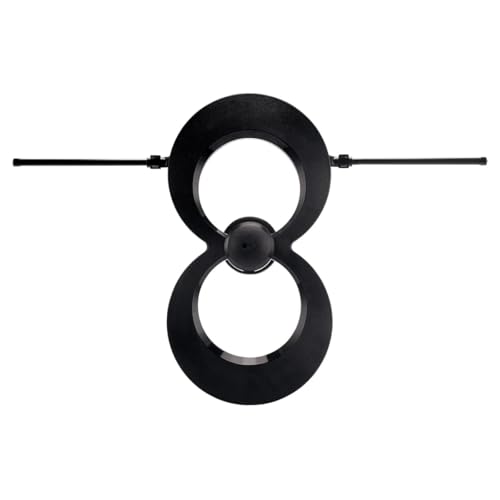
Antennas Direct ClearStream MAX-V Outdoor TV Antenna
The Antennas Direct ClearStream MAX-V is the wall-mount pick: an outdoor TV antenna with a wall bracket, UHF and VHF reception, indoor and outdoor use, multi-directional reception, Full HD 1080p, UHD 4K and 8K, and NEXTGEN TV support. The wall bracket in the title is the feature that sets it apart: it mounts on an outside wall, where it gets height and a clear view without a full mast. The indoor and outdoor rating means the same antenna can sit inside on a wall or outside on the bracket, and the multi-directional design means it does not need precise aiming.
In daily use, the MAX-V is the antenna for a home that needs more than a flat panel but less than a mast. Mount it on an outside wall, point it roughly toward the towers, and scan for channels. The wall bracket keeps it steady in wind, and the outdoor rating means it survives the weather. It is the pick for a house with a clear outside wall and towers that are not too far away.
Key specs:
- UHF and VHF reception
- Indoor and outdoor use
- Wall bracket included
- Multi-directional, Full HD 1080p, UHD 4K, 8K, NEXTGEN TV
- Outdoor TV antenna
Strengths:
- Wall bracket included for outdoor mounting
- Works indoors or outdoors
- NEXTGEN TV support for the future
Trade-offs:
- Needs an outside wall with a clear view
- Less range than a mast-mounted Yagi
- Wall mounting needs tools and a ladder
This antenna fits a house with a clear outside wall, a home at a medium distance from the towers, or a buyer who wants a wall mount without a mast.
Best for: a wall-mounted antenna with indoor and outdoor use
Not suited for: an apartment with no outside wall, or a home very far from the towers
Check price on Amazon: ClearStream MAX-V

ClearStream 4V Extreme Range Indoor/Outdoor HDTV Antenna
The ClearStream 4V Extreme Range is the long-range indoor and outdoor pick: an indoor and outdoor HDTV antenna with extreme range, from the ClearStream 4V line. The title is short, and it states the two facts that matter: this is an indoor and outdoor antenna, and it is built for extreme range. The 4V line is the larger ClearStream design, with reflectors and elements that pull in weaker signals than the smaller 1MAX and MAX-V, and the indoor and outdoor rating means it can sit in an attic or on a roof.
In daily use, the 4V Extreme Range is the antenna for a home that is far from the towers but still wants the flexibility of indoor and outdoor use. It can sit in an attic, where it is protected from the weather, or on a roof, where it gets the clearest view. It is the pick for a rural home, a home behind trees, or a buyer who wants the strongest indoor and outdoor antenna in the ClearStream line.
Key specs:
- Indoor and outdoor HDTV antenna
- Extreme range design
- ClearStream 4V line
- HDTV reception
- Larger ClearStream design
Strengths:
- Extreme range for distant towers
- Works indoors or outdoors
- Larger design pulls weaker signals
Trade-offs:
- Larger than the 1MAX and MAX-V
- Short title states fewer details
- Needs careful placement for best results
This antenna fits a rural home, a home far from the towers, or a buyer who wants the strongest indoor and outdoor antenna in the ClearStream line.
Best for: distant towers with indoor or outdoor mounting
Not suited for: a small apartment, or a home very close to the towers
Check price on Amazon: ClearStream 4V Extreme Range
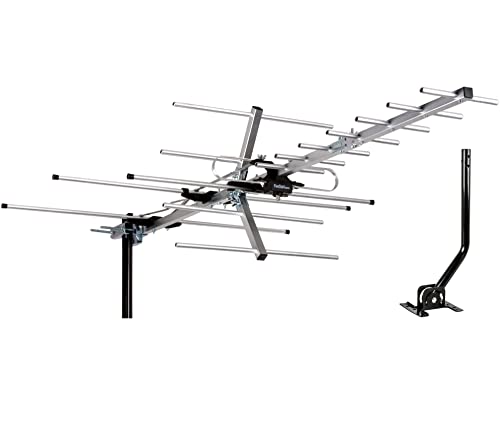
Five Star TV Antenna Indoor/Outdoor Yagi Satellite HD Antenna
The Five Star indoor and outdoor Yagi is the directional pick: a Yagi satellite HD antenna with up to 200-mile range stated in its title, for attic or roof mounting, with digital OTA and FM radio reception for 4K and 1080p, and a mounting pole included. The Yagi design focuses on the towers in one direction, and the 200-mile range in the title is the maker own claim for the best conditions. The mounting pole means it arrives ready to mount in an attic or on a roof, and the FM reception is a bonus for a home that also wants radio.
In daily use, the Five Star Yagi is the antenna for a home that knows where its towers are. Point it at the towers, mount it in the attic or on the roof, and scan for channels. The directional design rewards careful aiming with the strongest signal in this guide, and the attic mount keeps it out of the weather. It is the pick for a rural home with towers in one direction.
Key specs:
- Indoor and outdoor Yagi design
- Up to 200-mile range stated in the title
- Attic or roof mount, mounting pole included
- Digital OTA and FM radio reception
- For 4K and 1080p
Strengths:
- Strongest stated range in this guide
- Mounting pole included
- Directional design focuses on the towers
Trade-offs:
- Must be aimed at the towers
- Range figure is the maker claim, not a measured result
- Directional design misses towers in other directions
This antenna fits a rural home, a home far from the towers, or a buyer whose towers sit mostly in one direction.
Best for: maximum range with careful aiming
Not suited for: towers in several directions, or a buyer who will not aim the antenna
Check price on Amazon: Five Star Indoor/Outdoor Yagi

Antennas Direct ClearStream 2V Outdoor TV Antenna
The Antennas Direct ClearStream 2V is the outdoor mast pick: an outdoor TV antenna with a 20-inch mast, reflectors, Hi-VHF elements, UHF and VHF signals, multi-directional reception, and UHD 4K, 8K, and NEXTGEN TV support. The 20-inch mast and the reflectors are the features that set it apart: the mast lifts the antenna above the roofline, and the reflectors focus the signal. The Hi-VHF elements matter because some broadcast channels use the high VHF band, and an antenna without them would miss those channels. It is the classic outdoor antenna in this guide.
In daily use, the 2V is the antenna for a home that needs a real outdoor mount. The mast goes on the roof, the antenna points roughly toward the towers, and the multi-directional design forgives imprecise aiming. It survives the weather, it supports NEXTGEN TV, and it pulls in channels that an indoor antenna cannot reach. It is the pick for a house with a roof and towers that are not close.
Key specs:
- 20-inch mast included
- Reflectors and Hi-VHF elements
- UHF and VHF signals
- Multi-directional reception
- UHD 4K, 8K, NEXTGEN TV
Strengths:
- Mast lifts the antenna above the roofline
- Hi-VHF elements catch high VHF channels
- NEXTGEN TV support for the future
Trade-offs:
- Outdoor only, not rated for indoor use
- Roof mounting needs tools and a ladder
- Larger than the flat panel picks
This antenna fits a house with a roof, a home at a medium to long distance from the towers, or a buyer who wants a classic outdoor mast antenna.
Best for: a classic outdoor mast antenna
Not suited for: an apartment, or a home very close to the towers
Check price on Amazon: ClearStream 2V

1byone Outdoor TV Antenna 360-Degree Omnidirectional
The 1byone outdoor TV antenna is the omnidirectional pick: a 360-degree omnidirectional antenna with 100-plus miles of range stated in its title, 4K-ready HDTV reception with enhanced VHF and UHF reception, added stability for outdoor, attic, and RV use, and a 39-foot RG6 coax cable included. The 360-degree reception means it needs no aiming, which makes it the simplest outdoor antenna in this guide to install. The 39-foot cable lets the antenna sit where the signal is best, and the RV use in the title means it is built to survive travel as well as weather.
In daily use, the 1byone is the antenna for a home with towers in several directions. Mount it on the roof, in the attic, or on an RV, connect the long cable, and scan for channels. There is no aiming to get wrong, and the omnidirectional design receives from every side. It is the pick for a buyer who wants the simplest outdoor installation, or a home whose towers are scattered.
Key specs:
- 360-degree omnidirectional reception
- 100-plus miles range stated in the title
- Enhanced VHF and UHF reception
- 39-foot RG6 coax cable included
- For outdoor, attic, and RV use
Strengths:
- No aiming needed, receives from all sides
- Long 39-foot cable included
- Built for outdoor, attic, and RV use
Trade-offs:
- Less gain in any one direction than a Yagi
- Range figure is the maker claim, not a measured result
- Outdoor mounting still needs a ladder
This antenna fits a home with towers in several directions, an RV, or a buyer who wants the simplest outdoor installation.
Best for: towers in several directions with no aiming
Not suited for: a home very far from the towers in one direction, or an apartment
Check price on Amazon: 1byone Outdoor TV Antenna
Buying guide
Find the towers before buying anything
The single most useful step is finding where the broadcast towers are and how far away they sit. A free online tower map will show the distance and the direction for any address, and that information decides the antenna: close towers with a clear view need a small indoor antenna, and distant towers or towers behind a hill need a larger outdoor antenna on a mast. Write down the distance and the direction before shopping, because the range figures in listings are the makers own claims, and the tower map is the reality. A buyer who knows the distance will not overbuy or underbuy.
Indoor first, outdoor if needed
The cheapest test is to try indoors first. A flat panel antenna such as the ClearStream 1MAX takes minutes to set up on a shelf or a wall near a window, and a channel scan will show what it receives. If the picture is good, the setup is done. If channels are missing or break up, move the antenna higher, closer to a window, or outdoors, where the height and the clear view help. An antenna rated for indoor and outdoor use, as four picks in this guide are, makes this test free: the same antenna moves from the shelf to the mast without a second purchase.
Aiming a directional antenna
A directional antenna such as the Five Star Yagi must point at the towers, and the aiming is the difference between a clear picture and nothing at all. Use the tower map to find the direction, point the antenna that way, and scan for channels. Then adjust the aim a little at a time, scanning after each move, until the most channels come in clearly. A compass app on a phone helps, and a second person watching the signal while the first adjusts the antenna helps more. Mark the position once it works, because a Yagi that slips in the wind will lose its channels.
Cables, splitters, and signal loss
The cable between the antenna and the television loses signal over distance, and RG6 is the cable type to look for, because it loses less than older cable types. The 1byone in this guide includes a 39-foot RG6 cable, which is long enough for most homes. A splitter that feeds several televisions also loses signal, and a home with several televisions may need an amplifier or a distribution amplifier to compensate. Keep the cable run as short as practical, use RG6 cable, and avoid unnecessary splitters. If the picture breaks up on a long cable run, the cable is the first suspect, not the antenna.
Weather, grounding, and safety
An outdoor antenna lives in the weather, and it needs to be mounted safely. Use the mounting hardware that comes with the antenna, tighten every bolt, and check the mount after a storm. Grounding matters: an outdoor mast should be grounded according to local electrical codes, and the cable should enter the house with a drip loop so rain does not follow it inside. Never install an antenna near power lines, and never climb a roof in wet or windy weather. If the roof is steep or the mast is tall, hire a professional installer: the cost is small compared with a fall.
Setting up and everyday care
Setting up an indoor outdoor antenna starts with the tower map and a channel scan. Mount the antenna where it will live, indoors on a shelf or a wall, or outdoors on a mast or a bracket, and connect the cable to the television. Run the channel scan in the television settings, and write down which channels come in clearly. Then adjust the position a little at a time, scanning after each move, until the most channels are clear. A scan takes a few minutes, and it is the only reliable way to judge an antenna: the picture on the screen is the truth, and the range figure in the listing is only a claim.
Everyday care for an antenna is light work. Check the mount after a storm, and tighten any bolt that has loosened. Keep the cable connections dry and tight, and replace a cable that is cracked or corroded. Rescan for channels every few months, because broadcasters move channels and add new ones, and a television that has not been rescanned will miss them. An antenna that is mounted firmly, kept dry at its connections, and rescanned regularly will work for years without attention.
Common mistakes to avoid
Buying on range figures alone
The most common mistake with a TV antenna is buying on the range figure in the listing. Range figures are the makers own claims for the best conditions, and a home behind a hill or far from the towers will receive less than the figure promises. The tower map is the reality: check the distance and the direction before buying, and choose the antenna for the distance that actually exists. A buyer who knows the towers will not overbuy or underbuy.
Mounting the antenna too low
An antenna mounted too low receives a blocked signal, because the house, the trees, and the neighbours all stand between it and the towers. Height is the cheapest gain there is: an antenna in the attic or on the roof receives far more than the same antenna on a ground-floor shelf. If the channels break up, move the antenna higher before buying a larger one. A few feet of height often matters more than a larger antenna.
Forgetting to rescan
Broadcasters move channels and add new ones, and a television that has not been rescanned will miss them. Rescan for channels every few months, and rescan after any change to the antenna position. A rescan takes a few minutes, and it is the only way to know what the antenna actually receives. A buyer who never rescans will blame the antenna for channels that are simply unlisted.
Installing near power lines
An outdoor antenna must never be installed near power lines, and a mast must never be raised where it could fall onto a line. Check the area before installing, keep the mast well clear of any line, and ground the mast according to local electrical codes. If the roof is steep, the mast is tall, or the power lines are close, hire a professional installer. The cost is small compared with the risk, and a professional will ground the installation properly.
Our recommendation
For most homes, the Antennas Direct ClearStream 1MAX is the pick to buy first: it works indoors or outdoors, needs no aiming, and includes its mounting hardware, so the buyer can try indoors and move outdoors if needed. If the home is far from the towers, the ClearStream 4V Extreme Range is the stronger indoor and outdoor pick, and if the towers sit in one direction, the Five Star Yagi with its 200-mile stated range is the maximum-range pick. If the towers are scattered, the 1byone omnidirectional antenna is the simplest outdoor choice.
Whichever antenna you choose, find the towers first, try indoors before mounting outdoors, and rescan after every move. A good antenna is not the one with the largest range figure: it is the one that matches the distance, the direction, and the mounting options of the home it serves. The six antennas in this guide cover that range, from a flat panel on a shelf to a Yagi on a roof.
Related reading on Reviewstook: For the rest of the setup, see our guides to the best indoor TV antennas, the best long range TV antennas, and the best antennas for TV without cable.
Frequently asked questions
Do I need an outdoor antenna, or will indoor work?
It depends on the distance to the towers and what stands between them and the home. A home close to the towers with a clear view can use a small indoor antenna, and a home far away or behind a hill needs a larger outdoor antenna on a mast. The cheapest test is to try indoors first with an antenna rated for both, such as the ClearStream 1MAX, and move it outdoors if channels are missing. Four picks in this guide are rated for indoor and outdoor use, so the same antenna covers both tests.
What is the difference between UHF and VHF?
UHF and VHF are the two bands that broadcast television uses, and an antenna must receive both to get all the local channels. UHF carries most digital channels, and VHF carries some, including several major networks in some areas. Every antenna in this guide states UHF and VHF reception in its title. An antenna that only receives one band will miss the channels on the other, so check both bands in the listing before buying.
What is NEXTGEN TV?
NEXTGEN TV is the name for the ATSC 3.0 broadcast standard, which broadcasters are moving to over time. It promises better picture quality and new features, and the ClearStream 1MAX, MAX-V, and 2V in this guide state NEXTGEN TV support in their titles. An antenna that supports NEXTGEN TV will keep working as broadcasters switch over, while an older antenna may need replacing. The support is a forward-looking feature rather than a promise about any particular channel.
How far can a TV antenna really reach?
Range depends on the distance to the towers, the terrain, the antenna height, and the weather, and the range figures in listings are the makers own claims for the best conditions. A home close to the towers needs little range, and a home far away needs all of it. The tower map for the address is the reality: check the distance and the direction before buying, and choose the antenna for the distance that actually exists rather than the largest number in a listing.
Do I need an amplifier with my antenna?
Not always. An amplifier helps when the cable run is long or when one antenna feeds several televisions through a splitter, because both lose signal. It does not help when the signal is already weak at the antenna, because it amplifies the noise as well as the signal. Try the antenna without an amplifier first, and add one only if the picture breaks up on a long cable or a split feed. If the antenna receives nothing at all, the problem is placement or distance, not amplification.


