reviewstook.com is reader-supported. When you buy through links on our site, we may earn an affiliate commission.
Where to buy
An indie movie is a promise a small crew makes to a story: that the film in their heads can survive contact with the budget in their account. The best digital cameras for indie movie work are the ones that keep that promise affordable — cameras that record an image with genuine grading latitude, that accept the lenses and rigs a production grows around, that capture sound properly alongside the picture, and that a crew of three can carry, power and operate for twelve hours in a borrowed location. This guide is written for that crew: the director who is also the camera operator, the producer counting cards like cash, the first-time feature team and the festival short filmmaker levelling up from a phone.
The line between this guide and its sibling must be drawn in the first breath. A companion article in this series covers cameras for filming in the everyday sense — creators, events, businesses, content on a schedule. Nothing here is ranked for that world. Here, the questions are cinema’s questions: log profiles and ten-bit colour, dynamic range for a graded finish, rigging points and follow-focus manners, timecode and dual-system sound, media economics across a twenty-day shoot. One famous indie instrument — Blackmagic’s Pocket Cinema line, the camera that taught a generation what raw recording costs — sits outside our verified pool and is discussed prose-only, honestly, as the benchmark. The five linked picks are the mirrorless bodies a small production can build a real film around.
- Blackmagic Pocket Cinema Camera 6K: prose-only pick, the raw-recording benchmark of indie film
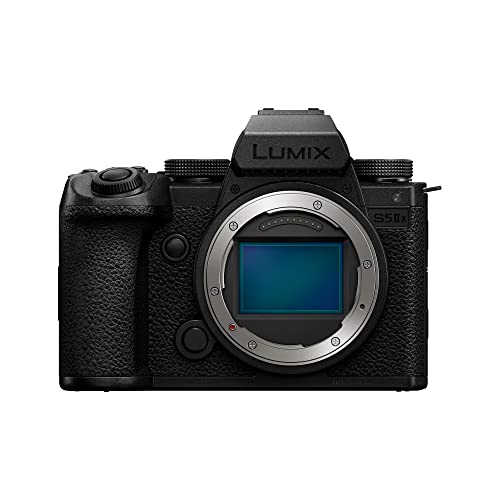
- Panasonic LUMIX S5IIX: the linked pick for log depth, open gate and production recording options
- Sony Alpha 7 IV: the linked pick for low-light muscle and the deepest lens bench
- Canon EOS R6 Mark II: the linked pick for Canon colour and a beloved lens heritage
- Panasonic LUMIX S5II: the linked pick for the matching second body and B-camera
- Canon EOS R6 Mark III: the linked pick for the newest Canon platform on a growing production
A confession of method before the rankings: on an indie set, the camera body is rarely the budget’s centre of gravity. Lenses, light, sound, media, power and the sheer arithmetic of shooting days all outrank it — and a camera that saves its production money in those departments, through cheap media, common batteries, adaptable mounts or internal recording that needs no external recorder, can be worth more than a technically superior body that taxes every one of them. The reviews below therefore grade each pick as a production citizen, not as a showroom instrument.
Key Takeaways
- Indie cinema needs grading latitude: log colour and ten-bit recording are the entry ticket.
- The famous raw-shooting benchmark is covered prose-only; linked picks are buildable mirrorless platforms.
- Media, power and lens economics across twenty shooting days outrank showroom specifications.
- Sound is a separate department even on a three-person crew — plan dual-system or disciplined camera audio.
- A matching B-camera saves more productions than a marginally better A-camera.
- This guide is for narrative filmmaking; everyday filming has its own guide in this series.
In this guide
Quick Picks
| Camera | Badge | Why it is here |
|---|---|---|
| Blackmagic Pocket Cinema Camera 6K | The benchmark | Raw recording and a cinema-first interface at an indie price of admission. |
| Panasonic LUMIX S5IIX | Best production platform | V-Log, open gate, external-drive recording and pro codecs in one body. |
| Sony Alpha 7 IV | Best low-light and lenses | S-Log depth, night manners and the widest lens ecosystem in the game. |
| Canon EOS R6 Mark II | Best Canon colour path | C-Log recording and skin tones directors cast their films around. |
| Panasonic LUMIX S5II | Best matching B-camera | The same colour science as the S5IIX for second angles and second units. |
| Canon EOS R6 Mark III | Best new-platform Canon | The latest generation body for productions standardising on Canon. |
What do the best digital cameras for indie movie work need to deliver?
Latitude, before everything. A narrative image is not finished in the camera; it is negotiated in the grade, scene by scene, toward a look the director and colourist agree the story needs. That negotiation requires raw material: a log profile that holds highlights and shadows in a flat, information-rich file, ten-bit colour so skies and skin can be pushed without banding, and dynamic range wide enough that a window in the frame does not become a white hole the story falls into. Cameras that bake a finished look may serve other briefs honourably — the sibling guide celebrates several — but on a film set they spend the production’s most precious currency before the colourist sits down.
The second need is buildability. A cinema camera is a chassis: cage, rails, follow focus, matte box, monitor, wireless transmitter, batteries that outlast the internal cell. Bodies earn their place by accepting that architecture gracefully — mounting points, an HDMI feed a focus puller and a director can both live with, controls that can be delegated to the rig rather than buried in a stills menu. The third need is economic: media the production can afford to fill daily and back up nightly, power from batteries the crew already owns or can rent anywhere, and a lens mount whose glass — owned, borrowed or hired — covers the story’s focal lengths without exotic adapters failing at dawn.
Sound, the fourth need, is where indie productions most often under-provision. The camera’s own audio provisions matter for scratch tracks and for the one-person-band documentary corners of narrative work, but the serious plan is dual-system: a dedicated recorder, a boom, timecode or a clap to marry sound and picture in the edit. The picks below are judged partly on how gracefully they join that plan — monitoring, timecode manners, and the humility to be the picture half of a two-part system.
Blackmagic Pocket Cinema Camera 6K — The benchmark
Any honest census of indie film sets finds this camera and its siblings everywhere, and the reasons are structural rather than fashionable. Blackmagic built the Pocket Cinema line as cinema instruments first: raw recording in the company’s own format, a large touchscreen interface organised around shooting rather than photography, professional monitoring tools on the built-in display, and colour science designed to land in the company’s grading software — which is itself famously available in a full-powered free edition, collapsing the cost of the entire post pipeline for a new filmmaker. It is covered prose-only here, outside our verified pool, and it leads this list because a guide to indie movie cameras that omitted it would be a map missing its capital.
On set, its character is distinctive. The wide body is a monitor with a lens mount, which makes it a natural citizen of the rig: cage it, rail it, hang a follow focus and an external battery, and it stops looking like a stills camera playing dress-up — because it never was one. Its image, recorded raw, gives the colourist the deepest negotiation of any instrument in this article, and its highlight behaviour and colour have carried features and festival shorts whose audiences never once asked what they were shot on, which is the entire point.
The debits are the specialist’s debits, and productions should budget for them clear-eyed. It takes no stills worth mentioning; its autofocus is a tool for the occasional push-button moment, not a focus puller’s replacement, so the crew supplies focus the traditional way; its battery appetite demands the external power solutions every serious user adopts; and it wants light and craft rather than forgiving their absence. In exchange it offers the purest cinema-per-currency proposition in the business — the benchmark not because it does everything, but because it does the film set’s central things with a seriousness the mirrorless picks must work to match.
- Cinema axis: raw latitude and grading-first design
- Interface: built around shooting, monitoring tools onboard
- Rig life: designed to be caged, railed and externally powered
- Focus: manual discipline assumed and rewarded
- Status: prose-only in this guide
Strengths
- Raw recording and colour the grade can truly negotiate with
- A post pipeline whose software costs the production nothing
- Cinema ergonomics without a cinema-camera invoice
Trade-offs
- No meaningful stills or autofocus to lean on
- External power is effectively mandatory
- Demands craft in focus, light and exposure
Best for: narrative crews committed to a graded finish. Not suited for: hybrid shooters, autofocus-dependent work or run-and-gun minimalism.
Its cultural role deserves the final word in its section: this is the camera that ended the era when “shot on a real cinema camera” was a budget category. A generation of directors learned dynamic range, raw discipline and the grade on it — and the mirrorless picks below are better cinema tools today partly because this benchmark exists to be answered.

Panasonic LUMIX S5IIX — Best production platform
If the benchmark is a specialist, the S5IIX is the production platform: a full-frame mirrorless body whose video engineering reads like a film set’s requirements list transcribed into a camera. Its V-Log profile carries the latitude narrative work negotiates with; its open-gate recording uses the full height of the sensor, letting a production frame for the cinema ratio while keeping vertical and alternative crops alive for the trailer, the poster frame and the deliverables nobody budgeted for; and its recording options reach from efficient internal codecs to external-drive capture over USB, which rewrites a long shoot’s media economics — the day’s footage lands on the very drive the edit will mount.
Heat and endurance, the silent killers of indie schedules, are engineered rather than hoped for: this body is built to keep recording through the long dialogue day, and its unlimited-take manners in mainstream modes mean the schedule is set by the performances rather than by the camera’s thermometer. Phase-hybrid autofocus gives the small crew a safety net for the moving master shot, while the body’s controls and monitoring aids respect the manual discipline narrative work prefers. Timecode provisions and proper audio — input, monitoring, deliberate levels — let it sit at the centre of a dual-system plan without apology.
The L-mount’s alliance structure quietly serves the indie budget: lenses from several makers, cinema-leaning glass included, at prices that let a production own its core set rather than renting its life away, and adapters that welcome the vintage lenses whose rendering so many indie looks are built on. Stabilisation steadies the handheld passages and the gimbal-less days, and the colour matches its sibling below so precisely that the two-body production — the configuration this guide recommends most — becomes a one-look production.
Costs, for balance: it is a serious body at a serious figure, its stills play a supporting role, and its deepest menus reward a prep day with the manual before the shoot rather than during it. For a crew whose film is actually happening — dates set, locations borrowed, cast committed — those are the right costs, attached to the right instrument: the most complete cinema platform we can link.
- Cinema axis: latitude plus production logistics
- Profiles: V-Log, open gate for flexible framing
- Recording: internal pro codecs, external drive over USB
- Endurance: thermal design for the long dialogue day
- Sound plan: timecode manners, full audio provisions
Strengths
- The deepest production feature set among linked picks
- Media economics transformed by drive recording
- Matches its sibling for two-body productions
Trade-offs
- Serious money; stills are the supporting act
- Menus demand a prep day
- Full cinema rig still the owner’s to assemble
Best for: features, festival shorts and two-body indie units. Not suited for: stills-led hybrids or one-take event work.
A producer’s note to close: quote this body into the budget with its drive-recording in mind and the media line shrinks enough to fund an extra day of the location you actually wanted. Indie films are made of such transfers — the camera that pays for its own schedule is a producer’s camera as much as a director’s.

Sony Alpha 7 IV — Best low-light and lenses
Indie films are shot in the light that exists: the bar that lends itself after closing, the stairwell, the night street, the house whose owner permits evenings only. The A7 IV is the pick for that reality. Its full-frame sensor and S-Log recording give the colourist real material from dim scenes; its high-sensitivity manners hold image quality together where smaller formats dissolve into noise; and its autofocus — the class benchmark — finds faces in near-darkness, which on a three-person night shoot is not a convenience but a second focus puller the budget could not hire.
The lens argument compounds the light argument. Sony’s mount holds the deepest bench in mirrorless: fast primes at every price from every serious maker, cinema-housed variants, anamorphic options for the widescreen dreamers, and a rental shelf in every city that stocks the mount by default. An indie production standardising on this body inherits that bench — the borrowed 35mm, the hired anamorphic pair for the dream sequence, the replacement lens sourced in an hour when a drop ends the resident one. Logistics are an aesthetic force on small productions, because the shot you can resource is the shot that exists.
As a set citizen it behaves: riggable, monitor-friendly, with colour profiles that range from a gentle ready look for the no-grade corners to the full log negotiation, and recording manners that keep a long take alive. Its stills excellence matters to productions too — the unit photographer’s frames, the poster shoot, the behind-the-scenes gallery all come from the same body the film does, one less case in the car.
The debits are the hybrid’s: its cinema depth, while real, stops short of the Panasonic’s production exotica — no open gate, no drive recording — and its menus interleave the stills and cinema personalities in ways a dedicated film body avoids. Crews should configure it once, save the film configuration, and protect it like a loaded magazine. Configured so, it is the night shoot’s best friend and the lens library’s natural home.
- Cinema axis: sensitivity and ecosystem
- Profiles: S-Log for the grade, gentle looks for fast corners
- Light: full-frame manners in borrowed locations
- Lenses: the deepest bench, owned and rented alike
- Bonus: stills for the unit photographer in the same body
Strengths
- Night and available-light confidence
- Autofocus that substitutes for crew you cannot hire
- Lens logistics no rival matches
Trade-offs
- No open gate or drive recording
- Menus mix its two personalities
- Rolling-shutter manners need respect on fast pans
Best for: night-heavy scripts, tiny crews, lens-driven looks. Not suited for: productions needing the Panasonic’s recording apparatus.
Directors of photography quietly vote for this body with their own money more than any other in its class, and their reason is instructive: when the location falls through and the scene moves to somewhere darker, smaller and later, this is the camera whose image survives the move. Indie filmmaking is the art of the plan surviving contact with the day; sensitivity is survivability.

Canon EOS R6 Mark II — Best Canon colour path
Directors cast cameras the way they cast actors, and the R6 Mark II gets cast for its face. Canon’s colour — above all its rendering of skin across the range of complexions a real ensemble brings — has a warmth and cohesion that directors trust with close-ups, and its C-Log recording preserves that character in a form the grade can shape rather than rescue. For the dialogue-driven indie film, the relationship piece, the story that lives in two-shots at a kitchen table, this body offers the most forgiving starting palette among the linked picks, with highlight behaviour that treats practical lamps and windows as scene elements rather than as enemies.
The production around it benefits from Canon’s other inheritance: a lens heritage that includes some of the most beloved portrait and standard primes ever made, adaptable to this mount with first-party grace, alongside the modern RF range. The vintage-glass route matters to indie aesthetics — a set of older primes, with their gentler contrast and characterful flare, can define a film’s look for the price of one modern zoom — and this platform welcomes that route as a citizen rather than as a hack. Autofocus, for the skeletal crew, tracks faces through the dialogue’s movement with the composure Canon’s system is known for, and the stabilisation serves the handheld intimacy many indie dramas are shot in.
Recording manners are honest mid-field: capable log recording, dual slots for the day’s safety, take lengths that cover scenes and interviews comfortably, with the extreme long-form and exotic codec territory ceded to the Panasonic platform above. Heat discipline on very long takes in warm locations is the known question to test in prep — as every professional tests every body — rather than a discovery to make on the day.
Choose it when the film’s heart is faces and the director’s references are warm. Its footage cuts together with a recognisable emotional temperature that productions spend grading suites trying to retrofit onto colder cameras; starting warm is not a limitation but a decision, and for the stories this camera suits, it is the decision the audience would vote for.
- Cinema axis: colour, especially skin
- Profiles: C-Log with Canon’s palette intact
- Lenses: modern RF plus a beloved adaptable heritage
- Focus: face tracking for skeletal crews
- Recording: capable mid-field, dual-slot safety
Strengths
- The most forgiving skin rendering among linked picks
- Vintage lens routes welcomed natively
- Footage with emotional temperature from day one
Trade-offs
- Recording exotica belong to the Panasonic
- Long hot takes deserve a prep test
- Log depth a step behind the benchmark’s raw
Best for: dialogue films, relationship stories, warm-look directors. Not suited for: raw maximalists or marathon single-take designs.
There is a casting-session exercise that sells this body better than any chart: film two actors in mixed window and practical light, grade the log gently, and watch the faces. Directors who run it tend to stop comparison shopping — colour that treats people kindly is the rarest specification in this article, and it cannot be added in post for any money the indie budget contains.

Panasonic LUMIX S5II — Best matching B-camera
Every experienced indie crew knows the second camera is not a luxury; it is the difference between a scene covered and a scene survived. The S5II earns its slot as the most rational B-camera in this guide: it shares the S5IIX’s colour science and V-Log profile, so its footage intercuts with the A-camera’s without a colourist’s apology; it shares the lens mount, the batteries’ family and the menu logic, so the crew’s knowledge and the kit’s spares serve both bodies; and it costs meaningfully less than its sibling because it omits the production exotica — drive recording, the heaviest codecs — that a second angle rarely needs.
Deployed well, it does more than double the angles. It is the gimbal body, lighter in the hand for the moving master while the X holds the tripod; the second unit that steals the establishing shots and the insert details while the main unit resets; the backup whose existence lets the production’s insurance conversation stay calm. Its stabilisation and autofocus are the family’s full manners, its low-light behaviour matches the look of the A-camera’s night work, and a director monitoring both feeds sees one film, not two cameras’ opinions of it.
It also serves productions that cannot yet reach the X as a perfectly serious A-camera in its own right: the same sensor-class image, the same log latitude, the same mount and colour — a short film shot entirely on it lacks nothing the audience can detect. The two-step path it enables is the soundest economics in this article: begin with the S5II, add the X when the production scale earns it, and the first body retires to B-duty with its value intact rather than being sold at a loss to fund its replacement.
The debits are defined by its role: buyers wanting one body with every production feature should take the X; the stills are again a supporting act; and a two-body kit still needs its lenses, rigs and media budgeted as a system. As an argument about how indie kits actually grow, though, this pick is the guide’s most practical paragraph.
- Cinema axis: colour-matched second angle
- Profiles: the same V-Log as the A-camera
- Shared system: mount, menus, batteries, knowledge
- Roles: gimbal body, second unit, insurance
- Path: start here, graduate to the X, keep both
Strengths
- Intercuts with the S5IIX without grading apologies
- A complete A-camera for smaller productions
- The growth path that wastes no money
Trade-offs
- Omits the X’s recording exotica by design
- Two-body dreams still need two-body budgets
- Stills remain the supporting act
Best for: two-camera coverage and growing productions. Not suited for: buyers wanting every production feature in one body.
Editors, asked which upgrade transformed their indie work, name the matched second body more often than any A-camera improvement — because coverage is what editing is made of. This pick is that upgrade, priced as a sibling rather than as a second mortgage.

Canon EOS R6 Mark III — Best new-platform Canon
Productions standardise, and standardising on a platform at the start of its generation is a defensible strategy: the body will be current for the slate of films the team plans across the next several years, its accessories and lenses will accumulate rather than churn, and its resale — when the generation turns — starts from the newest rung. The R6 Mark III is that play on the Canon side: the latest generation of the R6 line, carrying the family’s colour and autofocus inheritance forward with the platform’s newest processing and video provisions, for the production company equipping itself now with a multi-year horizon.
Its role in this guide is deliberately the forward-looking twin of the Mark II above. The established body is the known quantity — its behaviour documented by a thousand productions, its quirks mapped, its rental availability deep. The Mark III is the same bet placed on the future: Canon’s skin-first colour, the RF and adapted lens heritage, log recording for the grade, in the body that will still feel current when the team’s third feature wraps. Directors building a house style on Canon colour can start the library of looks, LUTs and lens notes on the platform that will carry them longest.
The honest cautions of any newest-generation purchase apply. Its long-form recording behaviour under production heat should be established in the buyer’s own prep tests, as with any body but with less communal data to borrow; rental depth and second-hand accessories will take time to match its predecessor’s; and the premium of newness is real money that a one-film production might better spend on the Mark II and a lens. Slates, not singles, justify it.
Judged as a platform decision rather than a spec duel, it completes the Canon path this guide offers: the proven instrument for the film happening this spring, the new generation for the company being built this year. Both share the colour that is Canon’s argument, the lenses that are its inheritance, and the autofocus that lets small crews punch above their number.
- Cinema axis: platform longevity on Canon colour
- Profiles: log recording in the family’s latest form
- Lenses: RF plus the adaptable heritage, shared with the Mark II
- Status: newest generation; communal data still accumulating
- Buyer: slates and companies, not one-off films
Strengths
- The longest platform runway on the Canon side
- Family colour and focus inheritance, updated
- Standardising now avoids mid-slate churn
Trade-offs
- Newness premium; less field data to borrow
- Rental and used ecosystem still maturing
- One-film budgets may belong with the Mark II
Best for: production companies standardising for a multi-film slate. Not suited for: single-film budgets or rent-first strategists.
Whichever Canon a production chooses, the deeper point stands: a house platform is a creative asset. Looks accumulate, lens notes compound, the crew’s hands learn one set of manners — and by the third film the camera has stopped being equipment and become part of the company’s signature, which is what standardisation is actually for.
Where does each of the six earn its place on a call sheet?
| Camera | Cinema heartland | Latitude path | Crew assumed | Choose it when |
|---|---|---|---|---|
| Blackmagic Pocket Cinema Camera 6K | Raw-first filmmaking | Raw recording | Focus puller included | The grade is the film’s second shoot |
| Panasonic LUMIX S5IIX | Production platform | V-Log, open gate | Small professional unit | One body must run the show |
| Sony Alpha 7 IV | Night and lens work | S-Log | Skeletal, mobile | Light is scarce and lenses matter |
| Canon EOS R6 Mark II | Dialogue and faces | C-Log | Small professional unit | Skin and warmth lead |
| Panasonic LUMIX S5II | Second angle | V-Log, matched | Two-body unit | Coverage is the bottleneck |
| Canon EOS R6 Mark III | Platform building | Log, latest generation | Company standardising | A slate, not a single film |
The table’s pattern is the article’s argument in miniature: after the latitude threshold is crossed, indie camera choice stops being about image quality — all six clear the bar — and becomes about the production around the image: its light, its lenses, its coverage, its years.
How should an indie crew budget around the camera?
By giving the camera the share it has earned and no more. A resilient indie budget treats the body as roughly one department among equals: the lens set, owned or hired for the shoot’s weeks; the lighting package, which decides more frames than the sensor does; the sound kit, whose failures no grade can forgive; media and drives in the quantity the shooting ratio honestly implies, doubled for the backup; and power — batteries, chargers, the generator conversation for the location that needs it. The picks above were chosen partly for how they treat those neighbouring lines: mounts that welcome affordable glass, recording that lands on drives, colour that matches a cheaper sibling. A crew that budgets the system, and rents the peaks it cannot own, will outshoot a crew that spent the same money on a body and prayed for the rest.
Which mistakes sink indie films at the camera stage?
Buying the body with the entire equipment budget is the founding error — the magnificent camera recording through a kit lens, lit by a ceiling bulb, sounded by its own microphones, is a trailer for a film about poverty of planning. Second: shooting a finished look because log “seemed complicated”, then discovering in the edit that the story needed the grade the baked files cannot give. Third: no backup discipline — one card reader, one drive, footage living in a single copy through the wrap party. Fourth: focus by hope, on a production whose camera offered assistance the crew never configured, or whose manual discipline nobody rehearsed.
Fifth, and most poignant: choosing the camera for the film you describe at parties rather than the one in the schedule. The low-light script needs the Sony’s sensitivity; the two-hander needs the Canon’s faces; the twenty-day feature needs the Panasonic’s endurance and media manners. The schedule is the truth; the camera that serves it is the right camera, and the one that serves the fantasy is an expensive postponement.
How do you run sound on a three-person crew?
By deciding, before the shoot, that sound is a department with a name attached — even when the name belongs to someone also holding the slate. The workable indie pattern: a dedicated recorder worn or stationed by the sound owner, a boom over the dialogue whenever the frame allows, a wireless microphone as the moving scene’s insurance, camera audio recorded always as the sync reference and emergency backup, and a slate or timecode habit observed religiously at every take’s head, especially the tired ones at hour eleven. The cameras in this guide support the pattern with monitoring, inputs and timecode manners at their levels; none of them replaces it. Productions forgive a soft shot in a strong scene; they do not forgive the scene whose words were lost, and neither do festivals.
What should the camera test day include before principal photography?
Everything the shoot will ask, performed once at walking pace. Shoot the film’s hardest planned scene in miniature — the night exterior, the window-lit interior, the long dialogue take — on the chosen body, with the production’s lenses, lights and sound chain, and carry the footage all the way through the intended grade and export. Test the media arithmetic against a real hour of footage; test the backup routine until the data manager can do it at midnight; test the rig’s weight across an hour on the operator’s shoulder. The test day is the cheapest production day there is, because every failure it hosts is a failure the schedule never meets — and every pick in this guide, benchmark included, deserves it equally.
How do you choose lenses for a first feature without bankrupting it?
Cover the story’s distances with the fewest pieces of glass that can be operated all day. Most dialogue films live at three focal lengths — a wide for the room, a standard for the two-shot, a short telephoto for the close-up — and a production that owns or hires those three, in versions whose rendering the director has tested and loved, owns its look. Zooms earn their hire on documentary-flavoured productions and impossible schedules; prime sets earn theirs on controlled ones. Vintage glass, adapted onto every mount in this guide, remains the indie secret economy: characterful rendering at prices that leave the lighting package funded. Whatever the set, rehearse its focus manners in the test day — a lens whose throw the puller cannot repeat is a lens the schedule cannot afford, regardless of its optical legend — and insure the whole set as one line item, because glass, not bodies, is where a production’s irreplaceable value concentrates.
What does a one-person-band filmmaker need differently?
Forgiveness, in every department at once. The solo filmmaker is simultaneously the focus puller, the sound department and the continuity supervisor, so the calculus of this guide inverts: autofocus stops being a convenience and becomes the crew; in-camera audio provisions matter because the separate recorder’s owner is also holding the boom of the imagination; stabilisation substitutes for the dolly grip who does not exist. Among the picks, the hybrids with the strongest autofocus and the gentlest menus — the Sony above all, the Canons close behind — serve the solo artist best, while the benchmark and the production platform reward the crewed film. There is no shame in either shape; the only error is crewing a solo film with a crewed film’s camera, or the reverse, and then blaming the instrument for the arithmetic.
How should a production protect its footage overnight?
With a ritual boring enough to survive exhaustion. Cards are never formatted on set; they travel in a labelled case, in a different bag from the camera. At wrap, the data manager — a named person, however small the crew — copies every card to two separate drives, verifies counts and spot-checks files, and logs the day’s media against the shooting schedule before anyone sleeps; the drives then sleep in different rooms. The cameras in this guide assist the ritual unequally and usefully: drive-recording bodies hand the day over already consolidated, dual-slot bodies arrive with the second copy half-made. But the ritual itself is the protection, and it has saved more films than any codec: hard drives fail singly and together only when their owners let them share a fate.
Why do so many indie films choose a look before they choose a camera?
Because the look is the decision the audience experiences, and the camera is merely its instrument. A production that settles its references first — the films it loves, the palette of its locations, the grain of its night scenes — can then audition cameras as servants of a known destination: the warm Canon path for the sunlit relationship piece, the Panasonic’s open gate for the film that must reframe its way through a chaotic location, the Sony’s sensitivity for the night-written script. Crews that reverse the order spend the shoot discovering what their expensive body wants the film to look like. The test day in this guide is where look and camera formally meet — references on the monitor, the candidate body on the tripod, the grade applied before lunch — and productions that hold that meeting rarely regret the marriage it arranges.
How do festivals and distributors change what the camera must deliver?
Less than filmmakers fear, and more than they hope. No festival programme was ever decided by a camera badge; programmers select stories, performances and completed films, and every pick in this guide can produce a frame that survives a cinema screen. Where delivery does bite is downstream and clerical: the finished film must arrive in the formats distributors specify, at quality thresholds the original recording must support — which argues for shooting the cleanest master the pipeline can carry, archiving the project and its media properly, and keeping the camera originals until long after the premiere. A production that shoots ten-bit log or raw, backs up religiously and finishes carefully will never meet a delivery specification it cannot satisfy; a production that baked compromises into its only copy may meet one in the week of its triumph.
What is the honest upgrade path from a first short to a first feature?
It is a path of departments, not bodies. The first short teaches what the crew actually lacked — usually light, then sound, then coverage — and the feature budget should answer those lessons in order. The camera body changes last and least: the body that shot the short, if it crosses this guide’s latitude threshold, can shoot the feature, and the matched sibling that joins it as B-camera transforms more footage than a flagship replacement would. Upgrade the lighting package into ownership, the sound kit into professionalism, the media-and-backup ritual into infrastructure — then, if money remains and the schedule’s demands have genuinely outgrown the body, the platform step this guide maps, from sibling to X or from generation to generation, wastes nothing already bought. Features are finished by crews whose equipment grew with their knowledge; the graveyard of indie ambition is full of flagship cameras bought before either.
How do you direct actors when the camera package is minimal?
By remembering that the minimal package is a style with a distinguished history, not an apology. Small cameras let a production live inside real rooms at real distances, hold takes longer, reset faster and keep the apparatus from colonising the performance — the reasons a long line of celebrated films chose intimacy over machinery. The director’s craft adapts in specific ways: blocking that plays in depth rather than in width, so one frame holds the scene’s geography; performances allowed to run past the comfortable cut point, because media is cheap and the extra thirty seconds is where actors find the thing; and a set whose quiet — few people, small rig, no generator’s roar — protects concentration. The picks in this guide, the hybrids especially, were partly ranked on how completely they disappear into that working method: a camera the cast forgets is a production value no rental can supply.
Final Recommendation
Choose the camera your production’s truth requires. If the grade is sacred and the crew can pull focus, the benchmark’s raw discipline awaits — patiently, since it must be sought outside our links. For a linked platform that runs a whole production, take the S5IIX; add its sibling when coverage calls. For night work and lens freedom, take the Sony. For faces and warmth, take the proven Canon — or its newest generation if you are building a company rather than finishing a film. Then spend what remains on light, sound and days: the camera gets the story onto the card, but those are what the audience will actually remember.
Frequently Asked Questions
Do I need raw recording for an indie film?
Need is a strong word; latitude is the real requirement. A well-exposed ten-bit log file from any linked pick here grades beautifully for the overwhelming majority of indie work, and raw’s deeper negotiation is bought with media volume, backup weight and post time that small productions feel keenly. Raw earns its cost on effects-heavy work, extreme looks and rescue-prone exposure situations. The benchmark exists for crews who have counted that cost and chosen it; log is the rational default for everyone else.
What is open gate and why do filmmakers want it?
Open gate records the sensor’s full height rather than only the widescreen slice, capturing image above and below the intended frame. The production gains freedom: reframe in post, extract vertical versions for trailers and platforms, stabilise with real margin, and protect the composition against the deliverable nobody predicted. The S5IIX offers it among the linked picks. It costs media and processing headroom, which is why it is a tool for productions that know their deliverables multiply — increasingly, all of them.
Can one camera really shoot a feature?
Yes — features in festivals every year are shot on single bodies in this class, and the audience cannot tell. The honest constraints are coverage and insurance rather than quality: one camera means scenes are built from repeated performances for each angle, and a failure has no understudy. Crews mitigate with discipline — a tested body, a rental house’s number in the producer’s phone, and the matched-B-camera path this guide recommends the moment the budget breathes.
How important is autofocus for narrative work?
It depends on the crew the budget can field. A production with a focus puller treats autofocus as an occasional utility and prizes manual manners — repeatable focus throws, rig compatibility. A three-person crew treats good autofocus as a crew member: the moving master, the gimbal pass and the night exterior all lean on it. The linked picks were chosen with functioning autofocus for exactly that reality; the benchmark assumes the traditional department. Neither position is purer; they are different budget shapes.
Should I buy cinema lenses or stills lenses?
Start with the glass whose rendering you love and can control, in whichever housing it comes. Cinema housings add repeatable focus marks, consistent sizing across a set and de-clicked apertures — genuine set virtues that matter more as crew size grows. Stills lenses add autofocus, stabilisation partnerships and lower prices, and their optics are frequently the same glass in different clothes. Many indie sets run a deliberate mixture: cinema primes for the dialogue days, stills zooms for the documentary corners. The mount decisions in this guide were weighed partly on how gracefully each platform hosts that mixture.
Is it better to rent a bigger camera for the feature?
Sometimes — rental converts a capital problem into a schedule line, and for a single feature with an experienced crew, a rented flagship can be the rational instrument. The counterweights are familiarity and failure: a body the crew has never lived with spends its first days being learned at production prices, and rental availability for the pickup days months later is a hope rather than a plan. The middle path most indie companies settle on is ownership of the platform in this guide — known, configured, insured — with rental reserved for the exceptional day: the crane shot, the high-speed sequence, the third camera for the set piece. Own the everyday; rent the extraordinary.
How do I insure and protect a camera package on an indie shoot?
Through the production’s insurance from day one — equipment owned and rented alike listed, valued and covered for the locations and hours the schedule actually involves — and through handling discipline that costs nothing: cases closed when not in use, the camera never set down outside a case or a hand, cables taped where feet travel, and a named person whose job includes the kit’s overnight home. Festivals are full of films that survived their cameras; the archive holds fewer whose cameras survived nothing because nobody owned the boring paragraphs of the call sheet.
Do actors perform differently for small cameras?
Frequently, and often for the better. A compact rig lowers the temperature of a room: fewer strangers behind machines, less waiting while apparatus is rebuilt, a set that feels like a conversation rather than an installation. Directors of intimate material have exploited this for decades, and it is one reason the hybrid bodies in this guide — stills-sized, quiet, unintimidating — keep being cast for dialogue films despite the existence of larger cinema machinery. The camera’s discretion is a directing tool; choose it consciously rather than discovering it at the first close-up.
What should the camera package weigh on a location day?
Whatever the crew can carry twice without resentment — once in, once out, with the stairs the location scout forgot to mention. Indie schedules die of load-in optimism more often than of image quality, which is why the mirrorless scale of every pick here is itself a production feature: bodies, lenses, support and sound for a full unit fit a vehicle a small team actually owns. Weigh the package honestly in prep, rehearse the carry, and let any item that cannot justify its kilograms — to the schedule, not to the showreel — stay home without a speech.
Can a film shot on these cameras play in a cinema?
It happens constantly. Modern projection is digital, the resolution and colour depth these bodies record exceed the delivery formats cinemas use, and the gap between a festival screen and a well-shot mirrorless frame is filled by craft — lighting, production design, the grade — rather than by camera class. What the audience reads as “cinematic” was never the sensor’s size; it is the sum of decisions this guide keeps returning to, all of which are available to a small crew with any pick on this page.
What frame rate and resolution should an indie film use?
The narrative standard remains the cinema frame rate that audiences read as “film” — with resolution chosen for the delivery and the crop plans rather than for the brochure. Shoot the master format the post pipeline can actually carry for twenty days: media, backup and editing horsepower all scale with the choice, and a finished 4K film outranks an abandoned heavier one in every festival on earth. Decide in the test day, write it into the production bible, and let no location-day enthusiasm amend it.
Related Guides
Keep reading with the best digital cameras for filming, the best digital cameras for film like quality and the best digital cameras for journalists.


