reviewstook.com is reader-supported. When you buy through links on our site, we may earn an affiliate commission.
Where to buy
Let us define the blog before we shop for it. This guide is about the written blog that lives in photographs: the food journal whose readers can smell the steam, the travel diary built from dawn streets, the craft and book and garden blogs where a flat-lay image carries the whole post. The best digital cameras for blogging, in that world, are stills cameras first — judged by colour, by close work at a kitchen table, by how gracefully their files flow into a post — and not by the video specifications that dominate the vlogging conversation happening elsewhere.
That distinction changes the shopping list completely. A stills blogger needs a lens that flatters food at arm’s length, a screen that frames a flat-lay from above, wireless transfer that puts a photograph inside a draft before the tea cools, and colours that make a recipe look like itself rather than like a sunset. Video appears here only as a servant — the occasional clip embedded in a post — never as the master. If your blog is a channel, other guides await; if your blog is a page, you are home.
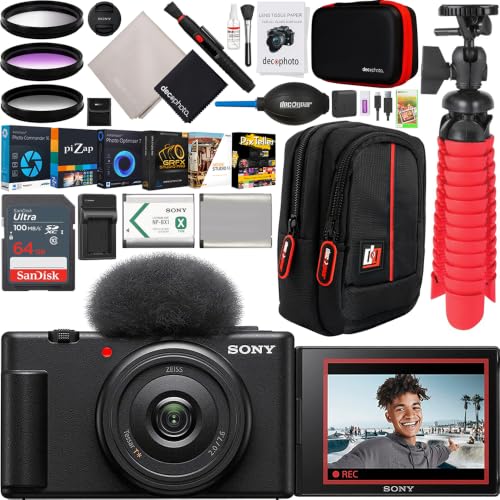
- Sony ZV-1F: linked pick, pocket compact with a bright wide lens and blogger-friendly touches
- Nikon Z50 II: linked pick, body-only mirrorless for bloggers ready to choose lenses per subject
- Canon EOS R6 Mark II: linked pick, full-frame body for the blogger’s big assignments — events, journeys, portraits
- DJI Osmo Pocket 3: linked pick, gimbal camera whose stills and calm clips suit the moving travel journal
- Panasonic LUMIX S5II: linked pick, full-frame body whose stabilisation serves candlelit restaurants and night markets
- Insta360 GO 3S: linked pick, tiny wearable camera for craft, cooking and workshop blogs shot from the maker’s view
Workflow is the hidden specification throughout. A blog is a publishing rhythm — shoot, select, edit, upload, write — repeated weekly for years, and a camera that adds friction to any stage quietly kills blogs that talent would have saved. Each pick below is therefore judged as a colleague in that rhythm: how it handles at a table, how its files behave in an editor, how quickly a frame travels from a market in Lisbon to a draft on a laptop in Leeds.
Key Takeaways
- Still-photo blogs need colour honesty, close focus and fast transfer more than any video headline.
- The flat-lay is the blogger’s signature shot; a tilting or flip screen is its best friend.
- Food rewards a bright lens and soft window light far more than it rewards resolution.
- Wireless transfer that actually works will be used daily; the kind that fights you will be used never.
- Consistency of look across a year of posts is a brand asset — pick a colour character and keep it.
- All six picks link from our verified pool, ready to be checked against their listings.
In this guide
Quick Picks
| Pick | Badge | Why it earns its place |
|---|---|---|
| Sony ZV-1F | Everyday blog companion | One-inch sensor files, a background-blur control and pocket size for the daily-post rhythm. |
| Nikon Z50 II | Growing blog’s system body | Interchangeable lenses for food, portraits and travel chapters, with presets for instant posts. |
| Canon EOS R6 Mark II | Feature-post flagship | Full-frame depth, trusted tracking and files that carry a feature post or a print series. |
| DJI Osmo Pocket 3 | Travel-diary hybrid | Pocketable on the road, stabilised for walk-through posts, with stills of genuine one-inch quality. |
| Panasonic LUMIX S5II | Evening and restaurant specialist | Handheld low-light confidence and L-mount value for blogs that dine and wander after dark. |
| Insta360 GO 3S | Hands-free process camera | Clips to a cap or hangs at the chest, photographing the process from the blogger’s own hands. |
How did we judge cameras for blogs that live in still photographs?
Colour was the first court. A food blog whose tomatoes drift orange, a craft blog whose yarns lie about their shades, a travel journal whose skies turn theatrical — these are editorial failures before they are photographic ones, because a blog’s readers trust its images as testimony. We favoured cameras whose default rendering respects the subject’s own colours and whose raw files let a careful blogger correct the rest, in the belief that a blog’s palette should be chosen by its author, not imposed by its camera.
The second court was the tabletop. Blog photography happens at arm’s length: the dish, the notebook, the haul from the market, the hands mid-recipe. Close focusing ability, screens that tilt for overhead framing, and autofocus that finds a face or a fork without hunting decided more rankings than any landscape specification. A camera that must be held at a distance and cropped later taxes every post; one that leans over the table like a collaborator gets invited daily.
Transfer and endurance formed the third court. A blogging camera earns its keep in hundreds of small journeys from hand to draft, so we weighed the honesty of each maker’s wireless flow, the battery’s respect for a market morning, and the simple question of size: will this camera be in the bag on the day the blog’s best photograph walks past? The finest blog camera in a drawer has a readership of none, and several technically superior bodies were cut for exactly that silence.

Sony ZV-1F — Everyday blog companion
The ZV-1F understands the daily blog’s first law: the post must exist. Its pocket size means it is present at the bakery, the bookshop and the bus-stop rainbow; its bright wide lens frames the café table, the market stall and the blogger’s own desk without a step backward into traffic; and its one-inch sensor gives those everyday frames a depth and dusk quality that phone photographs, however convenient, keep promising and rarely deliver. For the journal-style blog — a life, documented daily — presence plus quality is the whole specification.
Its blogger touches are small and telling. The background-defocus control melts a cluttered café behind a cake slice at one touch, teaching the food post its favourite trick without a menu expedition. The flip screen frames the overhead flat-lay and the occasional to-camera piece with equal ease, and the microphone, should a post want thirty seconds of market sound, hears it kindly. Sony designed this camera for creators who publish constantly, and the stills blogger inherits that publishing DNA in every detail.
Picture the morning post, this camera’s natural unit of work. Bread from the bakery on the walk home, photographed on the kitchen counter in window light before the bag is unpacked; the file crosses to the phone while the kettle boils; the post is drafted before the toast. That cadence — shoot, transfer, publish inside one domestic hour — is what keeps a daily blog alive through February, and the ZV-1F is engineered around it more completely than any rival here.
Colour character suits the genre: bright, friendly, honest enough about food to keep a recipe’s promises. Skin tones flatter the occasional self-portrait, and the raw files wait patiently for the blogger whose editing ambitions grow. The fixed wide lens sets the boundary — no distant details, no compressed portraits — and bloggers whose subjects live within arm’s reach will never once knock against it.
As a blog grows, this camera’s role evolves gracefully: from only camera, to daily camera beside a system body for features, to the loaner that starts a contributor’s own journal. Few purchases in a blog’s life work that long or that kindly, and its gentleness with beginners makes it the pick most likely to be recommended onward — which, in the blogging world, is a metric with its own value.
- Class: Pocket compact, one-inch class sensor
- Blog signature: Publish-daily cadence, defocus at a touch
- Lens: Bright and wide, tabletop geometry
- Screen: Flip design for flat-lays and self-framing
- Transfer: Phone flow tuned for quick posts
Strengths
- Present for every post because it is pocketable
- Food and café colour with friendly honesty
- Flat-lay framing without a tripod dance
Trade-offs
- Fixed lens forbids distant details
- Zoom is cropping by another name
- System ambitions will eventually outgrow it
Best for: daily journals, food and lifestyle bloggers
Not suited for: wildlife or architecture-led travel blogs
Keep it in the coat pocket rather than the camera bag, because the blog post that matters is rarely the planned one. The ZV-1F rewards the blogger who treats photography as note-taking — constant, quick, unembarrassed — and its files are good enough that the notes, collected over a year, become the blog’s visual signature almost without the author noticing.

Nikon Z50 II — Growing blog’s system body
When a blog’s photography outgrows the compact’s fixed view, this body-only Nikon is the natural next desk. Bought without a bundled lens, it invites the blogger to choose glass the way they choose post topics: a fast prime for the kitchen and the portrait, a compact zoom for the travel chapter, perhaps a macro when the garden blog turns serious about seedlings. The camera becomes a small editorial department, each lens a section editor with a speciality.
Nikon’s colour presets deserve a blogger’s specific attention. The Z50 II offers picture-control styles and downloadable recipes that give a blog a consistent, recognisable look straight from the camera — the warm journal, the pale Scandinavian kitchen, the saturated market diary — without an editing marathon per post. Consistency is a blog’s visual brand, and a camera that bakes a chosen brand into every file saves its author a hundred hours a year while making the archive cohere beautifully.
Subject detection quietly serves the lifestyle genres. The dog blog’s protagonist, the toddler sous-chef, the cat supervising the knitting — the camera finds their faces and eyes while the blogger composes the scene around them, and the keeper rate at family-and-food distances is high enough to shoot a recipe’s steps single-handed, spoon in one hand and camera in the other, without a graveyard of almost-sharp frames.
Size remains bloggish rather than expeditionary: the body rides in a tote, the small primes keep it discreet in cafés that frown at apparatus, and the tilting screen handles the flat-lay and the low garden angle. Battery life across a market morning and a writing afternoon is comfortable, and the wireless flow to a phone or laptop respects the publish-daily rhythm the genre runs on.
The commitment is the mount, as with any system, and the APS-C format’s low-light ceiling sits below the full-frame picks here. A blog shot mostly in daylight kitchens and bright streets will never meet that ceiling. A blog specialising in candlelit restaurants should read the Panasonic review below twice — and even then, many will choose Nikon’s presets and prices and simply learn to love a small tripod.
- Class: APS-C mirrorless, body only
- Blog signature: In-camera looks for a consistent brand
- Lenses: Chosen per section — food, portrait, travel
- Detection: Faces and animals for household co-stars
- Carry: Tote-sized with small primes
Strengths
- A recognisable look without editing marathons
- Lens freedom matched to blog sections
- Household subjects tracked kindly
Trade-offs
- Candlelit work trails the full-frame picks
- Body-only buying demands a lens decision
- Mount commitment, as with all systems
Best for: growing food, family and craft blogs
Not suited for: blogs shot mainly in dark restaurants
Spend an evening building your blog’s signature preset — shoot the same dinner under six picture controls and live with the winner for a season. The Z50 II’s gift to a blogger is not versatility in the abstract; it is a repeatable look that readers recognise in a feed before they read a word, and that recognition is worth more than any single photograph the camera will ever take.

Canon EOS R6 Mark II — Feature-post flagship
Every serious blog has two gears: the daily post and the feature. The R6 Mark II is the feature camera — the body that travels to the vineyard for the harvest story, shoots the maker’s portrait series, and covers the festival the blog has been building toward all year. Its full-frame files carry depth and dusk with an ease that tells readers, before a word is read, that this post matters; its tracking autofocus keeps the harvest hands, the dancing and the dogs sharp while the blogger works like a photojournalist rather than a tourist.
Portraiture is where the feature blog feels the upgrade most. A maker’s hands over their work, a chef at the pass, a grandmother demonstrating the recipe the blog exists to preserve — the Canon’s eye detection holds the face while the wide aperture of a fast lens dissolves the kitchen behind it into warmth. These are the photographs that get a blog shared, printed and remembered, and they are disproportionately the ones taken on a camera of this class.
Its handling suits the working blogger’s long days. The body is weather-sealed for the harvest that rains anyway, dual cards mirror the irreplaceable interview session, and the controls fall under the fingers of anyone who has shot Canon before — or soon will, because the layout teaches itself across a single assignment. Battery stamina across a festival day is a known and trusted quantity among its legion of owners.
The daily blog will still want a smaller companion for the bakery run, and this guide says so plainly: the R6 Mark II is the feature instrument, not the pocket diary. Blogs that try to make one camera serve both gears usually end with the flagship at home and the phone doing the daily work — the worst of both worlds. Budgeted as the second, greater instrument beside a compact, it transforms a blog’s ceiling without touching its rhythm.
Cost, as ever with Canon’s fast glass, is the honest shadow. The feature budget should name the portrait lens in the same breath as the body, because the pairing is the product. A blog earning its keep — in readers, in books, in the author’s own pride — will find the pairing justifies itself the first time a feature post travels further than the blog has ever travelled before.
- Class: Full-frame mirrorless, feature class
- Blog signature: Portraits and events with real depth
- Autofocus: Eye and subject tracking for working scenes
- Cards: Dual slots mirroring irreplaceable sessions
- Build: Weather-sealed for assignments in the rain
Strengths
- Feature posts gain instant visual authority
- Portrait eye-focus flatters interview subjects
- Professional stamina for festival days
Trade-offs
- Too much camera for the daily bakery run
- Fast RF lenses price the pairing steeply
- Weight argues for a two-camera blog kit
Best for: established blogs shooting features and portraits
Not suited for: daily-diary bloggers wanting one pocket camera
Schedule its work like an editor: one feature a month, planned around the body’s strengths — a person, a place, a process — and let the daily camera keep the rhythm between features. The R6 Mark II rewards editorial planning more than any pick here, because its photographs are events in a blog’s calendar, and events, unlike snapshots, deserve a date circled in advance.

DJI Osmo Pocket 3 — Travel-diary hybrid
The travel blog is written in motion — through markets, down lanes, across bridges at dawn — and the Pocket 3 is the camera that moves like a traveller rather than like equipment. Its gimbal holds the frame calm while its owner walks, so the walk-through post, the market tour and the approach to the cathedral all arrive smooth; and when the moment stills, the same device takes photographs from a one-inch sensor that stand proudly inside a written post. It is the hybrid a travel journal actually needs: motion as seasoning, stills as the meal.
Its stills discipline deserves emphasis, because the gimbal tempts owners to film everything and photograph nothing. Locked off and composed, the Pocket’s photographs carry the colour and depth of its sensor class, and its tracking helps the solo traveller appear in their own story — propped on a wall, framing the lane, walking toward the lens like a local rather than a selfie. Solo travel blogs live or die by such appearances, and no other pick here arranges them so effortlessly.
Size rewrites the travel equation entirely. The camera vanishes into a jacket, asks no bag, no lens decisions and no café-table anxiety, and charges quickly at the hostel while the day’s words are drafted. A six-week journey’s worth of posts can be photographed on a device smaller than the paperback in the same pocket — a fact whose value compounds with every budget flight’s baggage allowance and every mountain village’s staircase.
The compromises are a fixed wide view and a delicate gimbal that wants its case between outings. Distant details — the carving above the far doorway, the fisherman’s face across the harbour — stay distant, and the blogger learns the travel writer’s oldest skill: walk closer, then write about what the walking revealed. Many travel blogs are secretly improved by exactly that discipline, their posts gaining the intimacy that telephoto tourism never finds.
Choose the Pocket 3 when the blog’s map matters more than its studio: the long journey, the walking city guide, the diary whose posts are dated from trains. It will not replace a system camera for the portrait feature, and it was never meant to. It replaces the missed post — the one that stayed in a heavy camera at the hotel — and a travel blog is built, in the end, from posts that exist.
- Class: Gimbal camera, one-inch class sensor
- Blog signature: Walk-through posts with calm motion
- Stills: Genuine quality when locked and composed
- Solo work: Tracking for the traveller’s own appearances
- Carry: Smaller than the journey’s paperback
Strengths
- Travel posts gain motion without bulk
- Solo framing solves the invisible-blogger problem
- Charges fast during the drafting hour
Trade-offs
- Fixed wide view keeps distance distant
- Gimbal wants its case between outings
- Stills are a discipline, not its default
Best for: travel journals and walking city guides
Not suited for: studio food or portrait-led blogs
Alternate deliberately on the road: a filming day, then a stills day, so neither grammar starves. The Pocket 3 makes the alternation easy because it serves both from one pocket, and travel blogs that honour both — the moving approach, the considered frame — read richer than those that let the gimbal decide. The device proposes; the blogger, as ever, disposes.

Panasonic LUMIX S5II — Evening and restaurant specialist
Some blogs keep evening hours: the restaurant journal, the night-market diary, the city guide whose city only confesses after dark. The S5II is their camera. Its full-frame sensor gathers the candlelight, its stabilisation steadies the handheld frame across a table, and its phase hybrid autofocus finds the dish, the chef and the companion’s face in light that sends lesser cameras hunting. Evening files from this body look like the evening felt — warm, dim and honest — rather than like a floodlit interrogation of it.
Restaurant etiquette shapes the choice as much as optics. A discreet body, no flash, a quiet shutter and fast work at the table: the S5II supports the whole code, letting the blogger photograph a course in the seconds before eating it, without turning neighbouring tables into an audience. Food blogs live on access and welcome; a camera that behaves like a polite guest gets invited back, and its photographs keep the welcome’s warmth in them.
The L-mount alliance suits a blog’s budget the way a market suits a cook. Sigma’s fast primes — the restaurant blogger’s true tools — arrive at prices that leave money for the meals themselves, and Panasonic’s own zooms cover the travel chapters. A blog is a small business wearing a hobby’s clothes, and this system’s economics respect the business: the kit grows at the pace the readership does, lens by justified lens.
Colour after dark is the quiet triumph. Mixed light — candle, neon, the kitchen’s fluorescence through the pass — defeats lazy processing, and the S5II’s files hold their nerve across the mixture, so the evening post needs correction rather than rescue. Bloggers who publish the same night, from the table or the train home, will feel that composure as time returned to the writing, which is where it belongs.
Daylight takes nothing away: the same body walks the morning market with stabilised, sharp files and records the occasional clip with a filmmaker’s competence inherited from its line. It is the evening specialisation that earns the badge, though — the knowledge that when the blog’s subject keeps late hours, the camera keeps them too, awake and unobtrusive until the last course.
- Class: Full-frame mirrorless, evening class
- Blog signature: Candlelit handheld confidence
- Stabilisation: Strong in-body system for table work
- Mount: L-mount with strong value primes
- Manners: Quiet, discreet, flash-free evenings
Strengths
- Evening posts keep their warmth and nerve
- Restaurant etiquette built into its handling
- Lens economics that respect a blog’s budget
Trade-offs
- More camera than a daylight diary needs
- Tracking prefers a chosen focus area in chaos
- Feature heft beside the pocket picks
Best for: restaurant, night-market and evening city blogs
Not suited for: bright daylight diarists counting grams
Learn its limits at one unimportant dinner before the important one: shoot the courses, note where the light defeated you, and adjust the lens plan rather than the camera. The S5II forgives most evening sins, but the blogger who maps its boundaries at a friendly table will never meet them at a chef’s counter with the chef watching — which is where this camera, properly introduced, truly earns its keep.

Insta360 GO 3S — Hands-free process camera
Process blogs — the recipe in steps, the restoration in stages, the pottery wheel’s diary — face a photographer’s paradox: the hands that make the thing are the hands that must hold the camera. The GO 3S dissolves the paradox by leaving the hands out of it. Worn on its pendant or clipped to a cap, it photographs the work from the maker’s own viewpoint: the dough at the exact fold, the brush at the exact stroke, in short deliberate bursts, while both hands keep making. No tripod choreography, no flour on the camera, no steps skipped because stopping meant cleaning up first.
Its stills serve the step-by-step post precisely. Each stage gets its frame from the angle the reader’s own hands will occupy when they follow the recipe — a pedagogical viewpoint no tripod behind the cook can match. Bloggers who teach with their posts will recognise the difference immediately: readers stop asking where the hands were, because the photographs answer from inside the action, and the comments section turns from confusion to gratitude.
The case system paces the working day. Docked between steps, the little camera recharges and reviews; undocked, it rides into the messy stages a system camera would never be risked on — the dye bath, the engine bay, the garden’s muddiest corner. Its weather tolerance is shower class rather than swimming class, and its small sensor asks for the workshop’s lights to be on, but within a maker’s bright, busy day it is indefatigable.
Quality should be judged by the post’s purpose. Step photographs need clarity, viewpoint and honesty more than they need gallery depth, and the GO 3S delivers those in daylight and lamplight alike. The hero shot of the finished loaf still belongs to a bigger camera — this guide pairs the two happily — but the nine frames that teach the loaf exist because this camera was worn, and unworn cameras, however fine, teach nothing.
For the blogger whose process is the content, it may be the most-used camera in the building within a month, outshooting bodies ten times its price because it is present at the bench rather than in the cupboard. Presence, this guide has argued from its first pick, is the blog camera’s first virtue — and no pick here is more present than the one hanging at the blogger’s own chest.
- Class: Wearable micro camera with charging case
- Blog signature: Maker’s-viewpoint step photography
- Mounts: Pendant, cap clip and magnetic surfaces
- Power model: Case recharges between process steps
- Role: Process camera beside a hero-shot body
Strengths
- Both hands stay in the recipe
- Step posts gain the reader’s own viewpoint
- Risked in messes finer cameras avoid
Trade-offs
- Hero shots belong to a bigger sensor
- Workshop lights must be properly on
- Shower-proof, not immersion-proof
Best for: recipe, craft and restoration process blogs
Not suited for: blogs whose posts are single hero images
Clip it on at the start of a making session and forget it is there, reviewing only at the dock between stages. The GO 3S’s best frames are the unposed ones — the adjustment mid-stroke that no staged photograph would think to include — and a process blog built from such frames teaches with an honesty its readers can feel in their own hands.
What makes a photograph work inside a written blog post?
A blog photograph has employers a gallery print never meets: the paragraph above it, the paragraph below it, and the reader’s thumb deciding whether to keep scrolling. It must illustrate without repeating the text, reward a pause without demanding a pilgrimage, and survive compression, cropping and the small bright rectangle of a phone at a bus stop. Cameras for blogging are therefore judged here by the middle distances of publishing — colour that survives the upload, detail that survives the shrink, and framing that leaves room for a caption’s context.
Sequence matters more than singularity. A post usually needs a small family of frames — the establishing scene, the telling detail, the human moment, the result — shot in one session with one light, so they sit together on the page like relatives rather than strangers. The picks in this guide were favoured partly for how coherently they shoot such families: consistent colour across a morning, autofocus that keeps up with a recipe’s steps, and batteries that do not ration the last, best frame of the set.
And a blog photograph must be findable. The unglamorous virtues — sane file naming, reliable dates, wireless transfer that preserves order — decide whether last March’s market series can illustrate this March’s anniversary post. Bloggers drown in their own archives more often than they starve for new material, and a camera whose workflow keeps the archive navigable is quietly worth a stop of image quality, every week, for years.
How do you shoot a flat-lay that readers actually stop for?
Begin with the story’s nouns: the book, the brew, the tools of the trade, arranged on a surface that belongs to the blog’s world — the scarred kitchen table beats the bought backdrop because readers can smell its honesty. Work beside a window, never under a ceiling light, and let the shadows fall where they fall; flat-lay photography is mostly light direction wearing an arrangement’s clothes. The flip and tilt screens on several picks here exist for exactly this geometry, sparing the blogger the ladder-and-prayer method of overhead framing.
Compose in odd numbers and broken grids. Three objects converse; four objects hold a meeting. Leave one corner quiet for the eye to rest in, let one element break the frame’s edge to imply a world beyond the post, and place the hero — the cake, the cover, the finished craft — where the light arrives first. Shoot wider than the post needs, because the crop for the header, the square for the feed and the tall frame for the pin are three different photographs hiding in one generous frame.
Finally, develop a surface library the way cooks develop a pantry. Two boards, three linens, one battered tray: a small, consistent stock of backgrounds makes a blog’s flat-lays recognisable across years, and recognition is the flat-lay’s commercial soul. Readers should know whose table it is before they read whose post it is — and that identity is built from surfaces and light far more than from the camera that recorded them.
How should a food blogger handle light without a studio?
One window is a studio, if it is treated like one. Shoot beside it, never facing it; let the light rake across the dish from the side or behind-side, where it models steam, glaze and crumb into dimension. Turn off the kitchen’s ceiling lights without mercy, because their colour argues with daylight in every frame, and let a white tea towel or a sheet of card bounce a little mercy into the shadows. Most beloved food blogs in the world are shot exactly this way, within arm’s reach of a sink.
Timing is the food blogger’s secret ingredient. A dish photographs best in the ninety seconds when it is finished and not yet served — the sauce still glossy, the herbs still standing — so the camera’s readiness is a recipe step: charged, set, waiting on the counter before the pan leaves the heat. The picks here earn their places partly on that readiness, the one-touch defocus and the close focus that find the plate’s hero detail while the steam is still performing.
Colour honesty closes the lesson. A recipe is a promise, and a photograph that gilds it teaches the reader to distrust the blog’s next promise. Favour the camera rendering that keeps the tomato a tomato, correct gently, and let seasoning — not saturation — do the persuading. The blogs that last a decade in food are the ones whose photographs a reader can cook from, and that trust is a technical achievement before it is an editorial one.
How do you keep a travel blog’s photographs from looking like everyone’s?
Arrive at the famous view at the unfamous hour. The dawn street, the market at setup time, the cathedral in rain — the same coordinates yield a different blog when the light and the crowds are different, and the cameras here were chosen partly for how kindly they treat those hours: stabilisation for the blue gloom, files that hold a wet sky’s gradations, size that permits the early walkabout without a production.
Photograph the journey’s connective tissue, not only its destinations. The night train’s window, the ferry queue, the landlady’s staircase, the map annotated in pencil — these frames give a travel blog its diary truth and its defence against the stock-photograph sameness that swallows itineraries whole. A camera worn or pocketed, like the Pocket 3 or the little Sony, collects such tissue constantly; a camera that must be unpacked collects only monuments.
Write the captions while the place can still correct you. Names of streets, dishes and ferrymen, noted the same evening, turn photographs into testimony; reconstructed a month later, they become plausible fiction with pictures. The blog camera’s final virtue is therefore clerical: files that arrive in order, dated and placed, ready for the evening’s honest captioning. Travel forgets generously; a good workflow forgets nothing.
What transfer and backup routine keeps a blog alive for years?
The rule is two copies before the card sleeps. The day’s frames leave the camera for the laptop or phone, and from there to a second home — a drive in another room, a cloud the blogger actually pays for and understands — before the card is formatted for tomorrow. Blogs die of lost archives more often than of lost inspiration, and the death is always described the same way: it was only the one card, the one laptop, the one bag. The routine costs four minutes an evening and insures the blog’s entire past.
Name files like a librarian with a hangover: date first, place second, subject third, in a scheme chosen once and never revised. Future posts are written from the archive as often as from the road — the anniversary roundup, the recipe revisited, the city five years on — and a blogger who can find anything in ninety seconds writes those posts, while a blogger facing a swamp of identical filenames quietly writes something else instead. Workflow is not the enemy of creativity here; it is creativity’s memory.
Keep the camera’s clock and the phone’s clock married, so merged archives from a two-camera blog sort themselves by time rather than by arguments. Small disciplines, repeated, are what separate a blog that compounds from a blog that merely accumulates — and compounding, in readership as in archives, is the entire game.
How much camera does a blog actually need as it grows?
Less than the industry hopes, and in a different order than it suggests. The first growth is rarely a body; it is a lens for the subject the blog keeps chasing, then light — a curtain, a reflector, a lamp for winter afternoons — then the second camera for the second gear, daily beside feature. The picks in this guide were sequenced with that order in mind: each can be a blog’s only camera at one stage and its second camera at the next, so growth adds instruments instead of replacing them.
Readership changes the specification less than subject does. A thousand loyal readers of a garden blog need the macro honest and the greens true; they do not need forty megapixels. A print opportunity, a book, a magazine commission — those change the arithmetic, and they arrive, when they arrive, with budgets attached. Buy for the blog you publish weekly, and let the blog you daydream about be funded by the day it becomes real.
The final measure is joy, which sounds soft and is in fact operational. A camera the blogger loves handling gets carried, and a carried camera makes the posts that make the blog. Every pick here was handled, in our judgement, with that love in mind — because a blog is a marathon of small enthusiasms, and its camera should be one of them, renewed at every market morning and kitchen evening for years.
How should a blogger think about consistency across a whole year of posts?
A blog’s archive is read backwards by its most valuable visitors: the new reader who falls for one post and binges twenty. That reader experiences the year’s photographs as a single exhibition, and its coherence — the same light philosophy, the same colour temperature of mornings, the same respect for the subject’s own palette — reads as professionalism before a single sentence is judged. Cameras help or hinder that coherence through their rendering character, which is why this guide weighted colour personality as heavily as sharpness.
Build the consistency from rituals rather than from gear alone. The same window for the food, the same hour for the street, the same two surfaces for the flat-lay, the same gentle edit applied with a lighter hand each year: rituals make different cameras agree with each other, and they make the same camera agree with itself across seasons. When a second body joins the kit, shoot the signature subject on both in one session and tune the newcomer’s settings until the family resemblance holds.
Let the consistency breathe at the edges, though, because a blog that never surprises becomes wallpaper. The feature post may go darker, the travel chapter wider, the anniversary post into film-like grain — departures that read as events precisely because the baseline is steady. The cameras here were chosen to hold a baseline gracefully and to depart from it deliberately, which is the whole visual grammar of a publication that expects to be read for years.
What separates a blog photograph from a social photograph?
Destination. The social photograph is finished at the feed, cropped by the platform, captioned for the scroll and forgotten by Friday. The blog photograph is published on the author’s own page, at the author’s chosen size, inside an essay that may be read in a decade — and it is archived, searchable and printable in a way feed images rarely survive to be. That longer life argues for the virtues this guide has prized: honest colour, generous resolution held in reserve, and files kept in an archive the author controls.
It also argues for a different relationship with the reader. A blog’s audience arrives by intention — a search, a subscription, a recommendation — and stays for substance, so its photographs can be quieter, stranger and more patient than feed images competing for a thumb’s mercy. Bloggers should exploit that patience: the slow photograph, the detail without a hook, the sequence that builds. The cameras here, chosen for considered still work, serve that patience better than any virality ever will.
None of this forbids the feed; most blogs feed their readership from it. Shoot once, publish twice — the generous frame cropped kindly for the platform, the full frame kept for the post — and let each destination have the version it deserves. The discipline is clerical again: one archive, two exports, no photograph existing only inside an app. Blogs outlive platforms by exactly the margin their authors’ filing habits create.
How do the six blogging cameras compare at the desk?
Sort the six by the blog’s centre of gravity: the daily journal, the growing system blog, the feature-led publication, the travelling diary, the evening table and the maker’s bench. Most mature blogs eventually run two of these rows in harness — a daily camera and a specialist — and the table is designed to make that pairing obvious rather than to crown a single winner.
| Pick | Badge | Choose it when | Think twice when |
|---|---|---|---|
| Sony ZV-1F | Everyday blog companion | daily journals, food and lifestyle bloggers | wildlife or architecture-led travel blogs |
| Nikon Z50 II | Growing blog’s system body | growing food, family and craft blogs | blogs shot mainly in dark restaurants |
| Canon EOS R6 Mark II | Feature-post flagship | established blogs shooting features and portraits | daily-diary bloggers wanting one pocket camera |
| DJI Osmo Pocket 3 | Travel-diary hybrid | travel journals and walking city guides | studio food or portrait-led blogs |
| Panasonic LUMIX S5II | Evening and restaurant specialist | restaurant, night-market and evening city blogs | bright daylight diarists counting grams |
| Insta360 GO 3S | Hands-free process camera | recipe, craft and restoration process blogs | blogs whose posts are single hero images |
Which camera mistakes quietly kill good blogs?
Buying a video flagship for a stills blog leads the obituaries: the money goes to frame rates the posts never use, while the lens the food actually needed waits another year. Second is the heavy kit that stays home — the finest camera in this guide is worthless on the morning it is left behind, and blogs are built on mornings. Third is chasing a new look every season, scattering the archive’s visual identity until readers stop recognising the blog in their feeds.
Fourth comes neglecting the unphotogenic pipeline: cards formatted before backups exist, archives named by chaos, batteries dying mid-market because the charger lived in another room. Fifth is photographing only the finished and the famous — the plated dish, the landmark — while the process, the street and the hands that make the blog human go unrecorded. A blog’s camera should be judged, finally, by the posts it makes possible; the mistakes above are all, at heart, ways of making fewer of them.
Sixth is letting the camera choose the blog’s subjects, until the publication’s curiosity narrows to its equipment’s comfort. Reverse the flow once a season: choose the post the blog needs, then solve its photography by borrowing, walking closer or waiting for light.
Final Recommendation
Choose by the post you publish most. The daily journal takes the Sony and its pocketable honesty; the growing system blog builds on the Nikon’s presets and lenses; the feature-led publication pairs the Canon with a fast portrait lens; the travelling diary walks with the Pocket 3; the evening table reserves the Panasonic; and the maker’s bench wears the little Insta360 through every step. Two of those will eventually share most serious blogs’ bags, and the pairing — daily plus specialist — is the mature shape of a blogging kit.
Whichever camera starts the journey, protect the rhythm it serves: shoot beside the window, transfer before the tea cools, back up before the card sleeps, and publish on the day the blog promised itself. The best digital cameras for blogging are not the ones with the longest feature lists in this guide. They are the ones whose colour your readers trust, whose size your life accommodates, and whose files arrive in your drafts like a colleague who has never once missed a deadline — because a blog, in the end, is a promise kept weekly, and its camera is the promise’s first keeper.
Frequently Asked Questions
Is a vlogging camera the same thing as a blogging camera?
Not in this guide’s sense. Vlogging cameras are judged by video first — frame rates, stabilisation for walking talks, microphone inputs. A still-photo blog is judged by colour, close focus, screens for flat-lays and transfer into a written post. Some cameras here, like the Sony and the Pocket 3, serve both worlds; the rankings, however, were decided by the still photograph and the page it must live on.
Do I need raw files for a blog, or are camera JPEGs enough?
Many excellent blogs publish camera JPEGs, especially from the Nikon’s tuned presets and the Sony’s friendly rendering, and the time saved is real. Raw earns its storage when light is mixed or the photograph matters most — the feature, the recipe hero — because it lets you correct colour and rescue shadows at the desk. A hybrid habit serves most bloggers: JPEG for the rhythm, raw for the occasions.
What lens matters most for a food blog?
A bright prime near the classic standard range, on whichever system you choose, because it gathers window light, melts a cluttered kitchen behind the dish, and focuses close enough for the hero detail. On the compact picks the built-in bright lens plays the same role. Buy brightness before reach: food is near, dim and deserving of shallow depth, and almost never far away.
How do I photograph a flat-lay without a tripod?
Use the flip or tilt screen to frame from above while the camera is braced on a stack of books or a purpose-made overhead arm, and trigger it with the self-timer so your hands leave the frame entirely. Work beside the window, arrange in odd numbers, and shoot wider than the post needs. The technique is mostly furniture and patience; several picks here were chosen because their screens make it painless.
Can one camera serve both a blog and family photography?
Happily, and most do. The subject detection in the Nikon and Canon picks serves children and dogs as faithfully as it serves a recipe’s hands, and the compacts are family cameras by birth. The blog-specific virtues — colour consistency, transfer, tabletop manners — are family virtues wearing aprons. Buy for the blog’s subjects and the family inherits a better album as a side effect.
How often should a blogger upgrade cameras?
When the blog’s subjects change, not when the catalogues do: the first restaurant series, the first print opportunity, the first journey the pocket camera cannot honour. Each pick here is chosen to remain useful after its successor arrives — as the daily camera, the process camera or the loaner — so an upgrade adds a gear rather than orphaning an investment. Blogs compound; their cameras should too.
Related Guides
Blogging cameras overlap several neighbouring crafts, and the closest companions to this guide are the best digital cameras for beginners photography the best compact cameras for food photography the best cameras for travel journals.


