The best car stereo speakers are the ones that make the car sound like the music deserves: clear vocals, crisp highs, and bass you can feel without a subwoofer taking up the trunk. Factory speakers are built to a cost, with paper cones, weak magnets, and tweeters that give up at highway speed. A proper set of aftermarket speakers is the single most effective upgrade a car audio system can get, and it costs less than a tank of fuel for a pair.
This guide compares six car stereo speakers, all verified against the site’s own product lookup with brand and model checked against each listing. Two come from Pioneer, covering a 6.5-inch factory replacement and a 6×9 rear deck speaker. One comes from JBL, the power-handling pick. One comes from Kicker, the workhorse pair. One comes from Rockford Fosgate, the 3-way pick for vocal clarity. One comes from Kenwood, the warm-sounding Road Series model.
Every pick in this guide is a coaxial or full-range speaker, which means the woofer and tweeter live in one unit that fits the factory opening. No custom fabrication, no separate crossover to mount, no amplifier required, although most of these speakers will play louder and cleaner on one. The guide below explains how to match the speaker size to the car, what 2-way and 3-way really mean, and how to install a set in an afternoon.
In this guide
Quick picks: best car stereo speakers
| # | Product | Where to buy |
|---|---|---|
| 1 | Pioneer TS-F1634R | Check on Amazon |
| 2 | JBL GTO629 | Check on Amazon |
| 3 | Kicker 46CSC654 | Check on Amazon |
| 4 | Rockford Fosgate R165X3 | Check on Amazon |
| 5 | Kenwood KFC-1666R | Check on Amazon |
| 6 | Pioneer TS-A6971F | Check on Amazon |
How the picks were chosen
We started with the product lookup and kept only genuine car stereo speakers: coaxial and full-range speakers made to fit car doors and rear decks. Head units, amplifiers, and subwoofers were left out, because the keyword is car stereo speakers, and a speaker is what this guide is about. One head unit that appeared in the search results, a BOSS car stereo with speakers in the bundle, was rejected as the wrong product type.
Each candidate was checked by fetching its full listing title, which is how renewed units and bundles are caught: the short search title can hide the word Renewed or a package deal, but the full title shows it. Bundle listings that package two different speaker sets together were left out, because a bundle is not a single speaker model. The six picks were then sorted by size and by character: five 6.5-inch speakers for the doors and one 6×9 for the rear deck, covering budget, power, clarity, and warmth.
We also checked that each pick is a current model with a clear power rating or a clear driver layout in the title, so the section can be written from facts in the listing rather than from guesswork. A speaker with no size, no ways, and no power rating in its title cannot be written about honestly, and those listings were left out even when the brand was familiar.
What a car stereo speaker actually is
A car stereo speaker is a loudspeaker built for the inside of a car door or a rear deck. It has to survive heat, cold, moisture, and vibration, and it has to sound good while firing at your legs from a door panel. Most car speakers are coaxial, which means the tweeter sits in the center of the woofer, so the whole speaker fits in one factory opening.
The ways describe how many drivers share the work. A 2-way speaker has a woofer and a tweeter. A 3-way speaker adds a midrange driver. A 4-way speaker adds a super tweeter as well. More ways generally mean clearer sound, because each driver handles a narrower range of frequencies, but a well-built 2-way can sound better than a cheap 4-way.
Size is the other thing that matters. A 6.5-inch speaker fits most car doors. A 6×9-inch speaker fits the rear deck of many sedans and gives deeper bass because the cone is bigger. Measure the factory opening before you buy, or check the fitment guide for the car, because a speaker that does not fit the hole is useless no matter how good it sounds.
Impedance is the last technical detail worth knowing. Most car speakers are 4 ohms, which matches most head units and amplifiers. A 2-ohm or 3-ohm speaker, like some JBL models, draws more power from the same head unit and plays louder, but it needs a head unit or amplifier that can handle the lower load. Check the impedance in the listing and make sure the stereo can drive it before you buy.
What makes the best car stereo speakers worth buying
First, the speaker must fit the car. Check the size, 6.5-inch or 6×9-inch, and the mounting depth, which is how deep the speaker sits in the door. A speaker that is too deep will hit the window mechanism, and a speaker that is too wide will not sit flat. The picks in this guide are standard sizes that fit most cars, but always check the fitment for your specific model.
Second, match the power to the source. A speaker rated for 300W or more can take an amplifier, but it will also play fine on factory power if it is efficient. Check the sensitivity if it is listed: a higher sensitivity means louder sound from the same power. Third, think about the sound you like. A bright speaker suits rock and pop, a warm speaker suits jazz and talk, and a 3-way speaker suits vocals. There is no single best sound, only the sound that fits your ears and your music.
Fourth, buy in pairs. Car speakers are sold in pairs for a reason: the front doors should match, and the rear should match the front. A mismatched set sounds uneven, with one side brighter than the other. The picks in this guide are all sold as pairs or as single models that are easy to buy twice.
Fifth, consider the future. A speaker that works on factory power today and handles an amplifier tomorrow is a better buy than one that only works on factory power. The JBL GTO629 and the Pioneer TS-A6971F in this guide have the power handling to grow with the system, so they are the right choice if an amplifier is on the wish list for later.
Quick picks at a glance
| Product | Size | Type | Max power | Best for |
|---|---|---|---|---|
| Pioneer TS-F1634R | 6.5 in | 2-way coaxial | 200W | Factory upgrade |
| JBL GTO629 | 6.5 in | 2-way coaxial | 360W | Loud + amp-ready |
| Kicker 46CSC654 | 6.5 in | 2-way coaxial | Not listed | First upgrade |
| Rockford R165X3 | 6.5 in | 3-way full range | Not listed | Vocal clarity |
| Kenwood KFC-1666R | 6.5 in | 2-way coaxial | 300W | Warm sound |
| Pioneer TS-A6971F | 6×9 in | 4-way coaxial | 600W | Rear deck bass |
The picks in detail

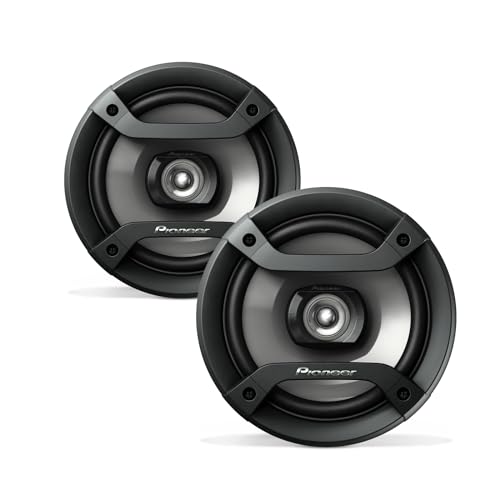
Pioneer F-Series TS-F1634R – 6.5-Inch 2-Way Coaxial Car Speakers, 200W Max
The Pioneer TS-F1634R is the factory-replacement pick in this group: a 6.5-inch 2-way coaxial car speaker with 200W of maximum power, designed to drop into the factory speaker openings of most cars and sound better than the speakers it replaces. It is a 2-way design, which means a woofer for the mids and bass and a tweeter for the highs, in one speaker that fits the same hole as the original.
The F-series is Pioneer’s budget line, and the TS-F1634R shows where the money goes: a balanced sound with smooth treble, a high-efficiency design that works well on factory head-unit power, and a straightforward installation with no amplifier needed. Most cars can run these speakers from the existing stereo, which keeps the upgrade to a single afternoon with basic tools.
For a driver who wants clearer sound without rebuilding the car audio system, the TS-F1634R is the right starting point. It fixes the two things factory speakers do worst: muddy vocals and harsh highs. The improvement is obvious the first time a favorite song plays, and the cost is low enough to do all four doors at once.
The TS-F1634R is also the easiest speaker in this group to buy twice. Because it is a standard 6.5-inch size, the same model fits the front and rear doors of most cars, so one purchase covers the whole car. That consistency matters: the same speaker front and rear gives the car a balanced sound instead of a mix of different voices.
Key specs:
- 6.5-inch 2-way coaxial car speakers
- 200W maximum power
- Factory speaker replacement; balanced sound and smooth treble
Strengths:
- Drops into most factory 6.5-inch openings
- High efficiency works on factory head-unit power
- Balanced sound with smooth treble
Trade-offs:
- No deep bass without a subwoofer
- 200W max is modest for amplified systems
- Basic build compared with premium lines
Anyone replacing tired factory speakers on a budget. It suits daily drivers, commuters, and anyone who wants a clear improvement without adding an amplifier.
Best for: a simple factory speaker upgrade Not suited for: high-power amplified systems
Check price on Amazon: Pioneer TS-F1634R

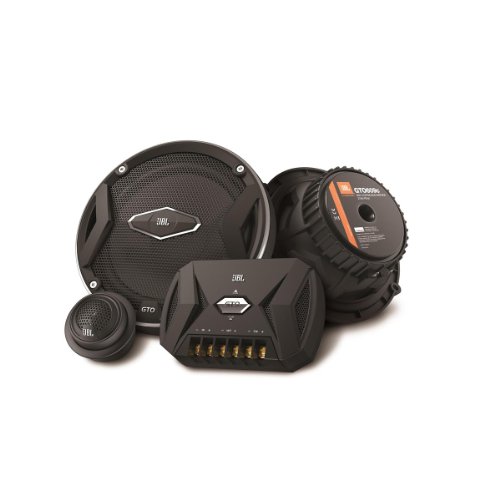
JBL GTO629 – 6.5-Inch Grand Touring Series Car Audio Speakers, 2-Way, 360 Watts Max
The JBL GTO629 is the power-handling pick: a 6.5-inch 2-way speaker from JBL’s Grand Touring series, rated at 360 watts of maximum power, built as a factory-sized replacement that also handles an amplifier. The GTO line is JBL’s mainstream car audio range, and the GTO629 is its standard 6.5-inch coaxial, with a bigger voice coil and a stiffer cone than the budget speakers in this group.
The 360W maximum power rating is the headline, but the useful number is the efficiency: the GTO629 is designed to play loud and clean on factory power, and louder still on an amplifier. That dual nature makes it the most flexible speaker in this group. Run it from the head unit today, add an amplifier later, and the same speakers keep up.
JBL’s tuning favors a lively, forward sound with strong bass for the size, which suits rock, pop, and hip-hop better than the flatter Pioneer tuning. If the car is a daily driver that also serves as a concert hall on the commute, the GTO629 is the speaker that makes the drive fun.
The GTO629 also comes with the mounting hardware and grilles needed for a clean installation, and the factory-sized design means it fits most 6.5-inch openings without cutting or adapters. That is a real advantage for a first-time installer who wants the upgrade to be reversible.
Key specs:
- 6.5-inch 2-way car audio speakers
- 360 watts maximum power
- Factory-sized replacement; Grand Touring series
Strengths:
- High power handling for amplified systems
- Lively sound with strong bass
- Fits most factory 6.5-inch openings
Trade-offs:
- Brighter sound may not suit every listener
- Needs an amplifier to reach its full potential
- The included cleaning cloth is an odd extra
Drivers who want loud, lively sound and may add an amplifier later. It suits rock and pop listeners who want their car to feel like a concert on the commute.
Best for: loud, lively sound with amplifier headroom Not suited for: listeners who prefer a flat, neutral sound
Check price on Amazon: JBL GTO629


KICKER 46CSC654 – CS-Series CSC65 6.5-Inch Coaxial Speakers, 4-Ohm (Pair)
The KICKER 46CSC654, also sold as the CSC65, is the workhorse pick: a pair of 6.5-inch CS-series coaxial speakers at 4 ohms, built for a direct factory replacement that sounds better than the originals in every way. Kicker’s CS series is the brand’s volume line, and the CSC65 is the speaker that most installers reach for when a customer asks for better sound without a big bill.
The CSC65 is a 2-way coaxial with a polypropylene woofer and a balanced dome tweeter, a combination that gives clear vocals and crisp highs without harshness. The 4-ohm impedance matches most factory head units and aftermarket stereos, so the speakers draw the power they need without a mismatch. Installation is a matter of removing the door panel, swapping the speaker, and putting the panel back.
Kicker’s reputation in car audio is built on speakers like this: tough, loud, and honest. The CSC65 will not win a sound-quality competition against a component set costing three times as much, but it will make every song sound better than the factory speakers, and it will do it for years without a complaint.
The pair pricing is the other reason to pick the CSC65. One box covers the front doors, and a second box covers the rear, so the whole car can be upgraded in two purchases. That makes it the easiest speaker in this group to budget for, and the most common recommendation in car audio shops for a first upgrade.
Key specs:
- 6.5-inch CS-series coaxial speakers, 4-ohm
- Pair of speakers; model 46CSC654, CSC65
- Direct factory replacement size
Strengths:
- Proven, popular choice for first upgrades
- Clear vocals and crisp highs
- Pair pricing makes a full-car upgrade affordable
Trade-offs:
- No deep bass without a subwoofer
- Basic styling compared with premium lines
- 2-way design limits the high-end detail
First-time upgraders who want a proven speaker at a fair cost. It suits anyone replacing factory speakers in a daily driver and wanting a clear, reliable improvement.
Best for: a proven first car audio upgrade Not suited for: audiophile component systems
Check price on Amazon: Kicker 46CSC654


Rockford Fosgate Prime R165X3 – 6.5-Inch 3-Way Full Range Speakers (Pair)
The Rockford Fosgate Prime R165X3 is the 3-way pick: a pair of 6.5-inch full-range speakers with three drivers per speaker, a woofer, a midrange, and a tweeter, so each part of the sound gets its own driver. The 3-way design is the advantage here: it spreads the work across three drivers instead of two, which gives clearer vocals and more detailed highs than a 2-way speaker at the same size.
Rockford Fosgate’s Prime line is the brand’s entry range, but the engineering is serious. The R165X3 uses a mica-injected polypropylene cone for the woofer, which is stiff enough to stay clean at higher volumes, and a silk dome tweeter for the highs, which sounds smoother than a metal tweeter. The result is a speaker that plays loud without getting harsh.
The 3-way layout also helps in a car, where the listening position is off-center and the speakers fire at your legs rather than your ears. With a dedicated midrange driver, the vocals stay clear even when the speaker is mounted low in a door, which is where most car speakers live.
For a driver who listens to a mix of music and wants the vocals to stay clear at highway speed, the R165X3 is the right choice. It is a pair, so one box covers the front doors, and the 3-way design gives it an edge over the 2-way speakers in this group for vocal clarity.
Key specs:
- 6.5-inch 3-way full-range speakers
- Pair of speakers; Prime series; model R165X3
- Woofer, midrange, and tweeter in each speaker
Strengths:
- 3-way design gives clearer vocals
- Silk dome tweeter sounds smooth, not harsh
- Stiff cone stays clean at higher volumes
Trade-offs:
- No deep bass without a subwoofer
- 3-way design needs more mounting depth
- No power rating listed in the title
Listeners who care about vocal clarity at highway speed. It suits commuters who listen to podcasts, vocals, and acoustic music as well as rock and pop.
Best for: clear vocals in a 3-way design Not suited for: tight door panels with shallow depth
Check price on Amazon: Rockford Fosgate R165X3
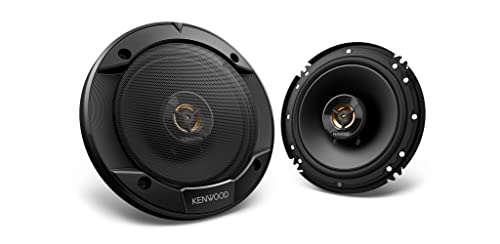
Kenwood KFC-1666R Road Series Car Speakers (Pair) – 6.5-Inch 2-Way, 300W, 4-Ohm
The Kenwood KFC-1666R is the Road Series pick: a pair of 6.5-inch 2-way coaxial speakers rated at 300W, with a 4-ohm impedance, a cloth woofer, and a balanced dome tweeter. Kenwood’s Road Series is built for the daily driver, and the KFC-1666R is the standard 6.5-inch model in that line, with a heavy-duty magnet design that keeps the bass tight.
The cloth woofer is the detail that sets the KFC-1666R apart. Most speakers in this group use polypropylene cones, which are light and stiff. Cloth is heavier and more damped, which gives a warmer, smoother bass that suits jazz, classical, and acoustic music better than a stiff cone. The balanced dome tweeter adds crisp highs without the harshness of a metal tweeter.
The 300W maximum power rating and 4-ohm impedance make the KFC-1666R a good match for both factory head units and small amplifiers. It will play cleanly on factory power, and it has the headroom to get louder on an amplifier without distorting.
For a driver who listens to a lot of acoustic music, jazz, or talk radio, the KFC-1666R is the warmest sounding speaker in this group. It is a pair, so one box covers the front doors, and the cloth woofer gives it a character that the polypropylene speakers cannot match.
Key specs:
- 6.5-inch 2-way car coaxial speakers
- 300W maximum power; 4-ohm impedance
- Cloth woofer and balanced dome tweeter; heavy-duty magnet
Strengths:
- Cloth woofer gives warm, smooth bass
- Balanced dome tweeter avoids harsh highs
- 300W headroom suits factory or amplified power
Trade-offs:
- Cloth cone is less stiff than polypropylene
- No deep bass without a subwoofer
- Warmer sound may feel less lively for rock
Listeners who prefer a warm, smooth sound for jazz, acoustic, and talk radio. It suits daily drivers where the speakers play for hours at a time without fatigue.
Best for: warm sound for long drives Not suited for: listeners who want a bright, punchy sound
Check price on Amazon: Kenwood KFC-1666R

Pioneer A-Series Plus TS-A6971F – 6-Inch x 9-Inch 4-Way Coaxial Car Speakers, 600W Max
The Pioneer TS-A6971F is the big pick: a 6×9-inch 4-way coaxial speaker rated at 600W maximum power, built for the rear deck or the rear doors where a larger speaker fits. The 6×9 size is the advantage here: a bigger cone moves more air, which gives deeper bass and louder sound than any 6.5-inch speaker in this group, without a separate subwoofer.
The 4-way design adds a super tweeter and a midrange to the usual woofer and tweeter, so the highs extend further and the vocals stay clear. The A-Series Plus line is Pioneer’s step up from the F-series, with better materials and a higher power rating, and the TS-A6971F is the 6×9 model in that line. Installation adapters are included, which helps in cars where the factory opening needs a bracket.
The 600W maximum power rating means the TS-A6971F can take an amplifier and keep going, but it also plays well on factory power thanks to its high efficiency. For a rear deck, where the speakers fire into the cabin from behind the seats, the 6×9 size fills the car with sound in a way that door speakers cannot.
For a driver who wants the biggest sound from a speaker swap alone, the TS-A6971F is the answer. It is the only 6×9 in the picks, and it is the only one that can add real bass to a car without a subwoofer. Pair it with the TS-F1634R in the front doors for a complete Pioneer system.
Key specs:
- 6-inch x 9-inch 4-way coaxial car speakers
- 600W maximum power
- A-Series Plus; installation adapters included
Strengths:
- 6×9 size gives deeper bass than 6.5-inch speakers
- 4-way design extends the highs
- 600W headroom for amplified systems
Trade-offs:
- Needs a 6×9 opening, usually the rear deck
- Larger size limits where it fits
- Bass still cannot match a real subwoofer
Cars with a 6×9 rear deck opening where the owner wants the biggest sound from a speaker swap. It suits anyone who wants bass without installing a subwoofer.
Best for: big sound from the rear deck Not suited for: cars without a 6×9 opening
Check price on Amazon: Pioneer TS-A6971F
Buying guide: choosing the right car speakers
Matching the size to the car
Start with the car, not the speaker. Look up the factory speaker size for the year, make, and model, or measure the opening with the door panel off. Most cars use 6.5-inch speakers in the doors, and many sedans use 6×9-inch speakers in the rear deck. Buying the wrong size is the most common mistake in car audio, and it is entirely avoidable.
Mounting depth matters as much as diameter. A speaker with a deep magnet can hit the window regulator or the door beam. Check the depth in the listing and compare it with the space in the door. If the depth is tight, a slim-mount speaker or a spacer ring can solve it, but it is better to buy a speaker that fits without modification.
2-way, 3-way, or 4-way
A 2-way speaker is the simplest and the most common, and it is enough for most listeners. A 3-way speaker adds a midrange driver, which improves vocal clarity, especially at highway speed when road noise competes with the music. A 4-way speaker adds a super tweeter for the highest frequencies, which matters only if you listen to music with a lot of high-frequency detail.
Do not choose by the number of ways alone. A well-built 2-way from a good brand will sound better than a cheap 4-way from a no-name maker. Use the ways as a guide, not a rule, and pay more attention to the brand, the materials, and the reviews from people who installed the same speaker in the same car.
Factory power or an amplifier
Most of the speakers in this guide will play well on factory head-unit power, which is usually 15 to 20 watts per channel. That is enough for clear sound at normal volumes. An amplifier adds headroom, which means the speakers can play louder without distorting, and the bass gets tighter.
You do not need an amplifier to enjoy these speakers, but if you plan to add one later, buy speakers with the power handling to use it. The JBL GTO629 and the Pioneer TS-A6971F in this guide are the best choices for an amplified system, because their maximum power ratings leave room to grow.
What to check before you buy
Check the impedance, usually 4 ohms, which matches most head units and amplifiers. Check the sensitivity if it is listed: higher is louder on the same power. Check whether the listing includes mounting hardware and grilles, and whether the speaker is sold as a pair or a single unit.
Also check the listing for the word Renewed, which marks a used or refurbished speaker, and for bundle deals that package two different speaker sets together. Buy the exact model named in this guide, from a listing that shows the full model number in the title.
Using and caring for your car speakers
Breaking in new speakers
New speakers sound stiff for the first few hours. Play music at moderate volume for a day or two before judging the sound, and avoid maximum volume until the suspension has loosened up. The difference after break-in is subtle but real: the bass gets deeper and the highs get smoother.
Do not test new speakers at full volume on the first day. A speaker that is pushed too hard before it is broken in can distort or damage the voice coil, and that damage is permanent.
Keeping the doors dry
Car doors are wet places. Rain runs down the window and into the door, and the speaker sits in that path. Most car speakers are built to handle moisture, but a speaker that sits in standing water will fail. Check the door drains are clear, and consider a foam baffle behind the speaker to shield it from direct water.
If the door panel rattles after installation, the speaker is loose or the panel clips are broken. Tighten the mounting screws, replace broken clips, and add a strip of foam tape where the panel meets the door. A rattle is not the speaker failing: it is the panel vibrating.
Cleaning and maintenance
Car speakers need almost no maintenance. Wipe the grilles with a dry cloth when you clean the car, and vacuum the door pockets where dust collects. Never spray cleaner directly onto a speaker cone, and never poke the tweeter with a finger or a tool.
If a speaker starts to sound distorted, check the wiring first. A loose connection or a corroded terminal is the most common cause, and it is a five-minute fix. If the wiring is good and the speaker still distorts, the speaker itself has failed and needs replacing.
Common mistakes to avoid
Buying the wrong size
The most common mistake is buying speakers that do not fit the car. Measure the opening or look up the fitment before ordering. A 6×9 speaker will not fit a 6.5-inch door, and a deep speaker will hit the window mechanism. Check the size and the depth, not just the brand.
Mixing different speakers
A car with different speakers in the front and rear sounds uneven, with one side brighter or louder than the other. Buy matching pairs for the front and rear, or at least the same brand and line. The picks in this guide are easy to match because they are sold as pairs.
Skipping the test listen
Install one speaker first, then listen before installing the rest. If the sound is wrong, it is easier to fix one speaker than four. Compare the new speaker with the old one on the other side, and check that the polarity is correct: reversed wiring makes the bass disappear.
Expecting subwoofer bass from a door speaker
A 6.5-inch door speaker cannot produce the deep bass of a subwoofer, no matter how good it is. If you want bass you can feel, add a subwoofer. A door speaker gives clear mids and highs; a subwoofer gives the low end. Expecting one to do both jobs leads to disappointment.
Final recommendation
For most cars, the best car stereo speakers in this guide come down to the size of the opening and the sound you like. The Pioneer TS-F1634R is the best simple upgrade: a 6.5-inch 2-way that drops into most doors, sounds better than the factory speakers in every way, and costs little enough to do all four doors at once. It is the speaker to buy if you want a clear improvement without a project.
If the car has a 6×9 rear deck, add the Pioneer TS-A6971F for the bass that door speakers cannot give. If you want the loudest sound, buy the JBL GTO629. If you want the clearest vocals, buy the Rockford Fosgate R165X3. If you want the warmest sound for long drives, buy the Kenwood KFC-1666R. And if you want the proven workhorse, buy the Kicker 46CSC654. Whatever you choose, measure the opening first, buy in pairs, and install one side before the other so you can hear the difference with your own ears.
Related reading on Reviewstook: see our guides to component car speakers, marine speakers, Bluetooth speakers for more on this topic.
Frequently asked questions
Will new car speakers work with my factory stereo?
Yes, in most cases. The speakers in this guide are designed to work on factory head-unit power, and they are efficient enough to sound better than the originals without an amplifier. An amplifier adds volume and headroom, but it is not required. Check the impedance, usually 4 ohms, which matches most factory stereos.
What size speakers fit my car?
Most cars use 6.5-inch speakers in the doors, and many sedans use 6×9-inch speakers in the rear deck. Look up the factory speaker size for your year, make, and model, or measure the opening with the door panel off. Also check the mounting depth, because a deep speaker can hit the window mechanism.
Do I need an amplifier for aftermarket speakers?
No, not to enjoy them. Aftermarket speakers sound better than factory speakers on the same head-unit power. An amplifier helps if you want louder sound without distortion, or if you want tighter bass. The JBL GTO629 and the Pioneer TS-A6971F in this guide have the power handling to make good use of an amplifier later.
What is the difference between 2-way and 3-way speakers?
A 2-way speaker has a woofer and a tweeter. A 3-way speaker adds a midrange driver, which improves vocal clarity, especially at highway speed. A 4-way speaker adds a super tweeter for the highest frequencies. More ways can mean clearer sound, but a well-built 2-way from a good brand often sounds better than a cheap 4-way.
Can I install car speakers myself?
Yes, for most cars. The job is removing the door panel, unplugging the old speaker, connecting the new one with the included adapter, and putting the panel back. Basic tools and an hour per door are usually enough. If the door panel is tricky or the car has a premium audio system with an external amplifier, a professional installer is worth the cost, and the job will still be cheaper than a full system rebuild.
Why do my new speakers sound worse than the old ones?
The most common cause is reversed polarity: if the positive and negative wires are swapped on one speaker, the bass cancels out and the sound goes thin. Check the wiring, then check that the speaker is mounted tightly with no air leaks around the edge. New speakers also need a few hours of break-in before they sound their best.