Disclosure: As an Amazon Associate, reviewstook.com earns from qualifying purchases. Links to Amazon on this page are affiliate links; they cost you nothing extra.
Canon uses the RF mount. APS-C bodies use RF-S lenses; full-frame bodies use RF lenses.
This guide is built from Amazon product listings and maker specs, not our own testing, so confirm kit contents, compatibility and current price on each product page.
Check price on Amazon on each product page before you buy.
Last updated: October 31, 2026.
In this guide
Quick Picks
| Product | Type | Best for |
|---|---|---|
| Canon EOS R100 (RF-S 18-45mm kit) | APS-C entry mirrorless kit | First interchangeable-lens camera |
| Canon EOS R10 (RF-S 18-45mm kit) | APS-C mirrorless kit | Step-up Canon APS-C |
| Canon EOS R10 (RF-S 18-150mm kit) | APS-C mirrorless kit | One lens for travel |
| Canon EOS R8 (body) | Full-frame mirrorless body | Lower-priced full frame |
| Canon EOS R7 (RF-S 18-150mm kit) | APS-C mirrorless kit | Sports and wildlife APS-C |
| Canon EOS R6 Mark II (RF24-105mm F4 L kit) | Full-frame mirrorless kit | Pro-level hybrid camera |
Our Picks
Top pickBest for first interchangeable-lens camera
1. Canon EOS R100 (RF-S 18-45mm kit)
A Canon EOS R100 mirrorless camera sold with the RF-S18-45mm F4.5-6.3 IS STM lens, per the listing. Check price on Amazon for the current listing.
Good for: First interchangeable-lens camera. Watch out: entry-level feature set.

Best for step-up Canon APS-C
2. Canon EOS R10 (RF-S 18-45mm kit)
A Canon EOS R10 mirrorless camera with the RF-S 18-45mm lens, per the listing. Check price on Amazon for the current listing.
Good for: Step-up Canon APS-C. Watch out: check kit contents.
Best for one lens for travel
3. Canon EOS R10 (RF-S 18-150mm kit)
A Canon EOS R10 mirrorless camera with the RF-S18-150mm F3.5-6.3 STM lens, 24.2MP, 4K, per the listing. Check price on Amazon for the current listing.
Good for: One lens for travel. Watch out: higher price.

Best for lower-priced full frame
4. Canon EOS R8 (body)
A Canon EOS R8 full-frame mirrorless camera, body only, per the listing. Check price on Amazon for the current listing.
Good for: Lower-priced full frame. Watch out: body only.

Best for sports and wildlife APS-C
5. Canon EOS R7 (RF-S 18-150mm kit)
A Canon EOS R7 mirrorless camera with the RF-S18-150mm F3.5-6.3 STM lens, 32.5MP, per the listing. Check price on Amazon for the current listing.
Good for: Sports and wildlife APS-C. Watch out: high price.
Best for pro-level hybrid camera
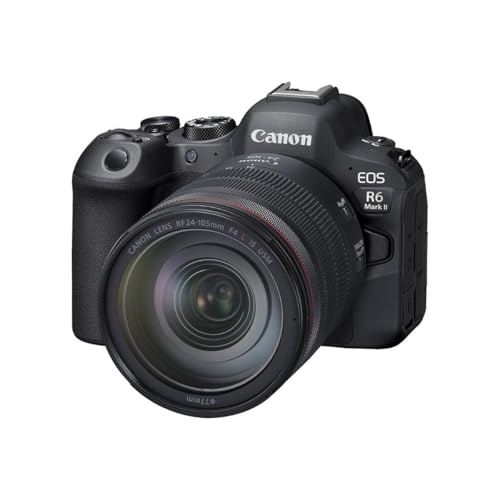
6. Canon EOS R6 Mark II (RF24-105mm F4 L kit)
A Canon EOS R6 Mark II full-frame hybrid mirrorless camera with the RF24-105mm F4 L USM lens, per the listing. Check price on Amazon for the current listing.
Good for: Pro-level hybrid camera. Watch out: high price.
Best Picks by Category
These labels summarise the details shown on each Amazon listing. They are a data summary, not hands-on test results.
- Top rated: Canon EOS R6 Mark II (RF24-105mm F4 L kit) — the premium-tier pick in this guide; check price on Amazon.
- Most reviewed: Canon EOS R100 (RF-S 18-45mm kit) — the entry-level pick in this guide; check price on Amazon.
- Best value: Canon EOS R100 (RF-S 18-45mm kit) — the budget-tier pick in this guide; check price on Amazon.
- Lowest price: Canon EOS R100 (RF-S 18-45mm kit) — the budget-tier pick in this guide; check price on Amazon.
- Premium option: Canon EOS R6 Mark II (RF24-105mm F4 L kit) — the premium-tier pick in this guide; check price on Amazon.
Pick Comparison
This table lists the picks with their price tier, so you can compare how they are positioned. Check price on Amazon for the current figure for each model.
| Product | Price | Details | Feedback | Price tier |
|---|---|---|---|---|
| Canon EOS R100 (RF-S 18-45mm kit) | Check price on Amazon | See listing | See listing | Budget |
| Canon EOS R10 (RF-S 18-45mm kit) | Check price on Amazon | See listing | See listing | Mid-range |
| Canon EOS R8 (body) | Check price on Amazon | See listing | See listing | Mid-range |
| Canon EOS R10 (RF-S 18-150mm kit) | Check price on Amazon | See listing | See listing | Mid-range |
| Canon EOS R7 (RF-S 18-150mm kit) | Check price on Amazon | See listing | See listing | Mid-range |
| Canon EOS R6 Mark II (RF24-105mm F4 L kit) | Check price on Amazon | See listing | See listing | Premium |
What the Listings Say
Below are the concrete details each seller states on the Amazon listing. Check the live listing for the latest specs before you buy.
Canon EOS R100 (RF-S 18-45mm kit)
The listing states: Stellar Image Quality: Canon EOS R100 4K digital camera with 24.1 megapixel CMOS (APS-C) sensor for superb image clarity and detail can capture images with natural bokeh; Compact Design: Compact, lightweight EOS R series 4K camera with an affordable price; smallest and lightest camera body in the EOS R series built for excellent mobility.
Canon EOS R10 (RF-S 18-45mm kit)
The listing states: Canon s 24.2 MP APS-C CMOS sensor ensures images appear crisp; Pair with a Canon RF-S/RF lens (or EF/EF-S lens using the Mount Adapter EF-EOS R (1) ) for stellar results; Canon s EOS R10 features subject detection technology to keep your subject in crystal-clear focus; Operates using a Canon LP-E17 battery pack; the USB Power Adapter PD-E makes it easy to charge the battery while it s still inside the camera.
Canon EOS R10 (RF-S 18-150mm kit)
The listing states: Canon s 24.2 MP APS-C CMOS sensor ensures images appear crisp; Pair with a Canon RF-S/RF lens (or EF/EF-S lens using the Mount Adapter EF-EOS R (1) ) for stellar results; Canon s EOS R10 features subject detection technology to keep your subject in crystal-clear focus; Operates using a Canon LP-E17 battery pack; the USB Power Adapter PD-E makes it easy to charge the battery while it s still inside the camera.
Canon EOS R8 (body)
The listing states: Step up to full-frame with Canon s lightest full-frame RF Mount mirrorless camera featuring a 24.2 million pixel CMOS image sensor and DIGIC X Image Processor.; An affordable and compact camera with built-in 0.39 2.36 million dots OLED EVF up to 120 fps refresh rate and 3.0 1.62 million dots vari-angle LCD touchscreen.; Uncropped 4K movie at up to 60 fps that is oversampled from 6K, Full HD High-frame rate movie recording at up to 180 fps2, and Canon Log 3 or HDR PQ.; Max movie record time of 2 hours3 and UVC / UAC for webcam and streaming4.
Canon EOS R7 (RF-S 18-150mm kit)
The listing states: Canon s 32.5 mp APS-C CMOS sensor ensures images appear crisp; Easily attach the included RF-S 18-150mm lens to the EOS R7 camera body with the compatible RF mount; The EOS R7 is compatible with EF-S, EF, RF, AND THE NEW RF-S MOUNTS (1); Canon s EOS R7 is built with seven stops of shake correction for coordinated control (3) no matter what life throws at you.
Canon EOS R6 Mark II (RF24-105mm F4 L kit)
The listing states: High image quality featuring a new 24.2 megapixel full-frame CMOS sensor; DIGIC X Image Processor with an ISO range of 100-102400, expandable to 204800; Dual Pixel CMOS AF II covering up to 100% x 100% area with 1,053 AF zones; Automatic subject detection of people, animals, and vehicles using deep learning technology with new subjects to detect including aircraft, trains, and horses.(1).
How to Choose
APS-C or full frame
R100, R10 and R7 are APS-C; R8 and R6 II are full frame.
Lens kit
Check which lens is included.
Budget
Add a lens if buying a body only.
APS-C or full frame: which Canon mirrorless camera suits you?
APS-C Canon mirrorless cameras are smaller and usually cheaper, while full-frame models use a larger sensor and generally cost more. In this guide the R100, R10 and R7 are APS-C, and the R8 and R6 Mark II are full frame.
A larger sensor gathers more light, which tends to help in dim rooms and gives shallower depth of field at the same framing. The trade-off is bigger, pricier lenses and often a heavier setup. APS-C keeps the whole kit lighter and gives extra reach on telephoto lenses because of the crop effect.
Think about what you shoot most:
- Family photos, travel and learning: APS-C is usually plenty and keeps costs lower.
- Low-light events and portraits: full frame is attractive for the extra light-gathering.
- Wildlife and sports: APS-C reach can help, which is why the R7 is positioned for that work.
Do not assume full frame is automatically better for you. A beginner who rarely changes settings may get more from a simple APS-C body and a good lens than from a full-frame body that sits unused. The listing for the Canon EOS R8 describes it as Canon’s lightest full-frame RF mount camera, so it is the lighter full-frame route here, but it is sold as a body only, so plan for a lens.
Pick the sensor size by your subjects and budget, then pick the specific model.
Which lenses work with a Canon mirrorless camera?
Canon mirrorless cameras use the RF mount, and APS-C bodies take RF-S lenses while full-frame bodies take RF lenses. Your lens choice should come before you finalize the body.
RF-S lenses are made for APS-C sensors and are generally smaller and lighter. RF lenses cover the full-frame image circle. Canon’s own wording is that APS-C bodies use RF-S lenses and full-frame bodies use RF lenses, and the listings add that RF lenses can also be used on APS-C bodies. Check the maker’s compatibility notes for the exact pairing before you buy.
Adapting older lenses is also possible. The R10 listing mentions the Mount Adapter EF-EOS R for EF and EF-S lenses, and the R7 listing says it is compatible with EF-S, EF, RF and RF-S mounts. If you already own older Canon lenses, that can lower the cost of getting started, but confirm the adapter and any features you depend on in the manual.
Questions to settle before buying:
- Do you already own Canon lenses that you want to keep using?
- Do you want a zoom range for travel, such as the 18-150mm kit lens, or a smaller kit lens?
- Will you add faster or longer lenses later?
A kit lens is a sensible start. You can add specialist glass once you learn what you miss.
Should you buy a Canon mirrorless camera as a kit or body only?
A kit is the simpler choice for most first-time buyers, and body only suits people who already own compatible lenses. Always confirm what the listing includes.
A kit bundles a body with a lens so you can shoot straight away. In this guide, the R100 and R10 are offered with an 18-45mm lens, the R10 and R7 also appear with an 18-150mm lens, and the R6 Mark II is listed with a 24-105mm F4 L lens. The R8 is body only.
The 18-45mm lens is the smaller, lighter choice. The 18-150mm lens covers more distance, which suits travel and walking around when you do not want to swap lenses. The trade-off is a larger lens and often a higher kit cost, so ask yourself whether the extra range matches how you shoot.
Body-only buying makes sense in three cases:
- You already own RF or adaptable EF lenses.
- You plan to pair the body with a specific lens that is not in any kit.
- You want to spend your budget on glass rather than the kit lens.
If you buy body only for the R8, add a lens to the budget from day one, and do not forget a card and spare battery. Read the listing for the battery type and any charging notes, as the R10 listing mentions a specific battery pack and a USB power adapter for charging in camera.
Which Canon mirrorless camera should you buy?
Choose by experience level and what you shoot. These pairings stay within what the listings say.
- If you want a first interchangeable-lens camera at the lowest price, go for the Canon EOS R100 (RF-S 18-45mm kit). It is described as the smallest and lightest body in the EOS R series, with an entry-level feature set.
- If you want a step up in Canon APS-C, choose the Canon EOS R10 (RF-S 18-45mm kit). Its listing mentions subject detection for focus.
- If you want one lens for travel, the Canon EOS R10 (RF-S 18-150mm kit) covers more range without lens swapping, at a higher cost.
- If you want the lower-priced route into full frame, pick the Canon EOS R8 (body), and budget for a lens.
- If you shoot sports or wildlife and want APS-C reach, the Canon EOS R7 (RF-S 18-150mm kit) is the one positioned for that, and its listing mentions seven stops of shake correction.
- If you want a pro-level hybrid camera for stills and video, choose the Canon EOS R6 Mark II (RF24-105mm F4 L kit), which is the premium pick here.
When two options seem close, ask which limit bothers you more: the price, the size or the feature set. That usually settles it.
Which Canon mirrorless features matter for video and autofocus?
For most buyers, autofocus behavior, stabilization and video options matter more than raw megapixel numbers. Read the feature lines on each listing and match them to what you film and photograph.
Autofocus is the feature you notice every day. The R10 listing mentions subject detection to keep a subject in focus, and the R6 Mark II listing describes automatic detection of people, animals and vehicles, with further subjects added. If you photograph moving children, pets or sport, those lines are worth reading closely.
Stabilization helps with handheld shots in low light and with telephoto lenses. The R7 listing mentions seven stops of shake correction, which Canon notes with a footnote, so check the footnote and the lens you plan to use. Lens-based stabilization also varies by lens, so check the lens listing as well.
Video options differ across the range. The R100 listing describes 4K video, while the R8 listing describes uncropped 4K oversampled from a larger source, Canon Log 3, a long maximum record time and webcam or streaming support. If video is a main reason you are buying, compare these lines instead of assuming all models behave alike.
- Photo-first buyers: focus on autofocus, handling and lens options.
- Video-first buyers: compare recording formats, record time limits and microphone or screen options in the manual.
- Hybrid shooters: look at both, plus battery life and heat notes from the maker.
Footnoted claims on listings usually depend on conditions, so treat them as best-case figures and read the footnotes.
What to check before you buy a Canon mirrorless camera
Confirm the lens included, the memory card and battery needs, and the return terms. A short checklist prevents the most common surprises.
- What is in the box: body only or kit, and which lens, as written on the listing.
- Lens mount match: RF-S for APS-C, RF for full frame, and adapter needs for older lenses.
- Memory cards: check the card type the camera uses in the manual, and whether a card is included.
- Battery and charging: check the battery model and whether a charger is in the box.
- Video needs: if you film, compare the listed video features, because they differ between models.
- Grip and size: if possible, compare body size and weight with how you will carry it.
- Bag and strap: plan for protection and carrying.
- Warranty and returns: confirm the seller’s terms on the listing.
Also check that the product is the model you meant. Similar Canon names are easy to confuse, so match the model name and the lens text on the listing against this guide before ordering.
Is it worth paying more for a Canon mirrorless camera, and who should skip it?
Paying more is worth it when you will use the extra capability, and not worth it if the entry model already covers your needs. Spend on features you will use.
Is the entry model enough? For casual photos and learning, the R100 is the lower-cost route, though its listing flags an entry-level feature set. If you later find you want faster handling or more control, the R10 is the next step in this guide.
What are the downsides of moving up? Higher-priced bodies cost more, and so do their lenses. The R7 and R6 Mark II are flagged for their high price, and the R8 is body only. Full-frame systems also tend to be larger in the bag.
Who should skip a Canon mirrorless camera?
- People who only take casual phone-style snaps and do not want to carry a camera.
- Buyers who already own a system with lenses they like and do not want to switch mounts.
- Anyone who needs a very compact pocket camera rather than an interchangeable-lens body.
Compare the picks above, check the current listing for the lens included and the exact model, then choose the camera that fits what you shoot.
A Closer Look at Each Pick in Everyday Use
The Canon range in this guide runs from a first camera to a professional hybrid, so the most useful question for each pick is not whether it is good, but where it sits in a photographer’s journey. The notes below focus on daily use, the jobs each kit handles best, and the point at which each model starts to feel limiting.
Canon EOS R100 with the standard kit zoom: the true starter kit
The R100 kit suits someone buying a first interchangeable-lens camera who wants to start shooting on the day the box arrives. The included standard zoom covers everyday framing for family, travel and learning, and the simple control layout keeps the first months approachable. In daily use its limits are about growth: fewer advanced controls, a simpler video feature set and less room to expand into demanding action or low-light work. That is an acceptable trade at this tier, provided you buy it as a learning camera rather than a forever camera. Who should choose it: a beginner, a student or a family buyer who values simplicity and a complete kit. Who should skip it: a keen enthusiast who already knows they want fast action tracking, extensive video tools or a deeper control layout. A common mistake is adding costly lenses to this body too quickly; learn with the kit zoom first, then let your own photographs show which lens deserves money next.
Canon EOS R10 with the standard kit zoom: the step-up most people should study
The R10 with the standard zoom is the balanced Canon choice for many buyers. It keeps the convenience of a ready-to-shoot kit while adding a more capable body for action, family events and growing skills. In everyday handling it feels like a camera you can learn on and keep, rather than outgrow in a season. The kit zoom is the sensible starting point, not the final word: it teaches your preferred focal lengths, after which a prime for portraits or a telephoto for sport becomes a targeted purchase. Who should choose it: a learner who wants headroom, or an upgrader from a phone or compact who shoots a mix of stills and occasional video. Who should skip it: a buyer who already knows they need full frame, or a traveller who would rather have the longer zoom version below. Before ordering, confirm the exact lens in the box, because R10 kits vary and the listing title is the contract.
Canon EOS R10 with the long kit zoom: one lens, more reach
This version of the R10 answers a travel and family problem: how to cover wide scenes and distant subjects without carrying or changing lenses. The longer zoom range suits holidays, school events, wildlife gardens and days out where moments happen far away. The compromise is size and light gathering compared with the standard kit zoom, plus the discipline of one-lens shooting: you gain convenience and lose some low-light flexibility. In practice many owners love exactly that simplicity. Who should choose it: a traveller or parent who hates lens changes and shoots mostly in decent light. Who should skip it: a low-light or portrait-led buyer, who will feel the need for a faster lens sooner. A frequent error is assuming the longer zoom makes other lenses unnecessary forever. Treat it as an excellent foundation, then add a compact prime later only if your evening and indoor photographs show you need one.
Canon EOS R8 body only: full frame, but you must finish the kit
The R8 is the full-frame doorway in this Canon list, and the words body only carry the whole decision. Without a lens it takes no photographs, so its real cost is the body plus at least one RF lens, a card and the basics. Chosen well, it gives a lighter full-frame setup for portraits, events and low-light work, with room to grow into Canon’s full-frame lens range. Chosen carelessly, it consumes the budget and leaves you with a lens that disappoints. Who should choose it: an existing Canon shooter with suitable lenses, or a new buyer who has already priced a first RF lens they genuinely want. Who should skip it: anyone comparing its headline tier directly with complete APS-C kits. That comparison is misleading, because the kits can shoot immediately and the R8 cannot. Price the finished outfit, not the body, before deciding it is the affordable full-frame route.
Canon EOS R7 with the long kit zoom: the action and wildlife specialist
The R7 kit is aimed at subjects that move and sit far away: sport, birds, wildlife and school events from the back of a hall. The APS-C sensor helps here, because its crop effect makes telephoto lenses reach further, and the included long zoom lets you start practising straight away. In daily use the learning curve is steeper than with the R100 or R10. Getting the best from action shooting means learning focus settings, shutter choices and panning technique, not just owning the body. Who should choose it: a committed hobbyist whose favourite subjects are action and wildlife. Who should skip it: a casual family buyer, who will pay for capability they rarely use while carrying more camera than they need. A common mistake is judging this kit by its first weekend. Action photography rewards practice, so budget time for it alongside money, and review your files closely to learn which settings worked.
Canon EOS R6 Mark II kit: the professional hybrid in this list
The R6 Mark II kit is the serious hybrid choice, pairing a full-frame body with a versatile professional-grade zoom as described on the listing. It suits weddings, events, client work and demanding personal projects where stills and video both matter and failure is costly. Living with it means accepting professional realities: larger files, a heavier bag, higher lens costs later and the need for disciplined backup habits. For the right buyer those are normal working costs. Who should choose it: an experienced shooter or working photographer who will use its breadth weekly. Who should skip it: a beginner, almost always. Its capability will not teach fundamentals faster, and the same budget spread across a simpler body, lenses and learning will usually produce better early photographs. If you do buy it, confirm the exact lens edition in the kit and plan storage and spare batteries from the start, because hybrid work consumes both quickly.
How the Picks Compare When You Use Them Side by Side
The clearest comparison in this Canon line-up is the ladder itself. The R100 teaches, the R10 grows, the R7 specialises and the R8 and R6 Mark II change sensor size and intent. Buyers often compare the R10 and R7 because both are APS-C, but they serve different weeks: the R10 is the generalist for mixed family, travel and learning, while the R7 earns its tier when action and reach dominate your shooting. Choosing the R7 for general use is not wrong, yet many owners would have been happier with the lighter generalist and a lens they wanted more.
The two R10 kits deserve a direct decision rather than a vague preference. Choose the standard zoom if your life is mostly indoors, groups and everyday scenes, and you suspect a portrait prime is in your future. Choose the long zoom if your memories happen at a distance: stages, sports fields, wildlife and travel viewpoints. The R8 complicates every comparison because it is a body in search of a kit. Put it beside the R6 Mark II kit only after adding a comparable lens to the R8 side of the page. Done honestly, that exercise shows the real gap between entering full frame and buying a professional hybrid outfit, and it stops the most common Canon buying error in this guide: mistaking a body price for a system price.
Across all six picks, remember that Canon lenses are the long-term commitment. Bodies will be replaced; a well-chosen RF or RF-S lens can serve for many years. If two bodies feel close, pick the one whose lens path you prefer, not the one with the longer feature list.
Choosing With Confidence: Criteria That Deserve More Weight
Start with sensor size, but treat it as a kit decision rather than a status decision. APS-C in this guide means smaller lenses, lower total cost and useful extra reach for distant subjects. Full frame means stronger low-light potential and shallower depth of field, paid for with larger lenses and a larger budget. Your subjects decide which matters. A parent photographing indoor birthdays in dim halls has a genuine full-frame argument; a hiker who values a light bag and distant wildlife has a genuine APS-C argument. Neither is settling.
Next, weight the lens in the box as heavily as the body. Kit definitions decide your first year. Read the listing title and contents line by line, confirm the lens mount and focal range in words you understand, and be suspicious of any offer where the kit contents are vague. Then think about autofocus in terms of your subjects, not in abstract. People, animals and vehicles each place different demands on tracking, and the guide’s own sections explain which bodies emphasise which detection. Match that to your real subjects. Finally, consider how you will learn. A camera with controls that invite experimentation will improve your photography faster than a more powerful camera left on automatic because its menus intimidate you. The best Canon here is the one whose next step you can clearly picture: the lens after this one, the skill after this one, the shoot after this one.
Setup, Daily Handling and Care
When a Canon kit arrives, resist the urge to shoot an important event first. Charge the battery, format a card in the camera, set the clock, and spend an evening learning where the maker puts the controls you will use hourly: focus point, exposure compensation, image playback and video start. Photograph your home and garden in different light, review the files on a larger screen, and note which settings confused you. That small rehearsal prevents the classic new-camera failure, which is discovering a menu at the exact moment a child blows out birthday candles.
Care routines for Canon mirrorless bodies are straightforward. Keep the mount covered whenever a lens is off, change lenses in sheltered spots with the body opening facing down, and clean the lens glass with a proper cloth rather than clothing. Store the kit dry and complete, so the charger, spare card and cleaning blower live with the camera instead of in forgotten drawers. Back up photographs the day you take them and keep two copies before formatting a card. If you shoot sport or wildlife with the R7, also clean the kit after dusty or wet outings before the next use, because grit around mounts and dials causes wear that owners often blame on the camera itself.
One learning habit pays for itself: after each outing, pick a handful of favourite and failed frames and work out what the camera did in each. Over a month, that review teaches focus behaviour, lens character and your own habits better than any feature list, and it tells you exactly which accessory or lens, if any, deserves to be bought next.
More Questions to Settle Before You Order
Can you mix lenses across these Canon bodies?
Within limits, yes, and the guide’s lens section explains the mount details. The practical rule is to check each lens against each body before assuming, especially when moving between APS-C and full-frame bodies or adapting older Canon lenses. An adapter can be a smart way to keep valued older glass in use, but autofocus and stabilisation behaviour should be confirmed for your exact combination rather than assumed from the mount name alone. When in doubt, the listing and the maker compatibility notes outrank general advice, including this page.
Is the kit zoom good enough, or should you budget for another lens at once?
For most beginners and general shooters, the kit zoom is good enough to start, and starting is what teaches you what you actually need. Buy a second lens at the same time only when you already know the job it does: a prime for portraits and dim rooms, or a telephoto for sport and wildlife. Buying both body and speculative lenses together is how budgets disappear into bags that stay home. Shoot for a month, study your files, then spend with evidence.
What should you verify on a Canon listing before paying?
Verify the exact body, the exact lens in the kit or the explicit body-only wording, the seller, the region and warranty wording, and what accessories are stated as included. Kit names repeat across sellers while contents differ, which is why two similar-looking offers can represent different value. Save a copy of the listing details with your invoice. If anything important is unclear, ask before ordering rather than after delivery, when the same question becomes a return.
How long should one of these cameras stay useful?
Years, if you buy for your subjects rather than for novelty. Still image quality changes slowly, so a well-chosen body rarely becomes the limit on your photographs; lenses, light and practice matter more. Video features and connectivity evolve faster, which is why video-led buyers should weight current recording options more heavily. Either way, a camera that fits your hands, budget and lens plans today will outlast a theoretically better camera that does not.
A First-Month Learning Plan With Your Canon
A new Canon will teach you quickly if you give it structured practice instead of random snapshots. In the first week, shoot only familiar subjects around home, in different light, and review every session on a larger screen the same evening. Learn where focus confirmation appears, how exposure changes show in the finder and which dial your fingers reach for without looking. Do not change many settings at once; change one thing per session, so you learn what caused each difference you see.
In the second week, give each outing a single subject: people, movement, distant detail or dim interiors, whichever matches the body you bought. The R10 and R7 owners should spend one full session only on moving subjects, accepting failed frames as tuition. R8 and R6 Mark II owners should spend one session in genuinely dim light, learning how their files behave when pushed. In the third week, film a short, complete piece if video matters to you, from setup to finished export, so the whole chain gets tested while nothing depends on it. In the fourth week, review the month honestly: which focal lengths recur, which light defeats you, which control still confuses you. That review, not a shop, should write your next shopping list. Owners who follow a plan like this usually discover that the camera they bought was more capable than their first weekend suggested, and that the next purchase they truly need is smaller, cheaper and more specific than the one they imagined on delivery day.
Common Canon Buying Mistakes in This Line-Up
Three mistakes recur with this range. The first is comparing a body-only tier with complete kit tiers as if they were the same purchase; they are not, and the guide’s Canon sections return to it because it distorts more decisions than any other error. The second is buying reach or speed for subjects you photograph twice a year while starving the subjects you photograph weekly. The third is treating the first lens as the final lens and agonising accordingly. A first lens is a teacher. Choose it for your most common photographs, let it reveal your habits, and allow the second purchase to be the informed one. Buyers who avoid these three errors rarely regret a Canon choice in this guide, whichever rung of the ladder they start on.
Frequently Asked Questions
Which Canon first?
Canon EOS R100 or R10.
Cheapest full frame?
Canon EOS R8.
For sports?
Canon EOS R7.
What is the difference between RF and RF-S lenses?
RF-S lenses are designed for Canon APS-C bodies, while RF lenses are designed for full-frame bodies. RF lenses can also be used on APS-C bodies in many cases. Check the maker's compatibility notes before buying a specific lens.
Can I use my old Canon EF lenses on a mirrorless Canon?
Often yes, with the Mount Adapter EF-EOS R. The R10 and R7 listings in this guide mention EF and EF-S compatibility. Confirm the adapter and any feature limits in the manual.
Is the Canon EOS R100 good for beginners?
It is described as an entry-level, compact camera, which suits a first interchangeable-lens camera. It has a simpler feature set than the step-up models. If you expect to grow quickly, compare it with the R10.
Is the Canon EOS R8 better than the R10?
They are different types: the R8 is full frame and sold body only, while the R10 is APS-C and sold as a kit. Full frame offers a larger sensor, but you must buy a lens. Choose based on your subjects, budget and lens plans.
Which Canon mirrorless camera is best for sports and wildlife?
The Canon EOS R7 is the pick positioned for sports and wildlife in this guide. APS-C bodies give extra reach with telephoto lenses. Check the listing for focus and burst features that matter to you.
Do I need to buy a lens separately?
Only if the listing is body only, like the Canon EOS R8. The other picks here come with a lens. Always read the listing to see exactly which lens is included.
Is full frame worth it for a hobbyist?
It can be, if you shoot in low light or want shallow depth of field, but it is not required. APS-C cameras give strong results for many hobbyists at lower cost. Think about lens cost too.
What accessories should I buy with a Canon mirrorless camera?
A memory card, a spare battery, a camera bag and a lens cleaning kit are common starting accessories. Check the manual for the right card type. Add other items only as you discover a need.
Bottom Line
For beginners, the R100. For all-rounders, the R10. For full frame value, the R8.
More Camera Guides
- Best Sony Mirrorless Cameras
- Best Fujifilm Mirrorless Cameras
- Best Panasonic Lumix and OM System Cameras
- Best Mirrorless Cameras for Video
- Best Mirrorless Cameras Under 1000 Dollars
- Best Mirrorless Cameras Under 1500 Dollars
- Best Mirrorless Cameras Under 2000 Dollars
- Best Compact Mirrorless Cameras
- Best Mirrorless Cameras for Vlogging
- Best Tripods for Mirrorless Cameras
- Best Gimbals for Mirrorless Cameras
- Best Camera Bags for Mirrorless Cameras
- All camera guides
Related Guides
- 5 Best Lenses for Canon RF Mirrorless Cameras (2026)
- 7 Best Mirrorless Cameras: Canon, Sony, Fujifilm, Lumix (2026)
- 6 Best Mirrorless Cameras for Beginners: Canon, Sony (2026)
- 7 Best Full-Frame Mirrorless Cameras: Sony, Canon, Nikon (2026)
- 8 Best Sony Mirrorless Cameras: a6100, a6700, a7 IV, ZV-E1 (2026)