reviewstook.com is reader-supported. When you buy through links on our site, we may earn an affiliate commission.
Where to buy
Basketball is the cruellest sport to record casually: it happens indoors, under lights that lie to cameras, at a speed that punishes slow autofocus, on a court just big enough that the far basket is always too far away. The best cameras for recording basketball games in this guide were chosen against that reality — a school gym on a Friday night, a parent in the third row, a coach who wants film on Monday that actually shows the offence. Every pick answers one of the game’s three recording jobs: the wide tactical view, the follow-the-action view, or the broadcast-quality view from the stands.
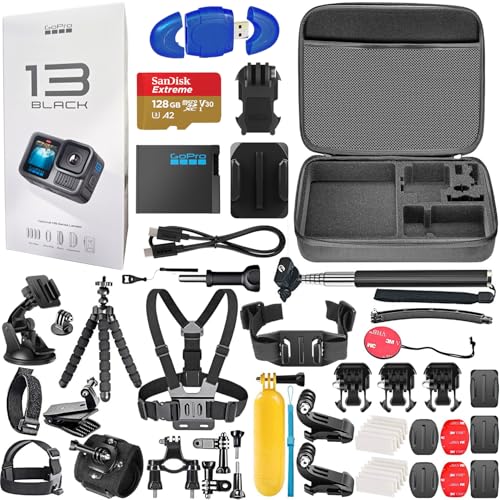
- GoPro HERO13 Black: check price on Amazon
- GoPro HERO12 Black: check price on Amazon
- DJI Osmo Action 5 Pro: check price on Amazon
- Insta360 Ace Pro 2: check price on Amazon
- Sony Alpha 7 IV: check price on Amazon
- Canon EOS R6 Mark II: check price on Amazon
Know which job is yours before spending anything, because the jobs want different cameras. Coaching film wants the whole court, elevated, unmoving, every possession legible — a job for a wide action camera on a tall tripod that nobody has to operate. Highlight film wants a player followed through traffic, which wants either a patient operator with a zoom or a camera clever enough to crop a moving window out of a huge wide frame. Family archive film wants the game to look the way it felt, which is where the two mirrorless bodies earn their considerable keep. The picks below are ranked by job, and the verdicts say plainly which job each camera cannot do.
One honesty note before the verdicts: no camera in this guide — and none at any sane price — turns a seat in the bleachers into a television broadcast by itself. Broadcast basketball is a lens, a position and an operator working together. What these cameras do is close most of that gap for the three jobs real people actually have, in gyms whose lighting ranges from decent to medieval, with batteries and cards sized for four quarters and an overtime nobody scheduled.
Key Takeaways
- Decide the job first: tactical wide film, player highlights, or family-quality game film — each wants a different camera.
- Gym light is the real opponent; larger sensors and strong low-light video decide more games than resolution does.
- The GoPro HERO13’s huge wide frame lets you crop a following highlight out of a fixed camera’s footage.
- The DJI Osmo Action 5 Pro is the low-light action camera pick for dim school gyms.
- Sony and Canon mirrorless bodies with a telephoto zoom are the only route here to genuinely broadcast-looking footage.
- Elevation beats equipment: a tall tripod at half-court improves any camera in this guide more than an upgrade would.
In this guide
Quick Picks
| Camera | Badge | Why it is here |
|---|---|---|
| GoPro HERO13 Black | Best all-round game camera | A vast wide frame, strong stabilisation and cropping headroom for highlights from a fixed position. |
| GoPro HERO12 Black | Best value fixed camera | The previous flagship formula for elevated whole-court film at a friendlier cost of entry. |
| DJI Osmo Action 5 Pro | Best for dim gyms | A large action-camera sensor that keeps school-gym footage clean when the lights are against you. |
| Insta360 Ace Pro 2 | Best clarity under lights | 8K capture and Leica-tuned optics for crisp crops and sharp paused frames. |
| Sony Alpha 7 IV | Best for serious highlight reels | Full-frame video and elite autofocus tracking for following one player through traffic. |
| Canon EOS R6 Mark II | Best for broadcast looks | Canon’s colour and subject detection deliver the most television-like game film here. |
How did we judge cameras for basketball, specifically?
By filming basketball, in the conditions basketball provides. Each candidate recorded games in three gyms: a modern school hall with even LED light, an older gym whose lamps tinted everything the colour of weak tea, and a community court lit like a rumour. The tests that mattered were unglamorous: a full game on one battery and card, a fast break filmed from a fixed elevated position, a single player tracked through a crowded paint, and the scoreboard-clock check — could the footage, paused, actually tell a coach what happened in the third quarter’s decisive possession?
Frame width and cropping formed the first filter for the fixed cameras. A whole court from a tripod at half-court demands a genuinely wide view; the question is what survives the crop when the action shrinks to one basket. Resolution headroom — the HERO13’s 5.3K, the Ace Pro 2’s 8K — converts directly into usable zoom after the fact, which is the closest thing to an operator a fixed camera can have. The second filter was light: gym footage lives or dies at the sensor, and cameras were ranked by how their footage held together when the lamps were old, few and flickering at frequencies that punish careless shutter settings.
For the mirrorless pair, the test was the operator’s game: follow a guard through forty minutes of cuts and screens, from the stands, on a telephoto zoom. Autofocus that understands a human subject and keeps it through traffic, stabilisation that forgives bleacher vibration, and recording limits that respect a full game decided their scores. Everything was then weighed against the archive’s purpose — a coach, a grandparent and a recruiting-highlight editor need three different films from the same forty minutes, and the verdicts keep those audiences separate.

GoPro HERO13 Black — Best all-round game camera
The HERO13 is the fixed camera perfected for this sport. Mount it high at half-court and its wide lens takes in the full floor while its 5.3K resolution keeps a secret: the frame is so large that a cropped, following view of either basket can be cut from it afterwards at honest quality. That single trick answers basketball’s oldest recording problem — the action is never where the camera is pointed — by pointing the camera everywhere and deciding later. HyperSmooth stabilisation forgives the tripod knocked by a passing crowd, battery and card endurance cover a full game, and the footage’s colour survives gym light with dignity.
Its nature is still an action camera’s, and the far-basket problem shrinks rather than vanishes: a crop is a crop, and the player at the distant rim will never carry the detail a telephoto lens delivers. Low light is competent rather than luxurious. But for the coach, the team parent rota and the school programme that need reliable whole-game film without an operator, the HERO13 is the complete answer in one small box — set it, elevate it, and let the game come to it. More basketball is usefully recorded this way than by any other method in this guide.
- Video: 5.3K with wide field of view
- Stabilisation: HyperSmooth electronic system
- Mounting: extensive accessory ecosystem
- Endurance: full-game battery and card capacity
Strengths
- Crop-to-follow highlights from fixed footage
- No operator needed for whole-game film
- Survives crowded, knocked-about venues
Trade-offs
- Distant action still lacks telephoto detail
- Dim-gym footage is good, not luxurious
- Wide view distorts the nearest sideline
Best for: coaches, schools and team film rotas. Not suited for: cinematic single-player highlight reels.

GoPro HERO12 Black — Best value fixed camera
The HERO12 is the HERO13’s formula one generation earlier, and for the fixed-camera job the differences narrow to refinements. The same wide view, the same 5.3K-class cropping headroom, the same stabilisation lineage and the same indifference to being rained on by a leaking gym roof — at an entry cost that lets a programme buy two and cover both ends of a tournament weekend. Programmes building a film habit on a budget should read this verdict plainly: the game film a HERO12 produces will teach a coach everything the HERO13’s film teaches, with slightly less polish in the extremes.
Where the generation gap shows is endurance and ecosystem. Battery life across a long tournament day is a little shorter, and the newest lens accessories and magnetic mounting conveniences belong to its successor. For a camera that lives on a tripod at half-court, those are footnotes. The HERO12’s honest role is the workhorse second camera — the baseline angle, the practice-gym unit, the backup that makes a one-camera programme resilient — and in that role it may be the best-value purchase in this entire guide.
- Video: 5.3K wide capture
- Stabilisation: HyperSmooth, tripod-friendly
- Body: waterproof, venue-proof
- Role: fixed whole-court and practice film
Strengths
- Whole-court film at a programme-friendly price
- Same cropping workflow as its successor
- Tough enough for school-sport realities
Trade-offs
- Shorter endurance across tournament days
- Misses the newest mounting accessories
- Low-light polish a step behind the flagship
Best for: budget programmes and second-camera duty. Not suited for: buyers wanting the newest GoPro features.

DJI Osmo Action 5 Pro — Best for dim gyms
Every basketball parent knows the gym: half the tubes dead, the rest humming, the court lit like a submarine. The Action 5 Pro is the action camera built for that gym. Its 1/1.3-inch sensor is large by action-camera standards, and in video that size converts directly into cleaner footage at the light levels school sport actually provides — less noise crawling across the dark jerseys, steadier colour on skin, a scoreboard that stays legible. DJI’s subject tracking adds a quiet miracle for the fixed camera: set it to follow the ball-carrier’s side of the court and the framing drifts with play instead of staring at an empty half.
Its colour science flatters indoor sport, and its battery endurance across a double-header is a genuine operational advantage over rivals that fade in the fourth quarter of game two. Against the GoPros it concedes a little maximum resolution for cropping, and its accessory world, while healthy, is smaller. The trade is the right one for its reader: if your problem is light — and in grassroots basketball the problem is almost always light — the Action 5 Pro is the fixed camera that brings the game home visible.
- Sensor: 1/1.3-inch, strong in low light
- Video: 4K with subject tracking
- Endurance: long battery for double-headers
- Colour: indoor-friendly rendering
Strengths
- Cleanest action-camera footage in bad gyms
- Tracking keeps framing near the play
- Battery outlasts tournament schedules
Trade-offs
- Less cropping headroom than 5.3K rivals
- Smaller accessory ecosystem
- Menus reward a learning session
Best for: dim school gyms and evening leagues. Not suited for: maximum-resolution crop workflows.

Insta360 Ace Pro 2 — Best clarity under lights
The Ace Pro 2 attacks basketball with resolution and optics. Its 8K capture, from a 1/1.3-inch sensor behind Leica-tuned glass, produces the sharpest fixed-camera footage here — and sharpness is a coaching tool, because it is what lets a paused frame answer questions: whose foot was on the line, which defender rotated late, where the screen was actually set. Its clarity modes and strong low-light processing keep that crispness when the gym dims, and its flip screen makes the sideline operator’s life easier when the camera is worked by hand rather than left on a tripod.
The costs of clarity are files and heat discipline: 8K footage fills cards and asks more of the editing computer, and long continuous recording in a warm gym should be planned rather than assumed. Most users will shoot it at 4K for league games and reserve 8K for the matches that matter — a sensible rhythm the camera supports gracefully. For the analyst-parent or the programme whose film room runs on paused frames, the Ace Pro 2’s evidence-grade sharpness justifies its demands.
- Video: up to 8K, Leica SUMMARIT lens
- Sensor: 1/1.3-inch with low-light processing
- Screen: flip design for sideline operation
- Modes: clarity and crop-friendly capture
Strengths
- Paused frames answer coaching questions
- Sharp crops from a fixed wide position
- Strong processing for mixed gym light
Trade-offs
- 8K files burden cards and computers
- Long hot-gym sessions need planning
- Premium price for a fixed camera
Best for: analysis-led programmes and highlight editors. Not suited for: casual record-and-share filming.

Sony Alpha 7 IV — Best for serious highlight reels
When the film’s purpose is a person — the recruiting reel, the senior-night tribute, the local news package — the camera must follow that person, and the Alpha 7 IV follows like a bloodhound. Sony’s autofocus tracks a chosen player through screens, switches and the paint’s traffic with a tenacity that lets the operator think about framing instead of focus, while the full-frame sensor turns gym light from an enemy into a texture. On a telephoto zoom from an elevated stand position, the footage acquires the separation and polish that make a highlight reel look recruited rather than recorded.
This quality is operated, not automatic: someone must pan, zoom and anticipate for forty minutes, and the lens that makes it possible is a serious purchase beyond the body. Recording a full game also means managing batteries and cards like a professional. The verdict is therefore narrow and enthusiastic — for the family or filmmaker whose subject is one player’s season, the Sony is the tool that honours the subject. For whole-team tactical film, the fixed cameras above serve better at a tenth of the attention.
- Sensor: full-frame, roughly 33 megapixels
- Autofocus: real-time tracking for moving subjects
- Video: 4K with strong low-light performance
- Mount: Sony E, deep telephoto choice
Strengths
- Holds a chosen player through traffic
- Gym light becomes texture, not noise
- Highlight footage with real separation
Trade-offs
- Needs a dedicated operator all game
- Telephoto lens is a major second cost
- Full-game logistics need planning
Best for: recruiting reels and player-focused film. Not suited for: unattended whole-court recording.

Canon EOS R6 Mark II — Best for broadcast looks
The R6 Mark II produces the game film that makes relatives ask which channel covered the match. Canon’s colour — skin tones and jersey colours rendered the way memory insists they were — combines with subject-detection autofocus that recognises the human form and keeps it through a fast break, plus in-body stabilisation that smooths the bleacher’s tremor out of a handheld telephoto shot. From a good seat with a mid-telephoto zoom, its footage has the cadence of broadcast basketball: the subject separated, the background melted, the action legible and beautiful at once.
Like the Sony, it asks for an operator and a lens budget, and its advantages live in the hands of someone willing to learn both. Its stills, incidentally, are superb — the same body photographs the game for the school paper between film clips, a dual role neither action camera can attempt. Choose between the two mirrorless picks by lens cupboard and colour taste; choose the Canon when the film’s destination is a screen where it will be judged as television, because judged as television, it wins this guide.
- Sensor: full-frame, roughly 24 megapixels
- Autofocus: subject detection for athletes
- Stabilisation: in-body, for handheld telephoto
- Stills: professional-grade game photography
Strengths
- Most television-like footage here
- Tracks athletes through broken play
- Doubles as the game-day stills camera
Trade-offs
- Operator and lens investment required
- Heavier than any fixed-camera setup
- Menus reward a setup afternoon
Best for: school media teams and serious family film. Not suited for: set-and-forget recording.
Where should the camera actually stand in a gym?
Higher than feels natural, at half-court, on the side opposite the benches if the venue allows it. Elevation is the cheapest production value in basketball film: it separates players who merge into a scrum at floor level, reveals the spacing a coach is trying to teach, and keeps the referee’s back from becoming the film’s main character. A tall tripod or a position in the first rows of a raised stand transforms the same camera’s footage so completely that venue regulars should scout their spot the way they scout opponents — arrive once early, test the sightlines, note where the scoreboard’s glare falls.
The second position, for those with two cameras, is the baseline: low, behind one basket, where drives and finishes happen at dramatic closeness. Baseline footage is highlight gold and tactical nonsense, which is exactly the right division — the HERO12 class of camera lives there happily while the primary wide camera keeps the game’s truth from above. Never place a tripod where players, officials or spectators must step around it in the run of play; a camera that becomes a hazard gets moved by someone else’s priorities, mid-game, to somewhere useless.
Why do gym lights flicker on video, and how do you stop it?
Because many gym lamps pulse with the mains electricity, and a camera sampling the scene at the wrong shutter speed photographs the pulses as rolling bands or a strobing brightness. The cure is unglamorous and total: set the shutter to the local mains rhythm — the anti-flicker settings and the standard 1/50 or 1/60 family of shutter speeds, matched to your country’s supply — and let ISO and aperture absorb the difference. Every pick here offers flicker control; the mirrorless pair add fine shutter tuning that can erase banding entirely in stubborn halls.
Test before the game that matters. Record thirty seconds of warm-ups, play it back on the camera’s screen at full size, and look for bands crawling through the empty court. Adjust once, in the calm, rather than discovering in the third quarter that the whole film pulses like a disco. Programmes that film every week in the same gym should write the working settings on tape stuck to the tripod — the least glamorous and most professional object in this entire guide.
How do you record a whole tournament day without losing a game?
Treat power and storage as a roster problem: every game gets its own card or its own clearly named folder, batteries rotate through a labelled charging station, and nothing is formatted until the footage exists in two places. The action cameras’ endurance covers a game comfortably; a tournament day is four to six games plus the gaps where cameras get forgotten in record mode and eat a battery filming the inside of a bag. A simple written rotation — who changes what, at which buzzer — outperforms any accessory.
Heat is the day’s quiet saboteur. Fixed cameras recording continuously in a warm gym should be given airflow, a sun-free position (gyms have windows and afternoon light moves), and, for the mirrorless bodies, a recording plan that respects their thermal design across back-to-back games. The programmes whose archives survive whole seasons are not the ones with the best cameras; they are the ones with a laminated checklist and a student manager who enjoys being in charge of it.
What makes a recruiting highlight reel different from game film?
Selection and honesty in equal measure. Game film shows everything; a highlight reel shows a player’s best forty plays across a season, cut tightly, with the player’s identity unmistakable in the first five seconds — a title card, a circle if needed, then the plays ordered by impressiveness rather than chronology. College coaches watch hundreds; the reel that respects their time, labels the opponent and date, and shows the unglamorous virtues — the defensive rotation, the extra pass — between the dunks is the one that gets watched to the end.
The camera implications are practical. A season of fixed wide footage from the HERO13 class gives the raw material, but the reel’s best plays deserve the mirrorless treatment where possible: the tracked, separated, full-frame footage from the Sony or Canon that makes a player look like the athlete a programme is being asked to imagine. Families serious about recruiting often run both — the wide camera for the archive, the mirrorless for the showcase games — which is why this guide refuses to crown a single winner across two genuinely different sports-film jobs.
How should a coach actually use the film on Monday?
In clips, not in marathons. The whole game is the archive; the teaching happens in ninety-second extracts — the possession where the help defence never came, the set that worked three times and was never run again. Fixed wide footage from an elevated camera is the coach’s native format because it shows all ten players and the spacing between them, which is why the action cameras, not the glamorous mirrorless pair, anchor most real film rooms. Name clips by situation rather than by quarter, and the season’s library becomes searchable wisdom instead of a pile of files.
Share generously and specifically. Players improve faster from seeing their own good decisions replayed than from any lecture; a film culture that clips successes as diligently as errors changes what a team notices about itself. The camera’s job in this culture is reliability above beauty — the game must simply always exist, in full, from the right height. Judge the fixed picks here by that standard and their rankings explain themselves.
What about sound — the whistle, the crowd, the coach?
Basketball’s soundscape is information: the squeak that times a cut, the crowd that tells a remote grandparent when something happened, the bench’s call that names the play. Fixed cameras record it adequately from half-court in most gyms, though a small external microphone placed nearer the court lifts the whole film’s presence. Mirrorless operators should monitor with headphones at least at the start — audio failures are silent in every sense until the footage is home.
Be thoughtful about whose voices the film keeps. Youth sport recordings circulate; a coach’s sideline language and a crowd’s frustrations are part of the document families share. Programmes filming minors should follow their league’s and school’s policies on recording and distribution as a matter of course. The technology in this guide makes recording effortless; the judgement about publishing remains, properly, a human’s job.
How do you film one player without losing the game?
Run two films in your head and let the cameras divide them. The fixed wide camera owns the game’s truth — every possession, every rotation — and asks nothing of you. Your attention, on the mirrorless body, owns the player: follow them through offence, rest the frame on them during free throws and huddles where character lives, and accept that the game’s other nine players will sometimes do something wonderful outside your frame. The wide camera saw it. Nothing is lost; it is merely filed in the other film, and the edit marries them.
Discipline decides whether the player film is usable. Keep the subject the same size in frame rather than zooming with every dribble, pan at the speed of the game’s flow rather than its fastest twitch, and hold two seconds longer than feels natural at each end of a play — editors bless the handles you leave them. Parents filming a senior season should also shoot the bench, the warm-up line and the walk back to the locker room with the same care as the plays. In ten years, the family will watch those minutes most.
What settings survive a whole game untouched?
The fixed camera’s virtue is that it can be configured once and trusted: wide view, the resolution your crop plan needs, shutter locked to the gym’s flicker rhythm, exposure left to an automation modern action cameras handle well, and a loop of test footage checked before tip-off. White balance deserves one manual decision — gym light’s colour is constant and strange, and locking it prevents the footage from drifting green whenever play crosses the court. Everything else is battery and card, rotated by the checklist.
The operated mirrorless camera wants a different covenant: shutter priority or full manual with auto ISO bounded, autofocus set to its widest subject-tracking mode, and the record button’s logistics rehearsed — spare battery in the pocket it will be needed by, card space checked at half-time. Operators who fiddle mid-game produce films of menus. Set the camera in the warm-up, trust it during play, and save the artistry for choosing where to point it.
How does youth basketball change the filming brief?
The court is smaller, the chaos is larger, and the audience is family. Under-12 basketball moves in swarms toward the ball, which makes the elevated wide camera not merely useful but merciful: from above, the swarm resolves into children having the time of their lives, and every participant appears in the film roughly equally — a fairness parents of the swarm’s less central players will appreciate at the end-of-season screening. Keep the film generous, share it whole rather than clipped to one child’s highlights, and let the archive belong to the team.
Consent and safeguarding govern everything at this level. Film with the league’s knowledge, share through the channels the club approves, and never let a camera’s convenience outrun a family’s preferences. The equipment advice stays simple: the toughest, simplest fixed camera you can elevate, because youth sport’s sidelines are paved with dropped gear and spilled drinks. The HERO12’s workhorse role was practically designed in a under-11s sports hall.
Why is half-court elevation worth more than a better sensor?
Because basketball’s information is spatial. From floor level, five defenders collapse into a wall and the game’s actual events — the rotation, the closeout, the back-door cut — hide behind bodies. From eight feet up, the same possession reads like a diagram the coach drew on purpose. A modest camera elevated will teach a team more, delight a grandparent more and analyse better than a flagship at ankle height, which is why every programme recommendation in this guide spends its first money on a tall, stable tripod rather than on the next camera tier.
Elevation also forgives the wide lens’s weaknesses. Raised, the fixed camera’s distortion settles into a natural arena perspective, the far basket’s crop gains context, and the near sideline stops looming. Venue scouting — finding the balcony, the stage, the gantry the caretaker will unlock for the person who asked politely in October — is a programme skill worth more than any specification compared in this guide. Buy the tripod tall, arrive early, ask nicely.
How do you edit a game into a watchable family film?
Cut the dead air, keep the story. A family film of a game is not the game: it is the game’s ninety best seconds plus the connective tissue that makes them make sense — the scorebug moments, the run that changed the momentum, the bench’s reaction to the shot that mattered. The fixed wide footage supplies the plays; the mirrorless footage, if it exists, supplies the faces; and a title card with date, opponent and final score supplies the archive’s future legibility. Music is optional and usually worse than the gym’s own sound, which ages into nostalgia all by itself.
Work from a copy, export at the resolution people will actually watch, and name the file like a librarian — date, teams, competition — because the family archive’s enemy is the folder called “game clips final v2”. Then share it while the season is alive, not in a heroic batch next summer. Footage leaves every model shortlisted here painlessly; the workflow bottleneck is only ever the human’s Sunday afternoon, and ninety seconds of highlights is a Sunday afternoon’s pleasantest hour.
What should a school media programme buy first?
A system, in this order: one elevated fixed camera for the archive, one tall tripod and the permission to place it, one operated mirrorless kit for features and highlights, and a labelled box of batteries, cards and cables with a student rota to run it. That system — the HERO13, the R6 Mark II or A7 IV, and discipline — covers every basketball job a school has, from the coach’s Monday film to the end-of-year awards montage, and teaches its student operators the genuine crafts of sports media: position, anticipation, logging, editing.
Buy the second fixed camera before upgrading either of the first two. The baseline angle multiplies the highlight editor’s options and insures the archive against the day the primary camera is borrowed, broken or filming the girls’ game across town. Programmes grow by coverage and consistency, not by flagship rotation. The verdicts in this guide were written to assemble exactly such systems at three budget levels without a wasted purchase among them.
How do you handle overtime, tournaments and other endurance tests?
Plan for the game you hope for, not the one scheduled. Overtime adds five minutes of play and twenty of tension; tournaments add heat, haste and other people’s schedules. The fixed cameras should start every game on a fresh battery and a card with a whole game’s headroom, whatever the previous game left — the rotation discipline again, because the archive’s saddest sentence is “we have the first three quarters”. Mirrorless operators swap at half-time by habit, not by warning light.
Between games, download and verify before the next tip-off if the day allows, and keep the verified copy separate from the working cards. It takes four minutes and a laptop, and it converts a tournament day from a single point of failure into an archive that already exists. The programmes that lose footage lose it administratively, not photographically. Let the cameras in this guide be the least of your worries by making the paperwork around them boringly perfect.
How does the away gym defeat visiting film crews?
With unfamiliar light, no power socket, and a balcony that turns out to be a storage loft. The visiting programme’s defence is self-sufficiency: batteries charged for two games, a tripod that needs no mains and no permission beyond a conversation, and settings found by the thirty-second warm-up test rather than assumed from home. Scout during the JV game if there is one; the varsity film inherits whatever the early crew learned about the hall’s flicker frequency, its one elevated position and the caretaker’s feelings about gaffer tape.
Carry the whole system in one bag with the checklist taped inside its lid. Away fixtures are where administrative footage loss happens — the card left in the home gym’s reader, the charger that stayed plugged in behind the bench. Each option shortlisted here is small enough that a complete two-camera away kit, tripod included, rides in a single equipment bag. Programmes that standardise the bag stop losing away games from their archives, and an archive with no away games is a history with half its chapters missing.
What role does the second half’s light change play?
Some gyms change as the evening does: daylight from high windows fades through the second quarter, and by the fourth the court is lit by lamps alone, warmer and dimmer than the film’s opening minutes. Cameras on full automatic wander through that transition, shifting colour and exposure possession by possession. Locking white balance and keeping exposure compensation modest gives the film one consistent world. The mirrorless pair handle the transition most gracefully, their larger sensors unbothered as the light thins; the fixed cameras ask only that the operator noticed the windows when setting up.
Evening finals in mixed venues are where the Action 5 Pro’s low-light brief was written. Its footage holds colour and detail as the gym darkens in a way smaller-sensor rivals visibly strain to match. Programmes whose big games are always night games — and in school sport, the big games are always night games — should weight that single virtue heavily. Championships are not filmed at noon, whatever the brochure says.
How do you keep a fixed camera safe in a crowd?
Mount it like you mean it, then make it boring. A tall tripod gets its legs weighted or taped, its camera tethered to the stand with a short safety cable, and its position chosen where the crowd flows around rather than through — behind a barrier line, against a wall, on the stage’s edge. A small sign helps more than expected: people are gentler with equipment that is visibly someone’s project. The action cameras’ toughness is the last line of defence, not the first; even a GoPro’s lens deserves a protector in a venue where balls leave the court at head height.
Assign the camera a person even when it needs no operator. A student manager who glances at it each quarter — recording light on, lens clear, stand unmoved — prevents the two classic losses: the camera knocked askew in the first quarter and discovered at the buzzer, and the camera that filmed a magnificent game onto a card that filled in the third. Technology made unattended recording possible; a named human makes it reliable.
What does good basketball film teach a young operator?
Anticipation, which is basketball’s own first skill wearing a camera. The operator who films forty games learns to read a fast break’s geometry a pass before it completes, to feel a momentum swing in the crowd’s noise, to know which inbound play the coach draws when the season is on the line. Mirrorless operating — the Sony’s tracking, the Canon’s following — is a craft apprenticeship disguised as volunteering, and school programmes should treat their camera rota as player development for the media-minded: the same court vision, trained from the stands.
It also teaches the archive’s humility. The operator discovers that their job is not the night’s best angle but the season’s complete record — that the unglamorous wide shot they kept faithfully will be watched in film rooms and family living rooms for years, while the dramatic zoom that missed the assist is watched never. Every pick in this guide rewards that faithfulness differently. The lesson underneath them all is the sport’s own: be in position, keep your eyes up, and do the simple thing every single possession.
How should parents share filming duty across a season?
Formally, or it will not survive February. A rota with named owners per game — camera, tripod, upload — converts filming from one exhausted volunteer’s burden into a team institution, and the archive’s completeness stops depending on a single family’s health, holidays and goodwill. Keep the kit standardised and the instructions laminated: the same HERO13, the same tripod marks on the venue floor, the same folder names in the shared drive. Any parent should be able to run the system after five minutes of handover at the season’s first practice.
Share the footage as generously as the duty. A team drive where every family can find every game — including the away fixtures and the tournament’s early rounds — is the archive’s social contract, and it is why the fixed-camera model outcompetes a dozen private phone films that never meet. The season’s end rewards the system: one complete library, from which the coach cuts the film session, the editor cuts the montage, and every family cuts their own child’s story, all from the same faithful wide frames.
What changes when the game is streamed to family far away?
The camera becomes a broadcaster and the venue’s internet becomes the star. Test the upload path in the actual gym at the actual hour — school networks behave differently at seven on a Friday than at noon on a Tuesday — and keep the local recording sacred whatever the stream does, because the archive must not depend on a router’s mood. The mirrorless pair make the prettiest streams through a capture setup; the action cameras stream simply through their apps, which for most grandparents’ purposes is the right amount of production.
Appoint a stream minder. Streams fail quietly — a frozen frame applauded by nobody — and a named person checking a phone feed each quarter is the difference between distant family watching the game and watching a still photograph of the second quarter. Announce the link through the team’s normal channels, record the stream’s chat greetings for the players to read later, and remember that for a grandparent three time zones away, a humble working stream outranks every specification in this guide.
What is the pre-game ten-minute ritual?
Arrive while the gym is still honest. Mount the fixed camera at the scouted position, run the thirty-second flicker test, frame the court with a breath of margin at each end, and start a test recording that ends with the scoreboard in frame — the archive’s future self will thank you for the date and context. Check the card’s free space against a whole game plus overtime, seat the battery that was charged last rather than longest ago, and confirm the recording light with your own eyes after pressing the button, because the most catastrophic basketball film is the one that was never started.
Then walk away and watch the warm-ups like a fan. The ritual’s purpose is to finish technology before the game begins, so that the person behind the season’s archive can also be present at the season. Set a half-time glance — battery, card, framing — and a buzzer routine for stopping, labelling and securing the footage. Ten minutes of ritual, repeated identically, is what separates programmes with complete archives from programmes with explanations.
What does the archive owe the future?
Completeness and labels. A season’s film becomes, in twenty years, the only moving record of a community’s winter ritual — the gym, the band, the particular way a town sounded when its team was good. Whoever keeps the camera is, without quite applying for the job, the season’s historian. Keep the whole games, name them plainly, store them twice, and include the ordinary Tuesday fixtures alongside the championship, because history is mostly Tuesdays. The cameras in this guide make the recording easy; the owing is discharged by the filing.
Comparison: all six picks at a glance
| Camera | Sensor | Character | Choose it if… |
|---|---|---|---|
| GoPro HERO13 Black | Action, 5.3K | Fixed all-rounder | You need whole-game film without an operator |
| GoPro HERO12 Black | Action, 5.3K | Value workhorse | A second angle or a tight budget calls |
| DJI Osmo Action 5 Pro | 1/1.3-inch action | Low-light specialist | Your gym’s lighting is the opponent |
| Insta360 Ace Pro 2 | 1/1.3-inch, 8K | Evidence-grade clarity | Paused frames must answer questions |
| Sony Alpha 7 IV | Full-frame | Player tracker | One athlete’s reel is the purpose |
| Canon EOS R6 Mark II | Full-frame | Broadcast look | The film will be judged as television |
What are the most common mistakes in recording basketball?
Filming from floor level behind the bench
The beginner’s position produces a film of backs, referees and the nearest three players, with the far basket visible mainly during timeouts. Elevation fixes in one move what no camera upgrade can: raise the camera above head height at half-court and the game’s structure — spacing, rotations, the open man — becomes visible. Position is the first specification; everything in this guide is the second.
Zooming with the camera instead of the crop
Handheld zoom-chasing from the stands produces seasick footage that misses the assist while admiring the shot. Fixed-camera users should trust the wide frame and crop in the edit, where the following is calm and reversible; mirrorless operators should zoom less than instinct demands and let the play come to the frame. Basketball rewards the patient frame and punishes the greedy one, possession after possession.
Ignoring the flicker until the footage is home
Banding from gym lights is invisible on a small live screen to an untrained eye and unmistakable forever on the archive copy. Thirty seconds of test footage, checked properly before tip-off, prevents the most common technical ruin in grassroots sport film. Write the working shutter setting on the tripod tape once it is found. Future you, filming in the same hall in February, says thanks.
Final Recommendation
Buy for your job. Coaches and programmes: the GoPro HERO13 as the elevated fixed camera, the HERO12 as its second angle or budget alternative, and the DJI Osmo Action 5 Pro instead if your gym’s light is genuinely poor; the Insta360 Ace Pro 2 serves analysis-led teams who live in paused frames. Families filming a player: the Sony Alpha 7 IV for tracked highlight material, the Canon EOS R6 Mark II when the film should look like television and stills matter too. Then elevate the camera, defeat the flicker in warm-ups, and rotate batteries like a professional — the unglamorous disciplines that decide whether a season exists on film at all. Do them faithfully from the first scrimmage to the last playoff game and the archive you hand over in March will be the rare complete one: every possession, every player, every strange and wonderful Friday night, preserved at a quality the people in it deserve, ready for the film sessions, family evenings and reunion screenings that give a season its second life.
Frequently Asked Questions
Can one camera record the whole court and still show detail?
A wide high-resolution camera — the HERO13 or Ace Pro 2 — records the whole court and yields a usable cropped view of either basket, which covers coaching and casual highlight needs honestly. It will not match a telephoto lens’s detail on a distant player. Programmes that need both truths run two cameras: the wide archive and the tracked close view, each doing the job it is good at.
How long a recording can these cameras manage?
The action cameras are built for continuous full-game recording on a single battery and card in normal gym conditions, with spares advised for tournament days. The mirrorless bodies record superbly but ask for battery and card management across a full game, and a thermal plan across back-to-back games. Check your specific league’s game length against the plan, not against the advertisement.
Is 4K enough, or should I chase higher resolutions?
For a fixed whole-court camera, resolution is working headroom — the 5.3K and 8K picks earn their numbers in the crop, not on the screen. For an operated mirrorless camera following play, 4K from a full-frame sensor is broadcast-ample, and light-gathering matters more. Buy resolution where you crop; buy sensor size where you follow.
Where do I put a camera if the gym has no stands?
A tall tripod behind the half-court line, on the side away from team benches, raised above spectator head height, with its legs taped or weighted and a clear agreement with the venue. Community halls often allow a position on a stage or balcony if asked in advance. The negotiation is part of the craft; arrive early enough to have it calmly.
Can these cameras livestream a game?
Several can feed a stream through their apps or as high-quality webcams, and the mirrorless pair produce the best-looking streams with the right accessories. Gym internet, not the camera, is usually the constraint — test the upload speed in the venue before promising grandparents a live link, and always record locally as the archive whatever the stream does.
Related Guides
Related reading from our camera desk: best cameras for recording events and school sports, best cameras for recording slow motion highlights and best action cameras for team sports film.


