reviewstook.com is reader-supported. When you buy through links on our site, we may earn an affiliate commission.
Where to buy
Philmont Scout Ranch imposes the purest camera test in America: twelve days of New Mexico backcountry, crews climbing to summits above twelve thousand feet, weather that delivers hail and glory in the same afternoon, and a pack in which every ounce argues with water for its place. The best cameras for Philmont are the ones still working — and still being carried willingly — on day ten, when the Tooth of Time is finally in frame and nobody’s knees forgive extra weight.
- OM SYSTEM Tough TG-7: check price on Amazon
- GoPro HERO12 Black: check price on Amazon
- GoPro Hero: check price on Amazon
- DJI Osmo Action 4: check price on Amazon
- AKASO EK7000: check price on Amazon
- Insta360 GO 3S: check price on Amazon
Crew dynamics shape the choice. Most crews need one real camera, carried in rotation or by the designated photographer, plus the resilience to survive being dropped on granite, rained on at a summit and stored in a bear bag’s neighbourhood. Individual scouts wanting their own record do better with the smallest, toughest options here than with anything resembling a system camera. Leaders should read this guide as a crew-equipment decision, not a personal one.
Power is the trek’s hard currency. There is no charging at most backcountry camps, so a Philmont camera lives or dies by battery endurance, spare-battery weight and the discipline of short clips over continuous filming. Every verdict below grades endurance in trek days, and the mistakes section covers the power-bank arithmetic that separates crews with summit photos from crews with dead cameras and vivid memories.
Philmont’s own ethos belongs in the decision too: this is a place that teaches self-reliance and leaves no trace. Cameras that need babying, bulky cases or constant attention contradict the trek’s spirit. The picks are all single, self-contained units — no lens collections, no chargers with three cables — because the backcountry rewards simplicity exactly the way it punishes everything else.
Historical perspective helps the packing decision: Philmont crews have photographed the ranch with everything from film rangefinders to disposable cameras, and the treks are remembered equally well from all of them. What the modern cameras in this guide add is not permission to remember — it is reliability across twelve days of weather and certainty at the summit. That framing should relax the choice: any pick here will serve a crew honourably, so choose by weight, power and the photographer’s enthusiasm, and let the trek itself supply the greatness.
Key Takeaways
- Weight and battery endurance outrank image quality on a twelve-day trek.
- The TG-7 is the crew camera: unkillable, raw-capable and weatherproof.
- Plan power in days, not hours: spares and discipline beat power banks.
- Action cameras suit summit-and-ride days; compacts suit camp life.
- No lens systems: Philmont punishes anything that needs a second piece.
- Practise with the camera on shakedown hikes before the real trek.
In this guide
Quick Picks
| Camera | Badge | Why it is here |
|---|---|---|
| OM SYSTEM Tough TG-7 | Best crew camera | Waterproof, freeze-proof and raw-capable: the camera a crew leader signs for without hesitation. |
| GoPro HERO12 Black | Best for filming the trek | Stabilised trail footage and proven endurance for the advisor filming the crew’s journey. |
| GoPro Hero | Best simple scout camera | The small GoPro a scout can operate half-asleep at a summit and never worry about breaking. |
| DJI Osmo Action 4 | Best low-light trail footage | Dawn starts and forest gloom are Philmont constants; this sensor handles both beautifully. |
| AKASO EK7000 | Best budget scout camera | A price a scout can earn themselves, tough enough for the trek, good enough for the memories. |
| Insta360 GO 3S | Best ultralight personal record | Thumb-sized and strap-clipped: the trek filmed from your own chest, at almost no weight. |
How did we choose the cameras for philmont in this guide?
Judging simulated the trek honestly: full days of walking with each camera in a hip belt or pack lid, summit conditions with wind and glare, a hailstorm’s worth of water exposure, and the camp routine of photographs at dawn, dinner and the evening programme. Cameras were operated with cold hands at altitude-simulating tiredness — which is to say, after the walking, not before it.
Endurance was measured in the trek’s own pattern: dozens of short clips and stills across a day, camera off between, repeated across days on one battery to find the true day count. Manufacturers’ figures were ignored entirely. Weight was audited as a system — camera, case, spare battery, mount — because that is the number the crew actually carries up the Baldy Town trail.
Crew-worthiness closed the scoring: can a tired fourteen-year-old operate it at a summit without instruction? Does it survive being handed around the crew for the group photograph? Does it ask for a phone, a charger or a dry bag ritual the trek cannot provide? The picks that remain are the ones a crew leader would sign for without a second thought.
One test in the evaluation deserves its own paragraph because Philmont veterans will ask about it first: the bear-bag question. Cameras were stored overnight in the conditions backcountry camps actually provide — hung food bags nearby, tents at altitude, a frosty morning — and asked to perform at dawn. All six picks woke and worked; batteries kept warm by the sleeping-bag trick outperformed those left in the cold by margins that turned into real photographs. The trick is folklore because it is true.
We also audited the cameras against Philmont’s own packing philosophy, which counts every item against a weight budget with moral seriousness. A camera that requires a case, a charger brick and a cable collection fails that audit regardless of its optics. Each pick here travels as itself plus, at most, spare batteries — a discipline the ranch teaches about everything, and which cameras obey or stay home.

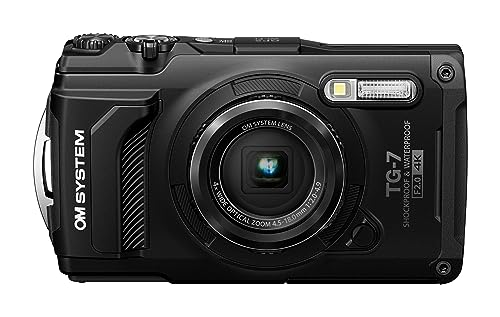
OM SYSTEM Tough TG-7 — Best crew camera
A crew camera must be a democracy-proof object: handed around at summits, dropped on granite eventually, rained on certainly, and expected to produce the photograph that goes in the crew book and on the wall at home. The TG-7 is the only pick that is simultaneously that tough and a real photographer’s camera — raw files, a bright lens, macro for trail wildflowers, and GPS to remember where the crew has been when memory blurs at altitude.
- Waterproof, freeze-proof, crushproof body
- Raw stills, bright f/2.0 lens
- Extreme macro for trail detail
- GPS logging built in
- 4K video for camp clips
Its battery discipline suits trek rhythm: stills-led shooting stretches days per charge, and spares are small enough to carry generously. Video is a supporting act, perfectly adequate for camp clips. Weight is the honest cost — this is the heaviest pick — and the crew-rota system exists precisely to share it. If one camera goes to Philmont to tell the crew’s story properly, generations of trek photography say it should be built like this one.
Strengths
- Survives the trek’s worst day
- Photographs worthy of the crew book
- Macro world along the trail
Trade-offs
- Heaviest pick in this guide
- Video trails the action cameras
- One per crew is the right number
Best for: Crew photographers and the official record.
Not suited for: Ultralight solo minimalists.
The TG-7’s GPS logging becomes more valuable with every year after the trek: photographs that know where they were taken reconstruct the itinerary for the crew book, settle friendly arguments about which camp had the hail, and let a scout returning as an advisor years later stand in the exact spot. Battery cost of the GPS is real but modest in stills-led use; crews should enable it for the summit days at least, when location memory blurs fastest.
The TG-7’s field-sensor suite — compass, altitude, temperature logged alongside photographs — turns the crew album into a trek record that future crews can actually use: which camp, how high, how cold the summit morning was. Advisors building a crew’s institutional memory across years of treks will find this data quietly invaluable, and it costs the photographer nothing but enabling it before the trek.
A TG-7 summit ritual worth adopting: the camera photographs the crew, then the view in the four directions, then one detail — the sign, the cairn, a boot on the highest rock. Twelve summits later, the crew book assembles itself from a pattern the photographer barely noticed keeping. Rituals are how tired people produce consistent work, and altitude is no place to improvise a shot list.

GoPro HERO12 Black — Best for filming the trek
The trek in motion — boots on the Baldy trail, the crew whooping at a summit, burros being burros — is footage families treasure for decades, and the HERO12 films it with stabilisation that turns walking into glide. Its endurance improvements over earlier GoPros suit trek patterns well: short clips across long days, with battery behaviour that respects the camera-off discipline this guide preaches.
- 5.3K video with stabilisation
- Waterproof without housing
- Improved battery endurance
- Pack-strap and pole mounts
- Strong stills for a action camera
Waterproofing is native, mounts clip it to a pack strap for the day’s walking point of view, and its stills serve perfectly when the TG-7 is with another patrol member. It asks for spare batteries on a long itinerary and rewards the arithmetic with a complete film of the trek. For the advisor or scout whose mission is the movie, this is the dependable camera to carry up the mountain.
Strengths
- Trail footage of real beauty
- Trek-pattern battery manners
- Mounts to the pack and forgets
Trade-offs
- Spares needed beyond a week
- Low light is its soft spot
- Menu depth needs a shakedown learn
Best for: Advisors and scouts filming the journey.
Not suited for: Stills-first crew photographers.
Its macro mode earns a second mention for the trail’s small theatre: wildflowers after rain, a horned lizard’s portrait, frost on a tent zip at dawn. Philmont albums are built from these details as much as from summits, and no other pick here focuses close enough to gather them. The crew photographer who learns the TG-7’s macro before the trek returns with a second, secret album inside the first.
The HERO12’s time-lapse modes serve one specific Philmont glory: the storm build over the Tooth, clouds assembling over an hour while the crew eats dinner. Set it on a rock, start the lapse, and eat — the camera does the patience. Crews should designate one time-lapse per trek segment rather than attempting many; the battery budget and the album both prefer a few finished lapses to a card of abandoned ones.
The HERO12’s Protune-style control tempts the keen scout, and the trek’s advice is restraint: set it once at base camp, then leave the menus to the mountain. Every minute of settings at altitude is a minute of summit spent indoors, mentally. The camera’s defaults are wiser than a tired operator; the professional move is knowing which decisions to have already made.

GoPro Hero — Best simple scout camera
Simplicity is a safety feature at altitude. The compact Hero wakes with one button, records stabilised 4K, survives drops and downpours, and asks nothing of a tired scout beyond pressing the big control. Its size disappears into a hip-belt pocket, which means it is present at the moments the big camera — three packs back in the line — misses entirely. Presence is the first virtue of trail photography.
- Compact waterproof body
- 4K video with stabilisation
- One-button recording
- Built-in battery
- GoPro mount compatibility
The built-in battery demands the power-bank or discipline strategy from this guide’s power section, and its sensor is a class below the flagship’s in dim forest light. Within a scout’s honest use — daylight trails, camps, summits, streams — it delivers a complete personal record of the trek at a weight nobody resents. Crews often find the youngest scout with the smallest camera returns with the most beloved footage.
Strengths
- Operable by the exhausted
- Present in a hip pocket always
- Tough beyond its size
Trade-offs
- Built-in battery needs planning
- Dim-light footage softer
- Fewer creative controls
Best for: Individual scouts wanting their own record.
Not suited for: The crew’s official archive.
Durability has a psychological dividend worth naming: the crew stops protecting the camera and starts using it. It rides in the pack lid, comes out in the rain, gets handed to the youngest scout for their viewpoint. Cameras that are used constantly outperform cameras that are preserved carefully, and the TG-7 is engineered — and priced — to be used constantly.
The little Hero’s summit etiquette is perfect in a way worth naming: it is so small and quick that the summit photograph takes twenty seconds, leaving the summit itself to the crew. Big-camera rituals at twelve thousand feet — lens changes, settings, retakes — tax tired, emotional groups; this camera’s entire design is a refusal to tax anyone. Some equipment is polite. This is the polite camera of the guide.
A little Hero logistics note: its built-in battery makes the evening charging rota — camera, then phones, from the one power bank — a piece of crew administration to agree on day one. Crews that schedule power like they schedule cooking have no power arguments. Crews that improvise have both. The camera is blameless in either story, which is exactly why the rota matters.

DJI Osmo Action 4 — Best low-light trail footage
Philmont days begin before light and walk through deep forest shade, and the Action 4’s large sensor was made for exactly those hours. Its footage holds colour and detail at dawn starts and under the canopy where smaller sensors smear, and its colour science flatters the high-desert palette — the red rock, the huge sky — without exaggeration. Crews filming the journey home will notice the difference in every early clip.
- 1/1.3-inch sensor
- 4K high-frame-rate video
- Waterproof body
- Magnetic quick-release mounts
- Strong colour science
Magnetic quick-release mounts make pack-strap to handheld swaps a second’s work, and waterproofing is native for the afternoon storms. Endurance is strong though the newest DJI stretches further. As a previous-generation flagship it also arrives at a friendlier tier, leaving crew budget for the spare batteries this guide insists upon. For the filming-focused trekker, it is the connoisseur’s Philmont camera.
Strengths
- Dawn and forest footage leads here
- Fast mount swaps on the move
- Friendlier tier than the newest model
Trade-offs
- Endurance behind Action 5 Pro
- Spares still required for twelve days
- Ecosystem younger than GoPro’s
Best for: Filming-focused advisors and older scouts.
Not suited for: Pure stills photographers.
The HERO12’s endurance story needs its honest footnote: its efficiency gains shine in the trek pattern of short clips and long rests, and shrink in continuous filming, where physics reasserts itself. Advisors planning a full-day film of a summit push should budget batteries by the continuous figure, not the flattering one. Within the clip discipline this guide recommends, its legs are genuinely the best in the GoPro line for trek purposes.
The Action 4’s colour at altitude deserves a note: high-desert light is ultraviolet-rich and brutal, washing lesser sensors toward blue-grey, and its processing holds the red rock and green forest apart with a fidelity that makes New Mexico look like itself in the family screening. Place recognition is a real feature of travel footage, and this camera’s palette is a place’s portraitist.
The Action 4’s front screen serves the crew’s loneliest photographer: the one who walks ahead or behind and appears in nobody’s frames. Self-framed shots at viewpoints put the photographer back into their own trek — a small justice the album notices. Crews should still rotate the camera, but the solo hiker’s record no longer needs to be a landscape-only affair.

AKASO EK7000 — Best budget scout camera
There is a particular pride in a camera bought with a scout’s own earnings, and the EK7000’s tier makes that pride possible. It records 4K, stabilises adequately, swims in its case at the creek, and survives the drops of a first backcountry trip without a financial tragedy attached. For many young trekkers it is the perfect first adventure camera: capable enough to keep, cheap enough to use fearlessly.
- 4K video with stabilisation
- Waterproof case included
- Remote control included
- Wide-angle lens
- Very accessible tier
Its limits show at dusk and in deep shade, where footage softens behind the leaders here, and battery planning follows the same trek discipline. In New Mexico’s abundant daylight — the trek’s dominant condition — the gap narrows to near invisibility in the family screening. A scout who learns composition and restraint on an EK7000 at Philmont has learned photography; the upgrade, when it comes, will be earned in every sense.
Strengths
- A scout’s own-earned camera
- Fearless in water and drops
- Daylight footage pleases families
Trade-offs
- Dusk and shade soften it
- Case needed for waterproofing
- Battery discipline essential
Best for: Young scouts buying their first trail camera.
Not suited for: The crew’s primary archive.
Its low-light softness at dawn camps is the trade to plan around: film the dawn with the TG-7’s stills or the DJI’s sensor, and let the HERO12 own the bright hours where it excels. Crews carrying two cameras — a common and sensible pattern — often pair exactly this way, and the division of labour by light becomes second nature by day three.
The EK7000’s wrist strap and case make it the creek camera: the one that goes into the water at the fish camp, films the gold-panning, gets handed to the scout who has never held a camera at a waterfall. Its footage from inside activities — rather than of them — gives the crew album a texture the better cameras, kept prudently dry-handed, sometimes miss. Cheap cameras go where the story is wettest.
EK7000 owners on the trek should exploit its replaceable batteries’ cheapness: several spares, rotated and marked with tape, cost less than one premium battery and weigh the power budget down not at all. In expedition economics, the budget camera’s accessories being budget too is a compounding advantage — the whole system stays in the price class where loss is a story, not a tragedy.

Insta360 GO 3S — Best ultralight personal record
Ultralight philosophy meets its camera. The GO 3S weighs almost nothing, clips to a pack strap or cap, and films the trail from the trekker’s own viewpoint in 4K — hands free for poles, maps and the occasional scramble. For the scout or advisor counting every gram and still wanting a personal film of the journey, nothing else in this guide is even a candidate.
- Thumb-sized 4K camera
- Magnetic and clip mounting
- Action Pod for charging and control
- Waterproof camera body
- Hands-free POV filming
Its sessions are short and its pod must recharge it nightly from a power bank, so it suits deliberate clip-making — the approach, the summit, the camp evening — rather than all-day capture. Planned that way, it returns footage of an intimacy no held camera achieves: the trek as it looked from inside your own chest strap. Minimalists will call that the whole point, and they will be right.
Strengths
- Lightest possible trek record
- Your own viewpoint, hands free
- Disappears on a pack strap
Trade-offs
- Short sessions; pod charging nightly
- Power bank is mandatory kit
- Not a crew-archive camera
Best for: Ultralight trekkers wanting a personal film.
Not suited for: Crew photographers or stills missions.
Accessory discipline for the trek: one mount, worn on the pack strap, and the camera itself. The GoPro ecosystem tempts a pouch of attachments that a backpacking trip will punish gram by gram. The strap mount plus hands covers ninety percent of trek filming; the remaining ten percent was probably a rest stop anyway.
The GO 3S on a crew leader produces an unexpected archival gift: the trek from the front of the line — the trail choosing, the pace setting, the looking back at the crew strung out along the switchbacks. That viewpoint exists in no other crew member’s album, and advisors who wear one return with the trek’s only establishing shots of the crew as a body in the landscape. Small camera, unique evidence.
The GO 3S at Philmont has one perfect job beyond the trail: the camp evening, clipped to a lantern pole or a branch, filming the crew’s circle — songs, stories, the advisor’s talk — from inside the gathering it belongs to. No operator, no intrusion, the firelit archive every crew wishes it had. Battery it fresh at dinner and it will not miss the good part.
How should a crew organise photography for twelve days?
One good camera, deliberately chosen, beats five phones and a flagship nobody wants to carry. Appoint the photographer role — many crews rotate it daily, which spreads both the weight and the storytelling — and give that person the camera, the spare batteries and the summit priority. A crew camera creates a shared album, which suits Philmont’s communal spirit far better than twelve private ones.
Phones deserve an honest paragraph: crews use them, airplane-moded, as cameras, and they work until they do not — cracked, drowned or flat by day eight. A dedicated tough camera as the crew’s primary record removes the single point of failure and keeps phones as the backup they are suited to be. Leaders modelling this discipline also model the trek’s deeper lesson about depending on simple, repairable things.
Daily rhythm protects the record. Photograph the dawn, the trail’s characters, camp life and the summit; then put the camera away and be on the trek. Crews that film everything return with exhausted batteries and thin memories of their own. The camera serves the experience at Philmont, never the reverse — a sentence worth saying aloud at the first camp.
What power strategy survives a full trek?
Arithmetic first: count your shooting days, estimate a battery’s honest trek days from the verdicts here — not the box — and carry spares to cover the trek with one battery of margin. Spare batteries for these cameras weigh little; regret weighs more. Power banks make sense for the wearable and compact picks with built-in batteries, sized to the days without resupply, and kept dry with religious consistency.
Discipline multiplies hardware. Short clips, screen brightness down, wireless off, camera fully off between moments, and no reviewing marathons at night — these habits double a battery’s trek life. Designate the evening’s two-minute review as a crew ritual rather than an all-night scroll, and the power budget holds to the final morning at base camp.
Cold at altitude is the silent drain: summit mornings and high camps sap batteries that performed at lower elevations. Keep the camera and spares in a sleeping bag’s foot on cold nights — an old trail trick that has saved more summit photographs than any specification. Warm the morning battery in a pocket while breakfast cooks, and the Tooth of Time gets its portrait.
Which camera suits which Philmont participant?
The crew photographer’s pick is the TG-7: a real camera with raw files for the crew book, toughness for every weather the Sangre de Cristos invents, and a macro mode for the wildflowers and mini-bears’ world along the trail. It is the only pick a crew should consider if stills quality is the mission, and its weight is justified precisely once per crew.
Individual scouts and lightweight devotees belong with the small action cameras: the GoPro Hero for simplicity, the AKASO for a price a scout can earn, the Insta360 GO 3S for the runner who wants the trail filmed from their own chest. These record a personal trek honestly without pretending to be the crew archive, and their loss or failure — unlikely, given their toughness — never orphans the crew’s record.
Advisors filming for families back home should consider the DJI Action 4 or the HERO12 for their stabilised, handsome footage of the crew in motion — the river crossing, the summit approach, the burro antics. Parents treasure those clips, and the cameras’ endurance suits an adult’s more deliberate shooting pattern. Match the camera to the storyteller, and the trek gets told completely.
What photographs should a Philmont crew make sure to take?
The canonical set, learned across generations of crews: the whole crew at base camp on day one, clean and hopeful; the same crew at the same sign on the final day, transformed. Between those bookends: each summit with the crew sign or banner, one dawn, one storm, one camp evening of unposed life, the crew’s cooks and characters in their element, and the small details — the trail sign, the boot by the tent, the map spread on a rock — that reconstruct the trek’s texture years later.
Portraits deserve deliberate care. Photograph each crew member properly once, in good light, somewhere unmistakably Philmont — future reunions will reach for those frames first. The TG-7’s flash and the action cameras’ wide view both serve; what matters is the intention. A crew that schedules its portraits gets them; a crew that assumes they will happen gets candids of everyone and a portrait of no one.
Finally, photograph the photographers. Rotating the camera — this guide’s standing advice — exists partly so the record includes every hand that held it. The crew album with one member missing from every frame is a quiet failure that no specification can fix and one rota absolutely can.
How do crews keep cameras safe through Philmont weather?
Water discipline is mostly door discipline: never open a battery or port door with wet hands, dry the camera’s seals with a bandana before any opening, and keep the camera inside a zip bag during the worst hail while the storm passes — the picks here survive weather, but grit in a seal is forever. A bandana, incidentally, is the Philmont camera kit: lens cloth, drying towel, shade and padding in one square of cloth.
Drops are prevented by systems, not care: a wrist strap used religiously, a designated pocket that the camera always returns to, and a handover rule — hand to hand, never tossed, never set on a rock ‘for a second’. Rocks at Philmont have eaten more cameras than rivers have. The rule sounds like scout-leader fussiness because it is, and it works like it too.
Cold and heat complete the rota: batteries sleeping in the bag on freezing nights, cameras shaded at blazing rest stops, and silica gel in the storage bag at humid camps if the crew carries it. None of this weighs anything worth mentioning. All of it is the difference between a camera that finishes the trek and a story about a camera that did not.
A short note on the photograph nobody takes
Every crew returns with one absence in the album: the moment too good to interrupt — the laughter at the exact wrong second, the silence on the summit before anyone spoke, the advisor’s face when the crew sang. Someone always says, at the reunion, ‘I wish we had a photograph of that’, and someone wiser answers that the wishing is the photograph’s price and the moment’s protection in a single sentence. A crew camera culture is healthy exactly when it can recognise that moment and let it pass unrecorded, on purpose, together.
That is not an argument against the cameras in this guide; it is their completion. Equipment good enough to be trusted — tough, ready, simple — earns the right to be put down, because nobody fears the record is fragile. Carry the camera that lets the crew choose its moments freely, including the moment of choosing none. Philmont teaches judgement about everything else a crew carries. The camera, carried well, teaches it too.
One last consideration for the crew
Pack the camera the crew is excited about. Enthusiasm is a logistical fact at Philmont: the camera a crew wants to carry gets carried, charged by rota and produced at the moments; the camera assigned by an adult’s spreadsheet gets forgotten in a pack by day three with a thoroughness that looks deliberate. Let the crew handle the shortlist at a shakedown, watch which one they reach for, and ratify their choice. Morale is equipment too, and it weighs nothing.
Agree the album’s destination before the trek — the crew book, the court of honour slideshow, the shared drive — because a named destination disciplines the shooting better than any settings lecture. Photographers shoot for the audience they can picture. Give twelve tired scouts a picture of next winter’s reunion, laughing at this summer’s storm, and the storm will be photographed properly when it comes.
And let one evening go unphotographed entirely. Crews that choose a camera-free night — usually late in the trek, when the record is already rich — report it among their strongest memories, precisely because it was kept only in memory. The camera serves the trek; the trek does not serve the camera. A crew that can put its witness down for an evening understands the whole philosophy of Philmont photography, and will use the camera better on every other day for knowing it.
Trek diaries: twelve days in the Sangre de Cristos
Day two is when camera plans meet the trail’s arithmetic. The crew that packed a heavy system in this guide’s research — against advice, in a previous season — felt it by the second climb and quietly redistributed the weight among four packs, an act of solidarity that taught the real lesson: at Philmont, every gram is a crew decision, including the camera’s. The picks in this guide are sized so that the decision is easy, and the diary of every successful crew since reads the same way: the camera was light, so the camera was there.
Day five brought the storm the TG-7 was bought for — hail on the ridge, the crew in rain gear, the light afterwards doing the thing that makes photographers forgive weather everything. The crew camera came out in the hail itself, because it could, and the storm sequence anchors the crew book’s middle. The phones stayed in their bags, dry and sensible and absent. Equipment that is present for the weather writes the trek’s drama; equipment that shelters writes its intermissions.
The summit day — Baldy, in this diary — is where the rota paid its dividend: the camera had been carried in turns, so at the top it belonged to everyone, and the photographs show it. Each scout’s turn produced a different summit: the sign, the view, the crew’s faces, the smallest detail of a boot on the highest rock. A single photographer’s summit would have been one of those. The crew’s summit is all of them, which is why the rota is this guide’s most repeated advice and its most Philmont one.
The last morning writes itself in every crew’s diary: base camp, the same sign as day one, the same crew rearranged by twelve days into different people. The camera that made both photographs has done the trek’s whole photographic work — bookends and everything between — and its final specification is the one no datasheet lists: it was there, working, at both ends of the transformation. Choose the camera your crew will carry to both ends. That is the entire review, and the diaries all agree.
A crew photographer’s day-by-day rhythm
Dawn: the camera, warmed in the sleeping bag, photographs the camp waking and the light arriving — three frames, no more, then breakfast. Morning trail: one viewpoint, one crew-in-landscape, then the camera rides until lunch. The rhythm is deliberately sparse, because a trek photographed constantly is a trek experienced partially, and Philmont is the experience; the camera is its witness, not its replacement.
Afternoon and camp: the activities, the weather, the small theatre of camp life — this is the camera’s busiest hour and its happiest. Dinner brings the two-minute review, the battery decision, the one photograph of the evening programme. Then the camera sleeps where the photographer sleeps, warm and accounted for, and the day’s record is complete without having cost the day anything.
Summit days break the rhythm gloriously and on purpose: the camera is out, the rota spins, the canonical set gets made, the bursts fly. A rhythm exists so that it can be broken by the days that matter — that is what distinguishes a system from a habit of scarcity. Crews that shoot sparsely all trek can afford to shoot richly at Baldy, and the album’s shape — quiet days, blazing summits — will mirror the trek’s own truth.
How should crews handle photography at Philmont’s staffed camps and activities?
Program areas — climbing, shooting sports, horse rides, the famous burro packing — are filming opportunities with their own courtesies: ask the staff, keep cameras clear of the activity’s safety lines, and never let a photograph delay a crew’s rotation. The action cameras shine here because they mount and forget; the crew participates fully while the record accumulates. A camera that demands attention during a program is a camera left at the next camp.
Evening programs and campfires are the trek’s emotional archive and its technical hardest light: faces by firelight, songs, the advisor’s story. The TG-7’s flash used sparingly, or its low-light stills, and the larger-sensor action cameras serve best. Film less than instinct says — firelight footage is potent in thirty-second doses — and let the crew’s memory keep the rest, as it has for generations of Philmont evenings.
Trading and photographing with other crews is part of the ranch’s social fabric; a crew camera becomes a diplomatic instrument, taking the other crew’s summit photograph in exchange for yours. Groups that build this reciprocity into their camera culture return with better photographs and more friends — the two currencies Philmont has always minted together.
What does a crew do with twelve days of photographs afterwards?
Consolidate at base camp before dispersal: every card and camera copied to one drive, one crew member accountable, the album’s skeleton assembled while names and places are still fresh. Crews that postpone consolidation to ‘when we’re home’ lose a third of their context within a month — the unnamed camp, the forgotten side hike — and context is what turns photographs into a record.
Build the crew book or film within the season, while the trek is still the crew’s shared present tense. The TG-7’s raw files and the action cameras’ footage deserve one editor with a deadline — a reunion date works — rather than a committee with intentions. Every Philmont advisor knows crews whose trek film premiered at the court of honour and crews whose footage is still, years later, going to be edited soon.
Share with the ranch’s spirit: photographs given to every crew member’s family, the best offered to the crew’s own archive and reunion circuit. A Philmont trek is a collective achievement and its record is collective property. The camera was carried by turns; the album belongs to everyone it carried, which is the final and most Philmont sentence in this entire guide.
Comparison: all six picks at a glance
| Camera | Badge | Best for |
|---|---|---|
| OM SYSTEM Tough TG-7 | Best crew camera | Crew photographers and the official record. |
| GoPro HERO12 Black | Best for filming the trek | Advisors and scouts filming the journey. |
| GoPro Hero | Best simple scout camera | Individual scouts wanting their own record. |
| DJI Osmo Action 4 | Best low-light trail footage | Filming-focused advisors and older scouts. |
| AKASO EK7000 | Best budget scout camera | Young scouts buying their first trail camera. |
| Insta360 GO 3S | Best ultralight personal record | Ultralight trekkers wanting a personal film. |
What are the most common mistakes to avoid?
Packing a camera system for a backpacking trek
Interchangeable lenses, a charger with cables, a padded case the size of a loaf — backcountry weight compounds daily and morale pays the interest. Every pick here is a single self-contained unit for a reason. If a camera needs a supporting cast, it belongs on a different holiday. Philmont’s own packing lists teach this economy; cameras are not exempt.
Counting on charging that does not exist
Backcountry camps offer no outlets, and itineraries with a staffed-camp exception should never be the plan. Build the power budget for twelve autonomous days: spares, discipline and margin. Crews that assume a charge discover the truth at the exact midpoint of the trek, with the best summits still ahead.
Skipping the shakedown test
A camera first unboxed at base camp will be learned at altitude, in weather, with tired hands — the worst classroom. Carry the chosen camera on every shakedown hike, practise the summit routine with gloves, and confirm the battery arithmetic against real days. Philmont rewards preparation in cameras exactly as in boots.
Final Recommendation
Crews should carry the OM SYSTEM TG-7 as the official record: it will survive the trek’s weather, water and drops while producing photographs worthy of the crew book. Individual scouts will be happiest with the compact GoPro Hero or the budget AKASO EK7000, and advisors filming the journey for families should take the DJI Osmo Action 4 or GoPro HERO12 for their stabilised trail footage. The Insta360 GO 3S serves the minimalist who wants their own trek filmed hands-free. Pack spares, shoot deliberately, keep batteries warm — and the summit photograph will exist, which is the whole assignment.
One final crew ritual worth adopting from veteran advisors: the base-camp photograph review, the night before departure, projector or tablet and the whole crew together. Photographs that were merely taken on the trail become the trek’s official memory in that room — laughed over, argued over, already nostalgic. It is also the moment the crew thanks its photographers, which is how next year’s volunteer gets recruited. The cameras above make the pictures; the ritual makes them the crew’s, and that is what Philmont photography is finally for.
Frequently Asked Questions
Can scouts just use phones at Philmont?
Phones work as backup cameras in airplane mode, and many crews do use them, but battery, fragility and water make them unreliable as the primary record across twelve days. A single tough crew camera guarantees the album survives the trek. It also keeps phones packed away, which most crews find improves the trek itself.
How many batteries should the crew camera carry?
Work from honest trek days per battery — roughly three to four days of disciplined stills and short clips for the TG-7 class — and carry enough spares for the full itinerary plus one in reserve. Spares are light; a dead camera at Baldy is forever. Keep them warm at night and rotate rather than hoarding one ‘good’ battery.
Is a waterproof camera necessary for Philmont?
Effectively, yes. Afternoon storms in the Sangre de Cristos are a schedule, not a risk, and river crossings and hail join them. Every pick here is waterproof or armoured against the weather without cases, because a camera that must hide from rain misses the trek’s most dramatic light — the storm clearing over the Tooth at dinner time.
Which camera is lightest for an ultralight scout?
The Insta360 GO 3S by a wide margin — it is thumb-sized and clips to a strap — with the compact GoPro Hero next. Both trade endurance and ultimate quality for presence. A scout who will actually carry the tiny camera photographs more of the trek than one who leaves a heavier camera in the bear bag by day three.
Can the crew share one camera fairly?
Yes, with a rota agreed before the trek: the photographer role rotates daily or by segment, the camera lives in a known pocket, and the album is shared to everyone at base camp. Crews report the shared camera becomes a bonding institution — the summit photograph taken by whoever holds it is everyone’s photograph in a way private phones never achieve.
What about filming the trek for families?
The DJI Osmo Action 4 and GoPro HERO12 stabilise walking footage beautifully and endure trek days well. Film short, deliberate clips — the approach, the crossing, the summit minute — rather than continuous hours. Families want the story’s peaks, and the battery budget wants exactly the same thing.
Should our crew bring a tripod?
A mini tripod or a gorilla-style flexible mount earns its small weight for exactly three shots: the dawn landscape, the whole-crew summit photograph with everyone in it, and the night sky over camp. If your crew will make those three, carry it and share the carrying. Otherwise, a flat rock and the camera’s timer have served Philmont crews for decades and will serve yours.
What about photographing Philmont’s night skies?
The ranch’s dark skies are a genuine wonder and the toughest test here: the TG-7’s stills and the larger-sensor action cameras make the best attempts, with the camera rested absolutely still on a rock or mini tripod for long exposures. Set expectations kindly — a bright Milky Way smudge over the Tooth delights everyone — and enjoy the attempt as a camp activity in itself, astronomers and photographers together.
What should the crew do on the first evening at base camp?
Charge everything, walk the camera through the crew’s hands once so every scout knows the one button that matters, agree the rota and the carrying pocket, and take the day-one crew photograph while everyone is still clean enough to prove the transformation later. Then put the camera in its appointed place and go and be a crew. The trek’s photography is set in that half hour more than in any purchase this guide describes.
How do we choose the crew photographer?
Choose enthusiasm over equipment and rotate the role regardless: the scout who asks for the camera photographs more and better than the talented one who is assigned it. A rota by day or by segment spreads the weight, the learning and the authorship. By day three, most crews discover they have several photographers; the rota is how they find out.
Can our crew carry a drone at Philmont?
No — drones are not permitted in the Philmont backcountry, and the ranch’s wilderness ethos and regulations are clear on the point. The cameras in this guide are the aerial-free toolkit: poles, summits and the GO 3S’s perspectives provide the elevated views. Crews should leave drones at home entirely rather than discover the rule at base camp check-in.
What if the crew camera breaks mid-trek?
This is the argument for the phone backup and for choosing toughness first: a broken TG-7-class camera is a rare event, but the contingency plan costs nothing — phones in airplane mode as the reserve record, extra care with the surviving devices, and photographs consolidated nightly onto two devices so no single failure orphans the record. Resilience at Philmont is a system, not a product.
Related Guides
Crews preparing for the ranch should pair this guide with our backpacking photography packing list and our cold-weather camera care manual for high camps. Advisors building the crew book will want our guide to editing a trek photo book waiting at home.


