reviewstook.com is reader-supported. When you buy through links on our site, we may earn an affiliate commission.
Where to buy
Amazon carries every linked pick among these best cameras for irl twitch stream work, and an IRL kit should be priced as a system: camera, the mount or grip that carries it, batteries or a power bank for a full session, and the phone or bonding setup that actually sends the stream. The camera is the visible third of an IRL rig; budget for the invisible two-thirds or the best sensor in the world will broadcast a frozen frame.
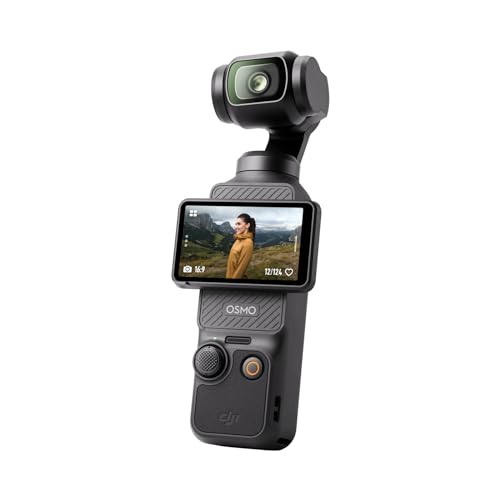
- DJI Osmo Pocket 3: check price on Amazon
- DJI Osmo Action 5 Pro: check price on Amazon
- GoPro HERO13 Black: check price on Amazon
- Insta360 X4: check price on Amazon
- Insta360 Ace Pro 2: check price on Amazon
- Insta360 GO 3S: check price on Amazon
The best cameras for irl twitch stream work are chosen under conditions no studio camera survives: walking for hours through changing light, from noon glare to bar neon, one-handed, while reading chat, in weather, with the stream’s survival depending on batteries, signal and stabilisation all holding at once. An IRL camera is not really a camera. It is the front end of a mobile broadcast that must never embarrass its host by dying, overheating or turning a city’s evening into smeared darkness while thousands watch.
Three qualities decide the genre. Stabilisation is the first, because IRL footage is walking footage, and the difference between a gimbal’s glide and a handheld judder is the difference between a stream viewers settle into and one they leave with a headache. Light range is the second: an IRL day crosses more lighting conditions before lunch than a studio sees in a year, and the sensor must hold faces in shade, neon and sunset without the streamer touching a setting. The third is endurance, battery, heat and ruggedness across a session measured in hours and kilometres rather than takes.
The six picks divide the genre by style: the gimbal for the polished city walk, the flagship action cameras for durability and mounts, the 360 for the stream that shows everything, the wearable for hands-free authenticity, and the flip-screen storyteller for the streamer who narrates face-to-camera. All of them feed a phone or an encoder; the guide is honest throughout that the camera is one link in a chain that includes your data connection, and it treats that chain in the setup sections.
Key Takeaways
- Stabilisation is the IRL genre’s first specification: viewers forgive resolution, they do not forgive judder.
- An IRL rig is a chain, camera, mount, power, phone and data, and the stream is exactly as strong as its weakest link.
- Large sensors earn their price after sunset, when IRL streams go where the people are and phone footage falls apart.
- Battery strategy is a format decision: swappable batteries or a power-bank tether must be settled before the route is.
- Faces sell IRL: a flip screen or face tracking that keeps the host framed while walking and reading chat is a production crew in miniature.
In this guide
Quick Picks
| Pick | Badge | Why it earns its place |
|---|---|---|
| DJI Osmo Pocket 3 | Best overall IRL camera | A one-inch sensor on a mechanical gimbal: the smoothest, kindest walking footage any pocketable rig produces. |
| DJI Osmo Action 5 Pro | Best for long, rough days | Waterproof, long-running and strong in low light, with a front screen for host check-ins anywhere. |
| GoPro HERO13 Black | Best mounting ecosystem for IRL | Every mount a streamer can imagine, serious slow motion for highlights, and live-streaming features in its app tradition. |
| Insta360 X4 | Best for showing everything | The stream and the VOD can be reframed from a 360 capture, so the moment behind you is never lost. |
| Insta360 Ace Pro 2 | Best face-to-camera action rig | The big flip screen and large sensor make it the action camera that narrates like a vlogging camera. |
| Insta360 GO 3S | Best hands-free wearable | A thumb-sized camera on a pendant or cap that streams the day from inside the host’s own point of view. |
How did we choose cameras for streaming in the real world?
We weighted stabilisation and light range as the twin gates. Every pick either carries a mechanical gimbal or class-leading electronic stabilisation, and every pick’s sensor was judged on the IRL stress test: the walk from daylight into a lit interior and out into dusk without a settings change. Cameras that demand attention mid-stream were marked down regardless of their image, because an IRL host’s attention is already fully subscribed by the street, the chat and the story.
Second came the session realities: battery behaviour over hours, heat in a summer crowd, waterproofing for the rain shower that was not in the forecast, and mounting, on a grip, a backpack strap, a chest mount or a cap, because IRL framing is done by the body more than by the hands. Third came the streaming chain itself: clean output to a phone or capture setup, sensible file and streaming modes, and the maker’s phone app quality, since the app is where an IRL stream is monitored, titled and rescued.
Price was read as rig cost. A camera that needs a gimbal, a cage and a media mod to stream is a different purchase from its sticker, and the verdicts keep that arithmetic visible, favouring the picks whose box contains most of their rig.
Which are the best cameras for irl twitch stream work to carry all day?
Six rigs for six streaming styles: the gimbal polish, two flagship workhorses with different temperaments, the 360 that misses nothing, the wearable that disappears, and the flip-screen narrator.

DJI Osmo Pocket 3 — Best overall IRL camera
The Pocket 3 is the IRL streamer’s default for a reason that takes one evening walk to understand: its mechanical gimbal produces footage that feels like a camera crew is following you, while its one-inch sensor holds the city’s night, the restaurant interior and the sunset street in one continuous, well-exposed walk. Face tracking keeps the host framed during the talk-to-chat segments, the rotating screen flips between the street and the selfie view, and the whole rig is small enough that the streamer forgets to perform for it, which is when IRL becomes real. Paired with a phone for the stream itself, it is the quality ceiling of practical IRL.
- Form: gimbal camera, 1-inch sensor
- Stabilisation: mechanical 3-axis gimbal
- Tracking: face tracking for host framing
- Screen: rotating, selfie and street views
- Video: 4K with strong low-light performance
The Pocket 3 IRL habit is the two-part session: walk-and-talk segments where the gimbal and face tracking carry the production, and planted segments where the camera sits on its mini tripod at the café table or the market stall while the host eats, interviews or plays. Its battery rhythm shapes the route, top-ups during the planted segments from a power bank, so plan the day as movement and rest in alternation and the camera never dies mid-story. Protect the gimbal in a hard case between locations; it is the one mechanism on this page that asks for care, and the footage it returns is the rent that care pays.
Strengths
- Unmatched walking smoothness and night quality
- Face tracking frames the host hands-free
- Pocketable enough for genuine spontaneity
Trade-offs
- Gimbal needs protection in a bag
- Battery life plans around top-ups
- Not waterproof for downpours
Best for: City walks, travel IRL and hosts whose stream is a narrated day.
Not suited for: Water sports, rough weather and mount-it-and-forget-it action coverage.

DJI Osmo Action 5 Pro — Best for long, rough days
The Action 5 Pro is the IRL camera for the streamer whose days are physical: the hike that becomes a stream, the fishing charter, the festival in the rain. Its large sensor is the low-light leader among the action bodies here, its battery endurance is built for sessions rather than clips, it is waterproof as sold, and the front screen lets the host check framing and chat-facing pieces without a phone in hand. Magnetic quick-release mounts move it between chest, cap and grip as the day changes shape, and the stabilisation, while electronic, is good enough that only the gimbal above clearly out-smooths it.
- Form: action camera, waterproof as sold
- Sensor: large 1/1.3-inch class, low-light strong
- Screens: front and rear touchscreens
- Mounting: magnetic quick-release
- Power: long-life removable battery
Run the Action 5 Pro as the always-on witness: chest-mounted for the activity, grip-mounted for the talking, and tethered over water because magnetic mounts and boats have a history. Its IRL discipline is the battery swap as a stream ritual, done on camera during a natural pause, which long-session viewers read as professionalism rather than interruption. Because it shrugs off rain and spray, it owns the segments the Pocket 3 must sit out, and many serious IRL kits carry both: the gimbal for the city’s polish, this for the weather and the water, with the stream’s quality never dipping when the day turns.
Strengths
- Endurance and sealing for real days
- Front screen for host framing anywhere
- Low light leads the action cameras
Trade-offs
- Electronic stabilisation trails the gimbal
- Magnetic mounts demand a tether over water
- Streaming still runs through a phone or encoder
Best for: Outdoor, travel and event IRL where weather and hours are the test.
Not suited for: The smoothest possible city-walk aesthetic, where the gimbal wins.

GoPro HERO13 Black — Best mounting ecosystem for IRL
The HERO13 is the IRL camera for the inventive mounter. Its accessory ecosystem is the deepest in the field, backpack straps, chest harnesses, suction, clamp and helmet solutions all exist and interoperate, and its stabilisation and image quality are flagship grade. GoPro’s app and subscription tradition includes live-streaming pathways that suit the streamer who wants the fewest boxes between the camera and the audience, and its slow-motion modes turn the day’s action, the skate line, the wave, the market performer’s trick, into the highlight clips that feed the channel’s other platforms. It is waterproof as sold and built to be knocked.
- Form: flagship action camera, waterproof
- Video: 5.3K with high-frame-rate modes
- Stabilisation: advanced electronic smoothing
- Mounting: the largest ecosystem available
- Power: removable battery, accessory power options
The HERO13 IRL pattern is the multi-position day: one camera, four mounts, and a stream whose viewpoint keeps refreshing, chest for the ride, grip for the walk, planted for the meal, helmet for the descent. Viewers read that variety as production value, and it costs nothing but the habit of moving the camera at natural breaks. Watch its warmth on the longest high-resolution sessions and give it moving air where you can; like all flagships it rewards a host who thinks of it as a small computer working hard, because that is precisely what it is.
Strengths
- Mounts for every IRL geometry
- Highlight-grade slow motion
- Streaming-friendly app ecosystem
Trade-offs
- Runs warm on marathon top settings
- No front screen for host framing
- Ecosystem spending is seductive
Best for: Action-sport IRL, variety streamers and mount inventors.
Not suited for: Hosts who narrate face-to-camera all day.

Insta360 X4 — Best for showing everything
The X4 changes what an IRL stream can be. As a 360 camera it captures the whole scene, the host, the street, the crowd’s reaction and the thing happening behind that everyone in chat saw first, and while the live stream itself is usually a chosen view, the recorded 360 master lets the day’s content be reframed endlessly afterwards: the clip for Shorts from this angle, the highlight from that one, all from one walk. Its 8K capture keeps reframed views respectable, it is waterproof for the weather chapters, and the invisible selfie stick gives the floating third-person view that makes viewers ask how the shot was made.
- Form: 360 camera, waterproof
- Video: 8K 360 capture, reframing in app
- Mounting: selfie stick vanishes in shot
- Modes: 360 and single-lens action
- Workflow: live view plus reframed VOD content
The X4 streamer’s habit is planting the camera high on its stick at the stops that matter, the viewpoint, the street performance, the table with friends, and letting the scene be the content while chat reacts to a world rather than a face. Its files are the heaviest here and its workflow the most app-dependent, so the evening export ritual is part of the format: pull the day’s angles while the memory is fresh, or the archive becomes a warehouse of unexamined spheres. Streamers whose channels live on clips as much as on live hours will find that economy irresistible; pure live hosts should weigh the simpler rigs first.
Strengths
- Nothing in the scene is ever missed
- One walk yields a week of reframed clips
- Floating third-person view stops thumbs
Trade-offs
- Heaviest files and most app work
- Live view is a choice, not the whole sphere
- Battery and storage plan a long day tightly
Best for: Clip-driven channels, travel and group IRL.
Not suited for: Set-and-forget live hosts who never edit.

Insta360 Ace Pro 2 — Best face-to-camera action rig
The Ace Pro 2 is for the IRL host who talks. Its large flip-up screen gives true selfie framing at arm’s length or on a grip, so the host’s pieces to camera are composed rather than guessed, its large sensor holds the evening city where IRL prime time lives, and the body remains a waterproof action camera for the segments where the stream gets wet, fast or airborne. That combination, narrator’s screen plus adventurer’s body, is unique on this page, and it suits the dominant IRL format of the era: a personality walking, talking and occasionally doing something spectacular, in that order.
- Form: action camera with flip touchscreen
- Sensor: large 1/1.3-inch class
- Video: up to 8K, strong slow motion
- Build: waterproof as sold
- Mounting: quick-release magnetic system
Work it on a short grip as the stream’s anchor: flipped for the talking, folded and mounted for the action, and the transitions become part of the show’s rhythm. Its screen is also the chat-adjacent confidence monitor, the quick glance that confirms framing while the phone carries the comments themselves. Guard the hinge from grit, rinse after salt water as directed, and feed it batteries on the long days; a narrator’s camera that dies mid-sentence is a special kind of silence, and the streamers who thrive on this rig treat power as part of the script.
Strengths
- True selfie framing on an action body
- Night faces stay clean and coloured
- One camera for narration and action
Trade-offs
- Flip hinge and grit are enemies
- Larger than the simplest action cams
- Top modes shorten battery life
Best for: Personality-led IRL: walking, talking, doing.
Not suited for: Pure POV streams where the host rarely appears.

Insta360 GO 3S — Best hands-free wearable
The GO 3S is IRL at its most literal: the camera worn on the magnetic pendant or clipped to a cap sees what the host sees, hands free, while life happens at full participation. Cooking streams, craft streams, market haggling, dog walks, bike messengering: the genres where the host’s hands are the content belong to this camera. Its stabilisation smooths the walking bounce to watchability, the Action Pod restores a screen and controls when framing matters, and its sheer smallness changes the social physics of filming in public, because a camera the size of a thumb does not reorganise a room the way a rig does.
- Form: thumb-sized modular wearable camera
- Mounting: magnetic pendant, cap clip, stands
- Video: 4K with strong stabilisation
- Pod: screen, controls and charging in one dock
- Use: POV streaming and hands-free capture
The GO 3S discipline is the short-form day: it thinks in clips and segments rather than marathons, so build the stream around its rhythm, wearable POV for the activities, the pod or a second camera for the long talking stretches, and charging woven into the pauses. Its discretion carries an obligation this guide will state plainly: a camera this easy to forget obliges the host to remember it for other people’s sake, announcing the stream where courtesy or law expects it. Streamers who handle that well find the wearable opens IRL’s most intimate and watchable territory, the day seen from inside.
Strengths
- True hands-free point of view
- Socially invisible in public spaces
- Pod restores framing when needed
Trade-offs
- Battery rhythm suits segments, not marathons
- Small sensor trails the big picks at night
- Easy to forget it is running, mind others
Best for: Hands-busy IRL: cooking, craft, riding, working streams.
Not suited for: All-day single-camera marathon streams.
How do the six IRL cameras compare side by side?
| Pick | Form | Strongest suit | Watch out |
|---|---|---|---|
| DJI Osmo Pocket 3 | Gimbal camera | Polished walking streams | Case the gimbal between spots |
| DJI Osmo Action 5 Pro | Action camera | Endurance and weather | Tether it over water |
| GoPro HERO13 Black | Action camera | Mounted variety coverage | Give it air on long sessions |
| Insta360 X4 | 360 camera | Whole-scene capture and clips | Evening exports are mandatory |
| Insta360 Ace Pro 2 | Action camera | Narration-led IRL | Protect the flip screen |
| Insta360 GO 3S | Wearable camera | POV and hands-free segments | Build the day in segments |
Choose by the stream’s centre of gravity. If it is the walk and the talk, the Pocket 3 and the Ace Pro 2 are the finalists, polish against ruggedness. If it is the activity, the Action 5 Pro and the HERO13 split endurance from mounting invention. If it is the scene and the clips, the X4 stands alone, and if it is the host’s own hands and eyes, the GO 3S is the only honest answer. Serious IRL channels routinely run two of these as a pair, a narrator and a witness, and the table’s rows combine more happily than they compete.
Every row shares the same asterisk: the stream leaves the camera through a phone or an encoder over a data connection that no camera controls. Test the whole chain on your actual streets before blaming any link, because the dead zone behind the market has ended more IRL careers than every camera fault on this page combined.
How do you actually get the stream out: phones, apps and bonding in plain language?
The camera records the world; something else must broadcast it. The common student-and-starter chain is the camera feeding a phone, by the maker’s app or a capture arrangement, with the phone’s data connection carrying the stream to Twitch. The professional chain adds a dedicated encoder or a bonding service that combines several connections, phone data, a venue’s Wi-Fi, a second SIM, into one resilient pipe, because a single mobile connection in a crowd is a thread and IRL prime time is a tug of war. Both chains are legitimate; the sin is not knowing which one you are on when the festival starts.
Whatever the chain, rehearse its failure. Know what the stream does when the signal drops, whether it buffers, degrades or dies; know the restart sequence by muscle memory; and have the phone’s chat view on a second screen or a mod’s eyes where possible, because the host is the last person who should be troubleshooting in public. The cameras here were chosen partly for how gracefully they behave inside these chains, stable output, sane apps, honest battery reporting, and the rest of the reliability must be built by rehearsal.
How do you plan power and signal for a six-hour IRL day?
Power is a route plan, not an accessory. Count the day in camera-hours honestly, the camera’s real endurance at your settings, not the box’s optimism, and place the swaps or top-ups at the day’s natural rests: the café segment recharges the gimbal, the planted interview tops the action camera, the power bank rides in the bag that never leaves your back. Cold and heat both tax batteries, and a summer crowd is an oven with opinions, so shade the kit at rests and let hot cameras breathe before they are sealed into a bag.
Signal is scouted like a location, because it is one. Walk the route at the stream’s hour with a speed-test habit, note the dead streets and the generous ones, and shape the day’s story so the irreplaceable segments, the guest, the event, the sunset, fall on strong ground. Where the platform and your setup allow adaptive quality, let the stream degrade gracefully through a weak patch rather than die at full beauty; viewers forgive a soft minute and abandon a frozen one, a law of IRL as reliable as gravity.
How do you stay legal, safe and welcome while streaming in public?
Public space is not a waiver. Rules on filming vary by place and venue, private property can set its own terms the moment you cross its threshold, and some subjects, children, people in distress, anyone in a place with a reasonable expectation of privacy, demand restraint that no terms of service can grant or remove. The working IRL host learns each city’s rhythm of welcome, keeps the camera’s presence honest, and treats a request to stop as an instruction rather than a negotiation, because the channel’s reputation is a longer asset than any single segment.
Safety is the other half of the same discipline: a streamer reading chat is a pedestrian not watching traffic, and the genre’s accident statistics are written in exactly that gap. Build the route’s pauses for chat, keep crossings and platforms for eyes-up walking, and let a mod or a companion carry the situational awareness on the biggest days. The cameras here help where they can, wearables and chest mounts free the eyes as well as the hands, but the discipline itself is the host’s, and it is the least optional item in this entire guide.
How do you grow an IRL channel beyond the first hundred viewers?
Consistency of route and ritual beats novelty of location. The channels that grow give their audience appointments: the same market on Saturdays, the same evening walk, the regulars who become characters, the segments viewers can describe to a friend. The camera’s role in that growth is invisible reliability, the stream that starts on time, in focus, in good light, every time, because audiences forgive a quiet day and never forgive a broken promise. Build the rig and the rehearsal until starting the stream is a one-minute act, and spend the saved attention on the route, the guests and the stories, which are the actual product.
Clips are the channel’s recruiting arm, and the rig should be chosen with them in mind: the X4’s reframing, the flagships’ slow motion, the gimbal’s cinematic walk all exist in this list partly because an IRL channel is discovered in thirty-second pieces on other platforms. Give the clips a workflow, the evening export, the caption habit, the regular posting slot, or they will remain unwatched spheres and full cards. Growth in this genre is a logistics discipline wearing a personality’s clothes, and the hosts who accept that early are the ones still streaming when the novelty class of their year has gone home.
What does a professional IRL day bag actually contain?
Two of everything that can end the stream: batteries and a power bank, cables, a second way to mount the camera, and a cloth for the lens that the weather will find. Then the host’s layer: water, a layer of clothing for the evening turn, the small light for the restaurant segment, and the printed or memorised route with its signal notes and its welcome places, the cafés and shops where the stream is a guest rather than an ambush. The bag is packed the night before against a list, because the morning’s enthusiasm is a notoriously bad quartermaster.
Finally, the invisible item: the rehearsed failure drill. The host who has practised the dropped-signal restart, the dead-camera swap to the phone, the graceful early ending, owns a calm that viewers read as professionalism and that no camera can purchase. Pack that calm by rehearsing once a month on a quiet street, and the day bag, physical and mental, is complete. Everything in this guide, cameras included, is in service of that calm, because IRL is live, and live is a discipline before it is a genre.
How do you handle hecklers, stream-snipers and the street’s unpredictability?
Design the stream so reality cannot easily hijack it: a mod with real powers and your trust, a delay where the platform and format allow one for sensitive locations, location-sharing discipline that never broadcasts the evening’s address in advance, and a personal rule, rehearsed until it is reflex, for disengaging from provocation without feeding it. The camera’s contribution is discretion when needed: the wearable lowered, the gimbal turned to the street, the planted segment moved indoors, each a de-escalation the audience reads as professionalism rather than retreat.
Most street unpredictability, though, is the good kind, and the craft is distinguishing it in the moment: the musician who invites the camera, the market character the chat falls for, the sudden parade. The host’s art is hospitality at walking pace, consent asked with a gesture and honoured instantly, names learned and used, small payments and credits where the street’s performers earn them. Channels are remembered for how they treated the city when the city surprised them, and that reputation compounds in exactly the currency IRL runs on.
How do you review an IRL stream and actually improve?
Watch the recording at the points where the audience left. The analytics mark the exoduses, and the honest host studies them like match film: the dead ten minutes of walking between places, the segment where the audio failed quietly, the story told twice. Most IRL improvement is subtraction, tighter routes, planted segments closer together, the courage to end a dying segment early, and the review habit is what turns a month of streams into a curriculum instead of a pile of hours.
Review the chain as well as the content: where the signal dipped, where the battery forced a decision, where the framing lost the host’s face for a whole segment. Keep the log with the route notes and the kit list, and the next stream inherits the fixes automatically. This is the unglamorous machinery under every IRL channel that looks effortless, and it is entirely learnable, which is the good news this guide has been saving: the genre rewards the organised at exactly the rate it punishes the merely talented.
What does the first month of IRL streaming actually teach?
It teaches that the audience is smaller and kinder than feared, that the chain breaks in the one place not rehearsed, and that the host’s stamina, voice, feet, cheerfulness under drizzle, is the true production budget. The correct response to all three lessons is system, not discouragement: fix the chain’s weak link, shorten the route to the length the host can sparkle across, and schedule the month’s streams like training rather than like performances. The cameras here will not be the limiting factor in that month for any host who rehearsed once, which is the most useful sentence a beginner can be given.
It also teaches the genre’s secret economy: regulars are gathered in the quiet streams, not the spectacular ones. The Tuesday walk with eleven viewers who all stay is worth more, in every currency the platform recognises, than the festival day with its thousand drive-by witnesses, and the host who learns to serve the eleven, names remembered, stories continued, builds the only foundation IRL empires have ever stood on. Choose the camera that makes the Tuesday walk effortless, and the festivals will look after themselves.
How do you design segments that give an IRL stream its shape?
Build the day as a string of appointments with uncertainty between them: the market at opening, the guest at noon, the viewpoint at golden hour, with the walking between them as the connective tissue where chat breathes and the host’s personality does its quiet work. Each appointment is a promise the audience can anticipate and the host can prepare, a location scouted, a story ready, a signal check done, and the stream’s quality is largely the ratio of kept promises to wandering. The cameras divide the labour exactly as this guide’s verdicts suggest, the narrator’s rig for the appointments, the witness cameras for the tissue between.
Give each segment an exit before it needs one. The planted interview that ends on time, the activity concluded while it is still delightful, the market left while the chat is still hungry, teach the audience that this stream respects their attention, and they repay it with the only currency that compounds: returning tomorrow. IRL’s marathon reputation misleads beginners; the great hosts are editors in real time, cutting their own day with the same ruthlessness the VOD editors apply later, and the cutting is a kindness viewers feel as pace.
How do you look after your voice, feet and morale across a streaming week?
The host is the rig that cannot be swapped. Voice care is production care: hydration staged along the route, the loud venues rationed, the planted segments placed where the voice can drop to conversational level and recover. Feet are schedule care: the route’s distance budgeted like battery, the seated segments earned and taken without apology, because a host in pain broadcasts it in every sentence by the fifth hour. These are not wellness decorations on a technical guide; they are the technical guide, for a format whose entire apparatus is a person walking and talking.
Morale is community care, administered by the mod team and the regulars, and the host’s job is to build the room that administers it: regulars recognised, kindness enforced early and boringly, the bad day acknowledged in one sentence and then worked through rather than performed. Streaming weeks fail socially before they fail physically, and the channels that last are the ones whose hosts understood that the chat is not the audience of the day so much as its co-author, deserving the same maintenance as the camera, the batteries and the route.
How do you collaborate with other streamers and guests on IRL?
Brief the guest like a producer, not like a friend doing you a favour: where the camera will be, that the stream is live and cannot be un-said, what topics are off the table, and how either of you ends a segment without ceremony. Guests relax inside explicit frames, and the audience reads the relaxation as chemistry. The rig should serve the guest’s comfort first, the narrator camera at a conversational distance, the wearable forgotten, because a guest who forgets the stream gives the channel its best hour and its best clips.
Credit and reciprocity are the collaboration’s economics: the guest’s channel named, the clips shared, the favour returned on their ground another day. IRL’s map is a community before it is a content category, and the hosts who treat collaborations as extractions find the map quietly closing, while the generous ones discover that every city has a door with their name already on it. The camera records all of this, in the end, which is why the genre’s ethics and its growth strategy are the same document.
How do you stream markets, festivals and crowds without becoming a nuisance?
Move like a guest in someone else’s workplace: the market is a livelihood before it is a backdrop, so buy something, learn a name, ask the stallholder’s leave with the camera visible, and keep the thoroughfares flowing by planting yourself out of the current. Festival crowds grant a general licence that individuals inside them do not, and the host’s eye should keep finding the faces that are performing for the public and sparing the ones that are merely enduring it. That discrimination, visible on the stream, is what venues remember when the next streamer applies.
Sound is the crowd’s other commons: a host narrating at full volume through a quiet ceremony or a residential street at midnight is spending the whole genre’s welcome. Keep the commentary at conversation level, step aside for the pieces that need volume, and let the planted segments happen in the places designed for talk. The cameras here pick up a conversational voice perfectly well at arm’s length, which is fortunate, because the genre’s future access depends on hosts who understood that the microphone’s reach is a responsibility and not just a specification.
What metrics actually matter for an IRL channel’s health?
Returning viewers and minutes watched per regular matter; raw peaks mostly flatter. The IRL economy runs on habit, the same faces at the same hours, and the host who reads the analytics for retention rather than for spikes will shape routes, segments and schedules that compound. Watch also the quiet metric of clip performance per stream hour, because it measures how much of the day was genuinely eventful, and let it discipline the route planning more honestly than any comment section can.
Keep one metric of your own that the platform does not provide: the number of streams you finished proud of. It correlates, over a season, with every number the platform does provide, and it is the only one that notices when the chain, the route and the hosting all worked at once. The cameras and the systems in this guide exist to make that number easy to raise; the raising itself is the host’s craft, practised one kept promise at a time.
How do you end a stream well?
End at a place and on a note, not at a battery’s death or a signal’s collapse: the viewpoint reached, the guest thanked, the regulars named, tomorrow’s promise made in one sentence. Endings are the part of the stream the audience carries into the rest of their day, and the channels that craft them, a closing ritual as recognisable as a signature, convert viewers into appointment-keepers. The planted final segment, on the mini tripod with the city behind you, is the Pocket 3 and Ace Pro’s closing gift to the format, a produced full stop after hours of beautiful run-on sentences.
Then do the unglamorous coda while the day is warm: batteries on charge, cards copied, the route log written, the clips marked. The stream that ends well twice, once for the audience and once for the archive, is the one that can be repeated tomorrow at the same standard, and repetition at standard is the entire difference between a hobby that happened and a channel that is happening.
How do you turn viewers into a community that polices itself?
Name the room’s values by enforcing them early, kindly and boringly, when the audience is small enough that every enforcement is also a lesson the regulars absorb. The regulars then become the culture’s carriers, greeting newcomers in the room’s accent, answering the repeated questions, flagging the trouble the mod has not seen, and the host’s job shifts from policing to gardening. IRL communities are unusually durable because they share real places and real days, and that durability is the channel’s actual asset, worth more than any month’s follower graph.
Give the community artefacts of its own: the recurring segment named by chat, the route chosen by vote, the annual meetup where the wearable and the gimbal record a day that belongs to everyone in the frame. A stream that manufactures shared memories manufactures loyalty of a kind no algorithm distributes, and the cameras here, pointed at the community as often as at the host, are how those memories get their production value.
What does IRL teach you about television, once you have done it for a year?
It teaches that television’s polish is mostly logistics wearing makeup: the scouted location, the rehearsed failure, the producer’s voice in the ear, the segment ended on time. The solo IRL host who survives a year has reinvented every one of those crafts at walking scale, and watches professional broadcasts ever after with a colleague’s eye, spotting the planted segment, the safety shot, the guest who was briefed well. That literacy is itself a career asset in a media economy that increasingly runs on live, unscripted and personal, which is the water IRL was born swimming in.
It also teaches the older medium’s one remaining secret: endurance of standard. Television never has a day off from competence, and the IRL host who matches that, stream after stream, in the rain months and the quiet months, discovers that the audience’s trust compounds exactly like interest. The camera is the smallest part of that standard, and this guide’s insistence on chains, rehearsals and routines is, in the end, just television’s oldest lesson translated for one person with a gimbal and a city.
What mistakes end IRL streams early?
- Blaming the camera for a dead stream that the single, congested phone connection killed three streets ago.
- Planning batteries by the box’s endurance figure and watching the finale through a black screen.
- Walking head-down in chat through traffic, kerbs and other people’s personal space.
- Starting the stream at maximum settings in noon glare and overheating the rig before the evening prime time.
- Filming into private spaces and unwilling faces until the venue, or the crowd, ends the session for you.
- Carrying the whole rig in the hands for six hours, until the footage shakes from simple exhaustion.
IRL fails logistically before it fails photographically, which is why this guide spends its length on chains, power, signal and manners. Master those and any camera on this page will make you look like a broadcaster; neglect them and the finest sensor in the world will broadcast a very sharp frozen frame of the moment everything stopped.
Final Recommendation
Start IRL with the Pocket 3 if your stream is a narrated day in the city, the Action 5 Pro if it is weather and endurance, the HERO13 if it is mounts and action, the Ace Pro 2 if your face carries the show, the X4 if clips feed the channel, and the GO 3S if your hands are the content. Then spend the serious effort on the chain behind the camera, power, signal and rehearsal, because the best camera for irl twitch stream success is the one still running, still connected and still welcome at hour six, when the light turns golden and the audience arrives.
Frequently Asked Questions
Can I stream to Twitch directly from these cameras?
Some ecosystems offer app-based live pathways, but the robust pattern is camera to phone or encoder to Twitch, which gives you chat, alerts and control in one place. Treat any direct feature as a convenience for simple sessions, and build the phone-based chain for the streams that matter, testing it end to end before the audience does.
How much data does an IRL stream use?
Enough that it must be planned: hours of continuous video at streaming bitrates consume a phone plan’s generosity quickly, which is why serious IRL hosts use dedicated data arrangements or bonding services and know their stream’s appetite from rehearsal rather than from the bill. Measure your own chain’s usage in a test hour and budget the month from evidence.
Is a phone alone not simpler for IRL?
Simpler, and for starting out, entirely respectable. The cameras here earn their place where phones struggle: stabilisation over hours, heat under sustained streaming, battery that is not also your chat and your lifeline, and sensors that hold the night. Most hosts graduate when a phone failure costs them a stream they cared about, and this list is the graduation catalogue.
What bitrate and resolution should an IRL stream use?
The highest your connection sustains without drops on your actual streets, which rehearsal reveals and ambition does not. A stable stream at a modest setting beats an ambitious one that buffers, every time, for every viewer; let adaptive behaviour handle the weak patches, and spend your optimisation effort on the route and the chain rather than on the settings page.
How do I read chat while walking safely?
In pauses you design: the planted segments, the café stops, the viewpoints, are chat’s natural home, with audio cues or a mod’s voice for the moments that cannot wait. Wearable and chest-mounted cameras free your eyes between those pauses. The hosts who last in this genre build the rhythm deliberately, walk, stop, talk, walk, and their streams feel more conversational, not less, for the structure.
Do I need a second person to run IRL?
No, but a moderator is the highest-value addition after the camera itself, handling chat, links and warnings while you handle the street. Solo hosts use the planted-segment rhythm and the community’s patience; duo hosts, one on camera and one producing, make the polished end of the genre. Start solo with honest systems, and let the channel’s growth hire the help in the right order.
How do I stream IRL in winter or in serious rain?
Shorten the segments, waterproof the chain of decisions: the sealed action cameras take the weather segments, the gimbal rests in its case, batteries live warm in inside pockets because cold halves them, and the route hugs shelter with planted indoor segments carrying the narrative. Viewers respect a stream that adapts visibly to weather far more than one that dies heroically in it, and the season’s best IRL often happens at the storm’s edge rather than in its teeth.
What is the best first upgrade after the camera?
The chain, in this order: power that lasts the whole route, a mounting system that puts the camera where the format needs it without occupying your hands, and then connectivity, a better data arrangement or bonding for the streets that matter. Hosts upgrade sensors first and chains last, which is why so many beautiful cameras broadcast frozen frames; reverse the order and your stream’s reliability becomes your channel’s reputation before your image quality is ever discussed.
Should I stream in vertical or horizontal for IRL?
Horizontal remains the native grammar of Twitch and of the long watch, while vertical clips harvested from the same day feed the discovery platforms. Rig for the horizontal stream, keep the host’s framing loose enough that a vertical crop survives it, and let the evening export serve both masters rather than compromising the live frame for a clip that has not happened yet.
Related Guides
Keep reading with best cameras for interviews student research and best cameras for instagram selfies and best cameras for hunting and fishing videos com.


